Galactic Republic
the thousand-year democracy
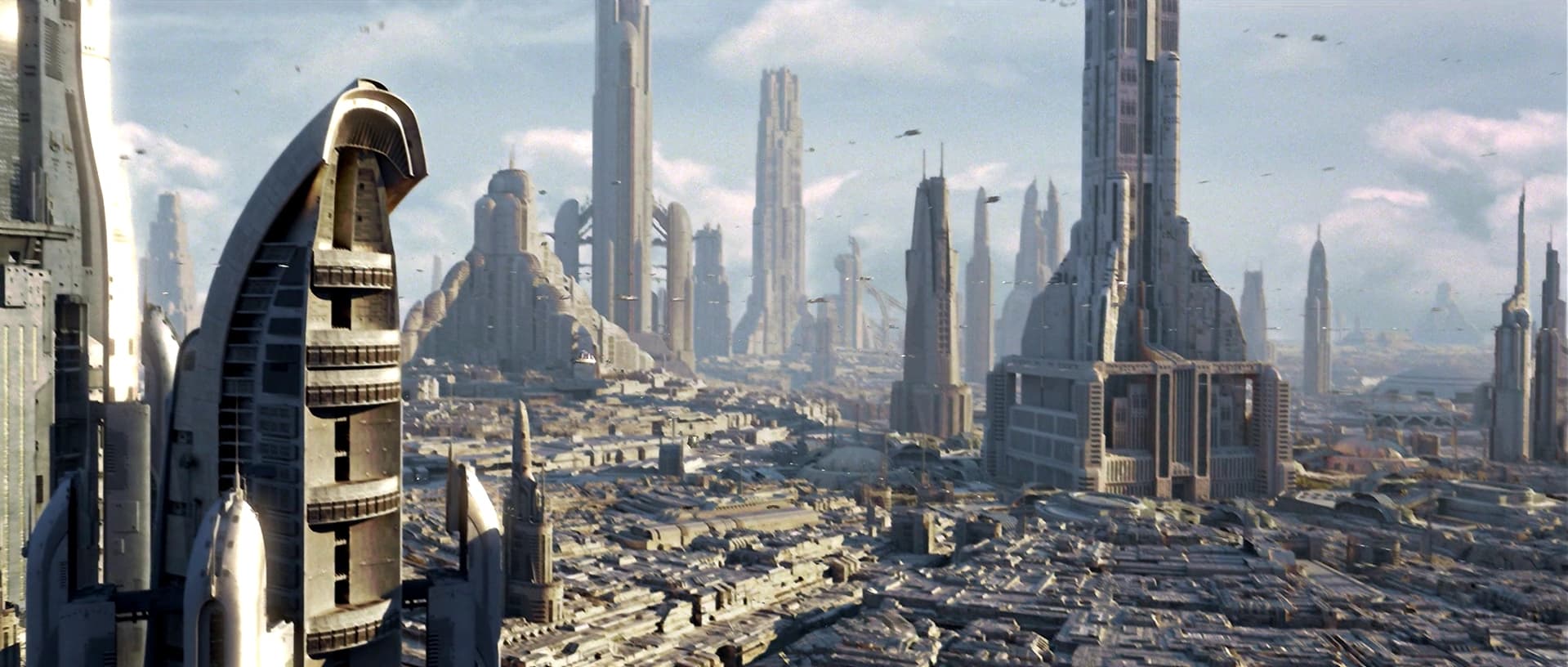
The Galactic Republic was the democratic government that ruled much of the galaxy for over a thousand generations from its capital on Coruscant, served by the Jedi Order. After the Clone Wars it was reorganized by Palpatine into the Galactic Empire.
The Galactic Republic was the democratic government that united much of the galaxy under a single state for over a thousand generations. Formed in the distant past and governed from the ecumenopolis of Coruscant in the Core Worlds, it was led by an elected Supreme Chancellor and the Galactic Senate, and it relied on the Jedi Order as its peacekeepers. After the Clone Wars, Supreme Chancellor Sheev Palpatine, secretly the Sith Lord Darth Sidious, reorganized the Republic into the Galactic Empire, ending the democracy he had spent decades subverting. (A New Hope; The Phantom Menace; Revenge of the Sith)
Foundation and the Old Republic#
The original Galactic Republic was formed in the distant past, with Coruscant established as its capital. The city-world would remain the seat of the Republic for thousands of years. Multiple versions of the Republic existed across its long history, and historians referred to the earliest period as the "Old Republic." Hyperspace travel proved the key to expansion beyond the Core Worlds, allowing the Republic to draw distant systems into a single galactic community. (A New Hope; Star Wars Propaganda: A History of Persuasive Art in the Galaxy; StarWars.com Databank, "Galactic Republic")
The High Republic era#
During the High Republic Era, the Republic actively sought out new hyperspace lanes and member worlds in the Outer Rim. Under leaders such as Supreme Chancellor Lina Soh and her predecessors and successors, the government worked to expand communications, forge alliances, and shut down brewing conflicts at the galactic frontier. The Jedi supported these projects, establishing outposts on many Outer Rim worlds. This expansion brought the Republic into conflict with the marauders known as the Nihil, whom it eventually moved to destroy through coordinated campaigns. The era also drew the Jedi and the civilian government closer together, with the Chancellor and her aides inserting themselves into matters once left to the Jedi Council. (The High Republic: Light of the Jedi; The High Republic: Out of the Shadows; The High Republic: Cataclysm)
Twilight years and corruption#
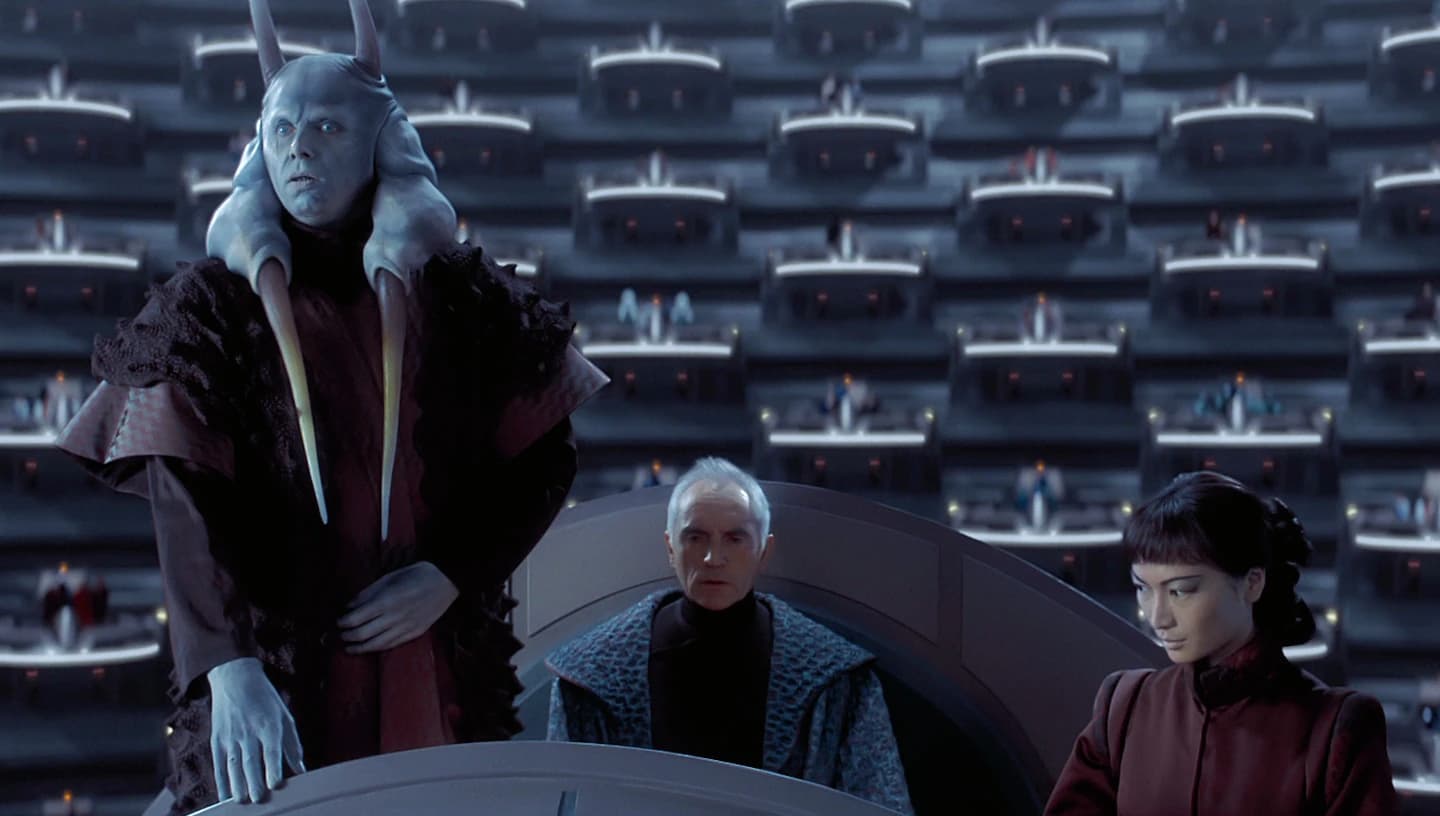
By its final centuries the Republic had maintained peace for nearly a millennium, but it had also grown mired in bureaucracy, layered legal precedent, and corruption. The Invasion of Naboo by the Trade Federation exposed the Senate's unwillingness and inability to resolve a crisis, ending only when the people of Naboo forced out the occupiers themselves. Outlying worlds were often forced into one-sided deals and refused military protection while the Republic honored older agreements. As corruption spread, the Republic's citizens turned increasingly to escapism, with podracing circuits and other entertainments diverting public attention from the decay of the Senate. (The Phantom Menace; Tarkin; Star Wars Propaganda: A History of Persuasive Art in the Galaxy)
The Clone Wars and militarization#
The Separatist Crisis, engineered by Count Dooku at Sidious's direction, split thousands of systems away into the Confederacy of Independent Systems. When the Clone Wars erupted, the Grand Army of the Republic, led by Jedi Generals and built from clone troopers bred on Kamino, became the backbone of the Republic Military. The war served Palpatine's designs at every turn. He used it to amass emergency powers, extending his term far beyond what was permitted and centralizing political and military authority in the Office of the Chancellor. He amended the Galactic Constitution repeatedly, securing near-total power over the military through the Reflex Amendment and authority over neighboring systems through the Sector Governance Decree. The Jedi continued to lead the Republic's forces despite growing public hostility and heavy casualties. (Attack of the Clones; Revenge of the Sith; Collapse of the Republic; Star Wars: The Rebel Files)
The Jedi and the Senate#
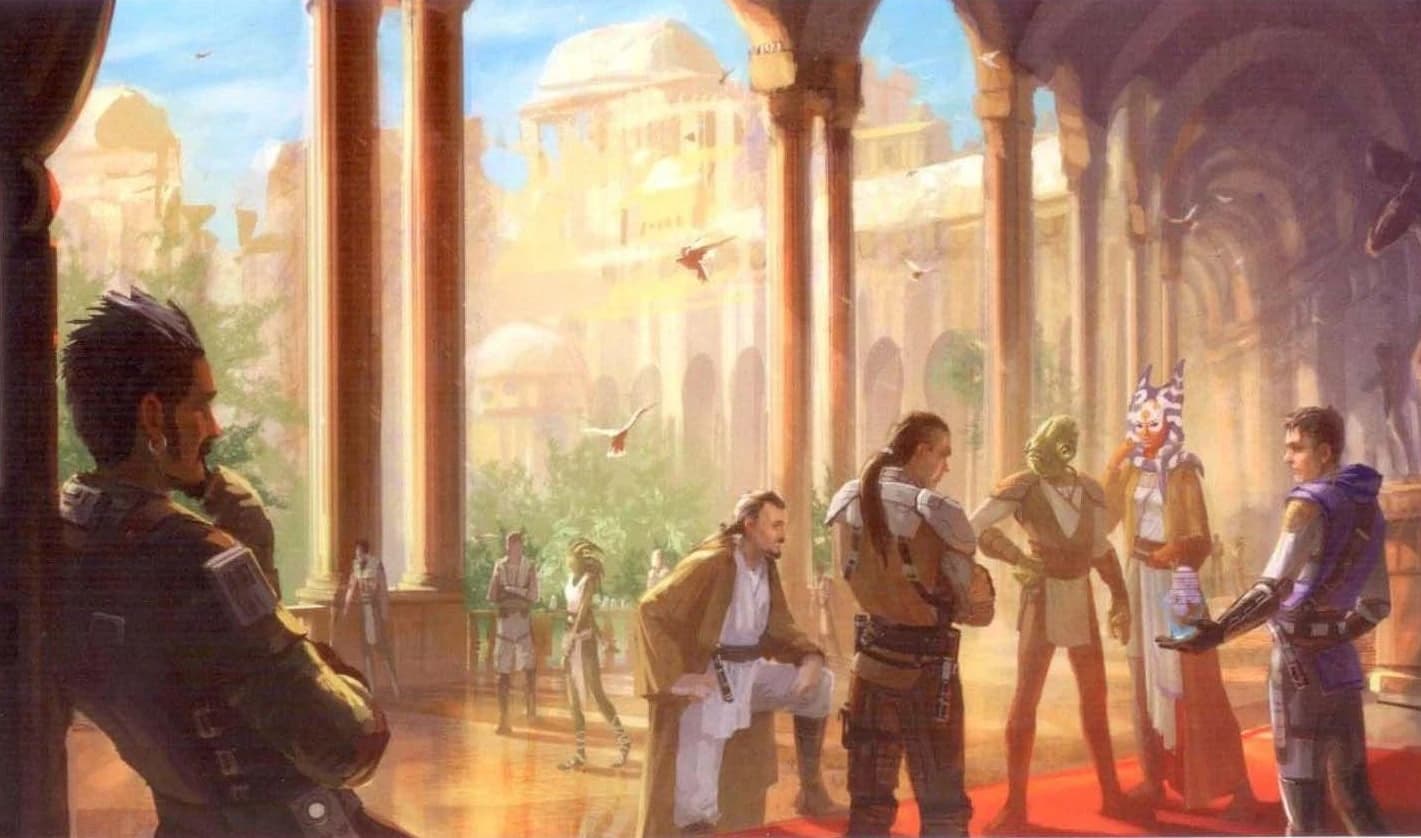
The Republic placed its full faith in the Jedi Order, whose allegiance was to the Senate. In the Republic's last decades the Jedi effectively supplanted the Judicial Forces as the Senate's arbiters, and when their ranks proved insufficient to defend the Republic in open war, they were compelled to lead the clone army. To the wider public, the Order remained mysterious, regarded by some as mystics and by others as warmongers, and as the Clone Wars dragged on, anti-war protests broke out on Coruscant decrying the leadership and the Jedi alike. (Attack of the Clones; Tarkin; Star Wars Propaganda: A History of Persuasive Art in the Galaxy; The Clone Wars, "The Jedi Who Knew Too Much"; StarWars.com Databank, "Galactic Republic")
Reorganization into the Empire#
After nearly three years of warfare the conflict reached its climax at the Battle of Coruscant, where the Republic dealt the Confederacy a severe blow and Count Dooku was killed. As the Republic pressed the Outer Rim Sieges, the Jedi High Council grew increasingly wary of Palpatine, even contemplating his removal by force. At an emergency session of the Senate, Sidious publicly denounced the Jedi Order, accusing it of plotting to seize control of the Republic. With the Great Jedi Purge underway and the Separatists neutralized, he proclaimed himself Galactic Emperor. The Galactic Republic officially became the Galactic Empire, and the Galactic Senate became the Imperial Senate. (Revenge of the Sith)
Memory and legacy#
In the decades after its dissolution, many citizens clung to the memory of the now Old Republic and its Jedi, while others came to accept the Imperial account of a weak and corrupt government rightly replaced. The Empire worked to erase visible reminders of the old order, renaming institutions and reshaping architecture into a severe Imperial aesthetic. After the Alliance's victory at Endor, the rebels declared themselves the New Republic in homage to the government they had fought to restore, dropping the title "Supreme" from the Chancellorship and rotating the capital among member worlds rather than fixing it on Coruscant. (A New Dawn; Star Wars Propaganda: A History of Persuasive Art in the Galaxy; Bloodline)
Frequently asked questions
- What was the Galactic Republic?
- The Galactic Republic was the democratic government that united much of the galaxy under a single state for over a thousand generations. Governed from Coruscant, it was led by an elected Supreme Chancellor and the Galactic Senate and relied on the Jedi Order as its peacekeepers.
- What was the High Republic era?
- During the High Republic Era, the Republic actively sought out new hyperspace lanes and member worlds in the Outer Rim under leaders such as Supreme Chancellor Lina Soh. This expansion brought the Republic into conflict with the marauders known as the Nihil, whom it eventually moved to destroy through coordinated campaigns.
- Why did the Galactic Republic fall?
- By its final centuries the Republic had grown mired in bureaucracy, layered legal precedent, and corruption. The Clone Wars allowed Palpatine to amass emergency powers, amend the Galactic Constitution, and centralize political and military authority in the Office of the Chancellor.
- How did the Galactic Republic become the Galactic Empire?
- At an emergency session of the Senate, Sidious publicly denounced the Jedi Order, accusing it of plotting to seize control of the Republic. With the Great Jedi Purge underway and the Separatists neutralized, he proclaimed himself Galactic Emperor, and the Galactic Senate became the Imperial Senate.
- What role did the Jedi Order play in the Galactic Republic?
- The Republic relied on the Jedi Order as its peacekeepers, and the Jedi's allegiance was to the Senate. In the Republic's last decades the Jedi effectively supplanted the Judicial Forces as the Senate's arbiters, and when their ranks proved insufficient in open war, they were compelled to lead the clone army.
Gallery
Images via Wookieepedia
Sources
- VideoA New Hope, Lucasfilm, 1977
- VideoThe Phantom Menace, Lucasfilm, 1999
- VideoAttack of the Clones, Lucasfilm, 2002
- VideoRevenge of the Sith, Lucasfilm, 2005
- VideoThe Jedi Who Knew Too Much, Star Wars: The Clone Wars, season 5 episode 18, 2013
- BookThe High Republic: Light of the Jedi, Charles Soule, novel, 2021
- BookThe High Republic: Out of the Shadows, Justina Ireland, novel, 2021
- BookThe High Republic: Cataclysm, Lydia Kang, novel, 2023
- BookA New Dawn, John Jackson Miller, novel, 2014
- BookTarkin, James Luceno, novel, 2014
- BookBloodline, Claudia Gray, novel, 2016
- BookStar Wars Propaganda: A History of Persuasive Art in the Galaxy, Pablo Hidalgo, official reference, 2016
- BookStar Wars: The Rebel Files, Daniel Wallace, official reference, 2017
- BookCollapse of the Republic, Fantasy Flight Games, roleplaying sourcebook, 2017
- WebGalactic Republic, StarWars.com Databank
Spotted a factual error or a primary source we missed? Email a correction. Every flagged claim gets reviewed.
Followed from this entry
Confederacy of Independent Systems
The Confederacy of Independent Systems was the secessionist government of star systems that broke away from the Galactic Republic, sparking the Clone Wars. Led publicly by Count Dooku and backed by corporate powers, it was secretly controlled by Darth Sidious.
Jedi Order
The Jedi Order was a monastic, nontheistic religious order devoted to the light side of the Force, serving for over a thousand generations as the guardians of peace and justice in the Galactic Republic. Nearly annihilated by Order 66, the Order endured through scattered survivors and was rebuilt, however briefly, by Luke Skywalker.

Clone Wars
The Clone Wars was a galaxy-spanning conflict fought from 22 to 19 BBY between the Galactic Republic and the breakaway Confederacy of Independent Systems. Secretly engineered on both sides by the Sith, it ended with the Jedi purged and the Republic reformed into the Galactic Empire.
Coruscant
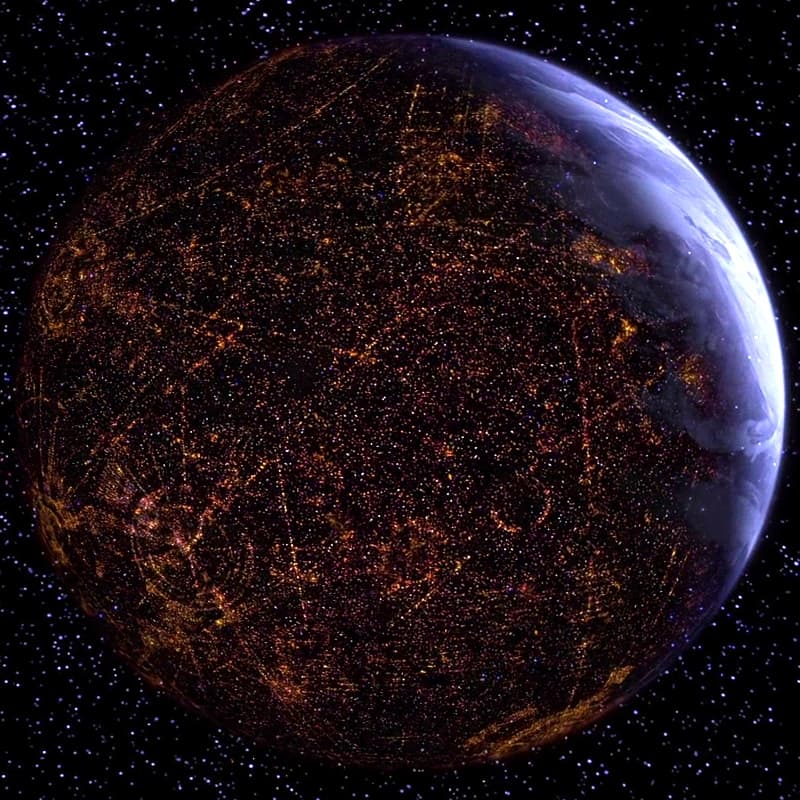
Coruscant was a city-covered world in the Core, the political heart of the galaxy for thousands of years. Capital of the Galactic Republic, the Empire, and for a time the New Republic, it was home to the Galactic Senate and the Jedi Temple, with a teeming underworld buried beneath its towers.

Galactic Empire
The Galactic Empire was the fascist regime that replaced the Galactic Republic when Sheev Palpatine, secretly the Sith Lord Darth Sidious, proclaimed himself Emperor. It ruled the galaxy through fear, military power, and the hunt for the Jedi until its defeat at Endor and final collapse at Jakku.

Kamino
Kamino was a remote, ocean-covered planet in Wild Space, home to the cloner Kaminoans. There the Grand Army of the Republic was bred, and there the Galactic Empire later destroyed Tipoca City in an orbital bombardment.
Mentioned in42 entries
Aayla Secura: the Twi'lek Jedi who fell on Felucia
Aayla Secura was a Rutian Twi'lek Jedi Master and Clone Wars general who commanded the 327th Star Corps alongside Commander Bly. She fell on Felucia during Order 66, shot in the back by the clones she had led.
Anakin Skywalker
Anakin Skywalker was a Jedi Knight of the Galactic Republic and the prophesied Chosen One destined to bring balance to the Force. He fell to the dark side and became the Sith Lord Darth Vader, then found redemption at the cost of his life by destroying the Emperor.
Boba Fett
Boba Fett was an unaltered clone of the Mandalorian Jango Fett, raised as his son and trained from childhood to become one of the most feared bounty hunters in the galaxy. After surviving the sarlacc, he claimed Jabba the Hutt's throne as Daimyo of Mos Espa.
C-3PO
C-3PO was a 3PO-series protocol droid built by Anakin Skywalker as a boy on Tatooine. Fluent in millions of forms of communication, he served the Skywalker family, the Galactic Republic, the Rebel Alliance, and the Resistance, and was the lifelong, often anxious companion of the astromech R2-D2.
Cad Bane
Cad Bane was a Duros bounty hunter considered the best in the galaxy after the death of Jango Fett. A specialist in fighting Jedi, he worked repeatedly for Darth Sidious and was finally killed by his old apprentice, Boba Fett.
Clone Wars
The Clone Wars was a galaxy-spanning conflict fought from 22 to 19 BBY between the Galactic Republic and the breakaway Confederacy of Independent Systems. Secretly engineered on both sides by the Sith, it ended with the Jedi purged and the Republic reformed into the Galactic Empire.
Confederacy of Independent Systems
The Confederacy of Independent Systems was the secessionist government of star systems that broke away from the Galactic Republic, sparking the Clone Wars. Led publicly by Count Dooku and backed by corporate powers, it was secretly controlled by Darth Sidious.
Coruscant
Coruscant was a city-covered world in the Core, the political heart of the galaxy for thousands of years. Capital of the Galactic Republic, the Empire, and for a time the New Republic, it was home to the Galactic Senate and the Jedi Temple, with a teeming underworld buried beneath its towers.
Count Dooku
Dooku was a Jedi Master who became disillusioned with the Order and fell to the dark side as the Sith Lord Darth Tyranus. As Count of Serenno he led the Separatist movement through the Clone Wars, all the while serving as the unwitting pawn of his master, Darth Sidious.
Darth Maul
Maul was a Dathomirian Zabrak trained from childhood as the Sith apprentice of Darth Sidious. Cut down on Naboo and left for dead, he survived and rebuilt himself, becoming a crime lord and a relentless seeker of revenge against the Sith who discarded him and the Jedi he hated.
Darth Vader
Anakin Skywalker was the prophesied Chosen One, a Jedi Knight and hero of the Clone Wars who fell to the dark side and became the Sith Lord Darth Vader. He enforced the rule of the Galactic Empire for decades before his redemption and death at the Battle of Endor.
Din Djarin
Din Djarin was a Mandalorian warrior and bounty hunter known across the Outer Rim simply as the Mandalorian. Hired to retrieve a Force-sensitive child, he instead became the foundling Grogu's protector and adoptive father.
+ 30 more
Get new articles in your inbox
No spam. New lore drops, canon conflicts, and deep dives only when they’re worth reading.
Some links on Lore Fortress are affiliate links. If you buy through them we earn a small commission at no extra cost to you.