Stalker
Nerazim Cybernetic War Machine
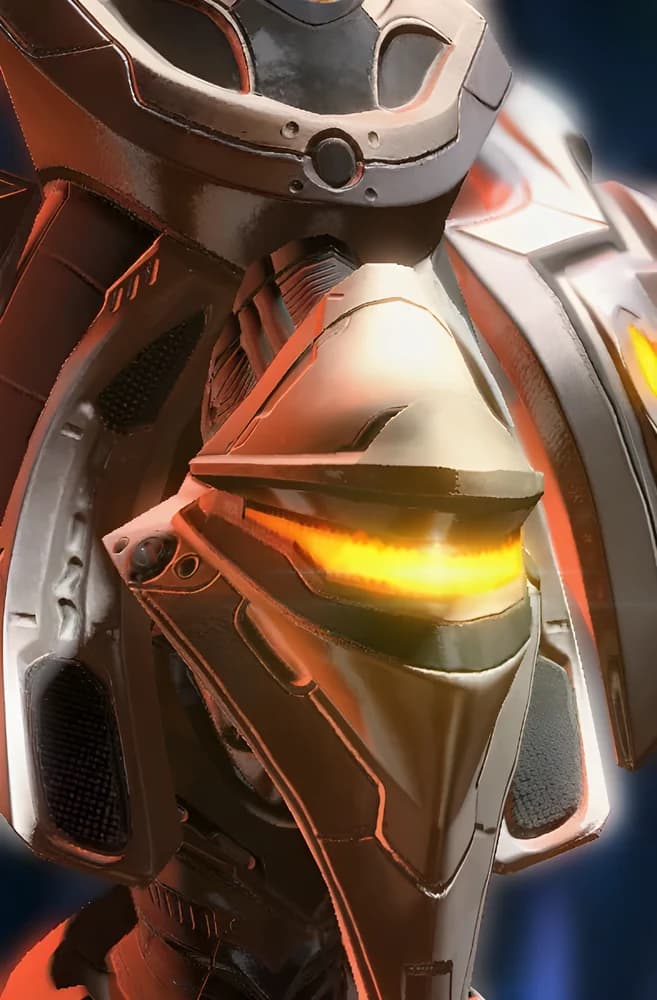
The stalker is a Nerazim cybernetic war machine, a metal body animated by the shadow-essence of a Dark Templar warrior. Developed after the fall of Aiur, it can teleport across the battlefield and tears its targets apart with Void energy.
The stalker is a Nerazim cybernetic war machine, a metal body controlled by the shadow-essence of a Dark Templar warrior fused into its frame. Inspired by the Khalai dragoon, it was developed after the fall of Aiur, when the protoss learned that stealth and guile alone were not enough to defeat the zerg. (StarCraft II unit profile: Stalker; StarCraft Field Manual)
Origin#
The fall of Aiur demonstrated to the Dark Templar that more than stealth and guile were required to defeat the zerg. In response, the Nerazim developed the stalker, a war machine inspired by the Khalai dragoon. The two machines differ fundamentally in their pilots. Where dragoons are piloted by crippled protoss warriors, the stalker is controlled by the shadow-essence of a Dark Templar warrior fused into a metal body. (StarCraft II unit profile: Stalker)
The Nerazim who control stalkers undergo this fusion voluntarily. The process involves a Void-powered ritual that binds their shadow essence to the machine, granting them a preternatural degree of control over their new body. It cannot be reversed. Some Tal'darim likewise chose to become stalkers in order to better hunt and kill their foes, wishing only to sharpen their combat skills and serve their Highlord, as not all Tal'darim seek ascension. (StarCraft II unit profile: Stalker; StarCraft Field Manual; StarCraft II: Legacy of the Void)
Stalkers were in use by the Daelaam as early as 2502 and by the Tal'darim by 2504. They are often used to support zealots on the battlefield. (StarCraft: Frontline Volume 1; StarCraft II: Wings of Liberty; StarCraft II race profile: Protoss)
Design and weaponry#
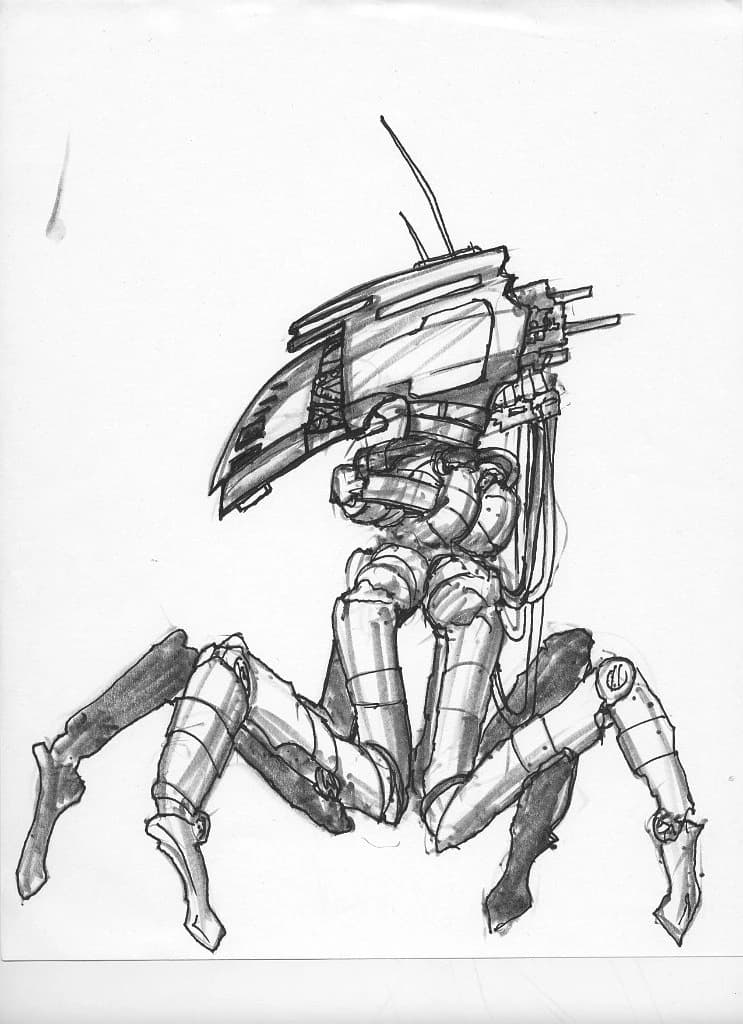
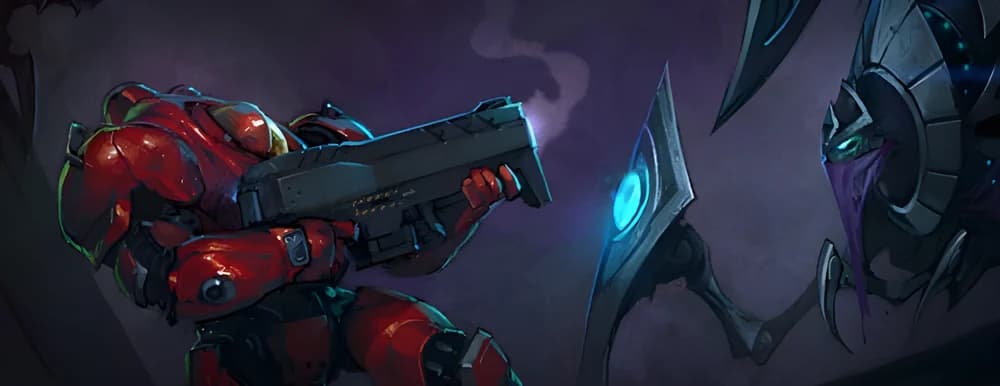
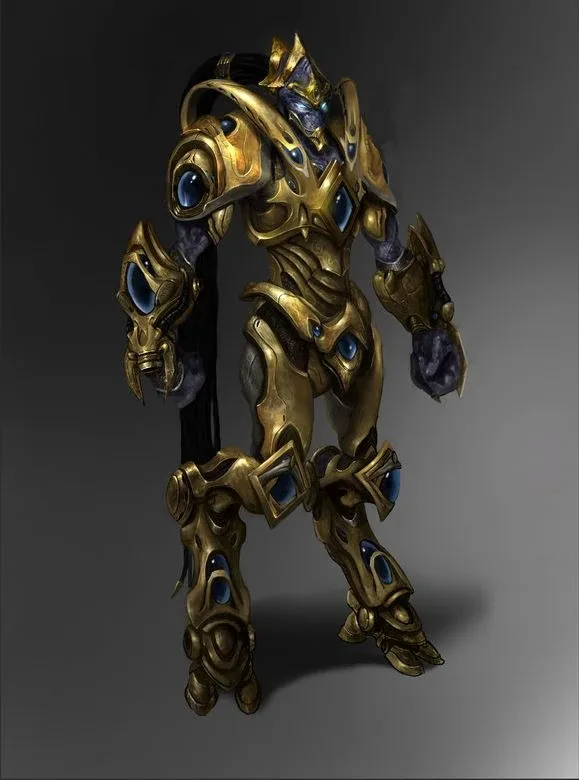
Stalkers stand roughly twice as tall as a terran wearing CMC armor. They draw their psionic power from their host Nerazim's connection to the Void and are armed with carapace-mounted particle disruptors effective against both ground and aerial targets. These weapons draw upon the power of the Dark Templar's training and technology to fire lethal blasts of entropic Void energy. Each shot destabilizes matter at a fundamental level and ultimately tears it apart by disintegrating its atomic composition, making the disruptors especially effective against materials with high hardness indexes such as chitinous carapaces or heavy armor plating. (StarCraft Field Manual; StarCraft II unit profile: Stalker)
Stalkers have been credited with many fantastic powers since their battlefield debut, but only one is witnessed consistently: an ability to instantly teleport, or blink, from one spot to another. This requires the implementation of a device called a Void displacer, which lets the stalker fade and materialize instantly at a different location, affording it a rare degree of mobility. The improved mobility allows stalkers to conduct ambushes, catch fleeing foes, and engage on their own terms, making them ideal for raiding enemy supply lines and teleporting away before reinforcements can arrive. Each blink generates a flux that taxes the stalker's systems, forcing a brief recharge period before another displacement. When the Daelaam retrieved the Spear of Adun, stalkers were outfitted with reactor technology linked to its solar core, allowing rapid shield regeneration when they displaced. That blink drive makes it one of the most mobile pieces of the full protoss arsenal. (StarCraft II unit profile: Stalker; StarCraft Field Manual; StarCraft II: Legacy of the Void)
Later developments#
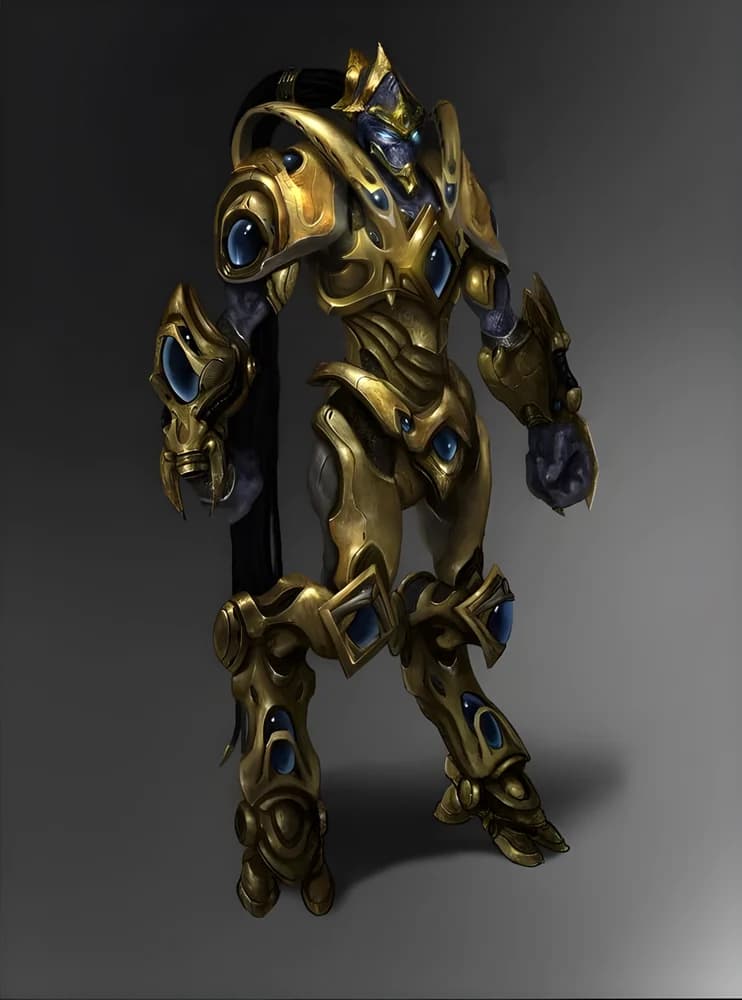
Years after its conception, Nerazim stalker technology benefited from Khalai engineering, and attempts were made to integrate dragoon chassis reinforcement into the battle strider's frame. At least some of these stalkers adopted the telltale golden Khalai color scheme rather than the stalker's standard platinum. Purifier stalkers were fully automated and able to draw from a complex log of battle interactions, while Ihan-rii stalkers were inscribed with sacred runes meant to safeguard the animated armor. (StarCraft II: Legacy of the Void; StarCraft II: Shadow Wars)
After the End War, a movement back to the artistic style of the Golden Age of Expansion led Khalai phase-smiths to redesign several stalkers in the style of the ancient Templar. This redesign elicited offense from many Nerazim, who saw their war machines reshaped in the image of a tradition not their own. Known variants of the stalker include the Tal'darim slayer, the Purifier instigator and the xel'naga ambusher, all fielded in Co-op Missions. (StarCraft II: Legacy of the Void; StarCraft II: Co-op Missions)
Frequently asked questions
- What is a stalker in StarCraft?
- The stalker is a Nerazim cybernetic war machine, a metal body controlled by the shadow-essence of a Dark Templar warrior fused into its frame. It was inspired by the Khalai dragoon and developed after the fall of Aiur.
- Why did the Nerazim create the stalker?
- The fall of Aiur showed the Dark Templar that stealth and guile alone were not enough to defeat the zerg. In response, the Nerazim developed the stalker as a war machine to fight more directly.
- How does the stalker differ from the dragoon?
- The two machines differ in their pilots. Where dragoons are piloted by crippled protoss warriors, the stalker is controlled by the shadow-essence of a Dark Templar warrior fused into a metal body through an irreversible Void-powered ritual that the warrior undergoes voluntarily.
- What weapons and abilities does the stalker have?
- Stalkers are armed with carapace-mounted particle disruptors that fire blasts of entropic Void energy, disintegrating matter at the atomic level and making them especially effective against chitinous carapaces and heavy armor. Many are fitted with a Void displacer that lets them instantly teleport, or blink, across the battlefield, though each blink forces a brief recharge period.
- When did stalkers enter service?
- Stalkers were in use by the Daelaam as early as 2502 and by the Tal'darim by 2504. They are often used to support zealots on the battlefield.
Gallery
Images via StarCraft Wiki
Sources
- WebStarCraft II unit profile: Stalker, Blizzard Entertainment, StarCraft II website, 2007 and 2014
- WebStarCraft II race profile: Protoss, Blizzard Entertainment, StarCraft II website, 2010
- BookStarCraft Field Manual, Rick Barba, Insight Editions, 2015
- ComicStarCraft: Frontline Volume 1, "Why We Fight", Josh Elder (w), Ramanda Kamarga (a), Tokyopop, 2008
- GameStarCraft II: Wings of Liberty, Blizzard Entertainment, 2010
- GameStarCraft II: Legacy of the Void, Blizzard Entertainment, 2015 (including War Council and Collections skin descriptions)
- ComicStarCraft II: Shadow Wars, Valerie Watrous (w), Blizzard Entertainment, 2017
- GameStarCraft II: Co-op Missions, Blizzard Entertainment, 2015 onward
Spotted a factual error or a primary source we missed? Email a correction. Every flagged claim gets reviewed.
Followed from this entry

Dragoon
The dragoon is a protoss four-legged walker that gives a second life to Templar too gravely wounded to fight on foot. The crippled warrior is transplanted into the exoskeleton, where their psionic mastery directs its ranged phase disruptors.
Zealot
Zealots are the lower-ranked Templar who form the backbone of the protoss military. Trained for decades in martial discipline and armed with psionic blades, they have served since before the Discord and are forbidden from using alien tissue or weaponry in combat.
Every Protoss Unit in StarCraft and StarCraft II, Explained
Every protoss warrior, war machine and starship from StarCraft, Brood War and the three StarCraft II games. Each entry covers who fights in it or builds it, how it fights, what it did in the story and which games it appears in, plus the Nerazim, Tal'darim and Purifier versions from Legacy of the Void.
2502: the year of quiet atrocities
2502 fell in the uneasy years between the Brood War and the Second Great War. The Terran Dominion hid a colonial massacre behind parade broadcasts, Emperor Mengsk buried the mother of his heir, a squad of outlaw commandos was sent to kill Jim Raynor, and secret programs built on stolen ghosts and captive protoss advanced in the dark.

Aiur
Aiur was the homeworld of the protoss, a verdant world on the galactic fringe engineered by the Xel'Naga and seat of the Protoss Empire. It was overrun by the zerg in 2500 and reclaimed by the Daelaam after the defeat of Amon.

Daelaam
The Daelaam was the unified protoss government that bound the Khalai, Nerazim, Purifiers, and some Tal'darim together after the fall of Aiur, led by Hierarch Artanis through the End War against Amon and the reclamation of their homeworld.
Mentioned in3 entries
Cybernetics Core: forge that bound protoss spirits to steel
The cybernetics core was a protoss support structure famed for blending machinery with biological beings and psionics. Its essence translators bonded the spirits of fallen warriors to the exoskeletons of dragoons and other walkers, while its auto-fabricators and field systems gave protoss commanders the means to wage war against far larger armies.
Every Protoss Unit in StarCraft and StarCraft II, Explained
Every protoss warrior, war machine and starship from StarCraft, Brood War and the three StarCraft II games. Each entry covers who fights in it or builds it, how it fights, what it did in the story and which games it appears in, plus the Nerazim, Tal'darim and Purifier versions from Legacy of the Void.
Ma'lash: the Blade of Amon
Ma'lash was the highlord of the Tal'darim, a warrior so brutal in the pits of Rak'Shir that his own people believed Amon had blessed him personally. He climbed the Chain of Ascension by torturing rivals to death, held the highlord's throne on Slayn through the treachery of Alarak, and lost it to the same hand.
Get new articles in your inbox
No spam. New lore drops, canon conflicts, and deep dives only when they’re worth reading.
Some links on Lore Fortress are affiliate links. If you buy through them we earn a small commission at no extra cost to you.