Viking
Terran Transforming Combat Walker
The A2 Viking Armored Mechanical Hybrid was a terran combat vehicle that could transform between a ground assault walker and an air-superiority fighter, developed by the Terran Dominion to close gaps in terran anti-air defense after the Brood War.
The A2 Viking Armored Mechanical Hybrid was a terran combat vehicle able to transform between a ground unit, its assault mode, and an air unit, its fighter mode. Developed by the Terran Dominion to address weaknesses in terran anti-air capability revealed during the Brood War, the Viking was conceived as an armored vehicle that could shift its combat role smoothly to meet the tactical needs of a developing battle. Its transformation system was based heavily on that of the siege tank, and the elite few pilots who mastered both of its combat modes became among the most feared aircrew in the Koprulu sector. (StarCraft II: Wings of Liberty; Viking (StarCraft II official site))
Design and hardware#
The Viking was a support ship whose transformation ability was based heavily on that of the siege tank. In its aerial mode it was classified as an air-superiority fighter, though the walker mode was considered the more important of the two and the craft was regarded as ungainly in the air. A large reactor housed in the central body powered all electrical systems and provided torque for walker-mode locomotion, a set of thrusters in the underbelly gave it hover and vertical takeoff capability and kept it stable during transformation, and four low-bypass turbines generated propulsion in flight. The pilot's seat carried more than double the straps, pads, and packing of any other fighter craft to account for the violent ups and downs of switching modes, and a soundproof carapace protected the pilot's ears from the thunderous Gatling cannons. (Viking (StarCraft II official site); Lost Vikings; StarCraft II: Wings of Liberty)
Versatility was designed into the Viking down to the smallest part. Most moving components could be replaced with easy-to-find spares, and even the complex servo systems in the arms and legs were interchangeable, so it was not uncommon for a pilot to ditch an arm to replace a damaged leg servo and return to battle. That versatility was also a drawback, because few pilots could handle both combat modes. The cockpit featured a heads-up display, targeting system, and terrain mapper standard to terran fightercraft, along with a detailed 3D wireframe showing the condition of every servo and actuator so that the pilot always knew what worked. As a final safeguard the Viking carried a governor circuit that cut off reactor power before the machine reached critical levels, but in dire situations pilots disabled it to supercharge the reactor into a deliberate meltdown, an unofficial self-destruct nicknamed the "Heimdall" for the brilliant flash that consumed the craft and its pursuers. (Viking (StarCraft II official site); StarCraft Field Manual; Lost Vikings; StarCraft II: Wings of Liberty)
Armament and variants#
The Viking was designed as an anti-air and ground-support weapon system, armed with a large payload of MT50 lanzer torpedoes and twin Gatling cannons for its two respective tasks, with a targeting system that displayed height and location. Because the torpedoes were ineffective against aerial targets smaller than capital ships, Enlightened Dynamics developed Ripwave missiles for the hybrid, and Bellerephon further expanded its options through the Phobos-class weapon system, an improved loadout adding a longer-range anti-air missile and an upgraded Gatling cannon with greater range in ground assaults. The implementation cost was steep enough that only a few Vikings received those upgrades. Few machines in the Terran army's line-up asked as much of a single pilot. (Viking (StarCraft II official site); StarCraft: Frontline Volume 2; StarCraft II: Wings of Liberty)
During the reign of Emperor Valerian Mengsk, Castillo Industries developed a more efficient and streamlined Viking with a different design, piloted by artificial intelligence and fitted with twin engines that increased firepower in both modes. Castillo also produced a heavily armored Viking model for the Umojan Protectorate. The Archangel, a much larger prototype upgrade, was fielded by the Dominion against Kerrigan, and Co-op Missions add further variants such as the Deimos Viking and the Royal Guard Sky Fury. (StarCraft II: Legacy of the Void; StarCraft II: Heart of the Swarm; StarCraft II: Co-op Missions)
History#
The Viking was based on the Wyrm, an earlier design fielded by the Terran Confederacy, but the Wyrm was considered sluggish and unresponsive and was a rare sight. The Brood War revealed weaknesses in terran anti-air capability, as Wraith combat fighters and Valkyrie missile frigates proved an unwieldy combination against agile zerg airborne organisms, while ground-based anti-air support from goliath assault walkers was too limited in mobility, since airborne attackers could simply move out of range. In the aftermath, terran weapon technicians proposed a radical concept to resolve both problems: an armored vehicle that could change its combat role from assault walker to air-superiority fighter and switch smoothly to fit a developing battle. (StarCraft: Frontline Volume 2; StarCraft: Ghost Academy Volume 2; Viking (StarCraft II official site))
Hoping to fill that gap, the Terran Dominion upgraded the Wyrm into the Viking, giving it more armor, more options, and a faster response time. A Viking was showcased at Ursa in 2502, where one single-handedly destroyed a military base after its pilot went rogue. During the reign of Emperor Valerian Mengsk, a new and more cost-efficient Viking with a sleeker design was commissioned from Castillo Industries. (StarCraft: Frontline Volume 2; StarCraft: Frontline Volume 1; StarCraft II: Heaven's Devils; StarCraft II: Legacy of the Void)
Frequently asked questions
- What is the Viking in StarCraft?
- The A2 Viking Armored Mechanical Hybrid was a terran combat vehicle that could transform between a ground assault walker and an air-superiority fighter. The Terran Dominion developed it to address weaknesses in terran anti-air capability revealed during the Brood War.
- Why did the Terran Dominion develop the Viking?
- The Brood War showed that Wraith combat fighters and Valkyrie missile frigates were an unwieldy combination against agile zerg fliers, while goliath assault walkers were too limited in mobility for anti-air support since airborne attackers could move out of range. Terran weapon technicians proposed an armored vehicle that could switch between assault walker and air-superiority fighter to solve both problems.
- What weapons did the Viking carry?
- The Viking was armed with a large payload of MT50 lanzer torpedoes and twin Gatling cannons for its two combat tasks. Because the torpedoes were ineffective against aerial targets smaller than capital ships, Enlightened Dynamics developed Ripwave missiles, and Bellerephon added the Phobos-class weapon system with a longer-range anti-air missile and an upgraded Gatling cannon.
- What was the Viking developed from?
- The Viking was based on the Wyrm, an earlier design fielded by the Terran Confederacy. The Wyrm was considered sluggish and unresponsive and was a rare sight, so the Terran Dominion upgraded it into the Viking with more armor, more options, and a faster response time.
- What is the Viking's "Heimdall" self-destruct?
- The Viking carried a governor circuit that cut off reactor power before the machine reached critical levels. In dire situations pilots disabled it to supercharge the reactor into a deliberate meltdown, an unofficial self-destruct nicknamed the "Heimdall" for the brilliant flash that consumed the craft and its pursuers.
Gallery
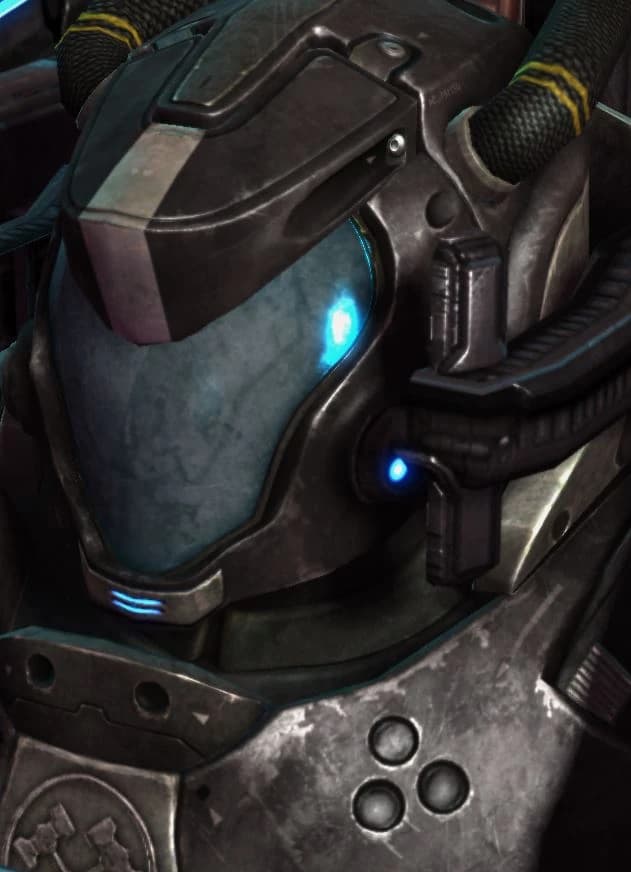
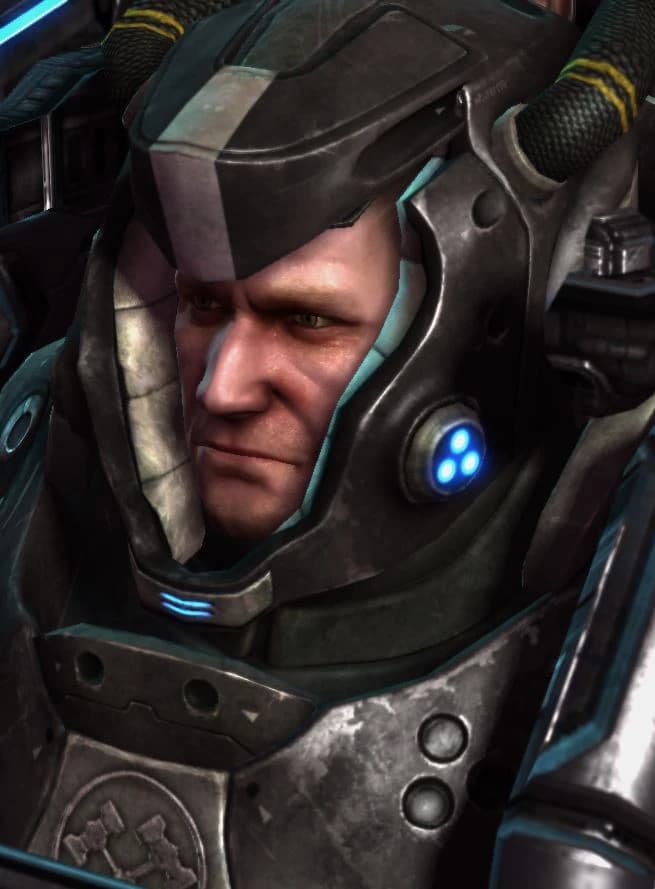
Images via StarCraft Wiki
Sources
- GameStarCraft II: Wings of Liberty, Blizzard Entertainment, 2010
- GameStarCraft II: Heart of the Swarm, Blizzard Entertainment, 2013
- GameStarCraft II: Legacy of the Void, Blizzard Entertainment, 2015
- GameStarCraft II: Co-op Missions, Blizzard Entertainment, 2015 onward
- BookStarCraft Field Manual, Rick Barba, Insight Editions, 2015
- BookStarCraft II: Heaven's Devils, William C. Dietz, 2010
- WebViking (StarCraft II official site), Blizzard Entertainment, unit page and "Viking Science", 2007 and 2014
- WebLost Vikings, Matt Forbeck, Blizzard Entertainment short story, 2013
- ComicStarCraft: Frontline Volume 1, "Heavy Armor, Part 1", Simon Furman (w), Jesse Elliott (a), Tokyopop, 2008
- ComicStarCraft: Frontline Volume 2, "Heavy Armor, Part 2", Simon Furman (w), Jesse Elliott (a), Tokyopop, 2009
- ComicStarCraft: Ghost Academy Volume 2, David Gerrold (w), Fernando Heinz Furukawa (a), Tokyopop, 2010
Spotted a factual error or a primary source we missed? Email a correction. Every flagged claim gets reviewed.
Followed from this entry
Wraith
The Wraith was a terran cloaking-capable space superiority fighter used extensively across the Koprulu sector from the Guild Wars onward, prized for its maneuverability and stealth before being gradually supplanted by the Viking and Banshee.
Siege Tank
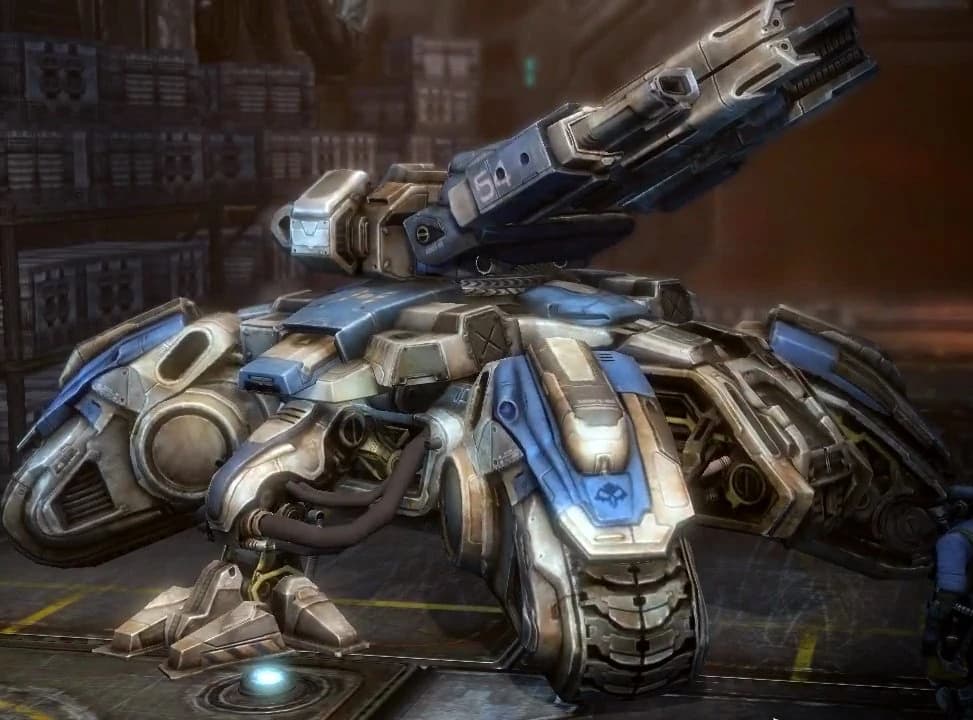
The siege tank was a terran armored vehicle that could switch between a mobile combat mode and a static long-range artillery emplacement, developed by the Confederacy and carried forward by the Dominion.
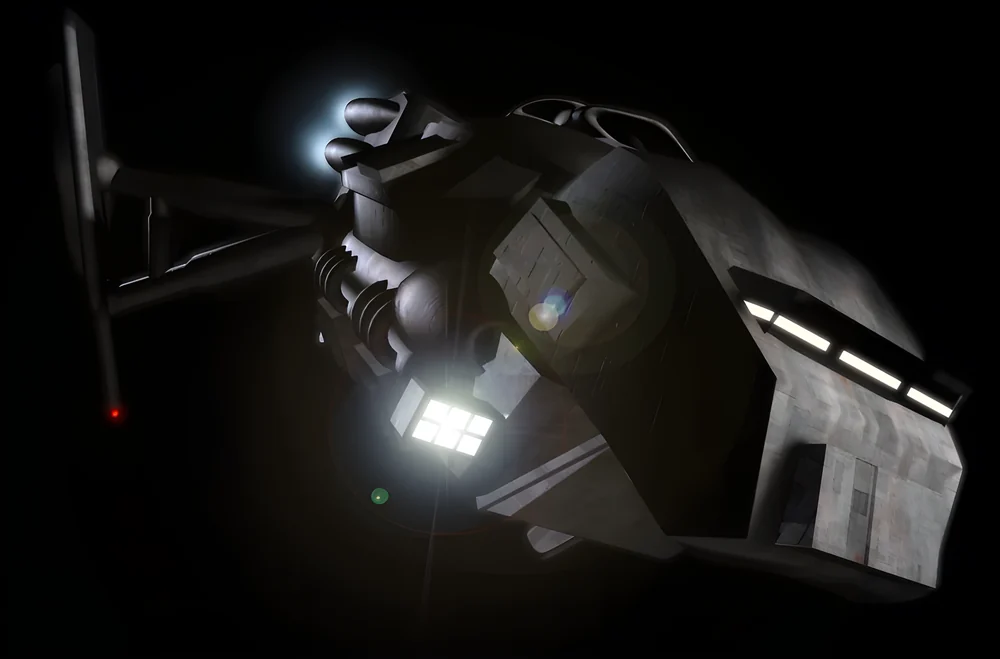
Valkyrie
The Valkyrie missile frigate was a United Earth Directorate anti-fighter spacecraft that arrived in the Koprulu sector during the Brood War. Armored and salvo-firing, it later served terran factions and inspired the Liberator.
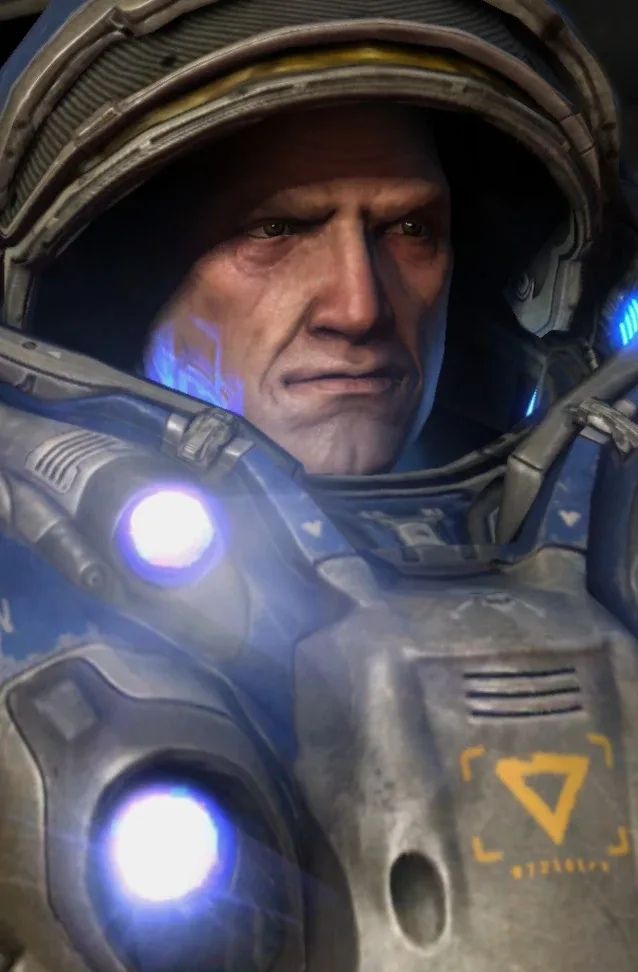
Every Terran Unit in StarCraft and StarCraft II, Explained
Every terran unit from StarCraft, Brood War and the three StarCraft II campaigns, sorted into infantry, vehicles and starships. Each entry covers who built it, what it was for and which games it appears in.
2502: the year of quiet atrocities
2502 fell in the uneasy years between the Brood War and the Second Great War. The Terran Dominion hid a colonial massacre behind parade broadcasts, Emperor Mengsk buried the mother of his heir, a squad of outlaw commandos was sent to kill Jim Raynor, and secret programs built on stolen ghosts and captive protoss advanced in the dark.

Brood War: Kerrigan's war for the Swarm
The Brood War was a zerg civil war between Kerrigan and the cerebrate Daggoth over who would succeed the Overmind. The UED invaded from Earth at the same time.
Mentioned in10 entries
2502: the year of quiet atrocities
2502 fell in the uneasy years between the Brood War and the Second Great War. The Terran Dominion hid a colonial massacre behind parade broadcasts, Emperor Mengsk buried the mother of his heir, a squad of outlaw commandos was sent to kill Jim Raynor, and secret programs built on stolen ghosts and captive protoss advanced in the dark.
Banshee
The AH/G-24 Banshee was a terran ground-attack aircraft built by Procyon Industries for the Terran Dominion. Designed for counter-insurgency, it became a cloaked raider notorious as a Dominion terror weapon.
Battle of Korhal
The Battle of Korhal was the final battle of the Second Great War, a joint assault by Sarah Kerrigan's Zerg Swarm and Jim Raynor's Raiders on the Dominion capital. It ended with the death of Emperor Arcturus Mengsk and the destruction of much of Augustgrad.
Elms: mercenary marine and hidden psychic
Elms was a terran mercenary marine with a cybernetic arm and a psionic gift she kept hidden from those around her. Hired for a crooked salvage operation on Adena, she fought her way through a zerg ambush, exposed the officers who abandoned her, and killed them all rather than accept a leash from anyone.
Engineering Bay: infantry research center of the terran military
The engineering bay was a terran research structure devoted to improving the quality of the weapons and armor fielded by infantry. In use by the Terran Confederacy as early as 2488, it remained one of the first two research facilities raised in any Dominion field base, and its work followed terran soldiers to every battlefield in the Koprulu sector.
Every Terran Unit in StarCraft and StarCraft II, Explained
Every terran unit from StarCraft, Brood War and the three StarCraft II campaigns, sorted into infantry, vehicles and starships. Each entry covers who built it, what it was for and which games it appears in.
Flashpoint Conflict: the Dominion civil war over Kerrigan
The Flashpoint Conflict was a Terran Dominion civil war fought during the Second Great War. Emperor Arcturus Mengsk hunted the deinfested and weakened Sarah Kerrigan across the sector, while his own son Valerian and Raynor's Raiders fought a running battle to keep her alive and deliver her to the Umojan Protectorate.
Mira's Marauders: the mercenary company that rules Dead Man's Rock
Mira's Marauders are the terran mercenary company led by Mira Han, based at Deadman's Port on Dead Man's Rock and the primary power on that lawless planet since the death of Ethan Stewart.
Valkyrie
The Valkyrie missile frigate was a United Earth Directorate anti-fighter spacecraft that arrived in the Koprulu sector during the Brood War. Armored and salvo-firing, it later served terran factions and inspired the Liberator.
Wraith
The Wraith was a terran cloaking-capable space superiority fighter used extensively across the Koprulu sector from the Guild Wars onward, prized for its maneuverability and stealth before being gradually supplanted by the Viking and Banshee.
Get new articles in your inbox
No spam. New lore drops, canon conflicts, and deep dives only when they’re worth reading.
Some links on Lore Fortress are affiliate links. If you buy through them we earn a small commission at no extra cost to you.