Harq al-Harba: Dramatist Laureate
the master playwright of the Atreidean period
Harq al-Harba, born Aitu Cinoli, was the foremost playwright of the Atreidean period, hailed as Dramatist Laureate of his age. A former salesman of filmbooks who came to the Imperial capital on Arrakis, he found lasting patronage in Ghanima Atreides and Farad'n Corrino, and his plays long stood as the best known account of his turbulent era.
Harq al-Harba, born Aitu Cinoli, was a significant and enigmatic playwright of the Atreidean period, honoured in his own age as Dramatist Laureate. Rising from a former salesman of filmbooks to the foremost dramatist of his day, he spent the greater part of his life at the Imperial capital on Arrakis under the patronage of Ghanima Atreides and Farad'n Corrino, and for centuries his plays remained the best known account of his turbulent era. He comes from the Dune Encyclopedia, not from Frank Herbert's novels, and every date on this page is the Encyclopedia's. (The Dune Encyclopedia)
Early life#
Harq al-Harba was born in the town of Nelopus on Yorba in 10246 AG, the son of a well to do tailor and a music teacher. Nothing certain is known of his childhood or education, but by tradition he left home at the age of twenty to work for the Gwent-Orlov publishing house. For the next ten years he travelled the planetary circuit of his territory as a salesman of minimic filmbooks imprinted on shigawire, carrying the latest publications from world to world, negotiating reprint rights, and buying up local works to copy onto his compact wire before moving on. It was a trade that demanded independent judgment and risk capital, for no sale was ever assured and the shigawire was both fragile and extremely costly. Because the account books of Gwent-Orlov listed their personnel only by employee identification numbers, they shed no light on this part of his life. (The Dune Encyclopedia)
At Arrakeen#
He severed his attachment to Gwent-Orlov, and in 10276 AG he made for the Imperial capital on Arrakis, where he spent the next thirty-seven years. In 10278 AG he was discovered by Ghanima Atreides and Farad'n Corrino, who remained his patrons for thirty years. His first play, The Sandrider, met with acclaim at Arrakeen in 10280 AG, and over the following decades he produced a steady body of work. He married Vela Cinoli in 10286 AG, with whom he had four children, and he purchased a half interest in an Arrakeen restaurant in 10295 AG. (The Dune Encyclopedia)
Though he enjoyed the help and company of the royal family, he felt somewhat out of place at court, and refused the suite of rooms Ghanima offered him. He did permit her to attend his rehearsals, and occasionally allowed the royal children to take walk-on parts in his plays, much to their delight. Tradition holds that Ghanima once persuaded him to write a masque which the family produced privately for the court, with Leto Atreides II appearing fittingly as the voice of God, though the text was not preserved and Harban scholars have argued the tale to be apocryphal. In 10313 AG he left Arrakeen and the writing of plays altogether, retiring to an isolated home on Fides, where he died in 10317 AG. (The Dune Encyclopedia)
Character and the authorship dispute#
By tradition Harq al-Harba could work only in absolute solitude, seldom leaving his room and almost never his house, and it was suggested that the many space journeys of his earlier life had left him afflicted with agoraphobia that drove him to writing, though the theory had no independent support. Since his death his reputation grew until he was recognized as the absolute master of his time, counted among the first rank of the playwrights of an age noted for the richness of its dramatic accomplishments. (The Dune Encyclopedia)
More than three hundred years after his death, in 10630 AG, his authorship and even his historical existence came under challenge. The skeptics doubted that a former salesman could have written the plays credited to him, and pointed to how little record of so famed a man survived. The dispute began with a minor noble of House Rembo and was carried further by scholars who variously named Farad'n Corrino, Count Hasimir Fenring, and the God Emperor Leto Atreides II as the true author, the last theory proving the most enduring. Critics answered that the question existed only in the minds of those clouded by snobbery and ignorance of Atreidean literary history, noting that more documentary evidence survived for al-Harba than for many of his contemporaries, and the discovery of the Rakis Hoard did nothing to overturn the conclusion that the plays were his own. (The Dune Encyclopedia)
Works#
Twenty-one plays are generally accepted as his authentic works, all but two of them collected in the famous Works volume edited by his wife Vela Cinoli and published on Fides in 10320 AG. He won more public acclaim for his history plays than for any other genre, but he was equally skilled in tragedy and comedy. Among his works were The Sandrider, the two-part History of Duke Leto, Shaddam IV, the historical tragedy Hasimir, the tragedies Carthage, Water for the Dead, and Stilgar's Dream, and the historical tragedy Chani. Most were first performed in the Fremen language, in which he was fluent, though his native tongue was the Yorban dialect of Galach. Before the discovery of the Rakis Hoard his plays were the best known account of the turbulent era from 10150 AG to 10219 AG. (The Dune Encyclopedia)
Frequently asked questions
- Who was Harq al-Harba?
- Harq al-Harba, born Aitu Cinoli, was a significant and enigmatic playwright of the Atreidean period, honoured as Dramatist Laureate. He spent thirty-seven years at the Imperial capital on Arrakis and came to be recognized as the absolute master of his time.
- What did Harq al-Harba do before becoming a playwright?
- Born on Yorba to a tailor and a music teacher, he left home at twenty to work for the Gwent-Orlov publishing house. For about ten years he travelled the planetary circuit as a salesman of minimic filmbooks imprinted on shigawire, negotiating reprint rights for works from world to world.
- Who were Harq al-Harba's patrons?
- After arriving at the Imperial capital on Arrakis in 10276 AG, he was discovered in 10278 AG by Ghanima Atreides and Farad'n Corrino, who remained his patrons for thirty years. Though he enjoyed their company he felt out of place at court, refusing the suite of rooms Ghanima offered him.
- Why was Harq al-Harba's authorship later disputed?
- More than three hundred years after his death, skeptics doubted that a former salesman could have written such celebrated plays and that so little record of his life survived. Various claimants were proposed, including Farad'n Corrino, Count Hasimir Fenring, and the God Emperor Leto Atreides II, but no professional Harban scholar ever credited these theories.
- What were Harq al-Harba's most important works?
- Twenty-one plays are generally accepted as authentic, most collected in the Works volume edited by his wife Vela Cinoli. They span history, tragedy, and comedy, and include The Sandrider, the two-part History of Duke Leto, Hasimir, Carthage, Stilgar's Dream, and Chani. Before the discovery of the Rakis Hoard his plays were the best known account of the era from 10150 AG to 10219 AG.
Sources
- BookThe Dune Encyclopedia, Willis E. McNelly (ed.), Berkley Books, 1984
Spotted a factual error or a primary source we missed? Email a correction. Every flagged claim gets reviewed.
Followed from this entry
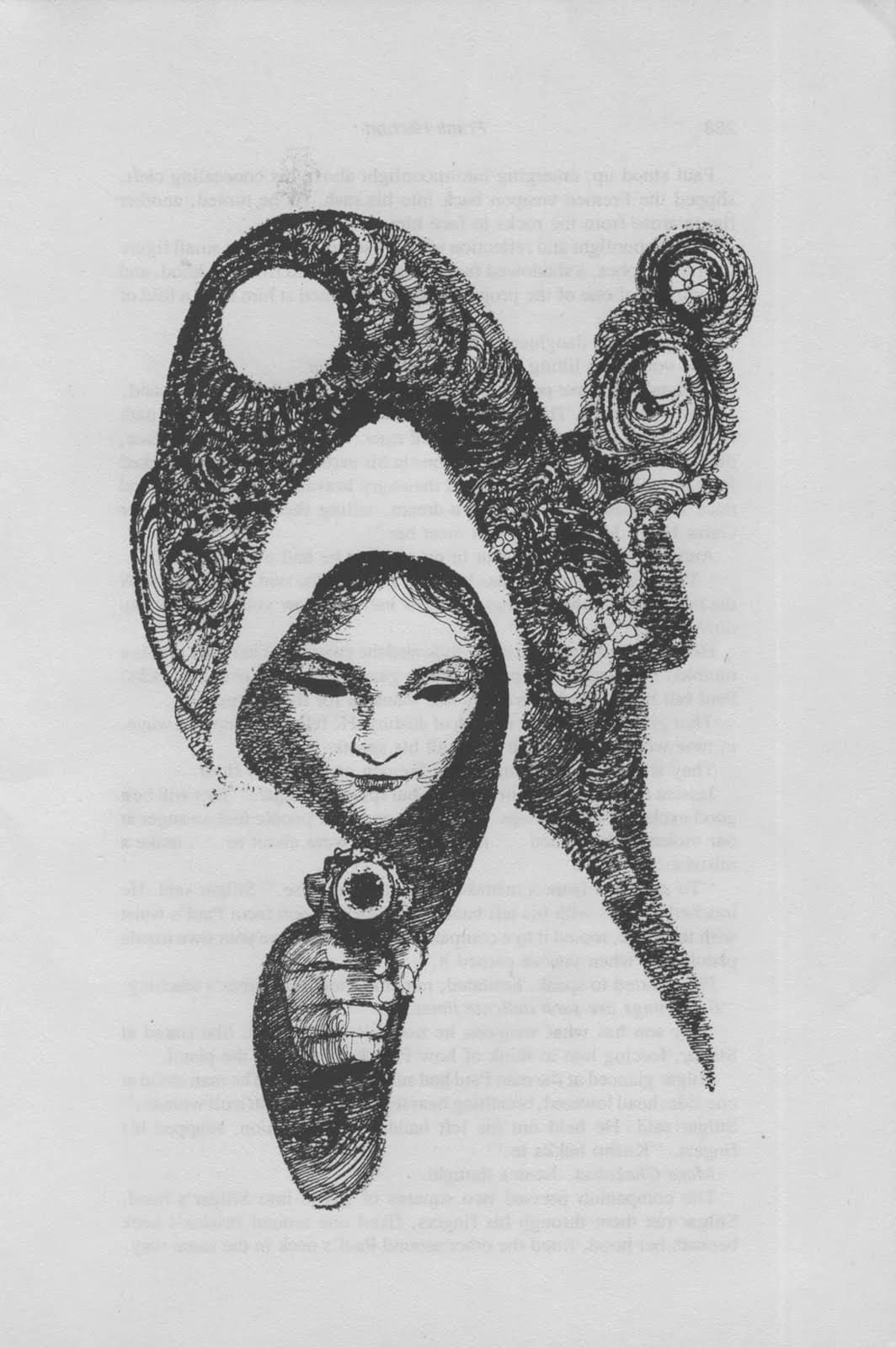
Chani
Chani was a Fremen warrior and Sayyadina, daughter of the planetologist Liet-Kynes, and the royal concubine and only true love of Emperor Paul Muad'Dib Atreides. She mothered his children before dying in childbirth at Sietch Tabr.

Ghanima Atreides
Ghanima Atreides was the pre-born daughter of Paul Muad'Dib and Chani, and the twin sister of the God Emperor Leto Atreides II. Married in name to her brother and consort to Farad'n Corrino, she seeded the Atreides, Harkonnen and Corrino bloodlines across the Empire.
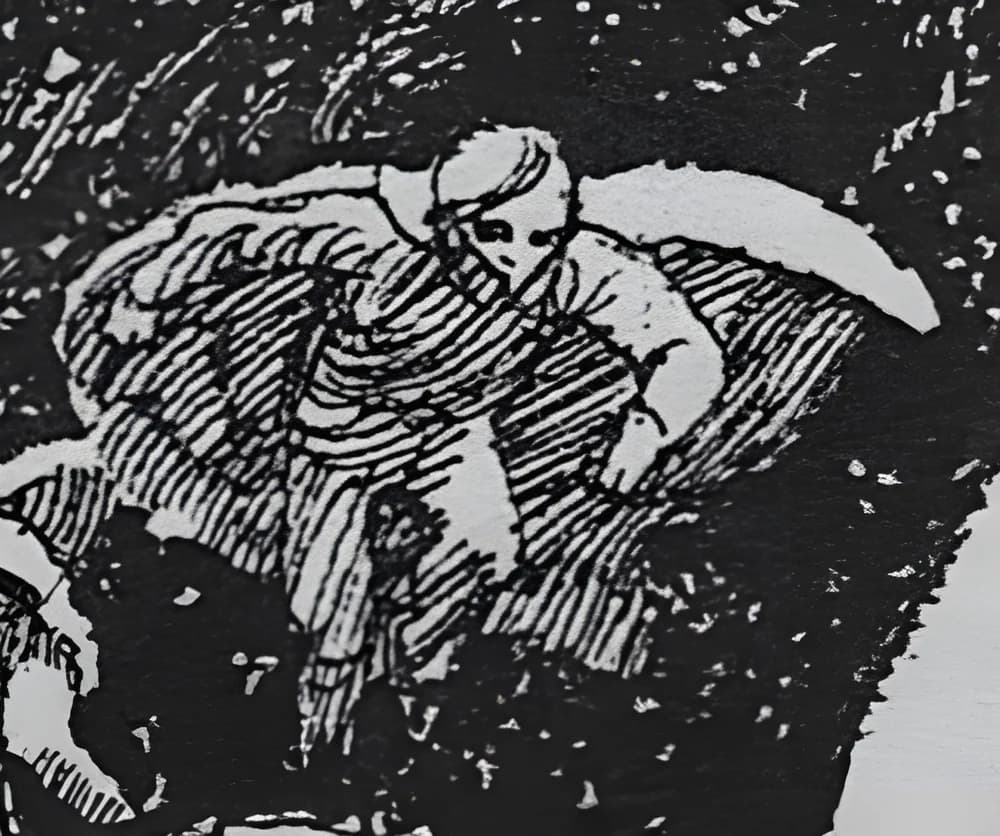
Leto Atreides II
Leto Atreides II was the third and final ruler of the Atreides Empire and its first and only God Emperor. The pre-born son of Paul Muad'Dib, he bonded with a colony of sandtrout to gain near-immortality and ruled mankind for thirty five hundred years to set humanity upon the Golden Path.
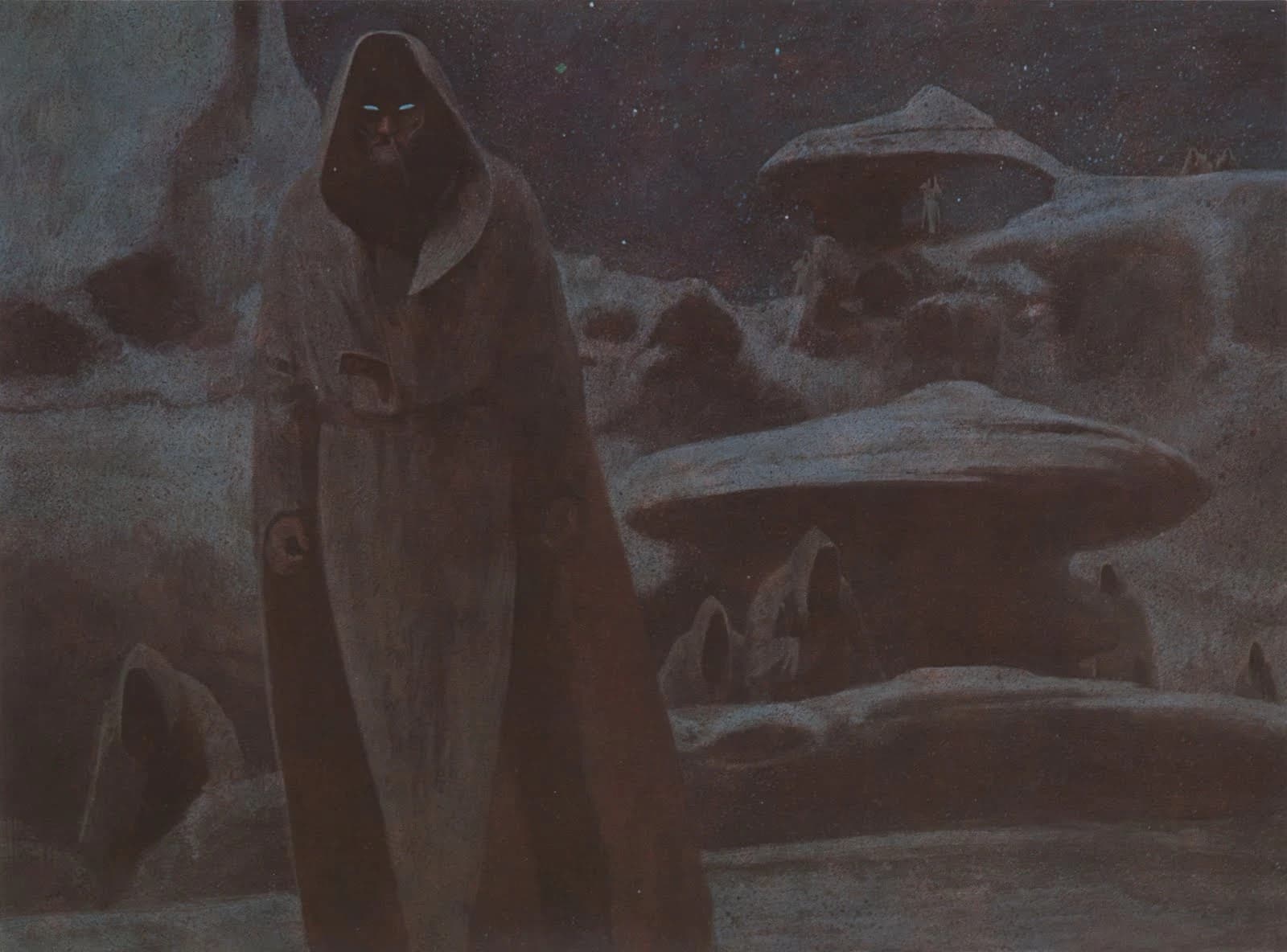
Stilgar
Stilgar is the Fremen Naib of Sietch Tabr who takes in Paul Atreides and Lady Jessica, becomes Paul's governor of Arrakis and his most loyal Fremen, and later helps raise the Atreides twins Leto II and Ghanima.
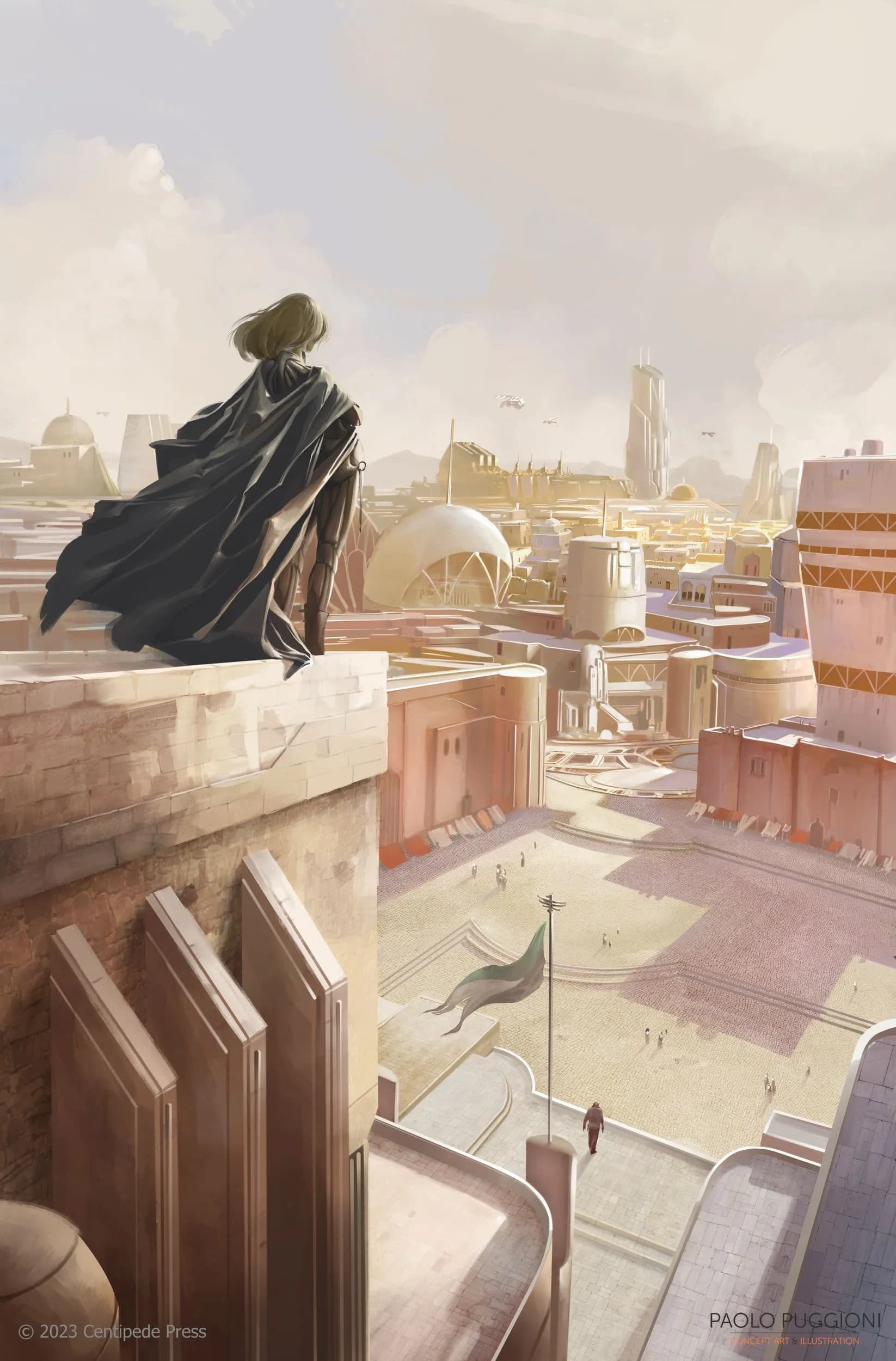
Arrakeen: the first city built on Arrakis
Sheltered by the Shield Wall near the northern pole, it held the Emperor's officials, House Atreides, then Muad'Dib's empire, then Leto II's festival city Onn.

Farad'n Corrino: the scribe Harq al-Ada
Farad'n Corrino was the grandson of the deposed Padishah Emperor Shaddam IV, raised to reclaim the throne but turned instead toward scholarship by the Lady Jessica. Renouncing his mother's ambitions, he became the official scribe of the Atreides Empire under the pen name Harq al-Ada and the concubine of Ghanima Atreides.
Mentioned in1 entry
Get new articles in your inbox
No spam. New lore drops, canon conflicts, and deep dives only when they’re worth reading.
Some links on Lore Fortress are affiliate links. If you buy through them we earn a small commission at no extra cost to you.