Arrakis
the desert planet Dune
Arrakis, known as Dune and later as Rakis, was a harsh desert world in the Canopus system and the only natural source of the spice melange. Home to the Fremen and the sandworms, it became the seat of the Atreides empire and the center of the known universe.
Arrakis, also known as Dune and in later ages as Rakis, was a harsh desert planet, the third planet of Canopus. For most of recorded Imperial history it was the original and sole source of the spice melange, the substance behind space travel, prolonged life, and prescient sight. Home to the Fremen and to the great sandworms, the planet was contested by the Great Houses and ultimately became the seat of power for the empire of Paul Atreides, called Muad'Dib, before its long transformation under the God Emperor and its final destruction in the age of the Scattering. (Dune; Dune (appendix); God Emperor of Dune; Heretics of Dune)
Location and environment#
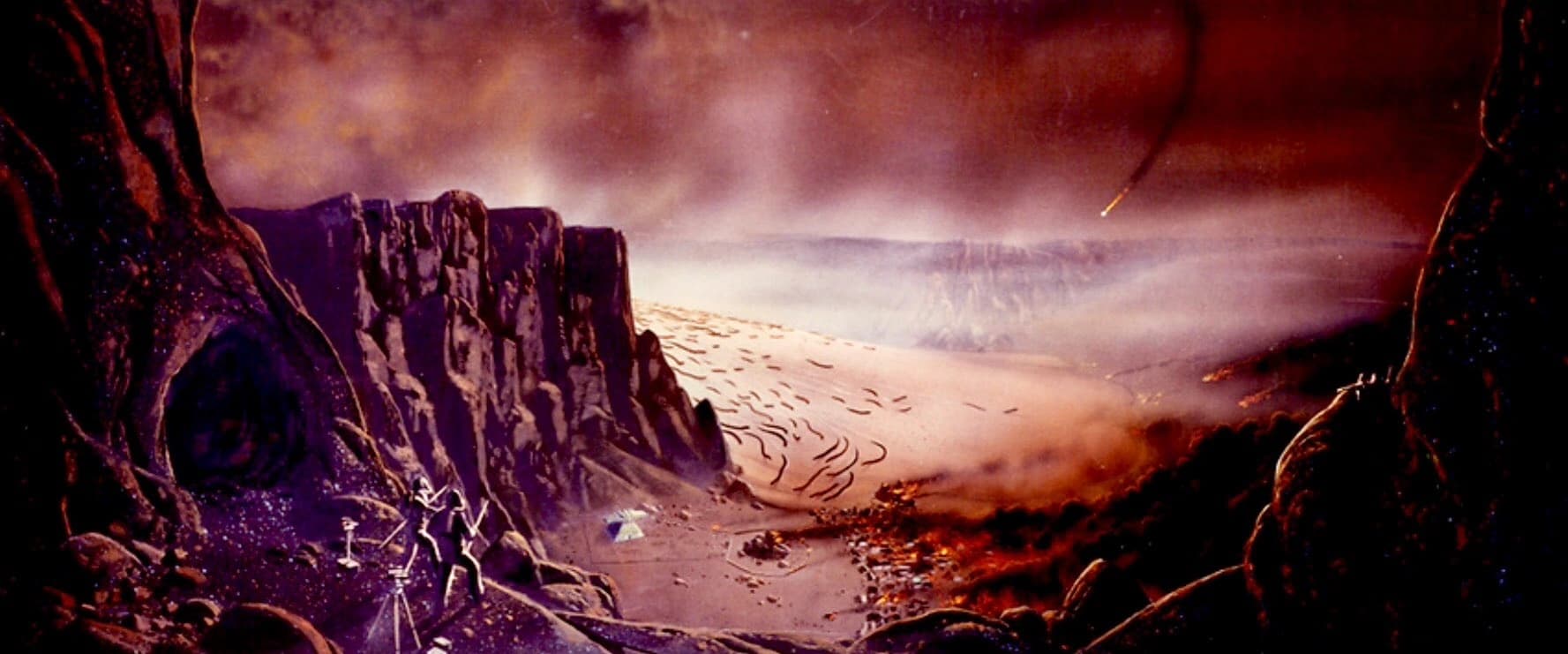
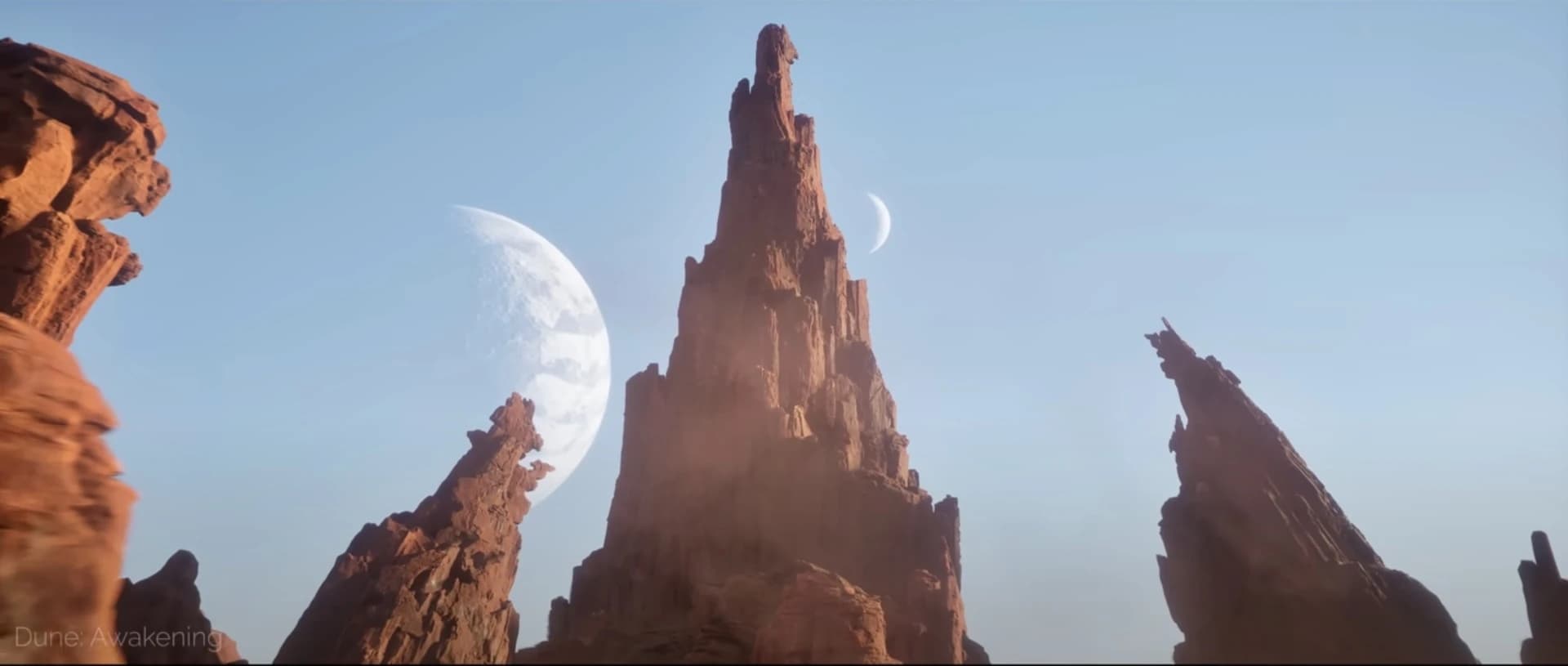
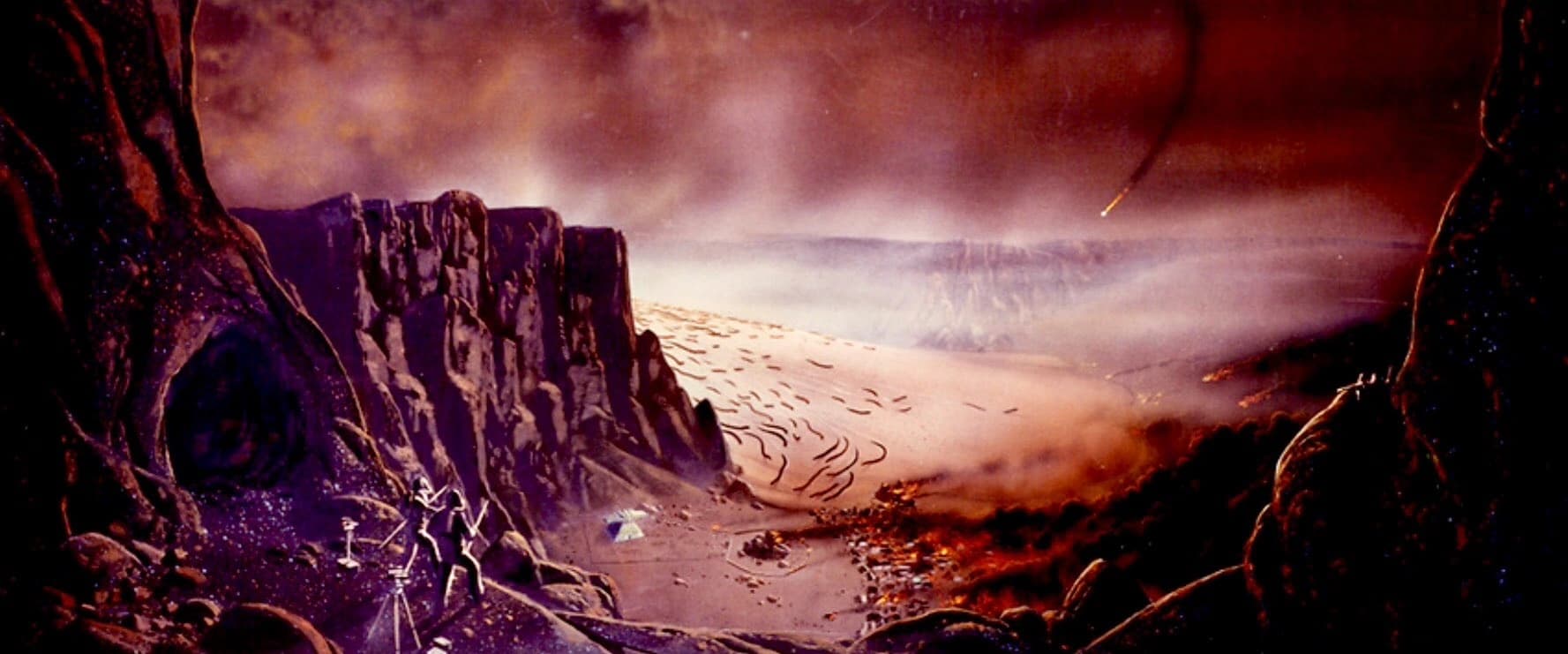
Arrakis has two moons, and on the second the Fremen see the shape of the kangaroo mouse they call Muad'Dib, the name Paul takes for himself. The surface of the planet is almost all dry dune desert, which gave it the name Dune. Weathered mountain ranges and rock outcrops break up the open sand and shelter what little native life there is. (Dune)
Temperature on Arrakis varies enormously. Liet-Kynes tells Duke Leto that the surface of a dune can be a hundred degrees hotter than the sand a foot below it, that half a metre above the sand it can be twenty degrees cooler than the surface, and that black shade can cut the heat by as much as forty degrees. Despite the dryness, the atmosphere is breathable: the Ecology appendix gives it as 75.4 percent nitrogen and 23 percent oxygen with traces of other gases, and Pardot Kynes works out that the oxygen comes from the sandworm cycle rather than from plant life. Vast reserves of water lie locked away underground by the sandtrout, while the Fremen harvest the small amounts of vapour in the air with windtraps. (Dune; Dune (appendix))
The planet's people cluster in the north, where the Shield Wall, a mountain barrier of rock, protects the cities of the Imperial Basin from the worms and the great storms. That is why the capital, Arrakeen, sits where it does. (Dune)
Native life and the sandworms#
Little native life survives the heat and dry climate, and what endures is overshadowed by the sandworms that roam the deep desert. The worms are central to the making of spice and attack anything that makes rhythmic noise on the open sand. Closely bound to them are the sandtrout, the small early stage of the worm that walls off the planet's water. Among the smaller creatures is the kangaroo mouse, called Muad'Dib by the Fremen, alongside desert hawks, owls, bats and burrowing animals, and hardy plants such as creosote bush and poverty grass cling to the harshest ground. (Dune; Dune (appendix))
The Fremen#
The Fremen live in caves in the rock outcrops and mountain ranges that break the planet-wide desert. The constant fight for survival shapes their culture, demanding frugal use of water above all else, and a long history of persecution made them hardy warriors who use the desert itself against off-world enemies with far better technology. (Dune; Dune (appendix))
Each Fremen community lives in a sietch led by a naib, and together they call themselves the Ichwan Bedwine, the brotherhood. Beyond them the planet holds a population of townsfolk, traders and offworlders in the cities and villages. After the Harkonnen return, the Baron counts some five million people in the towns and villages, and is stunned to learn from Thufir Hawat that the Fremen number at least ten million more. (Dune)
Spice and the rise to importance#
Frank Herbert's glossary credits Yanshuph Ashkoko, royal chemist to Emperor Shakkad the Wise, with discovering the geriatric properties of melange. The spice later became the base of the whole Imperial order, because the Spacing Guild's navigators depend on it, and Arrakis was the only place it could be found. (Dune; Dune (appendix))
While the planet was a fief of House Harkonnen, the Emperor sent the planetologist Pardot Kynes to study it. Kynes concluded that Arrakis could be turned into a green world through careful planning over many generations. The Fremen, enchanted by his vision of open water and growing things, followed him with fervour. Kynes married a Fremen woman and became a leader among them, and kept the true scale of the plan hidden from the Empire. He died in a cave collapse at Plaster Basin, but his work passed to his son, Liet-Kynes. (Dune (appendix))
The Atreides, the revolt, and Muad'Dib#
In 10,191 AG, House Atreides came to Arrakis to take control of the planet and its spice production from House Harkonnen, on the orders of Padishah Emperor Shaddam IV. Atreides rule was cut short by betrayal, the product of a plot between the Harkonnens and the Emperor, who lent his Sardaukar. The surviving Atreides, Paul and his mother Jessica, went into hiding among the Fremen, where Paul rose to lead them. (Dune; Dune (appendix))
Later, Paul Atreides, known among the Fremen as Muad'Dib, used the Atreides family atomics to blast a gap in the Shield Wall that had long protected Arrakeen. Riding sandworms into the city behind a great storm, the Fremen broke the Harkonnen and Sardaukar forces, and Paul forced Shaddam to give up the throne. Arrakis became the seat of both the new empire and the religious jihad that Paul unleashed across the known universe. (Dune)
Transformation, decline, and destruction#
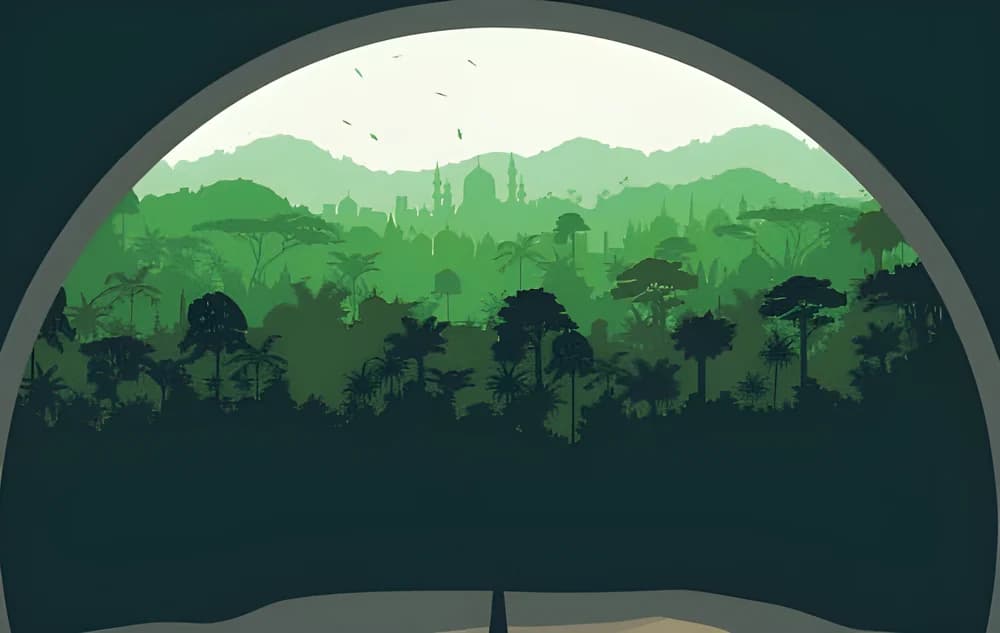
Paul's son, Leto Atreides II, the long-lived God Emperor, carried the planet's transformation through as part of his Golden Path. By the time of God Emperor of Dune the planet is a green and temperate world, the dream Pardot Kynes gave the Fremen, but the new ecology all but killed off the giant sandworms. Forests and rivers cover the land, and only Leto's desert reserve, the Sareer, shows that Arrakis had once been all sand. (God Emperor of Dune)
After some 3,500 years of rule, Leto II died when the bridge carrying him over the Idaho River gorge was cut and he fell into the water, which was poison to his worm body. His body broke apart into sandtrout, carrying pearls of his awareness, and the worms slowly returned. By Heretics of Dune, about 1,500 years later, the planet is desert again and goes by the shortened name Rakis, with Arrakeen now called Keen and a priesthood ruling in the God Emperor's name. When the Honored Matres came back from the Scattering, they burned the planet with a weapon from space and left it a charred ruin. Darwi Odrade and the girl Sheeana escaped with a single sandworm, which was carried to Chapterhouse, where its sandtrout began turning the Sisterhood's world into a new desert. (God Emperor of Dune; Heretics of Dune; Chapterhouse: Dune)
Frequently asked questions
- What is Arrakis?
- Arrakis, also known as Dune and in later ages as Rakis, is a harsh desert planet, the third planet of Canopus. For most of Imperial history it was the only source of the spice melange, the substance behind safe space travel, prolonged life and prescient sight.
- Why is Arrakis so important?
- Arrakis was the only natural source of the spice melange, which made it essential for safe space travel, prolonged life and prescient sight. Whoever controlled the spice held enormous power over the Guild, the Great Houses and the Emperor.
- Who lived on Arrakis?
- Arrakis was home to the Fremen, who lived in sietch communities in the planet's rocky formations, as well as a graben and pan population of townsfolk, traders and offworlders. After taking the planet the Baron counted about five million people in the towns and villages and was stunned to learn from Thufir Hawat that the Fremen numbered at least ten million more.
- How did Arrakis change under Leto Atreides II?
- Over thousands of years, the God Emperor Leto Atreides II turned Arrakis into a green and temperate world, the dream Pardot Kynes and Liet-Kynes had given the Fremen. The new ecology nearly wiped out the giant sandworms, leaving only Leto's desert reserve, the Sareer, as a reminder that the planet had once been all sand.
- What happened to Arrakis in the end?
- After Leto II's death the planet slowly drifted back to desert and became known as Rakis. When the Honored Matres came back from the Scattering they burned it with a weapon from space, but the Bene Gesserit escaped with a single sandworm to recreate Dune on Chapterhouse.
Gallery
Images via Dune Wiki
Sources
- BookDune, Frank Herbert, 1965
- BookDune (appendix), Frank Herbert, 1965; the appendices and Terminology of the Imperium printed with Dune
- BookGod Emperor of Dune, Frank Herbert, 1981
- BookHeretics of Dune, Frank Herbert, 1984
- BookChapterhouse: Dune, Frank Herbert, 1985
Spotted a factual error or a primary source we missed? Email a correction. Every flagged claim gets reviewed.
Followed from this entry
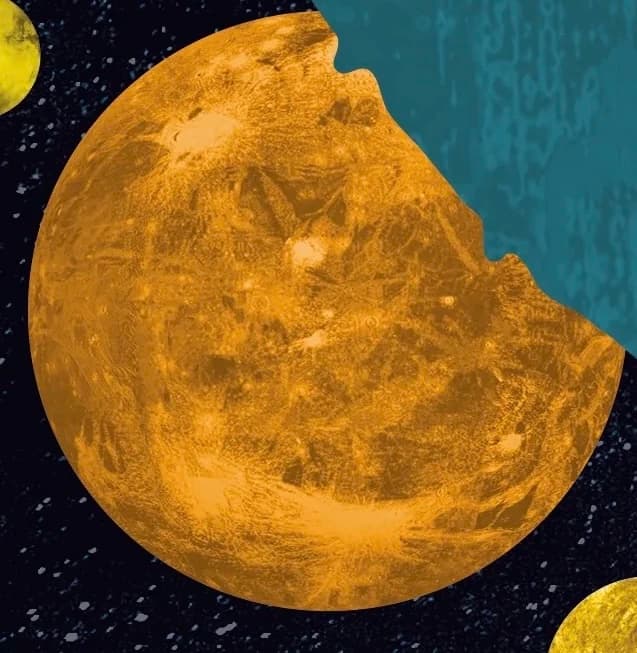
Shield Wall
The Shield Wall was a towering mountain range in the northern reaches of Arrakis that sheltered a small region from the planet's coriolis storms and kept the sandworms from human settlements. Paul Atreides breached it with the Family Atomics during the Battle of Arrakeen.
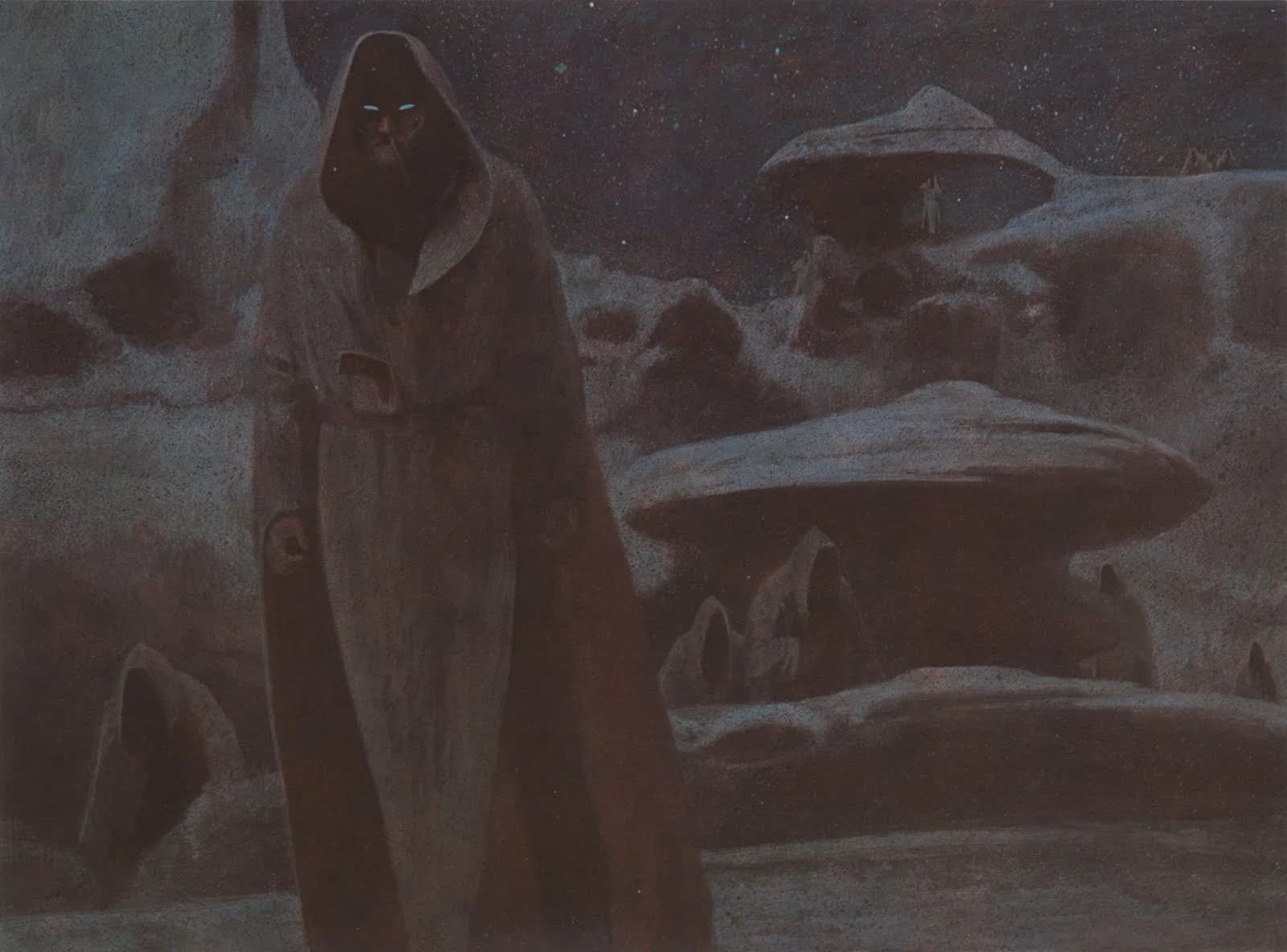
Chapterhouse
Chapterhouse was the Bene Gesserit term for the planet that served as the Sisterhood's home base. In its final form it was a hidden, deliberately unsettled world shielded from prescient eyes and, in the end, remade into desert to shelter the last sandworm.
Fremen
The Fremen were a culture of humans descended from the Zensunni Wanderers who made the desert planet Arrakis their home. Hardened by water scarcity and generations of persecution, they became the finest fighters in the Known Universe and the foot soldiers of Paul Atreides and his jihad.
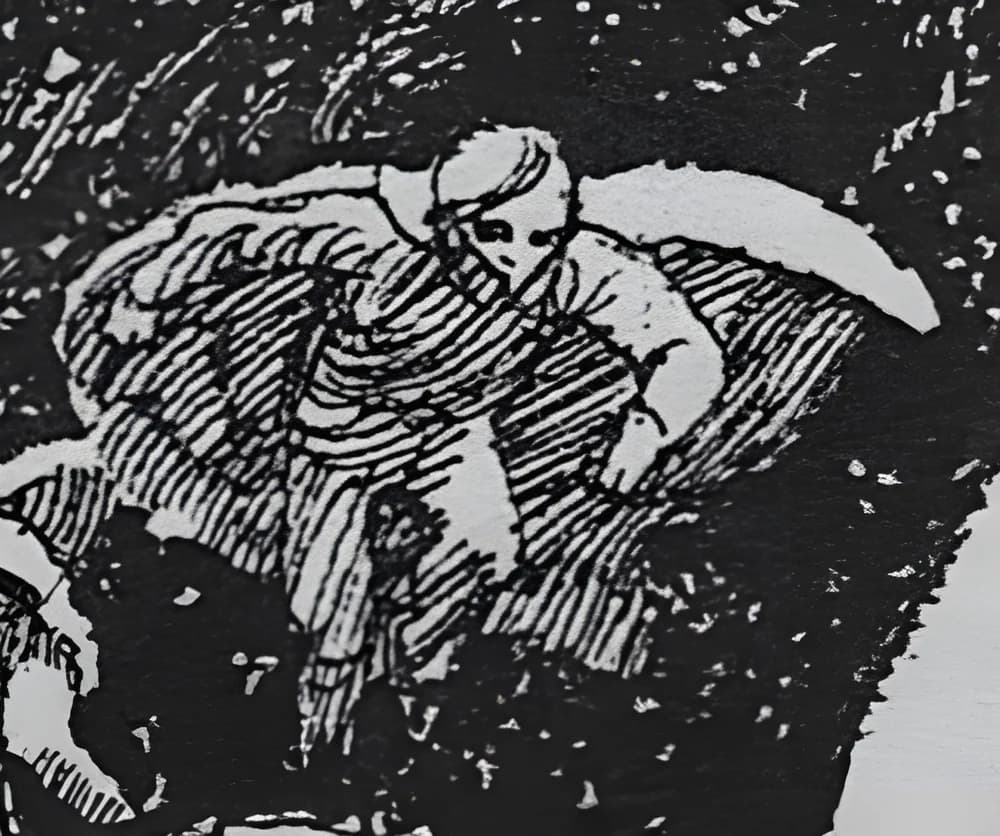
Leto Atreides II
Leto Atreides II was the third and final ruler of the Atreides Empire and its first and only God Emperor. The pre-born son of Paul Muad'Dib, he bonded with a colony of sandtrout to gain near-immortality and ruled mankind for thirty five hundred years to set humanity upon the Golden Path.
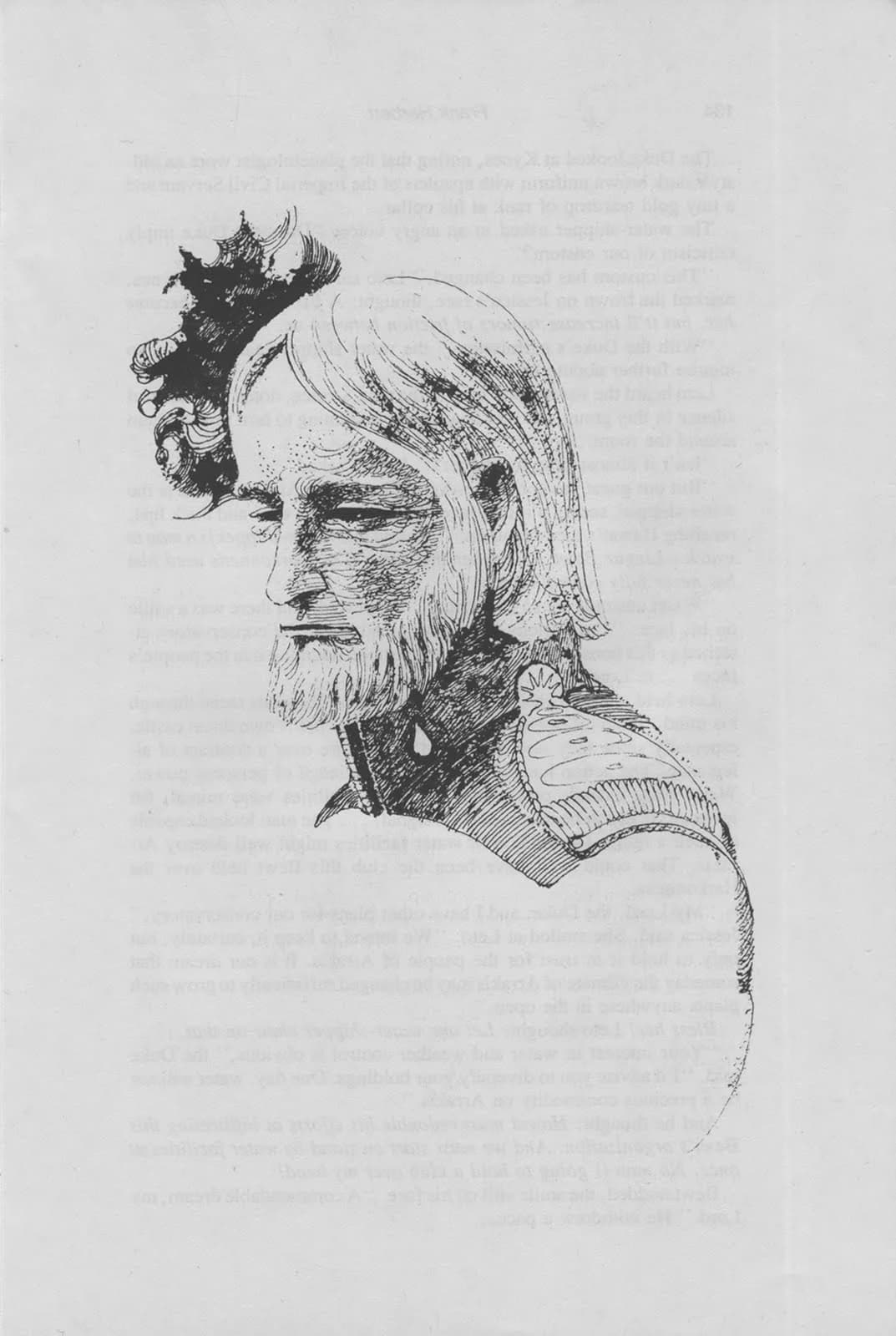
Liet-Kynes
Liet-Kynes was the Imperial planetologist of Arrakis, Judge of the Change, and the secret leader of the Fremen. He carried on his father's dream of greening the desert and died saving Paul and Jessica from the Harkonnens.

Pardot Kynes
Pardot Kynes was the Imperial Planetologist who first studied Arrakis, married into the Fremen, and gave them his dream of greening the desert. His vision of a transformed Dune would be carried on by his son Liet-Kynes.
Mentioned in174 entries
Alia Atreides
Alia Atreides was the preborn daughter of Duke Leto Atreides and Lady Jessica, sister to Paul. Granted full ancestral memory in the womb, she ruled the Atreides Empire as Regent before succumbing to possession by her Harkonnen grandfather and taking her own life.
Alia's Temple: the fane of St. Alia of the Knife
Alia's Temple, also called Alia's Fane, was the colossal temple in Arrakeen dedicated to the worship of St. Alia of the Knife. Raised beside Paul's Keep as one of the wonders of the universe, it drew pilgrims from across the Imperium, hid dungeons beneath its maze of corridors, and became the stage for the fall of the Regent Alia Atreides.
Alma Mavis Taraza
Alma Mavis Taraza was the Bene Gesserit Mother Superior who confronted the threat of the Honored Matres and the discovery that the girl Sheeana could command the sandworms. She drove the Duncan Idaho ghola project and the Tleilaxu alliance, and died on Rakis, her memories preserved in her successor Darwi Odrade.
Armand Ecaz
Armand Ecaz was the Archduke of House Ecaz and sovereign of the planet Ecaz, a high noble of the Landsraad and an avowed enemy of House Moritani who fought two Wars of Assassins against Grumman and stood as an ally of Duke Leto Atreides.
Arrakeen conservatory
The Arrakeen conservatory was a luxurious private garden built on the roof of the government mansion at Arrakeen, crowded with exotic wet-climate plants and a wasteful fountain. To the Fremen it was anathema, a weirding room, yet it came to embody Liet-Kynes' dream of a green Arrakis.
Arrakeen governor's palace: the Residency of Arrakis
The Arrakeen governor's palace, known as the Arrakeen Residency, was the great house in Arrakeen from which Arrakis was governed. It passed from the Fenrings to House Atreides, fell to the Harkonnens in the Siege of Arrakeen, and was retaken by Paul Atreides.
Arrakeen: the first city built on Arrakis
Sheltered by the Shield Wall near the northern pole, it held the Emperor's officials, House Atreides, then Muad'Dib's empire, then Leto II's festival city Onn.
Arrakis Revolt
The Arrakis Revolt was the uprising of the Fremen of Arrakis under Paul Atreides in the closing stage of the Desert War. Waged as a guerrilla campaign against the Harkonnen occupiers, it crippled spice production, drew in the Padishah Emperor, and ended with the fall of House Corrino.
Atomics: the forbidden arsenals of the Great Houses
Atomics was the Imperial term for nuclear weapons of mass destruction, the fission devices every Great House hoarded but almost never dared to use. The Great Convention made their offensive use against human targets grounds for planetary annihilation, yet the Houses kept their family arsenals in reserve, and history recorded the terrible occasions on which the ban failed.
Atreides-Harkonnen feud
The Atreides-Harkonnen feud was the ancient blood vendetta between the two Houses, born of a betrayal at the Battle of Corrin and ended ten thousand years later with the annihilation of the Harkonnens on Arrakis.
Baron Vladimir Harkonnen: the architect of the Atreides fall
Siridar-Baron Vladimir Harkonnen was the penultimate ruler of House Harkonnen and the chief architect of the downfall of Duke Leto Atreides. A gluttonous and cruel schemer, he conspired to seize Arrakis and the Golden Lion Throne before his House was destroyed in the war for Arrakis.
Battle of Arrakeen
The Battle of Arrakeen was the pivotal engagement of the Arrakis Revolt, fought between Muad'Dib Paul Atreides's Fremen and the Sardaukar of Padishah Emperor Shaddam Corrino IV. The Fremen routed the Imperial forces, and in the surrender that followed Paul won control of the known universe.
+ 162 more
Get new articles in your inbox
No spam. New lore drops, canon conflicts, and deep dives only when they’re worth reading.
Some links on Lore Fortress are affiliate links. If you buy through them we earn a small commission at no extra cost to you.