Sandworm
Shai-Hulud, the Maker of Arrakis
The sandworm was the colossal autotrophic animal of the deserts of Arrakis, honored by the Fremen as Shai-Hulud and feared across the Imperium. As the central organism in the lifecycle that produced the spice melange, it shaped the economy, religion, and history of the known universe.
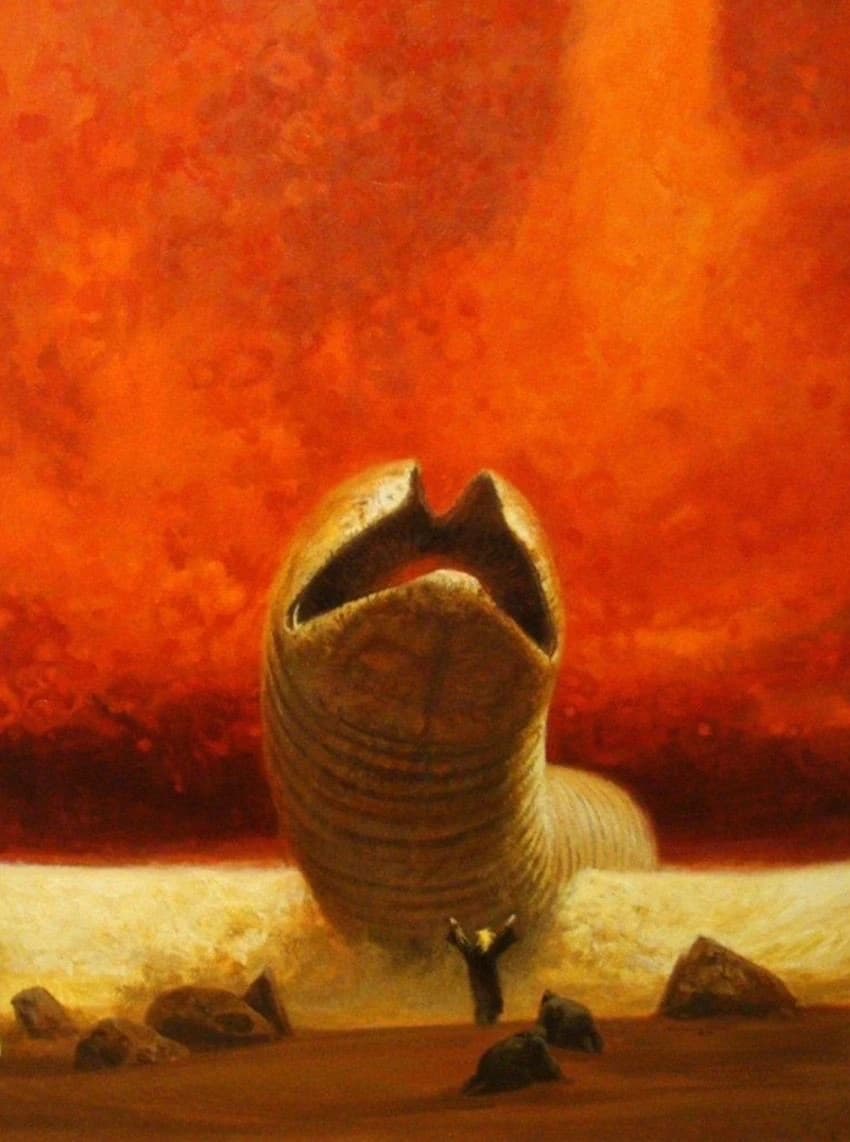
The sandworm was the giant animal that inhabited the deserts of Arrakis, the planet known to its native Fremen as Dune. It was the predominant lifeform of that world, at once honored and feared, and was the essential factor in the creation of the spice melange. They lived beneath the vast dunes that stretched across the surface, and Frank Herbert never says where the species came from. The Fremen called the creature the Maker and Shai-Hulud, and among the few peoples who had ever achieved any mastery over the beast, only they could ride it. (Dune; Dune (appendix))
The expanded books show worms already on Arrakis before the Butlerian Jihad ended, in the time of Selim Wormrider. (Expanded books: Dune: The Butlerian Jihad)
Physical characteristics#
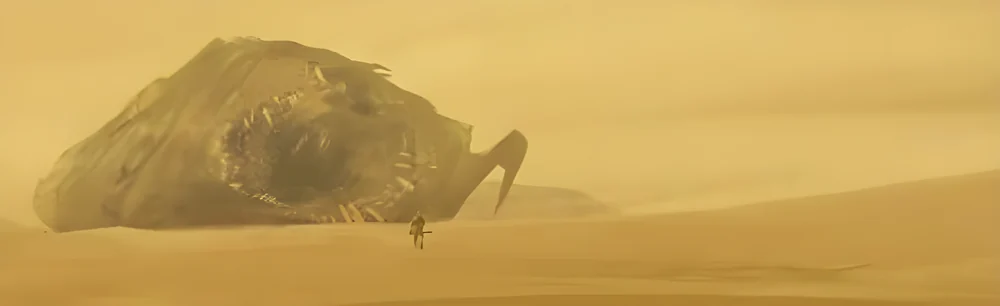
The sandworm could grow to an enormous size by any standard. The physician Wellington Yueh cited specimens up to 450 metres long observed in the deep desert. (Dune)
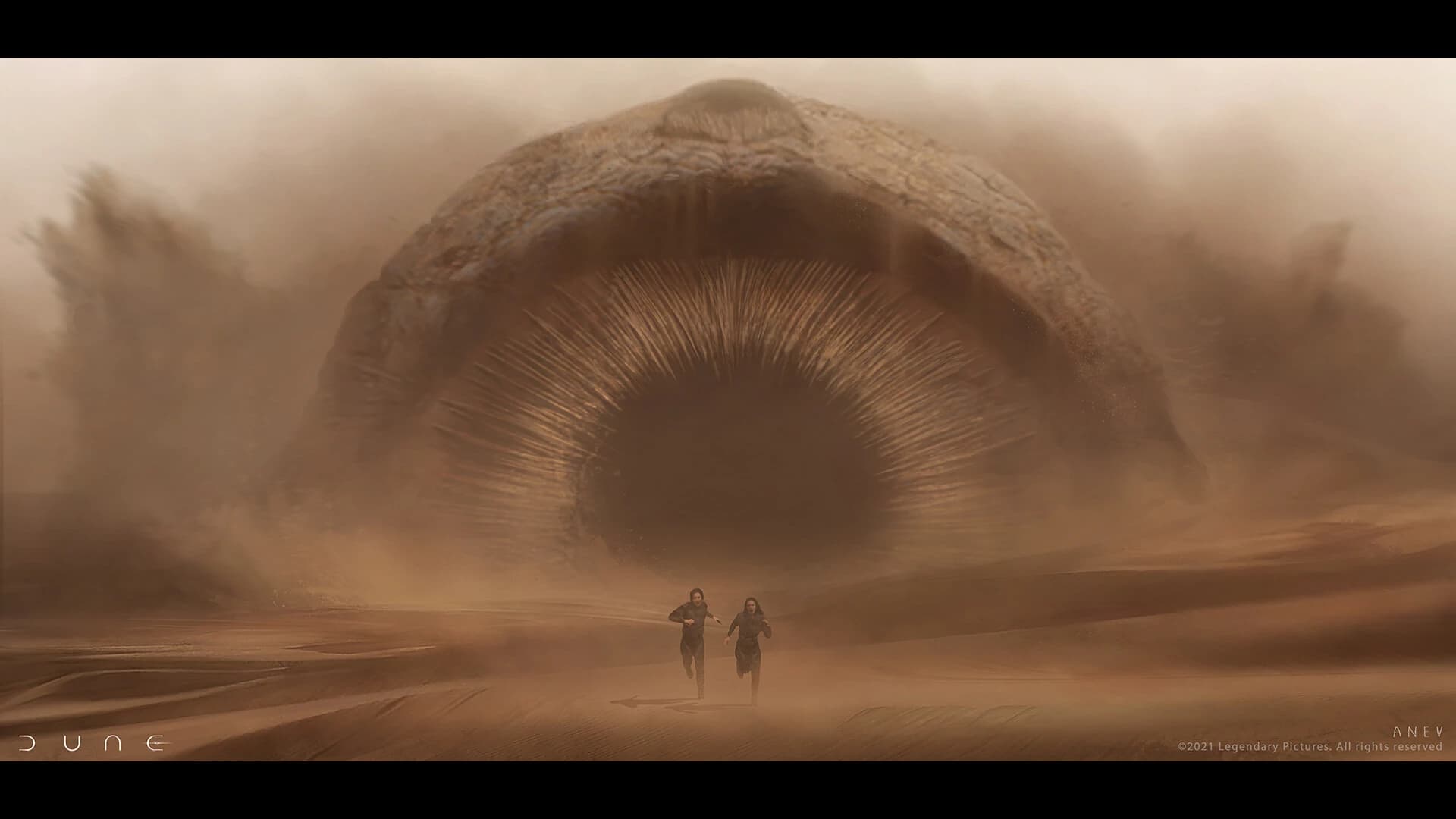
Its skin was thick, rough, and semi-metallic, serving as armor and comprised of many overlapping, interlocking scales, each a few feet across, which protected the worm against the invasion of sand into its softer interior. A sandworm's internal workings resembled a massive blast furnace, producing intense heat and flame, and this combustion supplied oxygen to the nearly plantless surface of Arrakis. The mouth, positioned at the forward end of the creature, could easily consume objects as large as spice harvesters. A strong, flinty, cinnamon smell exuded from the beast, especially from its mouth, and it was often said that a worm could be smelled before it was seen. (Dune)
The sandworms were territorial, each holding its own stretch of desert against intruders. (Dune)
Behavior and diet#
Sandworms lived beneath the sand and were drawn to rhythmic vibrations on the surface. They would breach in pursuit of the origin of such vibrations in an effort to defend their territory, of which they were highly protective. For this reason, to see a worm and live to tell of it was extremely rare. The main component of the worm's diet was sand and the other inorganic, dry components of the Arrakis crust, and it was believed the creatures also sifted the sand-plankton for nourishment. Humans were not part of its diet, though there were cases of worms devouring people in the act of breaching, a fate Baron Vladimir Harkonnen alluded to when he intended for Lady Jessica and her son Paul to be abandoned to the desert. (Dune)
Water was fatal to a sandworm even in small doses. Water that entered the worm's body acted as a catalyst, accelerating its metabolism until it became unstable and its body gave out, a violent death. The rare stunted worm of the Minor Erg was a primitive form about nine meters long; one such worm was trapped in a water ditch and drowned, and the byproduct of the worm and water mixture was the highly toxic poison known as the Water of Life. (Dune)
Wormriding#
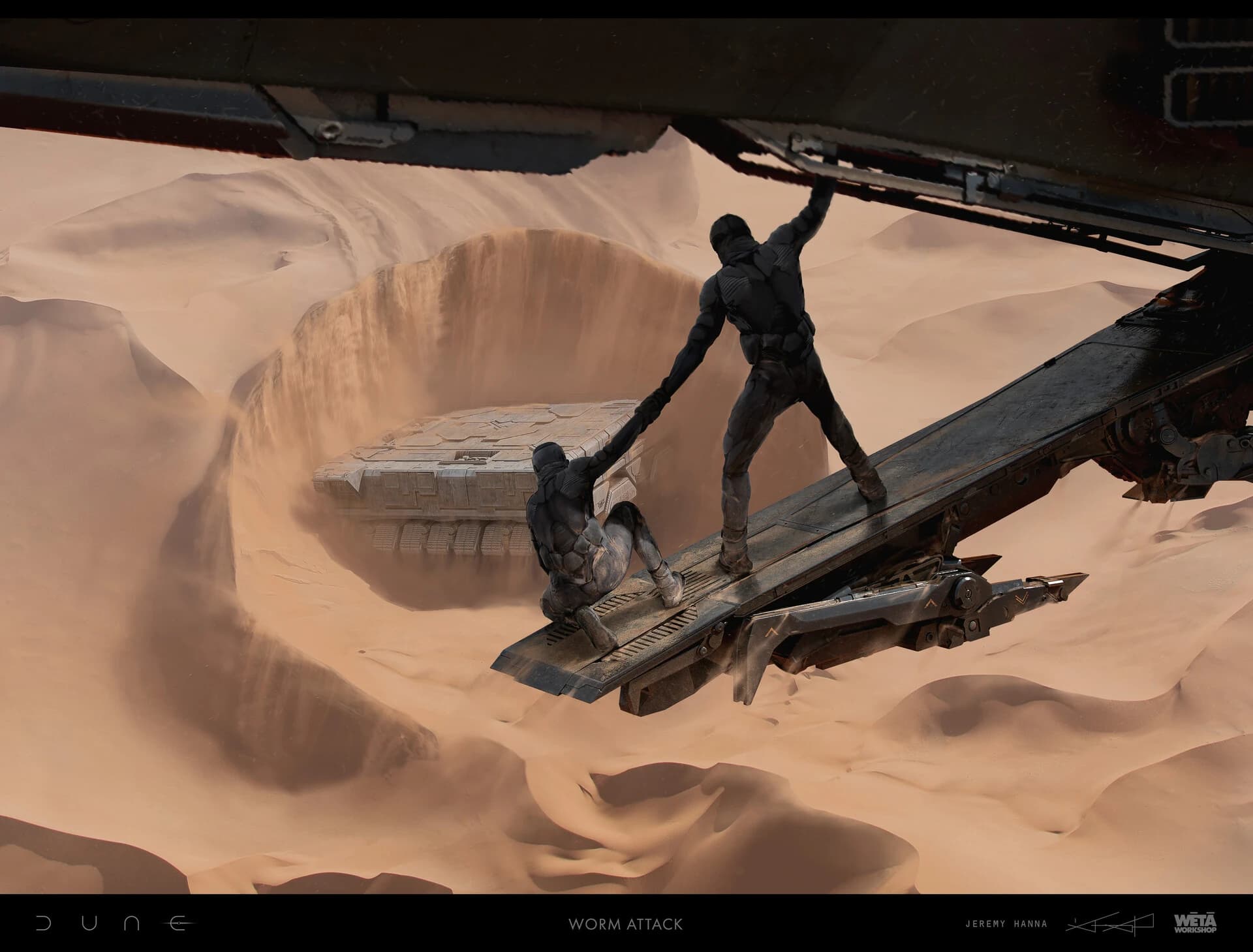
The armor of the sandworm, while all but impenetrable, could be exploited. By prying open the edges of one or more scales, the Fremen compromised the integrity of the armor, allowing sand to enter and irritate the worm's softer insides. The beast would then roll itself so that the opened scale was at the highest point from the desert floor, minimizing the amount of sand that could enter. A Fremen poised to mount the worm could climb aboard as it rolled the open scale upward, and so long as the scales remained pried open the worm would not submerge. Maker hooks were then placed toward the front of the creature to control its lateral movement. (Dune)
In this way wormriding became a viable and even sacred method of transport across the surface of the planet. A worm could be ridden until it tired and was allowed to submerge, so a long trip meant calling and mounting worm after worm. (Dune)
The spice cycle#
The creation of the sandworm began when sandtrout banded together after converging on a store of water deep beneath the surface of Arrakis. Water did occur naturally on the planet, but through this process it was always destroyed. The sandtrout and water mixture was converted into a liquid chemical that the worm could digest without being poisoned, and this chemical could erupt to the surface in a violent explosion known as a spice blow. The sandtrout that survived the event then coalesced and completed their metamorphosis into a young sandworm. Because the worm was essential to the creation of the spice melange, on a macro scale it exercised an enormous influence over the whole of humanity, whose commerce, space travel, and longevity depended on the spice. (Dune (appendix); Children of Dune)
Cultural and religious significance#
To the Fremen, the sandworm was a spiritual symbol of their faith, and they regarded the creatures as a manifestation of God. Within Fremen culture the worm bore several names beyond the Maker, chief among them Shai-Hulud, variously rendered as Old Man of the Desert, Old Father Eternity, or Grandfather of the Desert. Young sandworms were drowned by the Fremen to make the Water of Life used in the making of new Reverend Mothers, a ceremony central to sietch religious life. (Dune; Dune (appendix))
After the rise of the Atreides Empire and the spread of the Arrakis variant of the Zensunni religion across the known universe, reverence for the sandworm spread to other worlds. This continued under the rule of Leto Atreides II, who had himself become a hybrid of man and worm. (Dune Messiah; God Emperor of Dune)
Decline and survival#
The terraforming of Arrakis posed a grave danger to the sandworm, which found life outside the arid desert fatal. By the time of Leto II's reign the worms survived only in his desert preserve, the Sareer. At his death his body broke apart into sandtrout, each carrying a pearl of his awareness, and the desert began to return. (God Emperor of Dune)
By the time of Heretics of Dune, some fifteen hundred years later, Arrakis, now called Rakis, was desert again and the worms thrived once more. (Heretics of Dune)
The hostile actions of the Honored Matres later brought about the termination of all life on Arrakis, including, it was believed, the remaining sandworms. Before that destruction, however, Darwi Odrade and Sheeana had escaped Rakis with a single worm aboard a no-ship, covered by the last stand of Miles Teg. (Heretics of Dune)
On Chapterhouse, the secret base of the Bene Gesserit Sisterhood, the worm was released and broke down into sandtrout. They began turning that once-lush world into a desert where new worms and a new spice cycle could grow. (Chapterhouse: Dune)
Frequently asked questions
- What is a sandworm in Dune?
- The sandworm was the giant animal that inhabited the deserts of Arrakis, the predominant lifeform of that world, at once honored and feared. It was the essential factor in the creation of the spice melange, and the Fremen called it the Maker and Shai-Hulud.
- How big could a sandworm grow?
- The sandworm could grow to enormous size, with the physician Wellington Yueh citing specimens up to 450 meters long observed in the deep desert. Few people who saw one up close lived to describe it.
- Why is water fatal to a sandworm?
- Water entering a sandworm's body acted as a catalyst, accelerating its metabolism until it became unstable and its body gave out, a violent death. When a stunted worm of the Minor Erg was trapped and drowned, the byproduct of the worm and water mixture was the highly toxic poison known as the Water of Life.
- How did the Fremen ride sandworms?
- The Fremen pried open the edges of one or more of the worm's scales, allowing sand to enter and irritate its softer insides, which caused the beast to roll the opened scale upward and refuse to submerge. A Fremen could then climb aboard and place maker hooks toward the front of the creature to control its lateral movement.
- What happened to the sandworms after the terraforming of Arrakis?
- The greening of Arrakis nearly wiped the worms out, leaving only Leto Atreides II's desert preserve, but after his death the desert returned and the worms thrived again for roughly fifteen hundred years. The Honored Matres later destroyed all life on the planet, by then called Rakis, but the Bene Gesserit had already carried off a single worm, which became the key to re-seeding the species on Chapterhouse.
Gallery
Images via Dune Wiki
Sources
- BookDune, Frank Herbert, Chilton Books, 1965
- BookDune (appendix), Frank Herbert, 1965; the appendices and Terminology of the Imperium printed with Dune
- BookDune Messiah, Frank Herbert, G. P. Putnam's Sons, 1969
- BookChildren of Dune, Frank Herbert, G. P. Putnam's Sons, 1976
- BookGod Emperor of Dune, Frank Herbert, G. P. Putnam's Sons, 1981
- BookHeretics of Dune, Frank Herbert, G. P. Putnam's Sons, 1984
- BookChapterhouse: Dune, Frank Herbert, G. P. Putnam's Sons, 1985
- BookDune: The Butlerian Jihad, Brian Herbert and Kevin J. Anderson, 2002
Spotted a factual error or a primary source we missed? Email a correction. Every flagged claim gets reviewed.
Followed from this entry
Fremen
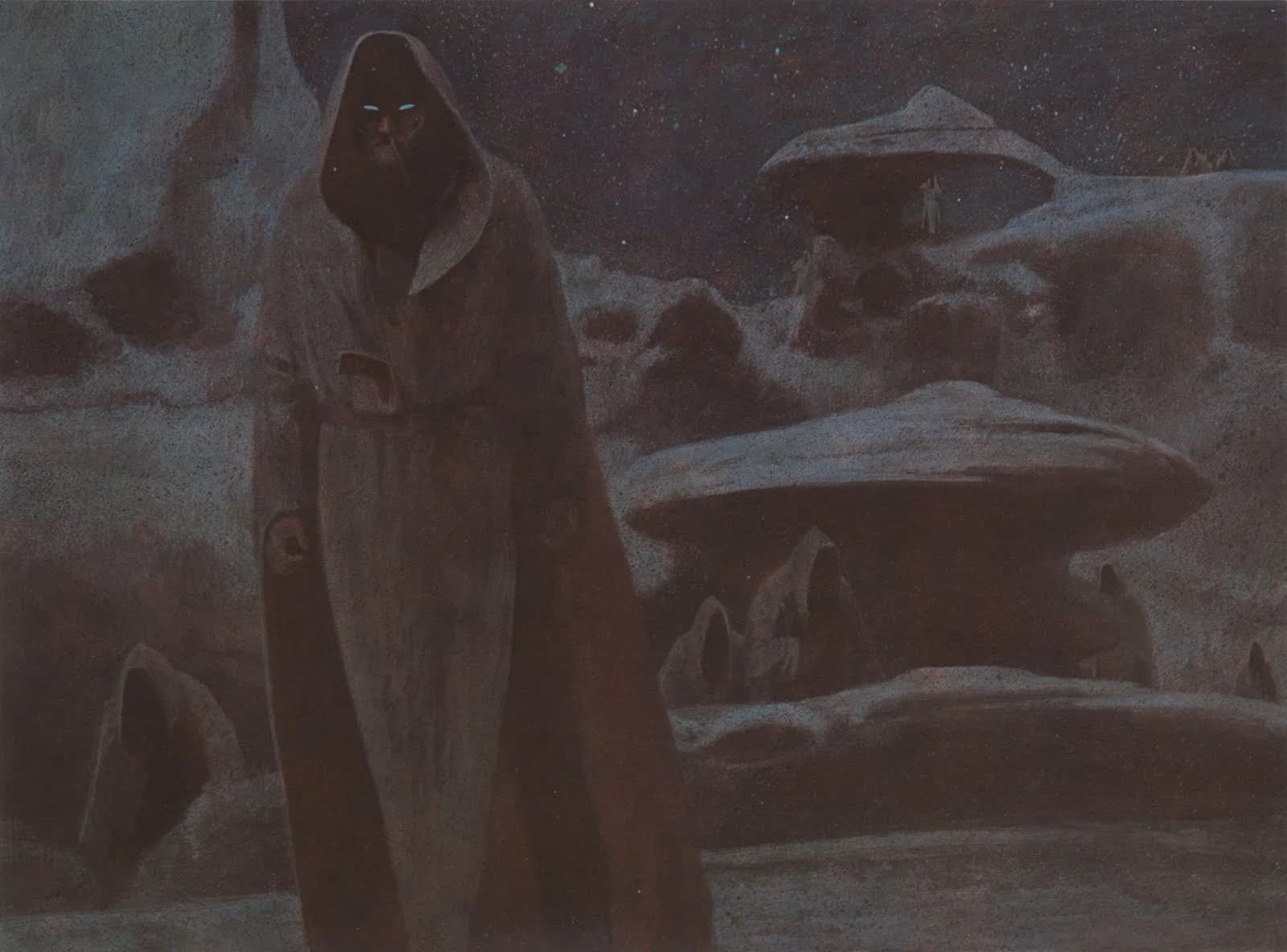
The Fremen were a culture of humans descended from the Zensunni Wanderers who made the desert planet Arrakis their home. Hardened by water scarcity and generations of persecution, they became the finest fighters in the Known Universe and the foot soldiers of Paul Atreides and his jihad.

Sandtrout
Sandtrout were the docile larval form of the sandworms of Arrakis, grey leathery creatures that locked together beneath the sand to trap the planet's water underground. Not native to Arrakis, they were the agents of its desertification, and one colony fused with Leto Atreides II to begin the Golden Path.
Arrakis
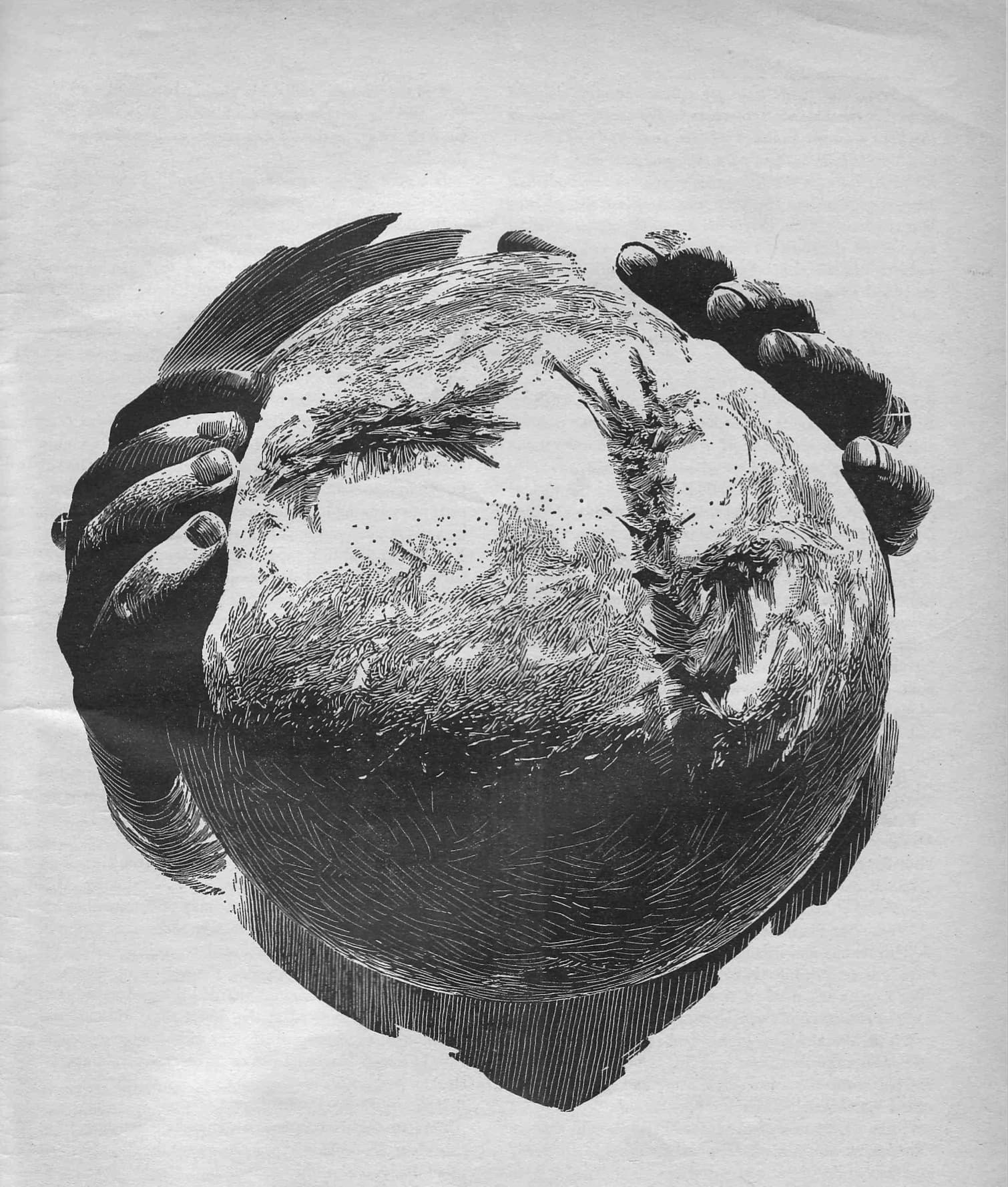
Arrakis, known as Dune and later as Rakis, was a harsh desert world in the Canopus system and the only natural source of the spice melange. Home to the Fremen and the sandworms, it became the seat of the Atreides empire and the center of the known universe.
Leto Atreides II
Leto Atreides II was the third and final ruler of the Atreides Empire and its first and only God Emperor. The pre-born son of Paul Muad'Dib, he bonded with a colony of sandtrout to gain near-immortality and ruled mankind for thirty five hundred years to set humanity upon the Golden Path.
Paul Atreides
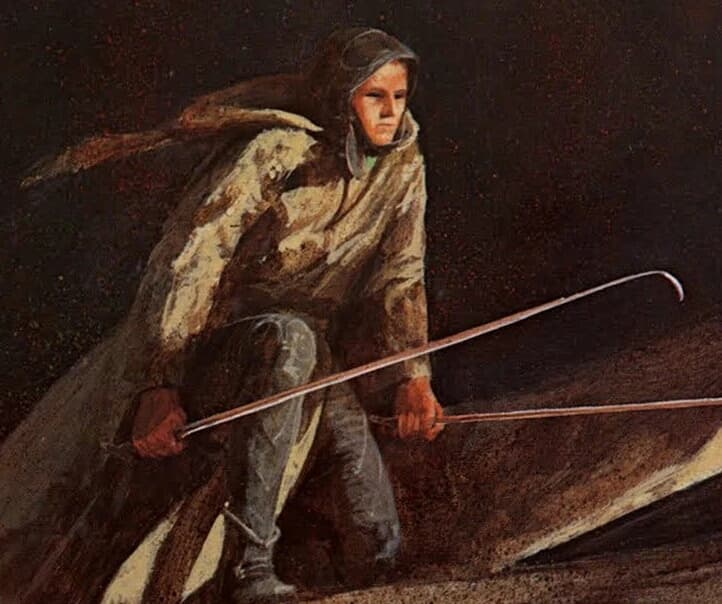
Paul Atreides was the last Duke of House Atreides and the prophet Muad'Dib of the Fremen. The long-awaited Kwisatz Haderach of the Bene Gesserit, he toppled Emperor Shaddam IV, founded the Atreides Empire, and unleashed a jihad across the Known Universe before walking blind into the desert.
Zensunni
Zensunni was a mystical denomination of Buddislam that took root among disadvantaged and enslaved peoples across the known universe, above all the Fremen of Arrakis. Born of a schism around 1381 BG, it stressed the mystical and a reversion to the ways of the fathers, and was later steered by the Bene Gesserit.
Mentioned in53 entries
Alia's Temple: the fane of St. Alia of the Knife
Alia's Temple, also called Alia's Fane, was the colossal temple in Arrakeen dedicated to the worship of St. Alia of the Knife. Raised beside Paul's Keep as one of the wonders of the universe, it drew pilgrims from across the Imperium, hid dungeons beneath its maze of corridors, and became the stage for the fall of the Regent Alia Atreides.
Alma Mavis Taraza
Alma Mavis Taraza was the Bene Gesserit Mother Superior who confronted the threat of the Honored Matres and the discovery that the girl Sheeana could command the sandworms. She drove the Duncan Idaho ghola project and the Tleilaxu alliance, and died on Rakis, her memories preserved in her successor Darwi Odrade.
Arrakeen: the first city built on Arrakis
Sheltered by the Shield Wall near the northern pole, it held the Emperor's officials, House Atreides, then Muad'Dib's empire, then Leto II's festival city Onn.
Arrakis
Arrakis, known as Dune and later as Rakis, was a harsh desert world in the Canopus system and the only natural source of the spice melange. Home to the Fremen and the sandworms, it became the seat of the Atreides empire and the center of the known universe.
Arrakis Revolt
The Arrakis Revolt was the uprising of the Fremen of Arrakis under Paul Atreides in the closing stage of the Desert War. Waged as a guerrilla campaign against the Harkonnen occupiers, it crippled spice production, drew in the Padishah Emperor, and ended with the fall of House Corrino.
Battle of Arrakeen
The Battle of Arrakeen was the pivotal engagement of the Arrakis Revolt, fought between Muad'Dib Paul Atreides's Fremen and the Sardaukar of Padishah Emperor Shaddam Corrino IV. The Fremen routed the Imperial forces, and in the surrender that followed Paul won control of the known universe.
Battle of Rakis
The Battle of Rakis was an engagement in the war between the Bene Gesserit and the Honored Matres. The Honored Matres attacked and killed Mother Superior Alma Mavis Taraza, and ultimately destroyed the planet and its sandworms, sparing only the single worm the Bene Gesserit carried away.
Bronso of Ix: the Historian Executed for Doubting Muad'Dib
Bronso of Ix was the Ixian historian whose condemned words open Dune Messiah, a scholar put to death for writing about Paul Atreides as a man rather than a god. Frank Herbert gave him only a death cell interview and a book title. The later novels by Brian Herbert and Kevin J. Anderson turned him into Paul's childhood friend and secret ally.
Chapterhouse
Chapterhouse was the Bene Gesserit term for the planet that served as the Sisterhood's home base. In its final form it was a hidden, deliberately unsettled world shielded from prescient eyes and, in the end, remade into desert to shelter the last sandworm.
Chapterhouse: Dune Explained: Plot Summary and Ending
The full story of Frank Herbert's last Dune novel, from the Bene Gesserit under siege on Chapterhouse to Odrade's gamble at Junction, Murbella's rise and Duncan Idaho's escape into the unknown, and what that open ending means.
Children of Dune Explained: Plot Summary and Ending
The full plot of Frank Herbert's Children of Dune in order, from the tiger attack on Paul's twins to Leto II taking the throne, with the ending explained: what happened to Alia, who the Preacher was, and what Leto's Golden Path costs him.
Corysta
Corysta was a Bene Gesserit sister exiled to the water-world of Buzzell, where she defied her order by trying to keep her child and later raised an abandoned Phibian boy she named Sea Child.
+ 41 more
Get new articles in your inbox
No spam. New lore drops, canon conflicts, and deep dives only when they’re worth reading.
Some links on Lore Fortress are affiliate links. If you buy through them we earn a small commission at no extra cost to you.