Litany Against Fear
the mind-killer mantra
The Litany Against Fear was a mantra spoken in moments of peril to focus the mind. Believed to have originated with the Bene Gesserit, it was used by Paul Atreides to endure the agony of the gom jabbar test of humanity.
The Litany Against Fear is the Bene Gesserit litany for steadying the mind in the face of fear, a tool of their training. Paul Atreides recites it on the first pages of Dune, with a poisoned needle at his neck. (Dune)
Origins#
In Frank Herbert's Dune the litany belongs to the Bene Gesserit, who recite it against the dangers of their training and teach it to those they train, Paul and Jessica among them. (Dune)
Brian Herbert and Kevin J. Anderson's prequels give it an older ancestor from the time of the Butlerian Jihad: a mantra of the City of Introspection about having no fear, since fear is the little death that kills over and over, while without it a person dies only once. (Expanded books: Dune: The Butlerian Jihad)
The litany#
The litany was spoken as follows: (Dune)
I must not fear. Fear is the mind-killer. Fear is the little-death that brings total obliteration. I will face my fear. I will permit it to pass over me and through me. And when it has gone past, I will turn the inner eye to see its path. Where the fear has gone there will be nothing. Only I will remain.
Jessica later recited a version that differed in its final lines: "And when it has gone past me I will turn to see fear's path. Where the fear has gone there will be nothing. Only I will remain." (Dune)
Use in the gom jabbar test#
Paul Atreides, son of Duke Leto Atreides I, used the litany when Reverend Mother Gaius Helen Mohiam compelled him to place his right hand in a device that caused pain, holding the gom jabbar to his neck as a test of his presence of mind. The litany helped him withstand the agony. (Dune)
The trial was a test of his humanity in a qualitative sense: a being whose nature was still primarily bestial would recoil from pain and seek to flee in order to preserve itself, while one of higher nature would endure it and pass through to the other side in order to remove the threat permanently. As Mohiam framed the distinction, an animal caught in a trap might chew off its own leg to escape, but a human would remain in the trap, endure the pain, and feign death so as to kill the trapper and remove a threat to its kind. (Dune)
Frequently asked questions
- What is the Litany Against Fear?
- The Bene Gesserit litany for calming the mind in the face of fear and danger. In Dune, Paul recites it during the gom jabbar test and Jessica uses it in the desert.
- Where did the Litany Against Fear originate?
- In Frank Herbert's Dune it is a Bene Gesserit litany. Brian Herbert and Kevin J. Anderson's Dune: The Butlerian Jihad adds an older ancestor, a mantra of the City of Introspection about fear as the little death that kills over and over.
- How does the Litany Against Fear go?
- It begins, "I must not fear. Fear is the mind-killer. Fear is the little-death that brings total obliteration," and continues with the speaker permitting fear to pass over and through them. It ends, "Where the fear has gone there will be nothing. Only I will remain."
- How did Paul Atreides use the Litany Against Fear?
- Paul used the litany when Reverend Mother Gaius Helen Mohiam compelled him to place his right hand in a device that caused pain, holding the gom jabbar to his neck as a test of his presence of mind. The litany helped him withstand the agony of the gom jabbar test of humanity.
Sources
- BookDune, Frank Herbert, 1965
- BookDune: The Butlerian Jihad, Brian Herbert and Kevin J. Anderson, 2002 (expanded books)
Spotted a factual error or a primary source we missed? Email a correction. Every flagged claim gets reviewed.
Followed from this entry
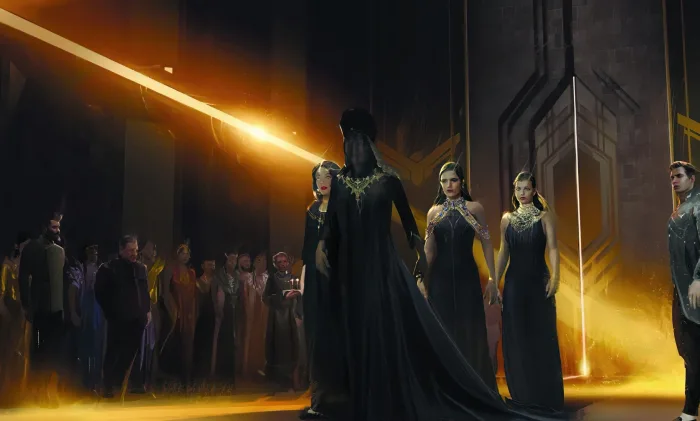
Bene Gesserit Powers Explained: the Voice, Truthsense, Other Memory and More
Every Bene Gesserit ability from Frank Herbert's novels, what it does, how a Sister learns it and who uses it on the page. None of it is magic: it all comes from training, and one gift comes from a poison.
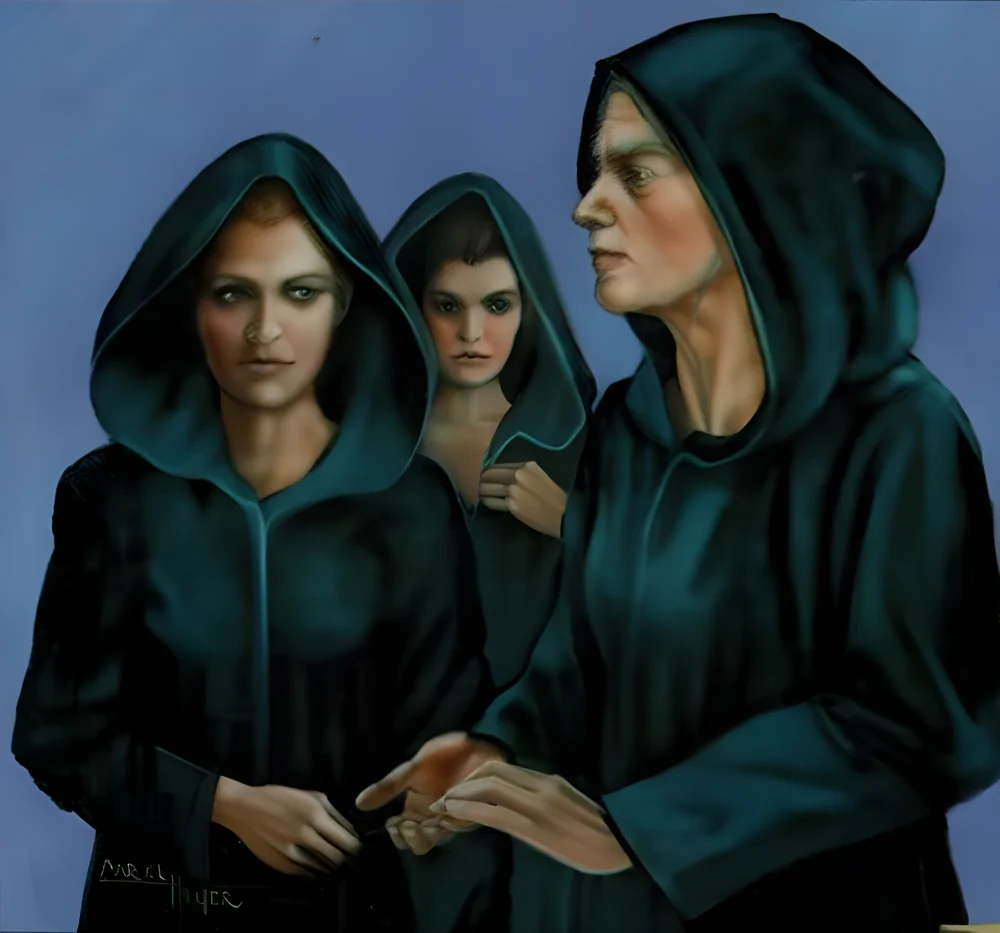
Bene Gesserit
The Bene Gesserit were an ancient order of women who wielded power from the shadows of the Imperium through a millennia-long breeding program, mastery of body and mind, and the religious engineering of the Missionaria Protectiva. Their goal was the Kwisatz Haderach, and through him the guidance of humanity.
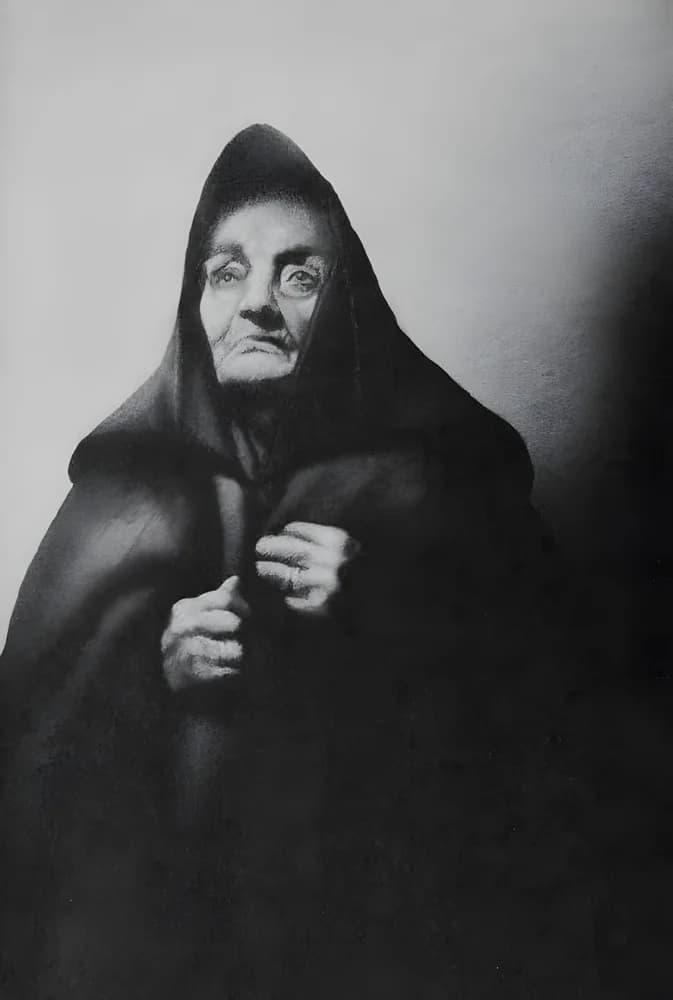
Gaius Helen Mohiam
Gaius Helen Mohiam is the Bene Gesserit Reverend Mother who taught Lady Jessica, serves as Truthsayer to Emperor Shaddam IV and tests the young Paul Atreides with the gom jabbar. In Dune Messiah she joins the conspiracy against Paul and is executed for it.
Gom Jabbar
The gom jabbar was a handheld needle tipped with meta-cyanide poison that brought almost instant death. The Bene Gesserit used it to enforce their test of humanity, holding it to a subject's neck to measure whether awareness could master instinct in the face of pain.

Lady Jessica: the concubine who bore a son
The Bene Gesserit ordered Jessica to bear Duke Leto a daughter. She had Paul instead, and that single disobedience broke the breeding programme.
Butlerian Jihad: the war on thinking machines
It began with a slave rebellion on Earth in 201 BG and ended at Corrin in 88 BG. Out of it came the ban on machines in the likeness of a mind.
Mentioned in3 entries
Bene Gesserit Powers Explained: the Voice, Truthsense, Other Memory and More
Every Bene Gesserit ability from Frank Herbert's novels, what it does, how a Sister learns it and who uses it on the page. None of it is magic: it all comes from training, and one gift comes from a poison.
Dune: Part One Ending Explained
The whole story of Denis Villeneuve's Dune: Part One in order, from the Emperor's gift of Arrakis to the duel with Jamis in the deep desert, then a plain explanation of the ending and the main ways the film differs from Frank Herbert's novel.
Dune: Prophecy Explained: Season 1 Plot Summary and Ending
The full story of HBO's Bene Gesserit series Dune: Prophecy, episode by episode, from Raquella's death to the escape to Arrakis. With the ending explained: who Desmond Hart really is, what Valya saw inside him, and where season one leaves the Sisterhood.
Get new articles in your inbox
No spam. New lore drops, canon conflicts, and deep dives only when they’re worth reading.
Some links on Lore Fortress are affiliate links. If you buy through them we earn a small commission at no extra cost to you.