Ornithopter
the thopter of the Imperium
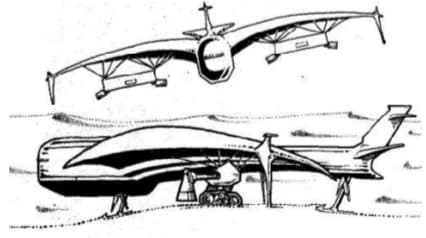
The ornithopter, or thopter, was the most common small transport aircraft of the Imperium, flying by jet propulsion and by mimicking the wingbeats of birds. It carried passengers and cargo, served in war, and on Arrakis dueled with the sandworms above the spice sands.
Ornithopters, also commonly referred to as thopters, were the most common small aircraft in the Imperium. Frank Herbert's glossary defines an ornithopter as any aircraft capable of sustained wing-beat flight in the manner of birds. They saw service everywhere from carrying people between cities to military operations, and on Arrakis they were the chief means of moving above the spice sands where the sandworms ruled. (Dune; Dune (appendix))
Capabilities and use#
Thopters are everywhere in Dune. Duke Leto flies one out over the desert with Liet-Kynes to see a spice harvester at work, spotters circle in them looking for wormsign, and the Harkonnen and Sardaukar attack on Arrakeen comes with thopters as well as troop carriers. Military craft carry lasguns, and after the attack the Harkonnens fly a bound Paul and Jessica out into the desert in one to leave them for the worms. (Dune)
Design and propulsion#
Thopters fly with beating wings, and a pilot can tuck the wings back and use the jets for a burst of speed. When Paul flees the Harkonnens, he takes his thopter into a sandstorm and rides it out by working the wings against the wind. The heaviest lifting on Arrakis is done by carryalls, the great wings that carry spice harvesting equipment out to the sand and lift it off again when a worm comes. (Dune; Dune (appendix))
Variants#
Dune mentions several kinds of thopter by role, from scouts and spotter craft to the troop-carrying wings of the attack on Arrakeen. On screen, Denis Villeneuve's 2021 film gives the Atreides thopters dragonfly-like wings that beat in a blur, a design that has become one of the best known images of the adaptation. (Dune; Dune (2021 film))
Frequently asked questions
- What is an ornithopter in Dune?
- The ornithopter, also called a thopter, is the everyday aircraft of Dune. Frank Herbert's glossary defines it as any aircraft capable of sustained wing-beat flight in the manner of birds. On Arrakis thopters carry people and spotters over the desert, scout for spice, and fly the Atreides and Harkonnen forces into battle.
- How does an ornithopter fly?
- A thopter flies by beating its wings like a bird, and can also fold its wings back and fire its jets for a burst of speed. Paul uses both modes when he flies a thopter into a sandstorm to escape the Harkonnens.
- What were ornithopters used for?
- They handled transport between cities, scouting, spotting for spice crews, and military work. On Arrakis they were the main way of moving above the open sand, where the sandworms ruled.
- How were militarized ornithopters armed?
- Military thopters in Dune carry lasguns. Shields are a risk on Arrakis because they draw sandworms, so desert flying relies on speed and height instead.
- What is the relationship between ornithopters and carryalls?
- Carryalls are the heavy lifting wings of Arrakis, built to lift spice factories off the sand when a worm comes. They work alongside the thopters that spot for the spice crews.
Gallery
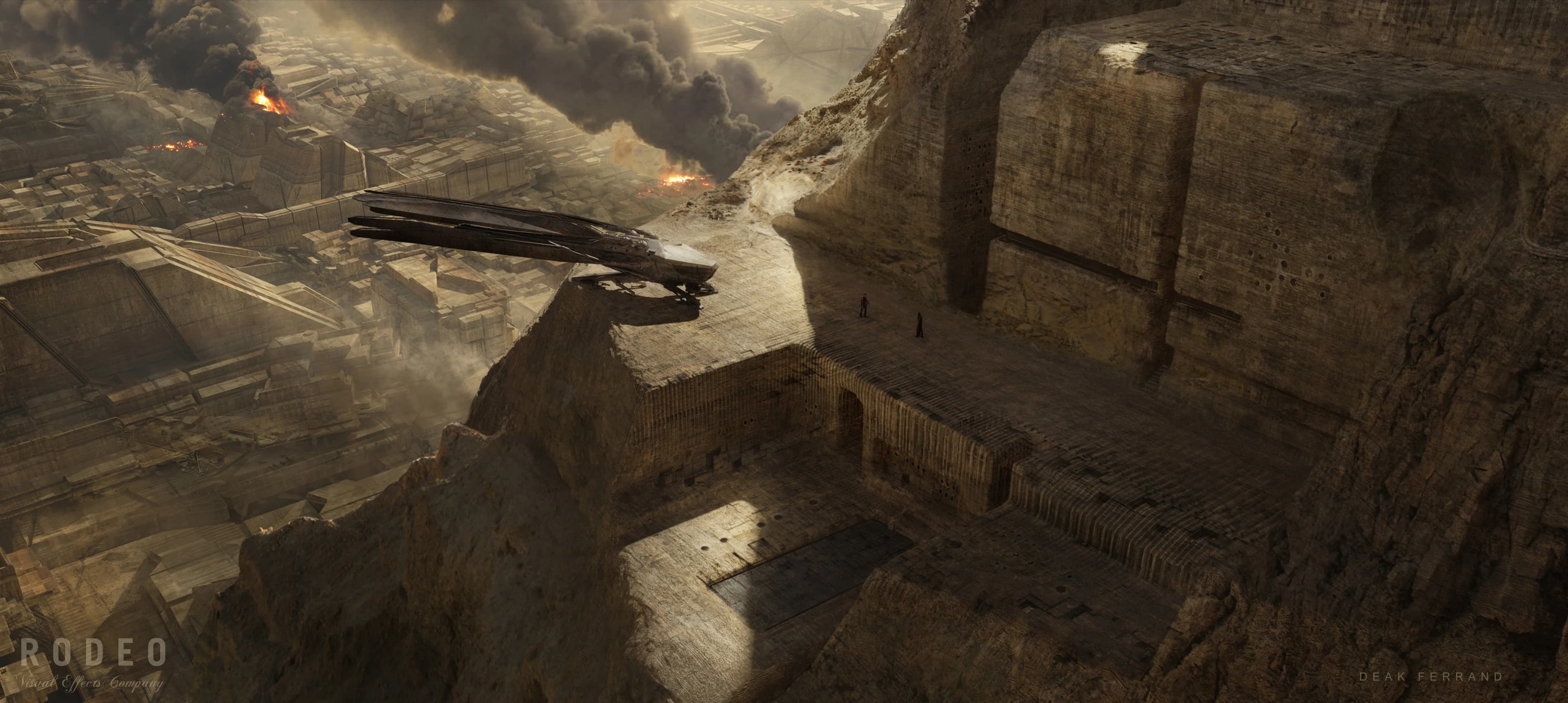
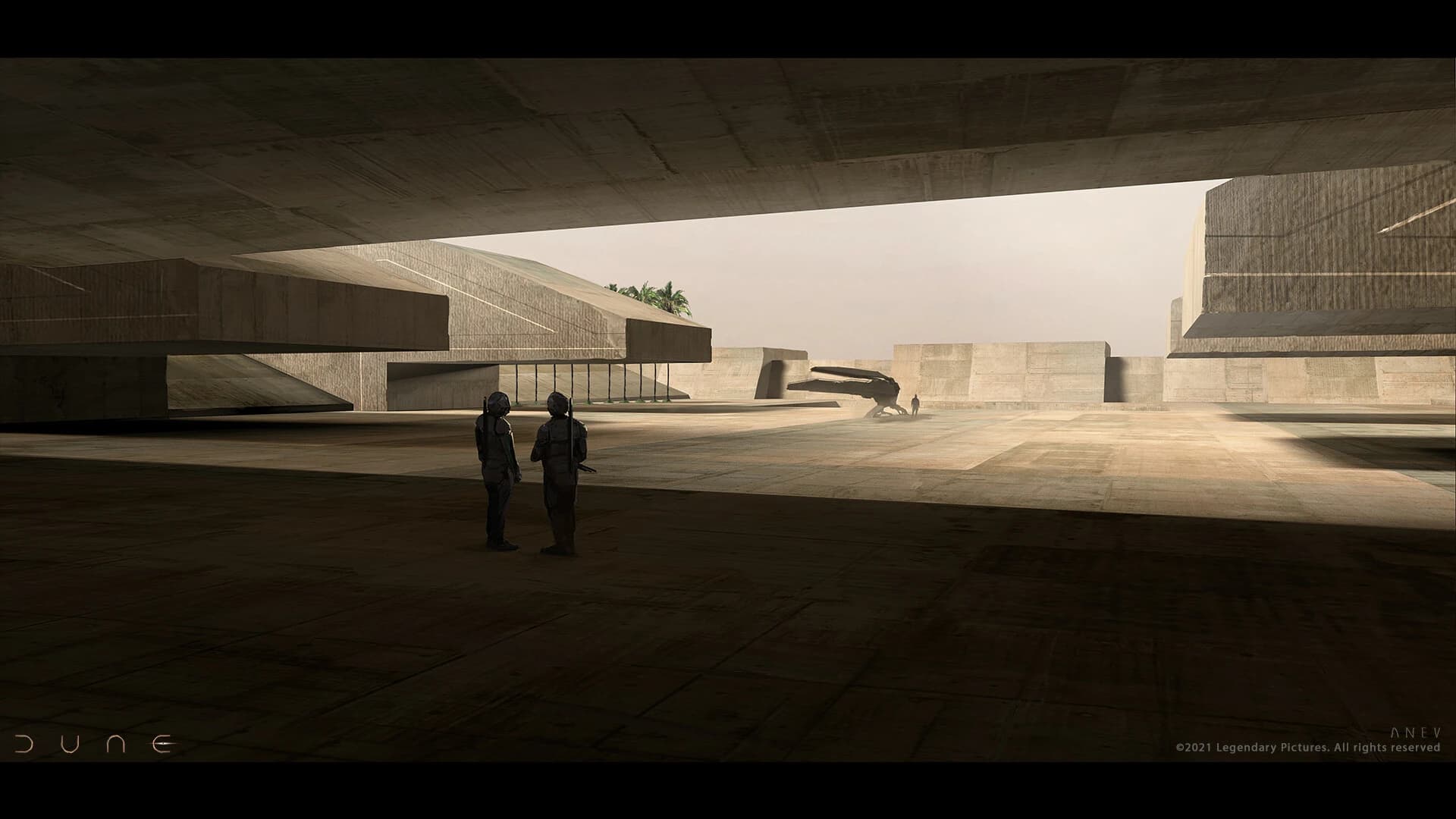
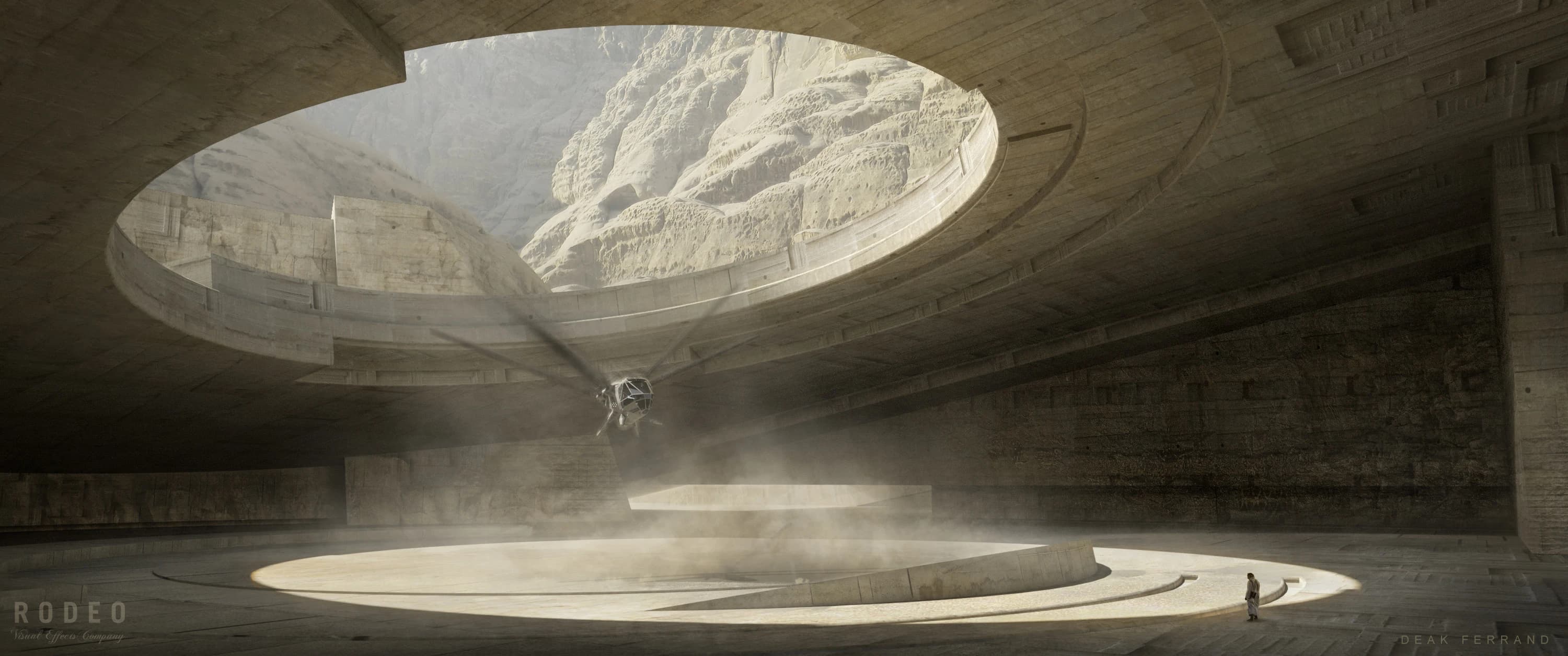
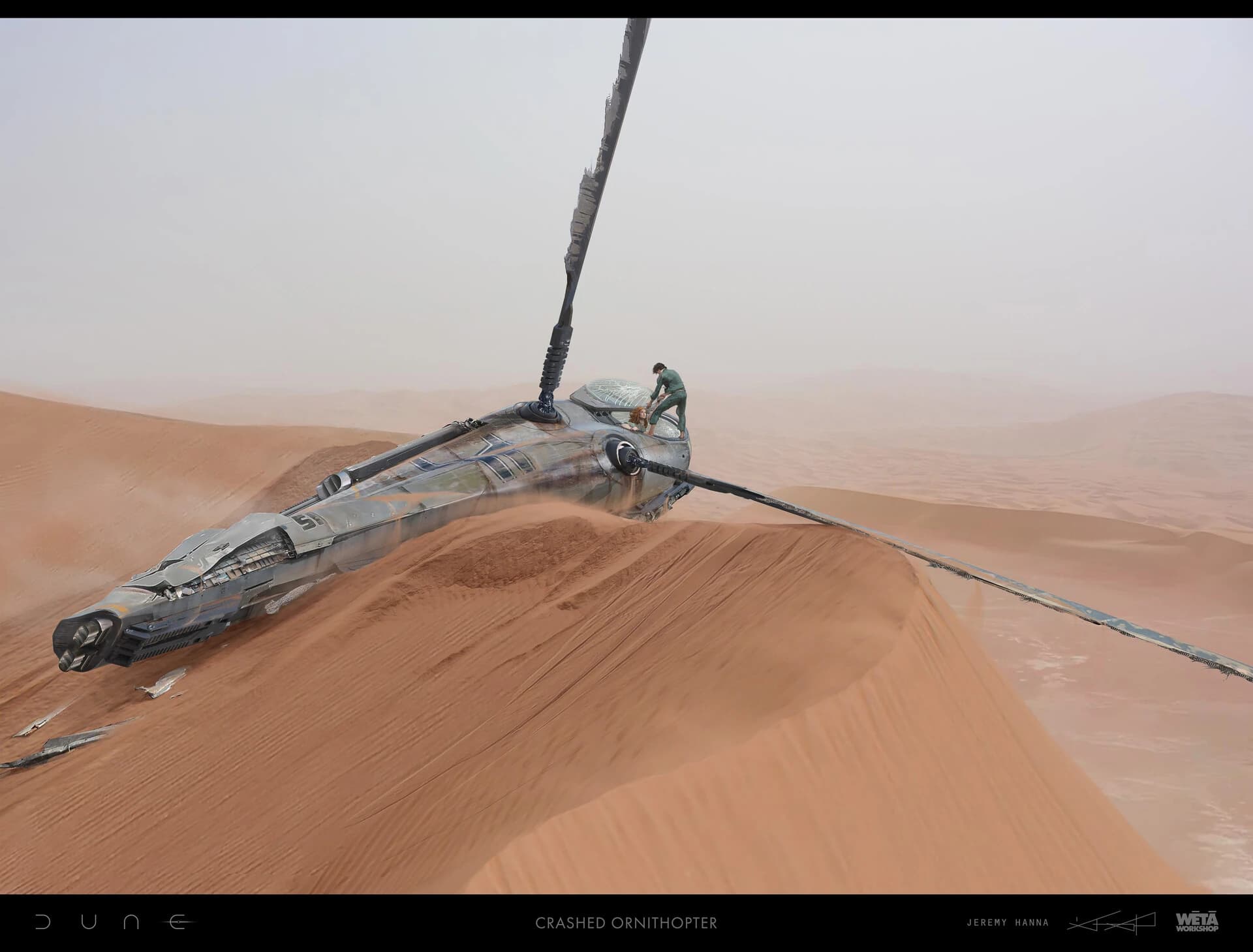
Images via Dune Wiki
Sources
- BookDune, Frank Herbert, 1965
- BookDune (appendix), Frank Herbert, 1965; the appendices and Terminology of the Imperium printed with Dune
- VideoDune (2021 film), directed by Denis Villeneuve, 2021
Spotted a factual error or a primary source we missed? Email a correction. Every flagged claim gets reviewed.
Followed from this entry

Lasgun
The lasgun was a continuous-wave laser projector, perhaps the most widely used hand weapon in the Imperium. Its great danger lay in shields: contact between a lasgun beam and a Holtzman shield triggered a nuclear explosion that could kill everyone nearby.
Spice harvester
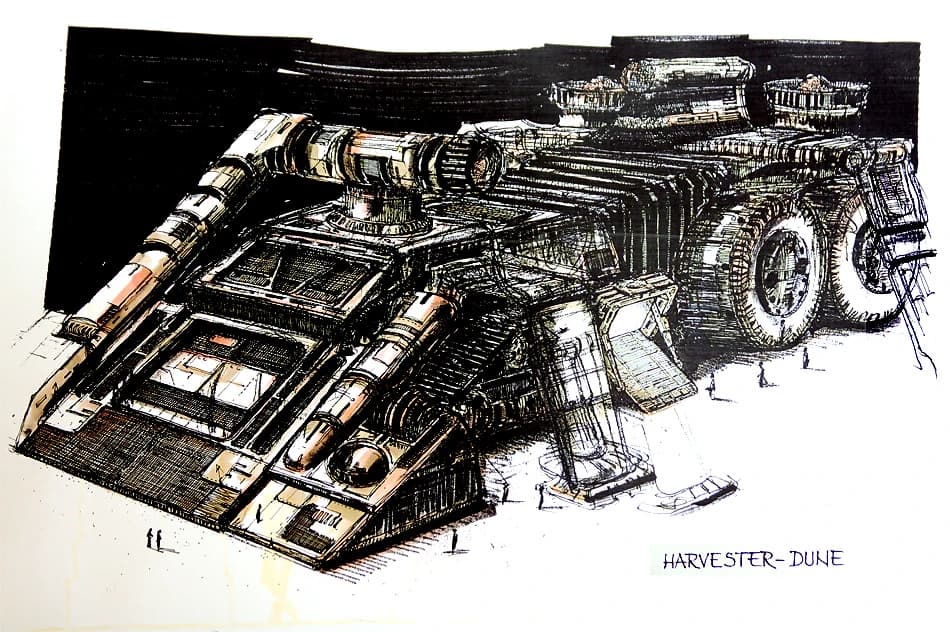
The spice harvester, also called a crawler, was a vast mobile factory used on Arrakis to mine and process melange from the desert sand. Dropped onto spice fields by carryalls and watched over by spotter thopters, harvesters worked under constant threat of the sandworms drawn by their rhythmic noise.

Arrakis
Arrakis, known as Dune and later as Rakis, was a harsh desert world in the Canopus system and the only natural source of the spice melange. Home to the Fremen and the sandworms, it became the seat of the Atreides empire and the center of the known universe.
Sandworm
The sandworm was the colossal autotrophic animal of the deserts of Arrakis, honored by the Fremen as Shai-Hulud and feared across the Imperium. As the central organism in the lifecycle that produced the spice melange, it shaped the economy, religion, and history of the known universe.
Also in Spacing Guild

Heighliner: the great foldspace carrier of the Spacing Guild
The Heighliner was the immense starship of the Spacing Guild, a vessel large enough to hold whole fleets of smaller craft and many thousands of passengers. Piloted by melange saturated Navigators, it folded space to cross the universe in an instant, and the Guild's monopoly over it made the Heighliner the quiet arbiter of Imperial power.
Carryall: the lifter of the spice harvest
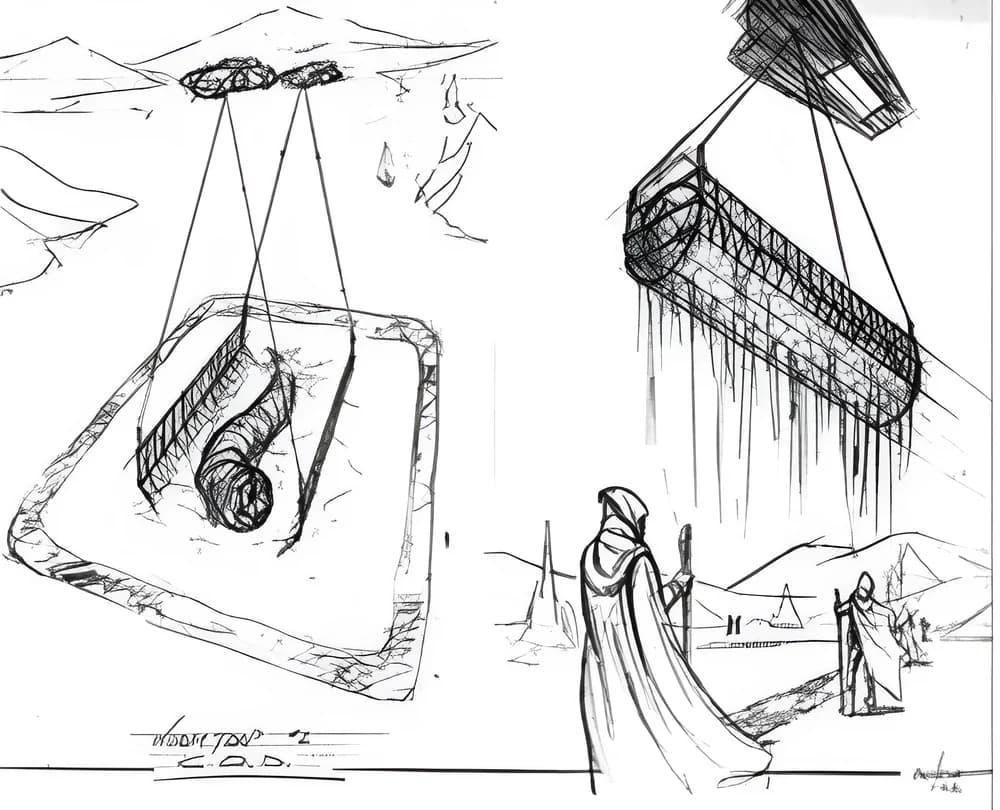
The carryall was a large winged aircraft used by spice mining teams on Arrakis. It ferried harvesters across the sand and, above all, lifted them clear when a sandworm came, making it indispensable to spice production.
Mentioned in5 entries
Botanical testing station: the forgotten laboratories of Arrakis
The botanical testing stations were scientific outposts on Arrakis. Pardot Kynes used his station to train Fremen and pass them the tools for hidden windtraps and catchbasins, and an abandoned one is where Duncan Idaho died holding off the Sardaukar in Dune.
Dune: Part One Ending Explained
The whole story of Denis Villeneuve's Dune: Part One in order, from the Emperor's gift of Arrakis to the duel with Jamis in the deep desert, then a plain explanation of the ending and the main ways the film differs from Frank Herbert's novel.
Ibrahim Vaughn Holtzman: the machine mind of Liesco
Ibrahim Vaughn Holtzman was a mathematical genius of Liesco II whose brain, transplanted into a prototype axolotl tank wired to a computer, circled his homeworld for millennia in a crippled ship. During his rare returns he gave humanity the Holtzman Waves, the Planar Effect behind the shield, and the Unified Effect Theory, before the Jihad destroyed him as the last thinking machine.
Spice blow: the explosion that turns sand into melange
A spice blow was the violent final stage of the melange cycle on Arrakis, in which a carbon dioxide bubble built up inside a pre-spice mass and heaved the whole deposit to the surface in an eruption of dust and raw spice. Every Fremen knew the sound of one, every sandworm was drawn to it, and Liet-Kynes died inside one.
Spice harvester
The spice harvester, also called a crawler, was a vast mobile factory used on Arrakis to mine and process melange from the desert sand. Dropped onto spice fields by carryalls and watched over by spotter thopters, harvesters worked under constant threat of the sandworms drawn by their rhythmic noise.
Get new articles in your inbox
No spam. New lore drops, canon conflicts, and deep dives only when they’re worth reading.
Some links on Lore Fortress are affiliate links. If you buy through them we earn a small commission at no extra cost to you.