Watertube
the Fremen liquid conduit
The watertube was a Fremen device of wide use in the transfer of liquids, woven through the stillsuit, the stilltent, the deathstill, and other water apparatus of Arrakis. Its simple appearance concealed a sophisticated design born of the desert's absolute need to conserve moisture.
In The Dune Encyclopedia, the watertube was a Fremen device of wide application in the transfer of liquids on Arrakis. It had existed since the final stage of the Zensunni migrations, and its sophisticated design reflected the close attention the Fremen paid to small details. Behind a simple appearance lay careful engineering that reflected the extraordinary importance of water conservation in the desert. (The Dune Encyclopedia)
Usage#
The watertube was used anywhere that liquids, especially distilled water, had to be transferred, since its design conserved the moisture so crucial to survival on Arrakis. Tubes ran in stillsuits between the catch-pockets and the mouth, and even between bodily orifices and the processing catches. They were built into the catchpockets of stilltents. The Huanui, or deathstill, used watertubing in its drainway and between its waiting basin and its flowmeter. Watertubes also appeared in literjons, in flowmeter spouts, and in portable windtraps. (Dune; The Dune Encyclopedia)
Construction and function#
The body of the tube was a melange-based plastic with plyotyl mixed in to provide the needed flexibility. The plastic was liquefied and forced into a mold of plasteel, typically ten to fifteen centimetres square and two metres long. The mold consisted of a group of holes of differing diameters. A cap at one end allowed the extrusion of rods as long as the mold and of varying diameter, while a cap at the far end received the rods and helped maintain a consistent wall thickness in the tube being formed. (The Dune Encyclopedia)
Partially cooled tubes were drawn from the molds and passed through a bonding vat, where the still-tacky inner surfaces, though not the cooler outsides, collected a crystalline solution. As that solution dried and bonded to the plastic, it formed the friction-release coating. With the active processes complete, the watertubes, by then resembling thin, limp cords of slightly different diameters, were taken to drying racks where they set up and cured. (The Dune Encyclopedia)
Archaeological study#
A half-dozen molds were recovered at two sites on Rakis, leading scholars to speculate that tube walls could be varied in thickness depending on how the caps were fitted. No matter how the caps were installed the rods would penetrate the matching holes, but when the caps were rotated a quarter turn the relation of rod size to mold-hole diameter changed. This suggested that a small number of multi-purpose mold-and-cap combinations could have met different production needs for watertubes of differing flexibility and inside diameter. No finds confirmed this, nor the possibility that switching caps among molds could have yielded almost infinite varieties of characteristics. Some analysts held that such speculation overlooked the Fremen preference for keeping technology simple, while others argued that this very adaptability would reflect their sophistication. (The Dune Encyclopedia)
The finds also showed an extraordinary uniformity of dimension, which suggested that some supplemental mechanism kept the rods perfectly straight inside the mold holes. The most common theory held that ultrasonic radiation, applied to the cooling plastic and plyotyl in the mold, stabilized the fluid and produced the macroscopic uniformity of the tube wall. Relics revealed trace samples of a flexible crystal almost inert at normal temperatures, found in significant amounts only near some bonding vats. Analysis indicated that this frictionless material had an intramolecular structure close to the later Pethlax and the prototype Frolmyr compound. (The Dune Encyclopedia)
Frequently asked questions
- What is a watertube?
- The watertube was a Fremen device of wide application in the transfer of liquids on Arrakis. It had existed since the final stage of the Zensunni migrations, and its design conserved the moisture so crucial to survival in the desert.
- Where were watertubes used?
- Watertubes ran in stillsuits between the catch-pockets and the mouth, and were built into the catchpockets of stilltents. The Huanui, or deathstill, used watertubing in its drainway and between its waiting basin and its flowmeter, and tubes also appeared in literjons, flowmeter spouts, and portable windtraps.
- What were watertubes made of?
- The body of the tube was a melange-based plastic with plyotyl mixed in to provide flexibility. The plastic was liquefied and forced into a plasteel mold, then partially cooled tubes were passed through a bonding vat where a crystalline solution bonded to the inner surface to form a nearly frictionless friction-release coating.
- What did archaeological study of watertubes on Rakis reveal?
- A half-dozen molds recovered at two sites on Rakis led scholars to speculate that tube walls could be varied in thickness depending on how the caps were fitted, though no finds confirmed this. The relics showed an extraordinary uniformity of dimension, prompting the theory that ultrasonic radiation stabilized the cooling plastic, and trace samples of a flexible crystal had an intramolecular structure close to the later Pethlax and prototype Frolmyr compounds.
Sources
- BookDune, Frank Herbert, Chilton Books, 1965
- BookThe Dune Encyclopedia, Willis E. McNelly (ed.), Berkley Books, 1984
Spotted a factual error or a primary source we missed? Email a correction. Every flagged claim gets reviewed.
Followed from this entry

Stillsuit
The stillsuit was a full body garment worn in the open desert of Arrakis to reclaim and recycle the wearer's own moisture. Fremen-made suits were the finest, losing only a thimbleful of water a day and allowing survival in the deep desert for weeks.

Arrakis
Arrakis, known as Dune and later as Rakis, was a harsh desert world in the Canopus system and the only natural source of the spice melange. Home to the Fremen and the sandworms, it became the seat of the Atreides empire and the center of the known universe.

Fremen
The Fremen were a culture of humans descended from the Zensunni Wanderers who made the desert planet Arrakis their home. Hardened by water scarcity and generations of persecution, they became the finest fighters in the Known Universe and the foot soldiers of Paul Atreides and his jihad.
Zensunni
Zensunni was a mystical denomination of Buddislam that took root among disadvantaged and enslaved peoples across the known universe, above all the Fremen of Arrakis. Born of a schism around 1381 BG, it stressed the mystical and a reversion to the ways of the fathers, and was later steered by the Bene Gesserit.
Also in Fremen

Maula pistol: the Fremen poison-dart gun of Dune
The maula pistol is a spring-loaded gun that fires poison darts, with a range of about forty metres. It is a small detail in Frank Herbert's Dune, but it makes sense on Arrakis, where shields draw sandworms and an old-fashioned dart gun still kills.
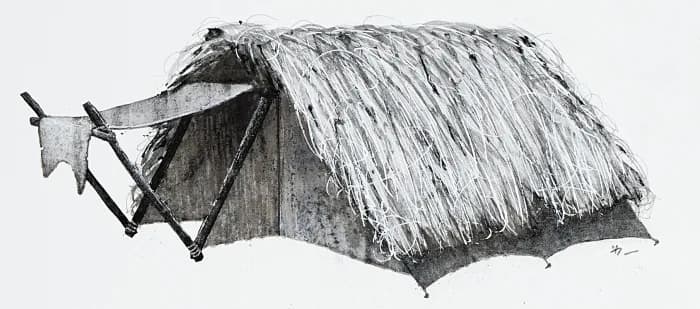
Stilltent: the Fremen water-saving tent of Dune
A stilltent is a small sealed tent that catches the moisture its occupants breathe out and turns it back into drinking water. It is the stillsuit's shelter-sized cousin, and in Dune it is where Paul Atreides first sees his future.
Mentioned in1 entry
Get new articles in your inbox
No spam. New lore drops, canon conflicts, and deep dives only when they’re worth reading.
Some links on Lore Fortress are affiliate links. If you buy through them we earn a small commission at no extra cost to you.