Stillsuit
the moisture-preserving garment of the Fremen
The stillsuit was a full body garment worn in the open desert of Arrakis to reclaim and recycle the wearer's own moisture. Fremen-made suits were the finest, losing only a thimbleful of water a day and allowing survival in the deep desert for weeks.
A stillsuit was a full body suit worn in the open desert of Arrakis and designed to preserve the body's moisture. It consisted of layers that absorbed moisture through sweating and urination, filtered out the impurities, and circulated the resulting drinkable water to catchpockets, from which the wearer drank through a tube attached at the neck. Kept in working order and properly maintained, a stillsuit permitted its wearer to survive for weeks in the open desert, and the discipline of its use was central to the survival of the Fremen. (Dune)
Design#
The stillsuit typically covered the entire body up to the neck and wrists. Gloves could be worn for the hands, but when delicate work was required the Fremen discarded the gloves and rubbed their hands with leaves from the creosote bush, whose residue prevented perspiration and allowed them to work. A facial mask could also be worn so that moisture from the mouth and face was likewise reclaimed. The recognized parts of a stillsuit included the breathing mask, also called the filter or moisture mask, the catchpockets, the gloves, the filt-plugs worn in the nostrils, the recath, the stillsuit cap and hood, and the watertube. When the planetologist Liet-Kynes assisted Duke Leto Atreides I with the fitting of his stillsuit, he explained the workings of the garment to the Duke. For a night out on the sand, the suit had a partner in the stilltent, a sealed shelter that caught the sleeper's breath moisture. (Dune)
Manufacture#
During the era of the Faufreluches, stillsuits were manufactured both by the Fremen and by private entrepreneurs. Fremen-made stillsuits, however, were widely considered the highest in quality, for they were the only suits that could truly preserve the body's moisture in the deep desert. A good stillsuit, in Liet-Kynes's account, lost no more than a thimbleful of water in a day. (Dune)
Use and discipline#
Fremen stillsuit discipline was very strict. Because an individual's body water belonged to the tribe, it was each person's personal responsibility to preserve as much of their water as possible. When crossing the deep desert, utter adherence to maximum stillsuit discipline was the only way to have a chance of surviving, while within the sietch the discipline was more relaxed. One of the measures of the progress of the transformation of Arrakis from a desert planet into a lush world was the point at which the Fremen no longer needed to wear stillsuits in the open air. (Dune; Children of Dune; God Emperor of Dune)
Frequently asked questions
- What is a stillsuit in Dune?
- A stillsuit was a full body suit worn in the open desert of Arrakis and designed to preserve the body's moisture. It absorbed moisture through sweating and urination, filtered out the impurities, and circulated the resulting drinkable water to catchpockets, from which the wearer drank through a tube attached at the neck.
- How efficient was a Fremen stillsuit?
- Fremen-made stillsuits were widely considered the highest in quality and were the only suits that could truly preserve the body's moisture in the deep desert. A Fremen stillsuit lost no more than a thimbleful of water in a day, and a properly maintained suit permitted survival for weeks in the open desert.
- What are the parts of a stillsuit?
- The recognized parts of a stillsuit included the breathing mask, also called the filter or moisture mask, the catchpockets, the gloves, the filt-plugs worn in the nostrils, the recath, the stillsuit cap and hood, and the watertube. The suit typically covered the entire body up to the neck and wrists.
- Why was stillsuit discipline so strict among the Fremen?
- Fremen stillsuit discipline was very strict because an individual's body water belonged to the tribe, making it each person's personal responsibility to preserve as much of their water as possible. When crossing the deep desert, utter adherence to maximum stillsuit discipline was the only way to have a chance of surviving, while within the sietch the discipline was more relaxed.
- Who explained the stillsuit to Duke Leto Atreides?
- When the planetologist Liet-Kynes assisted Duke Leto Atreides I with the fitting of his stillsuit, he explained the workings of the garment to the Duke.
Gallery
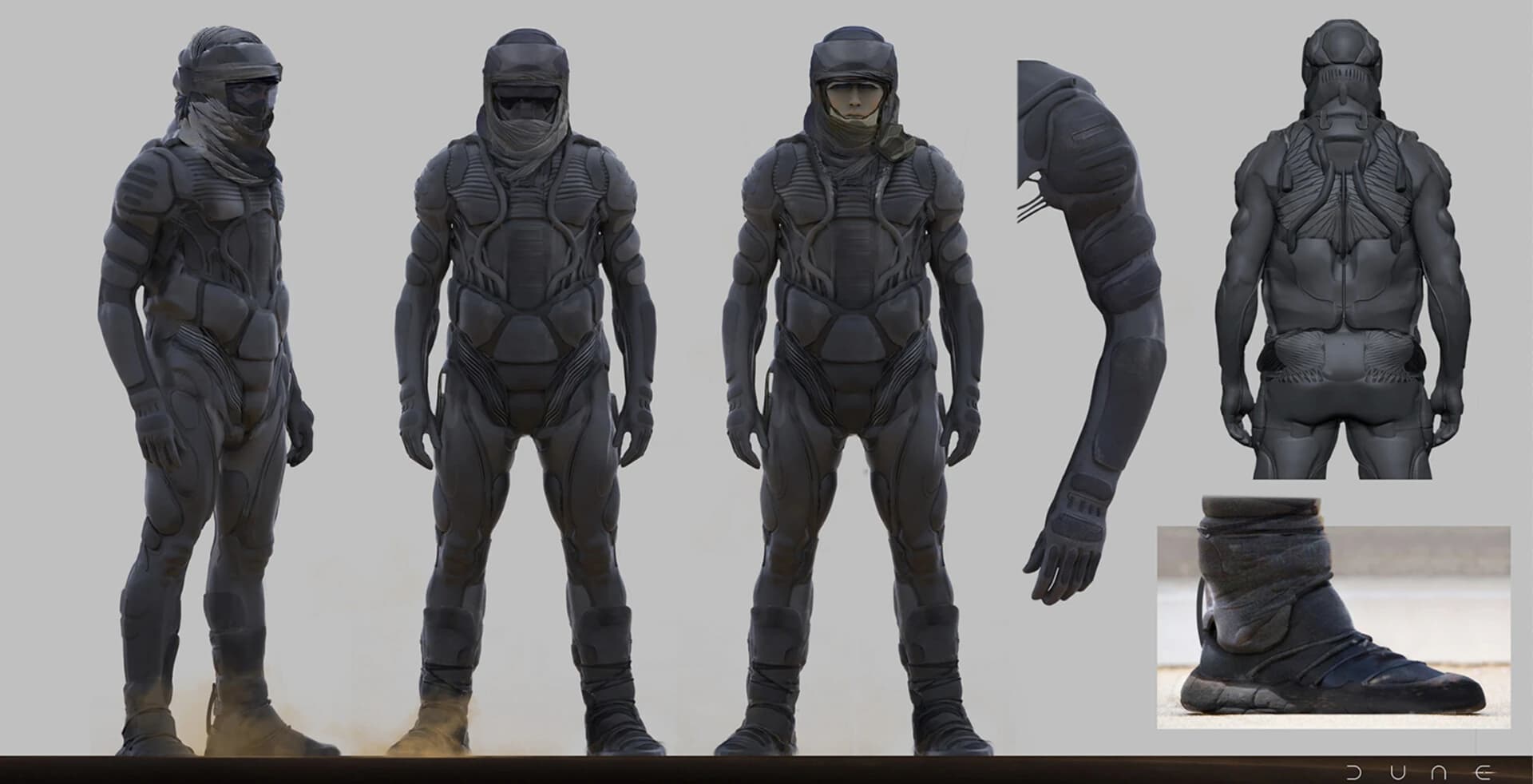
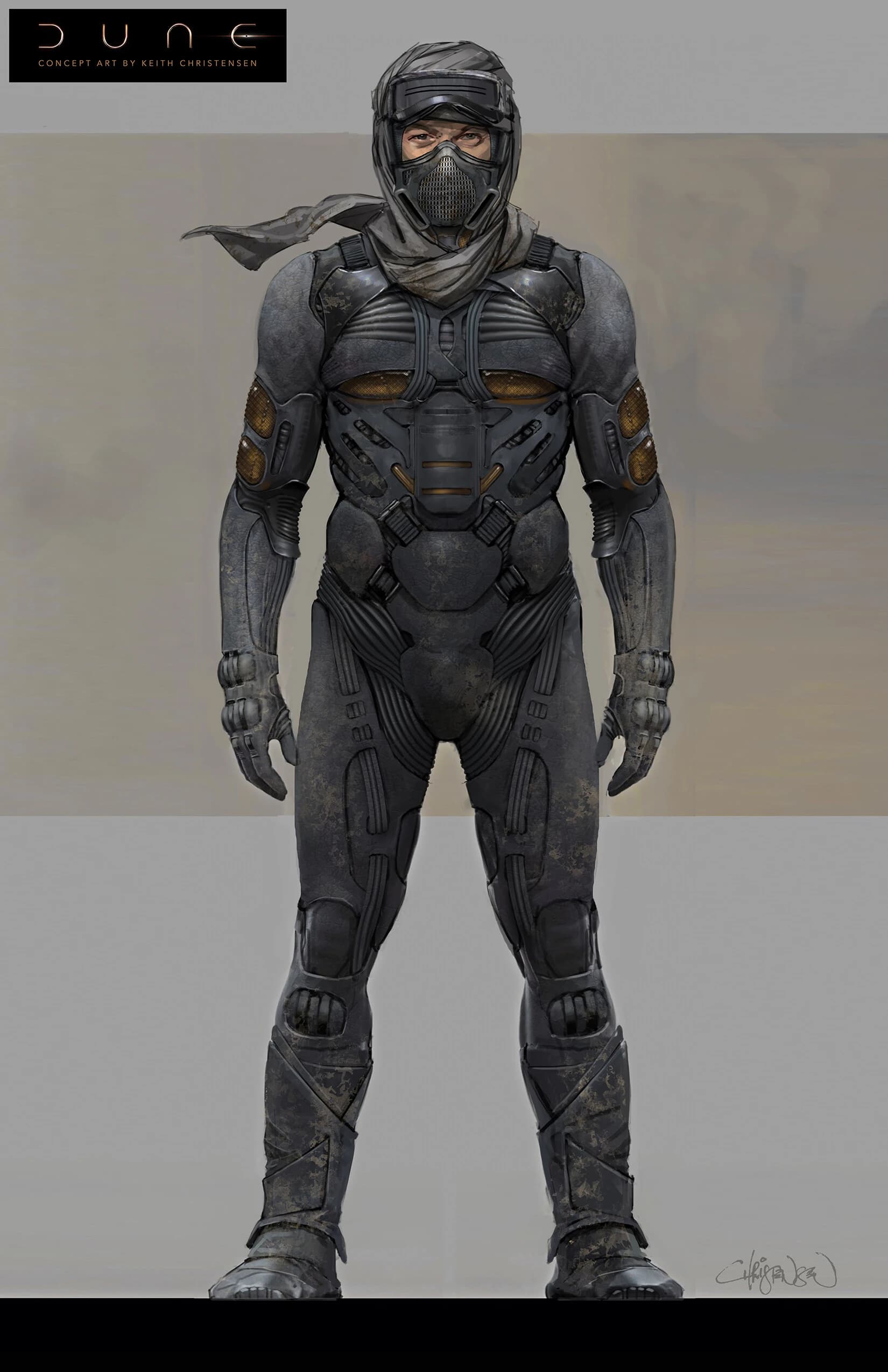

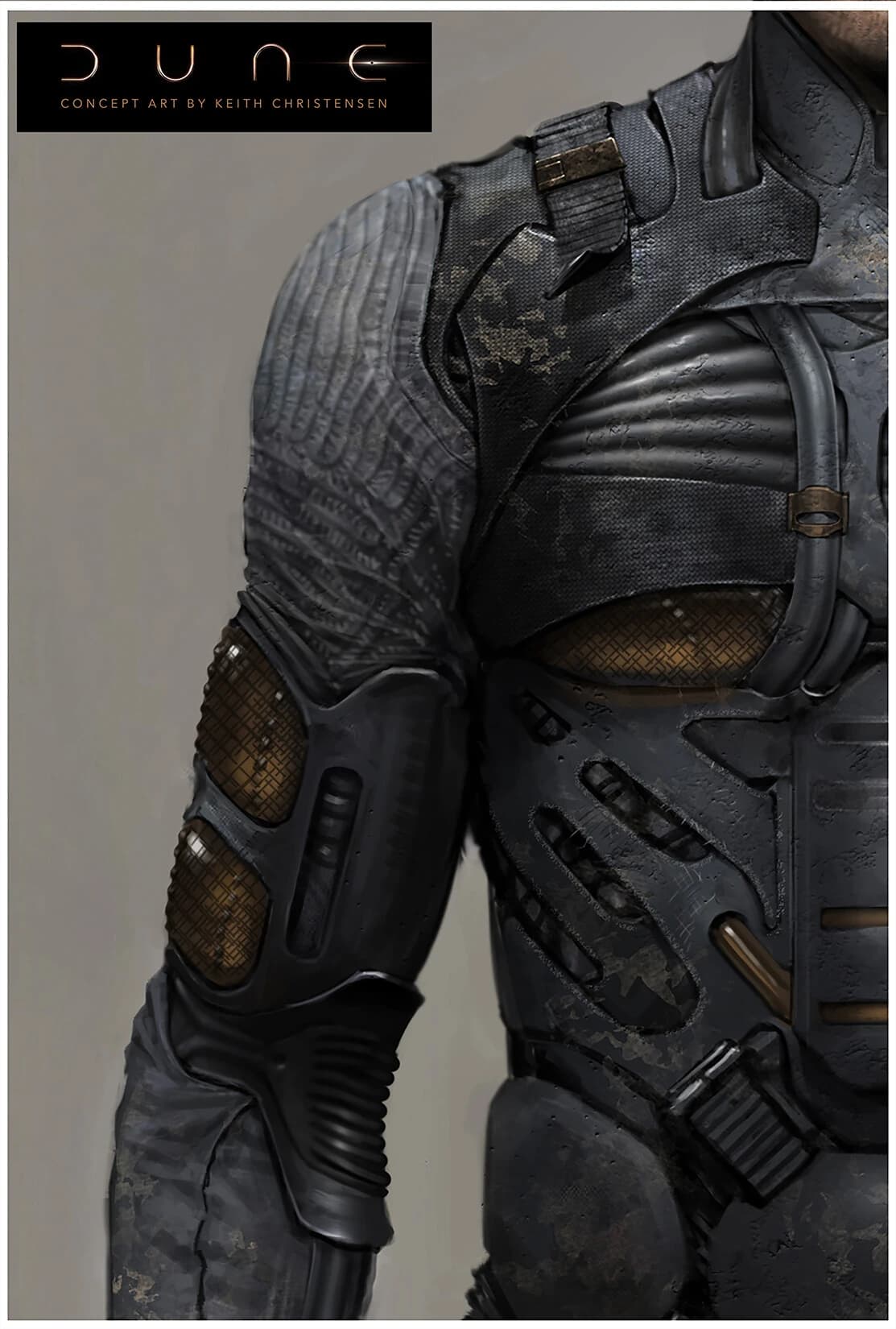
Images via Dune Wiki
Sources
- BookDune, Frank Herbert, Chilton Books, 1965
- BookChildren of Dune, Frank Herbert, G. P. Putnam's Sons, 1976
- BookGod Emperor of Dune, Frank Herbert, G. P. Putnam's Sons, 1981
Spotted a factual error or a primary source we missed? Email a correction. Every flagged claim gets reviewed.
Followed from this entry
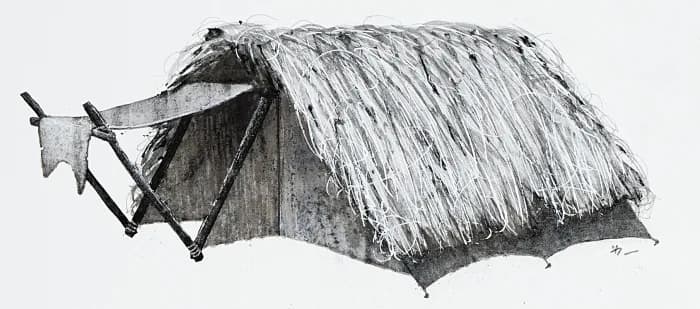
Stilltent: the Fremen water-saving tent of Dune
A stilltent is a small sealed tent that catches the moisture its occupants breathe out and turns it back into drinking water. It is the stillsuit's shelter-sized cousin, and in Dune it is where Paul Atreides first sees his future.
Watertube
The watertube was a Fremen device of wide use in the transfer of liquids, woven through the stillsuit, the stilltent, the deathstill, and other water apparatus of Arrakis. Its simple appearance concealed a sophisticated design born of the desert's absolute need to conserve moisture.
Arrakis
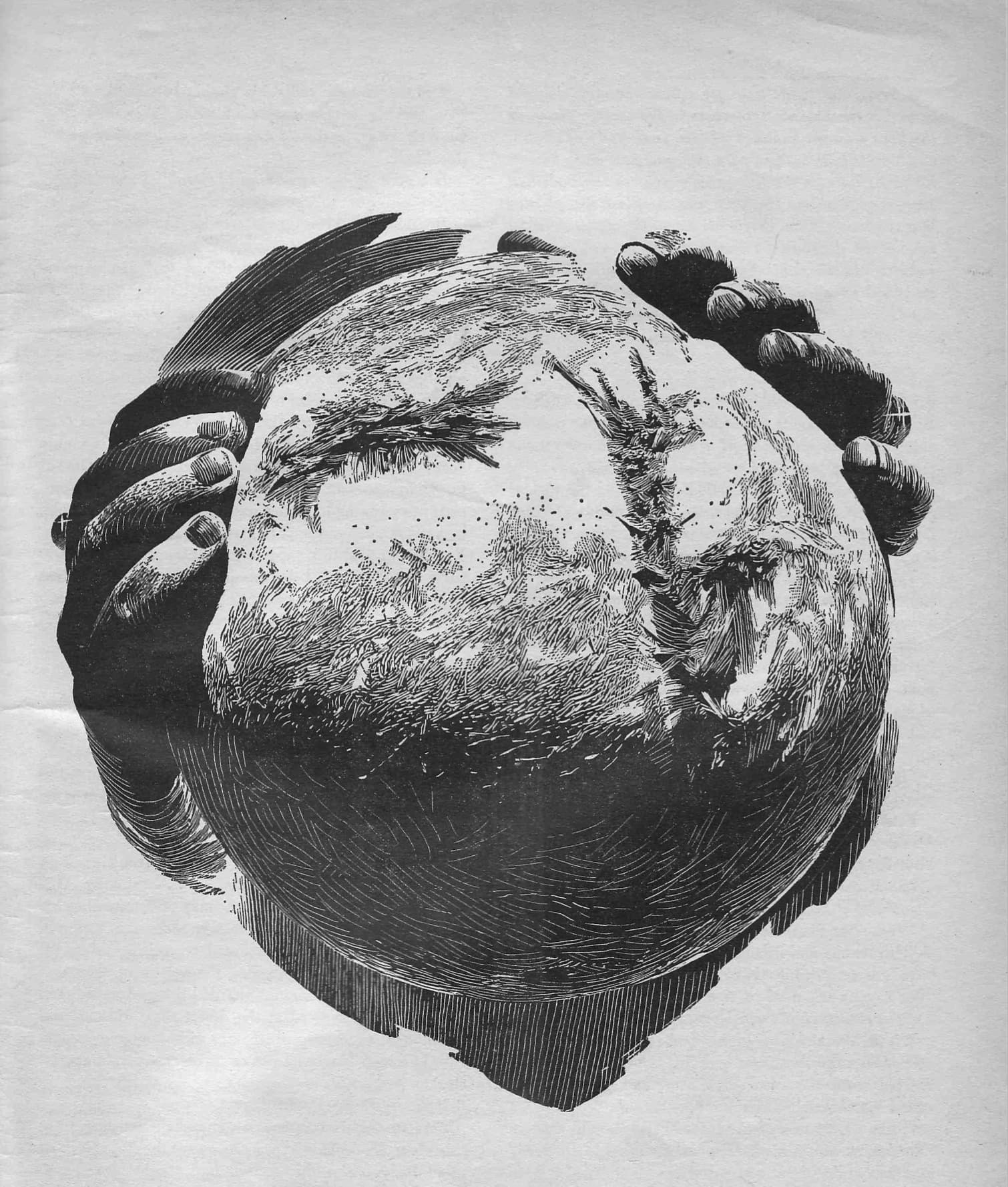
Arrakis, known as Dune and later as Rakis, was a harsh desert world in the Canopus system and the only natural source of the spice melange. Home to the Fremen and the sandworms, it became the seat of the Atreides empire and the center of the known universe.
Fremen
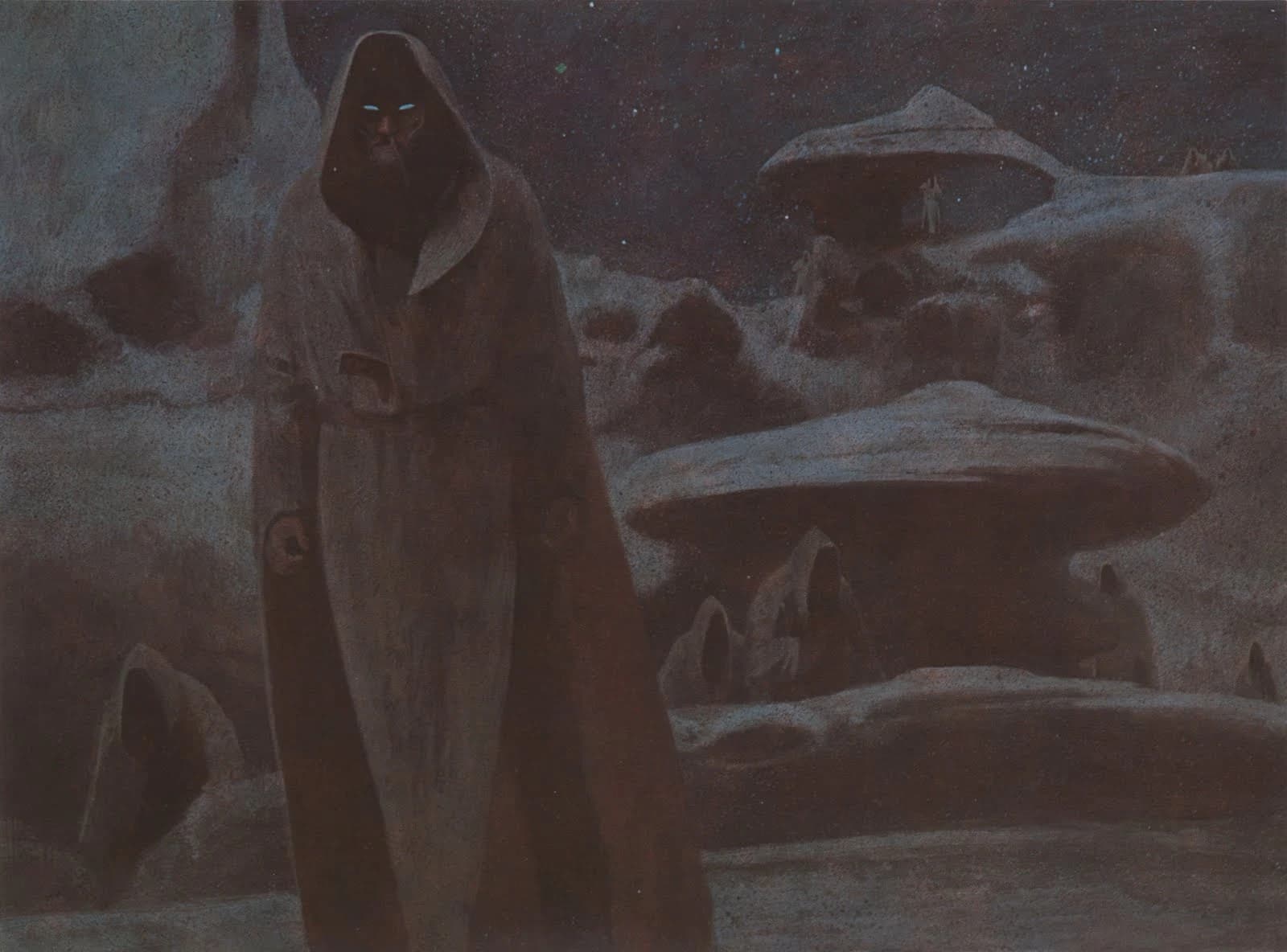
The Fremen were a culture of humans descended from the Zensunni Wanderers who made the desert planet Arrakis their home. Hardened by water scarcity and generations of persecution, they became the finest fighters in the Known Universe and the foot soldiers of Paul Atreides and his jihad.
Liet-Kynes
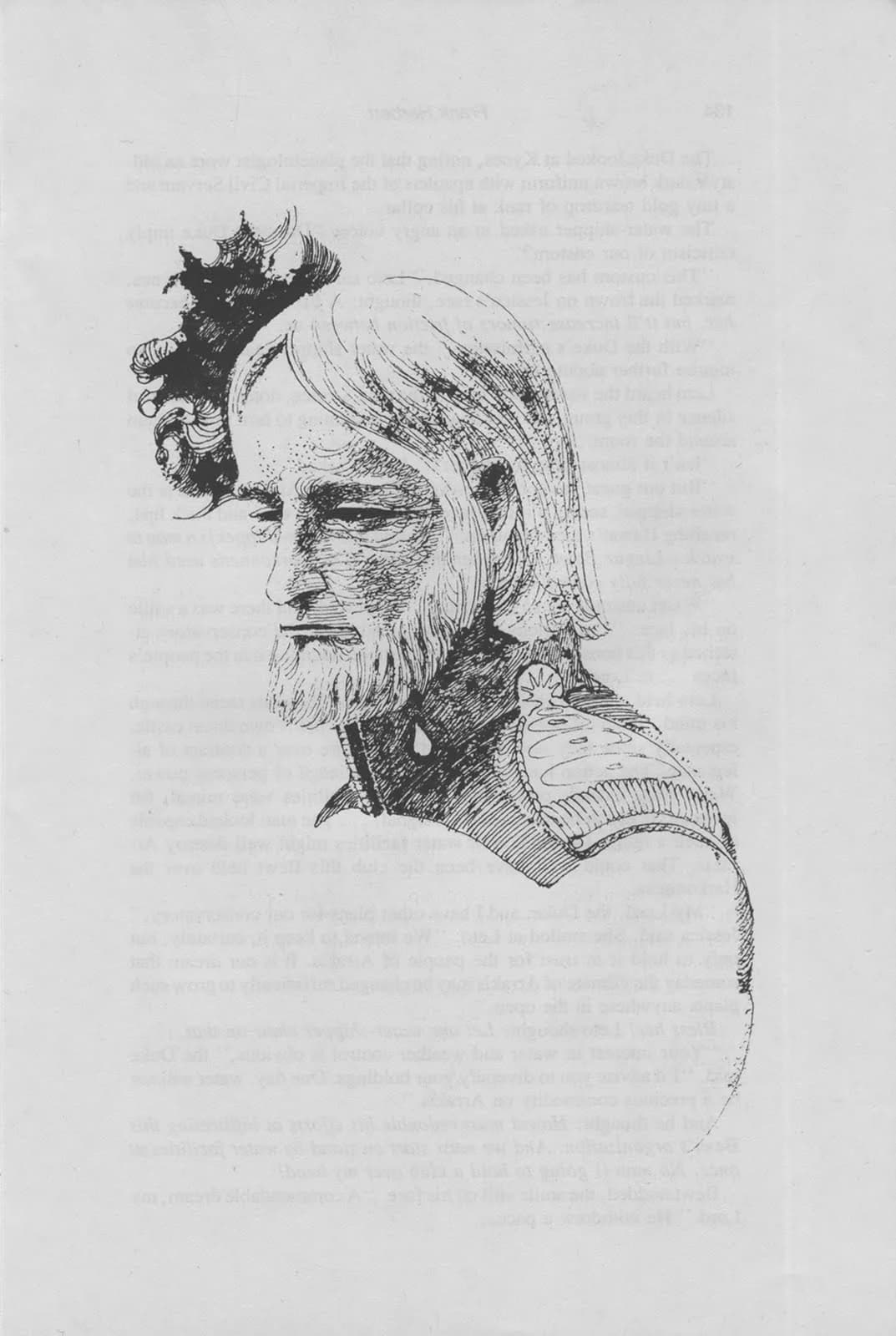
Liet-Kynes was the Imperial planetologist of Arrakis, Judge of the Change, and the secret leader of the Fremen. He carried on his father's dream of greening the desert and died saving Paul and Jessica from the Harkonnens.
Leto Atreides I: the Duke betrayed on Arrakis
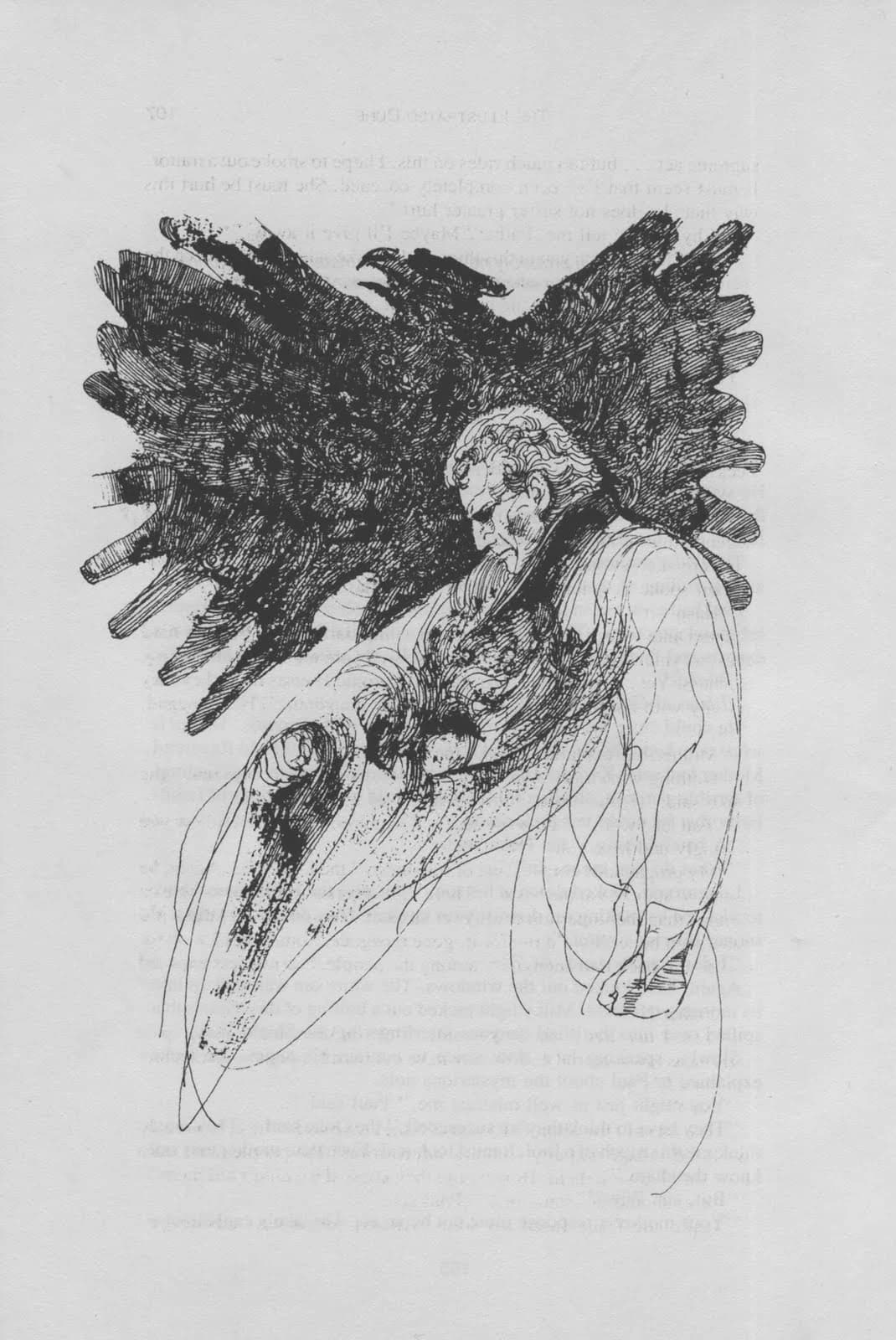
Duke of House Atreides and father of Paul. Shaddam handed him the spice fief of Arrakis, and the Harkonnens killed him there in 10191.
Mentioned in16 entries
Bronso of Ix: the Historian Executed for Doubting Muad'Dib
Bronso of Ix was the Ixian historian whose condemned words open Dune Messiah, a scholar put to death for writing about Paul Atreides as a man rather than a god. Frank Herbert gave him only a death cell interview and a book title. The later novels by Brian Herbert and Kevin J. Anderson turned him into Paul's childhood friend and secret ally.
Fremen
The Fremen were a culture of humans descended from the Zensunni Wanderers who made the desert planet Arrakis their home. Hardened by water scarcity and generations of persecution, they became the finest fighters in the Known Universe and the foot soldiers of Paul Atreides and his jihad.
Fremkit
A fremkit was a desert survival kit devised by the Fremen for staying alive in the open desert of Arrakis. Packed with navigation, shelter, wormriding, and water tools, it kept Paul and Jessica Atreides alive after they fled Arrakeen.
Garun: Naib of the Museum Fremen
Garun was the Naib of Tuono, a village of Museum Fremen on Arrakis in the final years of the God Emperor Leto Atreides II. He played host to Duncan Idaho and Siona Atreides during their exile, was exposed by Idaho as a Fremen in costume only, and wanted nothing more than to become a true Fremen.
Ghadhean al-Fali: the desert Naib who defied the Regency
Ghadhean al-Fali was a desert Fremen of Arrakis, a veteran of the Fedaykin death commandos of Muad'Dib who became a Naib of his people. His protest against the ecological transformation of Arrakis brought an assassination attempt into the Regency court and helped reveal the possession of Alia Atreides.
Liet-Kynes
Liet-Kynes was the Imperial planetologist of Arrakis, Judge of the Change, and the secret leader of the Fremen. He carried on his father's dream of greening the desert and died saving Paul and Jessica from the Harkonnens.
Lisan al-Gaib: Meaning of the Fremen Prophecy in Dune
Lisan al-Gaib means "the Voice from the Outer World", the off-world prophet of Fremen legend. The Bene Gesserit planted the prophecy on Arrakis centuries before Paul Atreides arrived, and Paul and Jessica used it to survive among the Fremen.
Maula pistol: the Fremen poison-dart gun of Dune
The maula pistol is a spring-loaded gun that fires poison darts, with a range of about forty metres. It is a small detail in Frank Herbert's Dune, but it makes sense on Arrakis, where shields draw sandworms and an old-fashioned dart gun still kills.
Selim Wormrider
Selim Wormrider was the exiled Zensunni of Arrakis who became the first person to ride a sandworm, founded the outlaw band that would become the Free Men, and laid the spiritual foundations of the Fremen people.
Sietch
Sietch was the Fremen term for a community or village. Hidden within the rock outcrops and caverns of the deserts of Arrakis, a sietch was a self contained settlement housing hundreds or thousands of families and the industries that sustained them.
Sietch Jacurutu: the water thieves the Fremen erased
Sietch Jacurutu was a legendary settlement of the deep desert whose people, the Iduali, murdered other Fremen for the water in their bodies until the tribes banded together and destroyed them. The survivors rebuilt under the name Fondak and sold passage off Arrakis to whoever could pay, and the sietch became the place where the nine year old Leto Atreides II found the shape of his Golden Path.
Siona Atreides
Siona Atreides was the daughter of Moneo and the culmination of Leto Atreides II's breeding program, the first human invisible to prescient vision. She led the rebellion against the God Emperor and helped engineer his death, then with Duncan Idaho carried the no-gene forward into the future of humankind.
+ 4 more
Get new articles in your inbox
No spam. New lore drops, canon conflicts, and deep dives only when they’re worth reading.
Some links on Lore Fortress are affiliate links. If you buy through them we earn a small commission at no extra cost to you.