Pelias: the king of Iolcus
Pelias was the demigod king of Iolcus, a son of Poseidon who feared the claim of his nephew Jason and sent him across the sea to fetch the Golden Fleece. The quest failed to rid him of his rival, and on Jason's return the sorceress Medea turned the king's own daughters into his executioners.
Pelias was the king of Iolcus in Thessaly, a son of Poseidon and the mortal woman Tyro, and the uncle of the hero Jason. It was Pelias who sent his nephew on the quest for the Golden Fleece, the relic that would one day pass from Jason's keeping into the hands of Kratos. The voyage he devised to rid himself of a rival instead brought the sorceress Medea into his kingdom, and the king who had sent a hero to his death died instead at the hands of his own daughters. (Bibliotheca; God of War II)
Blood of Poseidon#
Pelias was born in Iolcus to Poseidon, god of the sea, and to Tyro, the daughter of Salmoneus. By the same mother Poseidon also fathered Neleus, and through these two sons the sea god became the divine ancestor of the royal families of Thessaly and Messenia. Half god and half mortal, Pelias was counted among the demigods of the Greek world rather than its gods, one of the many children the Olympians left among mortal kind to rule kingdoms in their name. (Bibliotheca)
His descent placed him close to the heart of Olympus. Through his father he was a nephew of Zeus and Hades, and kin by blood to gods, heroes, and monsters across the Greek world. Pelias held to Poseidon, the father whose blood had made him a king, and it was in Poseidon's honor that he offered the sacrifice that set his ruin in motion. (Bibliotheca)
The stranger with one sandal#
Many years into his reign, Pelias offered a sacrifice by the sea in honor of Poseidon and summoned many to take part in it. Among those who answered was his nephew Jason. Hurrying toward Iolcus, Jason lost one of his sandals in the flooded river Anaurus, and he arrived at the king's sacrifice half shod. Some tellings gave the moment a divine hand, holding that it was Hera herself, disguised as an old woman, whom Jason helped across the swollen river when the sandal was lost. (Bibliotheca; Fabulae)
However the sandal left his foot, the arrival of the one sandaled stranger marked the turn of the king's fortunes. Jason was the rightful heir to the throne of Iolcus, and Pelias had no intention of yielding it. Rather than kill his nephew outright, the king set him a task from which no return was expected. (Bibliotheca)
The quest for the Golden Fleece#
Pelias sent Jason to fetch the Golden Fleece, the hide of a golden winged ram, which was kept in the far kingdom of Colchis. The fleece was to serve as a show of proof to Pelias that Jason was the rightful heir to the throne of Iolcus in Thessaly, and the price of the proof was a voyage across the breadth of the known world. To make it, Jason gathered a large force of armed warriors who took their name from the Argo, the ship in which they sailed. (Bibliotheca)
In Colchis the fleece lay under the guard of King Aeetes and a dragon that never slept, and by every reckoning the task should have killed Jason as Pelias intended. It did not, because Aeetes had a daughter. Medea, sorceress and priestess of Hecate, fell in love with the stranger, lulled the sleepless guardian with her craft, and fled Colchis at Jason's side with the greatest treasure of her father's house. The quest Pelias had built as a grave for his nephew instead sent back a hero with the fleece in his hands and a sorceress at his shoulder. (Bibliotheca)
The pot of the Peliades#
When Jason and Medea returned to Iolcus, Pelias still refused to give up his throne. The proof he had demanded was before him, and he set it aside, and it was that refusal that killed him. Medea conspired to have the king's own daughters, the Peliades, do the work no Argonaut could have done inside the palace walls. (Bibliotheca)
The sorceress showed the daughters of Pelias a wonder. She told them she could turn an old ram into a young one by cutting up the old ram and boiling it, and during her demonstration a live young ram sprang from the pot. Excited by what they had seen, the Peliades cut their own father into pieces and threw them into a pot, expecting the old king to emerge rejuvenated. Pelias did not survive. The king who had guarded his throne against heroes and prophecies was undone in his own hall, by his own children, through a trick that promised him youth. (Bibliotheca)
The king in Jason's telling#
The name of Pelias was spoken again long after his death, and far from Iolcus. Jason's last voyage carried him and his crew to the Island of Creation, where his men were killed by the monsters of the Bog of the Forgotten and Jason himself was partly devoured by a Mole Cerberus. Kratos, come to that island on his war against Olympus, slew the beast and cut the Golden Fleece free. In the game Jason is already dead, but in the novelisation he survives long enough for the Spartan to hear from him the history of the relic and of the king who had demanded it. (God of War II; God of War II (novel))
By the account Jason gives in the novelisation, Medea convinced the women of the king's own house to murder Pelias and eat him, for the king had meant to betray Jason on the strength of a false prophecy. The telling was harsher than the tale of the pot and the promised youth, but the two accounts agreed on everything that mattered. Pelias had turned on his nephew, Medea had answered treachery with treachery, and the flesh of the king of Iolcus had gone into the pot his own daughters filled. Of his kingdom after him the records said nothing, and the last legacy of Pelias was the fleece itself, won to satisfy a demand he never intended to honor, carried at last on the wrist of the Ghost of Sparta. (God of War II (novel))
Sources
- GameGod of War II, Santa Monica Studio, 2007
- BookGod of War II (novel), Robert E. Vardeman, Del Rey, 2013
- BookBibliotheca, Pseudo-Apollodorus, 1st or 2nd century AD
- BookFabulae, Hyginus, 1st century AD
Spotted a factual error or a primary source we missed? Email a correction. Every flagged claim gets reviewed.
Followed from this entry
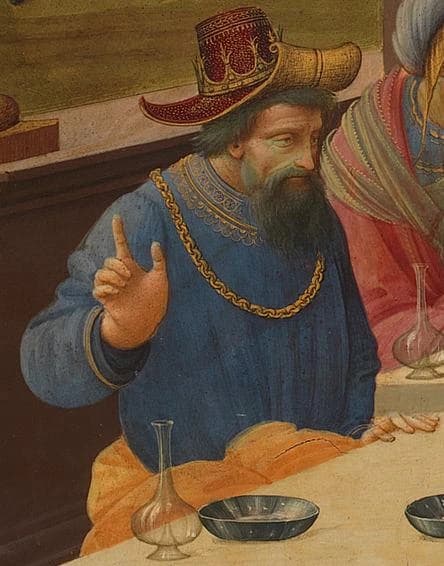
Aeetes: the king of Colchis
Aeetes was the king of Colchis, a son of the sun god Helios and the father of the sorceress Medea. The Golden Fleece came to rest in his kingdom as a gift of gratitude, and its theft by Jason of the Argonauts cost the king his daughter, his son, and the greatest treasure of his house.
Medea: the sorceress of Colchis
Medea was a sorceress and priestess of Hecate, a princess of Colchis born of the bloodline of Helios. Her craft won Jason the Golden Fleece, and her jealousy later destroyed his household, driving the Argonaut on the doomed voyage that ended on the Island of Creation.
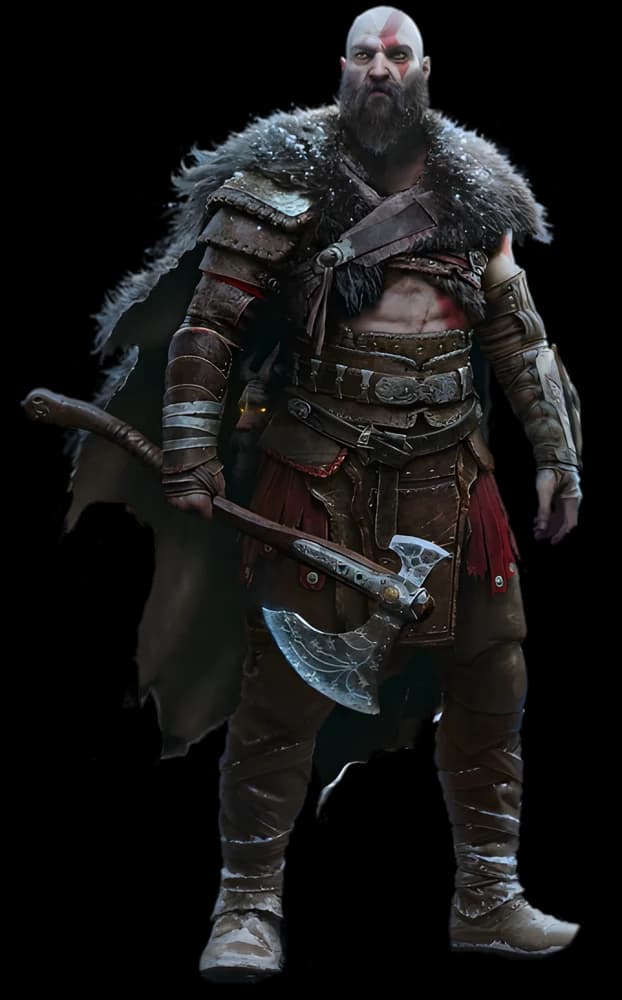
Kratos
Kratos was the demigod son of Zeus who rose from a Spartan general to the Greek God of War, destroyed the pantheon of Olympus in a quest for vengeance, and then began again in the Norse realms as a father seeking to leave his bloody past behind.

Cerberus: the multi-headed hounds of Hades
The Cerberi were a race of fierce multi-headed hounds, most of them kept as the beasts of Hades in the Underworld. Kratos faced them across many of his journeys, from the breeders of Pandora's Temple to the Mole Cerberus that had swallowed Jason and the Golden Fleece.
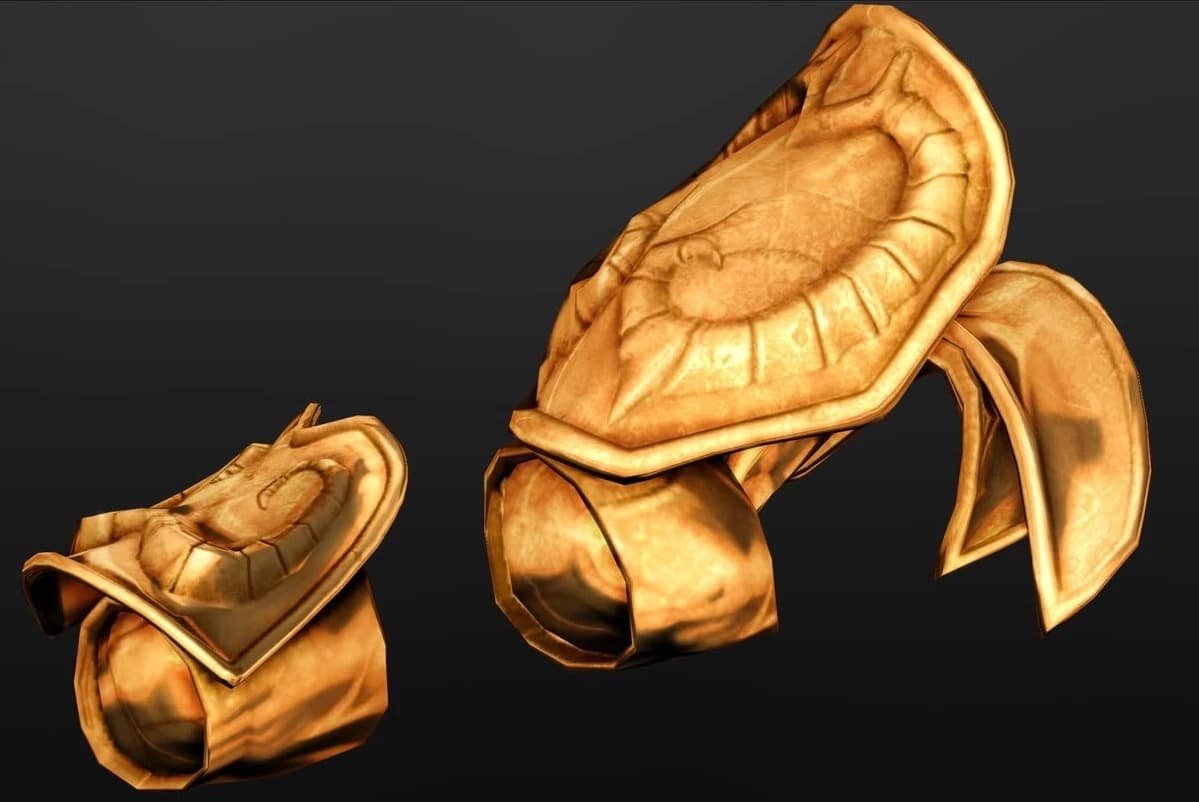
Golden Fleece
The Golden Fleece was a powerful golden armlet that had once belonged to the Argonaut Jason. Worn by Kratos, it could turn aside and reflect any attack, from a Gorgon's stone stare to a blow from the Blade of Olympus itself.
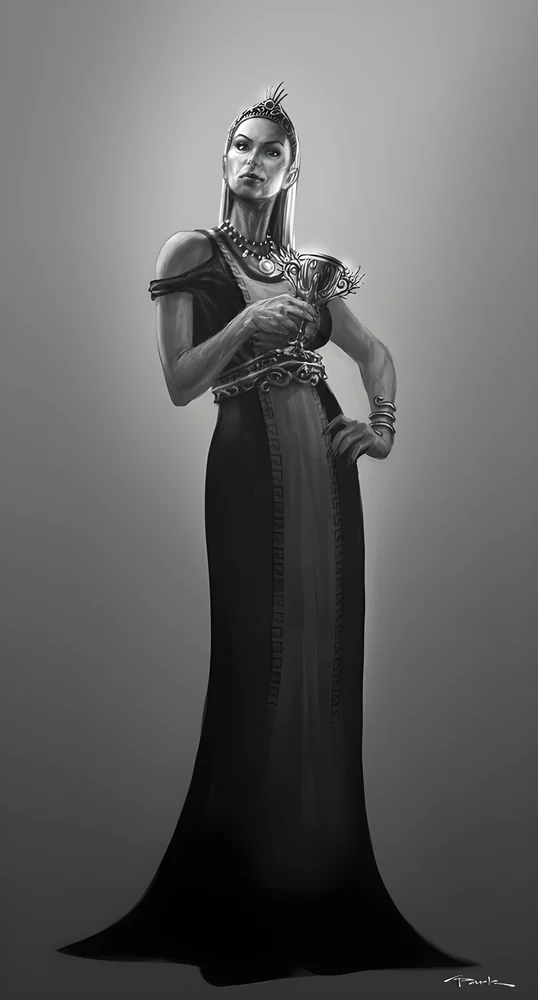
Hera
Hera was the Olympian Goddess of Marriage and Queen of the Gods, the sister and wife of Zeus and mother of Ares. Embittered by her husband's affairs and her withering garden, she set Hercules against Kratos before the Spartan snapped her neck and the world's flora died with her.
Mentioned in1 entry
Get new articles in your inbox
No spam. New lore drops, canon conflicts, and deep dives only when they’re worth reading.
Some links on Lore Fortress are affiliate links. If you buy through them we earn a small commission at no extra cost to you.