Evolution Chamber: crucible of zerg genetic advancement
The evolution chamber was a living zerg structure grown to test and refine the genetic code of the Swarm. Conceived under the Overmind's mandate against complacency, it hardened the strains of the zerg and passed each improvement outward through the hive cluster.
The evolution chamber was a living zerg structure grown to advance the genetic code of the Swarm's ground-based breeds. Conceived under the Overmind, it served as a testing ground where the strains of the Zerg were examined, refined, and hardened, feeding improved genetic templates into the wider hive cluster. Terran observers regarded it as one of the clearest expressions of the Swarm's ceaseless drive toward adaptation, and its inner workings remained only partly understood by the Terran scientists who studied its remains. (StarCraft; StarCraft Field Manual)
The Overmind's mandate#
The evolution chamber existed because the Overmind held that complacency was the road to defeat. To guard against stagnation, the Overmind drove the zerg to evolve without pause, and the evolution chamber gave that impulse a physical seat within the hive cluster. Inside its walls the genetic code of lesser breeds was tested and improved, raising the offensive and defensive capabilities of the Swarm's ground-based strains. Rather than a single fixed set of creatures, the zerg were meant to remain in flux, always folding new advantages into their biology, and the chamber was the organ through which that constant reworking was carried out. (StarCraft)
Its purpose was therefore both experimental and productive. The chamber acted as a proving ground for genetic material, and once a refinement proved sound it could be spread across the strains that fought for the Swarm. In this way the evolution chamber turned the Overmind's philosophy into a concrete, repeatable process, ensuring that the zerg brought a stronger and better-armored host to each new battlefield than the one before. (StarCraft)
Anatomy and growth#
The base of an evolution chamber formed from the genetic template of an unknown creature. As the structure grew, it took shape around a complete skeleton of skull, spinal column and ribs. When a chamber was destroyed, this internal frame fell apart and spilled from the ruin, exposing the bones around which the living structure had been built. The biological origin of the creature that provided the template stayed unknown to terran scientists, who were unable to identify what beast the skeleton had once belonged to. (StarCraft Field Manual; StarCraft II: Heart of the Swarm)
The chamber was sheathed in a hardened skin that granted it near immunity to small arms fire. Only sustained fire from massed C-14 rifles could break that hide open and bring the structure down, a resilience that let evolution chambers endure at the heart of a hive cluster while lighter defenses absorbed an enemy assault. Extending from the body of the chamber were genetic transmission appendages, specialized organs that allowed it to pass genetic information out to the other structures of the cluster. (StarCraft Field Manual)
Function within the hive cluster#
Within a hive cluster the evolution chamber worked as a distribution point for genetic progress. Through its transmission appendages it carried each refinement of the zerg genome to the surrounding structures, so that improvements tested in one place could be propagated across the whole base rather than remaining isolated. This gave the Swarm a way to standardize its advances, uplifting its ground breeds in concert as new genetic material was validated. (StarCraft Field Manual)
The chamber also served a defensive role in the growth of a base. It was required before a creep colony could mutate into a spore colony, the anti-air defensive form that guarded a hive cluster against enemy flyers. Without an evolution chamber present, that line of development could not be opened, which tied the Swarm's static defense directly to its capacity for evolution. The structure thus stood at the junction between the zerg's offensive growth and their ability to hold ground. (StarCraft)
Independence and the Cerberus Program#
Evolution chambers possessed hyperadaptive tendencies, adjusting and altering themselves in ways that resisted direction from outside the Swarm. This self-willed quality made them difficult to control for the Cerberus Program, a terran effort that sought to seize and exploit zerg strains for its own ends. A chamber left to its own devices would follow its own biological inclinations rather than the commands of its would-be handlers. (StarCraft II: Legacy of the Void)
To bring the structures to heel, the Cerberus Program circumvented their independence by chemical means. The arteries of each chamber were pumped full of command pheromones, flooding the structure with signals that overrode its natural adaptive impulses and imposed obedience on the broods under Cerberus control. It was a crude but effective method of mastering a living machine that had been grown to change on its own. (StarCraft II: Legacy of the Void)
The evolution pit aboard the leviathans#
In the form of the evolution pit, the same structure was grown within leviathans, the enormous living vessels that carried the Swarm between worlds. Housed inside the body of a leviathan, the evolution pit continued the chamber's core purpose, driving zerg evolution forward and guiding the reshaping of strains and the selection of new forms far from any planetary hive cluster. This let a brood pursue its genetic advancement even while in transit through space. (StarCraft II: Heart of the Swarm)
Aboard such vessels Abathur guided the reworking of the Swarm's creatures from an evolution pit, weighing one line of development against another as strains were refined. While Sarah Kerrigan led the Swarm from her leviathan, the evolution pit remained the place where her forces were reshaped, a mobile counterpart to the ground-bound chamber that kept the process of evolution close at hand wherever the leviathan traveled. (StarCraft II: Heart of the Swarm)
The terran replicant#
The evolution chamber drew the attention of terran engineers who sought to reproduce zerg biology by artificial means. Under Project Simulant, a replicated version of the structure was constructed from a polymeric alloy capable of flexing to accommodate the rolling biomechanical processes within, an engineered shell standing in for the living tissue of the true chamber. The imitation aimed to capture the function of the zerg original without relying on the genuine flesh of the Swarm. (StarCraft II: Legacy of the Void)
A separate mechanical counterpart, the mecha evolution chamber, served Egon Stetmann's Mecha Swarm. Where the zerg original was a creature in its own right, drawn from an unknown genetic template and prone to adapting on its own, Stetmann's version was a fabricated device meant to do the same job under his control. (StarCraft II: Co-op Missions)
Sources
- GameStarCraft, Blizzard Entertainment, 1998
- GameStarCraft II: Heart of the Swarm, Blizzard Entertainment, 2013
- GameStarCraft II: Legacy of the Void, Blizzard Entertainment, 2015
- GameStarCraft II: Co-op Missions, Blizzard Entertainment, Stetmann commander, 2019
- BookStarCraft Field Manual, Rick Barba, Insight Editions, 2015
Spotted a factual error or a primary source we missed? Email a correction. Every flagged claim gets reviewed.
Followed from this entry
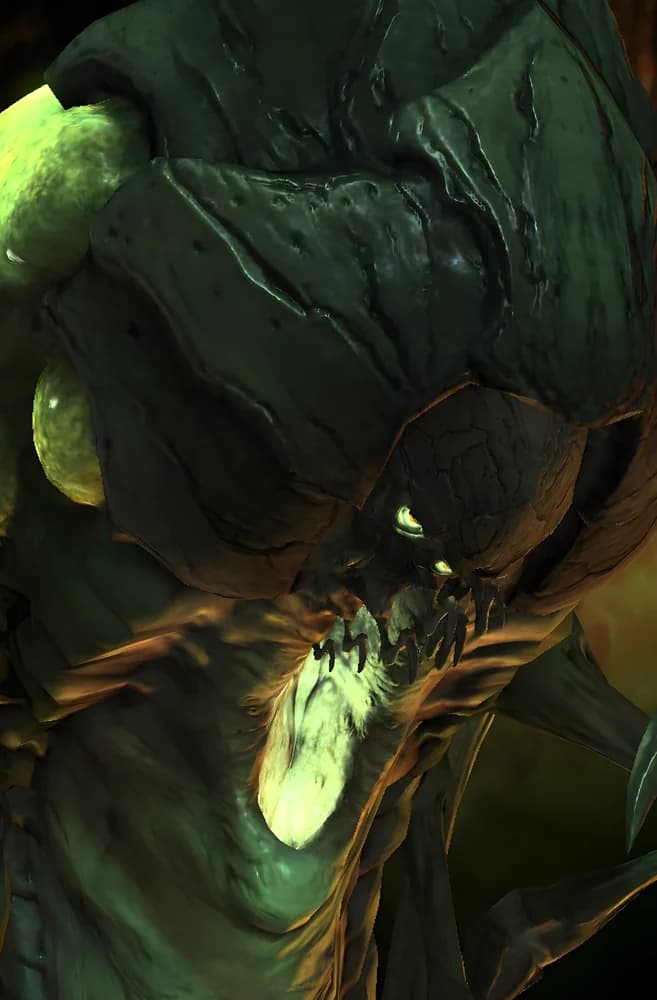
Abathur: the Swarm's living DNA library
Spun from many species by the Overmind, Abathur designed the Queen of Blades. He later betrayed Zagara to restart the wars he thought zerg needed.
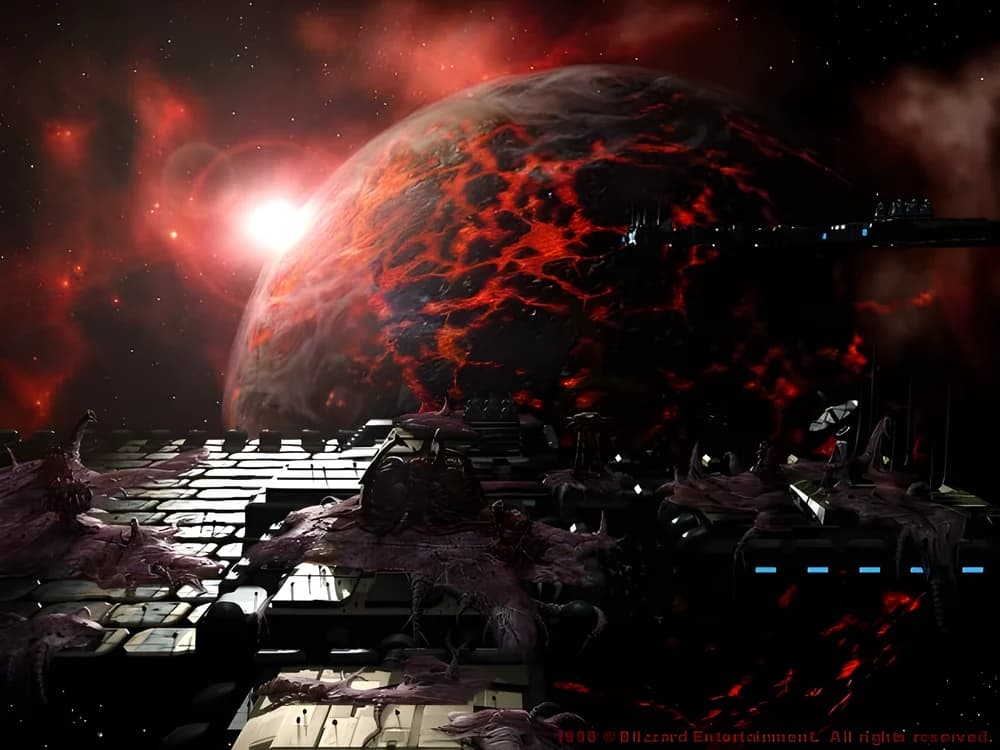
Creep
Creep was a living zerg superorganism, a viscous purple substance that nourished zerg structures and strains, bound entire colonies into a single organism, and could consume a whole planet within days if left unchecked.
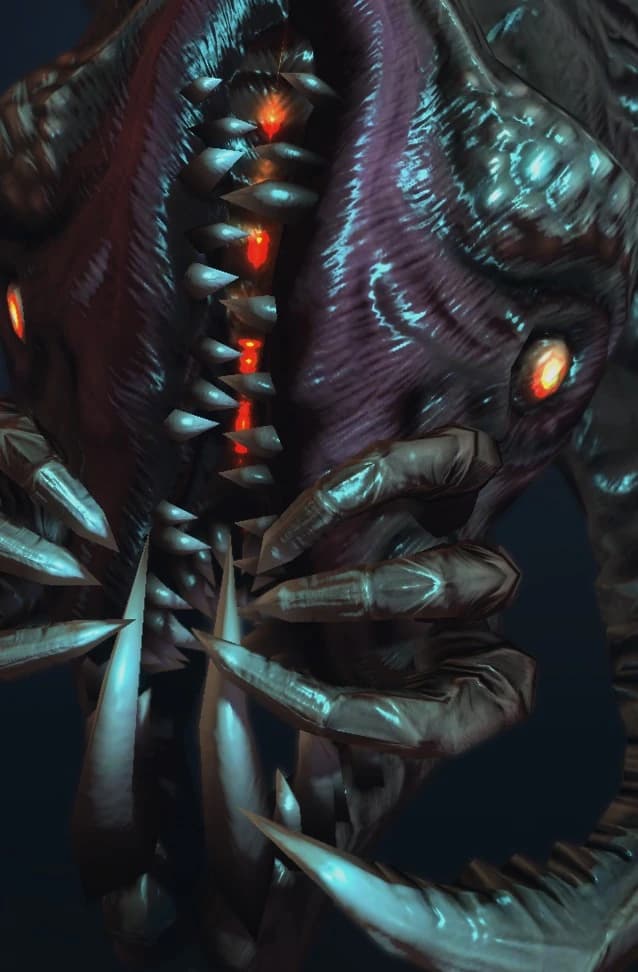
Leviathan
The leviathan was a massive airborne zerg breed that served as the Swarm's equivalent of a capital ship. Measured at around eleven kilometers long and capable of deep-space and warp travel, it became Sarah Kerrigan's mobile base of operations after her return to the zerg.
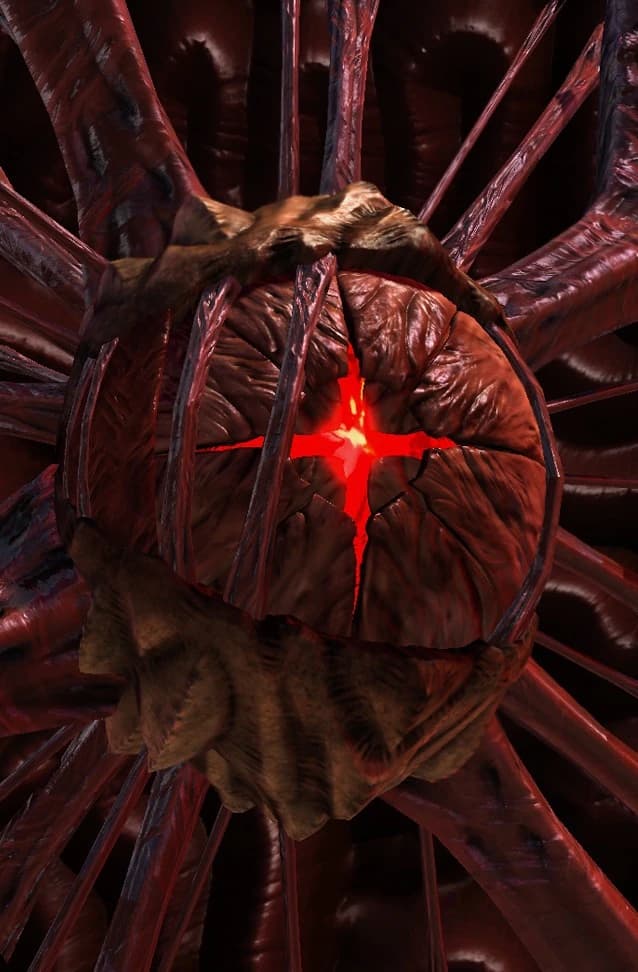
Overmind: the zerg mind that betrayed Amon
Amon built the Overmind on Zerus to drive the zerg at the protoss. It worked in secret against him instead, and died above Aiur to Tassadar's sacrifice.

Sarah Kerrigan, the Queen of Blades
Sarah Kerrigan was a psychic terran who began as a Confederate ghost, rose to be second-in-command of the Sons of Korhal, and after Arcturus Mengsk abandoned her on Tarsonis was captured and infested by the Zerg Swarm to become the Queen of Blades.

Zerg
The zerg are a ravenous collective of biologically advanced aliens who evolve by assimilating the essence of other species in pursuit of genetic perfection. Created by Amon's xel'naga on Zerus and bound to the Overmind, they grew into one of the three dominant powers of the galaxy.
Get new articles in your inbox
No spam. New lore drops, canon conflicts, and deep dives only when they’re worth reading.
Some links on Lore Fortress are affiliate links. If you buy through them we earn a small commission at no extra cost to you.