Every Zerg Unit in StarCraft and StarCraft II, Explained
Every zerg strain from StarCraft, Brood War and the three StarCraft II campaigns, from the zergling to the leviathan. Each entry covers the species it came from, what it does for the Swarm and where it turns up in the story.
The zerg don't build an army so much as grow one. The xel'naga took a race of small insectoids on Zerus and boosted the two traits that made them interesting, genetic versatility and psychic sensitivity, and the Swarm has used both ever since to absorb any species worth having. It strips a creature's genetic essence, folds it into its own code and breeds a new strain from a larva, so almost every zerg on this list started life as something else. StarCraft (1998) and Brood War set out the first strains, and the three StarCraft II campaigns (2010 to 2015) added new ones and brought old ones back. (StarCraft (manual); StarCraft II: Heart of the Swarm)
Ground strains#
These are the warriors and workers that crawl, burrow and charge. Most of them hatch from larvae at a hatchery, and several can be morphed further into a second strain in the field. For how these strains were grouped into fighting forces, see the guide to every zerg brood. (StarCraft (manual); StarCraft II: Wings of Liberty)
Zergling#
The zergling was bred from the Zz'gashi dune runner, its DNA boiled down to such a simple form that two zerglings hatch from one larva. It's the Swarm's basic assault warrior and the most numerous zerg mutation, and it hits in huge packs under the direction of larger strains. Zerglings fought in every war of the Koprulu Sector and appear in every StarCraft and StarCraft II game. (StarCraft (manual); StarCraft II official website)
Baneling#
The baneling is a zergling turned into a living bomb. Its body is rebuilt around swollen acid sacs, and it rolls into enemy lines and bursts. Terrans first saw them during the siege of Cask in 2503, and by 2511 the Dominion had a spray to stop the acid eating through its vehicles. It appears in all three StarCraft II campaigns. (StarCraft: Ghost: Spectres; StarCraft: Evolution; StarCraft II: Wings of Liberty)
Roach#
The roach came from the zantar slug of Garrxax, a creature known for healing fast. Assimilation pushed its metabolism to ten times the slug's, so a burrowed roach can close grievous wounds in moments, and it spits a corrosive saliva the slug passed on. Roaches fight in all three StarCraft II campaigns. (StarCraft II official website; StarCraft Field Manual)
Ravager#
The ravager is a roach evolved into an artillery strain, with a heavier frame that stores a fiery fluid on its back for lobbing at entrenched positions. It entered the Swarm on the eve of the End War. It first appears in Legacy of the Void. (StarCraft Field Manual; StarCraft II: Legacy of the Void)
Hydralisk#
The hydralisk was made from the slothien, a peaceful herbivore, and became one of the most savage strains in the Swarm. Its spines evolved from the slothien's defensive hairs, and it fires them in volleys at ground and air targets. Hydralisks served as the Swarm's shock troops from the Great War onwards and appear in every StarCraft and StarCraft II game. (StarCraft (manual); StarCraft II Science series)
Lurker#
The lurker was first evolved from Tiamat Brood hydralisks, an ambush strain that attacks from underground with lines of spines. Kerrigan dropped it after the Brood War, but during the Second Great War Abathur found feral lurkers on Cavir, leftovers from the Tiamat Brood, and brought the strain back. It appears in Brood War, Heart of the Swarm and Legacy of the Void. (StarCraft Field Manual; StarCraft II: Heart of the Swarm)
Ultralisk#
The ultralisk evolved from the brontolith, a docile creature it no longer looks anything like. It's the Swarm's heavy assault beast, armed with huge bone scythes called kaiser blades. Late in the Second Great War, Sarah Kerrigan rebuilt the strain from test subjects held at Skygeirr Station. It appears in StarCraft, Brood War and every StarCraft II campaign. (StarCraft (manual); StarCraft II: Heart of the Swarm)
Swarm host#
The swarm host descends from the primal hosts of Zerus, which the pack leader Brakk turned against Kerrigan's forces. Abathur adapted their essence into a strain that burrows and pours out a steady stream of locusts. Some swarm hosts fell under Amon's control in the End War. It appears in Heart of the Swarm and Legacy of the Void. (StarCraft II: Heart of the Swarm; StarCraft II: Legacy of the Void)
Locust#
Locusts are the short-lived attackers that a swarm host breeds inside its body. They first fought on foot, spitting acid at anything nearby, and later strains grew wings and could take to the air. They exist only to be thrown at the enemy and die within a short time. They appear in Heart of the Swarm and Legacy of the Void. (StarCraft II: Heart of the Swarm; StarCraft II: Legacy of the Void)
Infested terran#
An infested terran is a human rewritten by the zerg virus. The Swarm wanted terran psionic potential to beat the protoss, but most people weren't psychic or weren't compatible, so most infested terrans lost their minds and were used as walking bombs. In StarCraft II, infestors spawn them as disposable soldiers. They appear in StarCraft, Brood War and all three StarCraft II campaigns. (StarCraft; StarCraft (manual); StarCraft II: Wings of Liberty)
Broodling#
Broodlings are tiny, vicious creatures that live only for a few moments. The first ones grew from spores a queen fired into a living target, which burst out of the host and killed it. The newer generation grows in sacs on a brood lord and is dropped on enemies as living ammunition. Broodlings appear in StarCraft, Brood War and StarCraft II. (StarCraft (manual); StarCraft II Science series)
Drone#
The drone was assimilated from the gashyrr wasps of Eldersthine, though the manual also says drones were already working for the zerg before they left Zerus. It's the Swarm's worker: it gathers minerals and vespene gas and morphs itself into every zerg structure. The wasp's wings and legs became webbed membranes, and a drone hovers on a float bladder instead of flying. It appears in every StarCraft and StarCraft II game. (StarCraft (manual); StarCraft II Science series)
Larva#
The larva is the closest living thing to the original insectoids of Zerus. The xel'naga made it bigger and tougher, but it kept the versatility and psychic sensitivity that drew them to it, and every other ground and air strain starts as one. Larvae appear in every StarCraft and StarCraft II game. (StarCraft (manual))
Air strains#
The Swarm's fliers range from scouts the size of a house to the leviathan, a creature that crosses deep space on its own. Many of them come from the same root: the mutalisk can morph into several other air strains. (StarCraft (manual); StarCraft Field Manual)
Overlord#
The overlord came from the Gargantis proximae, giant semi-intelligent space-faring creatures that volunteered for assimilation rather than die out. The zerg barely altered them, so overlords kept their memories, and they served the cerebrates as scouts and as the psychic relays that tied broods together. When the Swarm broke apart, some ancient overlords went feral, woke up as themselves and gathered small broods. Overlords appear in every StarCraft and StarCraft II game. (StarCraft (manual); StarCraft II official website; Just an Overlord)
Overseer#
The overseer is an overlord evolved for watching, with its senses turned towards scouting and picking out hidden enemies. It can also spawn changelings to spy on the enemy from inside its ranks. It appears in all three StarCraft II campaigns. (StarCraft II: Wings of Liberty)
Mutalisk#
The mutalisk was bred from the mantis screamer of the desolate Dinares sector, and it flies through both air and open space. It's one of the most adaptable strains in the Swarm: it could morph into a guardian before the Great War, a devourer in the Brood War, and a viper or brood lord in Kerrigan's Swarm. Cerberus Program mutalisks even picked up traits from the Tyrador gigabat. It appears in every StarCraft and StarCraft II game. (StarCraft (manual); StarCraft: Brood War (manual); StarCraft II: Heart of the Swarm; StarCraft II: Legacy of the Void)
Guardian#
The guardian is a mutalisk morphed into a slow, armoured bomber, thought to be based on the mantis screamer's nesting form. It lobs explosive globs of acid at ground targets and has no defence against fliers. Brood lords replaced guardians after the Brood War, though Amon used feral ones on Aiur in the End War. It appears in StarCraft, Brood War and Legacy of the Void. (StarCraft (manual); StarCraft Field Manual; StarCraft II: Legacy of the Void)
Devourer#
The devourer is a wasp-like evolution of the mutalisk, bigger and slower, made to hunt capital ships. It spits corrosive acid that eats through the armour plating of terran and protoss starships. Devourers stayed in service through the Second Great War, and under Overqueen Zagara some were adapted to launch things other than acid. It appears in Brood War. (StarCraft: Brood War (manual); StarCraft Field Manual; StarCraft II: Heart of the Swarm; StarCraft: Evolution)
Scourge#
The scourge is a blind kamikaze flier of unknown origin that hunts starships and explodes against them. Its simple genes let two hatch from one larva, but it can only fly for a few hours before it needs feeding, so scourges often rest on the backs of overlords. Leviathans could still spawn them in the Second Great War, and the Swarm kept dedicated scourge nests in 2505. It appears in StarCraft and Brood War. (StarCraft Field Manual; StarCraft (manual); StarCraft: Queen of Blades; StarCraft II: Wings of Liberty)
Corruptor#
The corruptor is a squid-like flier with a brain-shaped body, snapping beaks and dangling tentacles, and nobody knows its core genus. It was bred to fight capital ships and is feared by terrans and protoss alike. Its template was lost when the Swarm broke apart in the Second Great War, but feral corruptors survived, and Amon took some into his forces in the End War. It appears in all three StarCraft II campaigns. (StarCraft II official website; StarCraft II: Heart of the Swarm; StarCraft II: Legacy of the Void)
Brood lord#
The brood lord is the Swarm's aerial siege strain, a huge manta-like creature that drops broodlings on ground targets. It was first morphed from the corruptor, and when the corruptor template was lost Abathur rebuilt it from the mutalisk instead. By 2505 it was again grown from corruptors, using genetic remnants kept in greater spires. It appears in all three StarCraft II campaigns. (StarCraft II official website; StarCraft II: Heart of the Swarm; StarCraft Field Manual)
Leviathan#
The leviathan is the zerg answer to a capital ship, a flying creature about 11 kilometres long that can cross deep space and travel through warp space. It carries tens of thousands of zerg inside, grows its own mutalisks and brood lords, and grabs ships with huge hollow tentacles. Kerrigan used one as her flagship in Heart of the Swarm. Leviathans appear in all three StarCraft II campaigns. (StarCraft Field Manual; StarCraft: Evolution; StarCraft II: Heart of the Swarm)
Support and spellcasters#
These strains fight with poison, parasites and tricks rather than claws. Several were rebuilt between games, so the StarCraft and StarCraft II versions can be very different animals. (StarCraft (manual); StarCraft II official website)
Queen (StarCraft)#
The original queen was derived from the Arachnis brood-keeper, though it didn't keep the brood-keeper's egg laying. It was a flying infestation specialist that served the cerebrates, oversaw maturing zerg near the hives and fired spores that burst into broodlings. After the Brood War its role was moved into a new, tougher form, and only a few old queens lived on. It appears in StarCraft and Brood War. (StarCraft (manual); StarCraft Field Manual)
Queen (StarCraft II)#
The StarCraft II queen was bred at the Queen of Blades' order to guard the future of the Swarm and keep its hives. It descends from the older queen, and through it from the Arachnis brood-keeper, but it can't fly and spends its life nursing larvae and spreading creep. Queens were in use by 2501 and appear in all three StarCraft II campaigns. (StarCraft II: Legacy of the Void; StarCraft II official website; StarCraft Field Manual)
Defiler#
The defiler has no known core genus: it carries the DNA of every other zerg breed and works like a cancer factory, brewing toxins from leftover genetic chains. It cloaks allies in swarms of tiny creatures, spreads plague, and eats other zerg to fuel the process. Its poisons proved nearly as deadly to the zerg as to their enemies, and the Swarm later reworked its template into the viper. It appears in StarCraft and Brood War. (StarCraft (manual); StarCraft II Science series)
Infestor#
The infestor evolved from the borbu matriarch and was in use by 2503. It moves underground, shielded by plates of assimilated mould and fungus, and it fights by seizing enemy minds, spreading fungal growth and spawning infested terrans. It appears in all three StarCraft II campaigns. (StarCraft II official website; StarCraft: Ghost: Spectres; StarCraft II Science series)
Viper#
The viper was first a primal zerg strain whose vicious defences caught Abathur's eye. The Swarm built it on the defiler's template, perfected with DNA from an unknown species, keeping the defiler's tricks while cutting out the poison that hurt the zerg. In Kerrigan's campaign it evolved from the mutalisk. It appears in Heart of the Swarm and Legacy of the Void. (StarCraft II Science series; StarCraft II: Legacy of the Void; StarCraft II: Heart of the Swarm)
Changeling#
The changeling is a protoplasmic spy that the overseer spits out. It shifts into the shape of an enemy soldier and wanders in its lines, but it's weak and only lives for a short time. The Queen of Blades developed changelings by 2503 and tested them on terrans before open war broke out. It appears in all three StarCraft II campaigns. (StarCraft: Ghost: Spectres; StarCraft II: Wings of Liberty)
Nydus worm#
The nydus worm is a huge burrowing creature that bursts out of the ground and opens a tunnel back to the Swarm's nydus network, letting whole broods cross a battlefield or a planet underground. It appears in all three StarCraft II campaigns, following the nydus canal of Brood War. (StarCraft: Brood War; StarCraft II: Wings of Liberty)
Heroic and campaign-only strains#
Some strains show up only in the campaigns: wild primal breeds, unique monsters and the evolutions Abathur offered Kerrigan in Heart of the Swarm. In those missions she picked one of two strains for each core unit, and the other was discarded. (StarCraft II: Heart of the Swarm)
Primal zerg#
The primal zerg of Zerus are zerg who escaped the Overmind and kept the original way of life: kill, take the victim's essence, grow stronger. Their packs field primal zerglings, roaches, hydralisks, ultralisks, mutalisks and hosts, rougher and more reptilian than the Swarm's. After Kerrigan's visit to Zerus, Dehaka and his pack left with her. They appear in Heart of the Swarm and Legacy of the Void. (StarCraft II: Heart of the Swarm; StarCraft II: Legacy of the Void)
Raptor and swarmling#
These were Abathur's two zergling evolutions. The raptor could leap up cliffs and onto its prey, while the swarmling hatched three to a larva, almost at once. Kerrigan kept one and dropped the other. They appear in Heart of the Swarm. (StarCraft II: Heart of the Swarm)
Splitter and hunter banelings#
The splitter baneling burst into smaller banelings when it popped, so one explosion became several. The hunter strain could leap at its targets from range. Both are Heart of the Swarm evolutions. (StarCraft II: Heart of the Swarm)
Vile and corpser roaches#
The vile roach's acid slowed whatever it hit. The corpser roach left something nastier behind: enemies it killed burst open to release roachlings. Both are Heart of the Swarm evolutions. (StarCraft II: Heart of the Swarm)
Impaler#
The impaler is a hydralisk evolution built from the essence of impaler colonies, an old Overmind defensive strain and ancestor of the sunken colony. It burrows and spears enemies from long range with a single tentacle. It was offered to Kerrigan as the alternative to the lurker, and appears in Heart of the Swarm. (StarCraft II: Heart of the Swarm)
Noxious ultralisk#
The noxious strain gave the ultralisk a toxic cloud that ate at anything standing near it. Kerrigan took it into the Swarm during the Second Great War as one of her two ultralisk choices. It appears in Heart of the Swarm. (StarCraft II: Heart of the Swarm)
Torrasque#
The Torrasque is a rare ultralisk strain that comes back from the dead. In the Great War it drew the power to revive from the Overmind; Kerrigan's version breaks its own tissue down when it dies and uses the energy to regrow inside a cocoon. It fought in Brood War campaigns as a single legendary beast and returned as an ultralisk evolution in Heart of the Swarm. (StarCraft: Brood War; StarCraft II: Heart of the Swarm)
Carrion and creeper swarm hosts#
These were the two swarm host evolutions. The carrion strain bred locusts that could fly, and the creeper strain could tunnel across the battlefield to a new position. They appear in Heart of the Swarm. (StarCraft II: Heart of the Swarm)
Brutalisk#
The brutalisk is a huge ultralisk variant that looks like a cross between a zergling and a hydralisk. One turned up on Redstone III and another on Tyrador VIII, and the Dominion held captives at Castanar and Skygeirr until Kerrigan freed the Skygeirr pair and turned them on their jailers. Amon later used them on Aiur, and one lured to Borea by the Defenders of Man was killed by Nova Terra. It appears in every StarCraft II campaign. (StarCraft Field Manual; StarCraft II: Wings of Liberty; StarCraft II: Heart of the Swarm; StarCraft II: Legacy of the Void; StarCraft II: Nova Covert Ops)
Omegalisk#
The omegalisk is an ultralisk-like monster, much larger than the standard strain. One guarded the tunnels under Char that held Kerrigan's nydus network, and Zeratul saw others in his vision of an Amon-controlled Swarm wiping out the protoss. It appears in Wings of Liberty. (StarCraft II: Wings of Liberty)
Aberration#
The aberration is an infested terran mutated so far that its lower half is a mass of pincers under a tough carapace. Aberrations were around by 2504, and a year later Broodmother Zagara made them a breed of their own that could hatch from larvae. They appear in every StarCraft II campaign. (StarCraft II: Wings of Liberty; StarCraft II: Heart of the Swarm)
Hunter Killer#
Hunter Killers are an elite hydralisk strain first bred by Daggoth of the Tiamat Brood. They guarded Kerrigan's chrysalis above Tarsonis, and Daggoth sent a pair to escort her when she boarded the science vessel Amerigo. They turn up again in Brood War, and in Wings of Liberty they escort Kerrigan on Tyrador VIII and Char. (StarCraft; StarCraft: Brood War; StarCraft II: Wings of Liberty)
Frequently asked questions
- What is the strongest Zerg unit?
- The lore doesn't rank them. The biggest by far is the leviathan, a living capital ship about 11 kilometres long. On the ground the ultralisk is the Swarm's heaviest regular strain, and its torrasque variant can regrow itself from a cocoon after it's killed.
- What species was the hydralisk made from?
- The slothien, a peaceful caterpillar-like herbivore. The original StarCraft manual (1998) says the Overmind twisted it into one of the most fierce and sadistic zerg strains. Blizzard's later StarCraft II unit profiles add that its spines evolved from the slothien's defensive hairs.
- What happened to the defiler and the scourge?
- The defiler's toxins were nearly as dangerous to the zerg as to their enemies, so the Swarm reworked its template with DNA from another species and produced the viper. The scourge never fully vanished: leviathans could still spawn them in the Second Great War and the Swarm kept dedicated scourge nests in 2505, but they weren't part of StarCraft II's standard roster.
- Which Zerg units are only in StarCraft 1?
- The flying queen, the defiler, the guardian, the devourer and the scourge were StarCraft and Brood War strains that left the standard roster in StarCraft II. The lurker was dropped too, then came back in Heart of the Swarm (2013) and Legacy of the Void (2015).
- Where do Zerg units come from?
- Almost all of them start as larvae. A larva carries genetic code that lets it grow into any strain the hive has learned, and the Swarm adds new strains by absorbing the essence of species it finds useful.
- Who designs new Zerg strains?
- In the Great War the Overmind and its cerebrates shaped the broods. In StarCraft II that job falls to Abathur, the evolution master who reworks essence into new strains for Sarah Kerrigan's Swarm.
Sources
- GameStarCraft, Blizzard Entertainment, 1998
- BookStarCraft (manual), Peter Underwood, Bill Roper, Chris Metzen and Jeffrey Vaughn, Blizzard Entertainment, 1998
- GameStarCraft: Brood War, Blizzard Entertainment, 1998
- BookStarCraft: Brood War (manual), Peter Underwood, Chris Metzen and Bill Roper, Blizzard Entertainment, 1998
- BookStarCraft: Queen of Blades, Aaron Rosenberg, Pocket Star, 2006
- GameStarCraft II: Wings of Liberty, Blizzard Entertainment, 2010
- WebStarCraft II official website, Blizzard Entertainment, zerg unit profiles, 2010
- BookStarCraft: Ghost: Spectres, Nate Kenyon, Pocket Star, 2011
- GameStarCraft II: Heart of the Swarm, Blizzard Entertainment, 2013
- WebJust an Overlord, Gavin Jurgens-Fyhrie, Blizzard Entertainment short story, 2013
- WebStarCraft II Science series, Blizzard Entertainment, 2014 to 2015
- BookStarCraft Field Manual, Rick Barba, Insight Editions, 2015
- GameStarCraft II: Legacy of the Void, Blizzard Entertainment, 2015, including the in-game Collections tab
- GameStarCraft II: Nova Covert Ops, Blizzard Entertainment, 2016
- BookStarCraft: Evolution, Timothy Zahn, Del Rey, 2016
Spotted a factual error or a primary source we missed? Email a correction. Every flagged claim gets reviewed.
Followed from this entry
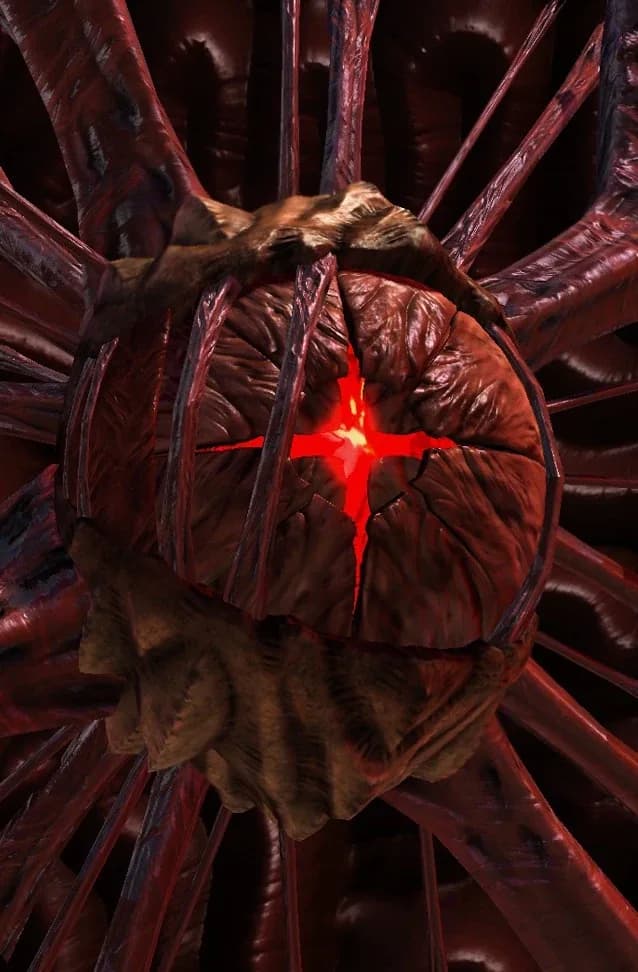
Every Zerg Brood, From the Garm Brood to Kerrigan's Swarm
Every named zerg brood in StarCraft, from the Overmind's six great broods of the Great War to the broodmothers who served the Queen of Blades. Each entry covers who led it, what it was good at, where it fought and how it ended.

Hatchery: foundational structure of every zerg colony
The hatchery was the living heart of every zerg colony, spreading creep, birthing larvae, and digesting minerals and vespene gas into nutrients for the Swarm. Grown from a single metamorphosed drone, it could mature into a lair and finally a hive, and the zerg defended it with fanatical zeal.
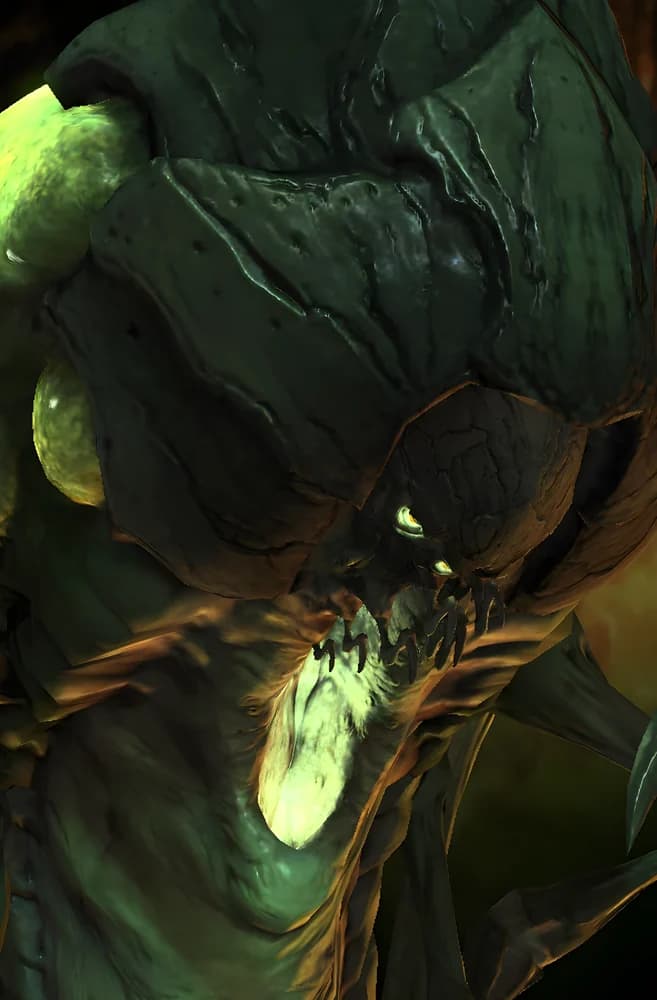
Abathur: the Swarm's living DNA library
Spun from many species by the Overmind, Abathur designed the Queen of Blades. He later betrayed Zagara to restart the wars he thought zerg needed.
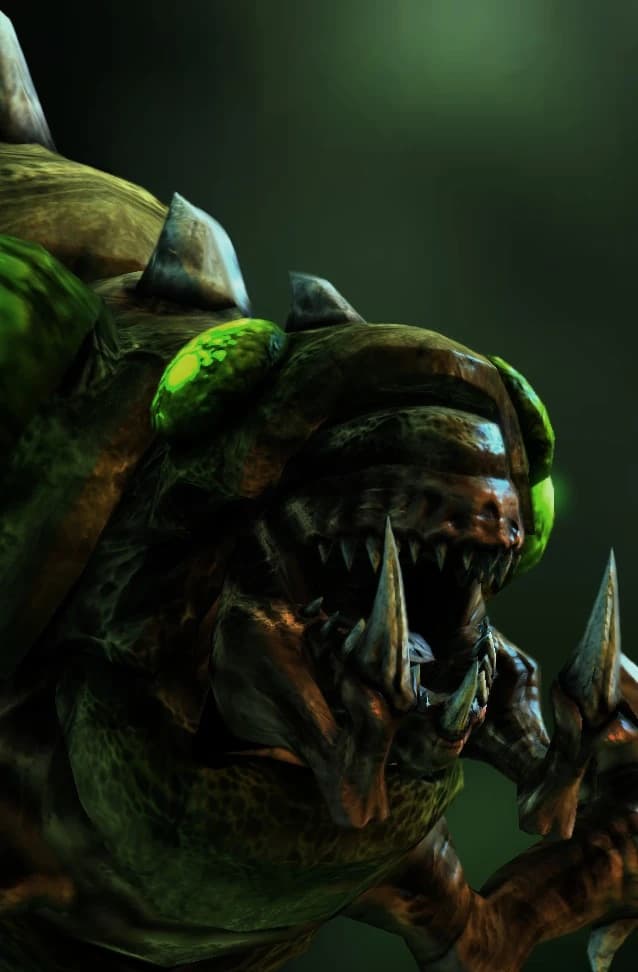
Baneling
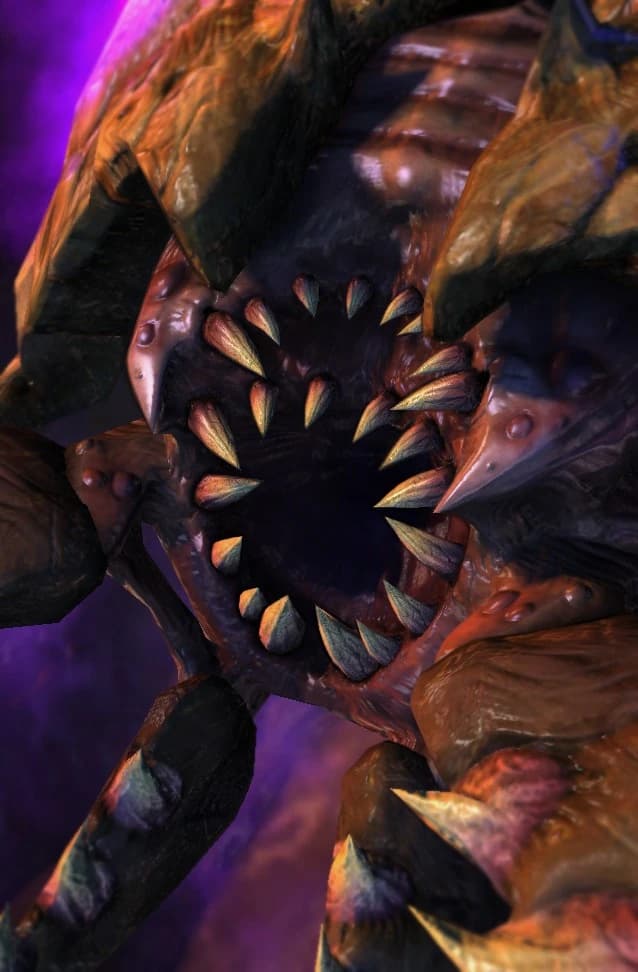
The baneling was an explosive zerg strain evolved from the zergling through a brief chrysalis phase, its body remade to carry sacs of highly corrosive acid. A living suicide bomber, the baneling ruptured among enemy formations in a shower of searing acid that devastated both structures and ground forces.
Brood Lord
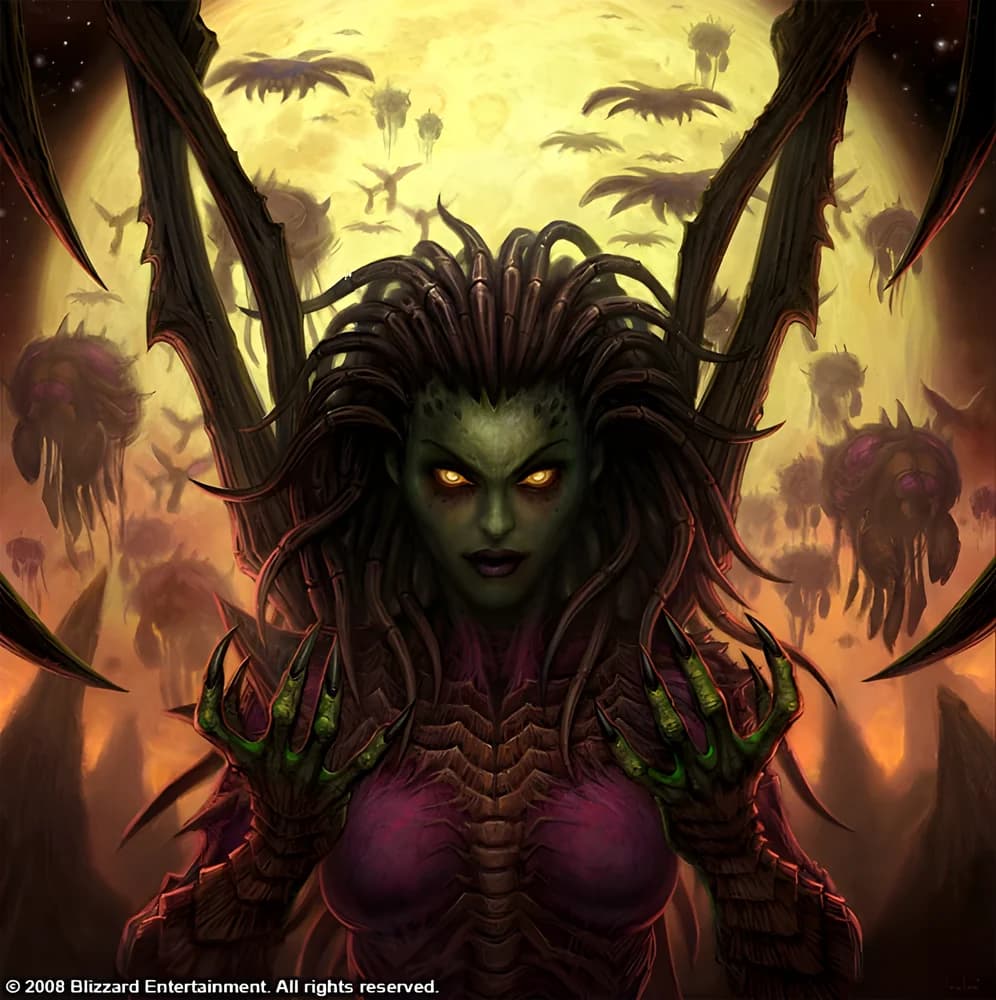
The brood lord is a massive manta-like Zerg flyer morphed from the corruptor, used by the Swarm as an aerial siege creature that rains living broodlings down onto ground targets. It serves only in the largest of conflicts.
Brood War: Kerrigan's war for the Swarm
The Brood War was a zerg civil war between Kerrigan and the cerebrate Daggoth over who would succeed the Overmind. The UED invaded from Earth at the same time.
Mentioned in15 entries
Abathur: the Swarm's living DNA library
Spun from many species by the Overmind, Abathur designed the Queen of Blades. He later betrayed Zagara to restart the wars he thought zerg needed.
Baneling
The baneling was an explosive zerg strain evolved from the zergling through a brief chrysalis phase, its body remade to carry sacs of highly corrosive acid. A living suicide bomber, the baneling ruptured among enemy formations in a shower of searing acid that devastated both structures and ground forces.
Brood Lord
The brood lord is a massive manta-like Zerg flyer morphed from the corruptor, used by the Swarm as an aerial siege creature that rains living broodlings down onto ground targets. It serves only in the largest of conflicts.
Every Zerg Brood, From the Garm Brood to Kerrigan's Swarm
Every named zerg brood in StarCraft, from the Overmind's six great broods of the Great War to the broodmothers who served the Queen of Blades. Each entry covers who led it, what it was good at, where it fought and how it ended.
Hydralisk
The hydralisk was a versatile zerg combat strain evolved from the peaceful slothien, armored in carapace plates and able to launch volleys of armor-piercing spines from its upper body. Forming the backbone of the Swarm's onslaughts, the hydralisk symbolized zerg power to terrans more than any other strain.
Infestor
The infestor is a burrowing Zerg support strain evolved from the borbu matriarch, capable of moving while burrowed, seizing control of enemies with a neural parasite, and disgorging infested marines and larvae on the battlefield.
Lurker
The lurker is an arachnid Zerg strain evolved from the hydralisk that attacks only while burrowed, erupting waves of super-dense spines from beneath the ground to impale anything caught above it.
Mutalisk
The mutalisk was the primary airborne strain of the zerg, evolved from the mantis screamer and able to travel through atmosphere and deep space alike. Communicating by scent and attacking with parasitic glaive wurms, mutalisks wheeled across the skies in vast numbers over zerg nests and forces.
Overlord
The overlord is a Zerg flyer evolved from the assimilated Gargantis proximae, serving the Swarm as a coordinator of lesser strains, a long-range sensory scout, an unmatched psionic transmitter, and a deep-space transport.
Primal Zerg
The primal zerg were a zerg subspecies of the planet Zerus who never fell under the Overmind's control, retaining the physical and psychological traits of the original zerg. Reptilian rather than insectile, individual rather than hive-bound, they pursued an endless Darwinian struggle to ascend the evolutionary ladder.
Roach
The roach was a heavily armored zerg ground strain evolved from the fast-healing zantar slug, able to spit corrosive acid and regenerate grievous wounds at high speed while burrowed. Tough and nearly impervious to small-arms fire, the roach anchored the Swarm's ground assaults alongside the zergling.
Ultralisk
The ultralisk was the most powerful ground strain the zerg possessed, a massive living battering ram evolved from the docile brontolith and armed with near-indestructible kaiser blades. Heavily armored and able to charge through protoss force fields, the ultralisk served as the Swarm's siegebreaker.
+ 3 more
Get new articles in your inbox
No spam. New lore drops, canon conflicts, and deep dives only when they’re worth reading.
Some links on Lore Fortress are affiliate links. If you buy through them we earn a small commission at no extra cost to you.