Swarm Host
the zerg locust breeder
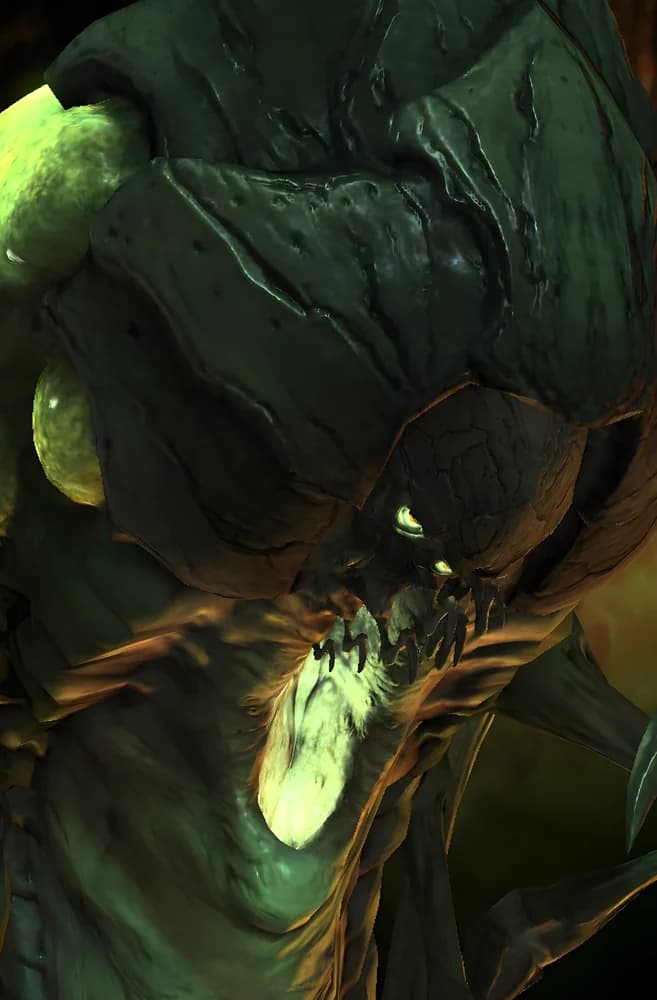
The swarm host was a zerg siege strain that burrowed into the ground and birthed an endless supply of short-lived locusts from an incubator on its back. Adapted by Abathur from the primal hosts of Zerus, it gave the Swarm a living artillery piece.
The swarm host, called the "egg monster" by terrans, was a zerg siege strain that emerged within Kerrigan's Swarm during the events of the Second Great War. Generated by an infestation pit, it burrowed into the ground and produced a seemingly endless supply of short-lived locusts from a breeding organ on its back, allowing a single swarm host to wear down and overwhelm an entire army. It was adapted by the evolution master Abathur from the primal hosts of the world Zerus. (StarCraft II: Heart of the Swarm; StarCraft II unit profile: Swarm Host; StarCraft Field Manual)
Biology and the locust incubator#
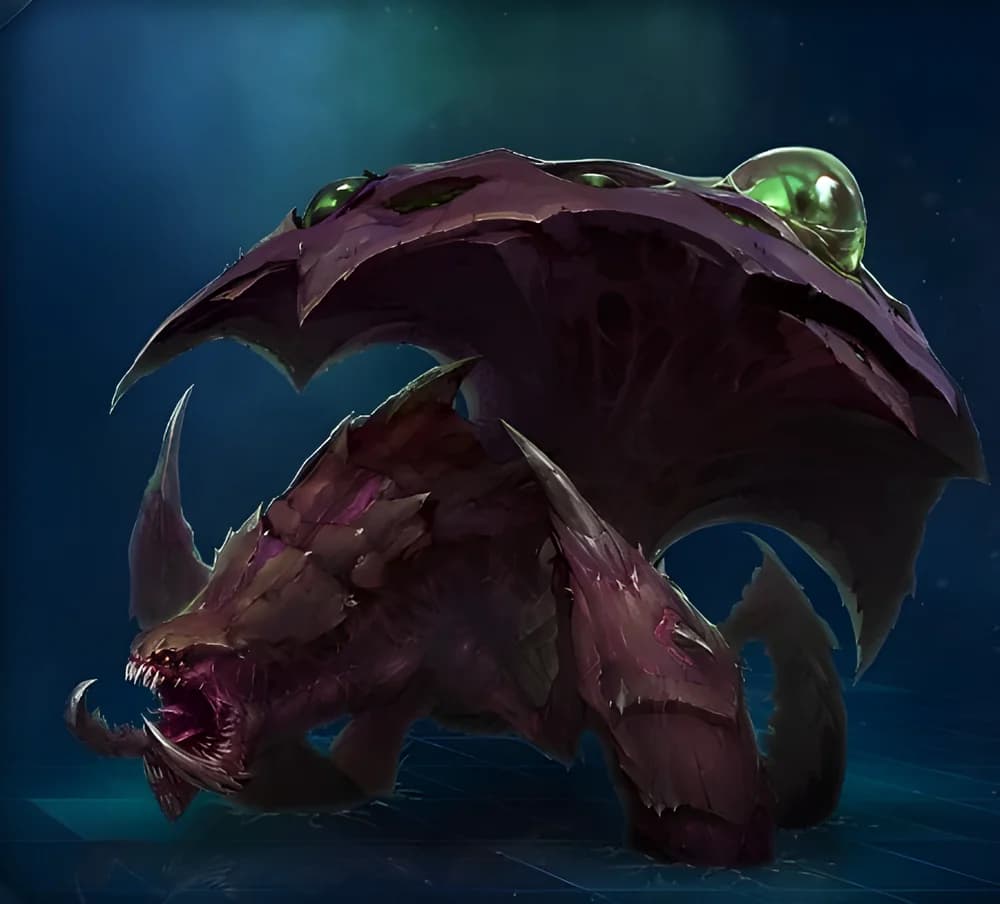
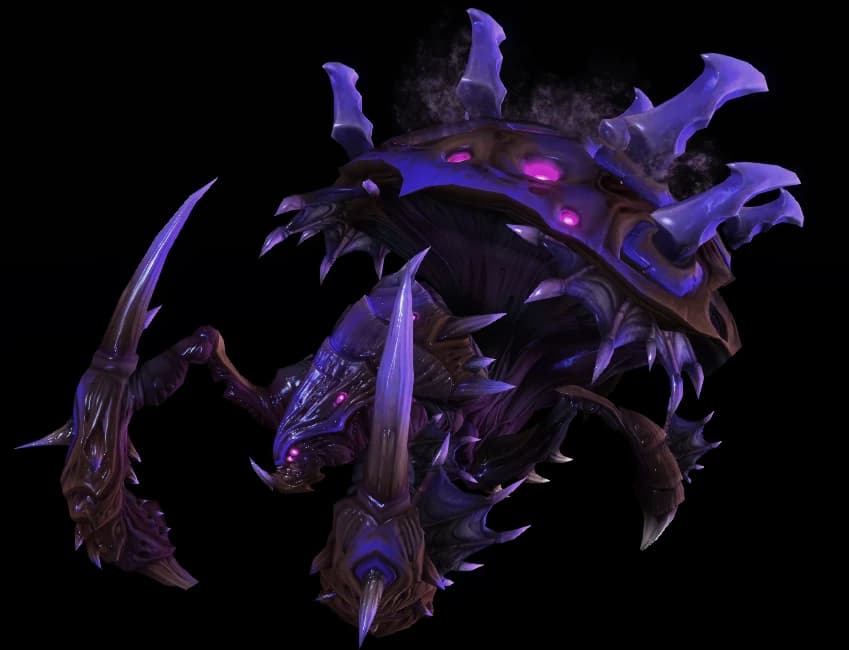
The swarm host carried a large, mushroom-shaped structure on its back that served as a living breeding ground. This incubator weaponized the millions of diminutive larvae that inhabited the creature's acidic bloodstream. Through a simple system of membranes for matter exchange, glands that flooded the offspring with hormones to hyper-accelerate their growth, and ducts that carried them efficiently to bubbling pockets on the incubator's surface, the swarm host birthed deadly but short-lived locusts to destroy any threat to the Swarm. The same larvae also fed on the host's damaged tissue, sealing wounds and destroying any foreign matter that entered its body. When the creature was threatened or drawn into combat, a subtle chemical reaction signaled the larvae to head for the incubator, where they were matured into living weapons. (StarCraft II unit profile: Swarm Host)
To deploy, the swarm host buried itself in the ground. Its legs bore powerful muscles that could vibrate at hypersonic speeds, in a manner not unlike the teeth of the nydus worm. Even so, the creature could not at first burrow quickly enough to keep pace with shifting battle. To correct this, a set of fragile but regenerating capillaries was added: when the swarm host dug, these capillaries broke and its acidic blood softened the soil, letting it sink underground in seconds. A specialized skeletal system of flexible osseous structures, which slid and locked into position much like the hydraulics of a terran siege tank, let the swarm host hold its position and balance while spewing locusts or enduring heavy fire. The strain's great limitation was its lack of mobility, which left it exposed to faster enemies wielding area damage. (StarCraft II unit profile: Swarm Host)
The swarm hosts of the Leviathan Brood were uniquely specialized for amphibious assault and carried genetic advantages that let them move swiftly through oceans to fall upon prey from the water. (StarCraft II: Legacy of the Void)
Origin and history#
The progenitors of the swarm host were a strain of primal zerg called primal hosts, native to the world Zerus. The Swarm first encountered them when they were used by the primal zerg against Sarah Kerrigan's forces under the pack leader Brakk, though one large and powerful primal host named Slivan was herself a pack leader. The evolution master Abathur incorporated the strain into Kerrigan's Swarm soon afterward, adapting the primal host's essence to create the swarm host proper. (StarCraft II: Heart of the Swarm; StarCraft II: Legacy of the Void)
Later, as primal zerg fought alongside the Swarm, many swarm host strains began to merge again with their primal host progenitors, producing hybrids that shared traits of both. Reports within the Terran Dominion suggested that swarm hosts eventually developed the ability to spawn locusts even without being burrowed. Swarm hosts enslaved by the Cerberus Program were enhanced with microfactories that let their handlers control the spawned locusts through remote-controlled headgear. (StarCraft II: Legacy of the Void; StarCraft Field Manual)
During the End War, a number of swarm hosts came under the control of the fallen xel'naga Amon and were inducted into his brood. They were destroyed on Aiur by the Tal'darim Highlord Alarak and the Nerazim Matriarch Vorazun. (StarCraft II: Legacy of the Void)
Frequently asked questions
- What is a swarm host in StarCraft?
- The swarm host, called the egg monster by terrans, was a zerg siege strain that burrowed into the ground and produced a seemingly endless supply of short-lived locusts from a breeding organ on its back. A single swarm host could wear down and overwhelm an entire army.
- How does the swarm host breed locusts?
- It carries a large, mushroom-shaped incubator on its back that weaponizes the millions of tiny larvae living in its acidic bloodstream. Glands flood the larvae with hormones to hyper-accelerate their growth, maturing them into locusts that are ejected to fight.
- Where did the swarm host come from?
- Its progenitors were a strain of primal zerg called primal hosts, native to the world Zerus. The evolution master Abathur incorporated the strain into Kerrigan's Swarm by adapting the primal host's essence.
- What is the swarm host's main weakness?
- The strain's great limitation was its lack of mobility, which left it exposed to faster enemies wielding area damage. To deploy, the swarm host had to bury itself in the ground.
- What happened to the swarm hosts during the End War?
- A number of swarm hosts came under the control of the fallen xel'naga Amon and were inducted into his brood. They were destroyed on Aiur by the Tal'darim Highlord Alarak and the Nerazim Matriarch Vorazun.
Gallery
Images via StarCraft Wiki
Sources
- GameStarCraft II: Heart of the Swarm, Blizzard Entertainment, 2013
- WebStarCraft II unit profile: Swarm Host, Blizzard Entertainment, StarCraft II website, 2013 and 2014
- BookStarCraft Field Manual, Rick Barba, Insight Editions, 2015
- GameStarCraft II: Legacy of the Void, Blizzard Entertainment, 2015 (including Collections skin descriptions)
Spotted a factual error or a primary source we missed? Email a correction. Every flagged claim gets reviewed.
Followed from this entry

Larva
The larva was the base zerg unit from which all other strains and structures were born. Carrying the genetic code of the entire Swarm in its DNA, a single larva could pupate into any breed the hive required, and the first zerg the terrans ever encountered.
Leviathan
The leviathan was a massive airborne zerg breed that served as the Swarm's equivalent of a capital ship. Measured at around eleven kilometers long and capable of deep-space and warp travel, it became Sarah Kerrigan's mobile base of operations after her return to the zerg.
Nydus Worm
The nydus worm was a zerg transport strain that tunneled beneath a battlefield to deliver Swarm forces to distant locations. An evolution of the nydus canal, it stretched its own body to line the tunnels it dug and emerged to disgorge zerg warriors far behind enemy lines.
Abathur: the Swarm's living DNA library
Spun from many species by the Overmind, Abathur designed the Queen of Blades. He later betrayed Zagara to restart the wars he thought zerg needed.

End War: Amon's crusade on the galaxy
The resurrected xel'naga Amon corrupted the Khala and cost the protoss both Aiur and Shakuras. Kerrigan, remade as a xel'naga, killed him in the Void.

Kerrigan's Swarm: the Zerg Swarm under the Queen of Blades
Kerrigan's Swarm was the faction of the Zerg Swarm led by Sarah Kerrigan, the Queen of Blades, formed when the death of the Overmind split the leaderless zerg and Kerrigan seized control of the broods she would command through the Brood War, the Second Great War, and the war against Amon.
Mentioned in2 entries
Essence
Essence was the genetic information carried by all life and the key to zerg evolution. By consuming or assimilating their prey, the zerg took the essence of other creatures and folded their desired strengths into the Swarm, an ability that first drew the fallen xel'naga Amon to enslave them.
Every Zerg Unit in StarCraft and StarCraft II, Explained
Every zerg strain from StarCraft, Brood War and the three StarCraft II campaigns, from the zergling to the leviathan. Each entry covers the species it came from, what it does for the Swarm and where it turns up in the story.
Get new articles in your inbox
No spam. New lore drops, canon conflicts, and deep dives only when they’re worth reading.
Some links on Lore Fortress are affiliate links. If you buy through them we earn a small commission at no extra cost to you.