Hatchery: foundational structure of every zerg colony
The hatchery was the living heart of every zerg colony, spreading creep, birthing larvae, and digesting minerals and vespene gas into nutrients for the Swarm. Grown from a single metamorphosed drone, it could mature into a lair and finally a hive, and the zerg defended it with fanatical zeal.
The hatchery was the foundational structure of every zerg colony in the Koprulu sector. Wherever the Swarm took root, from the ash wastes of Char to the fringe worlds of the Terran Confederacy, a hatchery came first: a living organ of the Swarm that spread creep across the ground, birthed the larvae from which every zerg breed emerged, and digested minerals and vespene gas into a nutrient form the Swarm could use to feed its mutations. The zerg guarded their hatcheries with fanatical zeal, and their enemies, terran and protoss alike, learned to make the structures their first target, because as long as a hatchery endured, the colony around it could always be reborn. (StarCraft)
The engine of the Swarm#
Three vital processes ran through every hatchery. The first was the production of creep, the living carpet that most zerg structures required in order to be built and that sustained the colony growing across it. The second was the birthing of larvae, the maggot-like base strain of the Swarm from which all other zerg breeds were mutated. The third was digestion: the hatchery broke down harvested minerals and vespene gas and converted them into a nutrient form that the zerg could use to feed their endless mutations. No colony survived without all three, and so no colony existed without a hatchery at the center of it. (StarCraft)
The structure carried a role beyond raw production. The hatchery served as the central point from which genetic information was distributed out of the hive cluster to drones and larvae, keeping every creature in the colony connected to the Swarm's evolving library of strains. Because the hatchery was the key to producing new strains, the zerg were known to defend the structure with fanatical zeal, throwing broods against any force that threatened it. Certain attendants of the Swarm, among them the queens that watched over its colonies, could be spawned directly from the hatchery itself without the need for larvae. (StarCraft; StarCraft II: Wings of Liberty)
Seed of every colony#
The hatchery began life as a drone. When a new colony was needed, a drone metamorphosed into the structure, and from that single transformation an entire hive cluster could grow. Together with the extractor, the hatchery was one of the only zerg structures that could be built without pre-existing creep beneath it, which made it essential to any attempt at expansion: the hatchery went down first on bare ground, its creep spread outward, and only then could the rest of the colony's organs take root. (StarCraft)
A hive cluster, sometimes called a hatchery cluster, was the zerg equivalent of a colony or base, sustained by creep and serving as the point from which zerg forces mined resources and spawned their broods. Hatcheries and their evolved forms sat at the heart of every such cluster, with drones used to establish new ones wherever the Swarm pushed its borders. The resilience of this cycle shaped terran military doctrine. The Terran Dominion stressed that its marines be obsessively thorough when carrying out zerg eradication operations, because just one surviving larva could mutate into a drone, which in turn could mutate into a hatchery, and thus give birth to a reborn zerg colony. A young hive held the genetic code for only the most basic breeds, such as the drone, but as it grew and developed new structures its library of strains expanded, and with a command from the Overmind, a cerebrate, or an overlord, its larvae would pupate into whatever the colony required. (StarCraft; StarCraft: Brood War; StarCraft: Uprising; StarCraft Field Manual)
From hatchery to lair and hive#
The hatchery was only the first stage of the structure's life. As a colony matured, the hatchery could mutate into a lair, and later into a hive, each form unlocking deeper stages of the Swarm's evolution while continuing the work it had performed since it was a hatchery: birthing larvae, maintaining the creep, and digesting minerals and gas. (StarCraft)
The hive was the final form and the primary structure of the zerg. Protected by a dense exoskeleton and granted full access to the Overmind's pool of knowledge, a hive gave the being commanding it the potential to loose the full fury of the Swarm. Its genetic model was extremely complex, and would have been indecipherable to any terran scientist. When under attack, hives could harden their hulls with bony protrusions, allowing them to shrug off weaker strikes. (StarCraft; StarCraft: Shadow of the Xel'Naga)
Targets of the Great War#
From the first zerg incursions into Confederate space, hatcheries and their clusters drew the sector's armies. On Chau Sara, General Edmund Duke led Alpha Squadron in the defense of the city of Los Andares, then attacked the main xenomorph hive cluster on the planet. The attack succeeded, but it only delayed the inevitable, and the zerg took control of the world before protoss fire incinerated it. (StarCraft)
The protoss fought the same battles on their own soil. During the war for Aiur, Aldaris directed Artanis against the zerg hive cluster at Scion. The cluster was destroyed, but in the army's absence the garrison that Fenix led at Antioch was attacked by overwhelming force. (StarCraft)
The Swarm also carried its hatcheries beyond planetary surfaces. Char Aleph, an orbital platform above Char, fell into zerg hands, and during the Brood War Sarah Kerrigan made the platform her base of operations, bringing Matriarch Raszagal there as a hostage to hold against Dark Prelate Zeratul. (StarCraft: Brood War)
Nuclear fire on Shi#
In the years after the Brood War, the hatchery remained the anchor of zerg infestations on the fringe worlds. When a team of ghost trainees was dispatched to Shi, the fourth planet of its system, to rescue four heirs of the Old Families, the trainees Aal Cistler and Dylanna Okyl launched a nuclear missile that Nova Terra guided onto a zerg hatchery cluster. The strike succeeded, but the rescue went badly: the heirs were recovered, yet the team was forced to shelter in the badly damaged battlecruiser Cyrus while zerg from another hatchery cluster swarmed against them. While the soldiers worked to repair the grounded ship, Gabriel Tosh and Terra engaged the remaining hatchery directly. The zerg broke off their assault and retreated to defend the structure, and the reprieve allowed the Cyrus to depart with the survivors. (StarCraft: Ghost Academy, Volume 3)
Under the Swarm reborn#
When Kerrigan rebuilt her Swarm during the Second Great War, hatcheries again marked every stage of her reconquest. On Astrid III, Abathur discovered a feral zerg hive cluster whose hatcheries morphed zerglings with unusual speed. Kerrigan took control of the hive, and Abathur explained that it made use of swarmlings, a strain in which a single egg produced three zerglings. (StarCraft II: Heart of the Swarm)
On Char itself, hatcheries anchored the struggle for the Swarm's leadership. In the Acid Marsh, where Kerrigan had once stored millions of zerg eggs for future use, Broodmother Zagara established her hive cluster to gather as many eggs as she could. When Kerrigan returned, she raised her own cluster near a birthing pond, defended it against the troops Zagara sent against her, and gathered enough eggs to spawn an army that destroyed Zagara's hive cluster, though she spared the broodmother herself. (StarCraft II: Heart of the Swarm)
Terran arms told the other side of the same story. During the raid on Char, the forces assembled under Crown Prince Valerian Mengsk defeated the zerg at the planet's primary hive cluster, and at that cluster the charged Keystone stripped Kerrigan of her infestation. From the first burning of Chau Sara to the last battles of the End War, the pattern held: to strike at the Swarm was to strike at its hatcheries, and to leave even one standing was to leave the zerg a future. (StarCraft II: Wings of Liberty)
Sources
- GameStarCraft, Blizzard Entertainment, 1998
- GameStarCraft: Brood War, Blizzard Entertainment, 1998
- GameStarCraft II: Wings of Liberty, Blizzard Entertainment, 2010
- GameStarCraft II: Heart of the Swarm, Blizzard Entertainment, 2013
- BookStarCraft: Shadow of the Xel'Naga, Gabriel Mesta, 2001
- BookStarCraft: Uprising, Micky Neilson, 2000
- BookStarCraft Field Manual, Rick Barba, Insight Editions, 2015
- ComicStarCraft: Ghost Academy, Volume 3, David Gerrold, Tokyopop, 2011
Spotted a factual error or a primary source we missed? Email a correction. Every flagged claim gets reviewed.
Followed from this entry
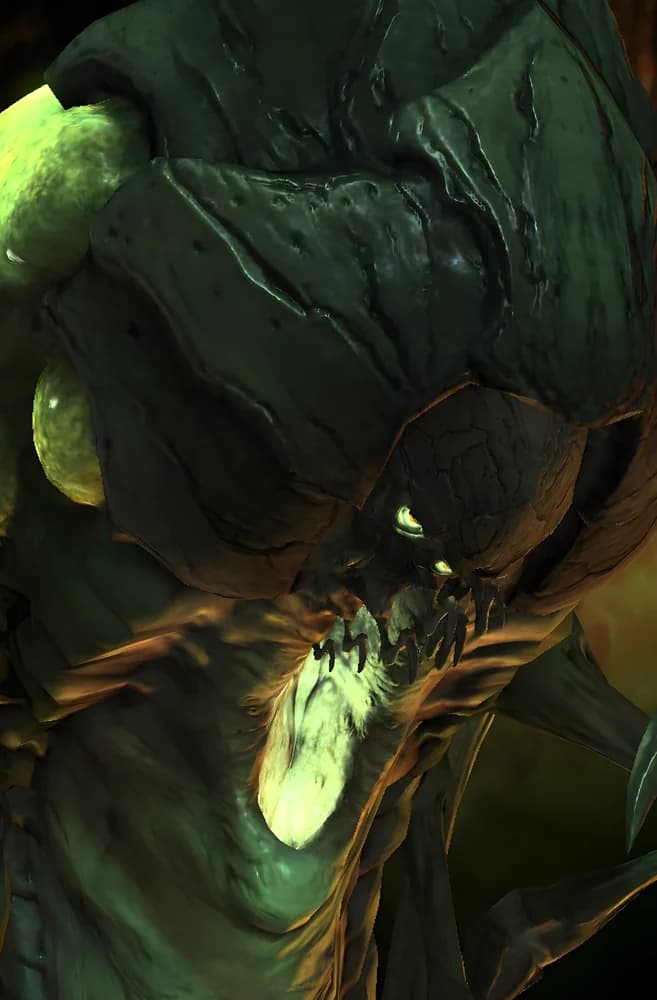
Abathur: the Swarm's living DNA library
Spun from many species by the Overmind, Abathur designed the Queen of Blades. He later betrayed Zagara to restart the wars he thought zerg needed.

Brood War: Kerrigan's war for the Swarm
The Brood War was a zerg civil war between Kerrigan and the cerebrate Daggoth over who would succeed the Overmind. The UED invaded from Earth at the same time.
Cerebrate
Cerebrates were the intermediate commanders of the zerg, created by the Overmind to lead individual broods and oversee the Swarm's evolution. Bound to the Overmind for their reincarnation, they vanished from the Swarm after the Brood War, replaced by Sarah Kerrigan's broodmothers.
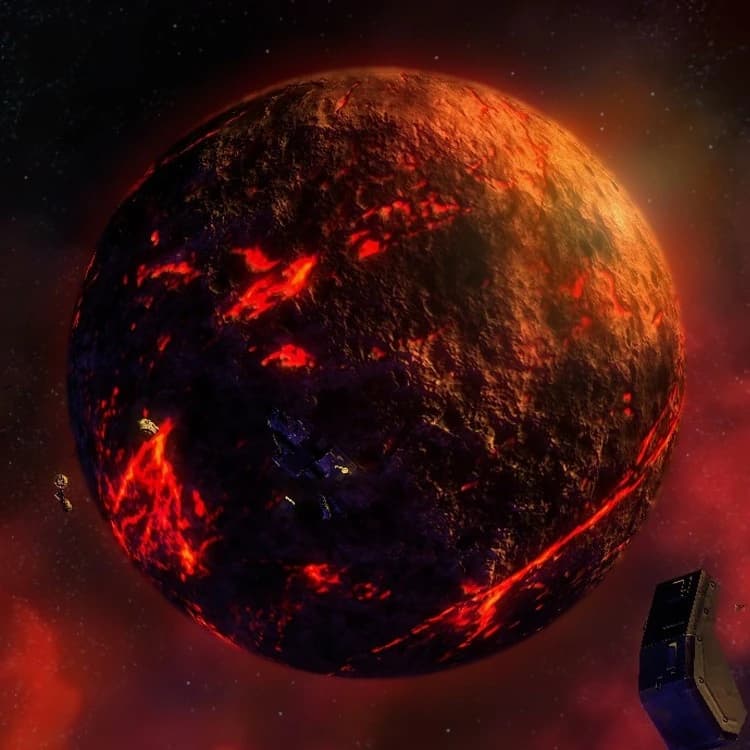
Char
Char was an inhospitable volcanic planet in the Koprulu sector that became the primary hive world of the zerg. It was the site of Sarah Kerrigan's rebirth as the Queen of Blades and, years later, of her restoration to human form.
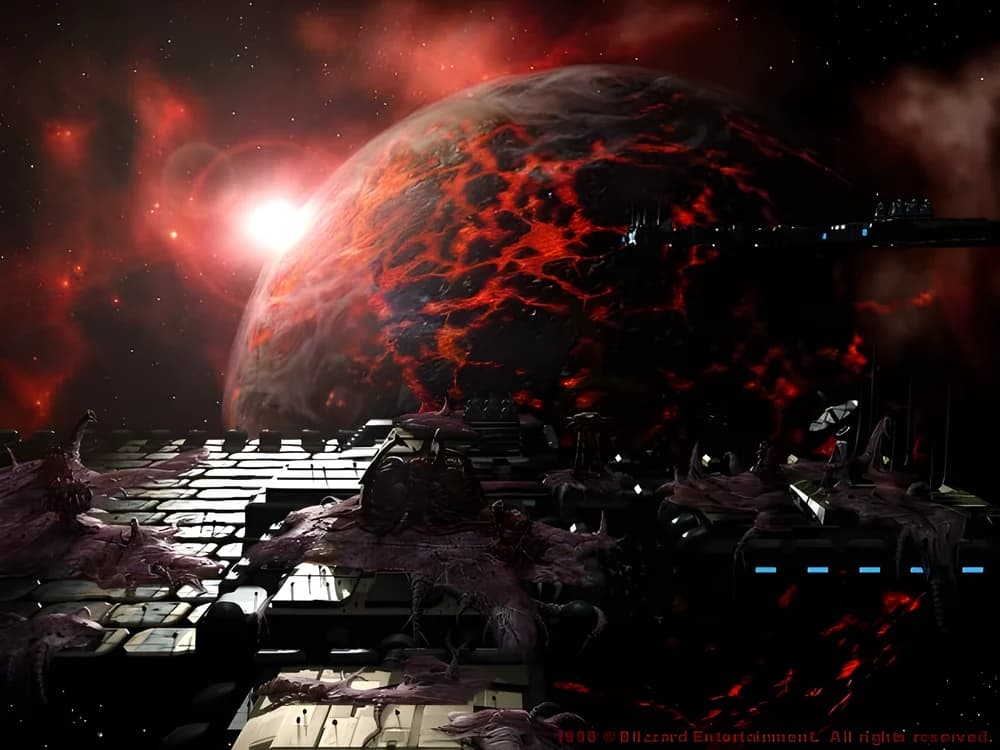
Creep
Creep was a living zerg superorganism, a viscous purple substance that nourished zerg structures and strains, bound entire colonies into a single organism, and could consume a whole planet within days if left unchecked.

Drone
The drone was the zerg worker strain, gathering resources and morphing its own body into the living structures of the Swarm. A single drone, descended from one surviving larva, could seed an entire reborn zerg colony.
Mentioned in2 entries
Every Zerg Unit in StarCraft and StarCraft II, Explained
Every zerg strain from StarCraft, Brood War and the three StarCraft II campaigns, from the zergling to the leviathan. Each entry covers the species it came from, what it does for the Swarm and where it turns up in the story.
Hive: apex structure of the Zerg Swarm
The hive was the primary structure of the zerg and the final evolution of the hatchery, unlocking the last stages of the Swarm's development. Shielded by a dense exoskeleton and joined to the Overmind's full pool of knowledge, it gave the being that commanded it the power to loose the full fury of the zerg.
Get new articles in your inbox
No spam. New lore drops, canon conflicts, and deep dives only when they’re worth reading.
Some links on Lore Fortress are affiliate links. If you buy through them we earn a small commission at no extra cost to you.