Amaya's Hut
A Ga-Koro Flax Workshop
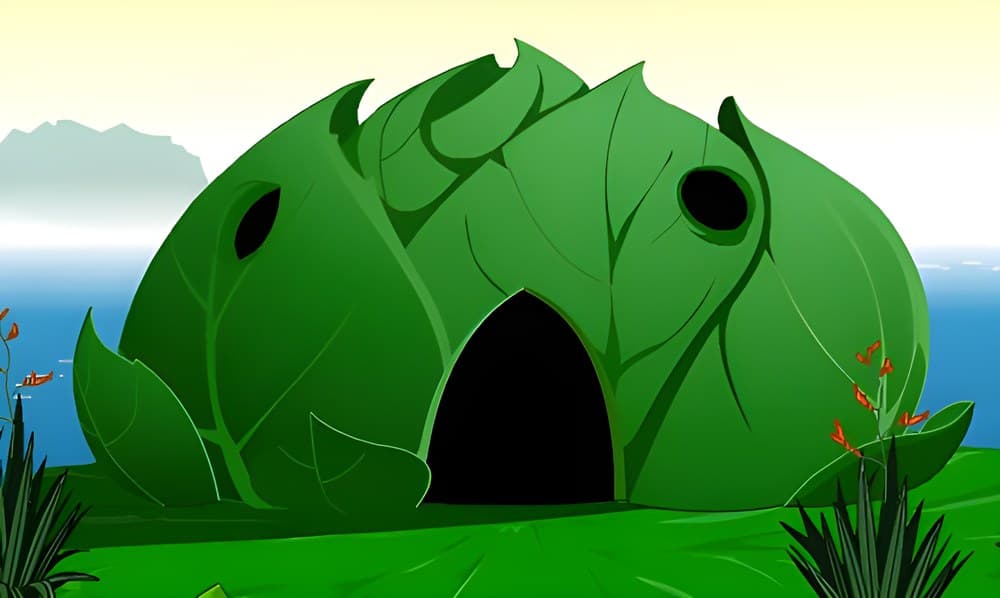
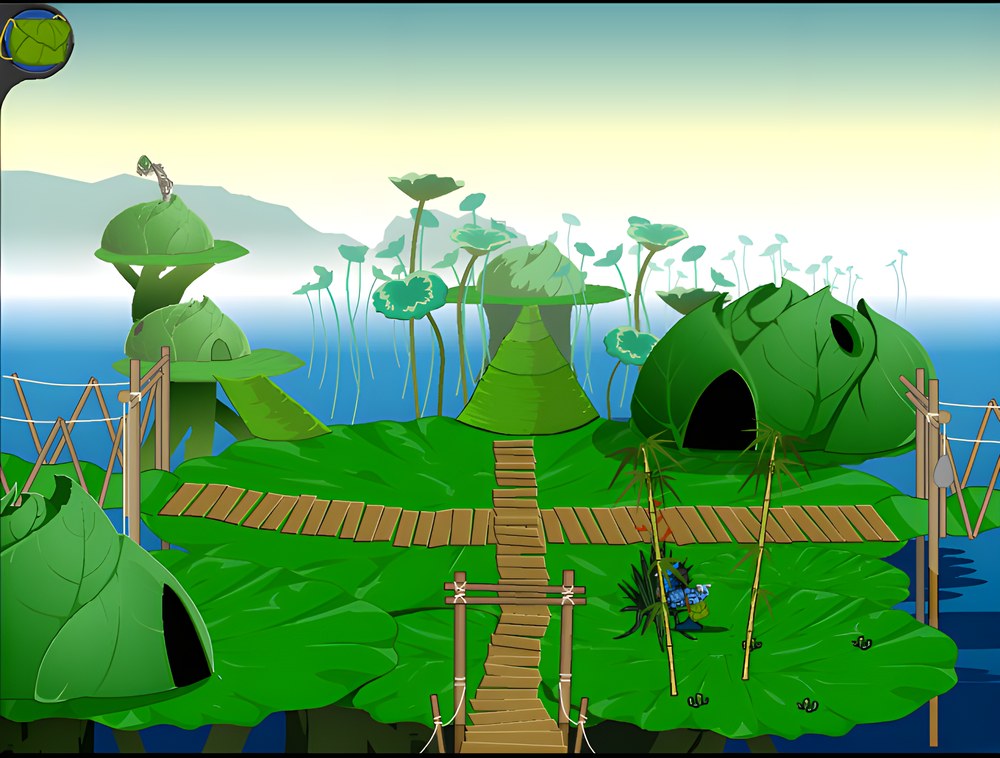
Amaya's Hut was a small driftwood dwelling in Ga-Koro that housed a Flax Weaver, a jellyfish lamp, and the quiet labor of Matoran daily life.

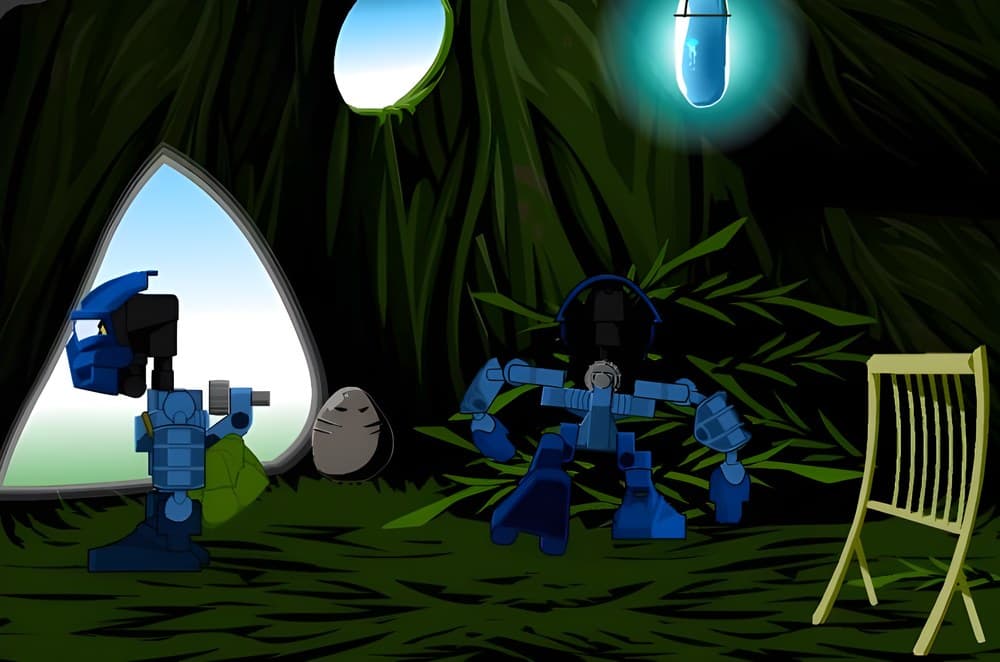
AmayaAmayaAmaya was a Ga-Matoran native to Metru Nui who taught Vhisola before the Great Cataclysm and later served as the Flax Maker of Ga-Koro on the island of Mata Nui.'s Hut was a small driftwood dwelling located in Ga-KoroKoroThe Koros were the six elemental villages established by the Toa Metru on Mata Nui after the Great Rescue, each tied to one element and one Turaga. on the island of Mata NuiMata Nui (Location)An island created by accident on the Great Spirit's face, home to the Matoran for a thousand years.. It served as both the personal residence of the Ga-MatoranGa-MatoranThe Water-element Matoran of Ga-Metru and Ga-Koro, exclusively female, who taught the schools of Metru Nui and crewed the boats and bridges of the Mata Nui coast. AmayaAmayaAmaya was a Ga-Matoran native to Metru Nui who taught Vhisola before the Great Cataclysm and later served as the Flax Maker of Ga-Koro on the island of Mata Nui. and a working flax workshop, housing a Flax Weaver, a stockpile of harakeke plants, and a jellyfish lamp that provided steady light through long working hours. The hut was destroyed during the BohrokBohrokHive-minded mechanical creatures designed to reshape worlds, the Bohrok represent a threat the Toa Mata never expected. swarm invasion and was never rebuilt.
Origins in Ga-Metru#

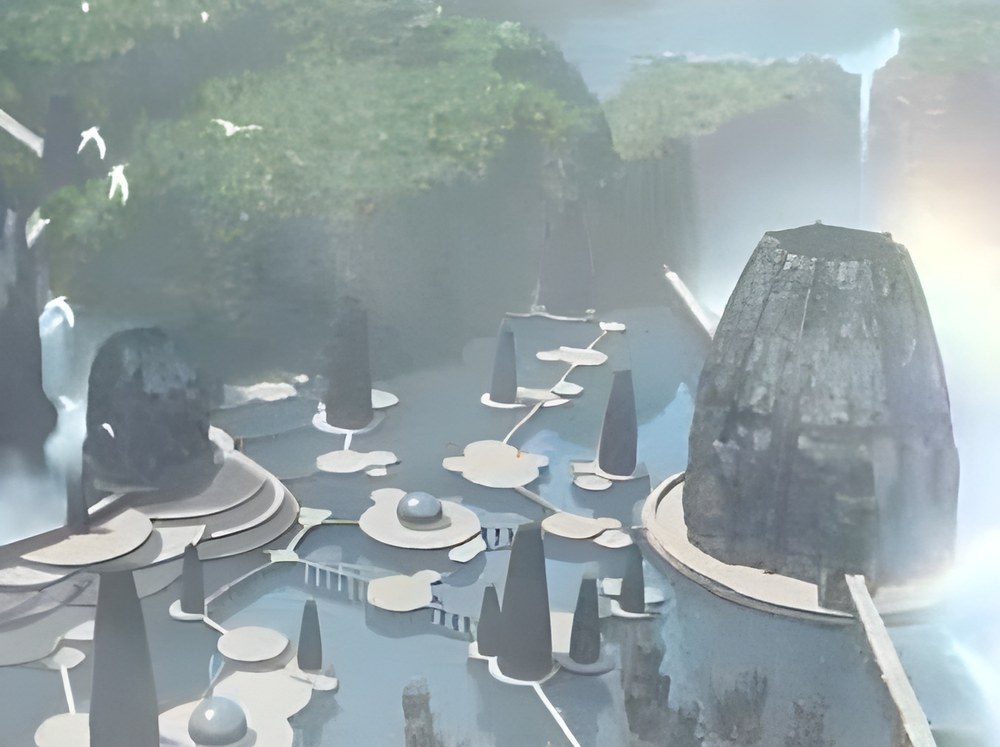
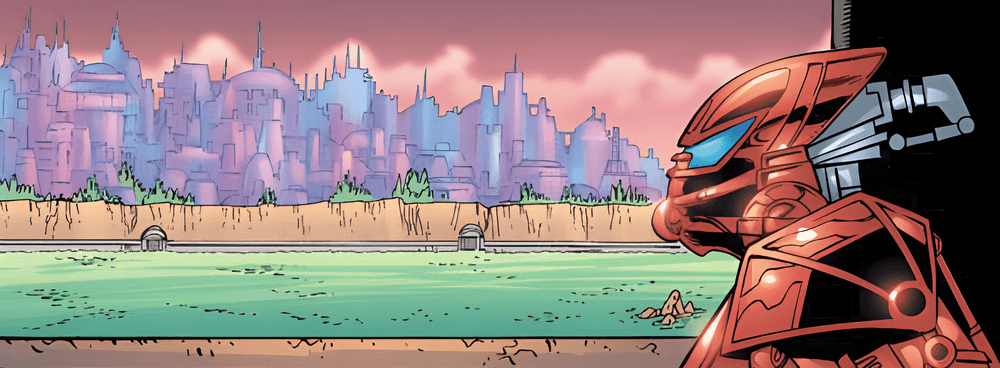
AmayaAmayaAmaya was a Ga-Matoran native to Metru Nui who taught Vhisola before the Great Cataclysm and later served as the Flax Maker of Ga-Koro on the island of Mata Nui.'s original residence stood in Ga-MetruGa-MetruGa-Metru is a district of Metru Nui, home to the Ga-Matoran and the Bordakh. during the era when Metru NuiMetru NuiThe city beneath Mata Nui functions as the Great Spirit's brain, housing the Matoran whose labor keeps the god alive. functioned as the central city of the Matoran UniverseMatoran UniverseA civilization of biomechanical beings living inside a colossal robot, destroyed when Teridax seized control.. Ga-MetruGa-MetruGa-Metru is a district of Metru Nui, home to the Ga-Matoran and the Bordakh. was the district of water and scholarship, and many of its dwellings doubled as workshops for artisans and researchers. AmayaAmayaAmaya was a Ga-Matoran native to Metru Nui who taught Vhisola before the Great Cataclysm and later served as the Flax Maker of Ga-Koro on the island of Mata Nui.'s hut fit this pattern, blending living quarters with the craft of flax preparation that would later define her work on Ga-KoroKoroThe Koros were the six elemental villages established by the Toa Metru on Mata Nui after the Great Rescue, each tied to one element and one Turaga..
The original hut was lost during the Great Cataclysm. The event was triggered by MakutaMakuta (Species)Shadowy Antidermis beings and the Brotherhood's elite, Makuta commanded darkness and shaped the Matoran Universe's fate. TeridaxTeridaxTeridax orchestrated a thousand-year scheme that ended with him occupying the Great Spirit Robot itself before his death on Bara Magna.'s sabotage of the city's systems and caused widespread structural collapse, flooding, and the eventual sealing of Metru NuiMetru NuiThe city beneath Mata Nui functions as the Great Spirit's brain, housing the Matoran whose labor keeps the god alive. beneath domes of protodermis. The Swamp of SecretsSwamp of SecretsThe Swamp of Secrets was the mutagen-saturated wetland that filled the floor of Karda Nui after the Great Cataclysm, serving as a Brotherhood stronghold until the Energy Storms. formed as a direct consequence of the same disaster. With the MatoranMatoranThe most abundant species in the Matoran Universe, chosen by Mata Nui to inhabit and maintain his cosmic body. population placed in stasis and evacuated to the island of Mata NuiMata Nui: Great Spirit of the Matoran UniverseBuilt by the Great Beings as a biomechanical guardian, betrayed by Teridax, and returned in a smaller form to reshape Spherus Magna., no dwellings in Metru NuiMetru NuiThe city beneath Mata Nui functions as the Great Spirit's brain, housing the Matoran whose labor keeps the god alive. remained in use, and AmayaAmayaAmaya was a Ga-Matoran native to Metru Nui who taught Vhisola before the Great Cataclysm and later served as the Flax Maker of Ga-Koro on the island of Mata Nui.'s hut was lost with the rest.
MatoranMatoranThe most abundant species in the Matoran Universe, chosen by Mata Nui to inhabit and maintain his cosmic body. housing in Metru NuiMetru NuiThe city beneath Mata Nui functions as the Great Spirit's brain, housing the Matoran whose labor keeps the god alive. followed standardised but regionally adapted designs. In Ga-MetruGa-MetruGa-Metru is a district of Metru Nui, home to the Ga-Matoran and the Bordakh., structures were typically built near canals or directly over water channels, with moisture-resistant materials and accessible docks. This pattern was carried forward into the later layout of Ga-KoroKoroThe Koros were the six elemental villages established by the Toa Metru on Mata Nui after the Great Rescue, each tied to one element and one Turaga.. Surviving records of Ga-MatoranGa-MatoranThe Water-element Matoran of Ga-Metru and Ga-Koro, exclusively female, who taught the schools of Metru Nui and crewed the boats and bridges of the Mata Nui coast. dwellings, including VhisolaVhisolaVhisola was a Ga-Matoran student of Nokama, one of the six finders of a Great Disk, whose research deduced the location of the Morbuzakh King Root.'s home, indicate that personal artifacts and working journals were commonly kept inside, suggesting AmayaAmayaAmaya was a Ga-Matoran native to Metru Nui who taught Vhisola before the Great Cataclysm and later served as the Flax Maker of Ga-Koro on the island of Mata Nui.'s original residence likely contained early records of her work with flax and harakeke.
Construction in Ga-KoroKoroThe Koros were the six elemental villages established by the Toa Metru on Mata Nui after the Great Rescue, each tied to one element and one Turaga.#
When the MatoranMatoranThe most abundant species in the Matoran Universe, chosen by Mata Nui to inhabit and maintain his cosmic body. spheres reached the shores of Ga-WahiGa-WahiGa-Wahi was a region situated to the east on the island of Mata Nui, inhabited by Ga-Matoran and various Rahi. The region once fell under the domain of Teridax, though that connection did not endure. Ga-Wahi no longer existed in later records., TuragaTuragaFormer Toa who fulfilled their destiny and transformed into leaders. Turaga wield Noble Kanohi masks and weakened elemental powers, guiding their communities. NokamaNokamaNokama served as Toa Metru of Water, endured the Hordika mutation, and led Ga-Koro and later Ga-Metru as Turaga through three eras. was the only TuragaTuragaFormer Toa who fulfilled their destiny and transformed into leaders. Turaga wield Noble Kanohi masks and weakened elemental powers, guiding their communities. to remain at the landing site, identifying the coastline as the natural location for the new Ga-KoroGa-KoroGa-Koro is a village on the island of Mata Nui, inhabited by the Ga-Matoran and associated with both Nokama and Gali. The settlement was formerly under the power of Teridax.. The other TuragaTuragaFormer Toa who fulfilled their destiny and transformed into leaders. Turaga wield Noble Kanohi masks and weakened elemental powers, guiding their communities. scouted inland, while NokamaNokamaNokama served as Toa Metru of Water, endured the Hordika mutation, and led Ga-Koro and later Ga-Metru as Turaga through three eras. oversaw the early construction of a coastal village built around the abundant waters and harakeke groves of the region.
AmayaAmayaAmaya was a Ga-Matoran native to Metru Nui who taught Vhisola before the Great Cataclysm and later served as the Flax Maker of Ga-Koro on the island of Mata Nui.'s Hut took shape near HahliHahliA Ga-Matoran scholar who rose to become Chronicler of Mata Nui, then Toa Inika, then Toa Mahri of Water during the final crises of the Matoran Universe.'s Hut and the structure later known as Amaya's JettyAmaya's JettyA small lily-pad jetty extending from Amaya's Hut at the eastern edge of Ga-Koro, marked by three Bamboo Poles and a Ruki poem., forming a small cluster of dwellings along the shoreline. The hut was modest in scale, holding a Flax Weaver, a pile of harakeke, and a jellyfish lamp set on a low shelf. Its placement allowed flax work to be shared with HahliHahliA Ga-Matoran scholar who rose to become Chronicler of Mata Nui, then Toa Inika, then Toa Mahri of Water during the final crises of the Matoran Universe., and the proximity of the two huts created an efficient working hub. HahliHahliA Ga-Matoran scholar who rose to become Chronicler of Mata Nui, then Toa Inika, then Toa Mahri of Water during the final crises of the Matoran Universe. was observed canoeing in the surrounding waters during this period, consistent with the cluster operating as a single functional unit.
Daily life in Ga-KoroGa-KoroGa-Koro is a village on the island of Mata Nui, inhabited by the Ga-Matoran and associated with both Nokama and Gali. The settlement was formerly under the power of Teridax. after the migration centred on rebuilding both structures and routines. AmayaAmayaAmaya was a Ga-Matoran native to Metru Nui who taught Vhisola before the Great Cataclysm and later served as the Flax Maker of Ga-Koro on the island of Mata Nui. and HahliHahliA Ga-Matoran scholar who rose to become Chronicler of Mata Nui, then Toa Inika, then Toa Mahri of Water during the final crises of the Matoran Universe. worked flax together, contributing to the village's supply of nets, ropes, and cloth. The hut became a stable point in the village's domestic life until the BohrokBohrokHive-minded mechanical creatures designed to reshape worlds, the Bohrok represent a threat the Toa Mata never expected. invasion brought it down.
Tools and Daily Work#
The Flax Weaver was the central piece of equipment inside AmayaAmayaAmaya was a Ga-Matoran native to Metru Nui who taught Vhisola before the Great Cataclysm and later served as the Flax Maker of Ga-Koro on the island of Mata Nui.'s Hut. It was a hand-cranked device used to process raw harakeke fibres into usable thread. The output was small-batch rather than industrial, supplying nets, ropes, sails for Ga-KoroGa-KoroGa-Koro is a village on the island of Mata Nui, inhabited by the Ga-Matoran and associated with both Nokama and Gali. The settlement was formerly under the power of Teridax.'s boats, and items of clothing. The fibres required sorting, soaking, and pounding before they could be worked, leaving the hut with the damp, earthy character of an active workshop.
The harakeke plants stacked near the weaver were cultivated in the wetlands of Ga-WahiGa-WahiGa-Wahi was a region situated to the east on the island of Mata Nui, inhabited by Ga-Matoran and various Rahi. The region once fell under the domain of Teridax, though that connection did not endure. Ga-Wahi no longer existed in later records.. Ga-MatoranGa-MatoranThe Water-element Matoran of Ga-Metru and Ga-Koro, exclusively female, who taught the schools of Metru Nui and crewed the boats and bridges of the Mata Nui coast. harvesters cut the leaves at the base to encourage regrowth, and the plants stored inside the hut were either freshly gathered or being prepared for drying. The coastal soil of Ga-KoroKoroThe Koros were the six elemental villages established by the Toa Metru on Mata Nui after the Great Rescue, each tied to one element and one Turaga. was well suited to the species, making harakeke a reliable local resource.
The jellyfish lamp rested on a low shelf inside the hut and provided light during early mornings and overcast days. It was powered by bioluminescent jellyfish captured from the surrounding waters and produced a soft blue glow. The design was characteristic of Ga-MatoranGa-MatoranThe Water-element Matoran of Ga-Metru and Ga-Koro, exclusively female, who taught the schools of Metru Nui and crewed the boats and bridges of the Mata Nui coast. craft, using native wildlife for illumination without the hazards of fire or the demands of an electrical system.
Together, the Flax Weaver, the harakeke stockpile, and the jellyfish lamp formed a self-contained workspace integrated into the wider economy of Ga-KoroGa-KoroGa-Koro is a village on the island of Mata Nui, inhabited by the Ga-Matoran and associated with both Nokama and Gali. The settlement was formerly under the power of Teridax.. The village relied on small workshops of this kind to produce the materials needed for daily life, and AmayaAmayaAmaya was a Ga-Matoran native to Metru Nui who taught Vhisola before the Great Cataclysm and later served as the Flax Maker of Ga-Koro on the island of Mata Nui.'s Hut was one node within that distributed system.
Craft and Survival#
Flax processing within AmayaAmayaAmaya was a Ga-Matoran native to Metru Nui who taught Vhisola before the Great Cataclysm and later served as the Flax Maker of Ga-Koro on the island of Mata Nui.'s Hut directly supported the survival of Ga-KoroKoroThe Koros were the six elemental villages established by the Toa Metru on Mata Nui after the Great Rescue, each tied to one element and one Turaga.. Clothing, fishing nets, and sails for the village's canoes all depended on the steady output of small workshops. The aftermath of the Great Cataclysm and the long migration left the MatoranMatoranThe most abundant species in the Matoran Universe, chosen by Mata Nui to inhabit and maintain his cosmic body. reliant on local craft, and AmayaAmayaAmaya was a Ga-Matoran native to Metru Nui who taught Vhisola before the Great Cataclysm and later served as the Flax Maker of Ga-Koro on the island of Mata Nui.'s Hut was one of several settings where that labour took place.
AmayaAmayaAmaya was a Ga-Matoran native to Metru Nui who taught Vhisola before the Great Cataclysm and later served as the Flax Maker of Ga-Koro on the island of Mata Nui. frequently worked alongside HahliHahliA Ga-Matoran scholar who rose to become Chronicler of Mata Nui, then Toa Inika, then Toa Mahri of Water during the final crises of the Matoran Universe., whose own hut stood nearby. Their cooperation kept the cluster productive even during periods when leadership was strained and external threats were close. HahliHahliA Ga-Matoran scholar who rose to become Chronicler of Mata Nui, then Toa Inika, then Toa Mahri of Water during the final crises of the Matoran Universe. would later assume the duties of a chronicler and serve as a Toa, but her early work in Ga-KoroGa-KoroGa-Koro is a village on the island of Mata Nui, inhabited by the Ga-Matoran and associated with both Nokama and Gali. The settlement was formerly under the power of Teridax. included direct participation in flax production.
The jellyfish lamp inside the hut allowed work to continue after dark, extending the productive hours of the village. Routines of this kind, repeated across Ga-KoroGa-KoroGa-Koro is a village on the island of Mata Nui, inhabited by the Ga-Matoran and associated with both Nokama and Gali. The settlement was formerly under the power of Teridax.'s dwellings, maintained the steady flow of supplies on which the wider settlement depended.
Destruction by the Bohrok#
The BohrokBohrokHive-minded mechanical creatures designed to reshape worlds, the Bohrok represent a threat the Toa Mata never expected. swarms invaded the island of Mata NuiMata NuiBuilt by the Great Beings to restore Spherus Magna, Mata Nui sustained an entire civilisation inside his body, was deposed by Teridax, and reclaimed his purpose as a mortal on Bara Magna. with the directive of clearing the surface of MatoranMatoranThe most abundant species in the Matoran Universe, chosen by Mata Nui to inhabit and maintain his cosmic body. construction. Their task was reversion, the systematic removal of every structure that interrupted the original landscape. AmayaAmayaAmaya was a Ga-Matoran native to Metru Nui who taught Vhisola before the Great Cataclysm and later served as the Flax Maker of Ga-Koro on the island of Mata Nui.'s Hut fell within their path, and no detailed record survives of the moment of its destruction.
No reconstruction was attempted after the swarm had been defeated. The cleanup of Ga-KoroKoroThe Koros were the six elemental villages established by the Toa Metru on Mata Nui after the Great Rescue, each tied to one element and one Turaga. in the aftermath of the invasion focused on clearing krana husks, stabilising the shoreline, and restoring the village's most essential structures. The Flax Weaver, the harakeke stockpile, and the jellyfish lamp were not replaced at the original site.
Legacy#
The original Metru NuiMetru NuiThe city beneath Mata Nui functions as the Great Spirit's brain, housing the Matoran whose labor keeps the god alive. residence had been lost in the Great Cataclysm, and the Ga-KoroKoroThe Koros were the six elemental villages established by the Toa Metru on Mata Nui after the Great Rescue, each tied to one element and one Turaga. hut was lost to the BohrokBohrokHive-minded mechanical creatures designed to reshape worlds, the Bohrok represent a threat the Toa Mata never expected.. When the MatoranMatoranThe most abundant species in the Matoran Universe, chosen by Mata Nui to inhabit and maintain his cosmic body. eventually resettled on Spherus MagnaSpherus MagnaA desert world of ancient conflict that became the merger point of the Matoran Universe and Bionicle's true endpoint. after the defeat of TeridaxTeridaxTeridax orchestrated a thousand-year scheme that ended with him occupying the Great Spirit Robot itself before his death on Bara Magna., no new hut was recorded for AmayaAmayaAmaya was a Ga-Matoran native to Metru Nui who taught Vhisola before the Great Cataclysm and later served as the Flax Maker of Ga-Koro on the island of Mata Nui.. Other named dwellings, monuments, and statues were established on the reunited planet, but AmayaAmayaAmaya was a Ga-Matoran native to Metru Nui who taught Vhisola before the Great Cataclysm and later served as the Flax Maker of Ga-Koro on the island of Mata Nui.'s Hut did not reappear in the surviving record of the post-war settlement.
The hut remains documented chiefly through its role in the daily economy of Ga-KoroGa-KoroGa-Koro is a village on the island of Mata Nui, inhabited by the Ga-Matoran and associated with both Nokama and Gali. The settlement was formerly under the power of Teridax. and through its association with HahliHahliA Ga-Matoran scholar who rose to become Chronicler of Mata Nui, then Toa Inika, then Toa Mahri of Water during the final crises of the Matoran Universe. and Amaya's JettyAmaya's JettyA small lily-pad jetty extending from Amaya's Hut at the eastern edge of Ga-Koro, marked by three Bamboo Poles and a Ruki poem.. It was one of the small workshop dwellings that supported the village's coastal industry during the period between the migration to Mata NuiMata Nui: Great Spirit of the Matoran UniverseBuilt by the Great Beings as a biomechanical guardian, betrayed by Teridax, and returned in a smaller form to reshape Spherus Magna. and the BohrokBohrokHive-minded mechanical creatures designed to reshape worlds, the Bohrok represent a threat the Toa Mata never expected. invasion.
Frequently asked questions
- What was Amaya's Hut?
- Amaya's Hut was a small driftwood dwelling located in Ga-Koro on the island of Mata Nui. It served as both the personal residence of the Ga-Matoran Amaya and a working flax workshop, housing a Flax Weaver, a stockpile of harakeke plants, and a jellyfish lamp.
- Where did Amaya's Hut originally stand?
- Amaya's original residence stood in Ga-Metru during the era when Metru Nui functioned as the central city of the Matoran Universe. That original hut was lost during the Great Cataclysm, triggered by Teridax's sabotage of the city's systems, after which Amaya built a replacement in Ga-Koro.
- What tools and equipment were inside Amaya's Hut?
- The central piece of equipment was the Flax Weaver, a hand-cranked device used to process raw harakeke fibres into thread. The hut also held a stockpile of harakeke plants and a jellyfish lamp powered by bioluminescent jellyfish, which produced a soft blue glow and let work continue after dark.
- What was Amaya's Hut used for?
- The hut supported Ga-Koro's flax production, supplying nets, ropes, sails for the village's boats, and items of clothing. Amaya frequently worked flax alongside Hahli, whose hut stood nearby, with the two huts operating as a single functional unit.
- What happened to Amaya's Hut?
- The hut was destroyed during the Bohrok swarm invasion, when the swarms cleared the surface of Mata Nui of Matoran construction. No reconstruction was attempted after the swarm was defeated, and no new hut was recorded for Amaya after the Matoran resettled on Spherus Magna.
Gallery

Images via BIONICLE Wiki (Biosector01)
Sources
- WikiAmaya's Hut โ BS01 character/subject entry
Spotted a factual error or a primary source we missed? Email a correction. Every flagged claim gets reviewed.
Related entries
Amaya
Amaya was a Ga-Matoran native to Metru Nui who taught Vhisola before the Great Cataclysm and later served as the Flax Maker of Ga-Koro on the island of Mata Nui.
Amaya's Jetty
A small lily-pad jetty extending from Amaya's Hut at the eastern edge of Ga-Koro, marked by three Bamboo Poles and a Ruki poem.
Ga-Matoran
The Water-element Matoran of Ga-Metru and Ga-Koro, exclusively female, who taught the schools of Metru Nui and crewed the boats and bridges of the Mata Nui coast.
Vhisola
Vhisola was a Ga-Matoran student of Nokama, one of the six finders of a Great Disk, whose research deduced the location of the Morbuzakh King Root.
Koro
The Koros were the six elemental villages established by the Toa Metru on Mata Nui after the Great Rescue, each tied to one element and one Turaga.
Turaga
Former Toa who fulfilled their destiny and transformed into leaders. Turaga wield Noble Kanohi masks and weakened elemental powers, guiding their communities.
Mentioned in6 entries
Amaya's Jetty
A small lily-pad jetty extending from Amaya's Hut at the eastern edge of Ga-Koro, marked by three Bamboo Poles and a Ruki poem.
Ga-Koro Town Square
The central plaza of Ga-Koro, split into a north square inhabited by Nokama, Nireta, Macku and Nixie, and a south square inhabited by Okoth, Kotu and Kailani.
Lily Pads of Ga-Koro: The Floating Foundation of a Matoran Village
The giant lily pads that formed the buoyant ground of Ga-Koro on Mata Nui, carrying the village's huts, bridges, and kolhii field across the surface of Naho Bay.
The Ga-Koro Bridge
The lily-pad bridge of Ga-Koro was the floating span that connected the Ga-Matoran village to the mainland of Ga-Wahi, raised in the village's defining battle against the Pahrak swarms.
Matoran Homes
The dwellings where Matoran live across the Matoran Universe, from island villages to sprawling cities.
Shasa's Hut
Shasa's Hut is a small Ga-Koro residence built from seaweed, holding a weaving loom for one of the village's working Matoran.
Get new articles in your inbox
No spam. New lore drops, canon conflicts, and deep dives only when theyโre worth reading.
Some links on Lore Fortress are affiliate links. If you buy through them we earn a small commission at no extra cost to you.