Amaya's Jetty
The Easternmost Point of Mata Nui
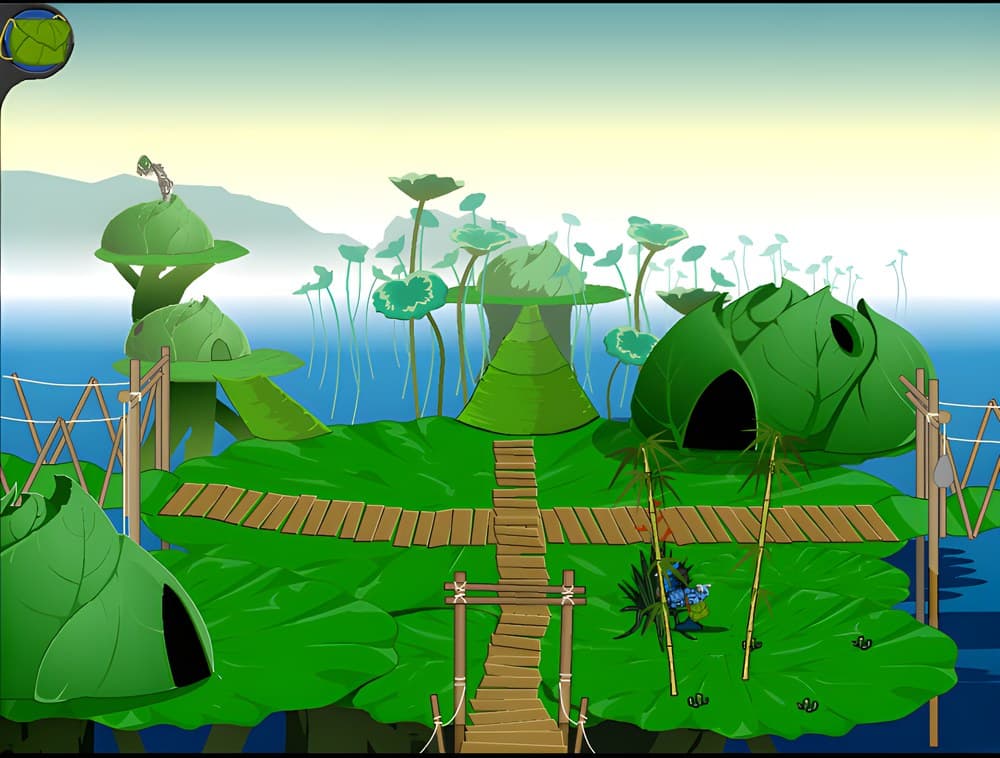
A small lily-pad jetty extending from Amaya's Hut at the eastern edge of Ga-Koro, marked by three Bamboo Poles and a Ruki poem.
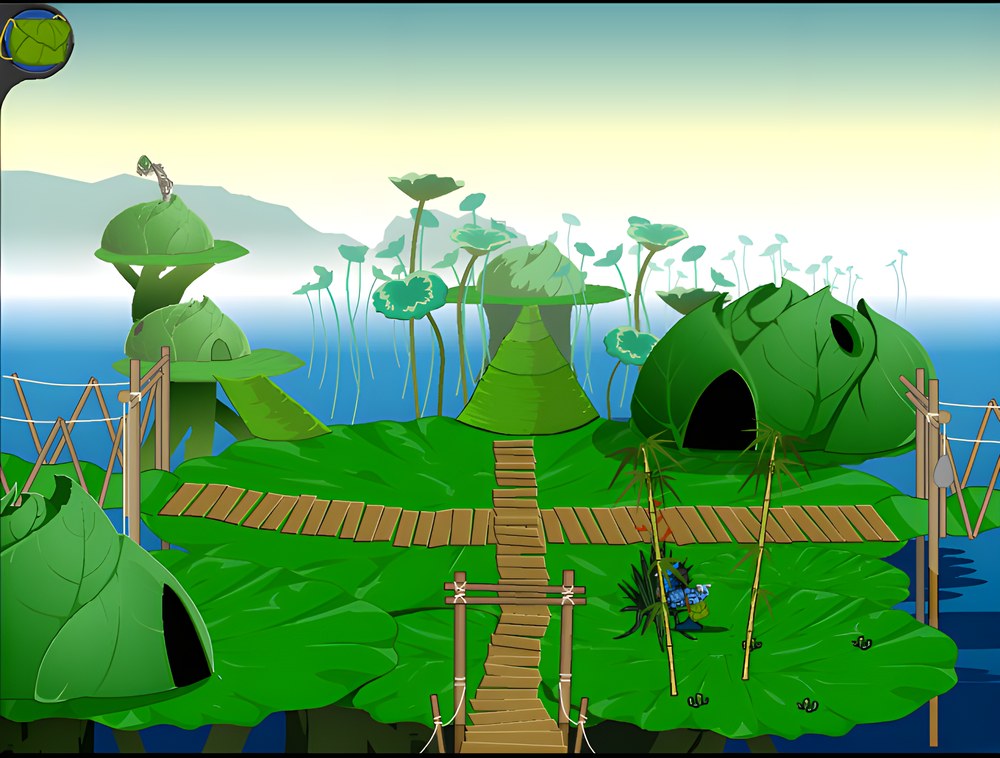
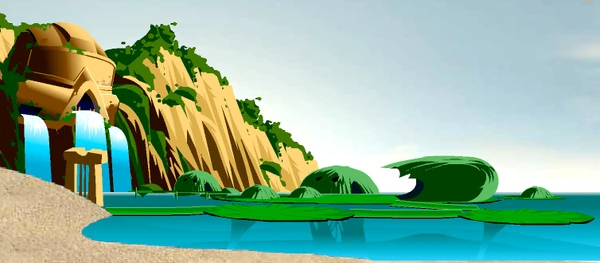
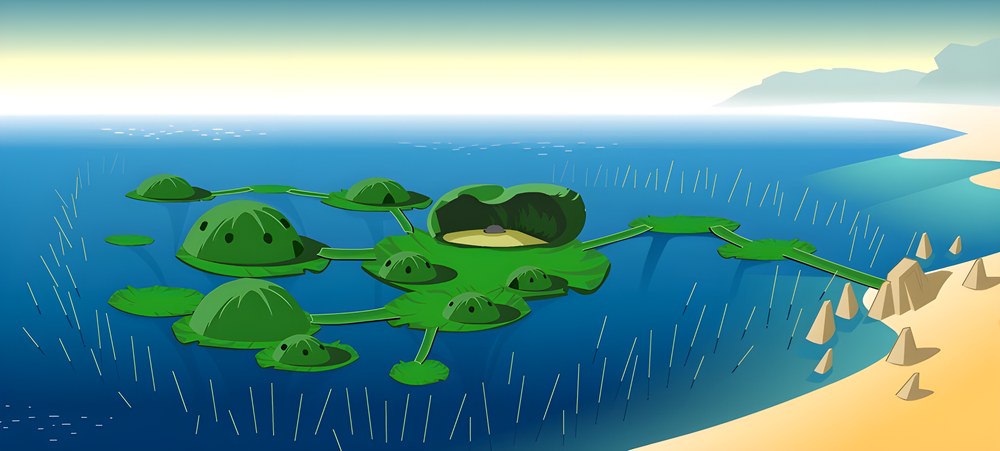
AmayaAmayaAmaya was a Ga-Matoran native to Metru Nui who taught Vhisola before the Great Cataclysm and later served as the Flax Maker of Ga-Koro on the island of Mata Nui.'s Jetty was a small jetty at Ga-KoroGa-KoroGa-Koro is a village on the island of Mata Nui, inhabited by the Ga-Matoran and associated with both Nokama and Gali. The settlement was formerly under the power of Teridax., built from a single lily pad and a short bridge jutting off the eastern wall of Amaya's HutAmaya's HutAmaya's Hut was a small driftwood dwelling in Ga-Koro that housed a Flax Weaver, a jellyfish lamp, and the quiet labor of Matoran daily life.. It was the easternmost point on the island of Mata NuiMata Nui (Location)An island created by accident on the Great Spirit's face, home to the Matoran for a thousand years., and was framed on its outer edge by three Bamboo Poles. One of those poles carried a short RukiRukiA common fish-like Rahi of the Ga-Wahi waters with strong jaws, the Ruki was the staple Matoran catch of Ga-Koro, the natural enemy of the Tarakava, and one of the few small Rahi confident enough to drive larger predators away from its shoals. poem tacked to its surface, written in the contemplative style favoured by the Ga-MatoranGa-MatoranThe Water-element Matoran of Ga-Metru and Ga-Koro, exclusively female, who taught the schools of Metru Nui and crewed the boats and bridges of the Mata Nui coast. of the village.
Construction and form#
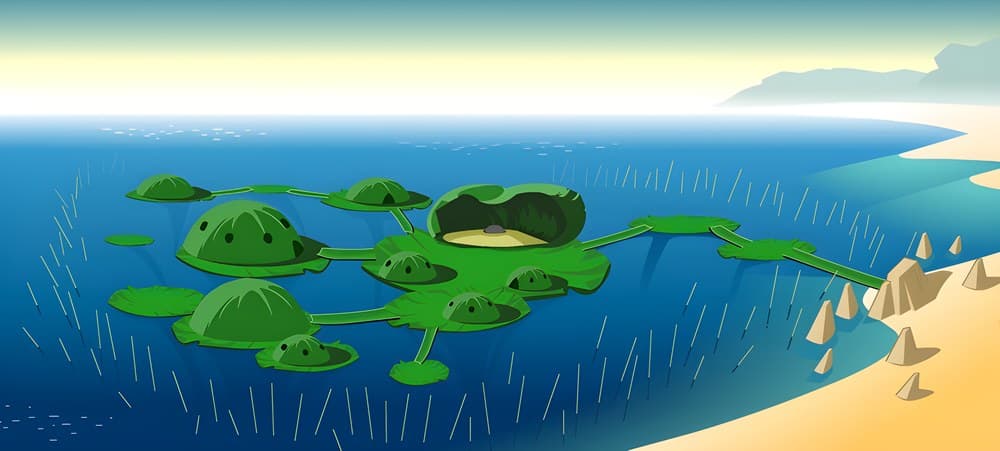
The jetty was a minimalist piece of Ga-KoroGa-KoroGa-Koro is a village on the island of Mata Nui, inhabited by the Ga-Matoran and associated with both Nokama and Gali. The settlement was formerly under the power of Teridax. architecture, in keeping with the village's general approach to building on the water. It consisted of two parts only: a lily padLily Pads of Ga-Koro: The Floating Foundation of a Matoran VillageThe giant lily pads that formed the buoyant ground of Ga-Koro on Mata Nui, carrying the village's huts, bridges, and kolhii field across the surface of Naho Bay. of the type Ga-MatoranMatoranThe most abundant species in the Matoran Universe, chosen by Mata Nui to inhabit and maintain his cosmic body. used as a structural module across the village, and a short connecting bridge that joined that pad to the wall of Amaya's HutAmaya's HutAmaya's Hut was a small driftwood dwelling in Ga-Koro that housed a Flax Weaver, a jellyfish lamp, and the quiet labor of Matoran daily life.. The whole structure jutted off the hut's eastern side and floated on the same coastal water on which the rest of the Naho BayNaho BayThe body of water that made up most of Ga-Wahi, named for a fallen Toa of Water and home to the floating village of Ga-Koro on its surface. settlement rested.
Three Bamboo Poles surrounded the jetty along its outer perimeter. The poles served the dual function common to similar markers in Ga-KoroGa-KoroGa-Koro is a village on the island of Mata Nui, inhabited by the Ga-Matoran and associated with both Nokama and Gali. The settlement was formerly under the power of Teridax.: they defined the usable edge of the platform for MatoranMatoranThe most abundant species in the Matoran Universe, chosen by Mata Nui to inhabit and maintain his cosmic body. walking on it, and they provided fixed points to which signage, ornament, or small fishing tackle could be attached. Bamboo of this type was the same material the Ga-MatoranMatoranThe most abundant species in the Matoran Universe, chosen by Mata Nui to inhabit and maintain his cosmic body. harvested in larger quantities for KolhiiKolhiiKolhii was the inter-village athletic contest of Mata Nui, descended from the earlier Akilini of Metru Nui and played by all six Koro until the island's evacuation. stick construction, with KotuKotuKotu was a Ga-Matoran of Water who resided on Spherus Magna. Blue and light blue in color, Kotu wore a powerless Rau and carried a Kolhii Stick, serving at various times as a Rahi Tender, an assistant to Nokama, an athlete, and a guard in the Defense Force. credited as the village's bamboo-pole craftsperson, capable of producing a finished pole from fifteen pieces of raw bamboo on the trading rosters recorded during the later chronicle.
The jetty had no boat slip, no winch, and no rigged sail mast. It was a contemplative platform rather than a working pier, and its placement at the rear of Amaya's HutAmaya's HutAmaya's Hut was a small driftwood dwelling in Ga-Koro that housed a Flax Weaver, a jellyfish lamp, and the quiet labor of Matoran daily life. put it deliberately outside the main waterborne traffic patterns of the village proper.
The easternmost point on Mata NuiMata Nui (Location)An island created by accident on the Great Spirit's face, home to the Matoran for a thousand years.#
The jetty's quiet distinction was geographic. Of every constructed and natural feature on the surface of Mata NuiMata Nui (Location)An island created by accident on the Great Spirit's face, home to the Matoran for a thousand years., the outermost lily pad of AmayaAmayaAmaya was a Ga-Matoran native to Metru Nui who taught Vhisola before the Great Cataclysm and later served as the Flax Maker of Ga-Koro on the island of Mata Nui.'s Jetty stood furthest east. The island's coastline extended in every direction from the central Mangai VolcanoMata Nui (Location)An island created by accident on the Great Spirit's face, home to the Matoran for a thousand years., but the eastern frontier was held by the Ga-WahiWahiThe Matoran word for region. The six Wahi of Mata Nui were the six elemental territories that made up the island before the Bohrok cleared its surface. coast and, within that coast, by AmayaAmaya's HutAmaya's Hut was a small driftwood dwelling in Ga-Koro that housed a Flax Weaver, a jellyfish lamp, and the quiet labor of Matoran daily life.'s small dock.
That distinction mattered more in atmosphere than in strategy. The eastern aspect made the jetty the first surface in the village to catch the morning light, and the first to face the open water beyond Naho BayNaho BayThe body of water that made up most of Ga-Wahi, named for a fallen Toa of Water and home to the floating village of Ga-Koro on its surface.. It was the kind of vantage that suited AmayaAmayaAmaya was a Ga-Matoran native to Metru Nui who taught Vhisola before the Great Cataclysm and later served as the Flax Maker of Ga-Koro on the island of Mata Nui.'s temperament. After her rescue from Metru NuiMetru NuiThe city beneath Mata Nui functions as the Great Spirit's brain, housing the Matoran whose labor keeps the god alive. by the Toa MetruMetruIn the Matoran language a metru was a single district of Metru Nui; the city was divided into six such districts, one for each element, and the term covered both the place and the elemental community that lived in it., her revival on Mata NuiMata Nui (Location)An island created by accident on the Great Spirit's face, home to the Matoran for a thousand years., and her later rebuild at Kini-NuiKini-NuiThe most sacred temple on Mata Nui, ironically built directly above Teridax's fortress., she worked as a flax maker alongside HahliHahliA Ga-Matoran scholar who rose to become Chronicler of Mata Nui, then Toa Inika, then Toa Mahri of Water during the final crises of the Matoran Universe. inside the hut. The jetty extended that quiet workshop one further pad outward, into a space whose only neighbours were the bay, the three poles, and the open horizon.
The RukiRukiA common fish-like Rahi of the Ga-Wahi waters with strong jaws, the Ruki was the staple Matoran catch of Ga-Koro, the natural enemy of the Tarakava, and one of the few small Rahi confident enough to drive larger predators away from its shoals. poem#
Tacked to one of the three Bamboo Poles was a poem composed in three short lines. The full text read, "Blue sea. A RukiRukiA common fish-like Rahi of the Ga-Wahi waters with strong jaws, the Ruki was the staple Matoran catch of Ga-Koro, the natural enemy of the Tarakava, and one of the few small Rahi confident enough to drive larger predators away from its shoals. leaps. The sound of water." The form mirrored the haiku-style verse that recurred across Ga-KoroGa-KoroGa-Koro is a village on the island of Mata Nui, inhabited by the Ga-Matoran and associated with both Nokama and Gali. The settlement was formerly under the power of Teridax. signage and that fit the village's tradition of contemplative writing. Turaga NokamaNokamaNokama served as Toa Metru of Water, endured the Hordika mutation, and led Ga-Koro and later Ga-Metru as Turaga through three eras.'s role as a teacher and the educational character of the Ga-MatoranMatoranThe most abundant species in the Matoran Universe, chosen by Mata Nui to inhabit and maintain his cosmic body. community generally produced more written ornament per square metre in Ga-KoroGa-KoroGa-Koro is a village on the island of Mata Nui, inhabited by the Ga-Matoran and associated with both Nokama and Gali. The settlement was formerly under the power of Teridax. than in any other koroPo-KoroPo-Koro was the Po-Matoran village in Po-Wahi, led by Turaga Onewa and guarded by Toa Pohatu, reached through a single statue-lined road called the Path of Prophecies., and the jetty inscription was one example of that custom.
The subject of the poem, the RukiRukiA common fish-like Rahi of the Ga-Wahi waters with strong jaws, the Ruki was the staple Matoran catch of Ga-Koro, the natural enemy of the Tarakava, and one of the few small Rahi confident enough to drive larger predators away from its shoals. fish, was a familiar marine species of Naho BayNaho BayThe body of water that made up most of Ga-Wahi, named for a fallen Toa of Water and home to the floating village of Ga-Koro on its surface. and one of the resources the village fished for food. A leaping Ruki was an everyday sight from the eastern edge of the village. The poem registered that sight, named the sound of the water it produced, and stopped. It made no claim and reached no conclusion. The choice of form matched the function of the jetty itself, which was a place to sit, watch, and listen, rather than to load cargo or launch boats.
The placement of the inscription on a Bamboo PoleBamboo PoleA crafting material in MNOG II used to assemble Kohlii sticks from gathered bamboo. rather than on a permanent stone block was characteristic of Ga-KoroGa-KoroGa-Koro is a village on the island of Mata Nui, inhabited by the Ga-Matoran and associated with both Nokama and Gali. The settlement was formerly under the power of Teridax. construction. Anything on Mata NuiMata Nui (Location)An island created by accident on the Great Spirit's face, home to the Matoran for a thousand years.'s water village was understood to be temporary in the long run, dependent on the buoyancy of its lily pads and the integrity of its bamboo. Writing in such a setting was an act of small commitment, expected to last as long as the structure did.
Place in the village#
AmayaAmayaAmaya was a Ga-Matoran native to Metru Nui who taught Vhisola before the Great Cataclysm and later served as the Flax Maker of Ga-Koro on the island of Mata Nui.'s Jetty sat in the rebuilt Ga-KoroGa-KoroGa-Koro is a village on the island of Mata Nui, inhabited by the Ga-Matoran and associated with both Nokama and Gali. The settlement was formerly under the power of Teridax. that followed the TarakavaMata Nui Fishing BirdA small diving Rahi of the Le-Wahi coast, known for its habit of taunting larger predators by diving toward their jaws and dodging at the last moment. attack and the subsequent restoration of the village by the Ga-MatoranMatoranThe most abundant species in the Matoran Universe, chosen by Mata Nui to inhabit and maintain his cosmic body.. Its immediate neighbours were Amaya's HutAmaya's HutAmaya's Hut was a small driftwood dwelling in Ga-Koro that housed a Flax Weaver, a jellyfish lamp, and the quiet labor of Matoran daily life. at one end and the open eastern water at the other. Hahli's HutHahliA Ga-Matoran scholar who rose to become Chronicler of Mata Nui, then Toa Inika, then Toa Mahri of Water during the final crises of the Matoran Universe. stood close enough that AmayaAmaya's HutAmaya's Hut was a small driftwood dwelling in Ga-Koro that housed a Flax Weaver, a jellyfish lamp, and the quiet labor of Matoran daily life. and HahliHahliA Ga-Matoran scholar who rose to become Chronicler of Mata Nui, then Toa Inika, then Toa Mahri of Water during the final crises of the Matoran Universe. shared the flax workshop daily, the two of them operating a flax weaver and a stock of harakeke plants between the two huts.
The jetty did not feature in any of the major military events of the village's history. It was not used in the defence against PahrakPahrakStone-aligned Bohrok swarm units that forced the Toa Mata to realize they couldn't win through isolated victories. during the BohrokThe Bohrok SwarmsThe six-tribe Matoran Universe cleanup force awakened to strip the island of Mata Nui back to bare rock for the Great Spirit's reawakening. War, nor was it the site of any recorded incident during the BohrokBohrokHive-minded mechanical creatures designed to reshape worlds, the Bohrok represent a threat the Toa Mata never expected.-Kal raid that took GaliGali, Toa of WaterThe Toa Nuva of Water and conscience of the Toa Mata, whose attunement to her element anchored the team across every campaign from Mata Nui to Karda Nui.'s Nuva SymbolNuva SymbolThe six carved emblems in which the Toa Nuva stored their elemental power after sealing the Bahrag, and which the Bohrok-Kal stole one by one. from the village. Its character was domestic and private rather than civic.
That private character was its point. Of all the Ga-KoroGa-KoroGa-Koro is a village on the island of Mata Nui, inhabited by the Ga-Matoran and associated with both Nokama and Gali. The settlement was formerly under the power of Teridax. features documented in the village's lily-pad layout, AmayaAmayaAmaya was a Ga-Matoran native to Metru Nui who taught Vhisola before the Great Cataclysm and later served as the Flax Maker of Ga-Koro on the island of Mata Nui.'s Jetty was one of the few whose function was purely contemplative. It existed because AmayaAmaya's HutAmaya's Hut was a small driftwood dwelling in Ga-Koro that housed a Flax Weaver, a jellyfish lamp, and the quiet labor of Matoran daily life. wanted a place to sit at the edge of the bay, and because the geometry of the rebuilt village made the eastern side of her hut available for such a use.
End of the jetty#
AmayaAmayaAmaya was a Ga-Matoran native to Metru Nui who taught Vhisola before the Great Cataclysm and later served as the Flax Maker of Ga-Koro on the island of Mata Nui.'s Jetty did not survive the end of the Mata NuiMata Nui (Location)An island created by accident on the Great Spirit's face, home to the Matoran for a thousand years. period. After the MatoranMatoranThe most abundant species in the Matoran Universe, chosen by Mata Nui to inhabit and maintain his cosmic body. population migrated back to Metru NuiMetru NuiThe city beneath Mata Nui functions as the Great Spirit's brain, housing the Matoran whose labor keeps the god alive. following the rediscovery of the underground city, the Ga-KoroGa-KoroGa-Koro is a village on the island of Mata Nui, inhabited by the Ga-Matoran and associated with both Nokama and Gali. The settlement was formerly under the power of Teridax. village was abandoned. The huts and platforms remained intact for a time. The destruction came afterward, when the Toa NuvaToa Mata and Toa NuvaSix biomechanical heroes created by the Great Beings to awaken Mata Nui and defeat the Brotherhood, transformed once and tested across an entire age. reawakened the BohrokThe Bohrok SwarmsThe six-tribe Matoran Universe cleanup force awakened to strip the island of Mata Nui back to bare rock for the Great Spirit's reawakening. a second time as part of the preparations for the awakening of the Great Spirit. The swarms scoured the surface of Mata NuiMata Nui (Location)An island created by accident on the Great Spirit's face, home to the Matoran for a thousand years. as they had been designed to do, and the lily-pad architecture of Ga-KoroGa-KoroGa-Koro is a village on the island of Mata Nui, inhabited by the Ga-Matoran and associated with both Nokama and Gali. The settlement was formerly under the power of Teridax. was destroyed along with everything else above ground. The jetty, the three Bamboo Poles, the Ruki poem, and Amaya's HutAmaya's HutAmaya's Hut was a small driftwood dwelling in Ga-Koro that housed a Flax Weaver, a jellyfish lamp, and the quiet labor of Matoran daily life. itself went with the rest of the village.
The site was not rebuilt. AmayaAmayaAmaya was a Ga-Matoran native to Metru Nui who taught Vhisola before the Great Cataclysm and later served as the Flax Maker of Ga-Koro on the island of Mata Nui. joined the MatoranMatoranThe most abundant species in the Matoran Universe, chosen by Mata Nui to inhabit and maintain his cosmic body. migration to Spherus MagnaSpherus MagnaA desert world of ancient conflict that became the merger point of the Matoran Universe and Bionicle's true endpoint. at the end of the Reign of ShadowsReign of ShadowsThe year Teridax ruled the Matoran Universe from inside Mata Nui's body, and the scattered resistance plots that ran against him until the Great Spirit returned from Bara Magna., settling with the other Ga-MatoranMatoranThe most abundant species in the Matoran Universe, chosen by Mata Nui to inhabit and maintain his cosmic body. in the Water TribeWater TribeA trading-focused desert tribe vulnerable to Bone Hunter raids and arena warfare on Bara Magna. colony in the Great Sea. The eastern point of Mata NuiMata Nui: Great Spirit of the Matoran UniverseBuilt by the Great Beings as a biomechanical guardian, betrayed by Teridax, and returned in a smaller form to reshape Spherus Magna.'s coastline reverted to uninhabited water, and the small jetty with its inscribed bamboo became one of the many domestic structures of the Ga-WahiWahiThe Matoran word for region. The six Wahi of Mata Nui were the six elemental territories that made up the island before the Bohrok cleared its surface. coast that survived only in the chronicles of the Mata Nui Online GameTakua's Journey Across Mata Nui: The Chronicler's Path to Kini-NuiA wandering Ta-Matoran with no memory of how he reached the beach walked the six villages of Mata Nui, witnessed the Toa Mata's awakening, and organized the defense that held Kini-Nui. sequel that had documented them.
Frequently asked questions
- What was Amaya's Jetty?
- Amaya's Jetty was a small jetty at Ga-Koro, built from a single lily pad and a short bridge jutting off the eastern wall of Amaya's Hut. It was framed on its outer edge by three Bamboo Poles, one of which carried a short Ruki poem.
- Why was Amaya's Jetty significant on Mata Nui?
- Of every constructed and natural feature on the surface of Mata Nui, the outermost lily pad of Amaya's Jetty stood furthest east, making it the easternmost point on the island. As a result it was the first surface in the village to catch the morning light.
- What did the Ruki poem on Amaya's Jetty say?
- Tacked to one of the three Bamboo Poles was a poem of three short lines reading, in full, "Blue sea. A Ruki leaps. The sound of water." The form mirrored the haiku-style verse that recurred across Ga-Koro signage.
- What was Amaya's Jetty used for?
- The jetty had no boat slip, winch, or sail mast. It was a contemplative platform rather than a working pier, placed at the rear of Amaya's Hut deliberately outside the main waterborne traffic of the village. It existed because Amaya wanted a place to sit at the edge of the bay.
- What happened to Amaya's Jetty?
- After the Matoran migrated back to Metru Nui, the Ga-Koro village was abandoned. The jetty was destroyed when the Toa Nuva reawakened the Bohrok a second time as part of the preparations for the awakening of the Great Spirit, and the lily-pad architecture of Ga-Koro was scoured along with everything else above ground. The site was not rebuilt.
Sources
- WikiAmaya's Jetty โ BS01 character/subject entry
- WikiAmaya's Hut โ BS01 character/subject entry
- GameMata Nui Online Game II: The Final Chronicle โ Primary source via BS01 wiki entry
Spotted a factual error or a primary source we missed? Email a correction. Every flagged claim gets reviewed.
Related entries
Ruki
A common fish-like Rahi of the Ga-Wahi waters with strong jaws, the Ruki was the staple Matoran catch of Ga-Koro, the natural enemy of the Tarakava, and one of the few small Rahi confident enough to drive larger predators away from its shoals.
Naho Bay
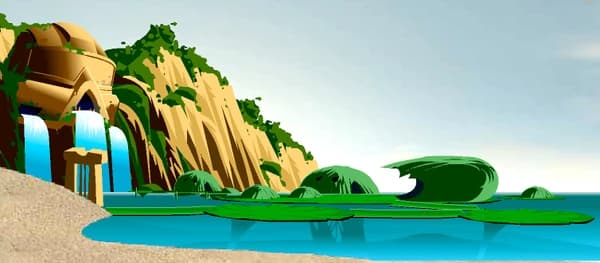
The body of water that made up most of Ga-Wahi, named for a fallen Toa of Water and home to the floating village of Ga-Koro on its surface.
Po-Koro
Po-Koro was the Po-Matoran village in Po-Wahi, led by Turaga Onewa and guarded by Toa Pohatu, reached through a single statue-lined road called the Path of Prophecies.
Kini-Nui
The most sacred temple on Mata Nui, ironically built directly above Teridax's fortress.
The Bohrok Swarms
The six-tribe Matoran Universe cleanup force awakened to strip the island of Mata Nui back to bare rock for the Great Spirit's reawakening.
Lily Pads of Ga-Koro: The Floating Foundation of a Matoran Village
The giant lily pads that formed the buoyant ground of Ga-Koro on Mata Nui, carrying the village's huts, bridges, and kolhii field across the surface of Naho Bay.
Mentioned in5 entries
Amaya's Hut
Amaya's Hut was a small driftwood dwelling in Ga-Koro that housed a Flax Weaver, a jellyfish lamp, and the quiet labor of Matoran daily life.
Ga-Koro Town Square
The central plaza of Ga-Koro, split into a north square inhabited by Nokama, Nireta, Macku and Nixie, and a south square inhabited by Okoth, Kotu and Kailani.
Lily Pads of Ga-Koro: The Floating Foundation of a Matoran Village
The giant lily pads that formed the buoyant ground of Ga-Koro on Mata Nui, carrying the village's huts, bridges, and kolhii field across the surface of Naho Bay.
Ruki
A common fish-like Rahi of the Ga-Wahi waters with strong jaws, the Ruki was the staple Matoran catch of Ga-Koro, the natural enemy of the Tarakava, and one of the few small Rahi confident enough to drive larger predators away from its shoals.
The Ga-Koro Bridge
The lily-pad bridge of Ga-Koro was the floating span that connected the Ga-Matoran village to the mainland of Ga-Wahi, raised in the village's defining battle against the Pahrak swarms.
Get new articles in your inbox
No spam. New lore drops, canon conflicts, and deep dives only when theyโre worth reading.
Some links on Lore Fortress are affiliate links. If you buy through them we earn a small commission at no extra cost to you.