The Ga-Koro Bridge

Ga-Wahi's Lily-Pad Span

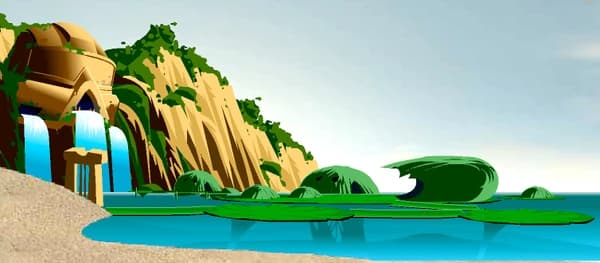
The lily-pad bridge of Ga-Koro was the floating span that connected the Ga-Matoran village to the mainland of Ga-Wahi, raised in the village's defining battle against the Pahrak swarms.

By Joe Garratt

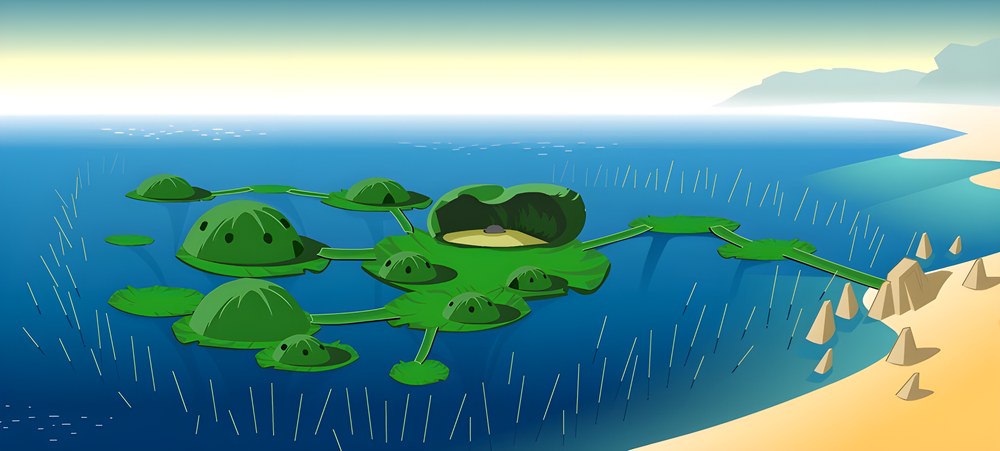
The Ga-KoroGa-KoroGa-Koro is a village on the island of Mata Nui, inhabited by the Ga-Matoran and associated with both Nokama and Gali. The settlement was formerly under the power of Teridax. Bridge was the central floating span that connected the village of Ga-KoroGa-KoroGa-Koro is a village on the island of Mata Nui, inhabited by the Ga-Matoran and associated with both Nokama and Gali. The settlement was formerly under the power of Teridax. to the mainland of Ga-WahiGa-WahiGa-Wahi was a region situated to the east on the island of Mata Nui, inhabited by Ga-Matoran and various Rahi. The region once fell under the domain of Teridax, though that connection did not endure. Ga-Wahi no longer existed in later records.. Composed of lily padsLily Pads of Ga-Koro: The Floating Foundation of a Matoran VillageThe giant lily pads that formed the buoyant ground of Ga-Koro on Mata Nui, carrying the village's huts, bridges, and kolhii field across the surface of Naho Bay. anchored end to end across the surface of the bay, the bridge was the principal land entry to a village that otherwise sat afloat in open water, and its destruction and restoration figured in several of the defining episodes of Ga-KoroGa-KoroGa-Koro is a village on the island of Mata Nui, inhabited by the Ga-Matoran and associated with both Nokama and Gali. The settlement was formerly under the power of Teridax.'s history.

Construction and Function#

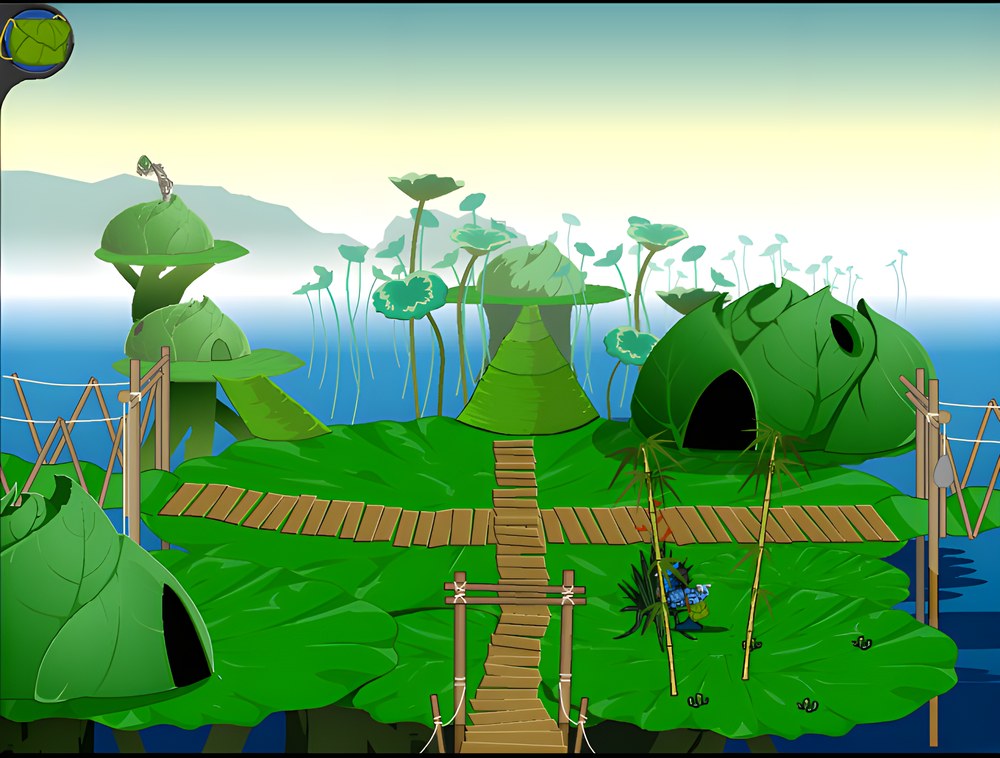
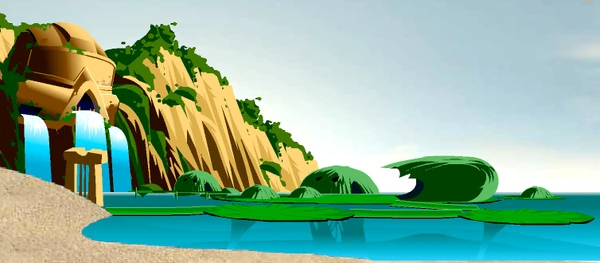
Ga-KoroGa-KoroGa-Koro is a village on the island of Mata Nui, inhabited by the Ga-Matoran and associated with both Nokama and Gali. The settlement was formerly under the power of Teridax. was built across a cluster of giant lily padsLily Pads of Ga-Koro: The Floating Foundation of a Matoran VillageThe giant lily pads that formed the buoyant ground of Ga-Koro on Mata Nui, carrying the village's huts, bridges, and kolhii field across the surface of Naho Bay. floating on the bay east of the NahoNaho BayThe body of water that made up most of Ga-Wahi, named for a fallen Toa of Water and home to the floating village of Ga-Koro on its surface. region of Ga-WahiGa-WahiGa-Wahi was a region situated to the east on the island of Mata Nui, inhabited by Ga-Matoran and various Rahi. The region once fell under the domain of Teridax, though that connection did not endure. Ga-Wahi no longer existed in later records.. The village's houses, jetties, and public spaces rested directly on these pads, and movement between huts was conducted over short bridges of woven plant matter and rope. The largest of these bridges, and the only one that reached the surrounding land, was the central span that ran from the village's gate pad across the bay to the mainland shore.
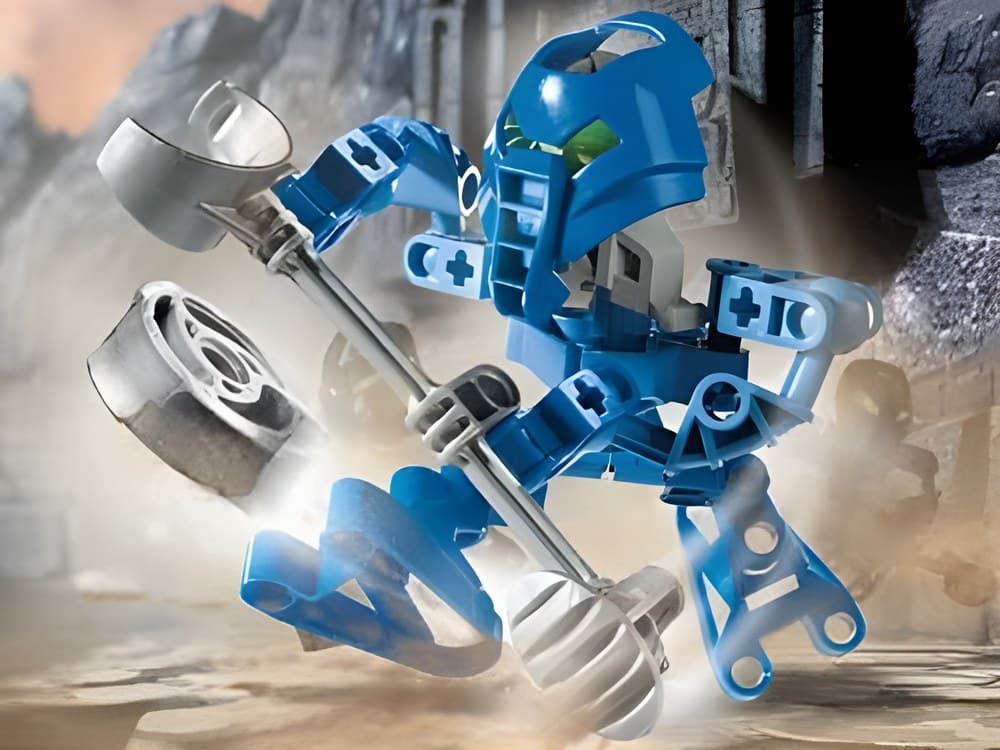
The bridge was constructed from the same biological material as the village itself: large interlocking lily padsLily Pads of Ga-Koro: The Floating Foundation of a Matoran VillageThe giant lily pads that formed the buoyant ground of Ga-Koro on Mata Nui, carrying the village's huts, bridges, and kolhii field across the surface of Naho Bay. anchored together and secured to the shoreline at the mainland end. The pads provided sufficient buoyancy to support MatoranMatoranThe most abundant species in the Matoran Universe, chosen by Mata Nui to inhabit and maintain his cosmic body. on foot and the small carts that supplied the village. The construction's strength lay in its modularity: damaged pads could be cut out and replaced with new ones harvested from the bay, and the bridge as a whole could be partially raised, separated, or extended as conditions required.

The mechanism for raising the bridge was the feature that set it apart from a static causeway. In its standard configuration the bridge lay flat across the water, but the anchor system at the mainland end allowed the Ga-MatoranGa-MatoranThe Water-element Matoran of Ga-Metru and Ga-Koro, exclusively female, who taught the schools of Metru Nui and crewed the boats and bridges of the Mata Nui coast. to lift sections of the span clear of the surface, dropping anything walking on them straight into the bay. The capacity was preserved for defensive use, and was decisive when the village faced its most serious siege.

The Battle of Ga-KoroGa-KoroGa-Koro is a village on the island of Mata Nui, inhabited by the Ga-Matoran and associated with both Nokama and Gali. The settlement was formerly under the power of Teridax.#

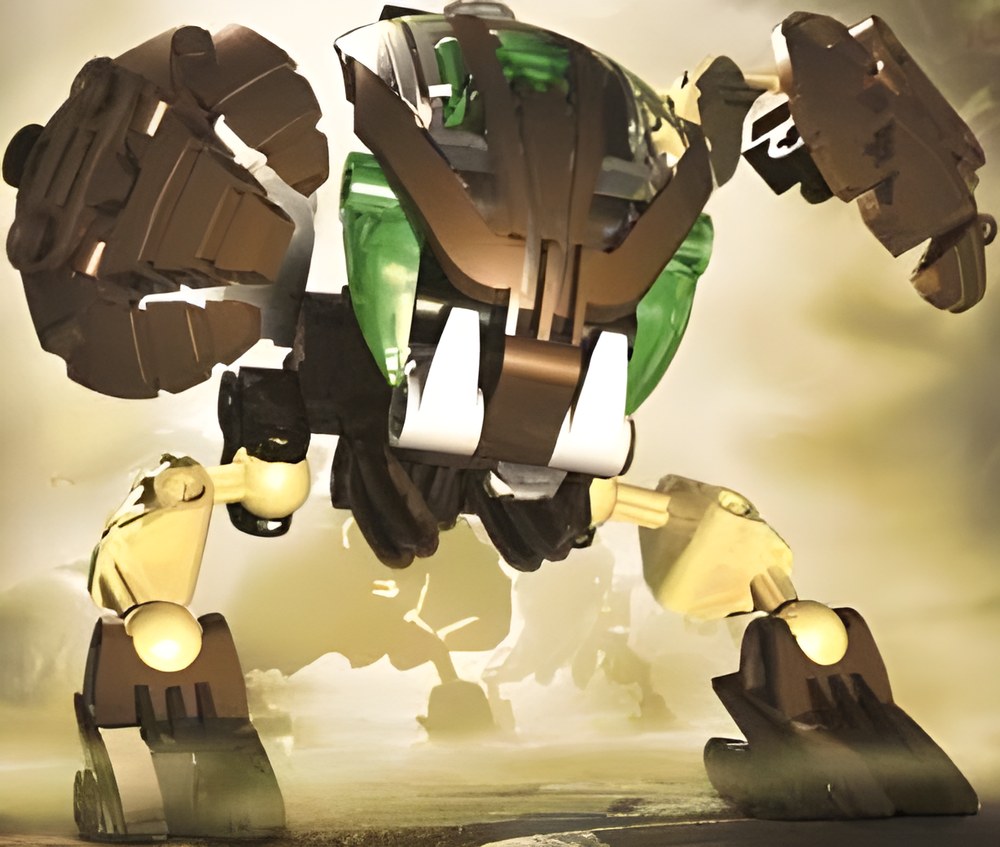
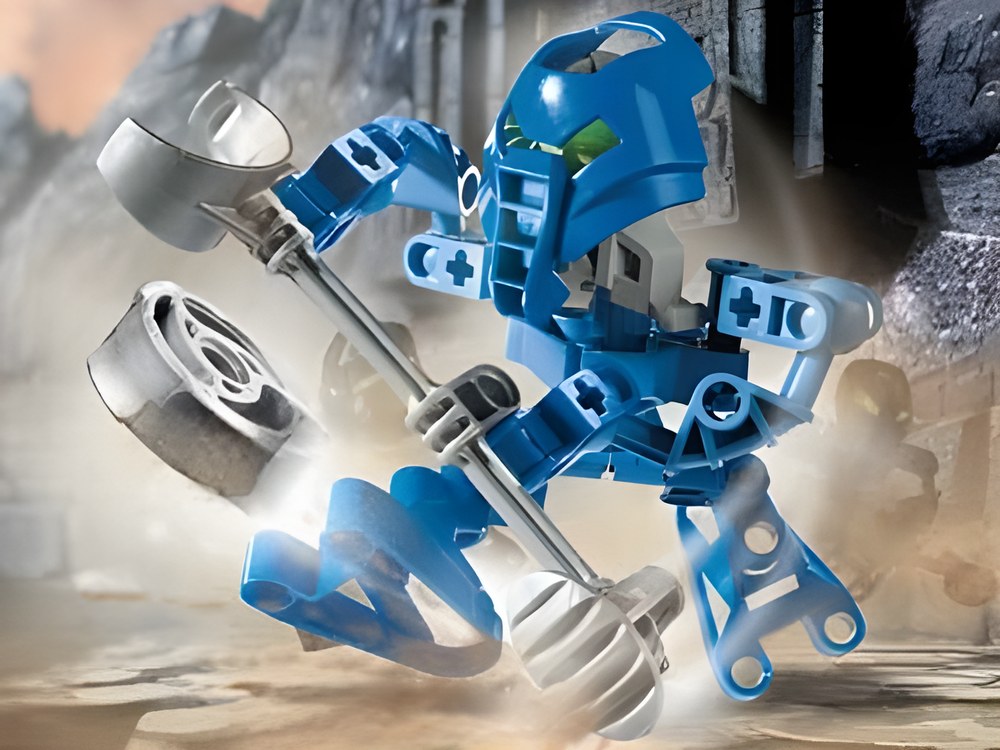
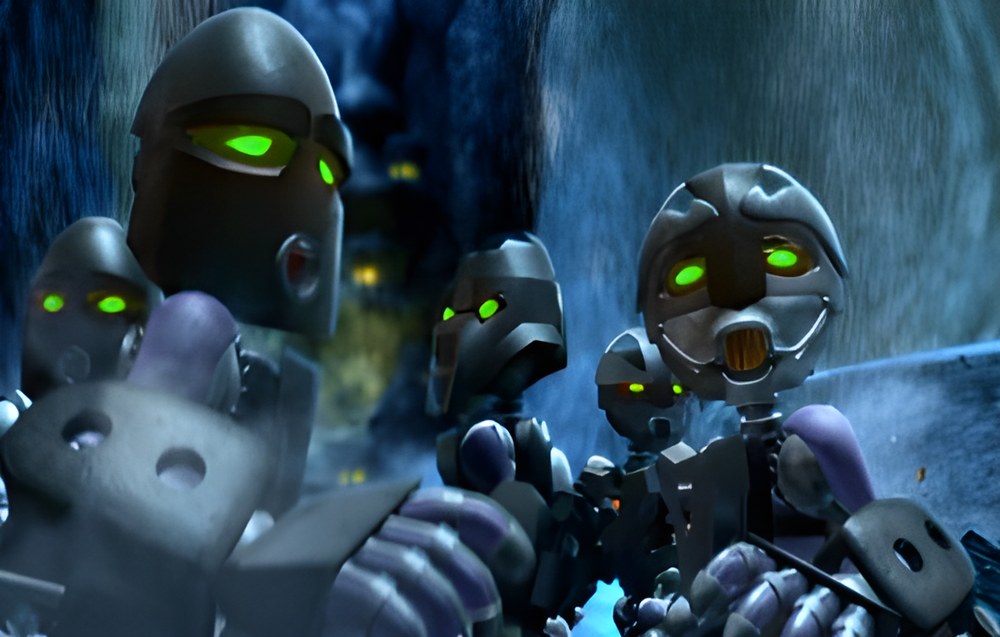
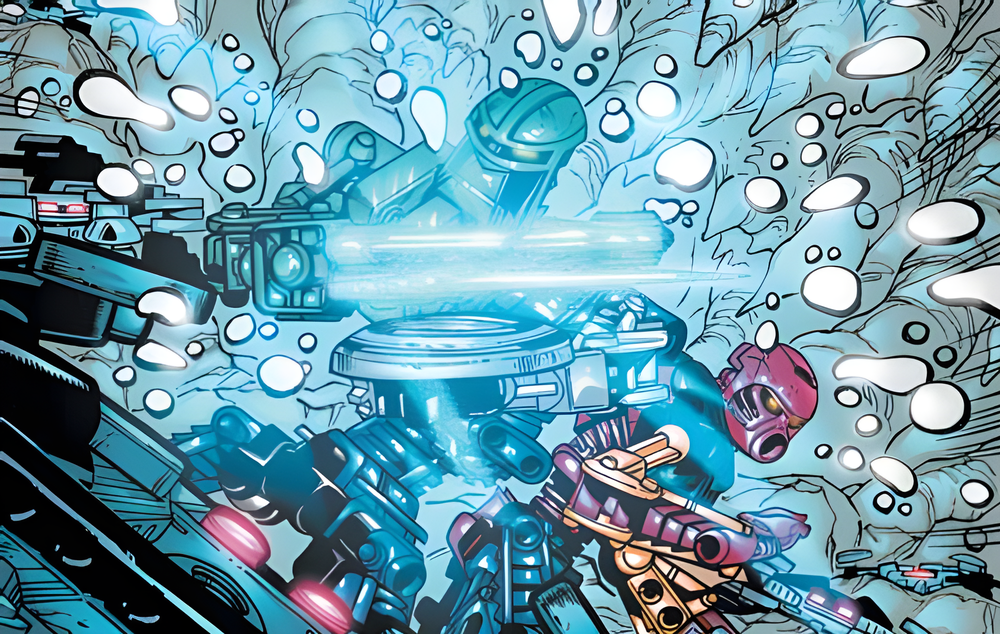
The most famous action involving the bridge was the Battle of Ga-KoroThe Battle of Ga-Koro: The Pahrak Siege of the Floating VillageThe conclusive engagement of the Bohrok War, fought on the lily pads of Ga-Koro by Gali, Maku, and the Ga-Matoran Defense Force against a Pahrak swarm. during the Bohrok WarBohrok WarThe 2002 swarm that nearly destroyed Mata Nui when Teridax triggered the Bohrok's awakening ahead of schedule.. Besieged by a PahrakPahrakStone-aligned Bohrok swarm units that forced the Toa Mata to realize they couldn't win through isolated victories. swarm and harassed by the Pahrak VaPahrak VaThe stone-element Bohrok Va were maskless support units that served during Mata Nui's 2002 invasion. playing mind games with the defenders, the Ga-MatoranGa-MatoranThe Water-element Matoran of Ga-Metru and Ga-Koro, exclusively female, who taught the schools of Metru Nui and crewed the boats and bridges of the Mata Nui coast. were outnumbered and outmatched by the stone BohrokBohrokHive-minded mechanical creatures designed to reshape worlds, the Bohrok represent a threat the Toa Mata never expected. on conventional ground. The PahrakPahrakStone-aligned Bohrok swarm units that forced the Toa Mata to realize they couldn't win through isolated victories. advanced across the bay using the bridge as their approach route, attempting to compromise the structure and reach the village pads directly.

The defenders' response was to raise the bridges. Ga-MatoranGa-MatoranThe Water-element Matoran of Ga-Metru and Ga-Koro, exclusively female, who taught the schools of Metru Nui and crewed the boats and bridges of the Mata Nui coast. and the Po-MatoranPo-MatoranThe Stone-element Matoran of Po-Metru and Po-Koro, carvers and quarry workers, the most athletic of the Matoran types and the population behind the Kohlii and Akilini circuits. kolhiiKolhiiKolhii was the inter-village athletic contest of Mata Nui, descended from the earlier Akilini of Metru Nui and played by all six Koro until the island's evacuation. champion HewkiiHewkiiHewkii rose from Po-Metru carver to Mata Nui's foremost kolhii player, then served as Toa Inika and Toa Mahri through the late wars of the universe. forced the bridges up, dunking the non-buoyant PahrakPahrakStone-aligned Bohrok swarm units that forced the Toa Mata to realize they couldn't win through isolated victories. into the bay, where their dense protodermisProtodermisThe engineered substance building the Matoran Universe, protodermis exists in countless refined states from mundane metal to diamond-hard crystal to the destruction-or-transformation force of energized form. shells took them straight to the bottom. The action saved MackuMackuMacku was a Ga-Matoran of Metru Nui and later Ga-Koro, attendant to Turaga Nokama, Kolhii partner to Hahli at the championship at Ta-Koro, and a member of the Chronicler's Company., who had been pinned on a compromised section, and the improvised technique of using a raised lily-pad surface against a heavy opponent later passed into the rules of a new variant of kolhiiKolhiiKolhii was the inter-village athletic contest of Mata Nui, descended from the earlier Akilini of Metru Nui and played by all six Koro until the island's evacuation. played at Ga-KoroGa-KoroGa-Koro is a village on the island of Mata Nui, inhabited by the Ga-Matoran and associated with both Nokama and Gali. The settlement was formerly under the power of Teridax. afterwards.

The PahrakPahrakStone-aligned Bohrok swarm units that forced the Toa Mata to realize they couldn't win through isolated victories. eventually destroyed the Ga-Koro WaterfallGa-Koro WaterfallThe Kaukau-shaped Naho Falls above Ga-Koro, concealing the southern approach to the Kini-Nui and rebuilt in the form of a Kaukau Nuva after the Bohrok War. and reached the village's central pads, but the battle was halted before the village fell. The Toa MataWho are the Toa Mata?Six warriors built to order by Artakha, stored in canisters, dropped into the ocean. This is the origin story of Bionicle's heroes and why their first week of work was entirely amnesiac. captured the BahragBahragCahdok and Gahdok were the twin queens of the Bohrok, sealed in a Protodermis cage by the Toa Mata and later released to finish their cleansing of Mata Nui. underground at the climactic moment, and the bright light that issued from the Toa SuvasToa SuvaThe shrine where six Matoran became Toa Metru by placing their stones and receiving their power. deactivated every active BohrokBohrokHive-minded mechanical creatures designed to reshape worlds, the Bohrok represent a threat the Toa Mata never expected. across the island. The PahrakPahrakStone-aligned Bohrok swarm units that forced the Toa Mata to realize they couldn't win through isolated victories. on the Ga-KoroGa-KoroGa-Koro is a village on the island of Mata Nui, inhabited by the Ga-Matoran and associated with both Nokama and Gali. The settlement was formerly under the power of Teridax. pads dropped where they stood, and the village's restoration could begin.

Auxiliary Structures#

The central bridge was the most prominent of several lily-pad spans within the Ga-KoroGa-KoroGa-Koro is a village on the island of Mata Nui, inhabited by the Ga-Matoran and associated with both Nokama and Gali. The settlement was formerly under the power of Teridax. layout. Amaya's JettyAmaya's JettyA small lily-pad jetty extending from Amaya's Hut at the eastern edge of Ga-Koro, marked by three Bamboo Poles and a Ruki poem., a small jetty jutting east from Amaya's HutAmaya's HutAmaya's Hut was a small driftwood dwelling in Ga-Koro that housed a Flax Weaver, a jellyfish lamp, and the quiet labor of Matoran daily life., was the easternmost point of the village and consisted of a single lily pad and an attached bridge. Surrounded by three Bamboo PolesBamboo PoleA crafting material in MNOG II used to assemble Kohlii sticks from gathered bamboo., the jetty carried a poem tacked to one of the poles and served as a private vantage point for residents looking out across the bay.

The Ga-Koro Kolhii FieldGa-Koro Kolhii FieldThe Ga-Wahi lily pad on which Hahli and Macku trained for the Kolhii championship the Ga-Koro team eventually won at Ta-Koro., the playing surface on which HahliHahliA Ga-Matoran scholar who rose to become Chronicler of Mata Nui, then Toa Inika, then Toa Mahri of Water during the final crises of the Matoran Universe. and MackuMackuMacku was a Ga-Matoran of Metru Nui and later Ga-Koro, attendant to Turaga Nokama, Kolhii partner to Hahli at the championship at Ta-Koro, and a member of the Chronicler's Company. practised for the Kolhii TournamentThe Kolhii Championship at Ta-Koro: The Last Tournament on Mata NuiThe post-Bohrok-Kal championship at the Ta-Koro Kolhii Stadium, the upset victory by Ga-Koro, and the unveiling of the Mask of Light to the assembled population of Mata Nui., was constructed on a lily pad positioned between Shasa's HutShasa's HutShasa's Hut is a small Ga-Koro residence built from seaweed, holding a weaving loom for one of the village's working Matoran. and the Ga-Koro Town SquareGa-Koro Town SquareThe central plaza of Ga-Koro, split into a north square inhabited by Nokama, Nireta, Macku and Nixie, and a south square inhabited by Okoth, Kotu and Kailani.. The pad was an extension of the broader bridge network rather than a separate structure, and its position made the game audible across the village.
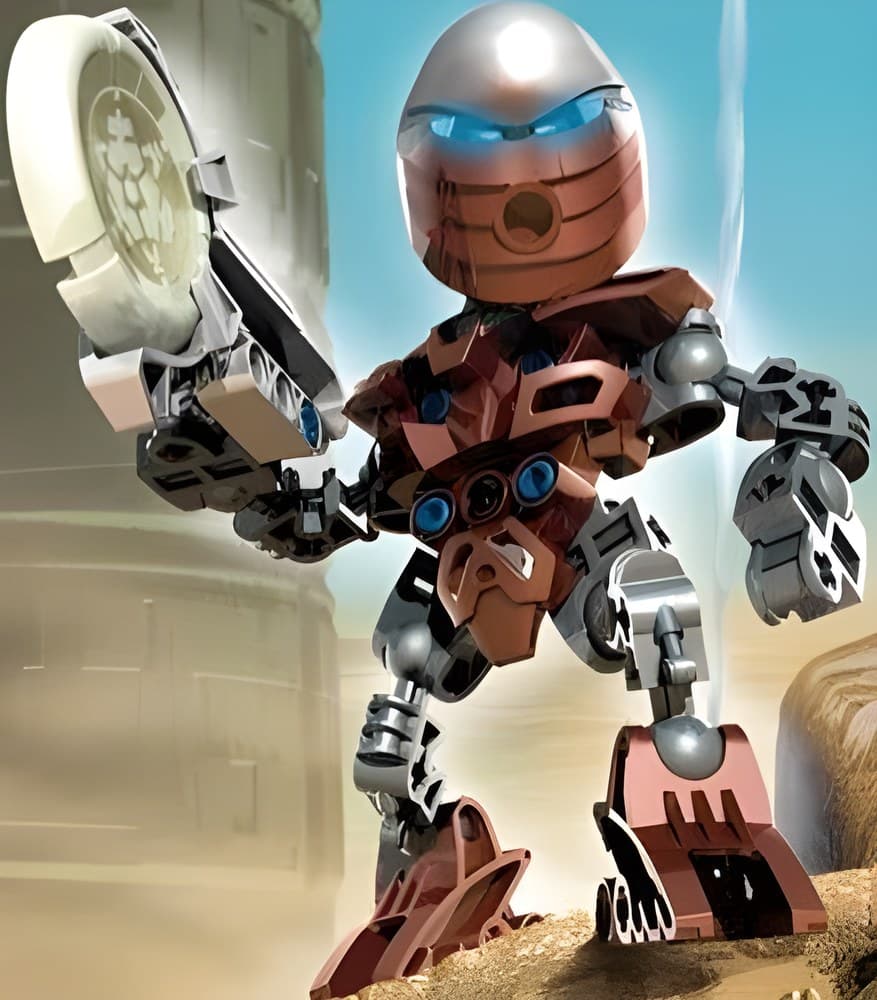
Smaller utility bridges connected most of the village's residential huts, including the network of pads around HahliHahliA Ga-Matoran scholar who rose to become Chronicler of Mata Nui, then Toa Inika, then Toa Mahri of Water during the final crises of the Matoran Universe.'s hut. The walks between huts were narrow and often slick, and the Ga-MatoranGa-MatoranThe Water-element Matoran of Ga-Metru and Ga-Koro, exclusively female, who taught the schools of Metru Nui and crewed the boats and bridges of the Mata Nui coast. habit of swimming as easily as walking made the village's geometry workable in a way it would not have been for the Po-MatoranPo-MatoranThe Stone-element Matoran of Po-Metru and Po-Koro, carvers and quarry workers, the most athletic of the Matoran types and the population behind the Kohlii and Akilini circuits. or Ta-MatoranTa-MatoranThe Fire-element Matoran of Ta-Metru and Ta-Koro, forgers of masks and Kanoka, lava farmers, and the standing core of the Ta-Koro Guard during the war for Mata Nui. visitors who occasionally passed through.
Reconstruction and Later Use#

After the Bohrok WarBohrok WarThe 2002 swarm that nearly destroyed Mata Nui when Teridax triggered the Bohrok's awakening ahead of schedule., the bridge and the wider village were rebuilt under the supervision of Turaga NokamaNokamaNokama served as Toa Metru of Water, endured the Hordika mutation, and led Ga-Koro and later Ga-Metru as Turaga through three eras.. The reconstruction period was the setting for BIONICLE Chronicles 4: Tales of the MasksThe Quests for the Kanohi NuvaThe six expeditions through which the Toa Nuva recovered their Great Masks of Power after the Bohrok-Kal crisis, told to the council that decided whether they had earned the truth about Metru Nui., during which HahliHahliA Ga-Matoran scholar who rose to become Chronicler of Mata Nui, then Toa Inika, then Toa Mahri of Water during the final crises of the Matoran Universe. noticed MackuMackuMacku was a Ga-Matoran of Metru Nui and later Ga-Koro, attendant to Turaga Nokama, Kolhii partner to Hahli at the championship at Ta-Koro, and a member of the Chronicler's Company.'s absence on a canoeing trip and the village's gradual restoration was recorded alongside the search for the Kanohi NuvaKanohi NuvaThe most powerful Masks of Power ever created, granting each Toa Nuva fundamentally enhanced abilities.. The bridge complex was restored to its pre-war condition, and the Ga-KoroGa-KoroGa-Koro is a village on the island of Mata Nui, inhabited by the Ga-Matoran and associated with both Nokama and Gali. The settlement was formerly under the power of Teridax. Kolhii TeamGa-Koro Kolhii TeamThe Ga-Matoran squad that won the Mata Nui Kolhii championship at Ta-Koro, after Turaga Nokama replaced Kotu on the roster with Hahli. trained on the field that lay along its line.

The bridge served again during the journeys of TakuaTakuaAn Av-Matoran hidden on Mata Nui as a Ta-Matoran, who gathered the Toa Stones, served as Chronicler, and ultimately accepted the Avohkii to become Takanuva, the Toa of Light. and JallerJallerJaller served as Captain of the Ta-Koro Guard, led the Toa Inika to Voya Nui, and commanded the Toa Mahri through the recovery of the Mask of Life. when the pair sought the bearer of the AvohkiiAvohkiiThe Avohkii is the Mask of Light, a golden mask that granted its wearer the power of Light and the ability to spread understanding. It was worn by Toa Takanuva., and during the eventual evacuation of Mata NuiMata Nui (Location)An island created by accident on the Great Spirit's face, home to the Matoran for a thousand years. when the MatoranMatoranThe most abundant species in the Matoran Universe, chosen by Mata Nui to inhabit and maintain his cosmic body. returned to Metru NuiMetru NuiThe city beneath Mata Nui functions as the Great Spirit's brain, housing the Matoran whose labor keeps the god alive.. At each crossing the bridge carried the same modest function: the meeting point between Ga-KoroGa-KoroGa-Koro is a village on the island of Mata Nui, inhabited by the Ga-Matoran and associated with both Nokama and Gali. The settlement was formerly under the power of Teridax.'s afloat geometry and the solid ground beyond it.

Place in the Record#

The Ga-KoroGa-KoroGa-Koro is a village on the island of Mata Nui, inhabited by the Ga-Matoran and associated with both Nokama and Gali. The settlement was formerly under the power of Teridax. Bridge was the village's connection to the rest of Mata NuiMata Nui (Location)An island created by accident on the Great Spirit's face, home to the Matoran for a thousand years. and the single point at which its floating layout met the island's terrestrial road network. Its defensive raising during the Battle of Ga-KoroThe Battle of Ga-Koro: The Pahrak Siege of the Floating VillageThe conclusive engagement of the Bohrok War, fought on the lily pads of Ga-Koro by Gali, Maku, and the Ga-Matoran Defense Force against a Pahrak swarm. was the clearest demonstration of how the Ga-MatoranGa-MatoranThe Water-element Matoran of Ga-Metru and Ga-Koro, exclusively female, who taught the schools of Metru Nui and crewed the boats and bridges of the Mata Nui coast. had adapted their environment to serve as protection, and the improvised kolhiiKolhiiKolhii was the inter-village athletic contest of Mata Nui, descended from the earlier Akilini of Metru Nui and played by all six Koro until the island's evacuation. variant that emerged from the same incident remained one of the few sports recorded as having originated in combat. The bridge survived the war, the reconstruction, and the eventual evacuation of the island, and stood throughout as the modest but essential link between the village in the water and the world on the shore.

Frequently asked questions

What was the Ga-Koro Bridge?
The Ga-Koro Bridge was the central floating span that connected the village of Ga-Koro to the mainland of Ga-Wahi. Composed of lily pads anchored end to end across the bay, it was the principal land entry to a village that otherwise sat afloat in open water.
How was the Ga-Koro Bridge built?
The bridge was constructed from large interlocking lily pads anchored together and secured to the shoreline at the mainland end, the same biological material as the village itself. Its strength lay in its modularity, since damaged pads could be cut out and replaced with new ones harvested from the bay.
How was the Ga-Koro Bridge used in the Battle of Ga-Koro?
During the Battle of Ga-Koro in the Bohrok War, the Pahrak advanced across the bay using the bridge as their approach route. Ga-Matoran and the Po-Matoran kolhii champion Hewkii forced the bridges up, dunking the non-buoyant Pahrak into the bay, where their dense protodermis shells took them straight to the bottom.
How did the Battle of Ga-Koro end?
The Pahrak eventually destroyed the Ga-Koro Waterfall and reached the village's central pads, but the battle was halted before the village fell. The Toa Mata captured the Bahrag underground, and the bright light from the Toa Suvas deactivated every active Bohrok across the island, dropping the Pahrak on the Ga-Koro pads where they stood.
What new sport came out of the Battle of Ga-Koro?
The improvised technique of using a raised lily-pad surface against a heavy opponent later passed into the rules of a new variant of kolhii played at Ga-Koro afterwards. It remained one of the few sports recorded as having originated in combat.

Sources

Spotted a factual error or a primary source we missed? Email a correction. Every flagged claim gets reviewed.

Related entries

Mentioned in5 entries

Get new articles in your inbox

No spam. New lore drops, canon conflicts, and deep dives only when theyโ€™re worth reading.

Some links on Lore Fortress are affiliate links. If you buy through them we earn a small commission at no extra cost to you.