Tau Volantis Debris Field: graveyard of the S.C.A.F. flotilla
The Tau Volantis Debris Field was the wreckage of the Sovereign Colonies Armed Forces flotilla, scuttled by its own command in 2314 under the Scenario Five directive. Sown with hundreds of thousands of homing mines, it hung in a stable low orbit for two centuries, destroying the ships that came looking for it in 2514.
The Tau Volantis Debris Field was a vast band of wreckage hanging in low orbit above Tau Volantis, all that remained of the Sovereign Colonies Armed Forces flotilla dispatched to the frozen planet in 2311. The fleet was not destroyed by an enemy. It was scuttled by its own command under the Scenario Five directive, its ships shattered or crippled by hundreds of thousands of homing mines released from within the flotilla itself. For two centuries the field drifted in a surprisingly stable orbit, its mines still armed, until the ships of Ellie Langford and Isaac Clarke blundered into it in 2514. (Dead Space 3)
A fleet built to be destroyed#
The Sovereign Colonies Armed Forces flotilla arrived at Tau Volantis in 2311 to investigate the source of a Marker signal traced to the ice planet. From the outset, the expedition's planners understood that setting foot on an alien world carried the risk of infection by an unknown contagion, and they treated their own ships as one of the most dangerous possible vectors for its spread. A fleet that carried the infection home would be worse than a fleet that never returned at all. (Dead Space 3)
The S.C.A.F. therefore built a failsafe into the expedition itself. In the event of a full scale, uncontrollable outbreak, the most prudent course of action was judged to be the disabling or outright destruction of the entire fleet. To carry out that order, the flotilla was accompanied by a battleship designed for mine warfare, a vessel with the capability to destroy every other ship in the formation. Its standing duties included monitoring the rest of the fleet, presumably watching for signs of contagion among the crews it might one day be ordered to kill. (Dead Space 3)
Scenario Five and the scuttling of the flotilla#
The failsafe was invoked in 2314. The declaration of Scenario Five, the Sovereign Colonies directive covering an extinction level outbreak, set the destruction plan in motion. The mine warfare battleship released its full complement into the flotilla, hundreds of thousands of homing mines loosed among the ships it had spent three years escorting. Most of the vessels were destroyed outright. The rest were damaged so badly that they were rendered useless as interstellar craft, stranded in orbit with no way to carry the infection beyond Tau Volantis. (Dead Space 3)
The mines served a second purpose beyond the initial slaughter. Left active in their thousands, they deterred any future visitors from nearing the infected fleet, ensuring that salvagers or rescuers could not board the wrecks and become carriers themselves. The quarantine was designed to outlive the people who ordered it, and it did. (Dead Space 3)
Among the vessels lost to that final order was probably the CMS Shackleton, one of the flotilla's ships, which most likely supported operations on the ground before it went down with the rest of the fleet. (Dead Space 3)
The wrecks that remained#
The field that formed from the scuttling was of substantial size and settled, unexpectedly, into a stable low orbit rather than raining down onto the planet below. Amid the drifting spacecraft parts, a number of damaged but relatively intact vessels endured. The largest was the CMS Roanoke, the orbital command platform that had served as flagship of the Galactic Expedition, which came through the mining largely whole and hung derelict among the wreckage of its fleet. Near it drifted the CMS Greely, a research vessel whose scientists had studied the planet's biology, and the CMS Brusilov, aboard which S.C.A.F. researchers had been studying a Marker made by the planet's native aliens and brought up from the surface, until Scenario Five and a deranged scientist's sabotage of the life support left the artifact abandoned with its dead crew. The CMS Terra Nova also lay within the field for a time. (Dead Space 3)
The wrecks were not the field's only contents. A number of SK-1P stations remained functional two centuries after the fleet died, small transit points that still allowed movement between the scattered zones of the flotilla. Flight recorder satellites drifted among the debris, preserving fragments of the expedition's final records. And threaded through all of it were the mines, a large number of them still active and still homing, patient sentries over a graveyard. (Dead Space 3)
The arrivals of 2514#
For two hundred years the quarantine held. Then, in 2514, the field claimed its first new victims. Ellie Langford's expedition, following the Tau Volantis trail in search of a way to end the Marker threat, appears to have emerged from shockspace close to the debris field and fallen victim to the mines. With their ship lost, Langford, Austin Buckell and Jennifer Santos were forced to find refuge aboard the most intact vessel available to them, the derelict CMS Roanoke, where they hid among the wreckage. (Dead Space 3)
The USM Eudora followed. Carrying Isaac Clarke, Robert Norton, John Carver and the crewmen Mark Rosen and Locke in pursuit of Langford's last known position, the Eudora exited shockspace close to the field and was almost immediately set upon by tens, if not hundreds, of automated mines. The ship was damaged beyond saving and destroyed, a demonstration of both the sheer number of mines the battleship had deployed and the lethality of such small weapons against a full sized vessel. The survivors escaped the Eudora's destruction and took refuge aboard the Roanoke, searching the dead flagship for Langford's team and for any means of reaching the planet's surface. (Dead Space 3)
The field, in the end, gave up the road down itself. Working from the Roanoke, the combined survivors located the CMS Crozier, a scrapped S.C.A.F. transport shuttle left in the Terra Nova's shuttle bay, and repaired it for the descent to Tau Volantis. The minefield that had guarded the dead fleet for two centuries had destroyed two more ships, but it failed in its final purpose: the survivors it stranded went down to the frozen world the quarantine had been built to seal away. (Dead Space 3)
Sources
- GameDead Space 3, Visceral Games, 2013
Spotted a factual error or a primary source we missed? Email a correction. Every flagged claim gets reviewed.
Followed from this entry
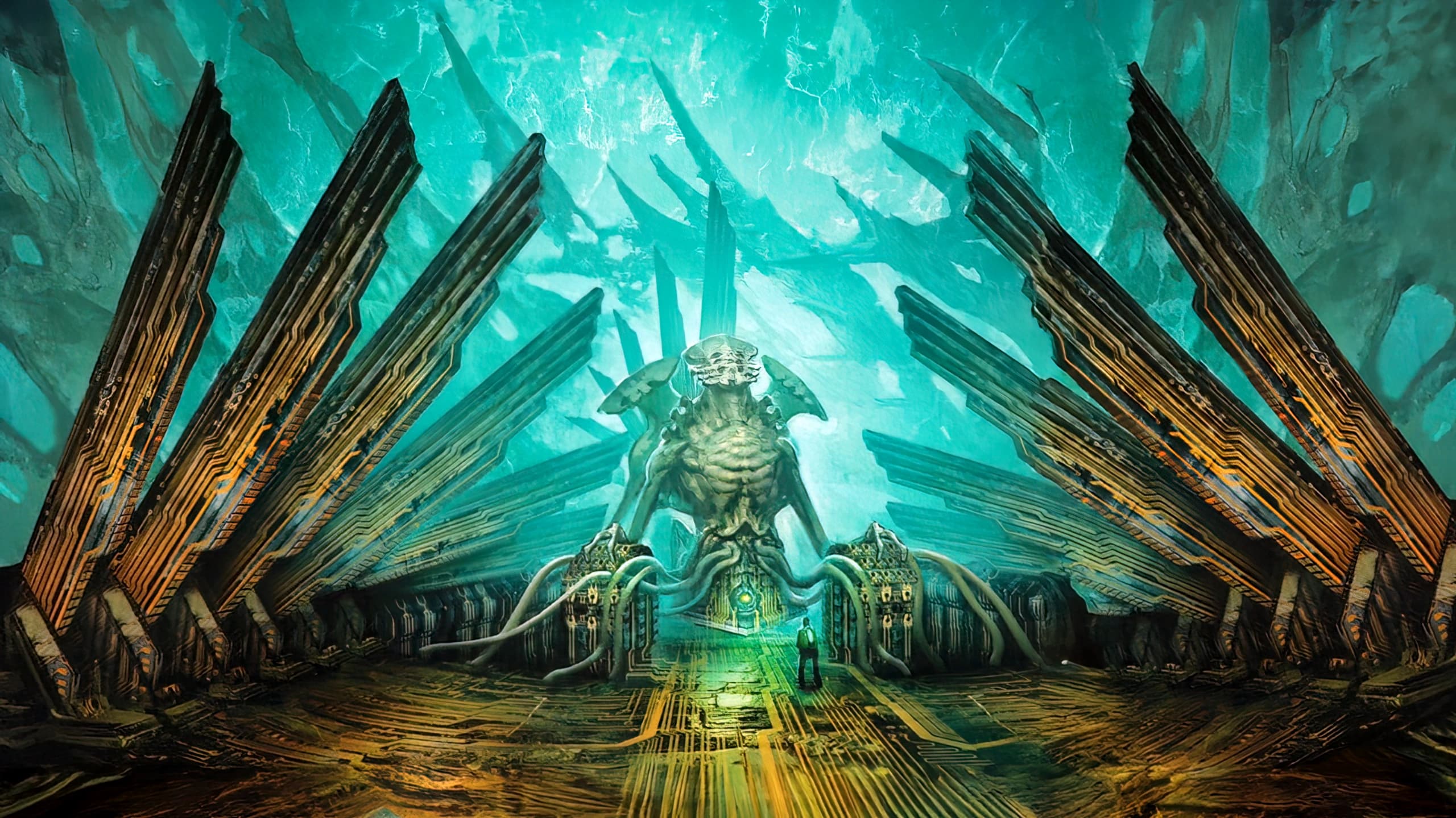
Tau Volantis
Tau Volantis was a frozen planet where, two million years ago, an alien civilization flash-froze their own world to halt a Convergence Event. Mistaken for the Marker homeworld, it became the site of the final clash over the Brethren Moons.
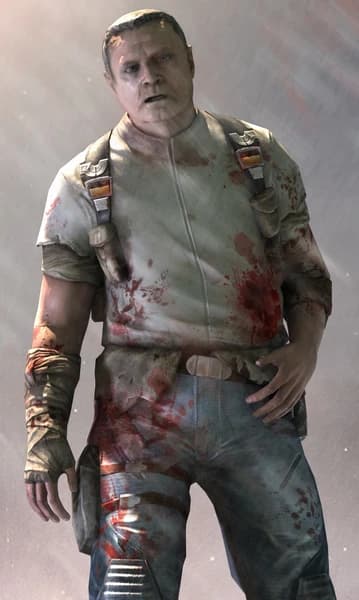
Austin Buckell: Marker Ops Scientist
Austin Buckell was a scientist on an EarthGov Marker Ops research team on Keyhole Station, recruited from the EDF Corps of Engineers. He joined Ellie Langford's expedition toward Tau Volantis and died of his wounds at a waystation on the planet.
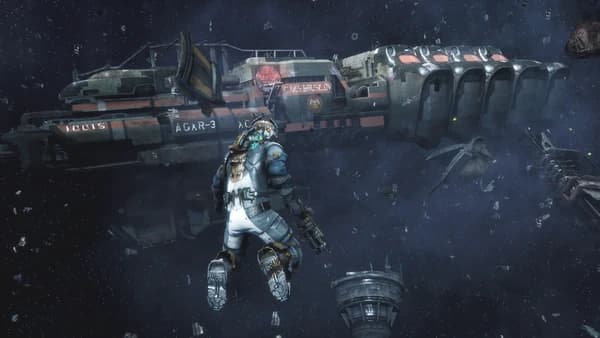
CMS Brusilov
The CMS Brusilov was a Sovereign Colonies Armed Forces ship that carried a science team to Tau Volantis to study the alien Markers. After its captain received the Scenario Five cleanse order, a maddened scientist purged the ship of air, and the Brusilov drifted dead in orbit for two hundred years.
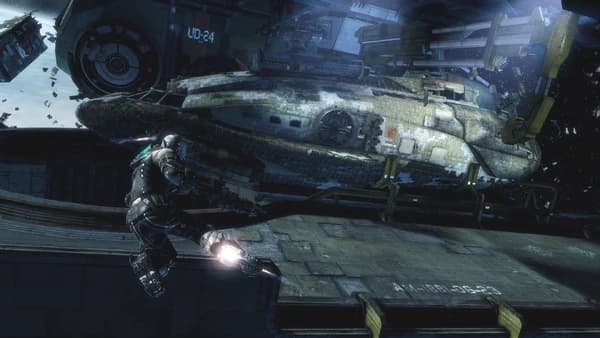
CMS Crozier
The CMS Crozier was a battered Sovereign Colonies Armed Forces transport shuttle abandoned in the flotilla over Tau Volantis. Repaired by Ellie Langford's team two centuries later, it carried Isaac Clarke down to the planet before breaking apart in the descent.
CMS Greely
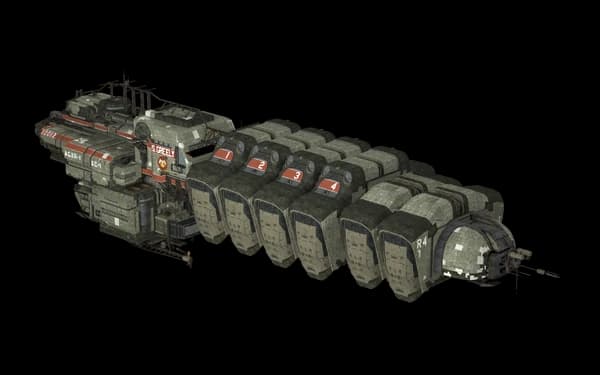
The CMS Greely was a Sovereign Colonies Armed Forces research vessel abandoned in the flotilla over Tau Volantis after Scenario Five. Its scientists used the ship to study frozen Alien tissue and, in their final hours, to broadcast a coded order to hide Rosetta from the purge.
CMS Roanoke
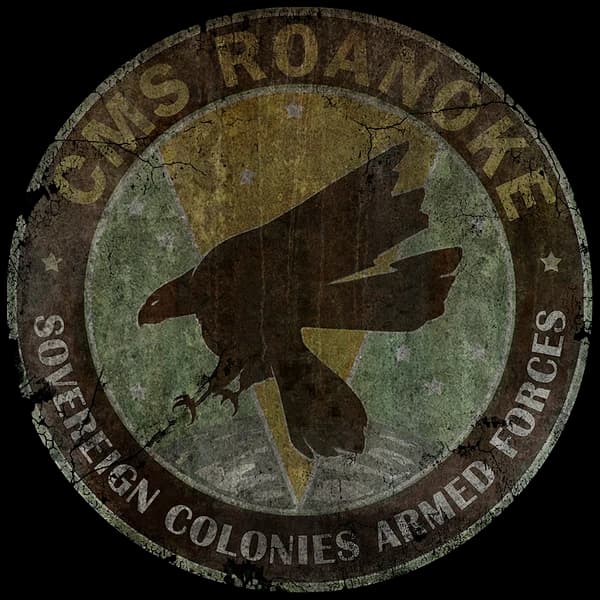
The CMS Roanoke was a Sovereign Colonies orbital command platform that served as the flagship of the Galactic Expedition to Tau Volantis. Left adrift in a mine-saturated flotilla after Scenario Five, it was the first wreck Isaac Clarke and John Carver boarded on reaching the frozen world.
Get new articles in your inbox
No spam. New lore drops, canon conflicts, and deep dives only when they’re worth reading.
Some links on Lore Fortress are affiliate links. If you buy through them we earn a small commission at no extra cost to you.