Muad'Dib's Jihad: the holy war that remade the Imperium
Muad'Dib's Jihad is the holy war fought by the Fremen legions in Paul Atreides's name. Paul foresees it all through Dune, and when Dune Messiah opens twelve years later it is still being fought, with sixty-one billion dead by his own count.
Muad'Dib's Jihad is the holy war fought by the Fremen legions in the name of Paul Atreides. Paul sees it coming for most of Dune and can't find a way to stop it. Frank Herbert never shows a battle on the page. By the time Dune Messiah opens, twelve years into Paul's reign, the war is still being fought and Paul is counting the dead. (Dune; Dune Messiah)
Origins#
The Jihad starts as a vision. Through Dune, Paul keeps seeing the same future: Fremen legions, mad with faith, carrying the green and black Atreides banner and his name across the stars. He looks for a path that avoids it. By the end of the book he knows there isn't one, because even if he died, his followers would fight on in the name of a martyr. (Dune)
At the close of Dune, Paul beats Shaddam IV at Arrakeen, takes the throne by claiming the Emperor's daughter, Princess Irulan, and sends the old Emperor into exile on Salusa Secundus. His real hold over the universe is the spice. He has shown he can destroy it, and with it the Spacing Guild's ability to cross space, so the Guild and the Great Houses have to deal with him. (Dune)
The war in Dune Messiah#
Dune Messiah opens twelve years later, and the war hasn't stopped. Paul signs the Semboule Treaty between other business, and Stilgar is busy with the staff mentats' numbers for the Zabulon campaign: two hundred and five attack frigates, thirty legions, support battalions, pacification cadres and missionaries of the Qizarate, plus the clerks, accountants and spies to run it. Paul could end it. He doesn't, because every path he can see that stops the war leads somewhere worse. (Dune Messiah)
Herbert gives almost no battle history. What survives comes from the veterans who have come home to Arrakis, many of them housed in a suburb of Arrakeen built for men of the Jihad. (Dune Messiah)
- Farok, once Bashar of the Ninth Legion, remembers a sunset on Enfeil, the world where he led his legion to victory. He also remembers the feast held for the Molitor victory, where the Bashars sat apart in their green robes and he was disgusted by some of what he saw. (Dune Messiah)
- Farok's son lost his eyes in the conquest of Naraj, where the defenders used a stone burner, one of the outlawed atomics. (Dune Messiah)
- Otheym, a former Fedaykin and Farok's neighbour, caught the splitting disease on Tarahell, right after the victory there. (Dune Messiah)
The cost#
Paul gives the figures himself, in conversation with his Panegyrist, the priest Korba. At a conservative estimate, he says, he has killed sixty-one billion people, sterilised ninety planets, completely demoralised five hundred others, and wiped out the followers of forty religions. Korba answers that the Jihad has brought ten thousand worlds into the light. Paul corrects him: into the darkness, and it will take a hundred generations to recover. (Dune Messiah)
That gap between the priest's boast and Paul's guilt is what Dune Messiah is about. The old powers, the Bene Gesserit, the Guild and the Bene Tleilax, join Irulan in the last conspiracy against Muad'Dib, and Paul lets it run because he can see where the other paths lead. (Dune Messiah)
When did it end?#
The novels don't say. Dune Messiah ends with Paul blind and gone into the desert and Alia ruling as regent for his twins, but nobody announces the end of the war, and there's no year attached to any of it. Some older timelines give the Jihad a neat twelve-year span ending in 10208 AG. That date isn't in Frank Herbert's books, and Messiah itself shows the fighting still going in its twelfth year. (Dune Messiah)
For what happened in the gap between the two books, see the twelve years between Dune and Dune Messiah. The Dune timeline sets out the dates the novels do give, and readers still argue over whether the toll makes Muad'Dib a hero or a villain. (Dune; Dune Messiah)
Frequently asked questions
- What was Muad'Dib's Jihad?
- The holy war fought by the Fremen legions in the name of Paul Atreides, Muad'Dib, after he took the throne at the end of Dune. Paul foresees it throughout the first novel, and Dune Messiah shows the empire it has built twelve years later.
- Did Paul want the Jihad?
- No. In Dune he sees it coming in his visions and searches for a way to stop it, until he understands that his followers would fight on even if he died. In Dune Messiah he lets it continue because every other path he can see leads somewhere worse.
- How many people died in Muad'Dib's Jihad?
- In Dune Messiah Paul gives the figures himself: at a conservative estimate, sixty-one billion killed, ninety planets sterilised, five hundred more completely demoralised, and the followers of forty religions wiped out.
- When did Muad'Dib's Jihad end?
- Frank Herbert's novels don't give it an end date. Dune Messiah opens twelve years into Paul's reign with the war still running: Paul signs the Semboule Treaty and Stilgar is working through the logistics of the Zabulon campaign.
- Which battles of the Jihad are named in the books?
- Dune Messiah mentions only a handful, all in passing: Farok's victory on Enfeil, the conquest of Naraj where his son was blinded, the Molitor victory, Otheym's campaign on Tarahell and the planned Zabulon campaign.
Sources
- BookDune, Frank Herbert, 1965
- BookDune Messiah, Frank Herbert, G. P. Putnam's Sons, 1969
Spotted a factual error or a primary source we missed? Email a correction. Every flagged claim gets reviewed.
Followed from this entry
What Happened in the Twelve Years Between Dune and Dune Messiah
Frank Herbert skips twelve years between Dune and Dune Messiah, and they are the bloodiest in the saga. Here is what the novels say happened: the holy war and its toll, the priesthood that grew around Paul, and the empire he was left ruling.
Last conspiracy against Muad'Dib
The last conspiracy against Muad'Dib was the alliance formed twelve years into Paul's reign to bring down the Padishah Emperor Paul Atreides. It ended with the blinded Emperor walking into the desert and the regency of his sister Alia.

Dune Messiah Explained: Plot Summary and Ending
The full plot of Frank Herbert's Dune Messiah in order, from the conspirators' meeting to Paul's walk into the desert, with the ending explained: why Paul leaves, what happens to Alia and the twins, and how Children of Dune picks it up.

Alia Atreides
Alia Atreides was the preborn daughter of Duke Leto Atreides and Lady Jessica, sister to Paul. Granted full ancestral memory in the womb, she ruled the Atreides Empire as Regent before succumbing to possession by her Harkonnen grandfather and taking her own life.
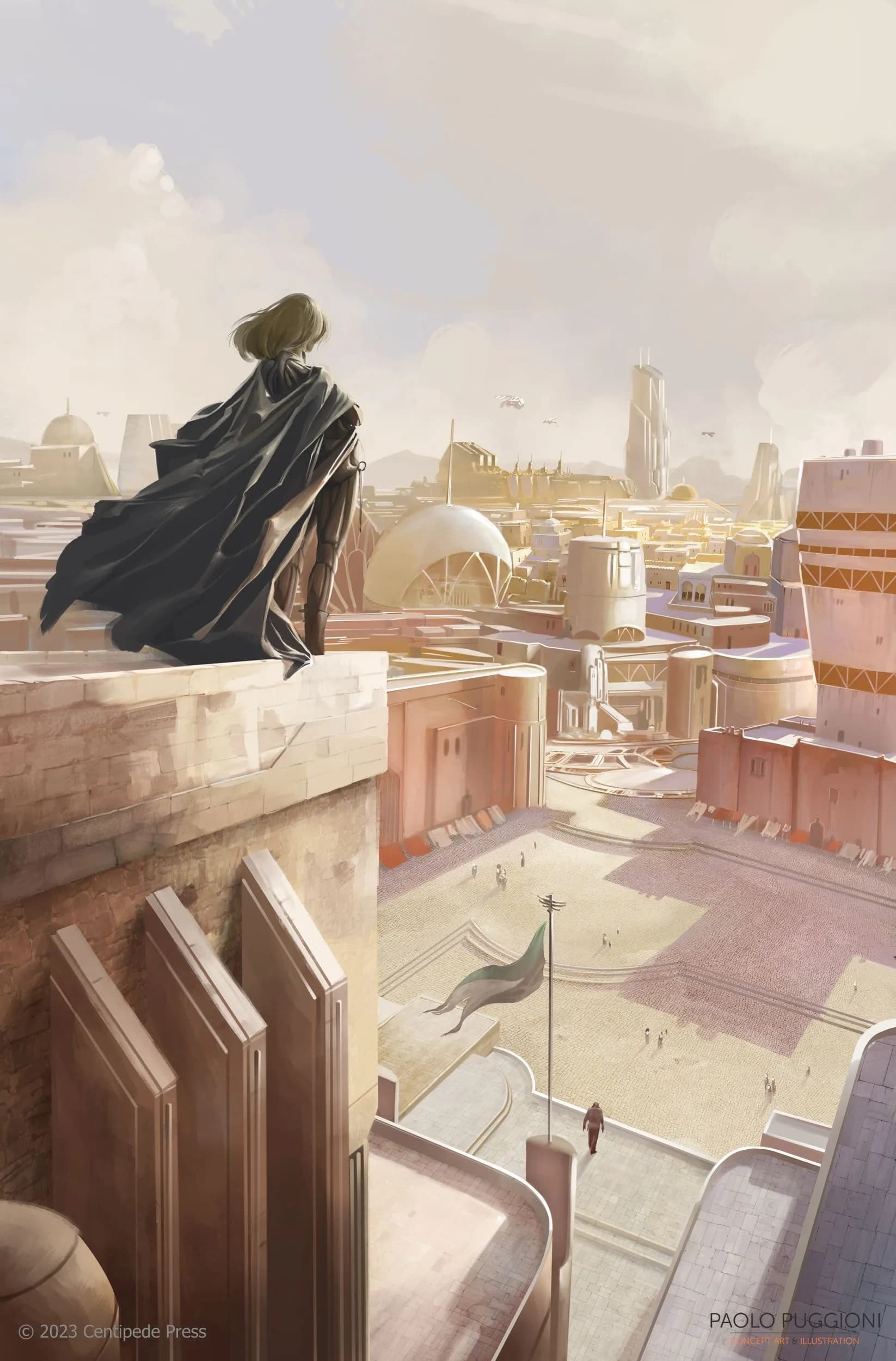
Arrakeen: the first city built on Arrakis
Sheltered by the Shield Wall near the northern pole, it held the Emperor's officials, House Atreides, then Muad'Dib's empire, then Leto II's festival city Onn.
Paul Atreides
Paul Atreides was the last Duke of House Atreides and the prophet Muad'Dib of the Fremen. The long-awaited Kwisatz Haderach of the Bene Gesserit, he toppled Emperor Shaddam IV, founded the Atreides Empire, and unleashed a jihad across the Known Universe before walking blind into the desert.
Mentioned in26 entries
Archducal Palace of Ecaz: seat of the Mahogany Throne
The Archducal Palace was the seat of government on Ecaz and the home of the ancestral Mahogany Throne, and it was twice taken from the family that owned it. Rebels drove Archduke Ferdinand out of it during the Ecazi Revolt, and a Moritani bombardment later burned the throne itself to ash.
Are the Bene Gesserit Evil?
The Bene Gesserit test children with poison, breed people like livestock and plant false prophecies on whole planets. They also spend ten thousand years trying to keep humanity alive. Here is what Frank Herbert's novels show on both sides, and how to read it.
Armand Ecaz
Armand Ecaz was the Archduke of House Ecaz and sovereign of the planet Ecaz, a high noble of the Landsraad and an avowed enemy of House Moritani who fought two Wars of Assassins against Grumman and stood as an ally of Duke Leto Atreides.
Arrakeen conservatory
The Arrakeen conservatory was a luxurious private garden built on the roof of the government mansion at Arrakeen, crowded with exotic wet-climate plants and a wasteful fountain. To the Fremen it was anathema, a weirding room, yet it came to embody Liet-Kynes' dream of a green Arrakis.
Battle of Arrakeen
The Battle of Arrakeen was the pivotal engagement of the Arrakis Revolt, fought between Muad'Dib Paul Atreides's Fremen and the Sardaukar of Padishah Emperor Shaddam Corrino IV. The Fremen routed the Imperial forces, and in the surrender that followed Paul won control of the known universe.
Bene Tleilax: gholas, Face Dancers, tanks
Reviled across the Imperium and needed by every part of it. The Tleilaxu axolotl tanks produced gholas, Face Dancers and Twisted Mentats to order.
Bijaz
Bijaz was a Tleilaxu dwarf, prescient and immune to the prescience of others, who spoke in riddles and rhymes. A tool of the conspiracy against Emperor Muad'Dib, he carried the names of the plotters and planted a hidden command in the Hayt ghola to kill the Emperor in his grief.
Desert War: the fall of the Corrino Empire
The Desert War is the fight for Arrakis told in Frank Herbert's Dune. It destroyed House Harkonnen, ended the Corrino Empire, and put Paul Atreides on the Golden Lion Throne.
Dune Ending Explained: the Book's Plot Summary and Final Chapter
The whole plot of Frank Herbert's Dune in order, from the gom jabbar on Caladan to the duel with Feyd-Rautha in Arrakeen, then a plain explanation of the final chapter, what Paul wins, what he can no longer stop, and where the rest of the series goes from there.
Dune Messiah Explained: Plot Summary and Ending
The full plot of Frank Herbert's Dune Messiah in order, from the conspirators' meeting to Paul's walk into the desert, with the ending explained: why Paul leaves, what happens to Alia and the twins, and how Children of Dune picks it up.
Dune Timeline: from the thinking machines to the end of Kralizec
A dated chronology of the Dune universe, from the first age of space travel and the Butlerian Jihad to Paul Atreides, the God Emperor, the Scattering and the last war with the machines. Events run oldest first, era by era, and every entry says which book it comes from.
Fedaykin
The Fedaykin were Fremen fighters of Arrakis, first the guerrillas of the Arrakis Revolt and then the personal death commandos of Paul Muad'Dib. By the time of his children they had become the elite of the Jihad army, before Alia Atreides dissolved them and the word returned to its old meaning.
+ 14 more
Get new articles in your inbox
No spam. New lore drops, canon conflicts, and deep dives only when they’re worth reading.
Some links on Lore Fortress are affiliate links. If you buy through them we earn a small commission at no extra cost to you.