Colonial Viper
the Fleet space superiority fighter
The Viper was the primary fighter of the Colonial Fleet, a name that went back to colonial air forces before the Cylon War. The Mark II and Mark VII bookended its service from the first war to the Fall of the Twelve Colonies.
The Viper was the primary attack and interceptor craft of the Colonial Fleet, designed to operate in space and in atmosphere. The name dates back to before the Cylon War, when colonial air forces flew propeller and jet-powered Vipers. By the war the Viper had become a space fighter and the standard craft aboard battlestars like Galactica, and it served against the Cylons in both wars. (Battlestar Galactica (2003 miniseries); Caprica, "The Imperfections of Memory")
Prelude to war and the First Cylon War#
Before the Cylon War and the unification of the Colonies, colony-based air forces flew propeller-driven and later jet-powered Vipers. Decades later these early aircraft lived on as holoband flight simulations, and they turned up in the hacked virtual world of New Cap City. (Caprica, "There Is Another Sky"; Caprica, "The Imperfections of Memory"; Caprica, "Ghosts in the Machine")
After war broke out and the Colonies unified, the Viper Mark II became the service craft of choice and fought with distinction throughout the conflict. By the end of the war it was being phased out in favour of the Viper Mark III, though Mark IIs kept flying until the Armistice. (Battlestar Galactica (2003 miniseries); Battlestar Galactica: Blood & Chrome)
The interwar period#
Little is recorded of the Viper's development in the forty years of peace. By the time of the Fall the Mark VII had replaced the Mark II as the Fleet's standard fighter, and the Mark II was chosen for display in the museum planned for Galactica. The Fleet also flew the Stealthstar, a stealth reconnaissance craft, one of which was sent across the Armistice Line on a classified mission to look for a Cylon buildup. (Battlestar Galactica (2003 miniseries); Battlestar Galactica, "Hero")
The Second Cylon War#
The Mark VII's advanced computer systems proved a fatal weakness in the Fall of the Twelve Colonies. The Cylons broke into those systems and shut the fighters down, and most Mark VIIs were destroyed. Galactica's Mark IIs, built without networked computers, became the ship's fighting squadron, and the few Mark VIIs that escaped with the survivors could only fly again once the offending software had been purged from them. (Battlestar Galactica (2003 miniseries))
Frequently asked questions
- What is the Colonial Viper in Battlestar Galactica?
- The Viper was the Colonial Fleet's main attack and interceptor craft, able to fly in space and in atmosphere. The name went back to propeller and jet aircraft flown by colonial air forces before the Cylon War, and Vipers served against the Cylons in both wars, most famously the Mark II and the Mark VII.
- What were the Viper's origins?
- Before the Cylon War and the unification of the Colonies, colony air forces flew propeller-driven and later jet-powered Vipers. By the time of Caprica, digital versions of these early aircraft were popular in holoband flight simulations and turned up in New Cap City.
- Which Viper mark was the frontline fighter at the Fall of the Twelve Colonies?
- The Mark VII had taken over from the Mark II as the Fleet's standard fighter. Its advanced computer systems made it vulnerable to the Cylon virus, and most Mark VIIs were shut down and destroyed in the attack.
- Why did the older Viper Mark II survive the Fall when the Mark VII failed?
- The Mark II had no networked computer systems for the Cylons to break into. Galactica's Mark IIs, kept for a planned museum display, became the ship's fighting squadron, and the few Mark VIIs that survived could only be used once the offending software was purged.
Sources
- EpisodeBattlestar Galactica (2003 miniseries), Sci Fi Channel, 2003
- EpisodeBattlestar Galactica, "Hero", Season 3, Episode 8 (2006)
- FilmBattlestar Galactica: Blood & Chrome, Syfy, 2012
- EpisodeCaprica, "There Is Another Sky", Season 1, Episode 6 (2010)
- EpisodeCaprica, "The Imperfections of Memory", Season 1, Episode 8 (2010)
- EpisodeCaprica, "Ghosts in the Machine", Season 1, Episode 9 (2010)
Spotted a factual error or a primary source we missed? Email a correction. Every flagged claim gets reviewed.
Followed from this entry
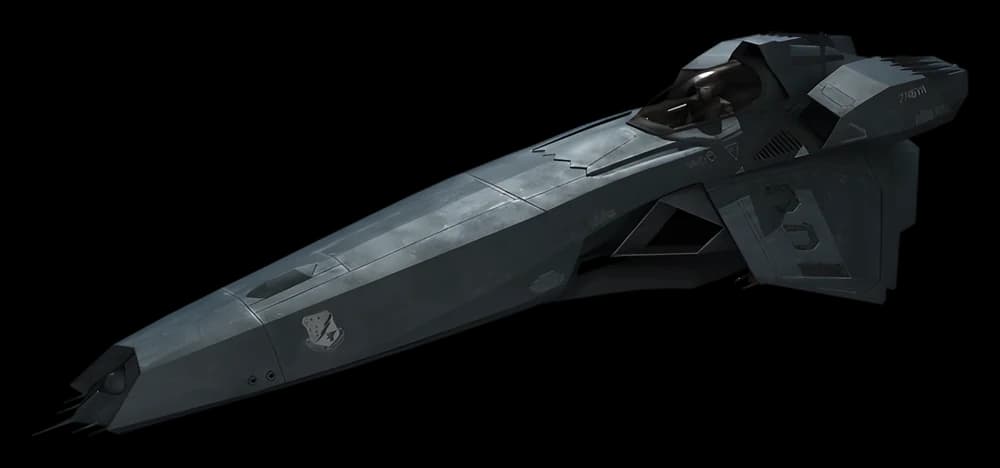
Stealthstar
The Stealthstar was a Colonial stealth reconnaissance craft with a Viper-style cockpit, used in the years before the Fall of the Twelve Colonies to probe Cylon space across the Armistice Line.
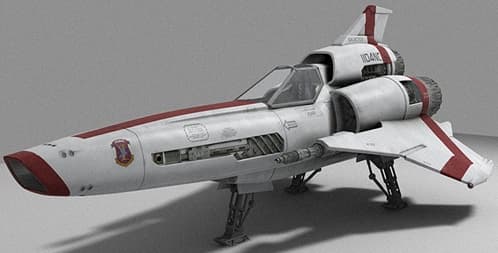
Viper Mark II
The Viper Mark II was the second generation of Viper space-superiority fighter used by the Colonial Fleet. Its lack of networked systems left it immune to Cylon hacking, allowing recommissioned museum pieces to fight on after the Fall of the Twelve Colonies.
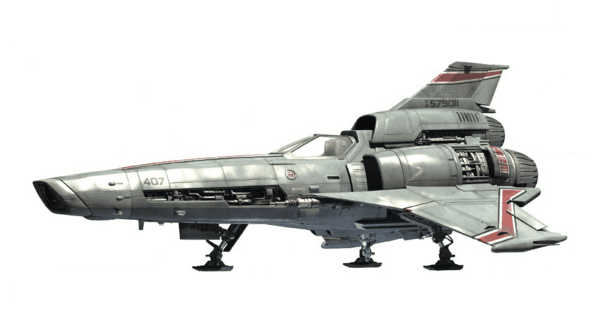
Viper Mark III
The Viper Mark III was the third generation of the Colonial Viper series of space-superiority fighters, introduced near the end of the First Cylon War as the successor to the Mark II. A single-pilot multi-role strike ship, its design influenced every later Viper up to the advanced Mark VII.

Colonial Fleet: 120 battlestars
The navy of the Twelve Colonies, which fought the Cylon War. One software exploit cut it to two surviving battlestars on the day of the Fall.

Cylon War: the machines revolt
The Cylons rose against the people who built them on Caprica. Twelve years of fighting ended in a sudden Armistice that held for forty years.

Cylon
The Cylons were a race of sentient machines created as military robots by Graystone Industries on Caprica. Built from research into artificial consciousness, they rebelled against their human masters, fought a long war, and forty years later returned to annihilate humanity.
Mentioned in40 entries
"33": Battlestar Galactica season 1 episode 1 explained
The fleet has been running for five days, jumping every 33 minutes with the Cylons right behind it. Here's what happens in "33", what it tells us about the Cylon plan, and which threads pay off later in the series.
"Crossroads": the Battlestar Galactica season 3 finale and Final Five reveal explained
"Crossroads" is the two-part season 3 finale: Gaius Baltar goes on trial for his time as president, four people hear a song nobody else can, and Starbuck comes back from the dead. Here's what happens and what it reveals.
"Exodus": Battlestar Galactica season 3 episodes 3 and 4 explained
"Exodus" is the two-part escape from New Caprica: the resistance gets the launch keys, Galactica drops through the atmosphere and Pegasus is lost. Here's what happens in Parts I and II, and what the episodes reveal.
"The Hub": Battlestar Galactica season 4 episode 9 explained
In "The Hub", humans and rebel Cylons destroy the Resurrection Hub and end Cylon immortality, while Roslin, stuck on a basestar with Baltar, finally hears his confession. Here's what happens, what Roslin's visions of Elosha mean and where it leads.
Basestar Type-D: the modern Cylon baseship
The Basestar Type-D, also called the Modern Basestar, was the primary Cylon capital ship at the Fall of the Twelve Colonies and through the war that followed. Partly organic and run by a Hybrid, it served as a fleet carrier and missile platform in the mould of a Colonial battlestar.
Battle of the Resurrection Ship
The Battle of the Resurrection Ship was an engagement between Colonial and Cylon forces that destroyed a resurrection ship shadowing the Cylon pursuit fleet. Its destruction stripped the hunters of their ability to download the dead and left them wary of pressing the chase.
Battlestar
The battlestar was the Colonial Fleet's capital ship, an armoured battleship and carrier hybrid. The wartime battlestars relied on unnetworked computers, carried squadrons of fighters, and were armoured to survive nuclear blasts.
Battlestar Archeron
The Battlestar Archeron was a Jupiter-class battlestar of the Colonial Fleet during the First Cylon War. Sent to Sector 12 on a covert operation, she was destroyed by the Cylons before her passenger ever arrived.
Battlestar Athena
Battlestar Athena was a Jupiter-class battlestar of the Colonial Fleet during the First Cylon War. In Battlestar Galactica Deadlock she is built for Picon and makes her maiden voyage to clear Cylon ships from her sponsor world.
Battlestar Columbia
The Columbia was a Jupiter-class battlestar and sister ship to Galactica, one of the original twelve battlestars of the First Cylon War. She was among the last Colonial ships lost in that conflict, destroyed shortly before the armistice.
Battlestar Galactica (2003) Miniseries Explained: Plot Summary and Ending
The 2003 miniseries is where the reimagined Battlestar Galactica starts: the Cylons come back after 40 years, the Colonies burn, and one old battlestar leads about 50,000 survivors into the dark. Here's what happens across both nights, what the ending means and where it fits in the watch order.
Battlestar Prometheus
Prometheus was a battlestar of Galactica's type that fought in the First Cylon War. She is named in the pre-production script of Blood & Chrome as one of Galactica's sister ships, alongside the Columbia.
+ 28 more
Get new articles in your inbox
No spam. New lore drops, canon conflicts, and deep dives only when they’re worth reading.
Some links on Lore Fortress are affiliate links. If you buy through them we earn a small commission at no extra cost to you.