Battlestar
the Colonial capital ship
The battlestar was the Colonial Fleet's capital ship, an armoured battleship and carrier hybrid. The wartime battlestars relied on unnetworked computers, carried squadrons of fighters, and were armoured to survive nuclear blasts.
The battlestar was the capital ship of the Colonial Fleet, an armoured battleship and carrier hybrid. Galactica, the best known, was one of twelve battlestars of her type built during the Cylon War, and by the Fall of the Twelve Colonies the Fleet fielded 120 of them. Galactica and Pegasus were the only battlestars known to survive the Fall. (Battlestar Galactica miniseries; Battlestar Galactica, "Pegasus")
Origin and purpose#
Galactica dates from the Cylon War, when the Cylons could infiltrate and turn networked computer systems. Galactica was built without a computer network, and Commander Adama kept her that way for decades, a choice that let her survive when the Cylons shut down the modern, networked Fleet. Her armour also took a nuclear hit during the attack and held. By the time of the Fall of the Twelve Colonies, the Colonial Fleet had 120 battlestars in service, organised into battlestar groups, and a quarter of them were gone within hours. (Battlestar Galactica miniseries)
Armament#
Battlestars were armed with heavy gun batteries for ship-to-ship combat and numerous point-defence guns that could throw up a flak barrier against incoming missiles and fighters. Galactica's arsenal also included nuclear warheads, one of which Kara Thrace used to destroy a basestar over Kobol. (Battlestar Galactica miniseries; Battlestar Galactica, "33"; Battlestar Galactica, "Kobol's Last Gleaming, Part II")
Carrier role#
As fighter carriers, battlestars fielded Vipers, the small, manoeuvrable single-seat fighters built for dogfighting, as well as Raptors, larger two-seat craft used for reconnaissance, transport and electronic warfare. (Battlestar Galactica miniseries; Battlestar Galactica, "33")
Classes#
Several types of battlestar served over the history of the Fleet. The Jupiter-class, Galactica's type, fought through the first war, and its sister ships included the Columbia, lost during Operation Raptor Talon. The Orion-class Osiris also served in that war. The smaller Valkyrie-class was still in service at the Fall, guarding Caprica. The Mercury-class, represented by Pegasus, was a newer and larger design whose networks happened to be offline for an overhaul when the Cylons struck. (Battlestar Galactica: Razor Flashbacks; Battlestar Galactica: Blood & Chrome; Battlestar Galactica, "Hero"; Battlestar Galactica: The Plan; Battlestar Galactica: Razor)
Notable battlestars#
Among the many battlestars that served the Colonies were Galactica, the Atlantia, the Columbia, the Triton, the Valkyrie, the Archeron, the Yashuman, and Pegasus. Others come from outside the on-screen story: the Prometheus from a draft of the Blood & Chrome script, the Athena from the game Deadlock, and the Chronos from Dynamite's Pegasus comic. (Battlestar Galactica miniseries; Battlestar Galactica: Razor Flashbacks; Battlestar Galactica, "Hero"; Battlestar Galactica: The Plan; Battlestar Galactica: Blood & Chrome; Battlestar Galactica: Razor; Battlestar Galactica Deadlock; Battlestar Galactica: Pegasus)
Frequently asked questions
- What is a battlestar?
- A battlestar was the Colonial Fleet's capital ship, a hybrid of battleship and carrier. Galactica, the best known, served from the First Cylon War until after the Fall of the Twelve Colonies, carrying heavy guns along with squadrons of Vipers and Raptors.
- Why were battlestars built with unnetworked computers?
- During the first war the Cylons could infiltrate networked computer systems, so Galactica was built without a computer network. Adama kept it that way, and it is why she survived the Fall while networked ships were shut down.
- How many battlestars did the Colonial Fleet have?
- At the time of the Fall of the Twelve Colonies the Colonial Fleet had 120 battlestars, and a quarter of them were lost in the first hours of the Cylon attack.
- What weapons and craft did a battlestar carry?
- Galactica carried heavy gun batteries, point-defence guns that could put up a flak barrier, and nuclear warheads. As a carrier she fielded Vipers, single-seat fighters, and Raptors, larger two-seat craft used for reconnaissance, transport and electronic warfare.
Sources
- EpisodeBattlestar Galactica miniseries, Miniseries, Sci Fi Channel (2003)
- EpisodeBattlestar Galactica, "33", Season 1, Episode 1 (2005)
- EpisodeBattlestar Galactica, "Kobol's Last Gleaming, Part II", Season 1, Episode 13 (2005)
- EpisodeBattlestar Galactica, "Pegasus", Season 2, Episode 10 (2005)
- EpisodeBattlestar Galactica, "Hero", Season 3, Episode 8 (2006)
- FilmBattlestar Galactica: Razor, Television film (2007)
- SerialBattlestar Galactica: Razor Flashbacks, Webisode series, Sci Fi Channel (2007)
- FilmBattlestar Galactica: The Plan, Television film (2009)
- FilmBattlestar Galactica: Blood & Chrome, Web series (2012) and television film (2013)
- GameBattlestar Galactica Deadlock, Black Lab Games, 2017
- ComicBattlestar Galactica: Pegasus, Brandon Jerwa and Jonathan Lau, Dynamite Entertainment, 2007
Spotted a factual error or a primary source we missed? Email a correction. Every flagged claim gets reviewed.
Questions about Battlestar
Followed from this entry
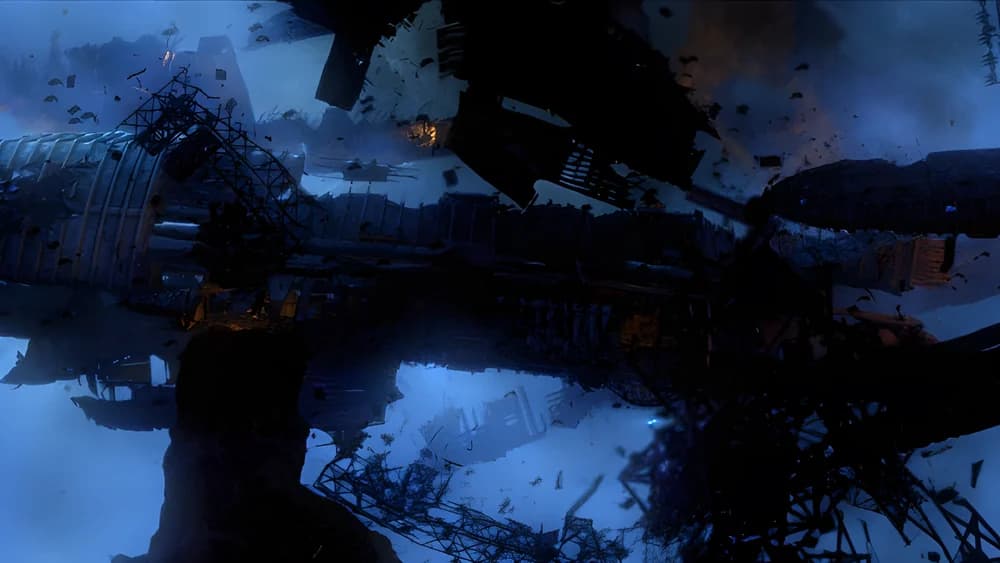
Battlestar Archeron
The Battlestar Archeron was a Jupiter-class battlestar of the Colonial Fleet during the First Cylon War. Sent to Sector 12 on a covert operation, she was destroyed by the Cylons before her passenger ever arrived.
Battlestar Athena
Battlestar Athena was a Jupiter-class battlestar of the Colonial Fleet during the First Cylon War. In Battlestar Galactica Deadlock she is built for Picon and makes her maiden voyage to clear Cylon ships from her sponsor world.

Battlestar Atlantia
The Atlantia was a Colonial battlestar that became the flagship of the Fleet during the Cylon surprise attack, when Admiral Nagala took personal command aboard her after the loss of Picon Fleet Headquarters. She was destroyed over Virgon, a victim of the Cylon backdoors in the Command Navigation Program.
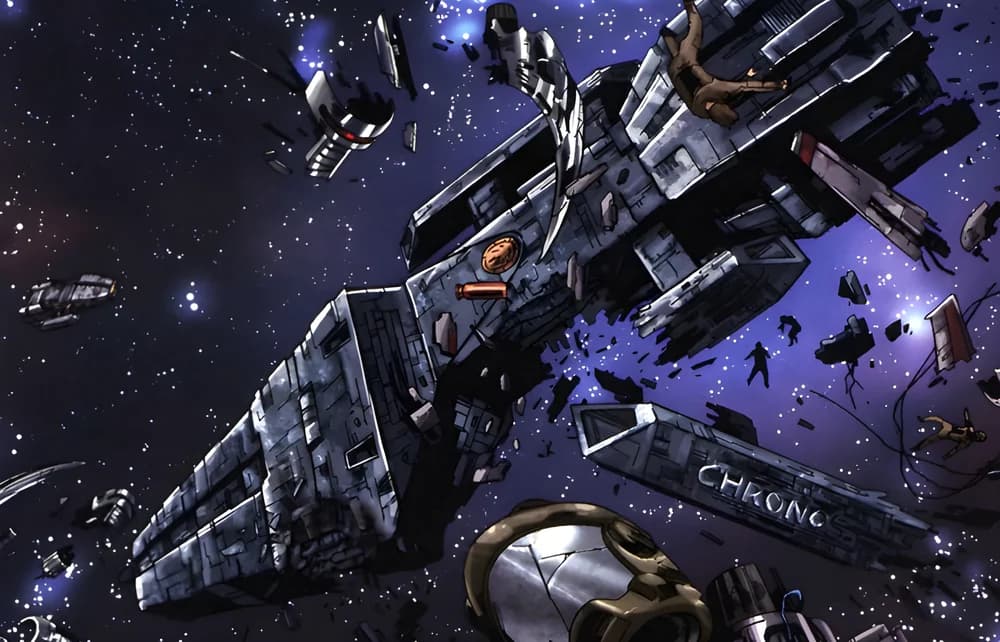
Battlestar Chronos
The Chronos was a battlestar of the Colonial Fleet in Dynamite's Battlestar Galactica: Pegasus comic. Sent to investigate a distress signal near the Armistice Line about a year before the Fall, she was wrecked by the Cylons and her hull turned into bait for the Pegasus.

Battlestar Columbia
The Columbia was a Jupiter-class battlestar and sister ship to Galactica, one of the original twelve battlestars of the First Cylon War. She was among the last Colonial ships lost in that conflict, destroyed shortly before the armistice.
Battlestar Prometheus
Prometheus was a battlestar of Galactica's type that fought in the First Cylon War. She is named in the pre-production script of Blood & Chrome as one of Galactica's sister ships, alongside the Columbia.
Mentioned in19 entries
Acropolis: battlestar lost at Cimtar
In the Original Series continuity, the Acropolis was a Colonial battlestar that fought through the Thousand-Yahren War against the Cylon Alliance. It was among the few battlestars left to attend the armistice talks over Cimtar and was destroyed when the conference proved a Cylon trap.
Amarak
Dr. Amarak was a Colonial government scientist who worked at the Ministry of Defense alongside Gaius Baltar. He asked to warn President Roslin about a betrayal and was presumed killed aboard the Olympic Carrier.
Anastasia Dualla
Anastasia Dualla was an enlisted woman of the Colonial Fleet who served as communications officer aboard the Battlestar Galactica and later as executive officer of the Battlestar Pegasus.
Barry Garner
Barry Garner was the chief engineer of the Battlestar Pegasus who was elevated to commander after the deaths of Cain and Fisk. His rigid, engineering-minded command alienated the crew, and he died restoring the ship's drives after leading the Pegasus into a Cylon trap.
Basestar Type-D: the modern Cylon baseship
The Basestar Type-D, also called the Modern Basestar, was the primary Cylon capital ship at the Fall of the Twelve Colonies and through the war that followed. Partly organic and run by a Hybrid, it served as a fleet carrier and missile platform in the mould of a Colonial battlestar.
Basestar: the Cylon carrier
The modern Cylon basestar was partly organic and run by a Hybrid, not a crew. It launched swarms of Raiders and healed battle damage like a wound.
Battlestar Archeron
The Battlestar Archeron was a Jupiter-class battlestar of the Colonial Fleet during the First Cylon War. Sent to Sector 12 on a covert operation, she was destroyed by the Cylons before her passenger ever arrived.
Battlestar Athena
Battlestar Athena was a Jupiter-class battlestar of the Colonial Fleet during the First Cylon War. In Battlestar Galactica Deadlock she is built for Picon and makes her maiden voyage to clear Cylon ships from her sponsor world.
Battlestar Group: the Colonial Fleet's core formation
A Battlestar Group was a naval formation of the Colonial Fleet built around a battlestar. The abbreviation BSG appears on ship patches and fleet charts, and several numbered groups are known from the series and its films.
Cylon communications relay
The Cylon communications relay was an installation the Battlestar Pegasus attacked after the Fall of the Twelve Colonies, only to find it was a staging ground for Cylon forces. The costly engagement exposed the Cylon agent Gina Inviere and cost Admiral Cain dozens of Vipers.
Cylon Raider: the living fighter
The modern Raider was a living organism fused to a metal exoskeleton, able to plan and to refuse orders. Killed Raiders resurrected into new ships.
Loki-type
The Loki-type was a Colonial heavy cruiser that served as a fleet support ship during the Cylon War. Lightly armed and built for resupply, it carried munitions, goods, and spare parts to combat ships and battlestar groups.
+ 7 more
Get new articles in your inbox
No spam. New lore drops, canon conflicts, and deep dives only when they’re worth reading.
Some links on Lore Fortress are affiliate links. If you buy through them we earn a small commission at no extra cost to you.