Jupiter-class
the original twelve battlestars
The Jupiter-class is the name licensed works give to the line of the original twelve battlestars built for the Cylon War. Built around un-networked computers, the class resisted Cylon infiltration, and Galactica, the last of the line still in service, survived the Fall of the Twelve Colonies.
The Jupiter-class is the name given in licensed works to the type of warship that props in the series call the Galactica-class battlestar. These ships were battleship and carrier hybrids that stood at the centre of Colonial formations, and the original twelve were built for the Cylon War, one to represent each of the Twelve Colonies of Kobol. The original battlestars deliberately avoided networked computers, which gave Galactica her resistance to Cylon infiltration. (Battlestar Galactica (2003 miniseries); Battlestar Galactica, "Rapture"; The Science of Battlestar Galactica; Battlestar Galactica Deadlock)
Origins#
The name Jupiter-class comes from outside the series: it appears in the book The Science of Battlestar Galactica and was adopted by the game Battlestar Galactica Deadlock, which also places the class after an earlier Artemis-class. Deadlock tells its own story in a separate continuity from the television series. On screen, Galactica was one of the original twelve battlestars, and by the time of the Fall she was the last of them still in service, an old ship about to become a museum. (Battlestar Galactica (2003 miniseries); The Science of Battlestar Galactica; Battlestar Galactica Deadlock)
Defenses#
Galactica mounted heavy main gun batteries, missile tubes and hundreds of smaller point-defence turrets, which threw up a flak barrage to stop incoming Raiders and missiles. Her heavy armour let her absorb punishment, including a nuclear strike, that would have finished a lighter ship. (Battlestar Galactica (2003 miniseries))
Fighter complement#
Large flight decks supported a sizable complement of fighters, multipurpose craft, and shuttles. At the Fall, Galactica's last squadron of Viper Mark VIIs had just left after her decommissioning ceremony, leaving her with museum-piece Mark IIs, Raptors and shuttles. Exact numbers are never given, though her two flight pods held eighty launch tubes between them. The pods retracted into the hull for FTL jumps. Vipers launched through the tubes on the sides of the pods, but all craft had to recover on the landing decks inside them. (Battlestar Galactica (2003 miniseries))
Computer systems#
Because the Cylons were adept at infiltrating networked systems, the original battlestars deliberately avoided networking their primary computers during the Cylon War. Commander William Adama kept Galactica's computers isolated long after the armistice, and that saved her at the Fall: the Command Navigation Program that let the Cylons cripple the rest of the fleet needed a network to run. The choice had a cost. Galactica's jump calculations were slow, and when she networked her computers to find the civilian fleet, a Cylon virus got into the system and later had to be purged by wiping the drives. (Battlestar Galactica (2003 miniseries); Battlestar Galactica, "Scattered"; "Flight of the Phoenix")
Frequently asked questions
- What was the Jupiter-class?
- The Jupiter-class is the name used in licensed works for Galactica's line of battlestars, which props in the series call the Galactica class. These ships were battleship and carrier hybrids, and the original twelve were built for the Cylon War, one for each colony.
- How many Jupiter-class battlestars were originally built?
- Twelve, one to represent each of the Twelve Colonies of Kobol. By the Fall, Galactica was the last of the original twelve still in service.
- Why were Jupiter-class ships resistant to Cylon infiltration?
- Because the Cylons were adept at infiltrating networked systems, the original battlestars deliberately avoided networking their primary computers during the Cylon War. Galactica kept to that rule, which saved her from the infiltration that crippled the rest of the fleet at the Fall, though it slowed her jump calculations.
- What fighters did Jupiter-class battlestars carry?
- At the Fall, Galactica carried Viper Mark VII fighters, her museum-piece Mark IIs, Raptors and shuttles. Her flight pods held eighty Viper launch tubes between them, though exact numbers of fighters aboard are not given.
- What defenses did the Jupiter-class have?
- Galactica mounted heavy main batteries, missile tubes and hundreds of point-defence guns that threw up a flak barrage against incoming Raiders and missiles. Her heavy armour let her survive hits, including a nuclear strike, that would have destroyed lighter ships.
Sources
- FilmBattlestar Galactica (2003 miniseries), Sci Fi Channel miniseries, 2003
- EpisodeBattlestar Galactica, "Scattered", Season 2, Episode 1 (2005)
- EpisodeBattlestar Galactica, "Flight of the Phoenix", Season 2, Episode 9 (2005)
- EpisodeBattlestar Galactica, "Rapture", Season 3, Episode 12 (2007)
- BookThe Science of Battlestar Galactica, Patrick Di Justo and Kevin Grazier, 2010
- GameBattlestar Galactica Deadlock, Black Lab Games, 2017
Spotted a factual error or a primary source we missed? Email a correction. Every flagged claim gets reviewed.
Followed from this entry
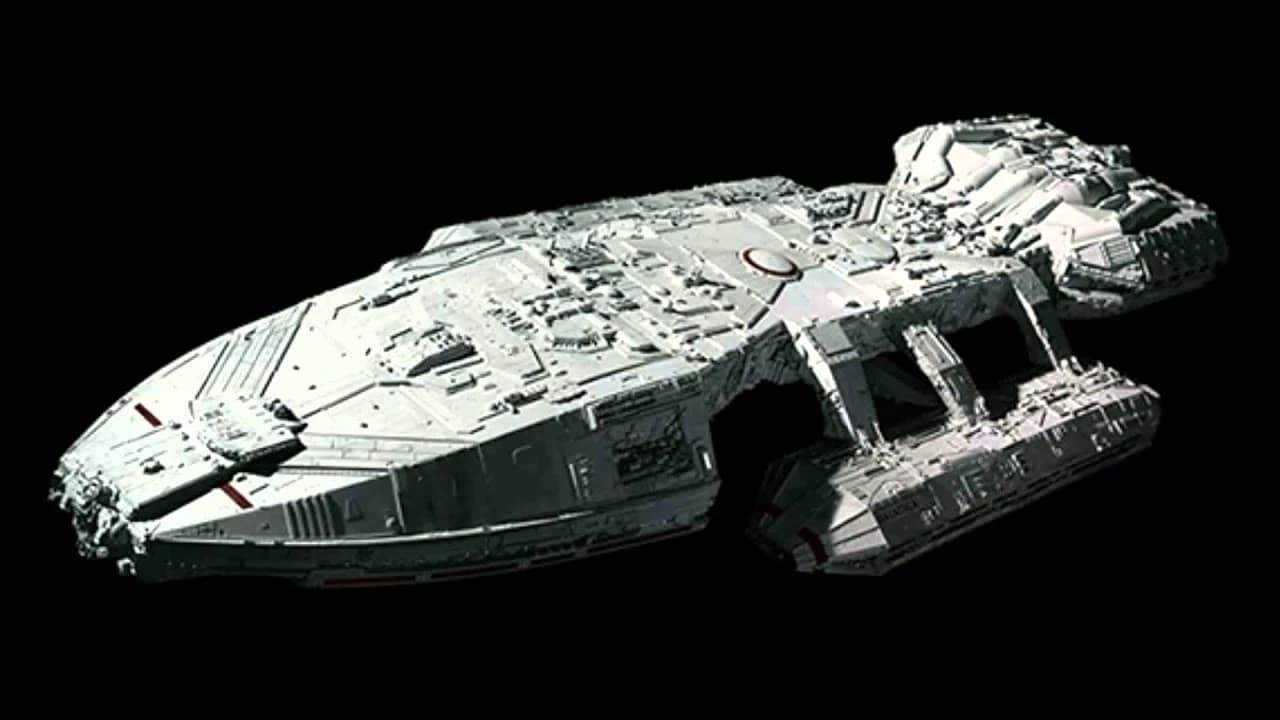
Galactica
Galactica was a Jupiter-class battlestar that served the Colonial Fleet from the Cylon War until the discovery of Earth. Never networked, it survived the Fall of the Twelve Colonies and shepherded the last fifty thousand humans across uncharted space before being scuttled into the sun.
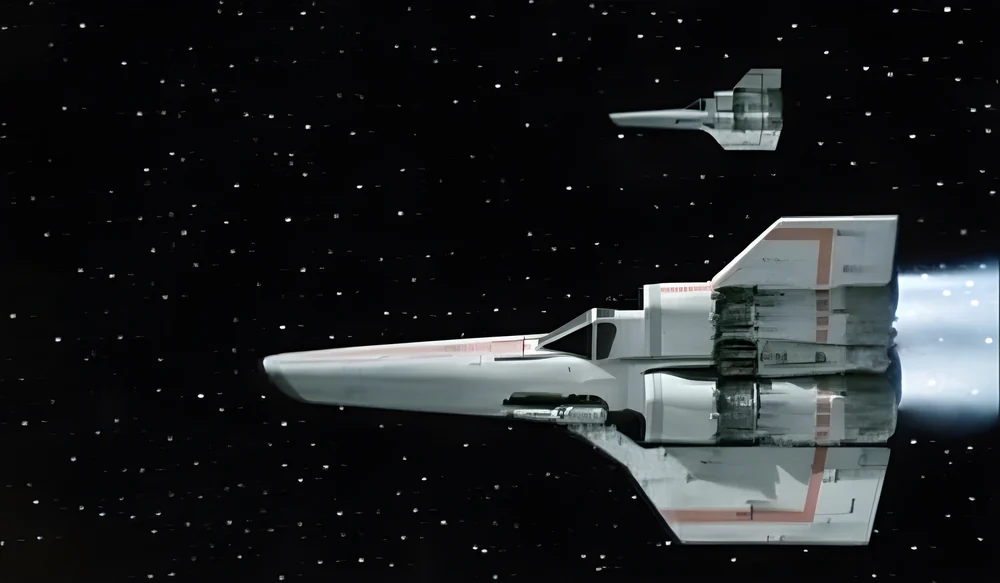
Colonial Viper
The Viper was the primary fighter of the Colonial Fleet, a name that went back to colonial air forces before the Cylon War. The Mark II and Mark VII bookended its service from the first war to the Fall of the Twelve Colonies.

Cylon War: the machines revolt
The Cylons rose against the people who built them on Caprica. Twelve years of fighting ended in a sudden Armistice that held for forty years.

Cylon
The Cylons were a race of sentient machines created as military robots by Graystone Industries on Caprica. Built from research into artificial consciousness, they rebelled against their human masters, fought a long war, and forty years later returned to annihilate humanity.
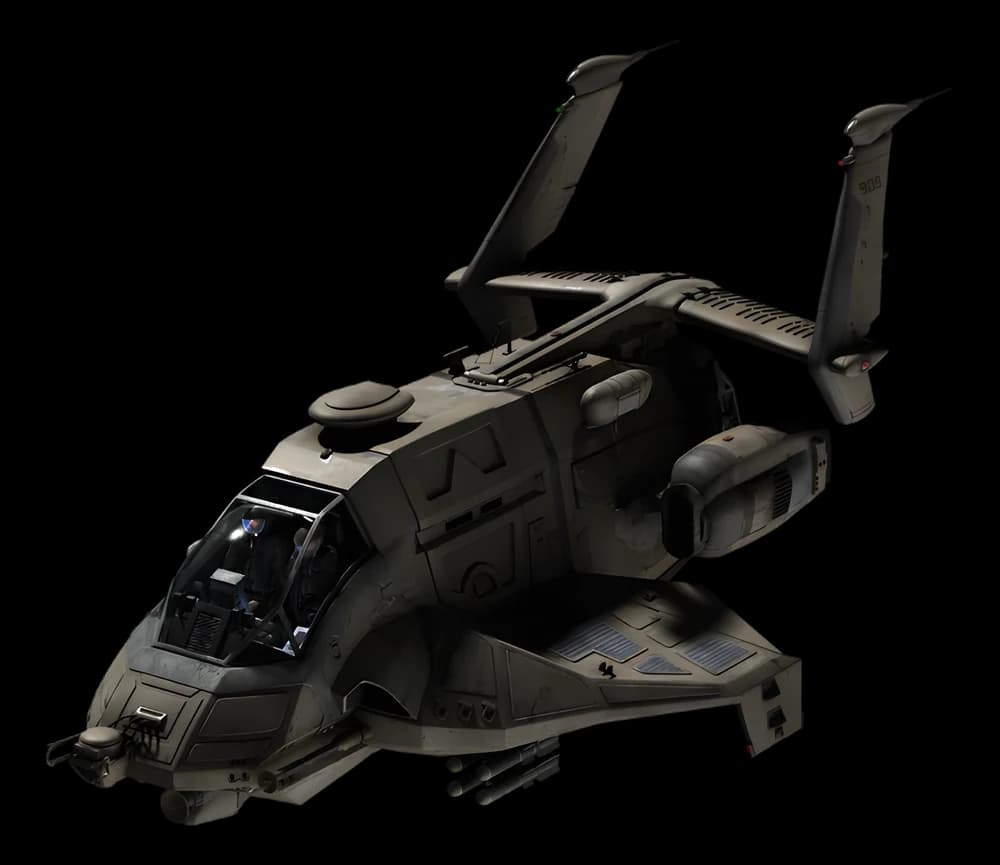
Raptor: the Fleet's workhorse
A sublight shuttle at the start of the First Cylon War, rebuilt over the interwar years into an FTL craft flying transport, recon and rescue.

Twelve Colonies of Kobol
The United Colonies of Kobol, also called the Twelve Colonies of Kobol, was the interplanetary state that represented humanity from the Cylon War until its dissolution upon the settling of the second Earth.
Mentioned in10 entries
Alert-type
The Alert-type was a Colonial escort warship design of the First Cylon War, seen in Blood & Chrome. A close relative of the Hornet-type, refitted Alert-type ships sailed with the Ghost Fleet during the Ghost Fleet Offensive.
Battlestar
The battlestar was the Colonial Fleet's capital ship, an armoured battleship and carrier hybrid. The wartime battlestars relied on unnetworked computers, carried squadrons of fighters, and were armoured to survive nuclear blasts.
Battlestar Archeron
The Battlestar Archeron was a Jupiter-class battlestar of the Colonial Fleet during the First Cylon War. Sent to Sector 12 on a covert operation, she was destroyed by the Cylons before her passenger ever arrived.
Battlestar Athena
Battlestar Athena was a Jupiter-class battlestar of the Colonial Fleet during the First Cylon War. In Battlestar Galactica Deadlock she is built for Picon and makes her maiden voyage to clear Cylon ships from her sponsor world.
Battlestar Yashuman
The Yashuman was a Valkyrie-class battlestar of the Colonial Fleet that led the battlestars guarding Caprica at the time of the Fall of the Twelve Colonies. She spotted the incoming Cylon basestars but was shut down by the Command Navigation Program backdoors before she could engage.
Demeter-type
The Demeter-type is a Colonial warship design glimpsed in Blood & Chrome during the First Cylon War. The film never names it or explains its role, so little about it is certain.
Galactica
Galactica was a Jupiter-class battlestar that served the Colonial Fleet from the Cylon War until the discovery of Earth. Never networked, it survived the Fall of the Twelve Colonies and shepherded the last fifty thousand humans across uncharted space before being scuttled into the sun.
Mercury-class
The Mercury-class was the most advanced battlestar fielded by the Colonial Fleet, developed in the years after the first Cylon War to succeed the aging Jupiter-class. Its heavy networking proved its undoing when the Cylons attacked.
Scorpion Fleet Shipyards
The Scorpion Fleet Shipyards were a vast orbital shipbuilding installation above Scorpia, a principal builder of Colonial warships from the First Cylon War until they were destroyed in the Fall of the Twelve Colonies.
Valkyrie-class
The Valkyrie-class was one of the oldest classes of battlestar in Colonial service, a small and versatile warship believed to have served as a light strike and reconnaissance vessel from the Cylon War until the Fall of the Twelve Colonies.
Get new articles in your inbox
No spam. New lore drops, canon conflicts, and deep dives only when they’re worth reading.
Some links on Lore Fortress are affiliate links. If you buy through them we earn a small commission at no extra cost to you.