FTL drive: spool up and jump
faster-than-light propulsion
Human and Cylon ships jumped instantly between points in space once the drive was spooled. Precise sums kept Galactica ahead of its pursuers.
The FTL drive was the propulsion system used by both human and Cylon ships to achieve faster-than-light travel. Before a jump, the drive was spooled up, after which the ship jumped instantaneously to another point in space. On human ships the drives were powered by refined tylium. The technology was central to the survival of the Colonial fleet, allowing Galactica and its convoy of survivors to leap away from pursuing Cylon forces after the Fall of the Twelve Colonies. (Battlestar Galactica, miniseries; Battlestar Galactica, "The Hand of God")
Physics#
The FTL drive moved a ship instantaneously from one point in space to another. On human vessels the drives were powered by refined tylium. The act of jumping distorted the surrounding space and could damage other vessels too close to the jumping ship; when one ship jumped just outside Galactica's flight pod, the spatial disruption tore holes in the outer hull and inflicted major damage. (Battlestar Galactica, "The Hand of God"; Battlestar Galactica, "Someone to Watch Over Me")
Navigation#
Navigation under FTL was extremely complex. Speed, trajectory, and jump duration all had to be carefully calculated before a successful jump could be made. A jump made without these calculations risked carrying the ship into dangerous locations such as asteroid belts, singularities, or a planet's atmosphere. Properly calculated jumps could be used to arrive in planetary orbit or to move an entire formation of ships at once, the latter being the method the Colonial fleet most often relied upon. A jump made without calculations was known as a blind jump; one such jump was made by Admiral Helena Cain in an effort to save the Pegasus from the Cylon attack on the Scorpion Fleet Shipyards. Jump coordinates had to be updated constantly to account for ship movement and stellar drift. (Battlestar Galactica, miniseries; Battlestar Galactica, "Pegasus"; Battlestar Galactica: Razor)
Limitations#
Colonial ships observed a jump limit known as the Red Line. Any ship that jumped beyond this line risked unknown navigational hazards and the chance of running off course through compound errors in the calculations. Age and wear took their toll too: after years of hard service and countless jumps, Galactica developed stress fractures throughout its hull, and Admiral William Adama ordered repairs. (Battlestar Galactica, miniseries; Battlestar Galactica, "A Disquiet Follows My Soul")
Cylon technology#
Cylon ships were capable of far more accurate jumps than Colonial vessels and could also jump much farther. When the fleet mounted a rescue mission to Caprica, Raptors fitted with a Cylon navigation computer made the trip in ten jumps, a distance Galactica would have needed more than two hundred jumps to cover. Cylon ships likewise used refined tylium as fuel. After a rebel basestar joined the fleet, its crews offered to upgrade the Colonial FTL drives, work that would be carried out entirely by Cylon teams and that promised to roughly triple the fleet's jump efficiency and range. (Battlestar Galactica, "Pegasus"; Battlestar Galactica, "Lay Down Your Burdens, Part I"; Battlestar Galactica, "A Disquiet Follows My Soul")
Frequently asked questions
- What is the FTL drive in Battlestar Galactica?
- The FTL drive was the propulsion system used by both human and Cylon ships to achieve faster-than-light travel. The drive was spooled up before a jump, after which the ship jumped instantaneously to another point in space.
- How does the FTL drive work?
- The drive moved a ship instantaneously from one point in space to another. On human vessels the drives were powered by refined tylium.
- What is the Red Line?
- The Red Line was a jump limit observed by Colonial ships. Any ship that jumped beyond it risked unknown navigational hazards and the chance of running off course through compound errors in the calculations.
- Why was navigation under FTL so dangerous?
- Speed, trajectory, and jump duration all had to be carefully calculated before a successful jump, and coordinates had to be updated constantly to account for ship movement and stellar drift. A jump made without these calculations, known as a blind jump, risked carrying the ship into an asteroid belt, a singularity, or a planet's atmosphere.
- How did Cylon FTL drives compare to Colonial ones?
- Cylon ships were capable of far more accurate jumps than Colonial vessels and could jump much farther. Raptors fitted with a Cylon navigation computer reached Caprica from the fleet in ten jumps, a distance Galactica would have needed more than two hundred jumps to cover.
Sources
- EpisodeBattlestar Galactica (miniseries), Miniseries (2003)
- EpisodeThe Hand of God, Season 1, Episode 10 (2005)
- EpisodePegasus, Season 2, Episode 10 (2005)
- EpisodeLay Down Your Burdens, Part I, Season 2, Episode 19 (2006)
- EpisodeA Disquiet Follows My Soul, Season 4, Episode 12 (2009)
- EpisodeSomeone to Watch Over Me, Season 4, Episode 17 (2009)
- EpisodeBattlestar Galactica: Razor, Television film (2007)
Spotted a factual error or a primary source we missed? Email a correction. Every flagged claim gets reviewed.
Followed from this entry

Scorpion Fleet Shipyards
The Scorpion Fleet Shipyards were a vast orbital shipbuilding installation above Scorpia, a principal builder of Colonial warships from the First Cylon War until they were destroyed in the Fall of the Twelve Colonies.

Caprica: the Colonial capital
Caprica was the richest of the Twelve Colonies, seat of the Colonial government, and the world where the Cylons were built. The Cylon attack destroyed it.

Cylon
The Cylons were a race of sentient machines created as military robots by Graystone Industries on Caprica. Built from research into artificial consciousness, they rebelled against their human masters, fought a long war, and forty years later returned to annihilate humanity.

Fall of the Twelve Colonies
A single day of Cylon attack killed billions of people across Colonial space. Barely fifty thousand escaped in a refugee fleet.
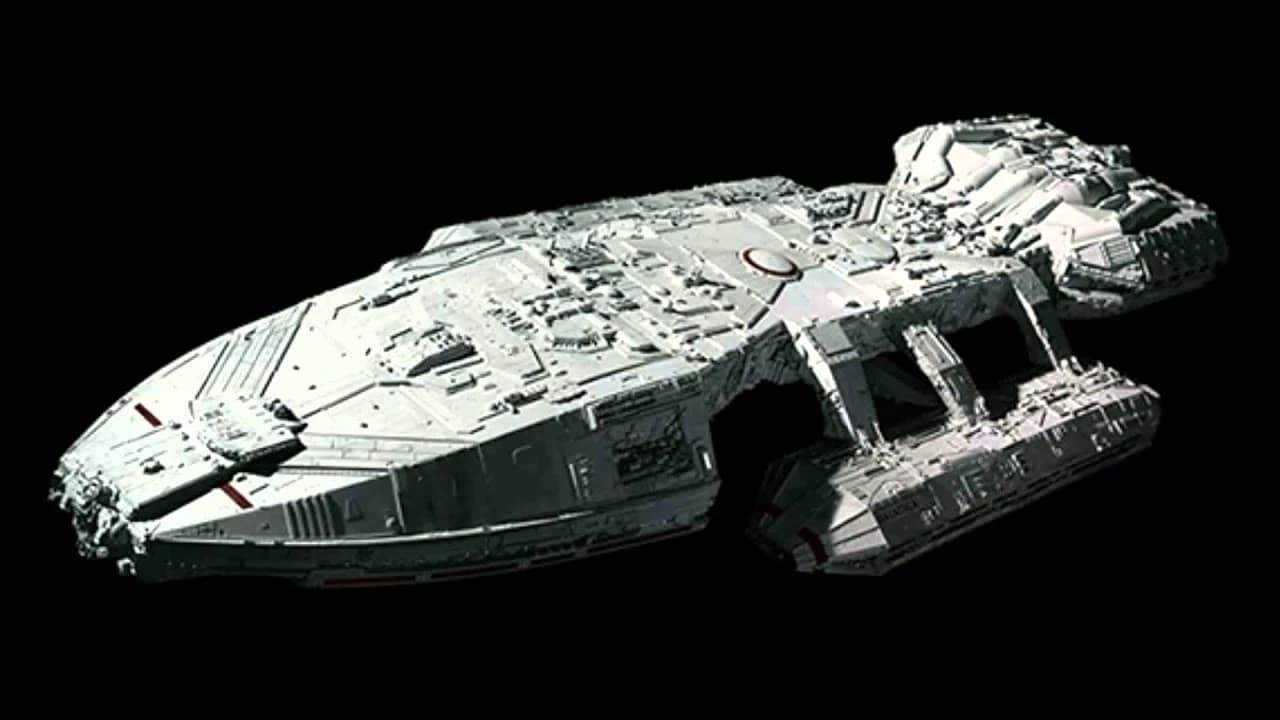
Galactica
Galactica was a Jupiter-class battlestar that served the Colonial Fleet from the Cylon War until the discovery of Earth. Never networked, it survived the Fall of the Twelve Colonies and shepherded the last fifty thousand humans across uncharted space before being scuttled into the sun.

Helena Cain
Rear Admiral Helena Cain commanded the battlestar Pegasus, one of only two Colonial capital ships to survive the Fall of the Twelve Colonies. Ruthless and uncompromising, she waged a relentless campaign against the Cylons before her assassination.
Mentioned in19 entries
Battle of the Resurrection Ship
The Battle of the Resurrection Ship was an engagement between Colonial and Cylon forces that destroyed a resurrection ship shadowing the Cylon pursuit fleet. Its destruction stripped the hunters of their ability to download the dead and left them wary of pressing the chase.
Celestra
Celestra was a Colonial deep space research vessel that carried human refugees away from the Cyrannus star system after the Fall of the Twelve Colonies.
Cloud 9
Cloud 9 was a luxury liner that survived the Fall of the Twelve Colonies and became an entertainment hub and meeting place for the Quorum of Twelve. It was destroyed by a nuclear blast over New Caprica, taking several other ships with it.
Felix Gaeta
Felix Gaeta was a skilled tactical officer aboard the Battlestar Galactica who served as William Adama's Officer of the Watch for years before the Fall. His objection to the fleet's alliance with the Cylons led him to lead a mutiny that ended in his execution.
Galen Tyrol
Chief Petty Officer Galen Tyrol kept Galactica's flight deck running through the long flight from the Colonies, a respected and fiercely protective deck chief who learned that he was in fact one of the Final Five Cylons, descended from the Thirteenth Tribe.
Gemini-type
The Gemini-type was a large Colonial container freighter that joined the refugee fleet after the Fall of the Twelve Colonies. A long central hull hung with external cargo pods, it survived the passage to the Algae Planet before being scuttled.
Heavy Raider
The Heavy Raider was an FTL-capable Cylon craft introduced with the renewed war on humanity, combining the roles of troop transport and gunship. Armored, windowless, and brain-piloted, it ferried Centurions to the colonies and later carried both Cylon assaults and a rebel alliance with the Colonial fleet.
Mercury-class
The Mercury-class was the most advanced battlestar fielded by the Colonial Fleet, developed in the years after the first Cylon War to succeed the aging Jupiter-class. Its heavy networking proved its undoing when the Cylons attacked.
Natalie Faust: the Six who led the Cylon rebellion and died on Galactica
Natalie Faust was the Number Six copy who led the rebel Cylon faction demanding the search for the Final Five. She freed the Centurions to break Cavil's majority, allied with the Colonials against the Resurrection Hub, and was shot dead in a Galactica corridor by Sharon Agathon.
Perseus-type
The Perseus-type was a Colonial freighter that operated during the interwar period and the Second Cylon War. At least two ships of the type joined the Galactica-led refugee fleet after the Fall of the Twelve Colonies.
Ragnar
Ragnar was a gas giant in the Cyrannus Star System whose hydrocarbons drove the economies of Canceron and Aerilon. It saw a costly battle early in the Cylon War and later hosted the surplus depot of Ragnar Anchorage.
Raptor Mark II
The Raptor Mark II was a multipurpose spacecraft fielded by the Colonial Fleet during the First Cylon War. It was the only Raptor variant to carry onboard weaponry, and it served in roles ranging from suppression of enemy air defenses to transport.
+ 7 more
Get new articles in your inbox
No spam. New lore drops, canon conflicts, and deep dives only when they’re worth reading.
Some links on Lore Fortress are affiliate links. If you buy through them we earn a small commission at no extra cost to you.