Kishock Harpoon Gun: Batarian Harpoon Rifle
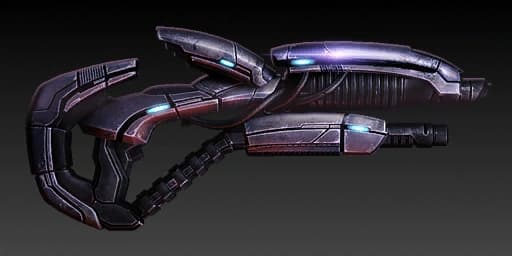
The Kishock Harpoon Gun was a single-shot batarian sniper rifle that launched a harpoon-like spike instead of a conventional round, inflicting massive internal bleeding on organic targets while miniaturized disruptors destroyed synthetics. It became so closely identified with batarian mercenaries and slavers in the Terminus Systems that its silhouette alone told defenders what kind of attack they faced.
The Kishock Harpoon Gun was a single-shot sniper rifle of batarian manufacture that abandoned conventional rounds in favor of a harpoon-like spike built to cause massive internal bleeding. Circulating chiefly through the Terminus Systems, the rifle became so closely identified with batarian mercenaries and slavers that Alliance personnel learned to read its presence as a statement of intent. Miniaturized disruptors worked into its projectiles made the Kishock lethal to synthetic targets as well, and although the weapon had to be reloaded after every single shot, those who carried it held that one shot was enough. (Mass Effect 3)
Design and function#
The Kishock broke with orthodox rifle design at the most basic level. Where most infantry weapons of its era shaved rounds from an ammunition block and hurled them at extreme velocity, the Kishock launched a heavy, harpoon-like bolt. The spike lodged deep in whatever it struck, opening wounds that continued to bleed long after the moment of impact. Targets that survived the initial strike often bled out in the seconds that followed, and the steady bleeding could betray even a target hidden behind a tactical cloak. Against machines the weapon was no less dangerous, since miniaturized disruptors carried in the projectile tore synthetic systems apart on contact. (Mass Effect 3)
The bolt traveled visibly slower than conventional mass accelerator fire, which obliged a shooter to lead moving targets or find some way to hold them still. The rifle answered this weakness with a charging mechanism of the same general kind found in the Graal Spike Thrower and the Geth Plasma Shotgun. A shooter who held the trigger and let the weapon build power sent the harpoon on a far flatter trajectory, with no perceptible drop even across long ranges, and with far greater kinetic force behind it. A fully charged harpoon that killed a lighter combatant could hurl the body a considerable distance, and even large, heavily armored creatures could be briefly staggered by the blow. (Mass Effect 3)
The spike could not punch through solid cover, but personal armor plating did little to stop it, and it drove cleanly through the ballistic shields carried by Cerberus Guardians. Observers noted that the harpoon defeated protections that blunted ordinary gunfire, hitting shielded and armored targets with the same brutal effect. The rifle mounted a scope of unusually low magnification, which suited it to closer engagements than most precision rifles favored. Its single greatest drawback remained the reload demanded after every shot, though the mechanism cycled markedly faster than other heavy single-shot rifles such as the M-98 Widow or the Javelin. (Mass Effect 3)
A mark of killers in the Terminus Systems#
The Kishock built its name on the lawless frontier. An Alliance captain on her fifth tour of the Terminus Systems once said that seeing a Kishock was the easiest way to tell whether she was being attacked by batarian mercenaries or slavers, since "no bastard with a Kishock means to take you alive." Slavers preferred their quarry breathing and saleable. A raider who shouldered a Kishock had made a different calculation, and defenders across the Terminus learned to read the weapon accordingly. (Mass Effect 3)
That reputation tied the rifle to the Batarian Hegemony's people and to the frontier where batarian crews did most of their raiding. Weapons like the Kishock flowed most freely through the same Terminus markets that supplied the mercenary bands and slaver crews operating beyond Citadel space. (Mass Effect 3)
The Citadel arms trade during the Reaper War#
During the Reaper War, the Kishock appeared in an unlikely setting, the heart of Citadel space. Batarian State Arms operated a storefront in the Docks: Holding Area aboard the Citadel, in Cargo Hold C, the section of the docks populated by batarian refugees who had fled the destruction of their worlds. A prerecorded audio message on the kiosk warned purchasers that caste restrictions might apply to what certain batarians could buy, a reminder that Hegemony social codes survived even in exile. In the Legendary Edition release the Kishock Harpoon Gun was among the weapons offered there; in the original release of Mass Effect 3 it came instead with the Groundside Resistance Pack. (Mass Effect 3; Mass Effect Legendary Edition; Mass Effect 3: Groundside Resistance Pack)
The rifle had genuine value in that conflict. Its built-in disruptors made it a credible threat to synthetic combatants such as the geth, and its ability to punch through the shields of Cerberus Guardians gave marksmen an answer to troops who advanced behind portable protection. For soldiers facing enemies whose defenses shrugged off conventional fire, a weapon that ignored those defenses and left its victims bleeding was worth the discipline its single-shot action demanded. (Mass Effect 3)
The Kishock in Andromeda#
The design outlived the Milky Way conflicts that made its name. Batarians who crossed dark space to the Andromeda galaxy brought the Kishock Harpoon Gun with them, intent on spearing their enemies in an entirely new galaxy. The Andromeda-pattern rifle used barbed harpoons that stuck fast in their targets and continued to cause massive internal injuries over time. Its projectiles dropped slightly in flight unless the shooter quickly charged the rifle before firing, and the weapon still demanded a reload after every shot, so a steady hand and a keen eye remained as essential in Andromeda as they had ever been in the Terminus Systems. (Mass Effect: Andromeda)
Sources
- GameMass Effect 3, BioWare, 2012
- GameMass Effect Legendary Edition, BioWare, 2021
- GameMass Effect 3: Groundside Resistance Pack, BioWare, 2012
- GameMass Effect: Andromeda, BioWare, 2017
Spotted a factual error or a primary source we missed? Email a correction. Every flagged claim gets reviewed.
Followed from this entry

Batarian Hegemony
The Batarian Hegemony was the oppressive, isolationist government of the batarians, native to Khar'shan. A rogue state hostile to the Systems Alliance, it sponsored deniable piracy and slaving across the Terminus Systems before the Reapers overran it.
Geth Plasma Shotgun: Arcing Cluster Weapon
The Geth Plasma Shotgun was a three-barreled geth weapon that fired clusters of superconducting projectiles. On impact the rounds fragmented and arced with electricity, flash-converting the surrounding air into conductive plasma to overload shields and barriers and inflict massive trauma on the unarmored.

Weapons: Mass accelerator firearms of the galaxy
Most personal weapons in the galaxy were micro-scaled mass accelerators that shaved tiny slugs from a metal block and flung them at lethal speed using mass effect fields. For decades waste heat was the only true limit on their fire, until the geth introduced detachable thermal clips that reshaped how every army fought.
Batarian
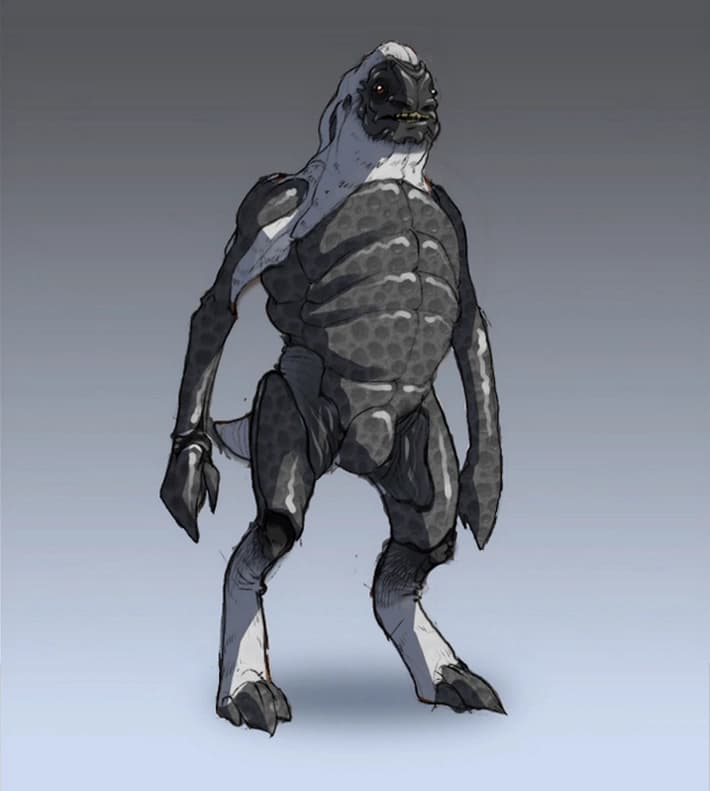
The batarians were a four-eyed species native to Khar'shan whose insular government, the Batarian Hegemony, withdrew from the galactic community and became infamous for slavery, piracy, and hostility toward humanity before the Reapers overran their space.

Cerberus
Cerberus was a clandestine, human-supremacist paramilitary organization led by the Illusive Man, willing to use any means to advance humanity's place in the galaxy. Branded a terrorist group by both the Systems Alliance and the Citadel Council, it was ultimately destroyed during the Reaper War.
Citadel
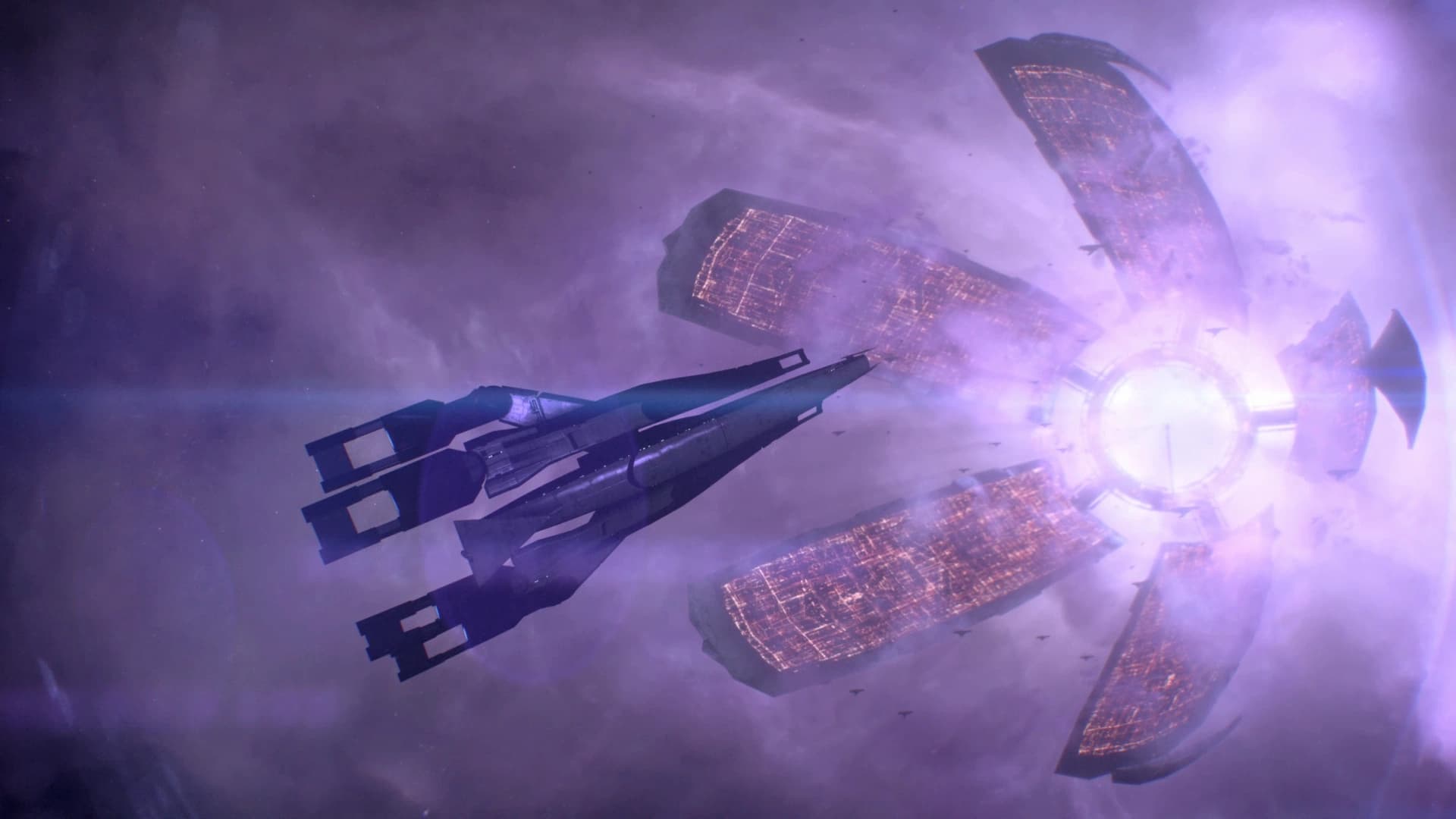
The Citadel was a colossal deep-space station in the Serpent Nebula that served as the political and cultural heart of Citadel space and the seat of the Council. Long believed to be a Prothean relic, it was in truth a Reaper construction and a dormant trap at the center of galactic civilization.
Get new articles in your inbox
No spam. New lore drops, canon conflicts, and deep dives only when they’re worth reading.
Some links on Lore Fortress are affiliate links. If you buy through them we earn a small commission at no extra cost to you.