Krysae Sniper Rifle: Turian Anti-Reaper Weapon
The Krysae was a turian antimateriel rifle rebuilt to kill Reaper creatures, firing armor piercing explosive rounds with proximity fuses that burst over cover and shredded massed enemies. In a desperate wartime move, the turians released its full specifications over the extranet so that nearly anyone with a fabricator could build one.
The Krysae was a turian antimateriel sniper rifle modified for a single purpose: killing the creatures the Reapers sent against the galaxy's defenders. Where most precision rifles put a solid slug through a distant target, the Krysae threw a specialized round that was both armor piercing and explosive, and its projectiles carried proximity fuses that detonated as they passed close to an enemy. The result was a marksman's weapon that behaved in the field like light artillery, bursting over entrenched positions and tearing apart clustered husks that conventional rifles picked off one at a time. Its most notable feature, though, was not mechanical. As the Reaper War ground on, the turians took the extraordinary step of publishing the rifle's complete specifications over the extranet, so that nearly anyone in the galaxy with access to a fabricator could manufacture the weapon and put it to work against the invasion. (Mass Effect 3; Mass Effect 3: Firefight Pack)
An antimateriel rifle turned against the Reapers#
The Krysae began as a turian antimateriel rifle, a class of weapon meant for hardened equipment rather than infantry. The Reaper invasion changed its purpose. Turian armorers modified the design specifically to kill Reaper enemies, the reworked husks and fused abominations that the invaders manufactured from the dead of every species they harvested. Those creatures came on in numbers, absorbed fire that would stop an ordinary soldier, and pressed attacks to point blank range, and the modified Krysae answered each of those problems in turn. (Mass Effect 3)
The heart of the modification was the ammunition. Each specialized round was both armor piercing and explosive, built to crack hardened targets and then detonate. The rounds carried proximity fuses, so a shot did not need to strike flesh to kill; passing close to an enemy was enough to trigger the burst. A marksman behind the Krysae could reach targets that never exposed themselves, aiming just above a barricade so the round burst in an airburst over the heads of whatever sheltered behind it. The same principle that let the M-37 Falcon lob proximity fused grenades into cover applied to the Krysae at true rifle ranges, with each round hitting far harder than a Falcon grenade. (Mass Effect 3)
The optics were adapted to the same ugly reality. A sniper fighting Reaper forces could not count on holding a distant perch, because husks charged and swarmed rather than trading fire. The Krysae's scope therefore used a rangefinder that adjusted to keep the target in proper proportion to the shooter, a feature that proved its worth whenever the sniper was forced into close range and had to fight with a long gun at distances no sniper would choose. The rifle fired semi automatically and fed three rounds from each thermal clip, a shallow magazine that pushed shooters to make every burst count, and its projectiles took long enough to reach distant targets that a marksman had to lead anything that moved. (Mass Effect 3)
Killing the harvested#
Against the Reaper ground forces the Krysae's explosive payload did work no conventional sniper rifle could match. A single round bursting among a pack of husks could tear apart several at once, and the weapon's blasts were destructive enough that enemies killed by it were destroyed completely, leaving nothing behind. That totality mattered against Cannibals, the batarian derived creatures that devoured the corpses of the fallen to repair and armor themselves mid battle. A firing line that included Krysae marksmen left no bodies for the Cannibals to consume, starving the creatures of the carrion that made them dangerous. (Mass Effect 3)
The proximity fuse cut both ways against the Reapers' more elaborate horrors. Ravagers, the artillery creatures grown from rachni stock, carried sacs that spilled out clouds of skittering Swarmers when ruptured, and a Krysae round passing over those swarms detonated early, bursting among the small creatures instead of hitting the Ravager behind them. Precision shooting at the Ravager itself became difficult as a result, though the same behavior made the rifle one of the more effective tools for sweeping Swarmers away in groups, and its rounds retained their lethality against the Ravager's heavy armor when they did connect. The largest constructs exposed the weapon's ceiling. The dense plating layered onto Brutes and Cerberus Atlas walkers could absorb or deflect the Krysae's blasts outright, and the explosive rounds could not punch through intervening objects the way a solid antimateriel slug could, so a shot stopped where it burst. (Mass Effect 3)
Against Cerberus and the geth#
The Reaper War put the Krysae up against organic and synthetic infantry as well, and its airburst rounds proved just as disruptive to disciplined soldiers as to husks. Cerberus Guardians advanced behind full length riot shields with only a narrow viewing slit exposed, a defense that defeated most rifle fire. The Krysae could not thread that slit; its proximity fuse detonated the round against the shield face before it ever passed through. Marksmen adapted by using the blast rather than the bullet, detonating rounds against a wall or floor near the Guardian or lofting a shot just over the shield's upper rim so it burst behind the barrier and killed the man carrying it. (Mass Effect 3)
Cerberus Phantoms presented the opposite problem, speed and invisibility rather than armor. The Krysae answered both. Its fuses detonated when a round passed near a target regardless of whether the shooter could see it, so a shot placed near a cloaked Phantom wounded her through the concealment, and the assassins' celebrated acrobatics could not carry them clear of an explosion the way they slipped aside from aimed bullets. The same held for the cloaked hunters among the geth, whose stealthed frames triggered the fuses all the same. Agile Cerberus Nemesis countersnipers, difficult to hit with precision fire as they sprinted between perches, could likewise be brought down by rounds that only needed to land close. Krysae fire even served as a point defense of sorts: a steady hand could detonate the rockets of a Geth Rocket Trooper in midair, the warheads bursting harmlessly short of their targets. Against massed line infantry such as Cerberus assault troops debarking from shuttles, sustained Krysae fire into the choke point broke formations before they could spread out, and the concussion of the blasts staggered even the sword wielding Dragoons that led Cerberus charges. (Mass Effect 3)
The open specification#
For all its qualities as a weapon, the Krysae's place in the history of the Reaper War rests on a decision made off the battlefield. Arms design was jealously guarded in Citadel space; the fortunes spent redesigning the M-98 Widow for organic shooters showed how much value the industry placed on a proprietary rifle. The Turian Hierarchy discarded that logic in the face of extinction. In a move contemporaries recognized as desperate, the turians released the Krysae's specifications over the extranet, free for the taking, so that nearly anyone with access to a fabricator could manufacture the weapon and help the war effort. A design honed by the galaxy's premier military culture became common property overnight. In the original release of Mass Effect 3 the rifle came with the Firefight Pack; in the Legendary Edition it was sold on the Citadel through the Cipritine Armory terminal in the Presidium Commons. (Mass Effect 3; Mass Effect 3: Firefight Pack; Mass Effect Legendary Edition)
Sources
- GameMass Effect 3, BioWare, 2012
- GameMass Effect 3: Firefight Pack, BioWare, 2012
- GameMass Effect Legendary Edition, BioWare, 2021
Spotted a factual error or a primary source we missed? Email a correction. Every flagged claim gets reviewed.
Followed from this entry
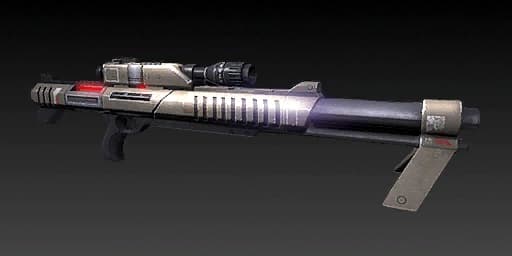
M-98 Widow: Anti-Materiel Sniper Rifle
The M-98 Widow was a 39 kilogram anti-materiel sniper rifle built to destroy armored vehicles and krogan, so violent in its recoil that no ordinary human could fire it without shattering an arm. Long the preserve of synthetics and augmented specialists, it reached the open galactic market only after a ruinously expensive redesign.
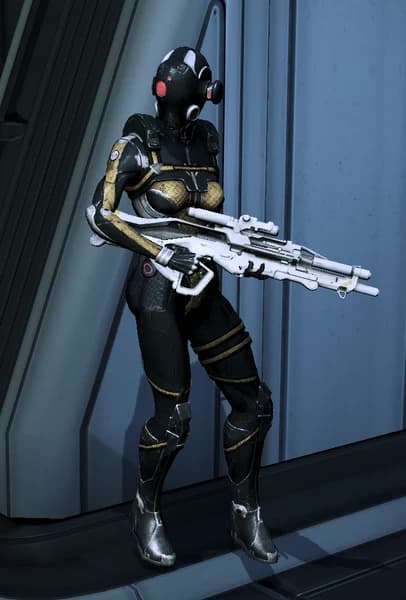
Nemesis: Cerberus's sniper specialist
The Nemesis was a Cerberus sniper specialist fielded across the galaxy during the Reaper War. Augmented with customized implants and a suite of scanning equipment, she could kill with a single round and was usually spotted only after she had already fired.
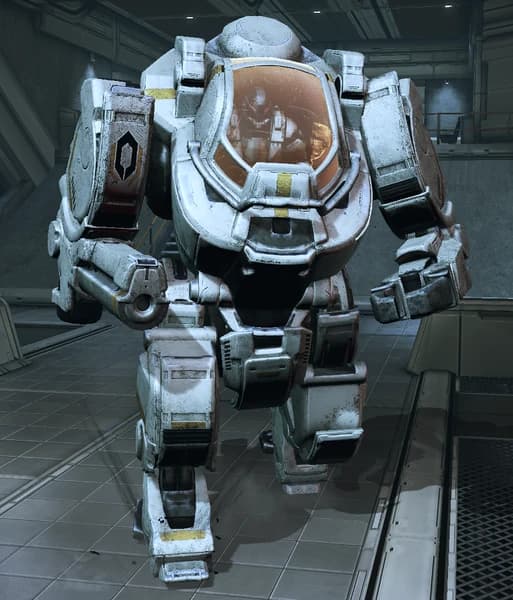
Atlas
The Atlas was a large piloted combat mech fielded by Cerberus during the Reaper War. Heavily armed and armored, it was developed as a larger and more powerful successor to the YMIR mech and carried a living operator inside an armored canopy.
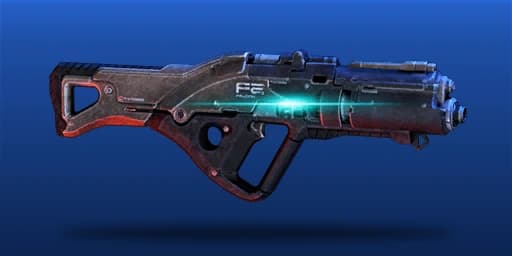
M-37 Falcon: Alliance Grenade Launcher Rifle
The M-37 Falcon was a Systems Alliance assault rifle that launched 25 millimeter mini-grenades instead of conventional rounds. Lighter and more accurate than most grenade launchers, it relied on a field fabrication kit to produce its specialized ammunition, leaving thermal clips as its only real constraint.
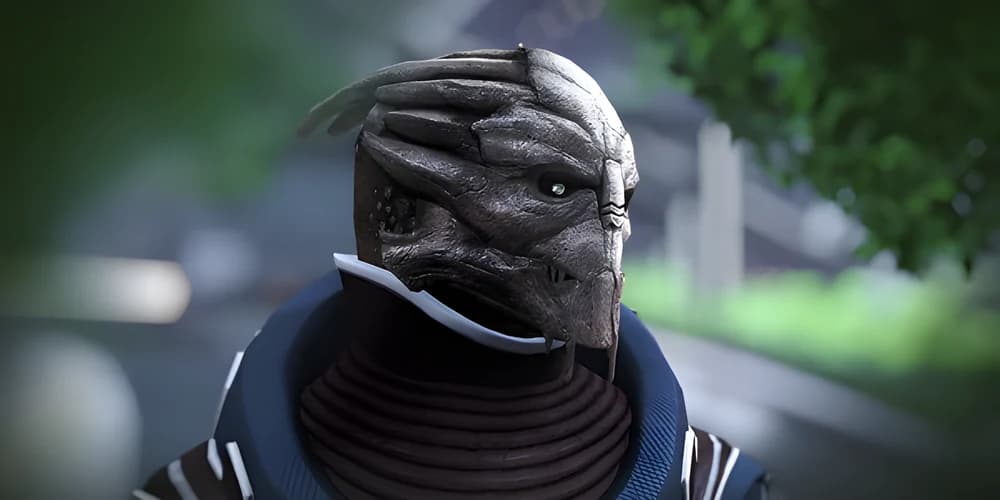
Turian Hierarchy
The Turian Hierarchy was the government of the turian people, a regimented meritocracy built around military and public service. It earned a Citadel Council seat for its role in the Krogan Rebellions and contributed the largest share of the Citadel Fleet.
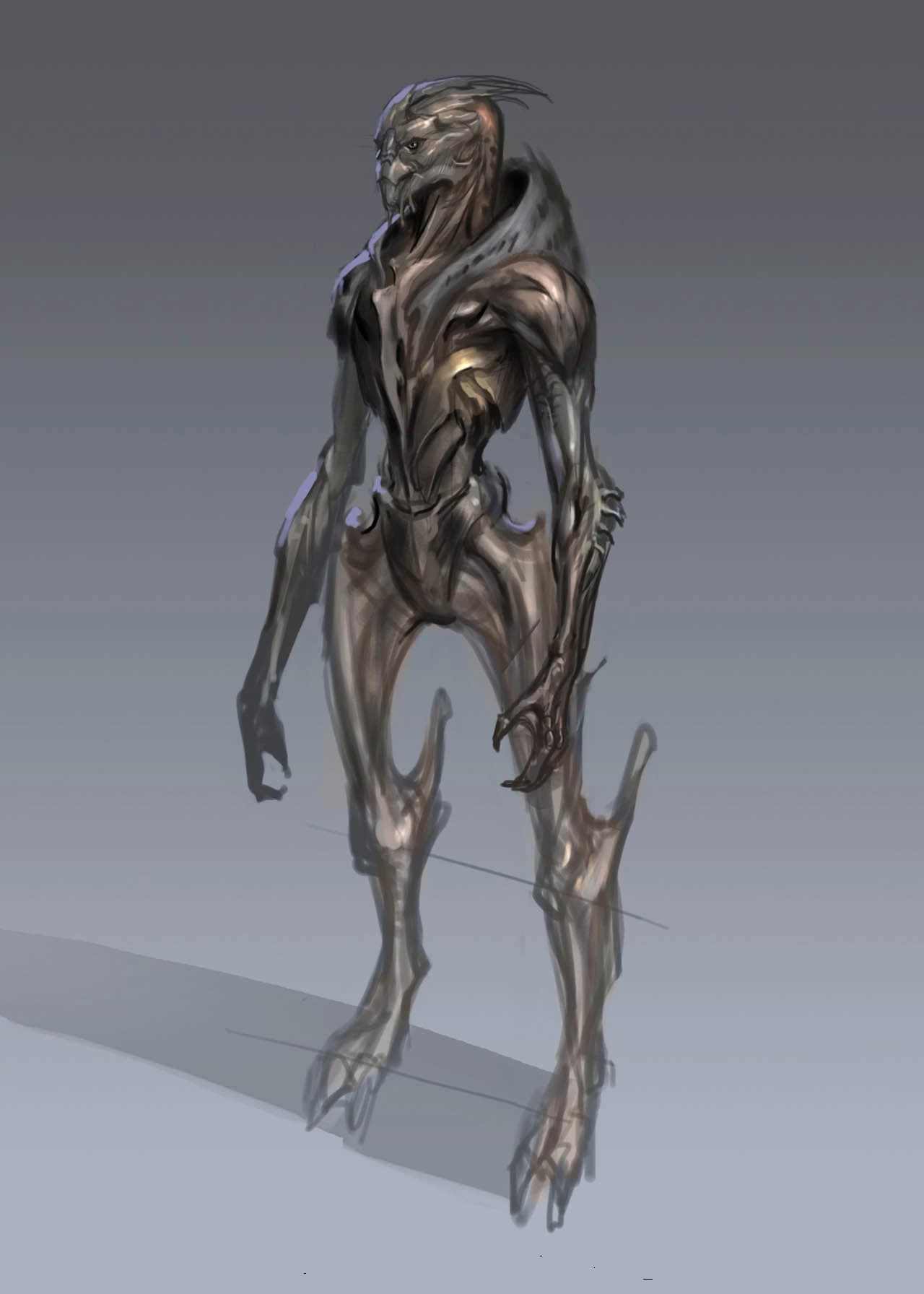
Turian
The turians of Palaven were a militaristic, disciplined species who earned a Citadel Council seat by defeating the krogan in the Krogan Rebellions and unleashing the genophage. Famed for their public service ethic and their contributions to the Citadel Fleet, they filled the galaxy's peacekeeping role for centuries.
Get new articles in your inbox
No spam. New lore drops, canon conflicts, and deep dives only when they’re worth reading.
Some links on Lore Fortress are affiliate links. If you buy through them we earn a small commission at no extra cost to you.