M-98 Widow: Anti-Materiel Sniper Rifle
The M-98 Widow was a 39 kilogram anti-materiel sniper rifle built to destroy armored vehicles and krogan, so violent in its recoil that no ordinary human could fire it without shattering an arm. Long the preserve of synthetics and augmented specialists, it reached the open galactic market only after a ruinously expensive redesign.
The M-98 Widow was an anti-materiel sniper rifle, a single shot weapon of such power that it sat closer to portable artillery than to a marksman's rifle. Weighing 39 kilograms, it was issued to sniper teams for assault missions against armored vehicles or krogan, targets that shrugged off conventional rifle fire. The kinetic barriers generated by standard military field generators, adequate protection for vehicles against most infantry weapons, were far too weak to stop a Widow round. For years the rifle's crippling recoil kept it out of organic hands almost entirely: among the crew that gathered aboard the Normandy SR-2, only the geth mobile platform Legion could wield one among the squad, though a Commander Shepard trained as a Soldier or Infiltrator could carry it as well. (Mass Effect 2; Mass Effect 3)
Design and stopping power#
The Widow belonged to a class of weapon built for equipment rather than personnel. Its designers assumed targets that ordinary rifles could not touch: armored vehicles sheathed in kinetic barriers, and krogan, whose redundant physiology let them absorb fire that would kill most soldiers outright. Against both, the Widow delivered. A single round carried enough force to defeat the barrier output of conventional military field generators, and sniper teams brought the rifle on assault missions precisely because it could open armored targets that the rest of their equipment could not. (Mass Effect 2)
That power came with severe costs. At 39 kilograms the Widow ranked among the heaviest weapons a soldier could bring into the field, and it chambered only a single round between reloads, so a shooter had to make each shot count. Marksmen accepted the tradeoff because of what that one shot did. The rifle was accurate and deadly at extreme range, effective against armor plating, kinetic shielding, and biotic barriers alike, and its heavy rounds retained their killing power even after punching through thin walls, portable ballistic shields, and layered armor plate. Armorers classed it as a step beyond lighter precision rifles such as the M-97 Viper, which had been designed around speed of fire rather than raw force. (Mass Effect 2; Mass Effect 3)
A rifle no human could fire#
The Widow was never designed to be carried and fired by a human. Before its later redesign, the recoil of a single shot could break an ordinary human's arm. Both the Normandy's research notes and later market descriptions called it a weapon of the geth, the synthetic race whose metal frames could absorb forces no organic body could. Whatever the truth of that attribution, the geth seen wielding it in Shepard's company was Legion, the unique mobile platform that traveled with the Commander. (Mass Effect 2; Mass Effect 3)
Shepard's own history with the weapon began aboard a disabled Collector cruiser. While sweeping the vessel, a Shepard trained as a Soldier or Infiltrator could take a Widow from the Collectors' arsenal as one of three specialist weapons on offer. Separately, talking with Legion about upgrades opened research into a Widow for the geth itself, and Legion, whose synthetic frame handled the recoil without modification, was the only squadmate who could use it. Another Widow was later found abandoned aboard a derelict Reaper, leaning against a railing in the dead hulk, its owner nowhere in evidence. (Mass Effect 2)
Remaking the Widow for the market#
The rifle's reputation created a commercial opportunity that several research firms found irresistible. They spent a considerable fortune attempting to redesign the Widow, aiming to retain what their documentation called the geth weapon's firepower while reducing its recoil enough that the gun could be fired without breaking a nonsynthetic's arm. The effort consumed years of trial and error before one company finally produced a usable model and rolled it out to the galactic market. Kassa Fabrication was among the arms dealers who carried the new production rifle. (Mass Effect 3)
The redesigned Widow arrived in time for the Reaper War, and it appeared on some of that conflict's most desperate battlefields. During the Reaper assault on Thessia, an asari sniper held an elevated overwatch position with a Widow as the defense of the asari homeworld collapsed around her, and Shepard's squad recovered the rifle from that ledge. Cerberus took a more systematic approach to the weapon's demands. Its Nemesis snipers received customized implants specifically so they could withstand the Widow's crippling kickback, and the combination turned an already dangerous specialist into a shooter capable of inflicting instant death, supported by high grade scanning equipment that kept the sniper hidden behind cover between shots. (Mass Effect 3)
The Black Widow#
The Systems Alliance developed its own derivative of the rifle, designated the Black Widow. The Alliance wanted to cut the original's reload time without giving up its stopping power, and the answer was to let the rifle fire several rounds before it needed a fresh thermal clip. Heavy for a sniper rifle, the Black Widow made up for its weight in firepower, and it forgave the occasional miss in a way its parent design never did. (Mass Effect 3)
Sources
- GameMass Effect 2, BioWare, 2010
- GameMass Effect 3, BioWare, 2012
Spotted a factual error or a primary source we missed? Email a correction. Every flagged claim gets reviewed.
Followed from this entry
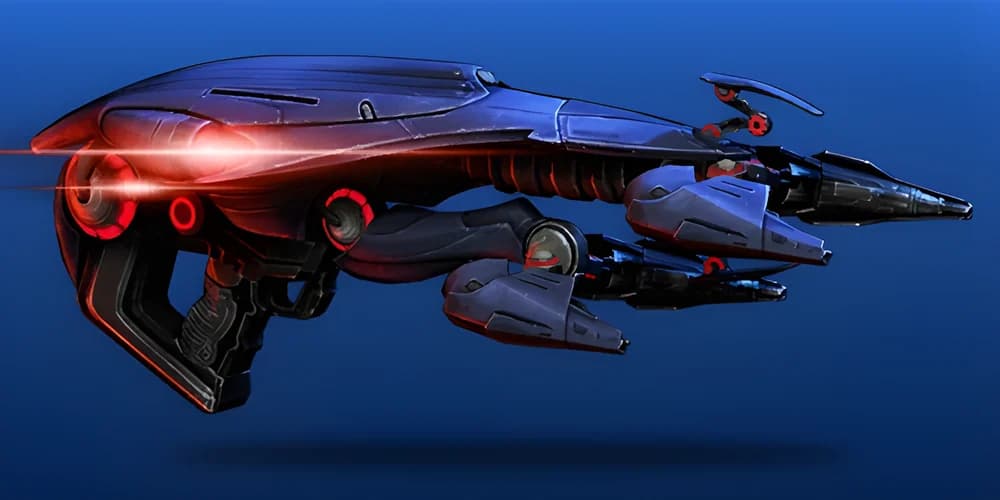
Kinetic barriers
Kinetic barriers, commonly called shields, were repulsive mass effect fields projected from small emitters to deflect fast-moving objects. They protected starships and infantry alike from mass accelerator fire while leaving slow movement and ordinary contact untouched.
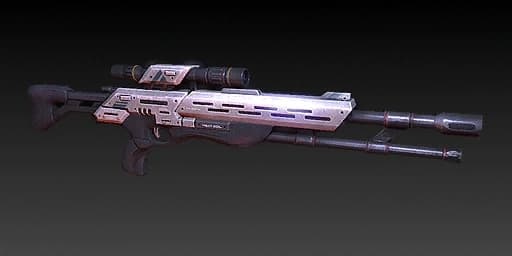
M-97 Viper: Rapid-Fire Sniper Rifle
The M-97 Viper was a rapid-fire military sniper rifle developed by Rosenkov Materials in answer to the spread of kinetic barriers. Accurate and deadly at long range, its high rate of fire let it bring down almost any target regardless of its defenses, making it a favorite of infiltrators and assassins.

Cerberus
Cerberus was a clandestine, human-supremacist paramilitary organization led by the Illusive Man, willing to use any means to advance humanity's place in the galaxy. Branded a terrorist group by both the Systems Alliance and the Citadel Council, it was ultimately destroyed during the Reaper War.
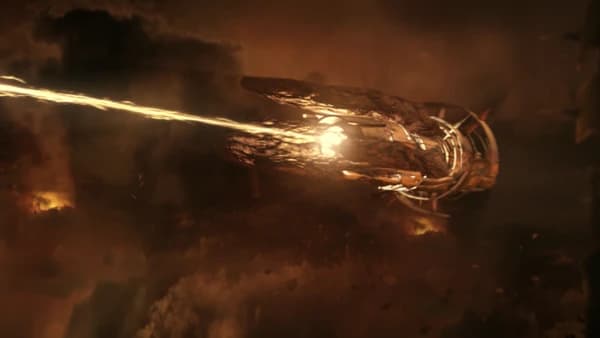
Collector Cruiser
The Collector Cruiser was the only known vessel type used by the Collectors, an immense hybrid of organic growth and metal superstructure. A single cruiser could carry enough troops, creatures, and stasis pods to abduct an entire human colony, and one such ship destroyed the original Normandy in 2183.

Commander Shepard
Commander Shepard was a Systems Alliance N7 marine who became the first human Spectre, exposed the rogue agent Saren Arterius, and led the galaxy's resistance against the Reapers. Shepard's gender, history, and many of the choices that shaped the war were never fixed, and the final fate of the cycle turned on the Commander's own decisions.
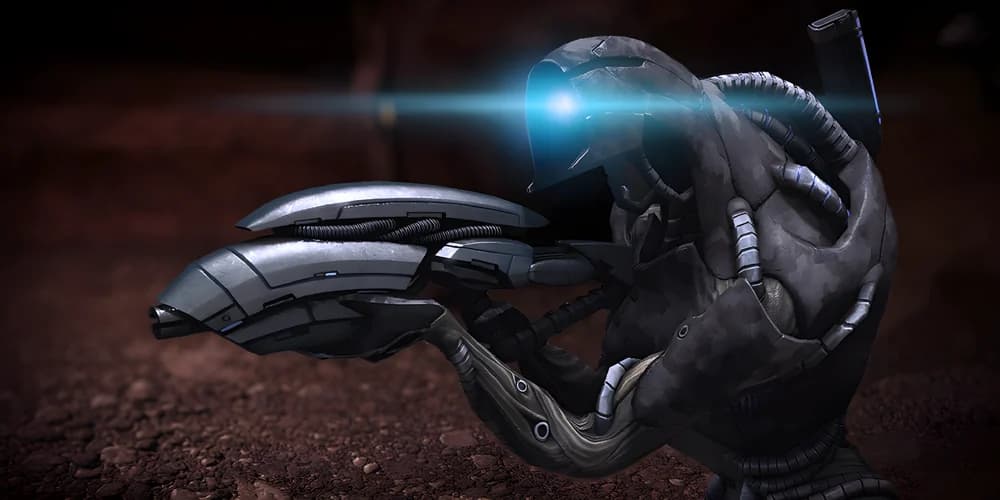
Geth
The geth were a race of networked artificial intelligences built by the quarians as laborers. When they gained sentience and questioned their makers, the quarians tried to exterminate them; the geth won the resulting Morning War and withdrew behind the Perseus Veil to build their own future.
Mentioned in4 entries
Geth Armory: Arsenal of the Synthetics
The Geth Armory was the name organic markets gave to the weapons and armor manufacture of the geth, a source of equipment of the highest quality whose workings remained almost entirely unknown. Its pulse rifles armed the geth military from common platforms to Juggernauts, its krogan armor lines were prized across Tuchanka, and its products reached organic hands only through rare trade licenses sold on the Citadel.
Javelin: Geth Ferrofluid Sniper Rifle
The Javelin was the name Alliance marines gave to a geth sniper rifle that fired a jet of superheated ferrofluid capable of cutting through nearly anything it struck. The same name belonged to the Alliance Navy's own disruptor torpedo ordnance, from the ship mounted launchers carried by frigates to the Mk.II missiles that batarian radicals turned against the colony on Watson.
Krysae Sniper Rifle: Turian Anti-Reaper Weapon
The Krysae was a turian antimateriel rifle rebuilt to kill Reaper creatures, firing armor piercing explosive rounds with proximity fuses that burst over cover and shredded massed enemies. In a desperate wartime move, the turians released its full specifications over the extranet so that nearly anyone with a fabricator could build one.
Nemesis: Cerberus's sniper specialist
The Nemesis was a Cerberus sniper specialist fielded across the galaxy during the Reaper War. Augmented with customized implants and a suite of scanning equipment, she could kill with a single round and was usually spotted only after she had already fired.
Get new articles in your inbox
No spam. New lore drops, canon conflicts, and deep dives only when they’re worth reading.
Some links on Lore Fortress are affiliate links. If you buy through them we earn a small commission at no extra cost to you.