Javelin: Geth Ferrofluid Sniper Rifle
The Javelin was the name Alliance marines gave to a geth sniper rifle that fired a jet of superheated ferrofluid capable of cutting through nearly anything it struck. The same name belonged to the Alliance Navy's own disruptor torpedo ordnance, from the ship mounted launchers carried by frigates to the Mk.II missiles that batarian radicals turned against the colony on Watson.
The Javelin was the name Alliance marines gave to a geth sniper rifle encountered during the Reaper War, a weapon unlike anything in an organic armory. Instead of accelerating a solid slug, the rifle held a reservoir of ferrofluid, drew the liquid magnetically into its firing chamber, and expelled it at lethal speeds. The jet behaved like a high pressure water cutter, slicing through nearly anything it hit with so much heat that observers described the shot as a beam of light. The name was already in use: the Systems Alliance fielded Javelin ordnance of its own, a family of disruptor torpedoes and missiles that armed warships from frigates to dreadnoughts and, in one infamous incident, nearly annihilated a human colony. (Mass Effect; Mass Effect 2; Mass Effect 3)
A geth weapon with an Alliance name#
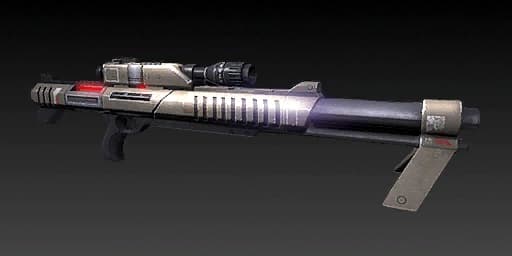
The Javelin was a geth design, and it ranked among the very heaviest weapons an infantry soldier could bring into the field. Its ammunition was not ammunition in any conventional sense. The rifle carried a sealed reservoir of ferrofluid, a liquid responsive to magnetic fields, and each trigger pull drew a measure of the fluid into the firing chamber before hurling it downrange at speeds that turned the stream into a cutting instrument. The comparison marines reached for was a high pressure water jet of the kind used to slice metal, except that the Javelin's jet carried so much heat that it appeared to the eye as a lance of light. What it did to a body was remembered less poetically. The fluid cut through nearly anything it struck and left terrible wounds in whatever survived its passage. (Mass Effect 3)
The ferrofluid jet#
The Javelin's stream did not stop at the first thing it touched. The jet retained its lethality through barricades, thin walls, and armor plating, and a single discharge could pass through one enemy and kill another standing behind the first. The jet also defeated armor plating that turned aside conventional rifle fire. (Mass Effect 3)
Matched to that penetrating power was an integral thermal sight. Looking through the Javelin's optics, a shooter could see warm targets through smoke and through any cover thin enough for the jet itself to pierce, with even cloaked infiltrators resolving as outlined silhouettes. The combination suited it to enemies who fought from concealment, such as Cerberus formations that screened their advances with smoke and cloaked operatives. (Mass Effect 3)
The weapon demanded discipline in return. A brief delay separated the trigger pull from the actual discharge, an idiosyncrasy that punished careless shots against moving targets and rewarded shooters who fired on enemies that were stationary or moving predictably. The ferrofluid reservoir was small, holding fewer shots in reserve than comparable heavy rifles such as the M-98 Widow, and recharging the chamber between shots was slow. In practiced hands the Javelin combined range, target detection, and penetration in a way almost nothing else carried by infantry could match. (Mass Effect 3)
Recovery on Rannoch#
The rifle entered Alliance hands during the quarian campaign to retake Rannoch, when the Migrant Fleet brought its war against the geth home to the species' lost homeworld. During that offensive, the ship carrying Admiral Zaal'Koris vas Qwib-Qwib was shot down over the planet, and Commander Shepard led the operation to reach the downed admiral. On the route to the extraction, near a crashed escape pod, Shepard's team recovered a Javelin from the battlefield. (Mass Effect 3)
The weapon did not remain a battlefield curiosity. Examples afterward appeared in commercial circulation through Elkoss Combine arsenal suppliers, putting a geth cutting jet within reach of any buyer with sufficiently deep pockets. (Mass Effect 3)
The Alliance Javelin: disruptor torpedoes#
Long before marines hung the name on a geth rifle, Javelin designated an experimental close assault weapon fitted to a handful of newer Alliance warships. The system consisted of a rack of two or more disposable disruptor torpedo tubes bolted or magnetically slung onto the exterior of a ship's armored hull. The torpedoes fired on converging trajectories and detonated in a precisely timed sequence that allowed the dark energy of their warheads to reinforce each other, magnifying the space time warp effects that made disruptor ordnance so destructive. (Mass Effect; Mass Effect 2)
Like fighter launched torpedoes, Javelins were cold launched for safety. Each torpedo came packed in an individual sealed tube filled with compressed inert gas, resembling an old fashioned submarine torpedo tube. Opening the front of the tube let the escaping gas push the torpedo into vacuum, releasing a puff of crystals around the tube's mouth, and only after clearing the tube completely did the torpedo ignite its thrusters. (Mass Effect 2)
Javelin mounts most often went to swift frigates, which entered "knife fight" torpedo ranges as a matter of course and carried the torpedoes to tear down opposing kinetic barriers. Heavier ships took Javelins aboard for short range engagements such as trans relay assaults, where the mounts proved particularly useful to dreadnoughts unable to lay their main guns on close targets. As missile weapons, Javelins remained subject to highly accurate defensive GARDIAN laser fire, and crews launched them in large numbers at short range to give any of them a chance of hitting home. The Normandy SR-2 carried the system from her commissioning, with two Javelin disruptor torpedo launchers mounted on the joints between her engine mounts and primary hull. (Mass Effect; Mass Effect 2)
The Javelin Mk.II and the Watson incident#
The Alliance also fielded Javelin ordnance in planetary defense, and one such installation became the instrument of a near atrocity. Batarian radicals raided an Alliance missile base on Franklin, the moon of the colony world Watson in the Skepsis system of the Sigurd's Cradle cluster, and launched two Javelin Mk.II missiles from the silo at the human colony below. A distress signal carried word of the attack off world, and Commander Shepard's team stormed the silo control facilities while the launch sequence ran, fighting through the batarian troopers and commanders holding the installation. (Mass Effect 2)
There was not time to stop both missiles. Shepard reached the controls able to divert only one, forced to choose between sparing the colonists and sparing the colony's industrial infrastructure, a choice left to the player. Either way, a weapon the Alliance had built and emplaced for the colony's protection fell on the colony itself, a grim footnote to a name that, in its other incarnation, marines would soon attach to one of the deadliest rifles of the Reaper War. (Mass Effect 2)
Sources
- GameMass Effect, BioWare, 2007
- GameMass Effect 2, BioWare, 2010
- GameMass Effect 3, BioWare, 2012
Spotted a factual error or a primary source we missed? Email a correction. Every flagged claim gets reviewed.
Followed from this entry
M-98 Widow: Anti-Materiel Sniper Rifle
The M-98 Widow was a 39 kilogram anti-materiel sniper rifle built to destroy armored vehicles and krogan, so violent in its recoil that no ordinary human could fire it without shattering an arm. Long the preserve of synthetics and augmented specialists, it reached the open galactic market only after a ruinously expensive redesign.
Geth
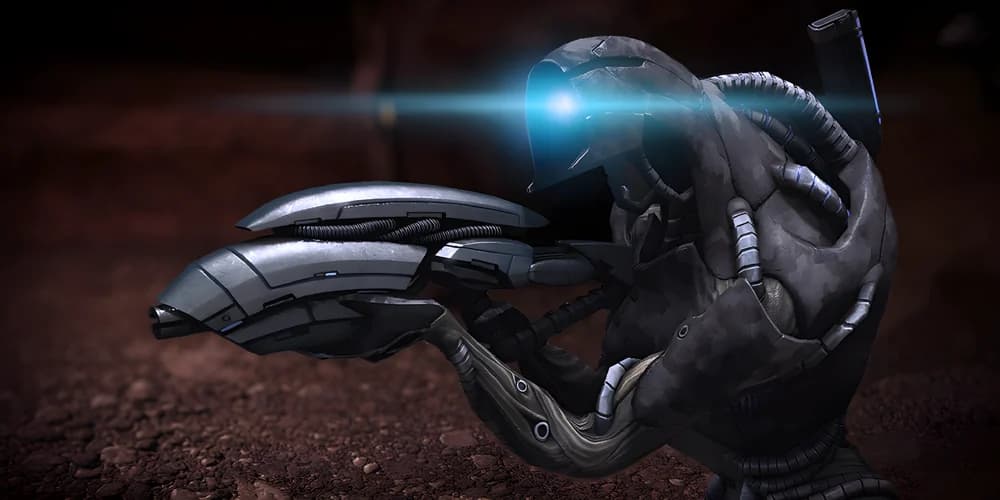
The geth were a race of networked artificial intelligences built by the quarians as laborers. When they gained sentience and questioned their makers, the quarians tried to exterminate them; the geth won the resulting Morning War and withdrew behind the Perseus Veil to build their own future.
Kinetic barriers
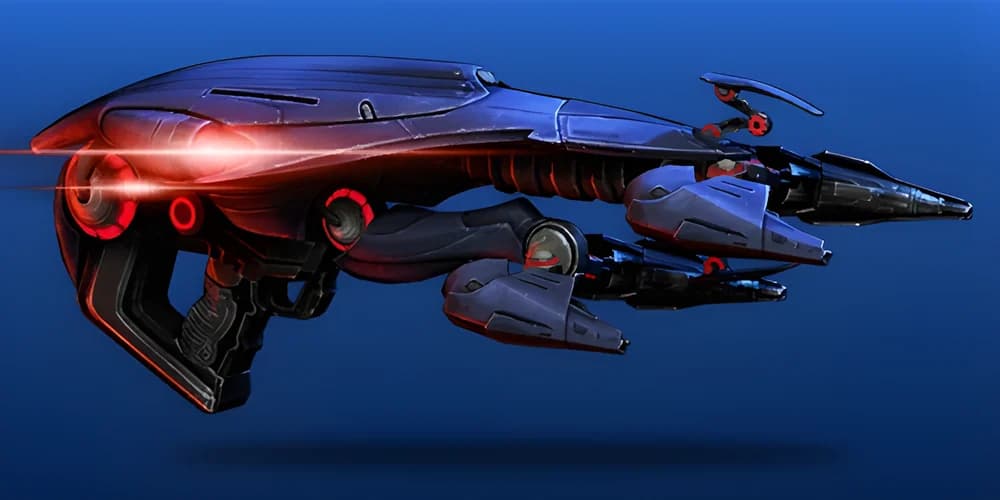
Kinetic barriers, commonly called shields, were repulsive mass effect fields projected from small emitters to deflect fast-moving objects. They protected starships and infantry alike from mass accelerator fire while leaving slow movement and ordinary contact untouched.
Alliance Navy: Humanity's Fleet
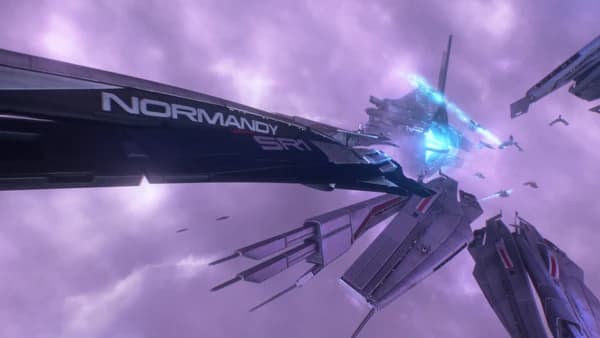
The Alliance Navy was the space combat branch of the Systems Alliance military, charged with defending Earth and its colonies. Numbering several thousand ships across multiple fleets, it was one of the greater naval forces in Citadel space and bore the brunt of the fighting during the Reaper War.
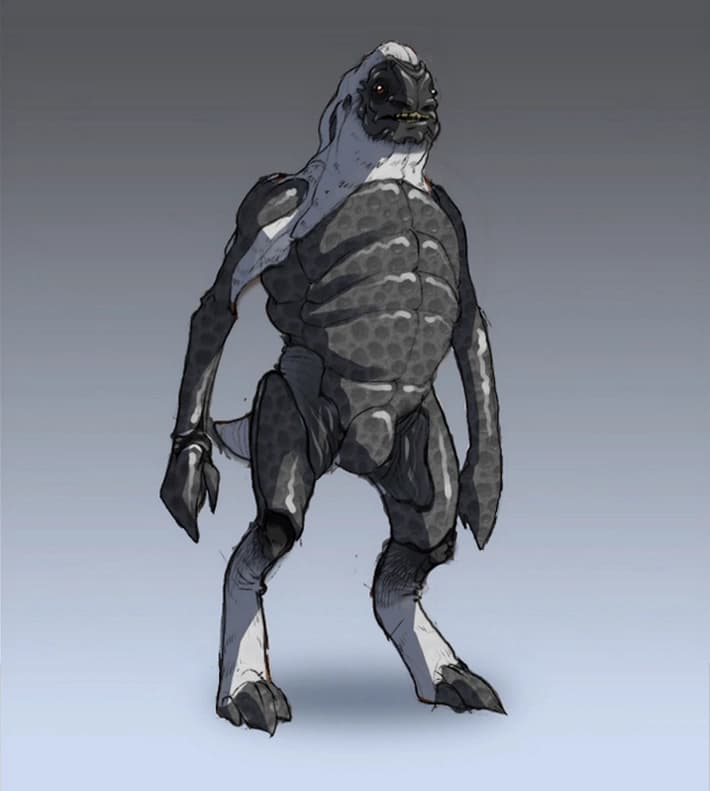
Batarian
The batarians were a four-eyed species native to Khar'shan whose insular government, the Batarian Hegemony, withdrew from the galactic community and became infamous for slavery, piracy, and hostility toward humanity before the Reapers overran their space.

Cerberus
Cerberus was a clandestine, human-supremacist paramilitary organization led by the Illusive Man, willing to use any means to advance humanity's place in the galaxy. Branded a terrorist group by both the Systems Alliance and the Citadel Council, it was ultimately destroyed during the Reaper War.
Mentioned in1 entry
Get new articles in your inbox
No spam. New lore drops, canon conflicts, and deep dives only when they’re worth reading.
Some links on Lore Fortress are affiliate links. If you buy through them we earn a small commission at no extra cost to you.