Planet: worlds of the Known Universe
In the cosmography of the Imperium, a planet was a celestial body in orbit around a star, neither a star itself nor a moon, that had swept its orbital region clear as it formed. From Old Earth outward, humanity settled thousands of such worlds, from the deserts of Arrakis to the oceans of Caladan.
A planet, in the reckoning of Imperial astronomers, was a celestial body in orbit around a star, neither a star itself nor a moon, which had cleared out the region around its orbit as it formed by drawing all other smaller bodies in its path into itself. Every inhabited world of the Known Universe belonged to this class, from Old Earth, where the human species first arose, to the desert expanse of Arrakis and the rain soaked seas of Caladan. The Dune Encyclopedia sets out a detailed body of Imperial planetary science, covering how such worlds formed, why their crusts moved, and how long it took for life and a breathable atmosphere to appear on those few that could carry them. (The Dune Encyclopedia; Dune)
The nature of a planet#
By definition a planet did not share its orbital region with any other body of significant size. The exceptions were its own moons and those objects collected later under its gravitational influence, captured satellites being a familiar feature of many systems. Beyond that shared definition, the worlds themselves diverged enormously. Depending on the tilt of a planet's axis, each world ran through its own cycle of seasons, with temperatures and weather that varied from hemisphere to hemisphere and year to year. In environmental conditions and terrain the planets of the Known Universe were extremely varied, a range that stretched from the open deserts of Arrakis to the near total ocean cover of Caladan and the industrial blight of Giedi Prime. (The Dune Encyclopedia; Dune)
Formation and the Neta class#
The chemical composition of a planet depended upon its distance from its main star. Some planets consisted primarily of silicates, some of hydrogen, these last shading into quasi-stars, some of sulfides, and some were mostly metallic. Imperial classification set aside a specific grouping, the Neta class, for those planets composed of 60 percent silicates by mass, give or take 10 percent, together with 30 percent metals, about 10 percent sulfides, and less than 5 percent hydrogen. Most of the great inhabited worlds of the Imperium fell within this class. (The Dune Encyclopedia)
The ancient Terrans of Old Earth held a simple account of planetary genesis, and later scholarship accepted it in most respects. During or after the formation of a star, the remaining smaller fragments of dust, gas, and ices accreted into a planetary body. As its mass grew, its interior warmed through gravitational contraction, with additional heat released by radioactive decay. On Neta class worlds the surface and interior soon became molten. After about one eon the exterior cooled sufficiently to form a solid crust, though convection in the molten interior repeatedly broke up that early crust and formed new crust in its place, a churning that Imperial writers compared to scum floating on the surface of a bubbling pot of molten fanmetal. Only about one and a half eons after formation did the crust grow thick and stable enough to become a basically permanent feature, while the interior settled into a quasi-molten state. (The Dune Encyclopedia)
Tectonics and the later theories#
The ancients ascribed the continuing restlessness of planetary crusts to radioactivity. In their view the heat generated by continuous radioactive decay drove a slow convection in the interior, which in turn produced volcanic eruptions, quakes, and the movement of crustal plates. The theory had an awkward flaw: of the four Neta class planets in the Sol planetary system, the system of Old Earth itself, only one exhibited plate tectonics at all. (The Dune Encyclopedia)
The scholar P. R. Bnaceret, who summarized the understanding of his era, wrote that heat from radioactive decay was insufficient to cause plate movements. Internal heat was not even necessary to the process, although in every known case internal heating did result from the action of whatever mechanism was primarily responsible for the motion of the plates. (The Dune Encyclopedia)
Two mechanisms were established as the actual causes of plate movement, and on some worlds both played a major part. The first was convection driven by severe internal heating, which came in part from radioactive decay but mostly from neutrinos emitted by the host star. Neutrinos carried no mass or charge, and most passed through a planet without interaction, yet those few that were absorbed heated the interior. Only where the neutrino flux was very large, a condition produced by very few stars, did the required severe heating occur, and only a few planets anywhere, none of them in the Sol system, relied on convection currents as their sole tectonic engine. The second and dominant mechanism was external gravitational torque. Where a planet had neighbors of considerably larger mass, or one or more moons whose mass was an appreciable fraction of its own, and where those bodies followed orbits lying appreciably outside the planet's ecliptic plane, preferably eccentric ones, the resulting torques generated large stresses in the crust. These stresses drove crustal movement and all its associated tectonic phenomena. Friction heated the planet internally as a byproduct, but on such worlds the heating was secondary to the process itself. (The Dune Encyclopedia)
Life and the oxygen threshold#
Where life evolved on a planet at all, rudimentary plant life first appeared in the fossil record about 1.5 to 2 billion years after the planet formed. Plant photosynthesis was the major source of atmospheric oxygen, and about two billion years passed before that oxygen reached the level of 19 percent. By that time advanced plant forms were widespread, and fossil remains of lycopsids and sphenopsids were especially common in the strata of such worlds. The 19 percent figure marked the recognized threshold of habitability: all habitable planets of the Known Universe carried at least that fraction of oxygen in their atmospheres. (The Dune Encyclopedia)
Worlds of the Imperium#
The roster of known planets ran into the thousands, and the great powers of the Imperium were each identified with particular worlds. Humanity's point of origin was Old Earth, also called Terra. Arrakis, in later ages called Rakis, was the desert world that supplied the spice melange and became the pivot of Imperial history. Caladan, recorded in some rolls as Dan and as the third planet of Delta Pavonis, was the ocean world of House Atreides. Giedi Prime, afterward renamed Gammu, was the industrial seat of House Harkonnen, while House Corrino ruled from Kaitain and kept Salusa Secundus as its prison planet. Ix was the center of machine manufacture, Tleilax the closed homeworld of the Bene Tleilax, and the Bene Gesserit kept their Mother School on Wallach IX and, in a later age, their hidden base on Chapterhouse. Beyond these lay a long roll of lesser and remoter worlds, from the whale fur fisheries of Lankiveil to dim Bela Tegeuse and the hidden sanctuary worlds of Tupile. (Dune; Heretics of Dune; Chapterhouse: Dune)
The naming of these worlds preserved layers of history. Many carried plain catalog designations, such as III Delta Pavonis or Wallach IX, marking their order outward from their stars. Others accumulated new names as their fortunes changed, as when Arrakis passed into memory as Rakis and Giedi Prime was rechristened Gammu. In every case the name attached to a world of the same fundamental kind: a body swept clean in its orbit, shaped by accretion and torque and, on a favored few, clothed in oxygen and life. (Dune; Heretics of Dune)
Sources
- BookThe Dune Encyclopedia, Willis E. McNelly (ed.), Berkley Books, 1984
- BookDune, Frank Herbert, Chilton Books, 1965
- BookHeretics of Dune, Frank Herbert, G. P. Putnam's Sons, 1984
- BookChapterhouse: Dune, Frank Herbert, G. P. Putnam's Sons, 1985
Spotted a factual error or a primary source we missed? Email a correction. Every flagged claim gets reviewed.
Followed from this entry
Old Earth
Old Earth, also called Terra, was the planet of the al-Lat system on which the human species first arose. After the Butlerian Jihad it dwindled to a memory, preserved in ancestral recollection and in the scattered Terran flora and fauna seeded across the worlds of the Imperium.
Arrakis
Arrakis, known as Dune and later as Rakis, was a harsh desert world in the Canopus system and the only natural source of the spice melange. Home to the Fremen and the sandworms, it became the seat of the Atreides empire and the center of the known universe.
Bela Tegeuse
Bela Tegeuse was the fifth planet of the Kuentsing star system and reputedly the third stopping place of the Zensunni forced migration. Generations later it was conquered by the Honored Matres.
Caladan: the ocean world the Atreides left
A rain-soaked world orbiting Delta Pavonis, held by House Atreides for twenty generations. Paul was born there, before Arrakis.
Chapterhouse
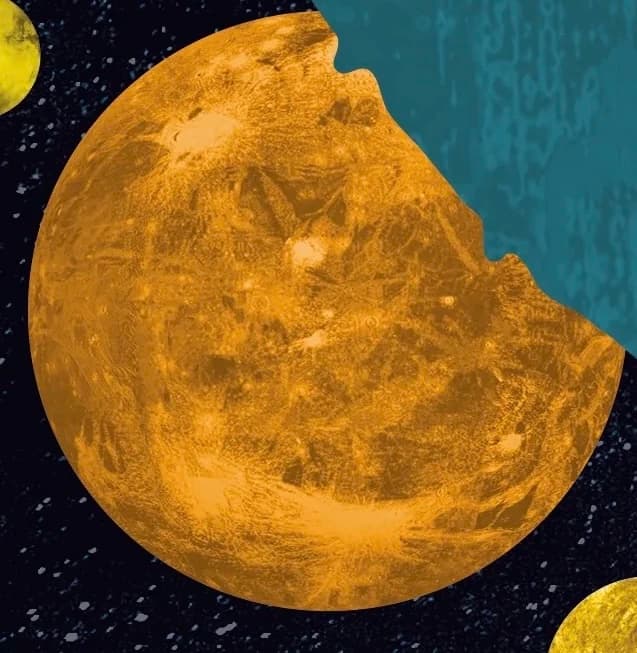
Chapterhouse was the Bene Gesserit term for the planet that served as the Sisterhood's home base. In its final form it was a hidden, deliberately unsettled world shielded from prescient eyes and, in the end, remade into desert to shelter the last sandworm.
Giedi Prime
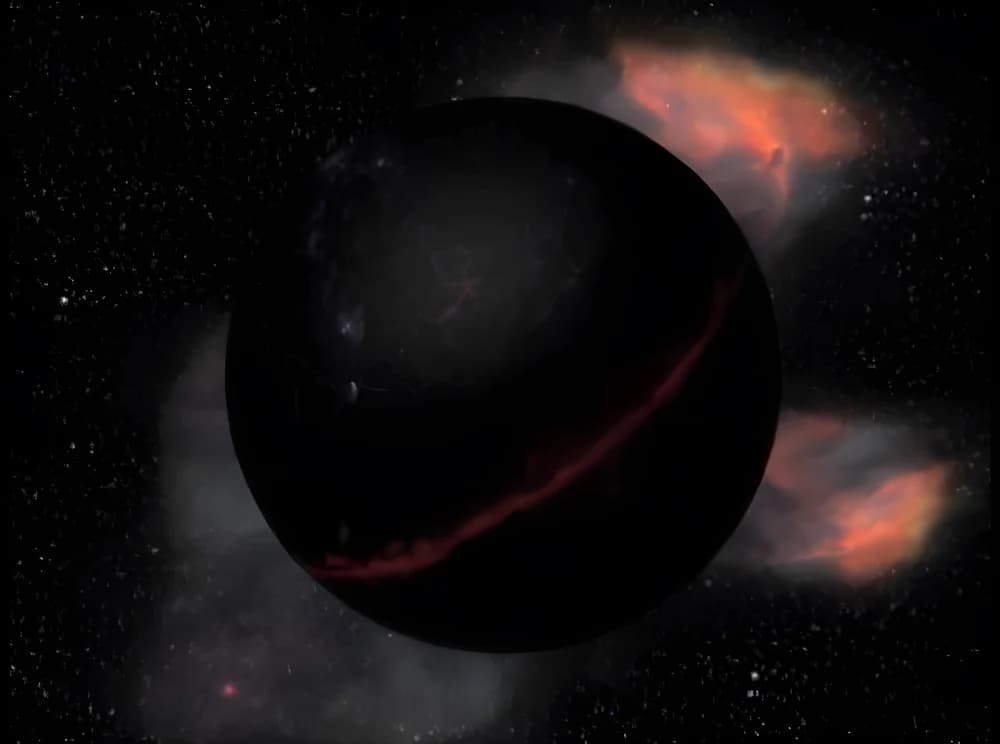
Giedi Prime, later renamed Gammu, was the industrial homeworld of House Harkonnen, orbiting the star Ophiuchi B. A planet of factories, arenas, and an oppressed populace, it later passed to Atreides administration and eventually became a Bene Gesserit base.
Get new articles in your inbox
No spam. New lore drops, canon conflicts, and deep dives only when they’re worth reading.
Some links on Lore Fortress are affiliate links. If you buy through them we earn a small commission at no extra cost to you.