Projectile weapons: the old guns of the Imperium
Projectile weapons, firing miniaturised poisoned needles, bolts and darts, were the standard armament of the House Troopers and the militaries of the Imperium. The coming of the Holtzman shield made most of them obsolete, yet the maula pistol, the slow-pellet stunner and the assassin's dartgun endured wherever shields could not be worn.
Projectile weapons were the ranged arms of the Known Universe, weapons that hurled physical ammunition at their targets rather than beams of light. Loaded with miniaturised poisoned needles, bolts and darts, they formed part of the standard armament of the House Troopers and the other military forces of the Imperium. The Holtzman shield made most of them obsolete on the battlefield, since a shield turned aside any object moving fast enough to kill. Yet the old guns never vanished. The Harkonnens brought artillery back into use on Arrakis, and on Arrakis, where a shield's pulse drove sandworms into killing rage, the Fremen kept the spring-loaded maula pistol alive as a weapon of the open desert. (Dune)
Standard armament of the Imperium#
Long before the age of shields, the projectile weapon was the common instrument of war. Its principle was ancient and simple: a mechanism, whether spring, charge or rocket, threw a solid missile at the enemy. In the Imperium the form ran toward miniaturisation and poison. The needles, bolts and darts were small, and their killing power came less from impact than from the toxins they carried. The glossary printed with Dune describes the Assassins' Handbook as a Third Century compilation of poisons commonly used in the War of Assassins, later expanded to cover the deadly devices permitted under the Guild Peace and the Great Convention, and most known poisons could be caught by a poison snooper. (Dune)
The family of projectile arms ran from the smallest concealable devices to true artillery. At the light end stood dartguns and tiny projectors of poisoned needles, the tools of assassins. At the heavy end was artillery, which House Harkonnen brought back into use on Arrakis. (Dune)
The Holtzman revolution#
The introduction of the defensive shield derived from the Holtzman Effect overturned this entire arsenal. A personal shield admitted only slow-moving objects, a crawl of between six and nine centimetres per second depending on its setting, fast enough to let a wearer breathe but far too slow for any bullet, dart or shell. Conventional projectile weapons became mostly useless against a shielded opponent. The alternative was no better: when a lasgun beam touched a Holtzman field, the contact set off an explosion that could destroy both the gunner and the target. (Dune)
Warfare therefore turned backward. The militaries of the Imperium returned to hand weapons, and fighting styles grew up around the shield's single weakness, the slow thrust that could slip beneath the barrier. The crysknife, the kindjal and the slip-tip displaced the gun as the decisive weapons of shield combat. Even so, dartguns and needle projectors stayed in use, for not every target wore a shield, and not every killing was done on a battlefield. (Dune)
Weapons that outlived the shield#
Obsolescence was never extinction. Because so many soldiers now went shielded and unarmoured, old-fashioned weapons could work again where nobody expected them. (Dune)
The desert war on Arrakis showed how deliberately such choices could be made. When House Harkonnen fell upon House Atreides in Arrakeen, the Baron used artillery to seal Atreides troops into the caves where they had taken shelter, a method nobody had thought worth guarding against. (Dune)
Slipping beneath the barrier#
One projectile weapon was built for the shield age rather than against it. The stunner was a slow-pellet weapon that threw a poison-tipped or drug-tipped dart at low velocity, slow enough to pass a shield's barrier and put the target down. Its use demanded judgement, for its effectiveness was limited by variations in shield settings and by the relative motion between the projectile and its mark. In skilled hands it was the rare gun that could reach a shielded man, which made it a weapon of ambush and abduction as much as of war. (Dune)
The maula pistol and the open desert#
The most famous survivor of the family was the maula pistol, a spring-loaded gun for throwing poison darts to a range of about forty metres. (Dune)
On Arrakis the maula pistol found its true home. Shields were rarely used in the deep desert, since a shield's vibrations drew a sandworm from afar and drove it into a killing frenzy, and against an unshielded enemy the old spring pistol was as lethal as it had ever been. The Fremen carried it widely, and in Children of Dune one lies exposed in the folds of a black cloth of intercession. It should not be confused with the baradye pistol of the fremkit, a static-charge device that laid down a dye marker on the sand, a tool of the desert rather than a weapon. (Dune; Children of Dune)
The assassin's dart#
In the corridors of the Great Houses, the projectile weapon lived on as an instrument of murder. Dartguns were small arms suited to the assassin's trade, and their place in Imperial history was sealed on Arrakis, where the traitor Wellington Yueh used a drugged dart to paralyse Duke Leto Atreides I and deliver him to his enemies. Tiny projectors of poison darts, small enough to hide in a palm or a sleeve, served the same trade. (Dune)
The maula pistol, too, belonged to this hidden world in the expanded books by Brian Herbert and Kevin J. Anderson. During the suboid revolt on Ix in 10,153 AG, Lady Shando Vernius was wounded by a maula pistol while trying to protect her daughter Kailea. Years later, when Leto Atreides faced his Trial by Forfeiture on Kaitain, the Mentat Thufir Hawat slipped a smuggled maula pistol into a desk drawer of his Duke's quarters, insurance against the next assassin whom a dagger might not stop. (Dune: House Atreides)
Echoes of older ages#
The expanded books trace the projectile weapon back to the wars against the thinking machines. Chandler pistols, which shot crystal fragments and needles, were used throughout the League Worlds, and the Dragoons of Poritrin were armed with them. The League of Nobles also fielded cellguns built to kill cymeks. (Dune: The Butlerian Jihad; Dune: The Machine Crusade; Dune: The Battle of Corrin)
From the machine wars to the reign of Muad'Dib, the projectile weapon traced a long decline without ever reaching an end. The shield took its battlefields, the lasgun took its prestige, and the blade took its glory, but wherever a shield could not be worn, on the open sands of Arrakis, in a palace corridor, in the hand of a traitor doctor, the old guns kept killing. (Dune; Dune: The Butlerian Jihad)
Sources
- BookDune, Frank Herbert, 1965
- BookChildren of Dune, Frank Herbert, G. P. Putnam's Sons, 1976
- BookDune: The Butlerian Jihad, Brian Herbert and Kevin J. Anderson, 2002 (expanded books)
- BookDune: The Machine Crusade, Brian Herbert and Kevin J. Anderson, 2003 (expanded books)
- BookDune: The Battle of Corrin, Brian Herbert and Kevin J. Anderson, 2004 (expanded books)
- BookDune: House Atreides, Brian Herbert and Kevin J. Anderson, 1999 (expanded books)
Spotted a factual error or a primary source we missed? Email a correction. Every flagged claim gets reviewed.
Followed from this entry

Maula pistol: the Fremen poison-dart gun of Dune
The maula pistol is a spring-loaded gun that fires poison darts, with a range of about forty metres. It is a small detail in Frank Herbert's Dune, but it makes sense on Arrakis, where shields draw sandworms and an old-fashioned dart gun still kills.

Crysknife
The crysknife was a knife made from the tooth of a sandworm, the primary weapon of the Fremen of Arrakis. Milky white and double-edged, it was sacred to its bearers and could not be sheathed once drawn until it had drawn blood.
Fremkit
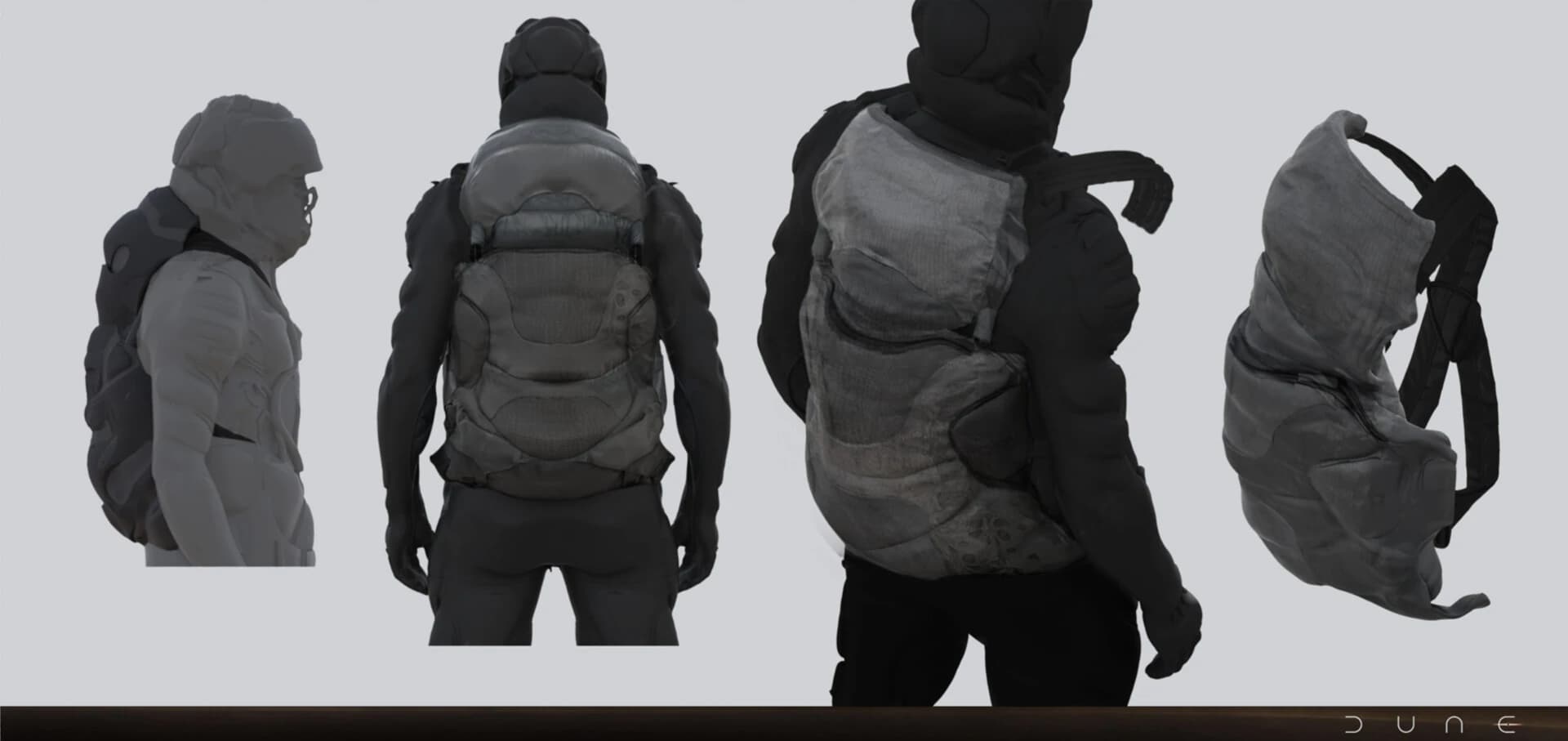
A fremkit was a desert survival kit devised by the Fremen for staying alive in the open desert of Arrakis. Packed with navigation, shelter, wormriding, and water tools, it kept Paul and Jessica Atreides alive after they fled Arrakeen.
Arrakis
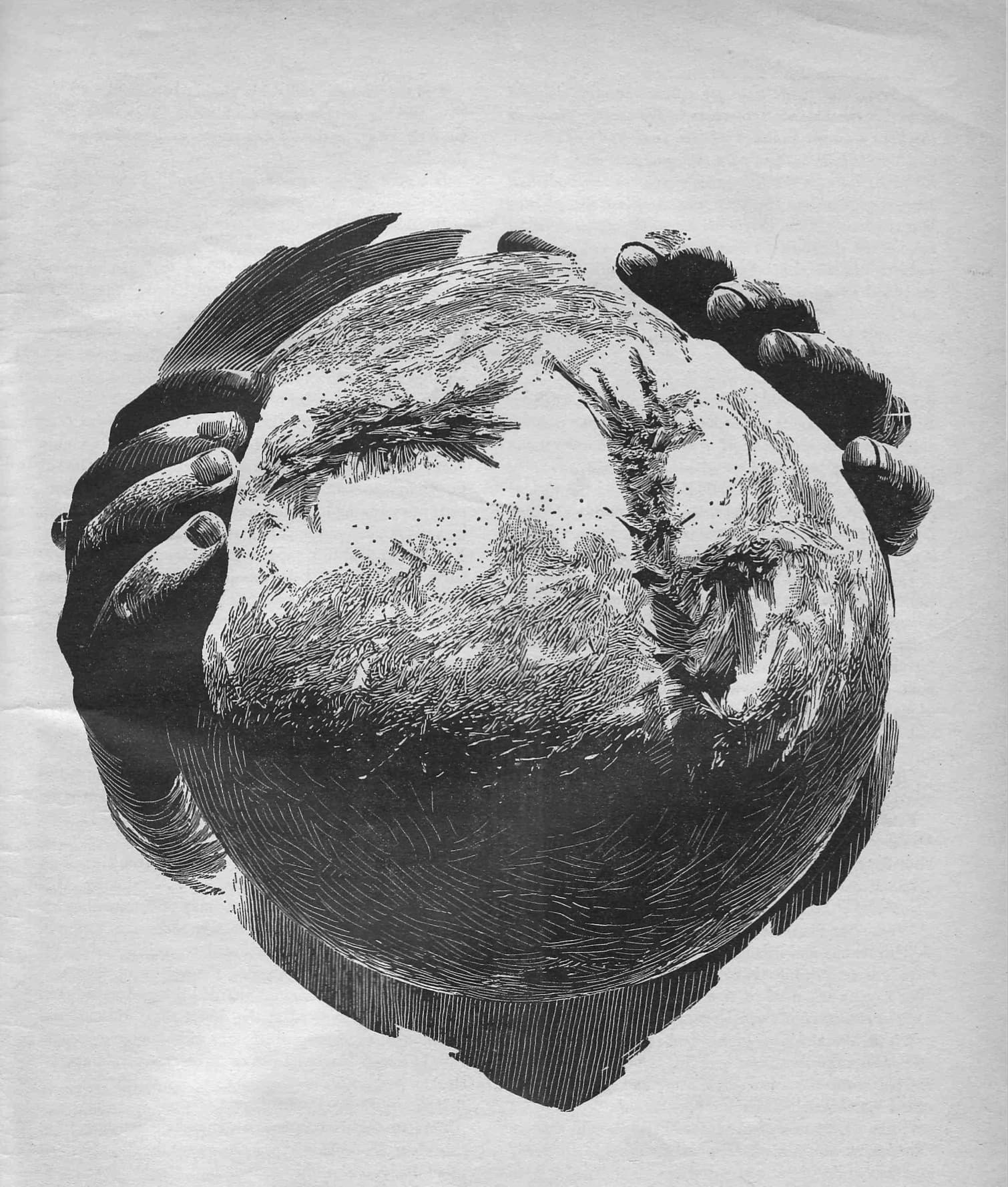
Arrakis, known as Dune and later as Rakis, was a harsh desert world in the Canopus system and the only natural source of the spice melange. Home to the Fremen and the sandworms, it became the seat of the Atreides empire and the center of the known universe.
Fremen
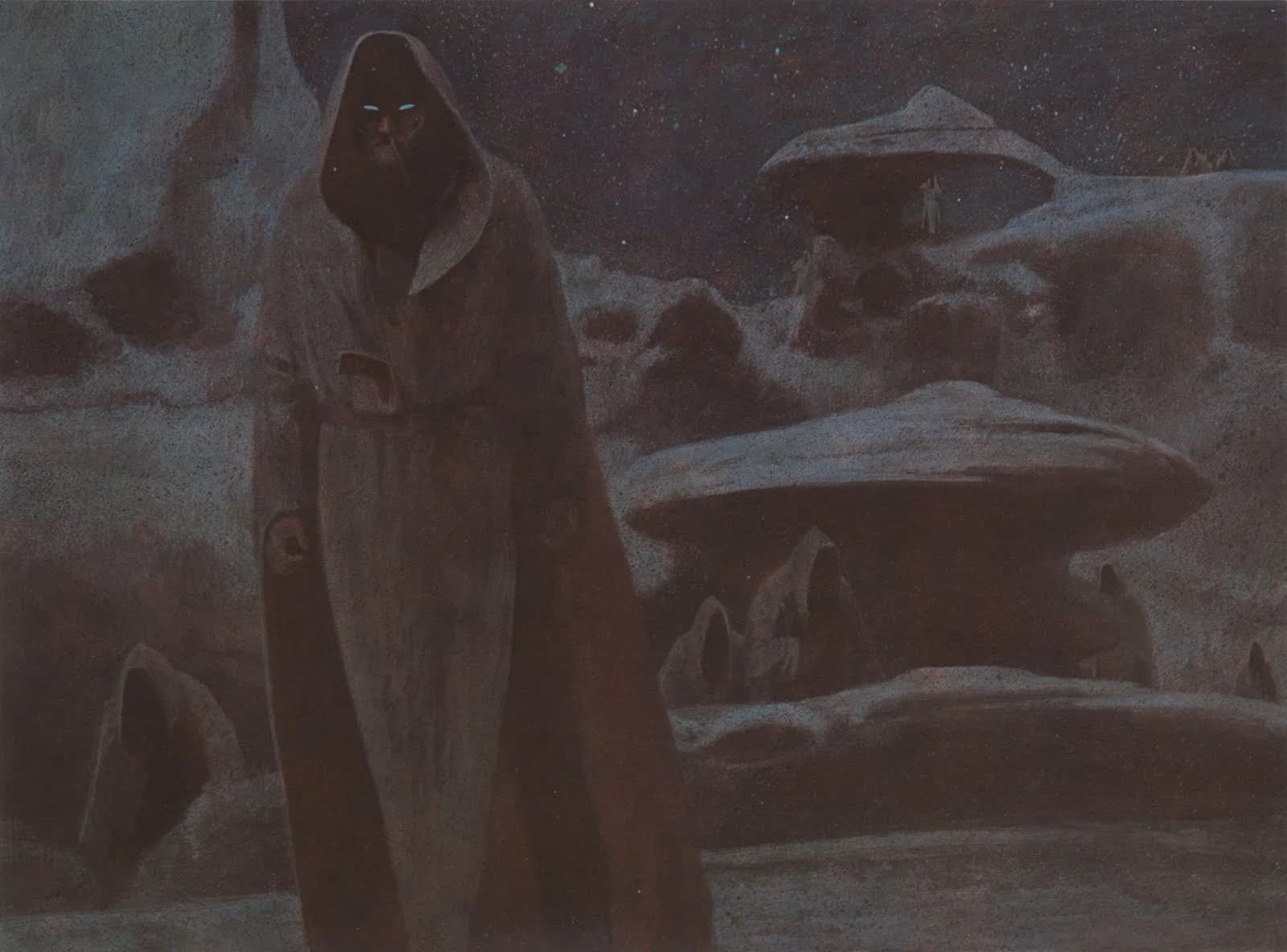
The Fremen were a culture of humans descended from the Zensunni Wanderers who made the desert planet Arrakis their home. Hardened by water scarcity and generations of persecution, they became the finest fighters in the Known Universe and the foot soldiers of Paul Atreides and his jihad.

Holtzman effect
The Holtzman effect was a scientific theory concerning the repellent force of subatomic particles. From it sprang the defensive shield, the suspensor, the glowglobe, and above all the folding of space that made instantaneous travel across the universe possible.
Mentioned in1 entry
Get new articles in your inbox
No spam. New lore drops, canon conflicts, and deep dives only when they’re worth reading.
Some links on Lore Fortress are affiliate links. If you buy through them we earn a small commission at no extra cost to you.