Baldur's Curse: the spell of invulnerability
Baldur's curse was a spell of protection that Freya wove around her son to cheat a prophecy of his pointless death. It made Baldur impervious to every wound, whether dealt by weapon or sorcery, but it stripped him of all physical sensation, drove him into madness, and left mistletoe as its single fatal flaw.
Baldur's curse was a powerful spell of protection that Freya designed to keep her son Baldur from dying a needless death. It made its recipient invulnerable to any and all injuries, no matter how minor or serious, but at the cost of being unable to physically feel anything. The enchantment did exactly what its maker intended and far more than she feared. It preserved Baldur's life through a hundred years of hardship, and it hollowed that life out from within, robbing him of every sensation until madness took him. Its one flaw was mistletoe, a weakness Mimir blamed on the fickle nature of the otherwise mighty magic of the Vanir, and through that flaw the spell was at last undone, with consequences that reached all the way to Ragnarök. (God of War (2018); God of War Ragnarök)
The prophecy and the casting#
On the day of Baldur's birth, it was prophesied that he would someday die a pointless death. Freya could not accept that her son would one day perish for no reason, and so she wove a powerful enchantment around him that would literally prevent him from being hurt at all, whether the harm was trivial or mortal. The spell worked. No blade, no fist, and no fall could wound the young god in any lasting way. (God of War (2018))
It also carried a side effect its maker had not intended. In sealing Baldur against injury, the curse sealed him against sensation itself, stripping him of any ability to feel whatsoever. Unable to feel anything, good or bad, Baldur slowly lost his mind. The gift meant to spare him a senseless death instead condemned him to a senseless life. (God of War (2018))
The spell's success did not go unnoticed in Asgard. Having seen for himself the advantages of being impervious to death and pain as Baldur demonstrated them, Odin demanded that Freya cast the same protection upon her husband and king. The former leader of the Vanir declined, and the refusal pushed their already deteriorating marriage further toward collapse. Freya never resorted to the spell a second time, not for Odin and not for anyone else, and Baldur remained its only known sufferer. (God of War Ragnarök)
What the curse granted#
The curse acted first as a shield against every wound and injury inflicted in combat. Whatever harm did land on Baldur was only temporary, for the enchantment heightened his natural godly recovery until he healed almost instantly. Even injuries that should have caused death could not claim him. When he first faced Kratos in the wildwoods of Midgard, the Spartan snapped his neck and left him for dead, yet by the time Kratos departed with Atreus, Baldur had revived and fully recovered from the broken neck. At worst, sufficient harm could daze and incapacitate him for a brief span before the spell knitted him whole again. (God of War (2018))
Because he felt no pain and no physical exhaustion, Baldur could fight on in any condition without ever being slowed. He attacked Jormungandr, the World Serpent, a creature that had given his brother Thor a genuine challenge, and afterward walked out of the freezing depths of the lake in which the serpent dwelt showing no discomfort at all. He could likewise survive unharmed in Helheim, a domain of cold so lethal that Odin himself reportedly could not endure it. (God of War (2018))
The protection extended beyond the physical. Baldur's curse made him immune to death by any form of sorcery, even spells cast by other gods. Magic could still touch him in ways that fell short of killing, just as weapons could still strike him without wounding, and enchantments that were not strictly combative worked on him as they would on anyone. Freya herself bound him fast with her vines, exactly as she had once bound Kratos. But nothing woven of magic could end his life while the curse held. (God of War (2018))
The price of numbness#
The cost of that imperviousness was the loss of nearly every sense Baldur had. Touch, smell, taste, and pain were all taken from him, leaving him completely numb to the physical world. Food and drink became empty motions. The numbness reached every bodily delight, and no comfort of the flesh remained to him. (God of War (2018))
What the curse could not take was emotion. Baldur still felt rage, resentment, and longing in full measure, and that imbalance may have been the cruelest part of the spell, for he retained every appetite for feeling while being denied any means of satisfying it. A century of that deprivation carried its own hidden danger. A sufferer freed from the curse after so long would be unable to comprehend the flood of sensory input, and might even greet agony as exhilaration. (God of War (2018))
Mistletoe and the breaking of the spell#
Mistletoe was apparently the only thing in creation that could break the curse. Mimir attributed the strange exception to the fickle nature of the otherwise powerful magic of the Vanir. Freya understood the danger perfectly. When she discovered that Atreus carried arrows fletched with mistletoe, she destroyed them, and Atreus later realized she had done it precisely to keep her son's protection intact. (God of War (2018))
One piece slipped past her. Kratos had used a mistletoe arrow to fasten Atreus's loose quiver strap, and it was still there. During Baldur's final battle against Kratos and Atreus beside the corpse of the giant Thamur, Baldur struck the boy, and the blow drove the mistletoe arrow through his own hand. The spell broke in that instant. Baldur was suddenly vulnerable for the first time in a hundred years, and he could feel everything. The overload of sensation washed over him as euphoria rather than pain, and he claimed he had never felt "more alive." Freya restrained him with vines and reanimated Thamur in a desperate bid to shield him, and the spell she had laid on Mimir lifted as the severed head confirmed that Baldur could now be harmed. (God of War (2018))
The breaking of the curse led directly to Baldur's death. Freed to feel and freed to die, he turned his fury on the mother who had cursed him, and Kratos ended his life to stop him. The consequences ran far beyond one family's ruin. Baldur's death brought on Fimbulwinter, the great winter that heralded Ragnarök. The spell itself died with its victim. Freya's one attempt to overrule fate had preserved her son's body for a century, destroyed his mind, and in the end delivered the very death it was made to prevent. (God of War (2018); God of War Ragnarök)
Frequently asked questions
- What was Baldur's curse in God of War?
- It was a powerful spell of protection that Freya designed to keep her son Baldur from dying the needless death foretold at his birth. It made him invulnerable to any injury, however minor or grave, but in exchange it removed his ability to physically feel anything at all.
- What could break Baldur's curse?
- Mistletoe was apparently the only thing that could undo the spell, a flaw Mimir attributed to the fickle nature of the otherwise powerful Vanir magic. When Baldur's hand was pierced by a mistletoe arrow after he struck Atreus, the spell broke and he became vulnerable again.
- Why couldn't Baldur feel anything?
- The invulnerability came at a cost. The spell rendered him numb to all physical things, taking his senses of touch, smell, taste, and pain. He could still feel emotions, but with nothing good or bad left to sense in his body, he eventually went insane.
- Did Freya ever cast the curse on anyone else?
- No. After seeing what imperviousness to death and pain looked like on Baldur, Odin demanded that Freya lay the same protection on him, her husband and king. She refused, which pushed their failing marriage further toward ruin, and the spell was never repeated. Baldur remained its only sufferer.
Sources
- GameGod of War (2018), Santa Monica Studio, 2018
- GameGod of War Ragnarök, Santa Monica Studio, 2022
Spotted a factual error or a primary source we missed? Email a correction. Every flagged claim gets reviewed.
Followed from this entry

Asgard
Asgard was the realm of the Aesir gods, perched in the crown of Yggdrasil and ruled by Odin from the hall of Gladsheim. Behind the great wall of Hrimthur it stood as a fortress against the prophesied doom of Ragnarok, until Kratos breached it and the realm fell.

Atreus (Loki): Kratos's Son and the Truth of His Name
Atreus was the son of Kratos and the Jotunn Faye, born in Midgard and given the hidden name Loki. Across two great journeys he grew from a sickly boy into the prophesied champion of the Giants, the god of mischief whose fate was bound to Ragnarok.
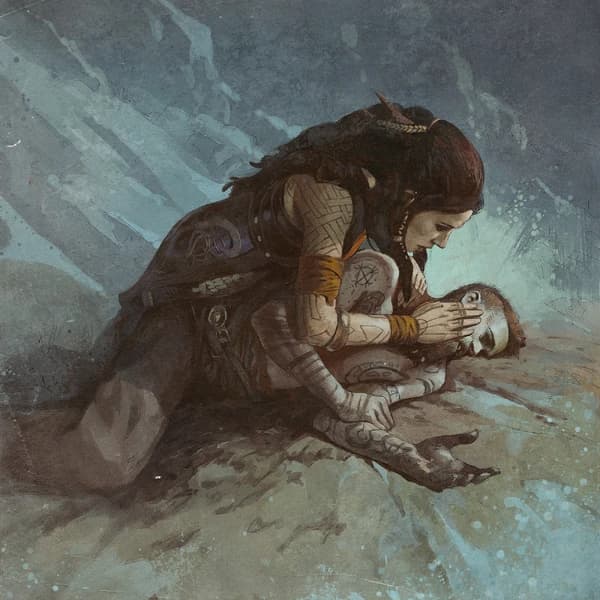
Baldur's Death: mistletoe and a broken neck
A mistletoe arrow broke Freya's spell of invulnerability over Baldur, and Kratos snapped his neck as he moved to strangle her. Fimbulwinter followed.

Baldur: the god who could feel nothing
Freya's spell made Baldur invulnerable but stripped every sensation from him, and a century of numbness drove him mad. Kratos killed him beside Thamur's corpse.

Fimbulwinter: the three-year winter
Fimbulwinter was the three-year winter that began with Baldur's death and ended with Ragnarok. Being magical, it weakened curses across the Nine Realms.

Freya
Freya was the Vanir goddess of love, war, and magic who married Odin to end the Aesir-Vanir War and was cursed to remain in Midgard. Once the Witch of the Woods, she aided Kratos and Atreus, swore vengeance after the death of her son Baldur, and at last turned her wrath on Odin himself.
Mentioned in1 entry
Get new articles in your inbox
No spam. New lore drops, canon conflicts, and deep dives only when they’re worth reading.
Some links on Lore Fortress are affiliate links. If you buy through them we earn a small commission at no extra cost to you.