Reavers: the last raiders of Midgard
The Reavers were savage human raiders, among the only living people left in Midgard after the Great Desolation emptied its roads. They survived by hunting, pillage, and in the worst cases cannibalism, and those who leaned on Seiðr magic were twisted into corrupted horrors, while their dead rose again as Hel-Walkers.
The Reavers were raiders of Midgard, among the very last living humans in a domain that had been all but emptied of its people. When the Great Desolation drove the Midgardians into hiding or flight, the Reavers stayed, surviving by hunting, reaving, pillage, and robbery in the harsh lands the rest of humanity had abandoned. Kratos and Atreus crossed paths with them again and again on their journeys, from cannibal gangs in the ruins of the Jötnar Marketplace to bands of Seiðr-corrupted marauders on the slopes of the mountain, and even death did not end them, for slain Reavers rose from Helheim as restless Hel-Walkers. (God of War (2018); God of War Ragnarök)
Survivors of the Great Desolation#
By the time Kratos and Atreus set out from their home in the Wildwoods, Midgard was a domain of empty roads. The Great Desolation had driven its people away, and most Midgardians had either fled the domain long before or vanished into hiding. Around the Lake of Nine, at the very heart of the domain of humans, the Reavers were the only living people who remained. Freya described what was left of that world plainly: "Once these roads were full of people. Now all have hid or fled, save for the reavers, savage enough to survive in such a world." (God of War (2018))
Savagery was the whole of their method. The Reavers endured where others could not by hunting, reaving, pillaging, and robbing whatever the wilderness and its few travelers still offered. Scarcity ruled every part of their existence, and where food and supplies ran out entirely, some bands crossed the last line left to them and turned to eating human flesh. Life among them was short and violent even before the monsters of the domain were counted, for Midgard's wilds threw trolls and beasts against them as readily as against anyone. In the River Pass, Kratos and Atreus witnessed the fire troll Brenna Dauði charge into a band of Reavers in a watery valley, and by the time father and son had brought the troll down, the surviving Reavers had fallen with it. (God of War (2018))
The cannibals of the Jötnar Marketplace#
The most infamous Reavers of the age were the gang that made its lair in the Jötnar Marketplace. When Kratos and Atreus entered the ruined market, the ravenous band ambushed them with butchery in mind. Yet the cannibals did not intend a quick kill. They feared what death had become in Midgard, where the slain could walk again as Hel-Walkers, and so they resolved to keep their captives breathing while they fed. "We'll have to keep them alive. Strip off their meat... a little at a time," they agreed among themselves. (God of War (2018))
The plan died with them. In the battle that followed, Kratos killed most of the gang, and Atreus killed one of them, the first human life the boy had ever taken. The killing shook Atreus badly, though he recovered quickly. The Reavers' own fear then proved well founded, for within seconds of their deaths the slain cannibals rose again as Hel-Walkers, and Kratos was forced to cut them down a second time, sending them back to Helheim. Two of these Reavers were known by name, Gunter and Sigmund, and both died twice at the edge of the same axe, once as living men and once as walking dead. (God of War (2018))
The Hræzla Farmaðr#
Not all Reavers were scattered scavengers. In Midgard there existed an organized Reaver clan called the Hræzla Farmaðr, a brotherhood that valued strength above everything and looked down on any it judged weak. Standing among them was earned, and only those who proved themselves through their skill at arms were counted worthy. (God of War (2018))
The clan's greatest raid was the plundering of Fafnir's Storeroom, the treasure vault where the hoarder Fafnir had gathered riches from all the realms. The Hræzla Farmaðr stripped it almost bare, carrying off nearly every treasure in the vault and leaving no more than a single chest behind. The victory destroyed them. During the raid the clan's leader was murdered by his own son, Vandrid, who drove a dagger into his father's back. The patricide won Vandrid nothing, for his fellow Reavers refused to accept him as their new leader, and mutiny broke out aboard the clan's longship. Vandrid's end was as brutal as his crime. He was impaled to the ship's mast, and his head was smashed in with a whetstone carried out of Niflheim. (God of War (2018))
Corrupted by Seiðr magic#
Some Reavers sought an edge in sorcery, and it cost them their humanity. Those who practiced Seiðr magic were corrupted by its overuse, growing more aggressive as the power altered their bodies. Unlike Draugr or Hel-Walkers, these corrupted Reavers were still living beings, but the magic had permanently mutated them and drained away most of what had been human in them, leaving creatures that were vicious, ruthless, and hostile almost by nature. Their skin turned black, yellow, and dark green, and spikes grew from their arms and heads. In battle they charged their enemies head on to draw first blood, hurled bolts of magic, and knitted their own wounds closed with sorcerous healing when they were badly hurt. Even their deaths were dangerous. When a corrupted Reaver was finally slain, the magic inside it turned unstable, and the creature screamed and glowed before its body burst apart in an explosion fierce enough to hurl the boy Atreus from his feet. (God of War (2018); God of War Ragnarök)
The strongest of these corrupted marauders were called Vikens, a name Faye herself had used for them, as Atreus remembered. Vikens favored great maces and long-handled cleavers with heavy blades, and they channeled Seiðr magic through their weapons, trailing streaks of power through the air with every swing. When a Viken slammed his mace into the ground, the burst of magic could poison as well as wound, and some wore armor besides, making them far harder to bring down than their lesser kin. Corrupted Reavers haunted even the mountain at the center of Midgard, where a band of them fought beside an Ogre against Kratos and Atreus during the pair's first climb, and in the years that followed they continued to plague the realms, carrying axes, cleavers, dual blades, and war hammers alongside their old swords and maces. (God of War (2018); God of War Ragnarök)
Death without rest#
For a Reaver, dying was rarely the end. Those who perished and were denied an afterlife became Hel-Reavers, restless and vengeful souls that gathered in Helheim and poured out to invade the living realms in numbers. The mightiest among them were the Hel-Reaver Lords, undead leaders who had been strong Reavers in life and returned from death stronger still. Atreus, who kept careful notes on such creatures, observed that these Hel-Walkers seemed to draw their power from the frost itself, which made his father's frozen axe all but useless against them and forced Kratos to fight them with his bare hands. In the end the Reavers embodied what Midgard had become in the last days before Fimbulwinter, a domain where the living were outnumbered by monsters and the dead, and where the only humans left standing were the ones savage enough to prey on everything else, including each other. (God of War (2018); God of War Ragnarök)
Sources
- GameGod of War (2018), Santa Monica Studio, 2018
- GameGod of War Ragnarök, Santa Monica Studio, 2022
Spotted a factual error or a primary source we missed? Email a correction. Every flagged claim gets reviewed.
Followed from this entry
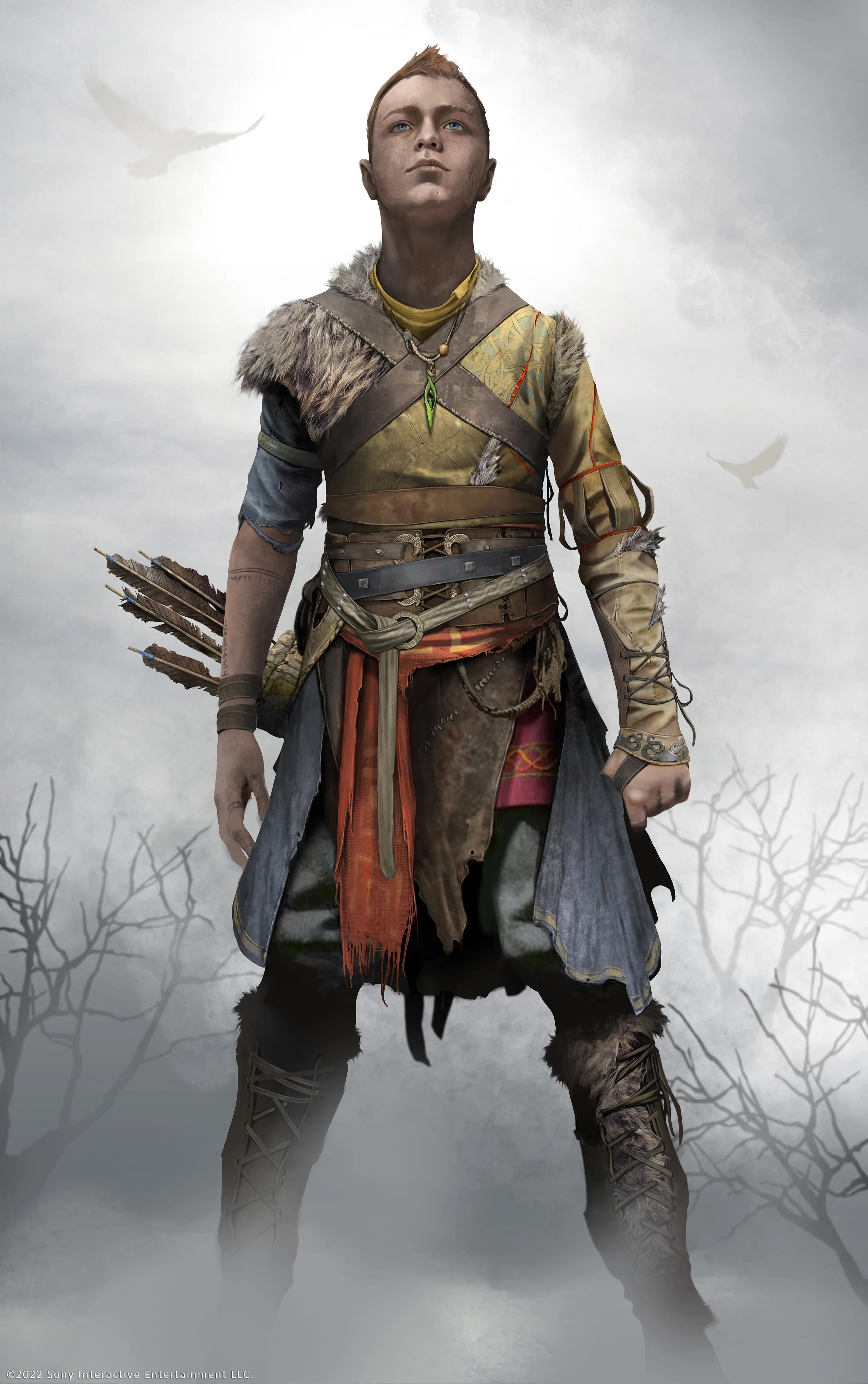
Atreus (Loki): Kratos's Son and the Truth of His Name
Atreus was the son of Kratos and the Jotunn Faye, born in Midgard and given the hidden name Loki. Across two great journeys he grew from a sickly boy into the prophesied champion of the Giants, the god of mischief whose fate was bound to Ragnarok.
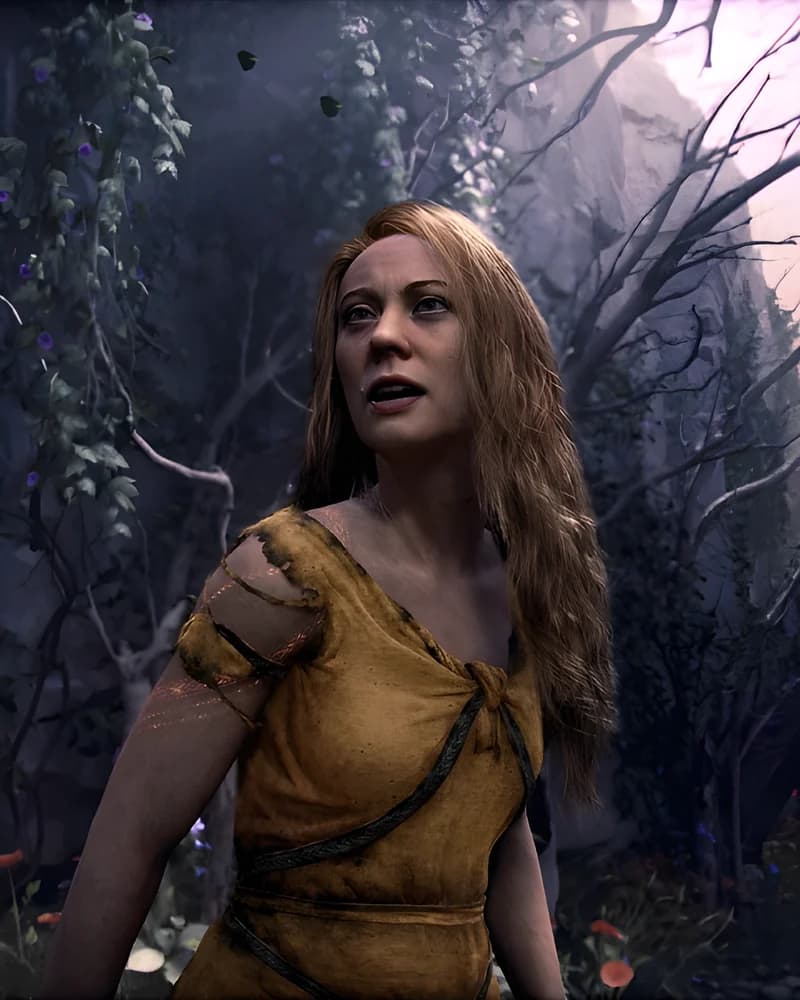
Faye: Laufey the Just, mother of Atreus
Faye was the Jotunn Laufey, wife of Kratos and mother of Atreus. Her foresight showed her own death, so she planned the route her ashes would take.
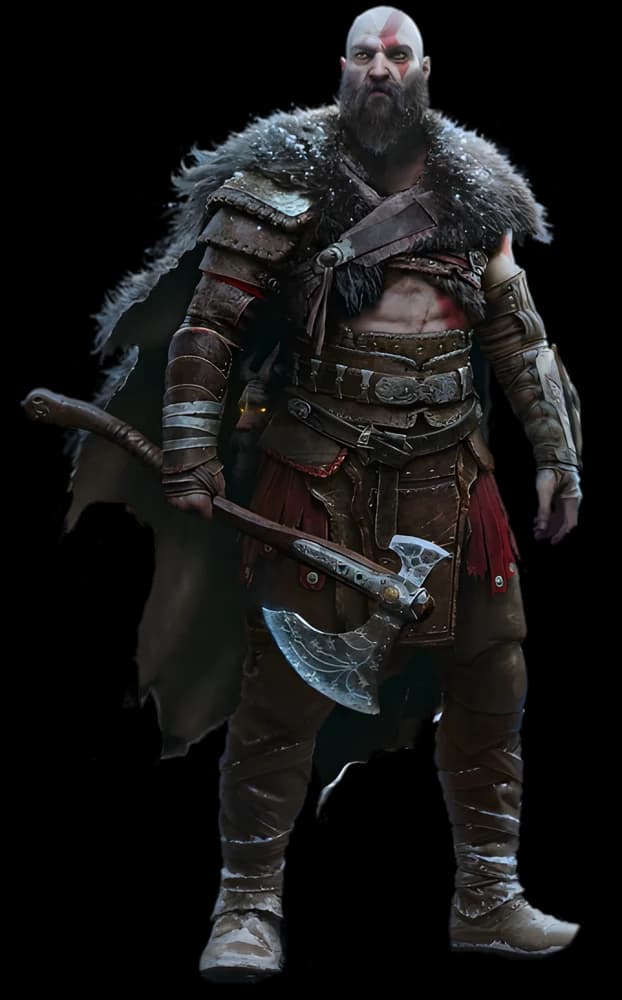
Kratos
Kratos was the demigod son of Zeus who rose from a Spartan general to the Greek God of War, destroyed the pantheon of Olympus in a quest for vengeance, and then began again in the Norse realms as a father seeking to leave his bloody past behind.
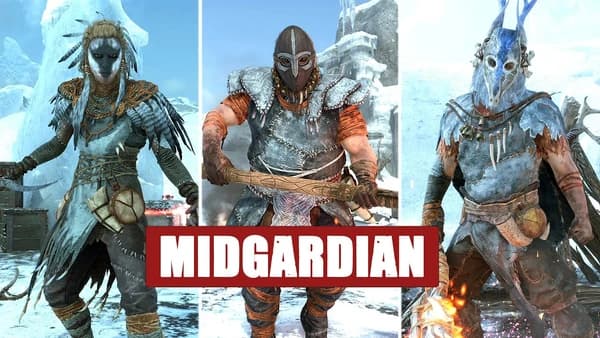
Midgardians
The Midgardians, also called Norsemen, were the mortal inhabitants of Midgard, divided into warring Nordic clans by their worship of the Aesir or the Vanir. Short-lived yet fearless, they sought glorious deaths in battle to claim a place among the honored dead.
Fafnir: the dwarf thief who became a dragon
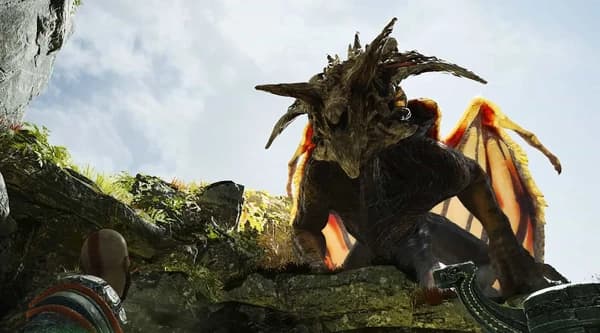
Fafnir Hreidmarson was a dwarf of Svartalfheim who ranged across the realms stealing treasure and made himself a nuisance to Aesir and Vanir alike. He was turned into a dragon by something he took, most likely a Vanir mirror, and was later chained in his own plundered storeroom by the dwarven king Mótsognir.

Freya
Freya was the Vanir goddess of love, war, and magic who married Odin to end the Aesir-Vanir War and was cursed to remain in Midgard. Once the Witch of the Woods, she aided Kratos and Atreus, swore vengeance after the death of her son Baldur, and at last turned her wrath on Odin himself.
Mentioned in1 entry
Get new articles in your inbox
No spam. New lore drops, canon conflicts, and deep dives only when they’re worth reading.
Some links on Lore Fortress are affiliate links. If you buy through them we earn a small commission at no extra cost to you.