Fafnir: the dwarf thief who became a dragon
Fafnir Hreidmarson was a dwarf of Svartalfheim who ranged across the realms stealing treasure and made himself a nuisance to Aesir and Vanir alike. He was turned into a dragon by something he took, most likely a Vanir mirror, and was later chained in his own plundered storeroom by the dwarven king Mótsognir.
Fafnir was born a dwarf in Svartalfheim and died a dragon in chains. Between those two states he spent a long career travelling the Nine Realms after anything that caught his eye, filling a storeroom in Midgard with plunder and earning a reputation among both the Aesir and the Vanir as a persistent nuisance. Mimir knew him by name and by habit. When Kratos and Atreus finally found him, he was a beast bound in his own house by the dwarven king Mótsognir, and the change had done nothing whatever to improve his temper. (God of War (2018))
A thief with a storeroom#
Fafnir was a dwarf like Brok and Sindri, and like them he was a maker's child, but the trade he took up was acquisition. He was known to travel to different realms after any treasure that interested him, and the practice made him notorious well outside his own kind. Mimir, who had spent long years at Odin's side and heard everything worth hearing, remembered Fafnir chiefly as a nuisance among the Aesir and the Vanir. (God of War (2018))
The proceeds went into a storeroom in Midgard, stocked with pieces carried back from every land he had visited. It did not stay full. A Reaver company called the Hræzla Farmaðr found the hoard and stripped it of nearly everything, leaving a single chest behind. Fafnir had spent a career taking things that belonged to other people, and in the end the same was done to him with far less ceremony. (God of War (2018))
One item out of that collection outlived the rest in memory. Fafnir had once ventured into Niflheim for a whetstone, a journey into the poisoned mists for a sharpening stone. Sindri later sent Kratos and Atreus to retrieve it, and remarked that it must have been quite a whetstone to be worth going in after. (God of War (2018))
The mirror and the change#
How a dwarf came to wear a dragon's body was never settled with certainty. Mimir offered one guess, that Fafnir's habit of lifting artefacts with magical properties had finally caught up with him, or that he had taken a trinket from the wrong Vanir goddess and been paid for it in kind. A lore marker at the place where he was later chained points at something more specific. Among the things Fafnir had stolen was a Vanir mirror, and a glance into it was enough to turn the one who looked into a dragon. (God of War (2018))
If that account is the true one, then Fafnir's ruin was the exact shape of his life. He took a thing he did not understand out of the hands of people who understood it perfectly, carried it home to his hoard, and looked at it. Whatever the trigger, the transformation was permanent, and it left one of the realms' more accomplished burglars in a body far too large for the work. (God of War (2018))
Chained in his own house#
Mótsognir, son of Ivaldi and self-made king of a stretch of Midgard, had gone hunting a legendary dwarven armour after a dream convinced him it would spare his people a gruesome death. Its making called for three ingredients, one of them harvested from dragons, and the king had three of them taken and bound. Fafnir was one. He was found and captured in his own former home, chained in the storeroom he had spent a lifetime filling. (God of War (2018))
Kratos and Atreus came upon him there, and Atreus was startled when Mimir identified the chained beast by name. He was freed, which Mimir treated with a certain dryness, observing that becoming a dragon had done nothing to improve Fafnir's terrible attitude. The other captives fared much the same way. Mótsognir himself had vanished at Konunsgard before his armour was ever finished, killed by Hel-Walkers behind a hidden room off his own throne. (God of War (2018))
The family that came apart#
Fafnir's father was Hreidmar, remembered in Svartalfheim for two things. He was one of its great armourers, and his sons all ended as dragons. When Odin wanted him to design armour for the Einherjar, Hreidmar agreed and then built a fatal flaw into the work, so that the breastplates snapped like stale bread at the lightest blow. About a dozen Einherjar died before the Allfather understood what had been done to him. Hreidmar was caught trying to escape through a Realm Travel gate and executed. (God of War (2018))
His brother Otr shared Fafnir's fate twice over, first in becoming a dragon and then in being taken on Mótsognir's orders. Otr broke his chains once, escaped, and turned back with the intention of burning Veithurgard and taking revenge on his captors. He was recaptured and bound to a magical anchor that could only be undone by destroying three runes cut into it. Kratos and Atreus disabled the anchor, and the dragon thanked them and flew off. Faye had known a dwarf called Otr and told his story to her son, though whether the dwarf in the tale and the dragon in the chains were the same creature was never established. Of the three sons of Hreidmar, Otr is the one who is not remembered turning into a dragon in any telling of the old story, and in the Nine Realms he did it anyway. (God of War (2018); Poetic Edda; Prose Edda)
What Fafnir was#
Nothing in the record casts Fafnir as a monster made by circumstance. He was disliked before he changed shape, and the change made him larger without making him different. Mimir's summary of him after his release, that the dragon was as unpleasant as the dwarf had been, is close to the whole of his character. What separates him from the ordinary run of the realms' beasts is that he chose his own destruction one theft at a time, and that his hoard, his shape and his captivity were all consequences of the same appetite. (God of War (2018))
Sources
- GameGod of War (2018), Santa Monica Studio, 2018
- BookProse Edda, Snorri Sturluson, around 1220
- BookPoetic Edda, Eddic poems, Codex Regius, 13th century
Spotted a factual error or a primary source we missed? Email a correction. Every flagged claim gets reviewed.
Followed from this entry
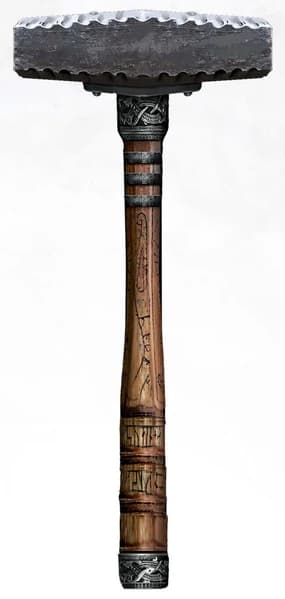
Ivaldi: the dwarf who poisoned Niflheim
Ivaldi was a dwarven alchemist who built a workshop in the realm of ice and learned to harness its frost, producing marvels that unsettled men and gods alike. When Odin moved against him he answered with lethal contrivances, reached for forces beyond his measure, and cursed the mists of Niflheim into a killing fog that took him as its first victim.
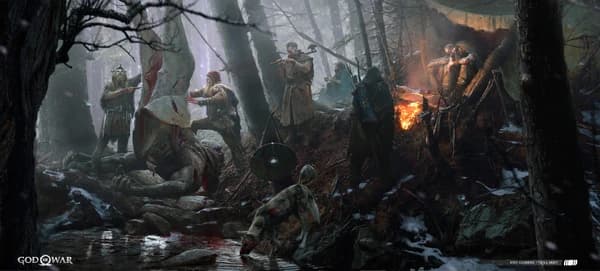
Reavers: the last raiders of Midgard
The Reavers were savage human raiders, among the only living people left in Midgard after the Great Desolation emptied its roads. They survived by hunting, pillage, and in the worst cases cannibalism, and those who leaned on Seiðr magic were twisted into corrupted horrors, while their dead rose again as Hel-Walkers.
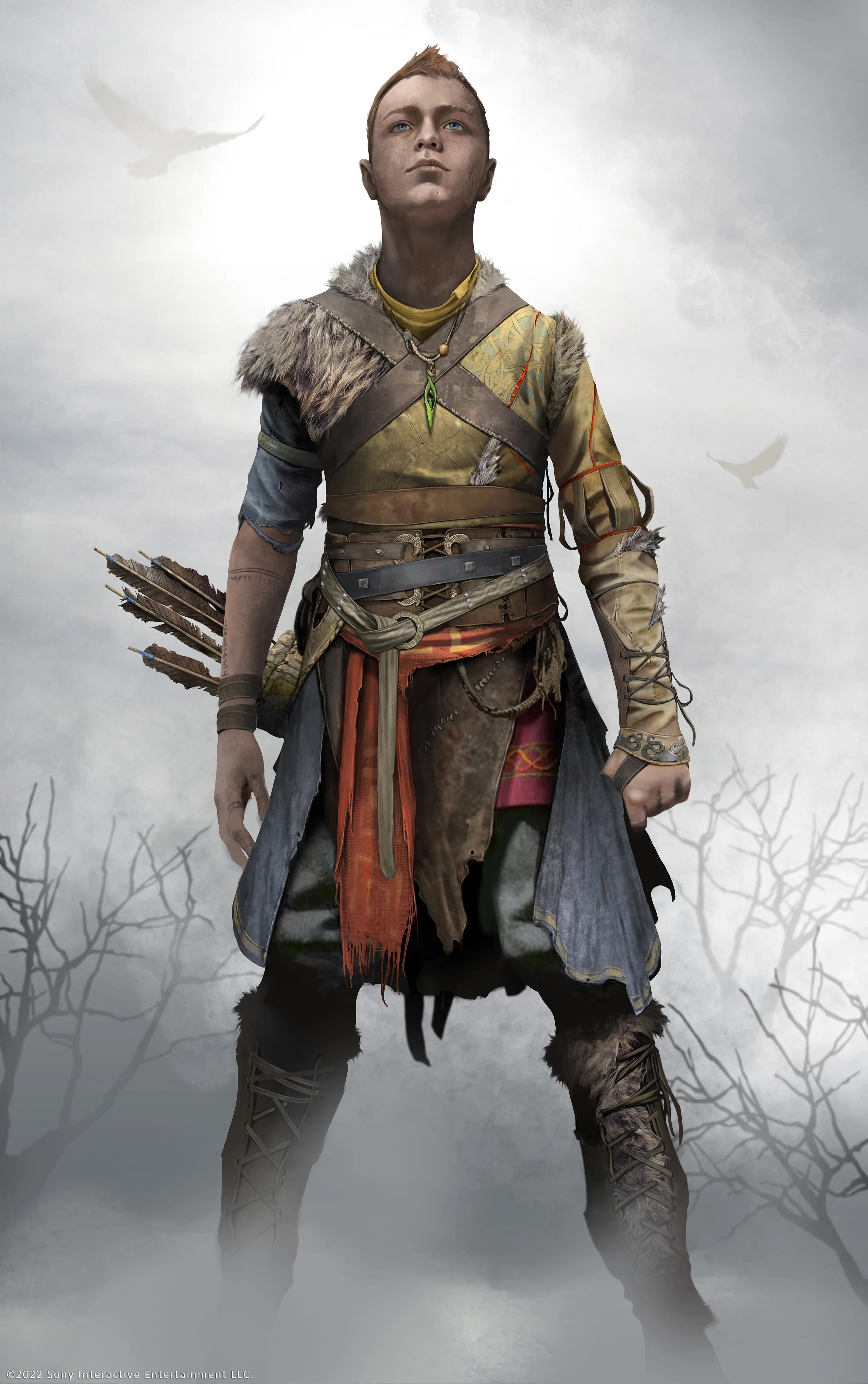
Atreus (Loki): Kratos's Son and the Truth of His Name
Atreus was the son of Kratos and the Jotunn Faye, born in Midgard and given the hidden name Loki. Across two great journeys he grew from a sickly boy into the prophesied champion of the Giants, the god of mischief whose fate was bound to Ragnarok.
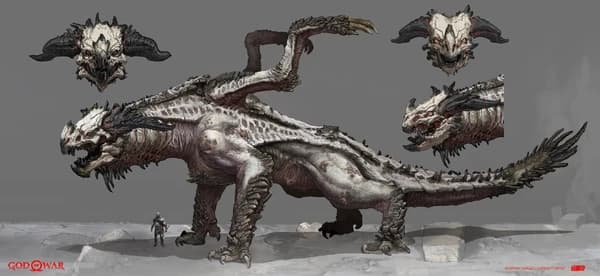
Dragons
Dragons were massive reptilian predators that roamed the Norse realms, breathing fire laced with lightning and capable of flight. Several distinct kinds existed, from the six-limbed Dragons of Midgard to the wingless Drakes of Alfheim.

Einherjar: Odin's army that never dies
Warriors who died an honourable death were raised again in Valhalla. Odin built them into a standing army for Ragnarok, reborn each time they fell.
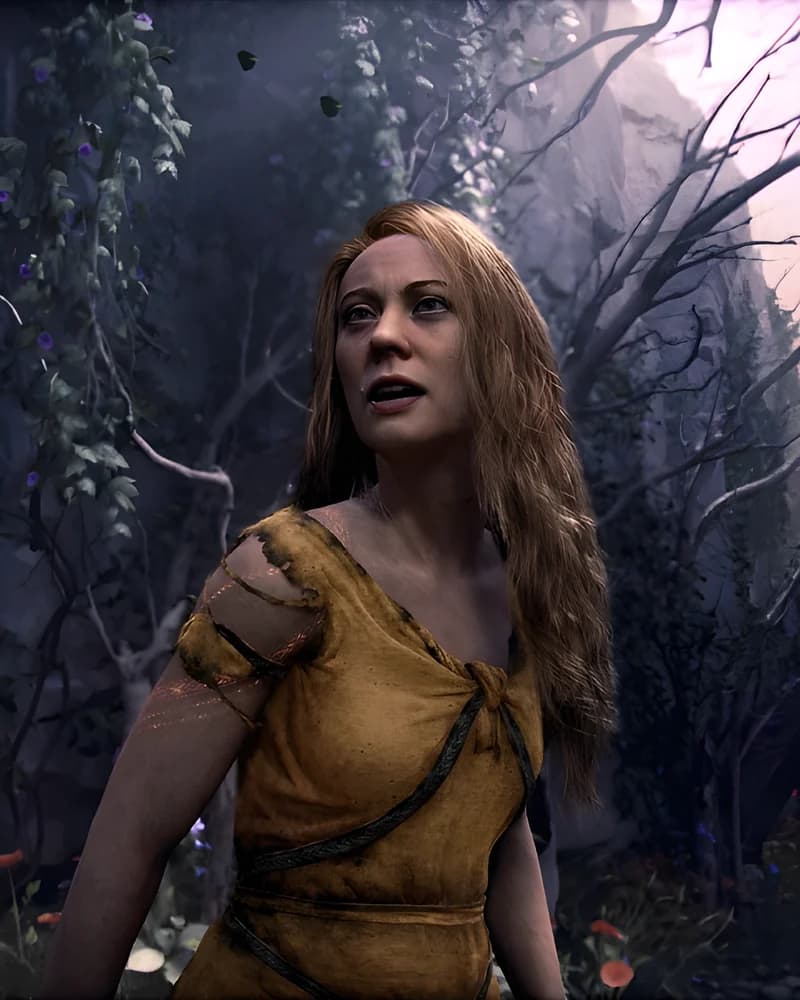
Faye: Laufey the Just, mother of Atreus
Faye was the Jotunn Laufey, wife of Kratos and mother of Atreus. Her foresight showed her own death, so she planned the route her ashes would take.
Mentioned in5 entries
Aurvangar Wetlands: gateway swamps of Svartalfheim
The Aurvangar Wetlands were the warm, geyser dotted swamps at the southern entrance of Svartalfheim, the main waterway to the Dwarven city of Nidavellir. Abandoned by the Dwarves and infested with Grim and Wretches, they were the first ground Kratos and Atreus walked in the Dwarven domain during their search for Tyr.
Dragons
Dragons were massive reptilian predators that roamed the Norse realms, breathing fire laced with lightning and capable of flight. Several distinct kinds existed, from the six-limbed Dragons of Midgard to the wingless Drakes of Alfheim.
Dwarves
The Dwarves were a race of short humanoids native to Svartalfheim, renowned across the Nine Realms as peerless smiths, builders, and alchemists. Their craft was sought by mortals and gods alike, though their service to Odin came at a bitter cost.
Reavers: the last raiders of Midgard
The Reavers were savage human raiders, among the only living people left in Midgard after the Great Desolation emptied its roads. They survived by hunting, pillage, and in the worst cases cannibalism, and those who leaned on Seiðr magic were twisted into corrupted horrors, while their dead rose again as Hel-Walkers.
Spirit: the restless dead of the Nine Realms
Spirits were the souls of the dead who could not rest until a final favor was fulfilled on their behalf, and alone among the undead they remained passive and neutral toward the living. Most lingered around the Lake of Nine in Midgard, though others were found in Svartalfheim, while Vanaheim held their fragmented counterparts, the Spectres, who kept the shapes they had worn in life.
Get new articles in your inbox
No spam. New lore drops, canon conflicts, and deep dives only when they’re worth reading.
Some links on Lore Fortress are affiliate links. If you buy through them we earn a small commission at no extra cost to you.