Spirit: the restless dead of the Nine Realms
Spirits were the souls of the dead who could not rest until a final favor was fulfilled on their behalf, and alone among the undead they remained passive and neutral toward the living. Most lingered around the Lake of Nine in Midgard, though others were found in Svartalfheim, while Vanaheim held their fragmented counterparts, the Spectres, who kept the shapes they had worn in life.
Spirits, called ghosts by some, were the souls of people who had died under all manner of circumstances yet could not rest, held back from the afterlife until some final favor was accomplished for them. They were the only undead of the Norse realms who remained passive and neutral toward the living. Most of them haunted the shores of the Lake of Nine in Midgard, where Kratos and Atreus met them during their travels, and each carried a burden that only the living could lift. (God of War (2018))
The Nature of the Restless Dead#
Death did not always carry a soul cleanly out of the world. Some of the dead, having perished with a matter left unresolved, remained behind as spirits, unable to rest or move on to an afterlife until a certain favor had been accomplished for them. What held each spirit varied as widely as the deaths that made them, an unavenged wrong, an unfreed crew, a lost belonging, a promise never kept, but the condition was always the same. Until the burden was lifted, the soul stayed bound to the place of its grief. (God of War (2018); God of War Ragnarök)
Among the many undead that stalked the Nine Realms, spirits stood apart. They alone were passive and neutral, raising no hand against the living and asking only for help. In form they were identical to the souls seen drifting through Helheim, pale and wispy shapes barely holding the outline of the people they had been. Only in Vanaheim did the dead linger differently, as Spectres who kept the full likeness of their living selves. (God of War (2018); God of War Ragnarök)
The Bound Dead of the Lake of Nine#
Most of the spirits of Midgard gathered around the Lake of Nine. After Jormungandr was awakened and his vast bulk lowered the waters of the lake, its drowned shores and islands lay open, and the spirits stranded there could at last be reached. A number of them remained stuck in Midgard together, unable to move on, their release tied to braziers standing cold at four far corners of the lake, on the Isle of Death, at Iron Cove, in the Forgotten Caverns, and beneath the Cliffs of the Raven. (God of War (2018))
As Kratos and Atreus crossed the lake on their travels, they ignited the braziers one by one. With each flame lit, the spirits held to those shores were freed from Midgard and allowed to pass on to the afterlife that had been denied them. (God of War (2018))
The Disciple Who Cursed Thor#
At Stone Falls waited the spirit of a man who had once been a disciple of Thor, and who had come to harbor a hatred of the Thunder God deeper than any worship he had ever offered. In life, Thor had taken advantage of his family's hospitality, and when the man's mother tried to make the drunken god leave her home, Thor murdered her. The son lived out the rest of his days in grief, and the grief soured into rage and hatred that followed him past death itself. (God of War (2018))
The spirit asked Kratos and Atreus to destroy the great statue of Thor that stood in the lake of Veithurgard, and gave the pair his blessing to take what lay in his father's grave. When the statue was brought down, the disciple offered the father and son his gratitude and departed, leaving to begin his own quest for vengeance. (God of War (2018))
The Captain and His Hel Bound Crew#
Outside a cave in the Forgotten Caverns, beside the tower that faced Svartalfheim, lingered the spirit of a broken sea captain, thought by some to have been named Erik. His sorrow was of his own making. Through his conduct in life, his crew had been condemned to rise as Hel-Walkers, the violent walking dead of the Norse world, and the wrecks of his ships lay scattered across the Lake of Nine. (God of War (2018))
The captain begged Kratos and Atreus to free his men from their undead state. The pair hunted the Hel-Walker crews among the wreckage strewn from the Isle of Death to Iron Cove and the shadow of the tower facing Niflheim, and put the captain's men to rest. (God of War (2018))
The Lie of Gullveig#
Not every spirit spoke the truth. Along the Mason's Channel, beside the water gate that led toward Thamur's corpse, a spirit begged Kratos and Atreus to find and collect the scattered bones of Gullveig, a woman who may have been his wife. He claimed that she held the power to reunite the dead with those they had lost. The bones lay strewn across the lake, her skull below the tower facing Svartalfheim, her hands at the Ruins of the Ancient and near the door behind which the great serpent's kin Fafnir was kept. (God of War (2018))
When the bones were gathered, the spirit called out for Gullveig to awaken before he departed. What rose was no grieving wife but a Revenant, a twisted thing that had to be destroyed. After Gullveig was slain, Atreus turned his anger on himself for having believed in nothing but a lie. Kratos told his son to take the deception as a lesson, and Atreus swore that he would never place his trust in spirits again. (God of War (2018))
The Wayfarers of Svartalfheim#
Spirits were not confined to Midgard. In Svartalfheim, home of the dwarves, two more of the restless dead were found in later years, the souls of a father and his son, both sailors. The pair had traveled to the dwarven lands to seek treasure and become rich, and the venture sealed their fate. Death separated them, the elder wayfarer coming to rest at Dragon Beach and the younger at Alberich Island. (God of War Ragnarök)
When their remaining burdens were at last resolved, each of the two moved on from the world, holding to the hope that father and son would find one another again in Helheim. (God of War Ragnarök)
The Spectres of Vanaheim#
Vanaheim held a different kind of lingering dead, the Spectre. Where a spirit wore the same faint, wispy shape as the souls of Helheim, a Spectre kept the form it had possessed in life, recognizable as the person it had been, and each bore a name of its own. When first encountered, the Spectres were wreathed in swirling elemental energies, the outward sign that their souls had been fragmented. (God of War Ragnarök)
Eight Spectres were known. Many of them were casualties of the war that wracked Vanaheim, bound to belongings lost in the fighting: Magnus behind the dam near the Jungle, who sought a stein; Andor in the Jungle, bound to a toy; Runa on the Plains, whose scroll had been torn apart; Holger in the Crater, before the frozen lightning bolt, missing a brooch; and Skarde at the mouth of the Sinkholes, tied to the halves of an hourglass. Gunhild lingered at the Cliffside Ruins, and Mari waited at Pilgrim's Landing for a cure that had come too late. (God of War Ragnarök)
The Spectre Astrid was found in Noatun's Garden. In life she had been a Vanir worshiper of Freya, and out of respect and love for her Queen she had made the glorious garden her life's work, keeping its plants in bloom so that Freya would find it flowering when she one day returned to her rightful home in Vanaheim. Once their fragmented souls were made whole and their unfinished matters laid to rest, the Spectres, like the spirits of Midgard, were freed at last to leave the world of the living behind. (God of War Ragnarök)
Sources
- GameGod of War (2018), Santa Monica Studio, 2018
- GameGod of War Ragnarök, Santa Monica Studio, 2022
Spotted a factual error or a primary source we missed? Email a correction. Every flagged claim gets reviewed.
Followed from this entry
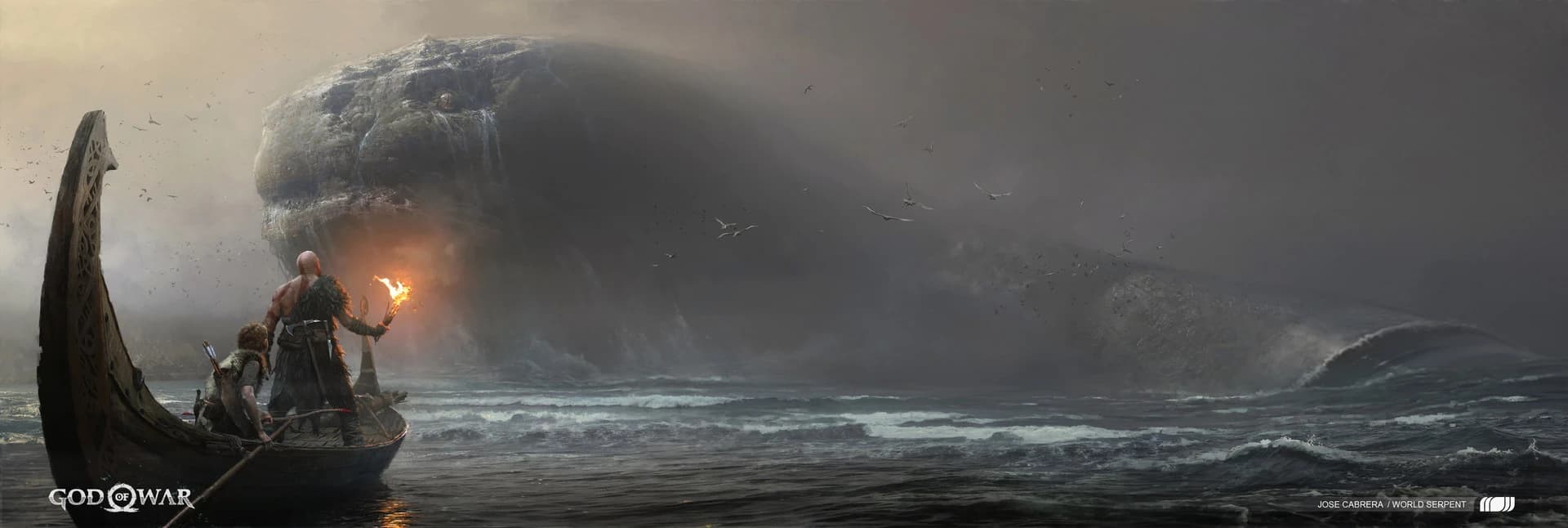
Jormungandr: the World Serpent of Midgard
Jormungandr was so vast he encircled all of Midgard within the Lake of Nine. Thor struck him so hard at Ragnarok that he was hurled backward through time.
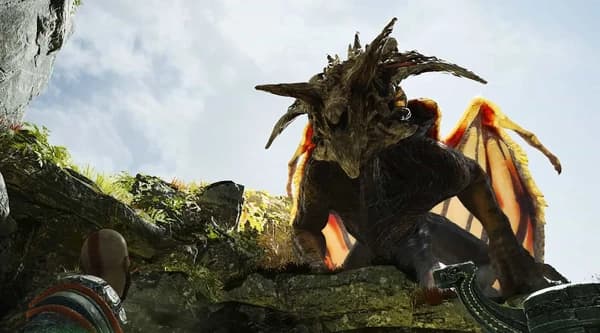
Fafnir: the dwarf thief who became a dragon
Fafnir Hreidmarson was a dwarf of Svartalfheim who ranged across the realms stealing treasure and made himself a nuisance to Aesir and Vanir alike. He was turned into a dragon by something he took, most likely a Vanir mirror, and was later chained in his own plundered storeroom by the dwarven king Mótsognir.
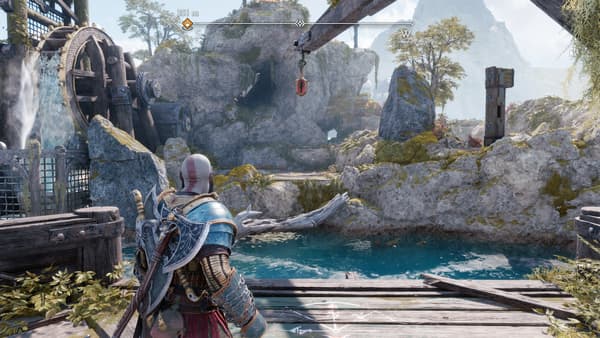
Alberich Island: deserted shore of the Bay of Bounty
Alberich Island was a small shoreline in the far north of Svartalfheim's Bay of Bounty, abandoned by the Dwarves and overgrown with dry vegetation. Kratos, Atreus, and Mimir passed its shore during their voyage across the bay, and its heights held a rift in Yggdrasil, the gravestone of a berserker, and a fragment of the Amulet of Yggdrasil.
The Afterlife
The Afterlife was where the dead passed, called the Underworld among the Greeks and Helheim among the Norse. Existing as physical places as much as spiritual ones, the various afterlives were ruled by powerful gods who judged the dead and shepherded their souls, with a different realm awaiting those who died within each mythology.
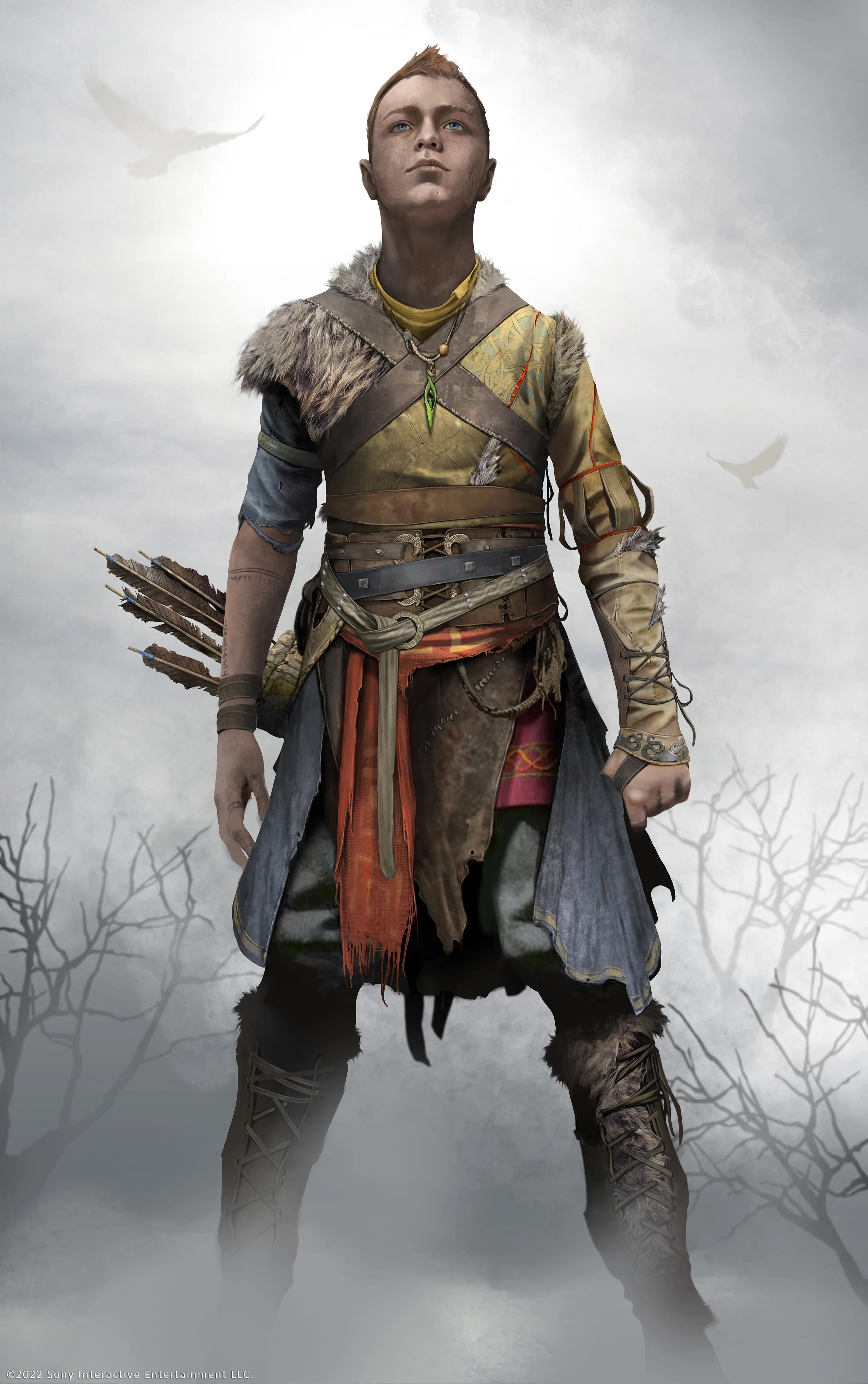
Atreus (Loki): Kratos's Son and the Truth of His Name
Atreus was the son of Kratos and the Jotunn Faye, born in Midgard and given the hidden name Loki. Across two great journeys he grew from a sickly boy into the prophesied champion of the Giants, the god of mischief whose fate was bound to Ragnarok.

Freya
Freya was the Vanir goddess of love, war, and magic who married Odin to end the Aesir-Vanir War and was cursed to remain in Midgard. Once the Witch of the Woods, she aided Kratos and Atreus, swore vengeance after the death of her son Baldur, and at last turned her wrath on Odin himself.
Mentioned in1 entry
Get new articles in your inbox
No spam. New lore drops, canon conflicts, and deep dives only when they’re worth reading.
Some links on Lore Fortress are affiliate links. If you buy through them we earn a small commission at no extra cost to you.