Barracks: mustering hall of terran infantry
The barracks housed and trained all terran infantry, a mobile structure that could cross great distances to reach new hot zones. Pitched by the Dominion as a safe and comfortable staging point, it was in truth a sterile warren of bunks, deployment ramps, and resocialization tanks that unnerved many of the recruits who lived inside it.
The barracks was the structure that housed and trained all terran infantry in the Koprulu sector. Like the command center, it was a mobile building, able to traverse great distances in order to reach new hot zones or deployment centers, and under the Terran Confederacy barracks were standard structures at most bases, built to a universal design. From its deployment room mustered the marines who formed the backbone of every terran army, together with firebats, medics, and, in later years, marauders and reapers. The Terran Dominion considered the barracks a safe, comfortable staging point for marines on the field, a statement that many of the marines quartered inside it vehemently disagreed with. (StarCraft; StarCraft: I, Mengsk; StarCraft: Brood War; StarCraft II: Wings of Liberty; StarCraft Field Manual)
Role among the terrans#
Every terran fighting force in the Koprulu sector was built on infantry, and every terran infantryman passed through a barracks. The structure served a double purpose: it was a home, holding the bunks, belongings, and mess facilities of the soldiers stationed within it, and it was a training and deployment hub from which those soldiers marched to war. Marines made up the bulk of its occupants, but the barracks also turned out flame-throwing firebats and the combat medics who kept the infantry alive, and where the appropriate covert facilities supported it, even ghosts could be prepared for the field from a barracks. In the years after the Brood War, the heavily armored marauders and the jump-pack equipped reapers joined the roster of troops that mustered from its deployment room. (StarCraft; StarCraft: Brood War; StarCraft II: Wings of Liberty; StarCraft: Speed of Darkness)
Mobility defined the design as much as capacity did. Like the command center that anchored terran outposts, the barracks could travel great distances to reach new hot zones or deployment centers, so that wherever a terran army established itself, its infantry housing arrived with it rather than waiting to be built from nothing. Under the Confederacy this made the barracks a fixture of nearly every base in terran space, and its universal design meant a marine transferred from one posting to another found the same rooms, the same ramps, and the same routines waiting. (StarCraft; StarCraft: I, Mengsk)
The Terran Dominion, which inherited both the structures and the marines inside them, publicly described the barracks as a safe and comfortable staging point for troops in the field. The men and women who actually slept in its bunk rooms tended to disagree, and vehemently. (StarCraft Field Manual)
Interior layout#
The interior of a barracks was sterile, and the structure divided into a set of standard sections. The bunk room held the bunks of the soldiers residing in the barracks, along with places for them to stow their belongings. It was quarters in the plainest sense, with little in it beyond a bed and a locker for each occupant. (StarCraft II: Legacy of the Void; StarCraft: Speed of Darkness)
The deployment room sat at the entrance and exit of the structure, with a ramp leading down from the doorway to the ground outside. Weapon and equipment racks lined the room so that troops could arm themselves on the way out. Standard protocol called for deployments to be green lighted: when the signal came and the door slid open, a platoon or squad surged out of the barracks as one, down the ramp and into the field. (StarCraft: Speed of Darkness)
The galley was cramped but efficient. Food and drink dispensers stood lined up against the back wall, with tables set out at which the soldiers could consume what the machines produced. No one mistook it for fine dining, though at least one force in the sector saw fit to improve on the arrangement for its senior ranks. (StarCraft: Speed of Darkness; StarCraft II: Legacy of the Void)
The resocialization chamber#
The final section of a standard barracks was its darkest, in both senses. The resocialization chamber consisted of a darkened room holding rows of resocialization tanks, and the sight of it was enough to daunt new recruits, some of whom passed out when first confronted with it. (StarCraft: Speed of Darkness)
The tanks were the endpoint of one of the Confederacy's grimmest institutions. Neural resocialization reprogrammed criminals and prisoners into obedient soldiers, and the practice was widespread enough that entire Confederate marine companies were composed almost wholly of resocialized troops. When Arcturus Mengsk served as a lieutenant under Captain Angelina Emillian, his six-marine section was the only group of non-resocialized soldiers in her company, and Emillian herself carried a scar from a prison riot on Chau Sara that broke out while her troops were collecting prisoners marked for conversion into resocialized troops. The Dominion carried the practice forward after the Confederacy fell, resocializing men such as Theodore Pierce so that they would serve the new regime. For a fresh recruit walking the corridors of a barracks, the rows of tanks were a standing reminder of what the state could do to a mind, and their placement inside the same structure where soldiers ate and slept did nothing to soften the effect. (StarCraft: I, Mengsk; StarCraft II: Nova Covert Ops)
Variants and refinements#
The barracks changed with the wars it served. By the Second Great War, Remedius Medical Systems had developed a medpack storage facility that could be placed within a barracks without the need for an attached tech lab, letting infantry draw medical supplies directly from their own quarters. Barracks of that era could also couple with an attached tech lab or a reactor, though never both at once, extending the structure's function to match the demands of a given deployment. (StarCraft II: Wings of Liberty)
Individual forces put their own stamp on the design. The Dominion Special Forces utilized a liquid nitrogen cooling system for their barracks, which gave the structures an eerie blue glow. The Knights of Tyrador, a planetary defense force, outfitted their barracks with a five-star robotic kitchen and a full-service spa, though those features were reserved for officers while the common soldiery ate from the same dispensers as everyone else. Whatever the livery or the luxuries, the structure beneath remained the same building the Confederacy had standardized across its worlds: a mobile, sterile hall where terran infantry slept, armed, and waited for the green light. (StarCraft II: Legacy of the Void)
Sources
- GameStarCraft, Blizzard Entertainment, 1998
- GameStarCraft: Brood War, Blizzard Entertainment, 1998
- GameStarCraft II: Wings of Liberty, Blizzard Entertainment, 2010
- GameStarCraft II: Legacy of the Void, Blizzard Entertainment, 2015
- GameStarCraft II: Nova Covert Ops, Blizzard Entertainment, 2016
- BookStarCraft: Speed of Darkness, Tracy Hickman, 2002
- BookStarCraft: I, Mengsk, Graham McNeill, 2008
- BookStarCraft Field Manual, Rick Barba, Blizzard Entertainment and Insight Editions, 2015
Spotted a factual error or a primary source we missed? Email a correction. Every flagged claim gets reviewed.
Followed from this entry

Neural resocialization: the manufacture of obedient soldiers
Neural resocialization was the Terran Confederacy process for turning criminals into loyal troops by layering false memories over their own and enforcing obedience. The Terran Dominion inherited it, refined it, and used it on ghosts and spectres, until Emperor Valerian Mengsk announced its abolition.
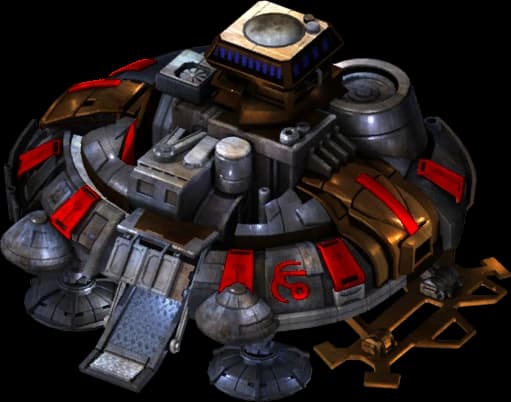
Command Center: mobile heart of every terran outpost
The command center was the core structure of every terran outpost, a mobile resource processor that manufactured SCVs and anchored new colonies wherever minerals and vespene gas were plentiful. Heavily armored and able to fly on jump jets, it evolved from a Confederate prospecting platform into a fortified military headquarters.

Arcturus Mengsk
Arcturus Mengsk led the Sons of Korhal to bring down the Terran Confederacy and crowned himself Emperor of the Terran Dominion, ruling through cunning, propaganda, and brute force until his death during the Second Great War.

Brood War: Kerrigan's war for the Swarm
The Brood War was a zerg civil war between Kerrigan and the cerebrate Daggoth over who would succeed the Overmind. The UED invaded from Earth at the same time.
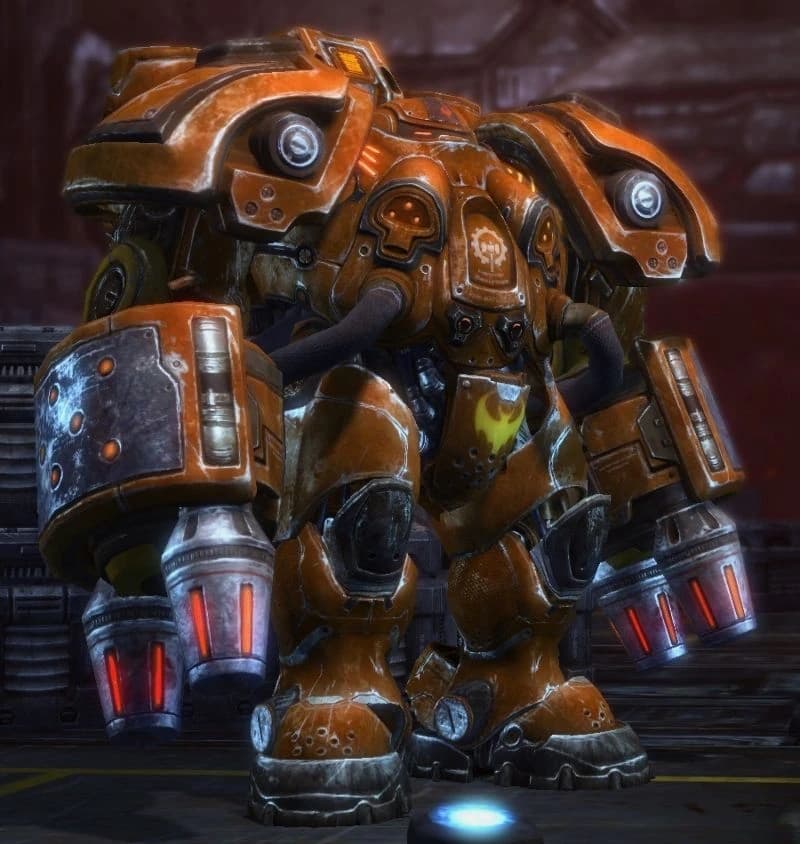
Firebat
The firebat was a terran close-quarters infantry trooper armed with arm-mounted flamethrowers, fielded from the Confederacy through the Dominion and drawn largely from resocialized criminals and pyromaniacs.

Ghost
Ghosts were the feared psionic covert operatives of the terran sector, drawn from psychically gifted individuals, trained from infancy as assassins, and used to guide nuclear strikes for the Confederacy and the Dominion.
Mentioned in2 entries
Every Terran Unit in StarCraft and StarCraft II, Explained
Every terran unit from StarCraft, Brood War and the three StarCraft II campaigns, sorted into infantry, vehicles and starships. Each entry covers who built it, what it was for and which games it appears in.
Factory: armored heart of terran vehicle production
The factory was the automated terran structure that served as the primary production center for ground vehicles, structures, and ammunition. Behind walls of reinforced neosteel it housed elite vehicle crews in first class quarters, assembled war machines with interior cranes, and could lift off on ventral thrusters to follow the front wherever it moved.
Get new articles in your inbox
No spam. New lore drops, canon conflicts, and deep dives only when they’re worth reading.
Some links on Lore Fortress are affiliate links. If you buy through them we earn a small commission at no extra cost to you.