Factory: armored heart of terran vehicle production
The factory was the automated terran structure that served as the primary production center for ground vehicles, structures, and ammunition. Behind walls of reinforced neosteel it housed elite vehicle crews in first class quarters, assembled war machines with interior cranes, and could lift off on ventral thrusters to follow the front wherever it moved.
The factory was a terran production structure, the automated heart of armored warfare in the Koprulu sector. It acted as the primary production center for ground vehicles, and its lines also turned out structures and ammunition for the forces it supplied. Raised by SCV work crews at bases across terran space, the factory stood behind walls of reinforced neosteel that made it one of the most survivable buildings in any terran base, and like the command center and barracks beside it, the structure was never truly rooted to the ground: ventral thrusters allowed a factory to lift off and relocate wherever the fighting demanded. From the era of the Terran Confederacy through the Terran Dominion and the wars that followed, nearly every vulture, siege tank, and goliath that took the field began its service rolling off a factory line. (StarCraft; StarCraft II: Heaven's Devils; StarCraft: Speed of Darkness; StarCraft Field Manual)
Place in terran industry#
Terran armies won their ground wars with machines, and the machines came from the factory. Whatever a force called itself, Confederate, Dominion, rebel, or mercenary, its armored strength traced back to the same automated structure, built to put war machines into the field as fast as raw material could be fed into it. Standard base doctrine placed the factory after the barracks in a settlement's construction order, and heavier industry followed it in turn: armories and starports operated in support of bases whose factory lines were already running. (StarCraft)
The structure's role reached beyond its own products. A ghost academy could not assemble nuclear missiles without a working factory to support the effort, which tied even the most feared weapons in the terran arsenal back to the same industrial floor that turned out patrol bikes and tanks. Between vehicles, ammunition, and the fabrication of structures, the factory sat at the center of nearly everything a terran army built, fired, or drove. (StarCraft II: Wings of Liberty; StarCraft II: Heaven's Devils; StarCraft: Speed of Darkness)
Construction and design#
The factory was engineered to survive on a battlefield, not merely near one. Its walls were made of reinforced neosteel, which made the structure one of the most survivable in any terran base, capable of standing through bombardment that flattened lighter buildings around it. The fuel supply reservoirs inside were heavily reinforced as well, a necessary precaution in a building that stored enough fuel to feed an armored column and could expect to take fire while doing so. (StarCraft Field Manual)
Inside, the factory was as much a workshop as a fortress. Interior construction cranes aided in the lifting and assembly of machinery, swinging hulls, turrets, and drive sections into place along the line. The structure was automated, requiring no army of laborers to keep its lines moving, but it was not empty of people: the factory maintained first class housing for the elite crews of the tanks, walkers, and other mechanical units it produced. The men and women who would drive its machines into battle lived beside the lines that built them, quartered in conditions considerably better than those endured by the infantry in the barracks next door. (StarCraft Field Manual)
Like much of terran architecture, the factory refused to stay put. Ventral thrusters allowed the entire structure to lift off, cross to a new position, and set down again, so that an army on the move never outran its own vehicle production. A terran advance could bring its industry with it, landing factories on freshly taken ground and rolling out replacement armor within reach of the front. (StarCraft; StarCraft Field Manual)
Assembly lines of the Great War#
In the era of the Confederacy and the Great War, the factory's signature product was the vulture hover cycle, the fast raider and patrol vehicle that screened terran positions across the sector. The basic line handled vultures on its own; heavier work took an expansion. Fitted with a machine shop annex, a factory could produce the siege tank, the artillery piece that defined terran defensive warfare, and the machine shop's facilities also enhanced the offensive weapons and speed of the vehicles that passed through it. With the support of an armory, factory lines extended to the goliath, the walking gun platform that gave terran ground forces an answer to threats in the air. (StarCraft)
That trio of vulture, siege tank, and goliath carried terran armored doctrine through the Great War and the Brood War, and every one of them came out of the same building. A commander reading a factory's output could read the shape of the army it served. (StarCraft; StarCraft: Brood War)
The Dominion era and the Second Great War#
By the time of the Second Great War, the factory had been refined alongside the arsenal it produced. The structure of that era was compatible with two forms of attached annex, the tech lab and the reactor, though not both at once, and the choice determined what its line could handle. Its roster of products had grown with the times: the hellion and its transforming hellbat configuration, the burrowing widow mine, the cyclone with its lock on weapon system, and, with a tech lab and armory support, the massive thor assault walker. Older and more specialized designs stayed within the factory's reach as well. The forces of Jim Raynor kept vultures and goliaths in production during their war against the Dominion, along with the diamondback hover tank and the predator combat walker. (StarCraft II: Wings of Liberty; StarCraft II: Heart of the Swarm; StarCraft II: Legacy of the Void)
The middle of the Second Great War brought the factory one of its stranger improvements. At Project Blackstone, the research of Redell Quinton did away with the latrine housed within factories. The reclaimed space gave factory lines the capacity to manufacture siege tanks with siege mode already installed, straight off the line, without the need for further facilities in the tech lab. It was an unglamorous piece of engineering that removed an entire step between the assembly floor and the battlefield, and it stood among the more practical results to come out of Project Blackstone. (Project Blackstone)
Variants and corrupted lines#
Individual forces fielded the factory in their own patterns. The Dominion Special Forces utilized the R36 series of factories, which featured sturdier anchors, a reinforced foundation, and a bulletproof coat of paint, hardening an already durable structure for service in the sector's worst warzones. Other formations marked their factories in their own liveries, from the covert operations units of Nova Terra to the Royal Guard of the Dominion and the Knights of Tyrador. (StarCraft II: Legacy of the Void; StarCraft II: Co-op Missions)
Not every factory remained in terran hands. The infested forces under Alexei Stukov had access to infested factories, terran production lines consumed and repurposed by zerg infestation, which created infested vehicles in place of clean terran machines. The corruption of the structure was a measure of its importance: even the Swarm found the terran factory worth keeping in service, its lines still running under a new and hungrier management. (StarCraft II: Co-op Missions)
Sources
- GameStarCraft, Blizzard Entertainment, 1998
- GameStarCraft: Brood War, Blizzard Entertainment, 1998
- GameStarCraft II: Wings of Liberty, Blizzard Entertainment, 2010
- GameStarCraft II: Heart of the Swarm, Blizzard Entertainment, 2013
- GameStarCraft II: Legacy of the Void, Blizzard Entertainment, 2015
- GameStarCraft II: Co-op Missions, Blizzard Entertainment, 2016
- BookStarCraft Field Manual, Rick Barba, Insight Editions, 2015
- BookStarCraft: Speed of Darkness, Tracy Hickman, Pocket Books, 2002
- BookStarCraft II: Heaven's Devils, William C. Dietz, Gallery Books, 2010
- WebProject Blackstone, Blizzard Entertainment, StarCraft II website, 2012
Spotted a factual error or a primary source we missed? Email a correction. Every flagged claim gets reviewed.
Followed from this entry
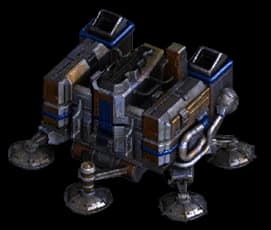
Barracks: mustering hall of terran infantry
The barracks housed and trained all terran infantry, a mobile structure that could cross great distances to reach new hot zones. Pitched by the Dominion as a safe and comfortable staging point, it was in truth a sterile warren of bunks, deployment ramps, and resocialization tanks that unnerved many of the recruits who lived inside it.
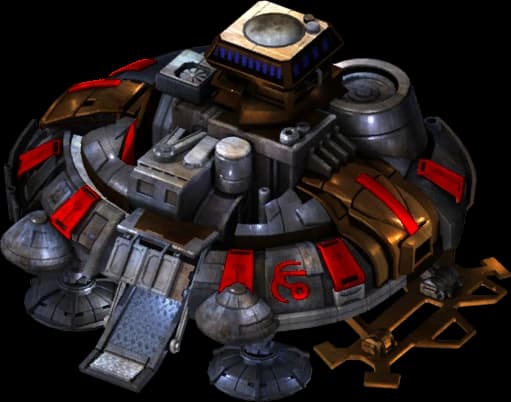
Command Center: mobile heart of every terran outpost
The command center was the core structure of every terran outpost, a mobile resource processor that manufactured SCVs and anchored new colonies wherever minerals and vespene gas were plentiful. Heavily armored and able to fly on jump jets, it evolved from a Confederate prospecting platform into a fortified military headquarters.
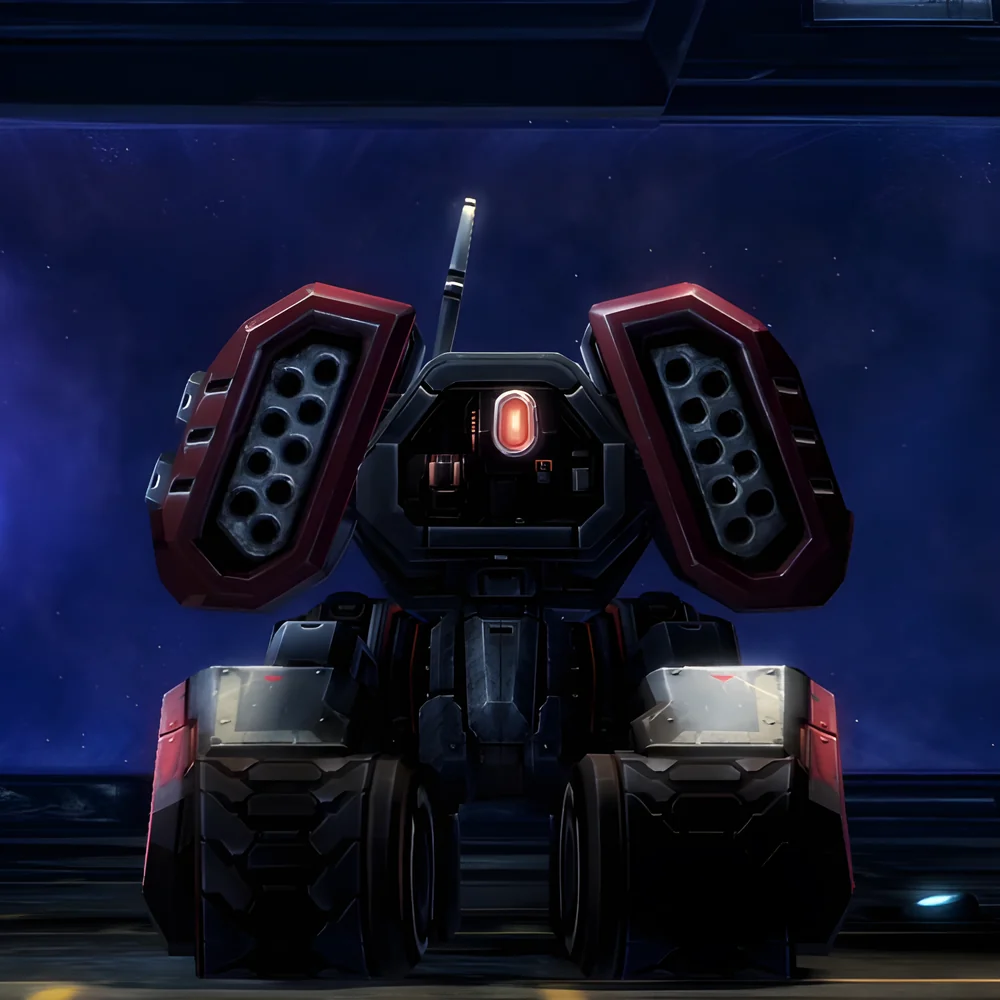
Cyclone
The cyclone was a fast terran assault vehicle developed by the Dominion to keep personnel out of harm's way, armed with twin Typhoon missile pods and a lock-on system that let it fire on the move. It began as a robotic drone before becoming a piloted machine.
Diamondback
The diamondback was a fast terran hover armored fighting vehicle able to fire on the move. First prototyped by the Confederacy, it was revived by Raynor's Raiders, who used its speed to hunt Dominion trains on Tarsonis.
Goliath
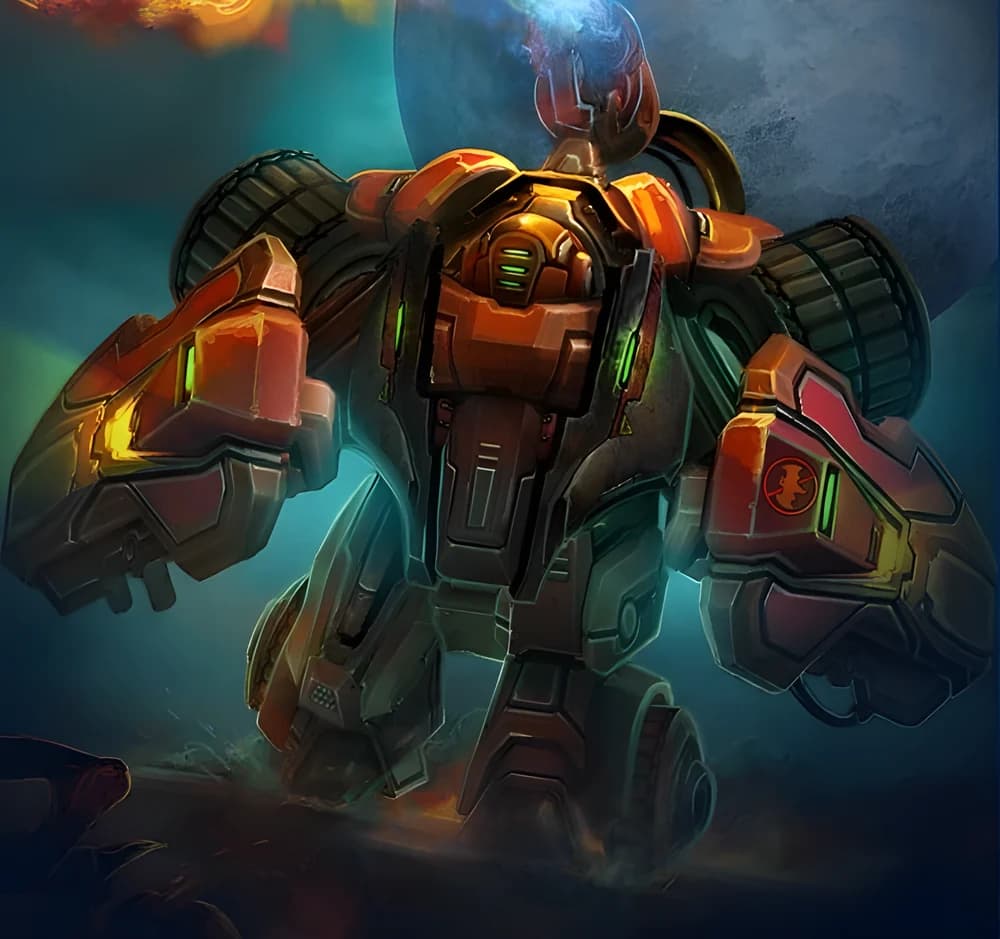
The goliath was a bipedal terran combat walker armed with twin autocannons and Hellfire missiles. Built for both ground and air defense, it served the Confederacy, the Sons of Korhal and the Terran Dominion across the sector's major wars.
Hellbat
The hellbat, formerly called the battle hellion, was a transforming terran flame tank built by the Terran Dominion as an upgrade to the hellion. It could reconfigure between a fast vehicle and an armored mechanized walker armed with a napalm-spraying flamethrower.
Mentioned in2 entries
Every Terran Unit in StarCraft and StarCraft II, Explained
Every terran unit from StarCraft, Brood War and the three StarCraft II campaigns, sorted into infantry, vehicles and starships. Each entry covers who built it, what it was for and which games it appears in.
Odin
The Odin was a Terran Dominion heavy combat walker and the prototype from which the smaller thor was derived. Developed in secret on Korhal, it was stolen by Raynor's Raiders and used to expose Arcturus Mengsk's war crimes.
Get new articles in your inbox
No spam. New lore drops, canon conflicts, and deep dives only when they’re worth reading.
Some links on Lore Fortress are affiliate links. If you buy through them we earn a small commission at no extra cost to you.