Command Center: mobile heart of every terran outpost
The command center was the core structure of every terran outpost, a mobile resource processor that manufactured SCVs and anchored new colonies wherever minerals and vespene gas were plentiful. Heavily armored and able to fly on jump jets, it evolved from a Confederate prospecting platform into a fortified military headquarters.
The command center, also known as the command post, was the core of every terran outpost in the Koprulu sector. First designed as a roving resource processor for prospectors of the Terran Confederacy, it was a mobile structure that could relocate on jump jets to wherever minerals or vespene gas were plentiful, manufacturing SCVs and serving as the return point for mining vehicles. Over the course of the sector's wars the command center grew from a lightly staffed civilian platform into a hardened military headquarters, and its silhouette marked terran settlement from the frontier colonies of Mar Sara to the capital streets of Augustgrad on Korhal. (StarCraft; StarCraft: Liberty's Crusade; StarCraft: I, Mengsk; StarCraft II: Wings of Liberty)
Design and structure#
A command center stood three stories high and was as wide as it was tall, easily identifiable from a distance by its flashing beacons. Massive repulsor landing claws supported the main bulk of the structure, while external ablative plates reinforced the hull. Observation towers, antennae, sensor domes and similar devices sat above the center proper, and the resource processors that gave the structure its economic purpose took up the bulk of its external space. (StarCraft; StarCraft: Liberty's Crusade)
Built from pressed metal plates, command centers were heavily armored and sturdy. Their defining feature was mobility: jump jets allowed a command center to lift off and relocate wherever minerals or vespene gas were plentiful, though every other system aboard had to be shut down for the journey. In flight the structure was slow moving and at its most vulnerable, so crews preferred to keep it grounded except when a move was necessary. When a terran army deployed to a new world, the command center was typically the first structure to touch down, the seed from which the rest of the outpost grew. (StarCraft; StarCraft: Liberty's Crusade)
Beyond its command function, the structure was a factory and a depot. Its fabricators manufactured SCVs, and harvesters returned their loads of minerals and gas to its processors. Under the Confederacy, command centers featured minimal staff and defenses, a reflection of their origin as civilian prospecting equipment rather than fortifications. (StarCraft; StarCraft II: Wings of Liberty)
Interior layout#
The command bay was the first point of call for anyone entering a command center. Standard operating procedure called for security checks and armor removal before a visitor went any further. Above the command bay, squeezed between the processors, sat the SCV maintenance bay, something of a misnomer given that its fabricators could build SCVs from scratch rather than merely repair them. Some command centers also carried bunks and a holo for rest and recuperation. (StarCraft: Speed of Darkness; Changeling)
The infirmary occupied one of the lower levels, set within the exact middle of the structure and encased by it on all sides, making it the best-protected section of the building. Even so, it lacked advanced equipment and functioned only as a first aid station, a place to keep an injured soldier alive long enough to reach better facilities. Water came from a basin, and its bunks featured straps in case a patient had to be restrained. (StarCraft: Speed of Darkness)
At the very top of the structure lay the operations room, ringed entirely by transsteel windows that let an officer look out in every direction. Its centerpiece was the command island, a raised circular platform from which command staff monitored the activities of the base and of the operations room itself, with consoles below the island tracking individual aspects of the outpost. General radio traffic was monitored and answered from this room, and the base's security codes were stored there. An observation deck, reached by lift, included a waiting area and the commander's office. Far below, in the dark lower depths reached by service ladders, the reactor core powered the structure through fusion, its heat leaving the floors warm and the air steamy. (StarCraft: Speed of Darkness; Changeling; StarCraft II: Heaven's Devils)
Later refinements and variants#
After the Brood War, the command center design underwent expansion. New models added extra bay facilities that carried a complement of SCVs while the command center was in transit, allowing crews to begin exploiting a fresh mineral field or vespene pocket the moment they landed and giving the workers shelter in case of enemy action. These newer command centers gave up the extensible interface that had let older models couple with attached facilities, trading it for internal bays that offered greater security. (StarCraft II: Wings of Liberty)
The increasing use of command centers in combat zones led to standard schematics for upgrading them to a dedicated military role, a sharp change from the minimally staffed and defended centers of the Confederate era. Two such military variants emerged: the ATVX orbital command, designed for surveillance and asset management, and the Ares planetary fortress, designed for planetary warfare. Command centers of the Second Great War were equipped with Atlas boosters, though the boosters could not lift the far more massive planetary fortress. Dominion Special Forces fielded command centers with reinforced repulsor landing claws that could gain solid footing even in the harshest environments, and a related structure, the enlistment center, served the Terran Dominion as a recruiting station for laborers and troopers. (StarCraft II: Wings of Liberty; StarCraft Field Manual; StarCraft II: Legacy of the Void)
One command center became famous for reasons other than war. At some point during the Great War or the Brood War, a team of Korhal's finest engineers covered a command center in gold, an extra coat of paint said to befit its nobility as a structure of the Terran Dominion. The gold made it several times heavier than a standard model, so its thrusters were upgraded to keep its lift-off functions intact. (StarCraft II: Legacy of the Void)
Command centers at war#
Command centers appeared at the center of many of the sector's defining battles. During the Great War on Mar Sara, a Confederate command center stood on a ridge east of Backwater Station, and Jim Raynor, fighting alongside colonial militia, destroyed an infested command center near the station, an act the Confederacy answered by arresting him and his militia for treasonous activities. On Antiga Prime, Lieutenant Sarah Kerrigan infiltrated the Antigan command center and killed the Confederate officer inside, and the strike force that advanced on her position was destroyed by her forces and Raynor's. (StarCraft)
During the Brood War, Raynor hid Arcturus Mengsk, then fleeing the United Earth Directorate, in a command center on Aiur near a warp gate. UED troops destroyed the command center, but Lieutenant Samir Duran moved his forces out of position and the zerg intervened, allowing Mengsk and Raynor to escape through the gate. On Braxis, a UED detachment of the Atlas Wing was sent into the capital of Boralis to destroy the Dominion's main command center in the city and infiltrate the Dominion data network. (StarCraft: Brood War)
Years later, during the Second Great War, Raynor's Raiders set up a forward base on Korhal using a command center they had acquired earlier, while Tychus Findlay sowed confusion among the Dominion defenders. From that foothold the Raiders moved against Augustgrad's broadcast towers and transmitted proof that Mengsk had used psi emitters against his own people. (StarCraft II: Wings of Liberty)
Infestation by the zerg#
For all its armor, the command center had a grim vulnerability: zerg queens could infest the structure, converting it into an infested command center that produced volatile infested terrans. Such corrupted centers appeared during the earliest zerg incursions into Confederate space, including the infested command center near Backwater Station on Mar Sara that Raynor and the local militia destroyed. During the fighting on Antiga Prime, terran combatants likewise discovered an infested command center and razed it. The structure that had been the heart of terran settlement could thus become a nursery for the Swarm, and burning out infested command centers became a recurring necessity wherever the zerg had passed through terran colonies. (StarCraft)
Sources
- GameStarCraft, Blizzard Entertainment, 1998 (including the manual)
- GameStarCraft: Brood War, Blizzard Entertainment, 1998
- BookStarCraft: Liberty's Crusade, Jeff Grubb, 2001
- BookStarCraft: Speed of Darkness, Tracy Hickman, 2002
- BookStarCraft: I, Mengsk, Graham McNeill, 2008
- BookChangeling, James Waugh, short story, Blizzard Entertainment, 2009
- BookStarCraft II: Heaven's Devils, William C. Dietz, 2010
- GameStarCraft II: Wings of Liberty, Blizzard Entertainment, 2010
- GameStarCraft II: Legacy of the Void, Blizzard Entertainment, 2015 (Collections skin descriptions)
- BookStarCraft Field Manual, Rick Barba, Insight Editions, 2015
Spotted a factual error or a primary source we missed? Email a correction. Every flagged claim gets reviewed.
Followed from this entry
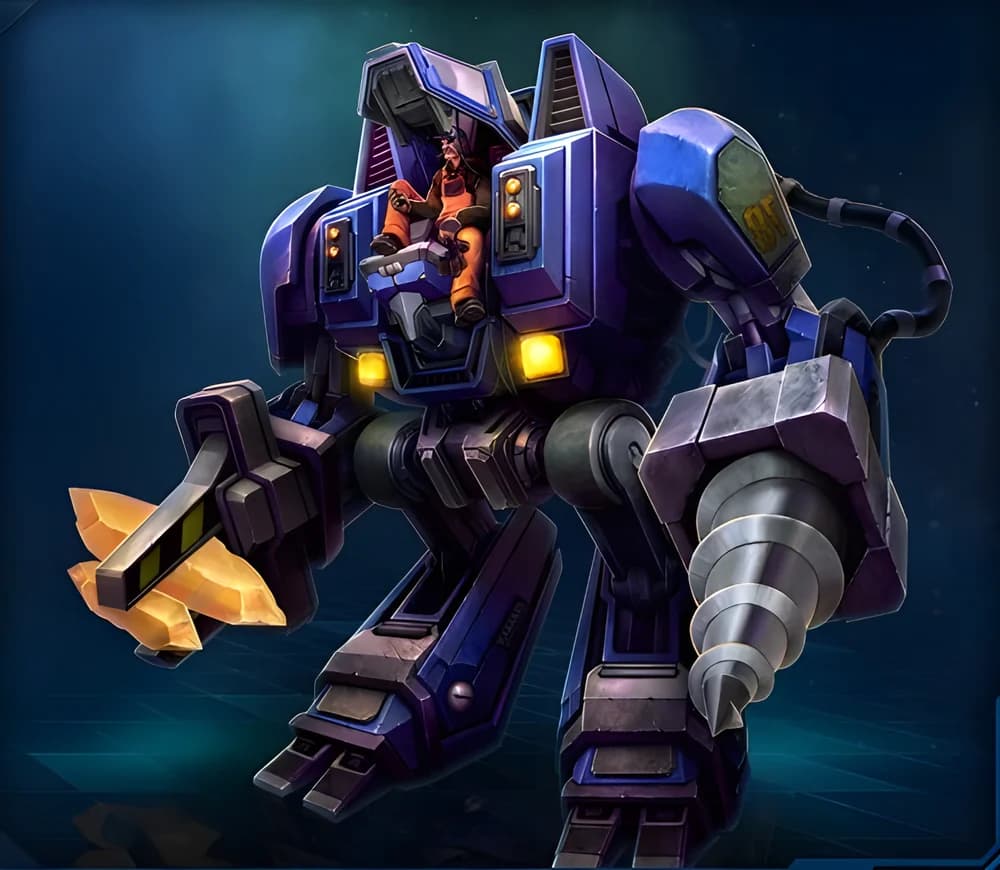
SCV
The T-280 space construction vehicle, or SCV, was the terran general-purpose engineering walker used across the Koprulu sector to build outposts, maintain space platforms, and harvest resources, and was regarded as a foundational unit of terran forces.

Antiga Prime
Antiga Prime was a terran fringe world in the Antiga system, the site of an open revolt against the Terran Confederacy that the Sons of Korhal turned into a zerg massacre, and a world later repopulated under the Terran Dominion.

Arcturus Mengsk
Arcturus Mengsk led the Sons of Korhal to bring down the Terran Confederacy and crowned himself Emperor of the Terran Dominion, ruling through cunning, propaganda, and brute force until his death during the Second Great War.
Augustgrad
Augustgrad was the capital city of Korhal and seat of the Terran Dominion, rebuilt from Confederate ruins and named for Augustus Mengsk. The most heavily fortified city in the Dominion, it was the site of Arcturus Mengsk's death at the hands of the zerg.

Brood War: Kerrigan's war for the Swarm
The Brood War was a zerg civil war between Kerrigan and the cerebrate Daggoth over who would succeed the Overmind. The UED invaded from Earth at the same time.
Great War: protoss against zerg over Aiur
The Great War was the first open fight between protoss and zerg, with the terrans caught between them. It ended over Aiur with the Overmind destroyed.
Mentioned in4 entries
Barracks: mustering hall of terran infantry
The barracks housed and trained all terran infantry, a mobile structure that could cross great distances to reach new hot zones. Pitched by the Dominion as a safe and comfortable staging point, it was in truth a sterile warren of bunks, deployment ramps, and resocialization tanks that unnerved many of the recruits who lived inside it.
Every Terran Unit in StarCraft and StarCraft II, Explained
Every terran unit from StarCraft, Brood War and the three StarCraft II campaigns, sorted into infantry, vehicles and starships. Each entry covers who built it, what it was for and which games it appears in.
Factory: armored heart of terran vehicle production
The factory was the automated terran structure that served as the primary production center for ground vehicles, structures, and ammunition. Behind walls of reinforced neosteel it housed elite vehicle crews in first class quarters, assembled war machines with interior cranes, and could lift off on ventral thrusters to follow the front wherever it moved.
Ihan-rii: the protoss sect that slept for millennia and woke to reclaim Tyrador
The Ihan-rii are a fanatical protoss sect that split from their kindred millennia ago, worship the xel'naga as their ancestors, and returned from deep stasis to reclaim Arakyr, the world terrans call Tyrador IX.
Get new articles in your inbox
No spam. New lore drops, canon conflicts, and deep dives only when they’re worth reading.
Some links on Lore Fortress are affiliate links. If you buy through them we earn a small commission at no extra cost to you.