Neural resocialization: the manufacture of obedient soldiers
Neural resocialization was the Terran Confederacy process for turning criminals into loyal troops by layering false memories over their own and enforcing obedience. The Terran Dominion inherited it, refined it, and used it on ghosts and spectres, until Emperor Valerian Mengsk announced its abolition.
Neural resocialization was a process devised by the Terran Confederacy to treat criminals suffering from mental disorders, or failing that to stop them offending and turn them into loyal soldiers instead. It worked by reshaping memory and enforcing obedience, and for most of the Confederacy's history the majority of its marines had been through it. The Terran Dominion inherited the technology along with everything else and pushed it further, applying the same techniques to ghosts and spectres to secure their loyalty. Terrans called it resoc, or brain panning, and the men who came out of it were recognisable to anyone who had served alongside them. The program was formally abolished after Valerian Mengsk took the throne, though few soldiers believed the machines had been switched off for good. (StarCraft; StarCraft: Liberty's Crusade; StarCraft: The Dark Templar Saga: Firstborn; StarCraft: Ghost: Spectres; StarCraft Field Manual)
A Confederate answer to a manpower problem#
The Confederacy built resocialization to turn criminals into soldiers. Officially it was a treatment for mental disorder, or at minimum a way to stop a man committing crimes again. In practice it produced soldiers. (StarCraft)
The technology was already in common use by 2478 and its existence was sometimes disclosed publicly, yet around 2480 it was still considered new and unproved. Understanding of it spread slowly even inside the institution that relied on it. As late as 2488 it was not common knowledge within the Confederate military, and rival powers wanted the details badly enough to torture captured Confederate soldiers for them. During the Guild Wars, Cole Hickson and Jim Raynor were thrown into a prisoner camp on Turaxis II and worked over by captors who wanted to know how resocialization was done. (StarCraft: I, Mengsk; StarCraft: Uprising; StarCraft II: Heaven's Devils; StarCraft #6)
The early results were crude. Confederate resocs of that period were little better than robots, marching blindly into enemy fire and taking chances no ordinary soldier would take, walking into the meat grinder because nothing in them objected. The science improved over the following decades and had produced new forms by 2499. Under the Dominion, the resocialization specialist Dr. Stanley Burgess pushed the frontier further still. (StarCraft II: Heaven's Devils; StarCraft: Liberty's Crusade; StarCraft: Speed of Darkness; StarCraft: Frontline Volume 1)
What the process did#
Several distinct types of neural resocialization existed, and all of them shared two properties. They reshaped the subject's memories, layering new ones over the old, and they enforced obedience to a degree that varied with the method used. (StarCraft: Liberty's Crusade; StarCraft: The Dark Templar Saga: Firstborn)
The memory work was described by its practitioners as programming. Technicians sought out particular memories, usually the emotionally charged violent ones belonging to a criminal past, suppressed them, and covered them over with more pleasant filler. Cataloguing and reprogramming required the subject to relive each memory as it was processed. What came out the other side had a blissful look about it that observers found hard to miss. (StarCraft: The Dark Templar Saga: Firstborn; The Education of PFC Shane; Changeling)
The same mechanism could be run in reverse to add rather than subtract. Technical and combat skills were installed as altered or new memories, which meant fresh personnel could be trained in a fraction of the usual time. The shortcut had a tell. Certain implanted memories recurred among resocs, and regular marines learned to recognise the process by hearing the same stories twice. Telepaths needed no such clues; a resocialized mind registered as fuzzy to psychic senses. (StarCraft: Speed of Darkness; A War On; StarCraft: The Dark Templar Saga: Firstborn)
Obedience was the other half. Some forms left the subject incapable of even pointing a weapon at another marine. Resocialized soldiers could also shift loyalties wholesale if their commanders did, which made entire units transferable property. (StarCraft: Liberty's Crusade; StarCraft: The Dark Templar Saga: Firstborn)
Methods and degrees#
By the opening of the Great War the Confederacy was using non-invasive forms that left little outward trace, at most a divot behind the ear. These modified behaviour so that the subject would obey a strongly given order even from someone outside the chain of command. Combined with stimulants, a resocialized marine could be ordered to shoot civilians and relatives, and explicit orders were needed to make him hold fire on possible friendlies. Other invasive methods were less discreet and left scars above the neckline. (StarCraft: Liberty's Crusade; StarCraft: I, Mengsk)
Resocialization tanks offered a milder route. A subject endured multiple sessions in the tanks and was programmed with the knowledge and skills required for a chosen occupation, emerging disoriented for some time afterwards but with fewer behavioural restrictions. A tank subject could evaluate a situation, disobey an order, even attack allies if he judged it right. (StarCraft: Speed of Darkness)
At the other end sat the intensive methods, which were reckoned extremely painful. Burgess used such techniques in Dominion service, sometimes with full-body restraints built into the procedure. By 2502 a subconscious form had been developed out of tank technology, one that caused behavioural problems but left the personality largely intact until a programmed trigger fired. It could be resisted by willpower alone. (StarCraft: The Dark Templar Saga: Firstborn; StarCraft: Frontline Volume 1; StarCraft #5; StarCraft #6)
Scale and policy#
Under the Confederacy most marines were resocialized, though near the end the government claimed the figure had fallen to half, sometimes less. The Great War ended any pretence that the process was reserved for criminals; forced resocialization was used to conscript civilians into the military outright. After the Brood War the intake of resocialized marines fell slightly, but volunteer numbers stayed low and the process continued. (StarCraft: Liberty's Crusade; StarCraft: Speed of Darkness; StarCraft II official site (unit pages))
The Dominion maintained that its program took criminals and redeemed them, giving them hope and a new beginning. Resocialization was never limited to the enlisted ranks. Lieutenant Emily Swallow of Alpha Squadron had undergone the process, while obvious candidates such as Major Esmerelda Ndoci had not. (Changeling; StarCraft: Liberty's Crusade; StarCraft: Ghost: Nova)
Where it broke#
Resocialized soldiers possessed little or no initiative. They reacted poorly to changing battlefield conditions and lacked the depth of personality of an ordinary human, and the process wiped away unique talents and expertise along with the criminal past. That loss was expensive enough that the Dominion created units such as the War Pigs to recover capabilities resoc had destroyed. Some handlers still preferred obedient troops to improvisational ones. Resocs also reacted badly to being antagonised, and pranks or the exploitation of their willingness to accept hazardous duty had ended in deaths. (StarCraft: I, Mengsk; StarCraft #1; StarCraft Field Manual)
The conditioning could shatter. Emily Swallow needed a stimpack to relieve the stress of questioning a Sons of Korhal agitator, and when zerg attacked her later, her old criminal instincts surfaced. Trauma weakened the hold on suppressed memories generally, which is why the Confederate Marine Corps kept seriously wounded resocs heavily sedated during treatment rather than risk them sliding back into who they had been. (StarCraft: Liberty's Crusade; StarCraft: I, Mengsk)
A small percentage of terrans proved resistant altogether. Criminals, the occasional political dissident and marines who stayed uncontrollable after treatment were conscripted into the Reaper Corps. Outside forces could undo the work as well. Protoss psionics reversed resocialization, terran psychics managed it to a degree, and infestation peeled back the memories of an infested terran to reveal the implanted layer for what it was. (Icehouse; StarCraft II official site (unit pages); StarCraft: The Dark Templar Saga: Firstborn; StarCraft: Frontline Volume 1; StarCraft: Speed of Darkness; The Education of PFC Shane)
Ghosts, spectres and an unexpected defence#
Resocialization bore a close resemblance to the technology normally used to control ghosts, and the two converged. The same methods were applied to spectres, and memory modification was used on ghost agents to guarantee their loyalty. False memories of that kind were hard to work through, though a memory wipe could strip them out. (StarCraft: Uprising; StarCraft: Ghost: Spectres; Waking Dreams)
One effect nobody had designed for emerged during the wars against Amon. Resocialization, particularly when the process had been repeated, granted resistance to the psychic domination of the hybrid. The Confederacy had built a cage for its criminals and accidentally built armour against a far older enemy. (Sector Six)
Abolition#
After Valerian Mengsk ascended, the Dominion announced that the resocialization program was fully abolished and put reforms in place for the better treatment of those who had been through it. The soldiers were not entirely convinced. Some suspected the program would be reactivated the moment casualties mounted and recruitment fell short. Others assumed it had simply been scaled back rather than ended, and that somewhere the tanks were still warm. (StarCraft Field Manual; StarCraft: Evolution)
Sources
- GameStarCraft, Blizzard Entertainment, 1998
- WebStarCraft II official site (unit pages), Blizzard Entertainment, marine and reaper pages, 2014
- WebChangeling, James Waugh, Blizzard Entertainment short story, 2009
- WebA War On, James Waugh, Blizzard Entertainment short story, 2013
- WebIcehouse, Michael O'Reilly and Robert Brooks, Blizzard Entertainment short story, 2013
- WebThe Education of PFC Shane, Robert Brooks, Blizzard Entertainment short story, 2013
- WebSector Six, Micky Neilson, Blizzard Entertainment short story, 2015
- WebWaking Dreams, E. C. Myers, Blizzard Entertainment short story, 2020
- BookStarCraft: Uprising, Micky Neilson, Pocket Star, 2000
- BookStarCraft: Liberty's Crusade, Jeff Grubb, Pocket Star, 2001
- BookStarCraft: Speed of Darkness, Tracy Hickman, Pocket Star, 2002
- BookStarCraft: Ghost: Nova, Keith R. A. DeCandido, Pocket Star, 2006
- BookStarCraft: The Dark Templar Saga: Firstborn, Christie Golden, Pocket Star, 2007
- BookStarCraft: I, Mengsk, Graham McNeill, Pocket Star, 2008
- BookStarCraft II: Heaven's Devils, William C. Dietz, Gallery Books, 2010
- BookStarCraft: Ghost: Spectres, Nate Kenyon, Pocket Star, 2011
- BookStarCraft Field Manual, Rick Barba, Insight Editions, 2015
- BookStarCraft: Evolution, Timothy Zahn, Del Rey, 2016
- ComicStarCraft: Frontline Volume 1, "Why We Fight", Josh Elder (w), Ramanda Kamarga (a), Tokyopop, 2008
- ComicStarCraft #1, Keith Giffen and Simon Furman (w), Federico Dallocchio (a), DC Comics (Wildstorm), 2009
- ComicStarCraft #5, Simon Furman (w), Federico Dallocchio and Carlos D'Anda (a), DC Comics (Wildstorm), 2009
- ComicStarCraft #6, Simon Furman (w), Federico Dallocchio, Mike S. Miller and Carlos D'Anda (a), DC Comics (Wildstorm), 2009
Spotted a factual error or a primary source we missed? Email a correction. Every flagged claim gets reviewed.
Followed from this entry
2499: the year the Great War began
2499 was the final year of peace in the Koprulu Sector and the first year of the Great War. It opened with quiet training rosters and covert cover ups, and it closed with two Confederate colonies burned from orbit, the zerg revealed to terran eyes, and rebellion spreading from Mar Sara to Antiga Prime.
2502: the year of quiet atrocities
2502 fell in the uneasy years between the Brood War and the Second Great War. The Terran Dominion hid a colonial massacre behind parade broadcasts, Emperor Mengsk buried the mother of his heir, a squad of outlaw commandos was sent to kill Jim Raynor, and secret programs built on stolen ghosts and captive protoss advanced in the dark.
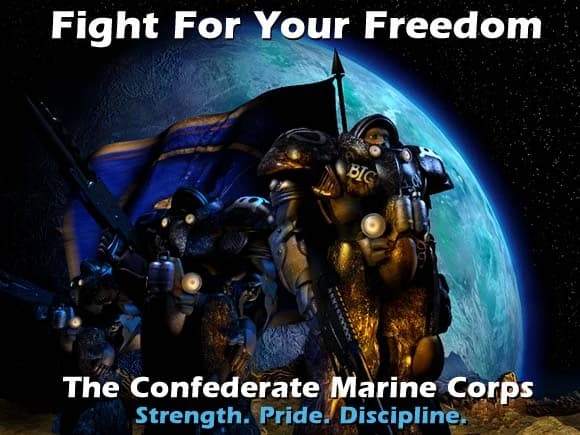
Confederate Marine Corps: infantry backbone of the Terran Confederacy
The Confederate Marine Corps was the best known military arm of the Terran Confederacy, an infantry service older than the Confederacy itself that filled its ranks with resocialized criminals and reluctant volunteers. It fought the Kel-Morian Combine through the Guild Wars and was destroyed alongside its government when the zerg overran Tarsonis.
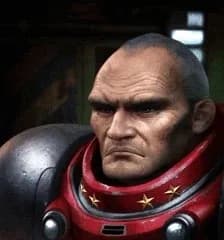
Alpha Squadron
Alpha Squadron, nicknamed the Blood Hawks, was an elite Terran Confederate military formation under General Edmund Duke that defected to the Sons of Korhal during the Great War and went on to serve the Terran Dominion.

Brood War: Kerrigan's war for the Swarm
The Brood War was a zerg civil war between Kerrigan and the cerebrate Daggoth over who would succeed the Overmind. The UED invaded from Earth at the same time.
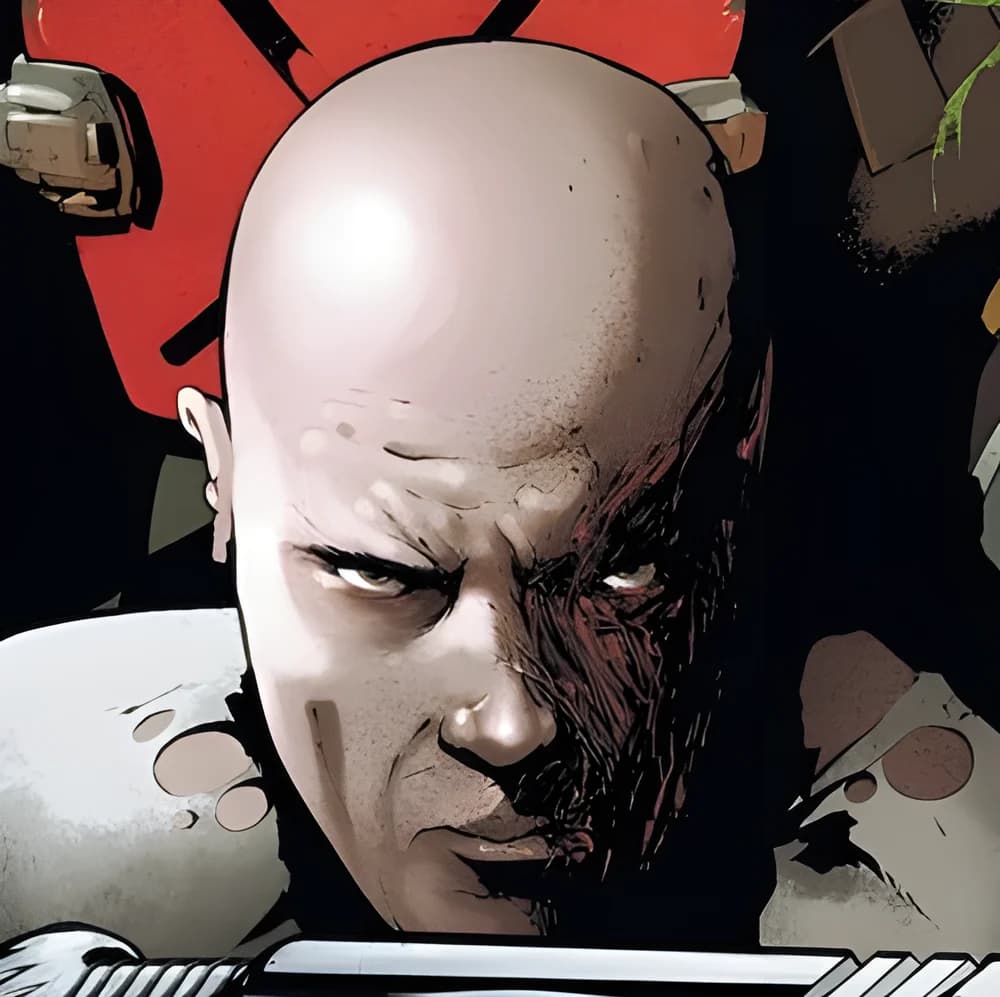
Cole Hickson
Cole Hickson was a terran outlaw and soldier scarred on the left side of his face, a sniper and frequent leader of the War Pigs. He once saved Jim Raynor's sanity in a Kel-Morian prison camp, then years later was resocialized by Tamsen Cauley into an unwitting assassin sent against Raynor.
Mentioned in3 entries
Barracks: mustering hall of terran infantry
The barracks housed and trained all terran infantry, a mobile structure that could cross great distances to reach new hot zones. Pitched by the Dominion as a safe and comfortable staging point, it was in truth a sterile warren of bunks, deployment ramps, and resocialization tanks that unnerved many of the recruits who lived inside it.
English: the common tongue of terran humanity
English was a West Germanic language of Earth that the United Powers League designated as the common language of the planet in the twenty-third century. Carried into the Koprulu sector by the exiled colonists, it was sometimes called Terran there, and it grew a vocabulary of frontier slang, military shorthand, and new units of time and measure that no speaker of earlier centuries would have recognized.
Every Terran Unit in StarCraft and StarCraft II, Explained
Every terran unit from StarCraft, Brood War and the three StarCraft II campaigns, sorted into infantry, vehicles and starships. Each entry covers who built it, what it was for and which games it appears in.
Get new articles in your inbox
No spam. New lore drops, canon conflicts, and deep dives only when they’re worth reading.
Some links on Lore Fortress are affiliate links. If you buy through them we earn a small commission at no extra cost to you.