Confederate Marine Corps: infantry backbone of the Terran Confederacy
The Confederate Marine Corps was the best known military arm of the Terran Confederacy, an infantry service older than the Confederacy itself that filled its ranks with resocialized criminals and reluctant volunteers. It fought the Kel-Morian Combine through the Guild Wars and was destroyed alongside its government when the zerg overran Tarsonis.
The Confederate Marine Corps was the best known military arm of the Terran Confederacy, the infantry heart of the Confederate Armed Forces. By the time of the Great War the Corps had existed for more than two centuries, which made it older than the Confederacy it served. Its marines, clad in powered armor and carrying gauss rifles, fought the Kel-Morian Combine through the Guild Wars, stood against the first protoss and zerg incursions into Confederate space, and finally failed to hold Tarsonis when the Swarm descended on the Confederacy's throne world. What remained of the Corps after that collapse was forcibly conscripted into the armed forces of the new Terran Dominion. (StarCraft; StarCraft II: Heaven's Devils; StarCraft: Liberty's Crusade; StarCraft: Brood War)
Recruitment and resocialization#
The Corps drew a large part of its manpower from criminals and troublemakers, who were reformed for service through neural resocialization. The practice defined the institution. (StarCraft)
Voluntary enlistment was uncommon. A career in the Corps was generally regarded as a last resort, and before the Guild Wars only half of recruited marines ever saw combat; the other half dropped out of boot camp, died in training accidents, were resocialized, or ended up behind desks. Recruitment drives and increased pay in the years before the Guild Wars raised the number of volunteers, but the odds facing them worsened at the same time. Half of all recruits failed to complete training or were disabled during it, and those who made it through were almost guaranteed to see combat. (StarCraft: I, Mengsk)
Whatever brought a recruit to the Corps, their past life was considered irrelevant the moment they enlisted or were conscripted. Terms of service were flexible in length, determined by the threat level as ordained by Confederate High Command. The case of Private First Class Ardo Melnikov showed the darker side of that clean slate: attached to the 417th Confederate Marine Platoon and shipped to Mar Sara, Melnikov carried memories of his home and his lost love that resocialization had rewritten, the exact details of his life left hazy by the process. Marines who instigated brawls or were otherwise regarded as troublemakers were likewise liable to be neurally resocialized to prevent further incidents. (StarCraft: I, Mengsk; StarCraft: Revelations; StarCraft II: Heaven's Devils)
Training and service#
Every recruit's entry into the Corps began in boot camp, a hellish place by all accounts, where brutal drill instructors ruled and recruits were routinely abused. A recruit who failed to pass boot camp the first time was forced to repeat the process. Standard training, including advanced infantry training, lasted twelve weeks, though during the Guild Wars the program was shortened to nine weeks and advanced infantry training was dropped altogether. Recruits trained with the AGR-14 gauss rifle, older models of which had existed in Corps service as far back as 2478. (StarCraft: I, Mengsk; StarCraft II: Heaven's Devils)
In the field, a marine's standard equipment consisted of the C-14 rifle and the CMC Powered Combat Suit, the armored exoskeleton that took its name from the Corps itself and whose successors remained in widespread use across the Koprulu sector long after the Confederacy was gone. Out of armor, marines wore regulation khaki on patrol and navy-blue or white dress uniforms in more controlled circumstances. (StarCraft; StarCraft: Liberty's Crusade; StarCraft: I, Mengsk; StarCraft II: Heaven's Devils)
The Corps also served as a proving ground for new war technology. The Confederate academy was the primary center of research into new technologies for the Marine Corps, seeking to improve the quality of its personnel, though some soldiers looked on the institution with dread. (StarCraft: Ghost Academy Volume 2)
Culture within the Corps#
An unspoken code ran through the ranks: marines did not rat out other marines. The Corps maintained a long-standing rivalry with the Colonial Fleet, and brawls between the services were common enough that the instigators risked resocialization. In spite of the Confederacy's areligious stance, the Corps kept chaplains in its service. Its media magazine was called Battle Flag. (StarCraft II: Heaven's Devils; StarCraft: I, Mengsk)
The Corps also recruited from the top of Confederate society, not only its prisons. Recruiters visited the senior year of Styrling Academy on Korhal, where Captain Angelina Emillian of the 33rd Ground Assault Division made a presentation that impressed a young Arcturus Mengsk. Having read the classified files of that year's graduates, Emillian understood the young man's psychology and told him he could learn the finer points of prospecting in the Corps and had only a fifty percent chance of seeing combat. Both statements were technically truthful. Mengsk enlisted when he came of age, on the very morning his father Angus delivered his Close of Session speech to the Korhal Senate, and left without saying goodbye. Chuck Horner, whose father and grandfather had both served in the Confederate Army, later served under Mengsk in the Corps and became second-in-command of Dominion section after their action on Sonyan. (StarCraft: I, Mengsk)
The Guild Wars#
The Corps carried out numerous actions against the Kel-Morian Combine on worlds such as Sonyan and Onuru Sigma in the years leading up to the Guild Wars. On Sonyan, marines removed Kel-Morian miners from their claim in Turanga Canyon by force. When open war came, the Corps saw action on battlefields including Gamma Dorian, Dylar IV, Char, and Turaxis II. (StarCraft: I, Mengsk; StarCraft II: Heaven's Devils; Stealing Thunder)
The Corps was also turned against the Confederacy's own citizens. In 2478, after the people of Andasar City on Antiga Prime drove out the local militia and took the planet's magistrate hostage in protest of Confederate corruption, a Marine Corps force under Lieutenant Cliff Nadaner retook the city two days later and left no survivors out of the thousands who had once dwelt within it. The anti-Confederate rebellion on Korhal, led by Angus Mengsk, claimed the lives of hundreds of Confederate marines in ambushes over the same era. (StarCraft: I, Mengsk)
Invasion and the fall of Tarsonis#
When the protoss burned Chau Sara, at least one force of marines was stationed on the planet. The same unit was later posted to Fire Base Chimera on Mar Sara, where it defended itself against zerg attack. In the last days of Mar Sara, a platoon under Lieutenant L. Z. Breanne was dispatched to recover a psi emitter, and its marines made a last stand against the zerg to buy time for the evacuation of the planet. (StarCraft: Revelations; StarCraft: Speed of Darkness)
The end came on the Confederacy's own home ground. Just before the zerg invasion of Tarsonis, the 22nd Confederate Marine Division was employed in the search for November Terra, sought for recruitment into the Ghost Program. When the Swarm struck the throne world, the Corps tried to keep the zerg contained and ultimately failed. With the collapse of the Confederacy, the remnants of the Confederate Marine Corps were forcibly conscripted into its Terran Dominion counterpart, and the oldest fighting institution in the sector passed into the service of the man who had once worn its uniform. (StarCraft: Ghost: Nova; StarCraft: Liberty's Crusade; StarCraft: Brood War)
Known units#
At the top of the chain of command sat Confederacy Marine Command, the Corps' highest body. Beneath it served formations including Command Bravo, the 22nd Confederate Marine Division, the 33rd Ground Assault Division and its Dominion section, the 3rd Marines, the 2nd Battalion, the 321st Colonial Rangers Battalion that cooperated with the Colonial Rangers, the 57th Marine Combat Engineers, the 417th Confederate Marine Platoon, Recon Patrol 09, and the Tactical Response Squad. (StarCraft: I, Mengsk; StarCraft II: Heaven's Devils; StarCraft: Ghost: Nova; StarCraft: Revelations; StarCraft: Speed of Darkness)
Sources
- GameStarCraft, Blizzard Entertainment, 1998 (including the manual)
- GameStarCraft: Brood War, Blizzard Entertainment, 1998 (manual)
- BookStarCraft: Revelations, Chris Metzen and Samuel Moore, short story in Amazing Stories, 1999
- BookStarCraft: Liberty's Crusade, Jeff Grubb, 2001
- BookStarCraft: Speed of Darkness, Tracy Hickman, 2002
- BookStarCraft: Ghost: Nova, Keith R. A. DeCandido, 2006
- BookStarCraft: I, Mengsk, Graham McNeill, 2008
- BookStarCraft II: Heaven's Devils, William C. Dietz, 2010
- BookStealing Thunder, Micky Neilson, short story, Blizzard Entertainment, 2010
- ComicStarCraft: Ghost Academy Volume 2, David Gerrold (w), Fernando Heinz Furukawa (a), 2010
Spotted a factual error or a primary source we missed? Email a correction. Every flagged claim gets reviewed.
Followed from this entry
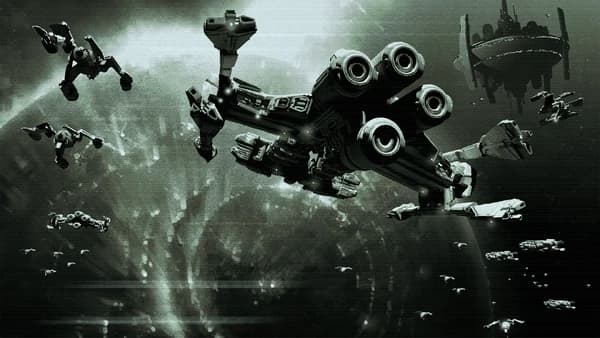
Confederate Armed Forces: military arm of the Terran Confederacy
The Confederate Armed Forces was the military of the Terran Confederacy, headquartered on Tarsonis and organized into squadrons of conscripts and resocialized criminals. It fought the Kel-Morian Combine in the Guild Wars, razed Korhal with nuclear weapons, and collapsed when the zerg overran Tarsonis.

321st Colonial Rangers Battalion
The 321st Colonial Rangers Battalion was an elite Terran Confederacy unit formed on Turaxis II during the Guild Wars. Under the corrupt Colonel Vanderspool it gave rise to the Special Tactics and Missions Platoon, nicknamed Heaven's Devils, which counted Jim Raynor and Tychus Findlay among its members.
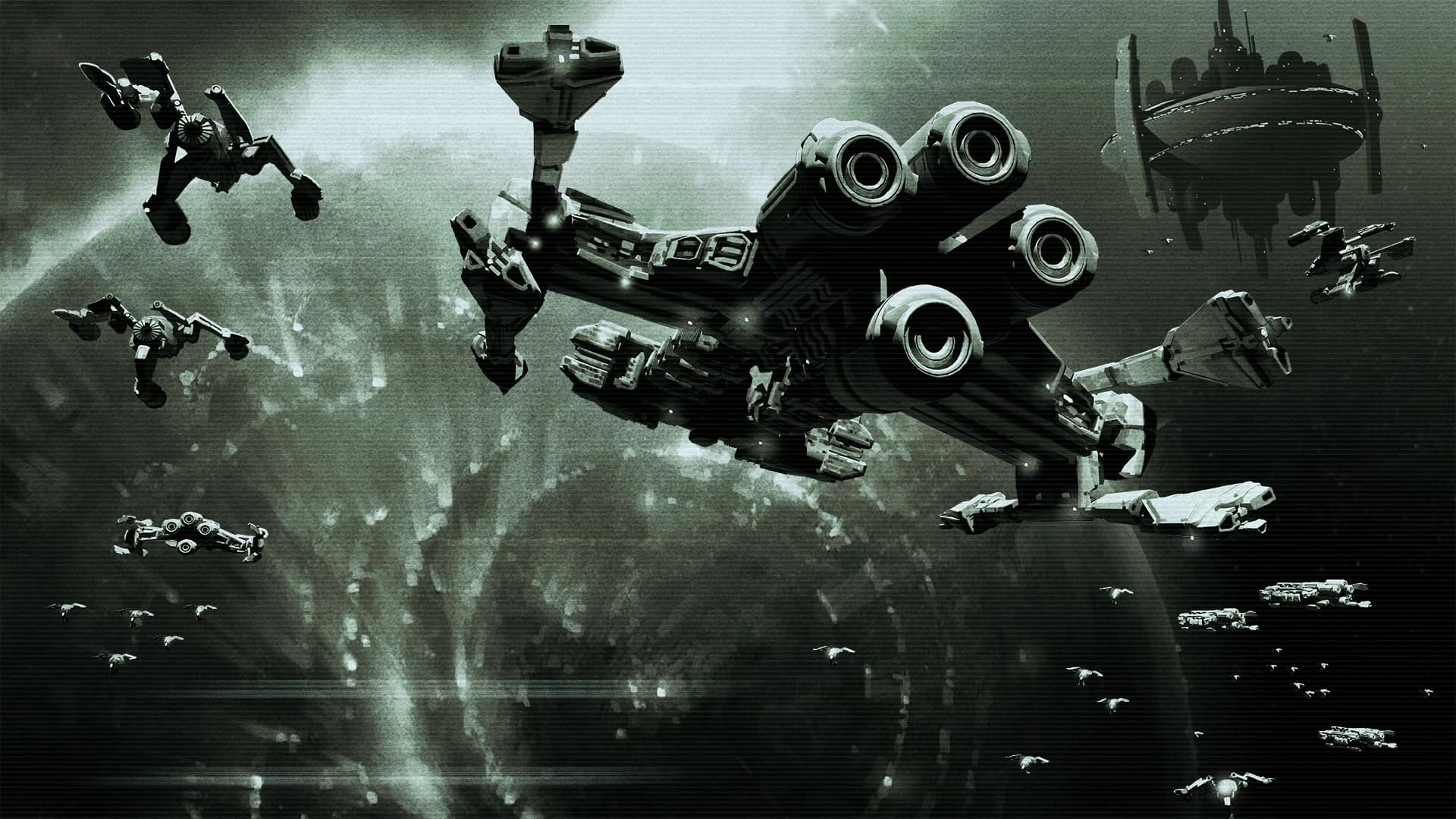
Colonial Fleet
The Colonial Fleet was the naval branch of the Terran Confederacy's armed forces, older than the Confederacy itself. It provided air and orbital support from its Tarsonis platforms until the fall of the Confederacy folded its remnants into the Dominion Armada.
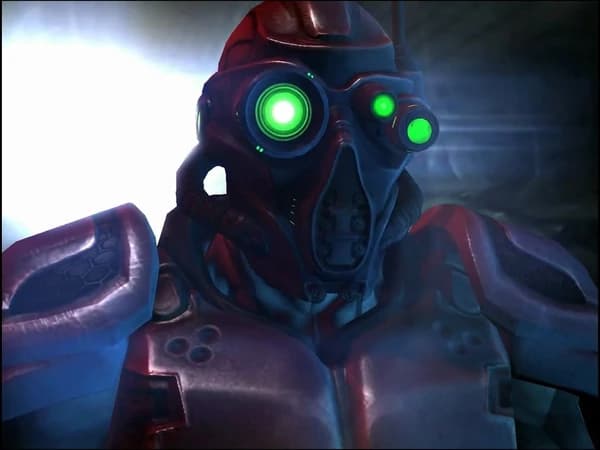
Ghost Program
The Ghost Program was the project for the training and use of terran ghosts, psychically gifted operatives trained from infancy as commandos, assassins, and nuclear strike coordinators. Created by the Terran Confederacy and later adopted by the Terran Dominion, it relied on memory wipes and psychic limiters to enforce loyalty over its conscripts.
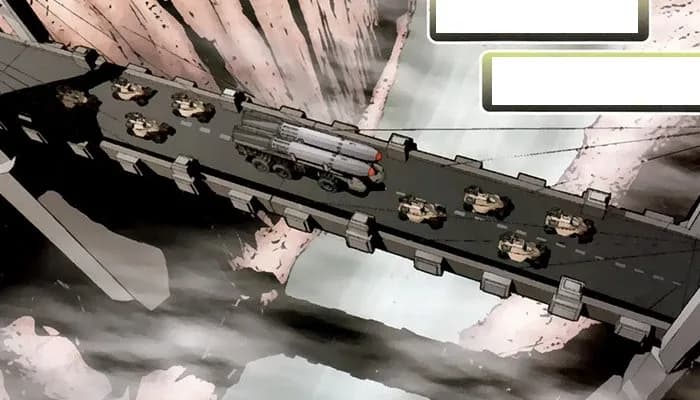
Kel-Morian Combine: the sector's miners
A business conglomerate that governed Moria and ran the mining guilds. It fought the Confederacy in the Guild Wars and outlived it as a corporate power.
Terran Confederacy
The Terran Confederacy, also called the Confederacy of Man, was the dominant human government of the Koprulu sector before the Great War, ruled by the Old Families of Tarsonis and brought down by the zerg invasion and the Sons of Korhal rebellion.
Mentioned in1 entry
Get new articles in your inbox
No spam. New lore drops, canon conflicts, and deep dives only when they’re worth reading.
Some links on Lore Fortress are affiliate links. If you buy through them we earn a small commission at no extra cost to you.