Ghost Program
Terran covert operative project
The Ghost Program was the project for the training and use of terran ghosts, psychically gifted operatives trained from infancy as commandos, assassins, and nuclear strike coordinators. Created by the Terran Confederacy and later adopted by the Terran Dominion, it relied on memory wipes and psychic limiters to enforce loyalty over its conscripts.
The Ghost Program was the project for the training and use of terran ghosts, the covert operatives known for their psionic powers, combat skill, and ability to cloak. It was originally created by the Terran Confederacy and later adopted by the Terran Dominion, both of which used its graduates as commandos and assassins and as the human guidance systems that directed tactical nuclear strikes. The program drew its conscripts from psychically gifted individuals, trained them from infancy, and bound them with implants and memory wipes that reshaped their loyalties and erased their pasts. (StarCraft; StarCraft: Uprising; StarCraft: Ghost: Nova)
Purpose and conscripts#
Ghosts were chosen from psychically gifted individuals quarantined by the Terran Confederacy and trained from infancy to channel their psionic energies, augmenting their natural strength and endurance. Conscripts who completed the program's rigorous training and augmentations then served as commandos and assassins, appearing without warning and killing in silence. Lightly armored and able to hide their presence with a cloaking device, they were also trusted to direct nuclear missile strikes against enemy targets, a role their stealth made them uniquely suited for. (StarCraft)
Recruitment began at birth. It was mandatory for children born within the Confederacy to have a Psi Aptitude Profile taken within nine months, and a high enough score meant recruitment. Universal testing was impossible in practice, so children on the Fringe Worlds, or those with socially powerful parents, sometimes escaped detection. Cover stories were invented to obscure the fate of conscripted children: some parents were told their children were being sent to special schools, and were sometimes later informed the child had died in an accident. The Terran Dominion was relatively forthright about the process, sending parents a letter when a child was selected, but failure to comply carried penalties. Recruitment was carried out by the Psi-Ops Division. (StarCraft; StarCraft: Liberty's Crusade; StarCraft: Speed of Darkness; StarCraft: Ghost: Nova; StarCraft: Frontline Volume 1; StarCraft: Ghost Academy)
Telepaths who escaped the standard profiling, or who might serve in other roles, were tracked down by wranglers, mildly psionic agents whose powers were useful chiefly for finding other telepaths at close range. Dominion wranglers such as Malcolm Kelerchian were paid for each psychic they brought in and often worked alongside conventional military forces, sometimes using lobotomized zerglings to hunt their targets. (StarCraft: Ghost: Nova; StarCraft: Frontline Volume 3)
Control and identity#
Standard Confederate practice was to implant psychic dampeners into all ghosts, acting on the principle of neural resocialization. While active, the implants reshaped a ghost's memories, weakened their powers, and enforced loyalty, with the result that few ghosts retained any memory of their former lives. The implants could, however, be removed or disabled. Other controls included aggression inhibitors that prevented ghosts from attacking their superiors, ghost conditioning that weakened psionic ability, and psi-screens worn to shield a mind from being read. (StarCraft; StarCraft: Hybrid; StarCraft: Uprising; StarCraft: Liberty's Crusade; StarCraft: Ghost: Nova)
Ghosts lived their lives entirely within the program, which provided all housing, food, and living arrangements, leaving many who had never lived outside it unable to adjust to civilian life. For the most part they were known only as numbers or names. Under the Confederacy every ghost, graduate or washout, was assigned a standard number and an alpha-numeric agent code, a system the Dominion retained. Confederate ghosts were unaware of their true names; most Dominion ghosts knew theirs but were trained to address one another by their alpha-numerics, a habit that spread to Dominion soldiers. Every ghost possessed a personal file, though its contents were restricted. (StarCraft: Uprising; StarCraft: Ghost: Nova; StarCraft: Ghost: Spectres; StarCraft: Shadow of the Xel'Naga)
After the defection of Sarah Kerrigan, the Confederacy concluded that dampeners were too easily disabled and instituted memory wipes, a technique regarded as effectively unbreakable, applied after training and major missions. The Dominion later added neural implants that tracked each ghost's location. After the death of Arcturus Mengsk, ghosts were given more freedom to decide whether they underwent the procedure. (StarCraft: Ghost: Nova; StarCraft: Ghost: Spectres; Nova: The Keep)
Origins and the Confederacy#
Terran psionic ability traced back to Earth. By the late twenty-first century private firms had developed biotechnology granting advanced telepathy, and the genetic manipulations contributed to a civil war that left most of Earth under the United Powers League by 2229. The scientist Doran Routhe loaded thousands of prisoners, many of them mutants, into four supercarriers bound for Gantris VI. The lead vessel carried the artificial intelligence ATLAS, which discovered that a high proportion of the prisoners carried a mutation leading to psionic potential that would manifest within a few generations. The ships missed their target and founded colonies in the Koprulu sector, the most advanced of which, Tarsonis, established the Terran Confederacy. (StarCraft)
About twenty years before the war sparked by the destruction of Chau Sara, the Confederacy had already created a fledgling Ghost Program. One of its early subjects, the eight-year-old Sarah Kerrigan, drew attention when her powers erupted with such force that the measurement scale required a complete readjustment. Ghosts of the program assassinated Angus Mengsk to suppress the rebellion of Korhal, and his head was never found. When Arcturus Mengsk took up his father's cause and allied with Umoja, the Confederates answered with a nuclear barrage that killed millions of Korhalian colonists, after which they limited themselves to tactical nukes guided by ghosts. (StarCraft: Hybrid; StarCraft: Uprising; StarCraft)
On the world of Vyctor 5, at the secret Fujita Facility, Confederate scientists experimented with a species of xenomorphs found among the Fringe Worlds and discovered the creatures were sensitive to psionic control. Ghost Agent Kerrigan had the best command over them and became the only subject allowed to work with them. Arcturus Mengsk and his Sons of Korhal raided the facility, rescued Kerrigan, and removed her neuro-adjuster, restoring her memories. Kerrigan then led the Sons of Korhal in an attack that destroyed the primary ghost training center on Tarsonis. Fearing further defections, the Confederacy began wiping the memories of its ghosts. (StarCraft: Uprising; StarCraft: Ghost: Nova)
The Great War and the fall of the Confederacy#
The Confederacy lost its colony of Chau Sara to a sudden protoss attack, and shortly afterward the zerg appeared on Mar Sara. At the secret Jacobs Installation the Confederates experimented with the psi-emitter, a device that amplified a psychic's powers so the zerg could detect them from far off. Facing the zerg, the protoss, and the Sons of Korhal at once, the Confederacy began losing ground, and ghosts suffered a high mortality rate. Director Ilsa Killiany, believing the ghosts were all that kept the Confederacy alive, went out of her way to acquire powerful psychics, even dispatching an agent to forcibly recruit a fifteen-year-old scion of the Old Families, November Terra. (StarCraft; StarCraft: Ghost: Nova)
Nova was retrieved just as the Sons of Korhal defeated the Confederacy at Tarsonis, using captured psi-emitter technology to lure the zerg to the world. The Confederacy imploded, the Sons of Korhal renamed themselves the Terran Dominion, and the Ghost Program passed into Dominion hands. Sarah Kerrigan, abandoned to the zerg above Tarsonis, was infested and resurfaced on Char as the Queen of Blades. Among her first acts she boarded the science vessel Amerigo and stole the Confederacy's data on ghost conditioning, finally breaking the conditioning that had restrained her even after infestation. (StarCraft: Ghost: Nova; StarCraft)
The Dominion era#
The Terran Dominion took over the program, relocated its facilities, and placed Director Kevin Bick in charge. Under Arcturus Mengsk no one could leave the program voluntarily, and ghosts remained ghosts until death. As part of an overhaul, Mengsk ordered roughly half of his government's ghosts killed in a controlled environment, eliminating untrustworthy former Confederate agents and those judged worthless, and he commissioned dedicated ghost academies equipped with nuclear silos. (StarCraft: Ghost: Nova; StarCraft: Evolution; StarCraft II: Heaven's Devils; StarCraft: The Dark Templar Saga: Shadow Hunters)
The Dominion clashed with the Umojan Protectorate over the fate of its trainees. Senator Corbin Phash secretly harbored a psychic son, Colin; when the zerg attacked Maltair IV and left only the two Phashes alive, Corbin fled to the Protectorate while Colin was captured and inducted into the program. To counter the propaganda that followed, the Dominion publicized its ghosts as heroes, and on the recommendation of Superintendent Sarco Angelini the Ghost Academy began training students in groups and grew more open. The Dominion also instituted a final graduation exercise immediately before a trainee's memory wipe; Nova Terra was the first agent to undergo the process, eliminating her assigned targets. (StarCraft: Frontline Volume 1; StarCraft: Frontline Volume 3; StarCraft: Frontline Volume 4; StarCraft: Ghost Academy; StarCraft: The Dark Templar Saga: Firstborn; StarCraft: Ghost: Nova)
Enhancement projects and the spectres#
After the Brood War, the Dominion discovered the potent psionic reagent terrazine and launched secret projects to put it to use. Project Shadow Blade, led by General Horace Warfield, studied terrazine's effects on terrans until it was infiltrated by Cole Bennett, an escapee from the program who experimented on himself, expanded his own power, and saw the project dissolved. In 2502 Dominion Intelligence devised Project Gestalt, in which Dr. Stanley Burgess spliced ghosts with protoss organs, producing a warrior of formidable power before the project ended in disaster. An earlier take on Shadow Blade drove the plot of the shelved StarCraft: Ghost game. (StarCraft: Ghost: Spectres; StarCraft: Frontline Volume 3)
Bennett, embittered, secretly turned against Arcturus Mengsk and recreated his own version of Shadowblade with the escaped ghost Gabriel Tosh and the technopath Lio Travski, converting resocialized marines into lower-grade spectres from a cloaked platform, Gehenna Station. As ghosts began disappearing, the Dominion publicly blamed remnants of the United Earth Directorate. Nova Terra, aided by the wrangler Malcolm Kelerchian and the special forces unit the Annihilators, eventually exposed Bennett's treachery to Tosh and killed him, ending the Spectre Rebellion. (StarCraft: Ghost: Spectres)
Later conflicts and reform#
Dominion ghosts were deployed throughout the Second Great War, often against the zerg and Raynor's Raiders, with Nova Terra continuing her hunt for the spectres and even offering Jim Raynor access to ghost technology in exchange for his aid. A ghost team under Nova later raided the Umojan research station that held the recently uninfested Sarah Kerrigan and Jim Raynor, capturing Raynor though Kerrigan escaped. Ghosts were used against Kerrigan's resurgent Swarm on Char, at Skygeirr Station, aboard the Moros, and finally on Korhal, though they could not prevent the death of Arcturus Mengsk. (StarCraft II: Wings of Liberty; StarCraft II: Heart of the Swarm)
During the End War, Dominion spec ops ghosts were deployed with special forces under Nova Terra against Amon's Forces. After taking the throne, Valerian Mengsk reformed the Dominion Armed Forces with particular attention to the Ghost Program, producing better and more committed agents who served of their own free will. Among his reforms, he gave ghosts more say over memory wipes and allowed them to leave the program voluntarily, though by 2511 only one had taken the offer. (StarCraft II: Co-op Missions; StarCraft II: Legacy of the Void; Nova: The Keep; StarCraft: Evolution)
Other ghost programs#
The Ghost Program of the Terran Confederacy and its Dominion successor were not the only ones of their kind. The Umojan Protectorate trained psychic operatives of its own, called shadowguards, who were subject to neither memory wipes nor other forms of control. The United Earth Directorate had its own Ghost Program as well, despite the efforts of its predecessor the United Powers League to wipe out mutants; its psychics played a key role in the assault on the Dylarian Shipyards and were used by Alexei Stukov and his colleagues to control the second Overmind. (Collateral Damage; StarCraft; StarCraft: Brood War)
Frequently asked questions
- What was the Ghost Program?
- The Ghost Program was a project for the training and use of terran ghosts, the covert operatives known for their psionic powers, combat skill, and ability to cloak. It was originally created by the Terran Confederacy and later adopted by the Terran Dominion, which retained its conscripts as commandos, assassins, and coordinators of nuclear strikes.
- How were ghosts recruited into the program?
- Children born within the Confederacy were required to have a Psi Aptitude Profile taken within nine months of birth, and a high enough score resulted in conscription into the program. Most ghosts were trained from infancy, and cover stories were invented to obscure the fate of conscripted children. The Dominion was more open about the process but still penalized families that refused to comply.
- How did the program control its ghosts?
- The Confederacy implanted psychic dampeners that reshaped a ghost's memories, weakened their powers, and enforced loyalty along the principle of neural resocialization. After the defection of Sarah Kerrigan, the Confederacy adopted memory wipes, a more reliable technique that the Dominion retained. Other controls included aggression inhibitors, ghost conditioning, and psi-screens.
- Why was Sarah Kerrigan important to the Ghost Program?
- Sarah Kerrigan was brought to the Confederacy's attention as an eight-year-old whose psionic abilities were so potent they required a rescaling of measurement. She became the program's most powerful agent and the only one permitted to control the xenomorphs studied at the Fujita Facility. Her rescue and defection to the Sons of Korhal, followed by her attack on the primary ghost training center on Tarsonis, prompted the switch to standard memory wipes.
- How did the Ghost Program change under the Dominion?
- Arcturus Mengsk took control of the program after the fall of the Confederacy, relocated its facilities, ordered roughly half of his government's ghosts killed to purge untrustworthy agents, and built dedicated ghost academies with nuclear silos. Under his rule no ghost could leave the program voluntarily. His son Valerian Mengsk later reformed it, making memory wipes optional and allowing ghosts to depart of their own free will.
Sources
- GameStarCraft, Blizzard Entertainment, 1998
- GameStarCraft: Brood War, Blizzard Entertainment, 1998
- GameStarCraft II: Wings of Liberty, Blizzard Entertainment, 2010
- GameStarCraft II: Heart of the Swarm, Blizzard Entertainment, 2013
- GameStarCraft II: Legacy of the Void, Blizzard Entertainment, 2015
- GameStarCraft II: Co-op Missions, Blizzard Entertainment, 2016
- BookStarCraft: Hybrid, Micky Neilson, short story, Amazing Stories 601, 2000
- BookStarCraft: Uprising, Micky Neilson, Pocket Books, 2000
- BookStarCraft: Liberty's Crusade, Jeff Grubb, Pocket Books, 2001
- BookStarCraft: Shadow of the Xel'Naga, Gabriel Mesta, Pocket Books, 2001
- BookStarCraft: Speed of Darkness, Tracy Hickman, Pocket Books, 2002
- BookStarCraft: Ghost: Nova, Keith R. A. DeCandido, Pocket Star, 2006
- BookStarCraft: The Dark Templar Saga: Firstborn, Christie Golden, Pocket Star, 2007
- BookStarCraft: The Dark Templar Saga: Shadow Hunters, Christie Golden, Pocket Star, 2007
- BookStarCraft II: Heaven's Devils, William C. Dietz, Gallery Books, 2010 (timeline appendix)
- BookStarCraft: Ghost: Spectres, Nate Kenyon, Pocket Star, 2011
- BookStarCraft: Evolution, Timothy Zahn, Del Rey, 2016
- ComicStarCraft: Frontline Volume 1, Tokyopop, 2008
- ComicStarCraft: Frontline Volume 3, Tokyopop, 2009
- ComicStarCraft: Frontline Volume 4, Tokyopop, 2009
- ComicStarCraft: Ghost Academy, Keith R. A. DeCandido (w), Fernando Heinz Furukawa (a), Tokyopop, 2009 to 2011
- ComicNova: The Keep, Micky Neilson (w), Edouard Guiton (a), Blizzard Entertainment, 2016
- WebCollateral Damage, Matt Burns, Blizzard Entertainment short story, 2010
Spotted a factual error or a primary source we missed? Email a correction. Every flagged claim gets reviewed.
Followed from this entry
United Powers League: the police state that exiled humanity
The United Powers League ruled almost all of Earth from 2229 onward, banning religion, imposing a single language and killing more than four hundred million of its own citizens under Project Purification. Its surplus prisoners became the involuntary colonists of the Koprulu sector, and its panic at the discovery of alien life reforged it into the United Earth Directorate.
Annihilators
The Annihilators, officially the 22nd Confederate and later Dominion Marine Division, were a small ground-based special forces unit famed for the highest zerg kill rate in the terran armed forces. They served first the Confederacy and then the Terran Dominion.
ATLAS
The Artificial Tele-empathic Logistics Analysis System, or ATLAS, was a revolutionary supercomputer that selected which prisoners would survive the journey that founded the Koprulu sector colonies. Fragments of its code still survive in terran adjutants.
Old Families
The Old Families were the descendants of the commanders of the colony ship Nagglfar and the dynastic ruling houses of Tarsonis. Through control of the media, the economy, and the Confederate Council they dominated the Terran Confederacy for generations, until they were largely wiped out in the Fall of Tarsonis.
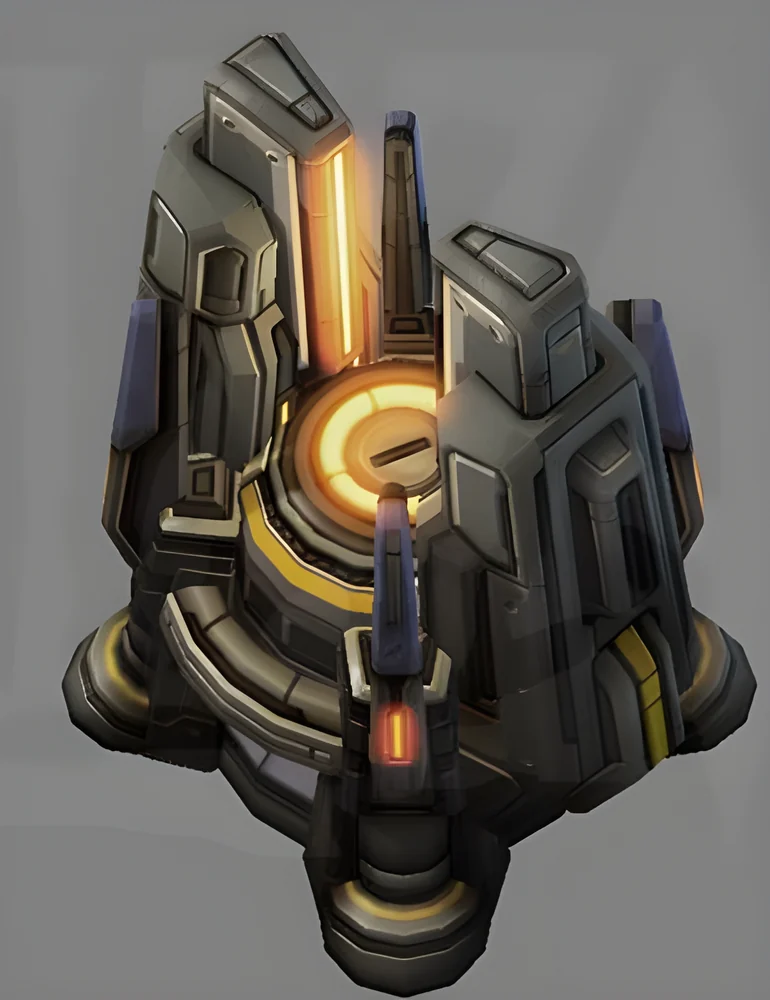
Psi emitter
The psi emitter was a portable terran device that broadcast the amplified neural imprint of a ghost to draw the zerg across interstellar distances. The Terran Confederacy built it as a containment weapon, and Arcturus Mengsk used it to annihilate the Confederacy at Tarsonis, an atrocity that haunted the Koprulu sector for years afterward.
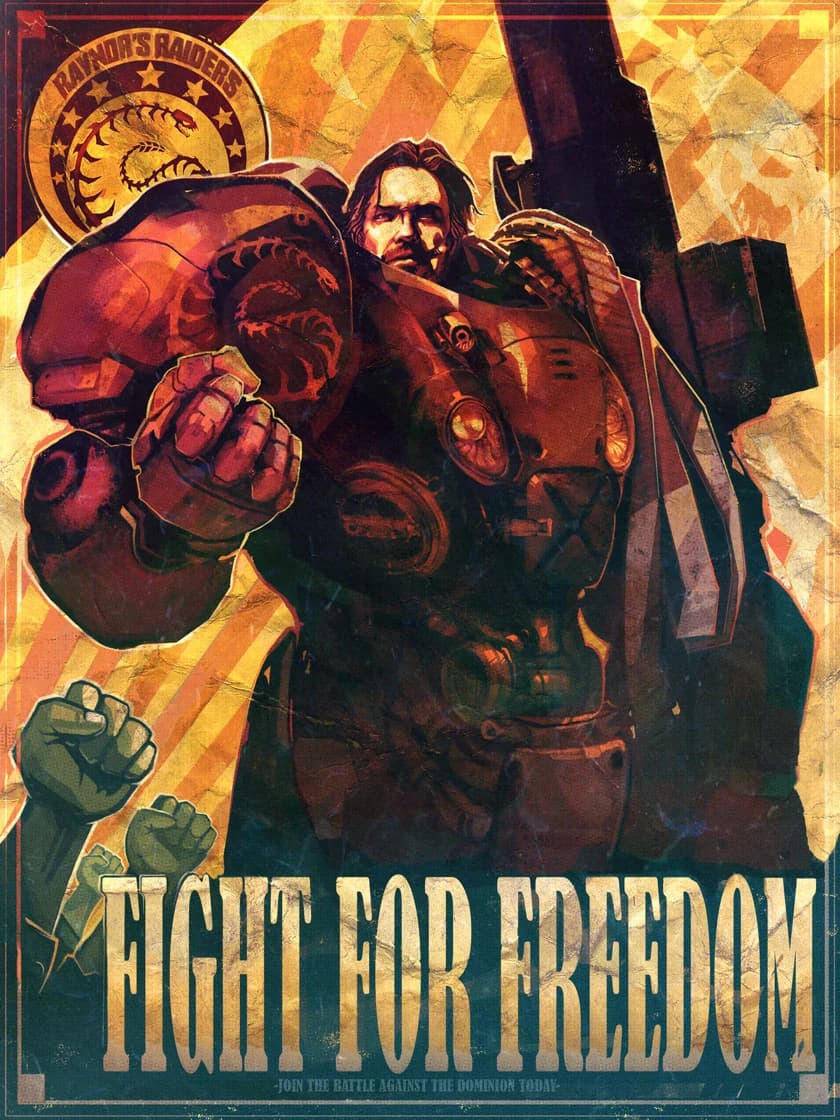
Raynor's Raiders: the rebel band of Jim Raynor
Raynor's Raiders were the terran rebel formation led by Jim Raynor, born from Raynor's Rangers after Arcturus Mengsk abandoned Sarah Kerrigan at New Gettysburg, waging a long insurgency against the Dominion from the battlecruiser Hyperion.
Mentioned in25 entries
2499: the year the Great War began
2499 was the final year of peace in the Koprulu Sector and the first year of the Great War. It opened with quiet training rosters and covert cover ups, and it closed with two Confederate colonies burned from orbit, the zerg revealed to terran eyes, and rebellion spreading from Mar Sara to Antiga Prime.
2502: the year of quiet atrocities
2502 fell in the uneasy years between the Brood War and the Second Great War. The Terran Dominion hid a colonial massacre behind parade broadcasts, Emperor Mengsk buried the mother of his heir, a squad of outlaw commandos was sent to kill Jim Raynor, and secret programs built on stolen ghosts and captive protoss advanced in the dark.
Annihilators
The Annihilators, officially the 22nd Confederate and later Dominion Marine Division, were a small ground-based special forces unit famed for the highest zerg kill rate in the terran armed forces. They served first the Confederacy and then the Terran Dominion.
Artificial intelligence: machine minds of the Koprulu sector
Artificial intelligence was simulated intelligence implanted as computer coding, carried in software or in hardware such as robots. Terrans relied on it for everything from navigation to warfare, the protoss built their automatons through psionic manufacture and once created the sentient Purifiers, and even the xel'naga left thinking crystals behind them.
Colin Phash
Colin Phash was a young terran with powerful psionic gifts, the son of the Dominion senator Corbin Phash. Hunted for his abilities and forced into the Ghost Academy, he was eventually freed and became the youngest known member of the Umojan shadowguard.
Confederate Armed Forces: military arm of the Terran Confederacy
The Confederate Armed Forces was the military of the Terran Confederacy, headquartered on Tarsonis and organized into squadrons of conscripts and resocialized criminals. It fought the Kel-Morian Combine in the Guild Wars, razed Korhal with nuclear weapons, and collapsed when the zerg overran Tarsonis.
Confederate Marine Corps: infantry backbone of the Terran Confederacy
The Confederate Marine Corps was the best known military arm of the Terran Confederacy, an infantry service older than the Confederacy itself that filled its ranks with resocialized criminals and reluctant volunteers. It fought the Kel-Morian Combine through the Guild Wars and was destroyed alongside its government when the zerg overran Tarsonis.
Corbin Phash: the senator who defied the Dominion
Corbin Phash was a Terran Dominion senator from Maltair IV who hid his son Colin's psionic gifts from the Ghost Program. When the secret broke he fled to the Umojan Protectorate, survived a ghost assassin, and waged a propaganda war against Arcturus Mengsk from exile.
Dominion Armed Forces
The Dominion Armed Forces were the military of the Terran Dominion, built from the Sons of Korhal and the conscripted remnants of the Confederacy. Across the Brood War, the Second Great War, and the war against Amon they grew into the most powerful terran military in the Koprulu sector.
Every Terran Unit in StarCraft and StarCraft II, Explained
Every terran unit from StarCraft, Brood War and the three StarCraft II campaigns, sorted into infantry, vehicles and starships. Each entry covers who built it, what it was for and which games it appears in.
Gabriel Tosh: the ghost terrazine remade
A loyal Dominion ghost until a psychic catastrophe and terrazine broke him. Tosh led Project Shadowblade against Mengsk, and his fate turns on a choice in Wings of Liberty.
Ghost
Ghosts were the feared psionic covert operatives of the terran sector, drawn from psychically gifted individuals, trained from infancy as assassins, and used to guide nuclear strikes for the Confederacy and the Dominion.
+ 13 more
Get new articles in your inbox
No spam. New lore drops, canon conflicts, and deep dives only when they’re worth reading.
Some links on Lore Fortress are affiliate links. If you buy through them we earn a small commission at no extra cost to you.