Atomics: the forbidden arsenals of the Great Houses
Atomics was the Imperial term for nuclear weapons of mass destruction, the fission devices every Great House hoarded but almost never dared to use. The Great Convention made their offensive use against human targets grounds for planetary annihilation, yet the Houses kept their family arsenals in reserve, and history recorded the terrible occasions on which the ban failed.
Atomics was the name given throughout the Imperium to the process of nuclear fission and, more specifically, to the nuclear weapons of mass destruction built upon it. Every Great House of the Landsraad maintained its own family atomics, arsenals held in secret and almost never spent, for the Great Convention decreed that the offensive use of atomics was grounds for planetary annihilation. The weapons carried a stigma older than the Imperium itself, born of their devastating employment in the war against the thinking machines, and for millennia they existed chiefly as instruments of deterrence. The most celebrated exception came on Arrakis, where Paul Atreides turned the family atomics of House Atreides against the Shield Wall itself and rode to the throne of the Known Universe through the breach. (Dune; Dune: The Butlerian Jihad)
A weapon no House dared use#
Atomics occupied a singular place in the arsenal of the Imperium. They were rarely used, and the reluctance was not merely legal. The weapons harbored a pronounced psychological and social stigma, the residue of traumatic historical events that mankind had never allowed itself to forget. In the expanded books, that aversion traces back to the devastating use of atomics during the war against the thinking machines, a conflict in which many worlds were scarred by nuclear fire, Earth, cradle of the species, above all. (Dune; Dune: The Butlerian Jihad; Dune: The Battle of Corrin)
Yet the horror of the weapons never persuaded the Houses to give them up. The Great Houses continued to stockpile atomics through the long peace of the Imperium. The Convention barred their use against human targets, and the arsenals sat in reserve, a power every House held and none could spend without bringing the rest of the Imperium down on it. (Dune)
The Great Convention and the family arsenals#
The prohibition on atomics was enforced by the Great Convention, the universal truce held in place by the balance of power between the Great Houses, the Spacing Guild and the Imperium. Its chief law forbade the use of atomic weapons against human targets, and each of its laws began with the words "The forms must be obeyed." The offensive use of atomics was grounds for planetary annihilation, the combined retribution of the whole Imperium falling upon the offending House. (Dune)
The result was a balance both stable and strange. Every House Major kept family atomics; no House Major admitted to planning their use. The weapons became heirlooms of deterrence, hidden away and passed down the generations, their existence universally known and their deployment universally unthinkable. When the arsenals did emerge into the light, the occasion marked a rupture in the order of the Imperium itself. (Dune)
The Butlerian Jihad and the Great Purge#
In the expanded books, the atomic trauma at the root of the stigma began with Earth. At the outset of the Butlerian Jihad, all life on humanity's homeworld was destroyed by atomics, and the cradle of the species was left a poisoned ruin. The lesson was not restraint. Over the course of the Jihad the weapons were turned systematically against the enemy, and in the protracted campaign remembered as the Great Purge, atomics destroyed the thinking machines and all biological life on numerous planets, Earth alone excluded from the tally by virtue of having been lost already. (Dune: The Butlerian Jihad; Dune: The Battle of Corrin)
The instruments of the Purge included pulse-atomics, weapons developed by the Army of the Jihad specifically against the gelcircuitry of the machines and held on the shelf within the League worlds for years before their employment. Their use was absolute in its effect. Each time a Synchronized World was liberated, every human slave and Trustee on its surface died alongside the thinking machines being eradicated. The campaign broke the machine empire and led at last to the Battle of Corrin, and it burned the fear of the atom into the species for ten thousand years. (Dune: The Battle of Corrin)
Not every atomic horror of the age was genuine. On the planet Poritrin, during the second slave revolt, a cataclysm commonly attributed to atomics was in truth caused by the interaction of a laser with a Holtzman shield. The distinction mattered little to those who remembered the fire, and the event was counted among the atomic catastrophes of history regardless. The same lethal interaction between lasgun beam and Holtzman field remained a source of pseudo-atomic destruction throughout the Imperial age. (Dune: The Machine Crusade; Dune)
Catastrophes of the Imperial millennia#
The Great Convention did not end the use of atomics; it made each use a scar upon history. Long before the Corrino emperors of Paul's day, the renegade House Tantor managed to land on Salusa Secundus with its family atomics and, in a daring raid, bombed the capital of the Imperium. The Salusa Incident set off an ecological catastrophe that damaged the planet's ecosystem beyond repair. A few members of House Corrino survived, among them the young Padishah Emperor Hassik Corrino III, and the Imperial capital had to be moved to Kaitain, where it remained for the rest of the Corrino age. (Dune: House Atreides; Dune)
Millennia later, atomics were used again during the Great Spice War of Shaddam Corrino IV, in the destruction of Korona, an artificially created research moon orbiting the world of House Richese. The Emperor struck the moon after being tipped off by an anonymous letter left by House Harkonnen, whose Baron had lately been blackmailed by the Richesians, and the resulting damage to the planet below was catastrophic. A generation earlier, the fugitive Earl Dominic Vernius contemplated bombing Kaitain itself to repeat the fate of Salusa Secundus, a plan that died with him when, surrounded by Sardaukar at his Arrakis base, he detonated a stone burner and took a large number of the Emperor's soldiers with him. (Dune: House Corrino; Dune: House Harkonnen)
Muad'Dib and the Shield Wall#
The most consequential use of atomics in the history of the Imperium destroyed no city and killed no man directly. During the Desert War on Arrakis, Paul Atreides, fighting under the Fremen name Muad'Dib, held the family atomics of House Atreides, which had been hidden away on Arrakis and survived the Harkonnen attack that destroyed his father. When the Emperor himself landed near Arrakeen, Paul launched his final assault. He used the Atreides atomics to blow a hole in the Shield Wall that protected the capital from the deep desert and its storms, and through the breach the Fremen rode their sandworms into the Battle of Arrakeen, overwhelming the Sardaukar and Harkonnen forces and delivering the throne to House Atreides. (Dune)
The stroke was as much legal as military. By turning his atomics on the Shield Wall, a feature of the terrain, and not directly upon the opposing forces, Paul circumvented the Great Convention. No human target had been struck, no clause plainly violated, and no House could invoke planetary annihilation against him, which paved the way for his ascension. The maneuver demonstrated what the Houses had always quietly understood, that the Convention's forms could be obeyed in the letter while its purpose was shattered along with the rock. (Dune)
The stone burner and the letter of the law#
The law's careful definitions produced one further ambiguity, the stone burner. The stone burner was not considered an atomic weapon proper, for it merely ran on atomic fuel, yet it delivered destruction of a comparable order along with a signature horror of its own, radiation that dissolved the eye tissue of every creature within its radius. Stone burners appeared in the wars of Muad'Dib's own empire. During the conquest of Naraj, the defenders activated one such outlawed atomic device, and among its victims the son of the Fremen veteran Farok lost his eyes. (Dune Messiah)
At the end of Paul's reign as Emperor the weapon reached the throne itself. Conspirators against Muad'Dib set off a stone burner in Arrakeen, and the blast left Paul Atreides permanently blinded, the Emperor who had broken the Shield Wall losing his eyes to the atom's lesser cousin. The event stood among the recorded uses of atomics in Imperial history even though the device fell outside the formal definition, a final demonstration that the boundary between atomics and everything else was a matter of treaty language rather than of fire. (Dune Messiah)
Known kinds of atomics#
Frank Herbert's novels name the family atomics of the Great Houses and the stone burner, which stood apart as an atomic fuelled device outside the formal class. The expanded books add the pulse-atomics of the Butlerian Jihad, built to wipe out the machines' gelcircuitry. Whatever their form, all shared the same inheritance, the stigma of the machine wars and the shadow of the Great Convention, which together kept the most terrible weapons of mankind buried in the vaults of the Great Houses for ten thousand years. (Dune; Dune Messiah; Dune: The Battle of Corrin)
Sources
- BookDune, Frank Herbert, Chilton Books, 1965
- BookDune Messiah, Frank Herbert, G. P. Putnam's Sons, 1969
- BookDune: The Butlerian Jihad, Brian Herbert and Kevin J. Anderson, 2002 (expanded universe)
- BookDune: The Machine Crusade, Brian Herbert and Kevin J. Anderson, 2003 (expanded universe)
- BookDune: The Battle of Corrin, Brian Herbert and Kevin J. Anderson, 2004 (expanded universe)
- BookDune: House Atreides, Brian Herbert and Kevin J. Anderson, 1999 (expanded universe)
- BookDune: House Harkonnen, Brian Herbert and Kevin J. Anderson, 2000 (expanded universe)
- BookDune: House Corrino, Brian Herbert and Kevin J. Anderson, 2001 (expanded universe)
Spotted a factual error or a primary source we missed? Email a correction. Every flagged claim gets reviewed.
Followed from this entry
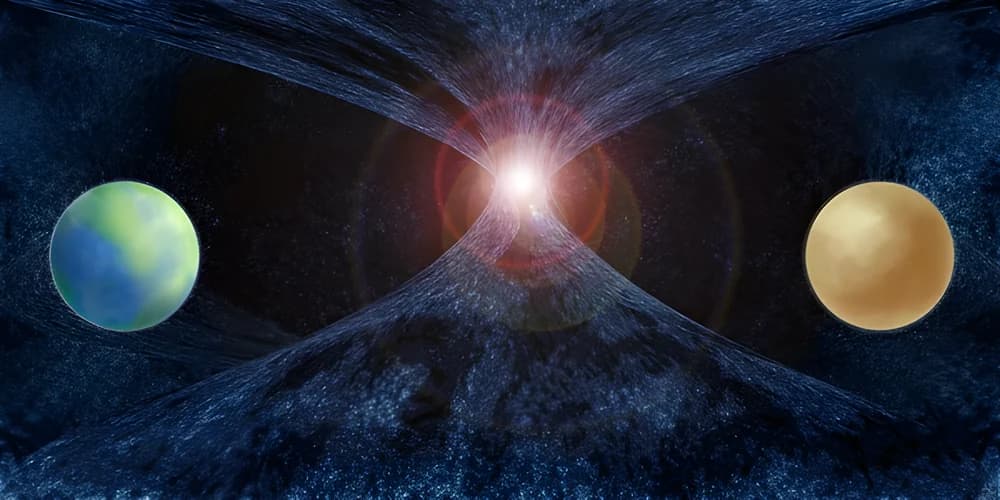
Holtzman effect
The Holtzman effect was a scientific theory concerning the repellent force of subatomic particles. From it sprang the defensive shield, the suspensor, the glowglobe, and above all the folding of space that made instantaneous travel across the universe possible.
Earth
Earth, also called Old Earth, Terra, or Old Terra, was the planet of the al-Lat system on which the human species first arose. By the age of the God Emperor it survived chiefly as ancestral memory and as fragments of Terran life carried across the worlds of the Imperium.
Great Convention
The Great Convention was the universal truce of the Imperium, held in place by the balance of power between the Spacing Guild, the Great Houses and the Imperium. Its chief law forbade the use of atomics against human targets, and its rules governed Kanly and the War of Assassins.

Lasgun
The lasgun was a continuous-wave laser projector, perhaps the most widely used hand weapon in the Imperium. Its great danger lay in shields: contact between a lasgun beam and a Holtzman shield triggered a nuclear explosion that could kill everyone nearby.
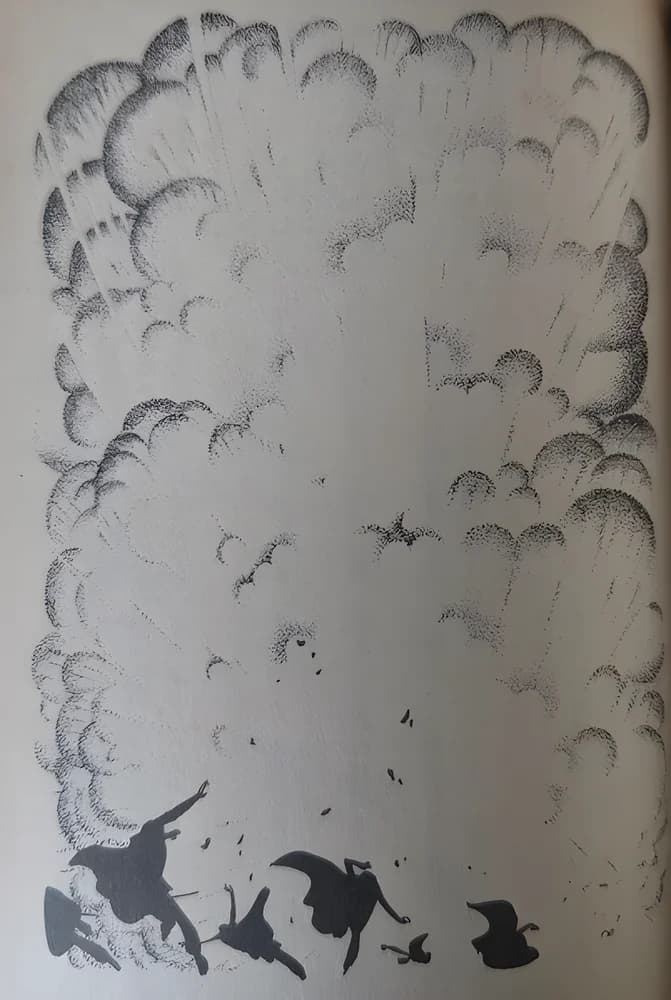
Stone burner
A stone burner was a particularly destructive weapon that released J-rays to dissolve eye tissue and blind every creature within its radius, while also capable of immense physical destruction. Powered by an atomic charge yet legally distinct from atomics, it was the weapon used to blind Emperor Paul Atreides.
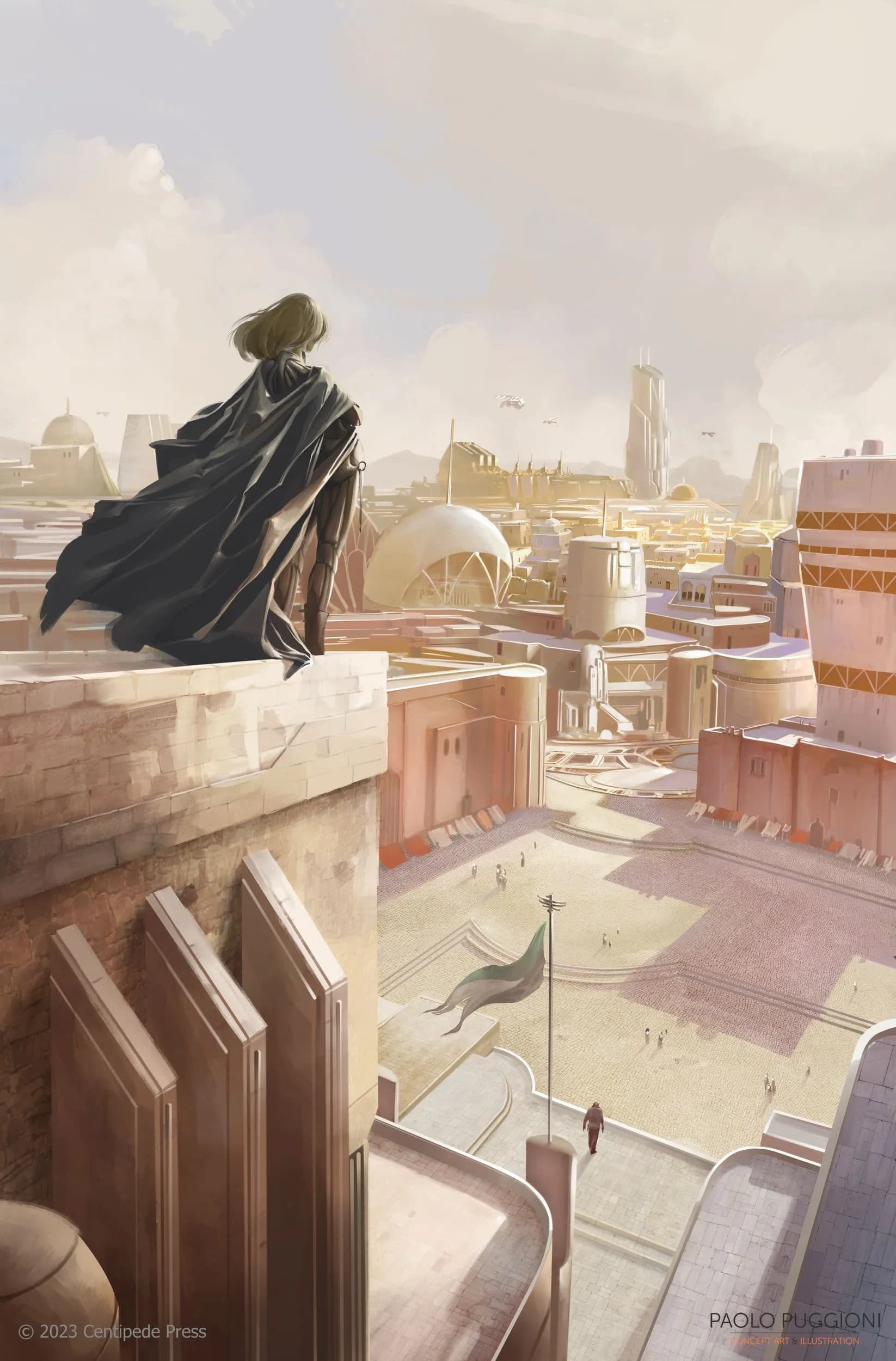
Arrakeen: the first city built on Arrakis
Sheltered by the Shield Wall near the northern pole, it held the Emperor's officials, House Atreides, then Muad'Dib's empire, then Leto II's festival city Onn.
Mentioned in9 entries
Dune (1984 Film) Explained: Plot Summary, Ending and Book Differences
The full story of David Lynch's 1984 Dune in order, from Irulan's opening narration to the rain over Arrakis, with the ending explained and the biggest changes from Frank Herbert's novel, including the weirding modules.
Dune Ending Explained: the Book's Plot Summary and Final Chapter
The whole plot of Frank Herbert's Dune in order, from the gom jabbar on Caladan to the duel with Feyd-Rautha in Arrakeen, then a plain explanation of the final chapter, what Paul wins, what he can no longer stop, and where the rest of the series goes from there.
Dune Timeline: from the thinking machines to the end of Kralizec
A dated chronology of the Dune universe, from the first age of space travel and the Butlerian Jihad to Paul Atreides, the God Emperor, the Scattering and the last war with the machines. Events run oldest first, era by era, and every entry says which book it comes from.
Dune: Part Two Ending Explained
The full story of Denis Villeneuve's Dune: Part Two in order, from Paul's first days with the Fremen to the duel with Feyd-Rautha and the start of the holy war, with the ending explained and the main ways it differs from Frank Herbert's novel.
Hiih Resser: the Moritani Swordmaster who refused
Hiih Resser was the only Grumman student to keep his place at the Ginaz school when House Moritani was disowned by the Swordmasters, and he went home expecting execution. He served his Viscount through a failed strike on Caladan and then quietly gutted the man's last atrocity by leaving the detonators off a field of buried atomics.
House Moritani: the Feuding House of Grumman in Dune
House Moritani ruled Grumman and is known in Frank Herbert's Dune for one thing, its War of Assassins against House Ginaz. The Brian Herbert and Kevin J. Anderson books add Viscount Hundro Moritani, whose feud with House Ecaz ended with the House wiped out.
How Did Paul Atreides Become Emperor?
Paul became Emperor by beating Shaddam IV on Arrakis, threatening to destroy the spice, and marrying Princess Irulan to take the throne through her claim. Here is how he won, why the Guild gave in and how the films tell it.
Muad'Dib's Jihad: the holy war that remade the Imperium
Muad'Dib's Jihad is the holy war fought by the Fremen legions in Paul Atreides's name. Paul foresees it all through Dune, and when Dune Messiah opens twelve years later it is still being fought, with sixty-one billion dead by his own count.
War of Assassins of 10,187 AG: the ruin of House Moritani
The second War of Assassins between House Ecaz and House Moritani began with a dead heir, a trade embargo and a wedding turned into a slaughterhouse. It ended on the salt basin outside Ritka with a mad Viscount, a field of buried atomics and a Swordmaster who quietly refused to arm them.
Get new articles in your inbox
No spam. New lore drops, canon conflicts, and deep dives only when they’re worth reading.
Some links on Lore Fortress are affiliate links. If you buy through them we earn a small commission at no extra cost to you.