Botanical testing station: the forgotten laboratories of Arrakis
The botanical testing stations were scientific outposts on Arrakis. Pardot Kynes used his station to train Fremen and pass them the tools for hidden windtraps and catchbasins, and an abandoned one is where Duncan Idaho died holding off the Sardaukar in Dune.
The botanical testing stations were scientific structures on the desert world of Arrakis. In Frank Herbert's Dune, the Planetologist Pardot Kynes runs one as his Imperial post, and an abandoned station is the hiding place where Duncan Idaho makes his last stand. The Dune Encyclopedia adds that the stations were where the Fremen learned the skills and took the tools for their hidden windtraps and water basins, and the expanded books push their history back to the Old Empire. (Dune; Dune (appendix); The Dune Encyclopedia; Expanded books: Dune: The Machine Crusade)
Outposts of the Old Empire#
The expanded books give the stations a deep past. In Dune: The Machine Crusade, set thousands of years before Dune, the oldest of them are already relics, assembled by Old Imperial scientists who once studied the Arrakeen environment and then left. (Expanded books: Dune: The Machine Crusade)
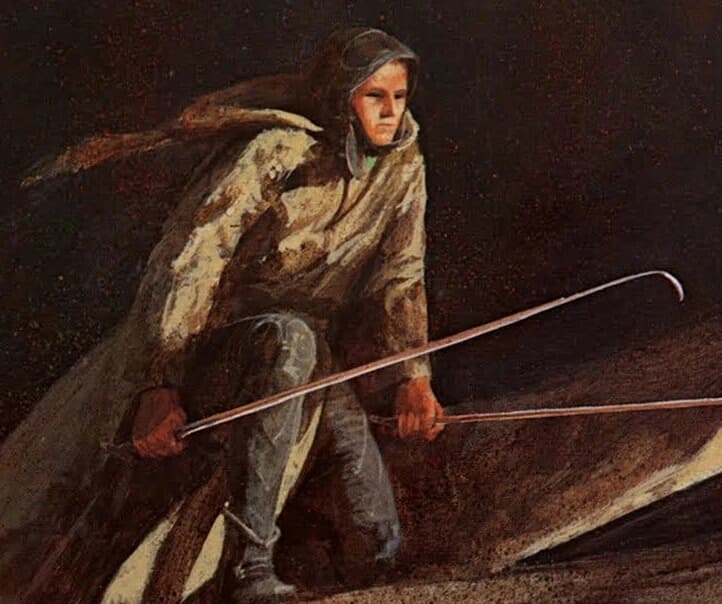
One of these ancient stations is found by the young Zensunni outcast Selim Wormrider. After the desert ordeal in which he first rides one of the great worms, Selim comes upon a station hidden nearby, camouflaged in the rocks. It gives him shelter, and its ancient rations have stayed preserved through the ages. He also finds hundreds of literjons of water inside, collected over the centuries by automated moisture extractors that went on harvesting the air long after the station's builders had gone. (Expanded books: Dune: The Machine Crusade)
Cradles of the sietch#
Frank Herbert's appendix to Dune tells how Pardot Kynes won the Fremen over and set them to work on his plan to remake Arrakis. The Dune Encyclopedia fills in the station's part in it. Under the noses of his Harkonnen overseers, Kynes smuggled desert Fremen into his testing stations, where they studied, ran tests and carried tools and equipment back to their sietches to set up hidden windtraps and water basins. (Dune (appendix); The Dune Encyclopedia)
The stations also lent their names to the Fremen's secret gardens. According to The Dune Encyclopedia, the eight palmaries planted in the south were named after eight of the Imperial Testing Stations, so that they could be talked about without alerting the Harkonnens. (The Dune Encyclopedia)
The station of the Kynes#
Pardot Kynes, the Imperial Planetologist sent to study Arrakis, made a testing station his official post. After the Fremen took up his vision of a transformed Arrakis and hailed him as umma, a prophet, Kynes went back to that post and used it as cover for their work, bringing in Fremen as its personnel and diverting tools such as cutterays to dig underground catchbasins and hidden windtraps. He organised small-unit experiments with regular interchange of data, building up a mass of tiny observations of the planet's climate and life. (Dune (appendix); The Dune Encyclopedia)
The station grounds also served his research directly. In The Dune Encyclopedia's account, Kynes worried that the sandtrout, the water stealers of the deep desert, could dry out any area his Fremen chose to plant. He had several captured and loosed in one of the testing station gardens. The plant roots stopped them sealing off water, and those that did not leave the garden died, which put his fears to rest. (The Dune Encyclopedia)
Pardot's work passed to his son. Liet-Kynes, raised among the Fremen, succeeded him as Planetologist and carried on the plan his father had started. (Dune; Dune (appendix))
The last refuge of Duncan Idaho#
An abandoned testing station is the setting for one of the bitterest episodes of the fall of House Atreides. When the Padishah Emperor's Sardaukar join the attack on Arrakeen in Harkonnen uniform, the Atreides Swordmaster Duncan Idaho survives the massacre of the household. He finds Paul Atreides and the Lady Jessica in the desert after their escape from their Harkonnen captors and brings them to the old station, where the Planetologist Liet-Kynes is waiting. (Dune)
The refuge does not hold for long. Sardaukar find the station and storm it, and Duncan Idaho is cut down holding the way, though not before he has killed nineteen of the Emperor's soldiers. Paul and Jessica escape in an ornithopter and flee toward the deep desert, parting ways with Kynes. The fight at the old station opens the road to the Desert War, the long campaign by which Paul and the Fremen would break the Harkonnens and the Imperium itself. (Dune)
Sources
- BookDune, Frank Herbert, Chilton Books, 1965
- BookDune (appendix), Frank Herbert, 1965; Appendix I: The Ecology of Dune
- BookThe Dune Encyclopedia, Willis E. McNelly (ed.), Berkley Books, 1984
- BookDune: The Machine Crusade, Brian Herbert and Kevin J. Anderson, 2003 (expanded universe)
Spotted a factual error or a primary source we missed? Email a correction. Every flagged claim gets reviewed.
Followed from this entry
Arrakis
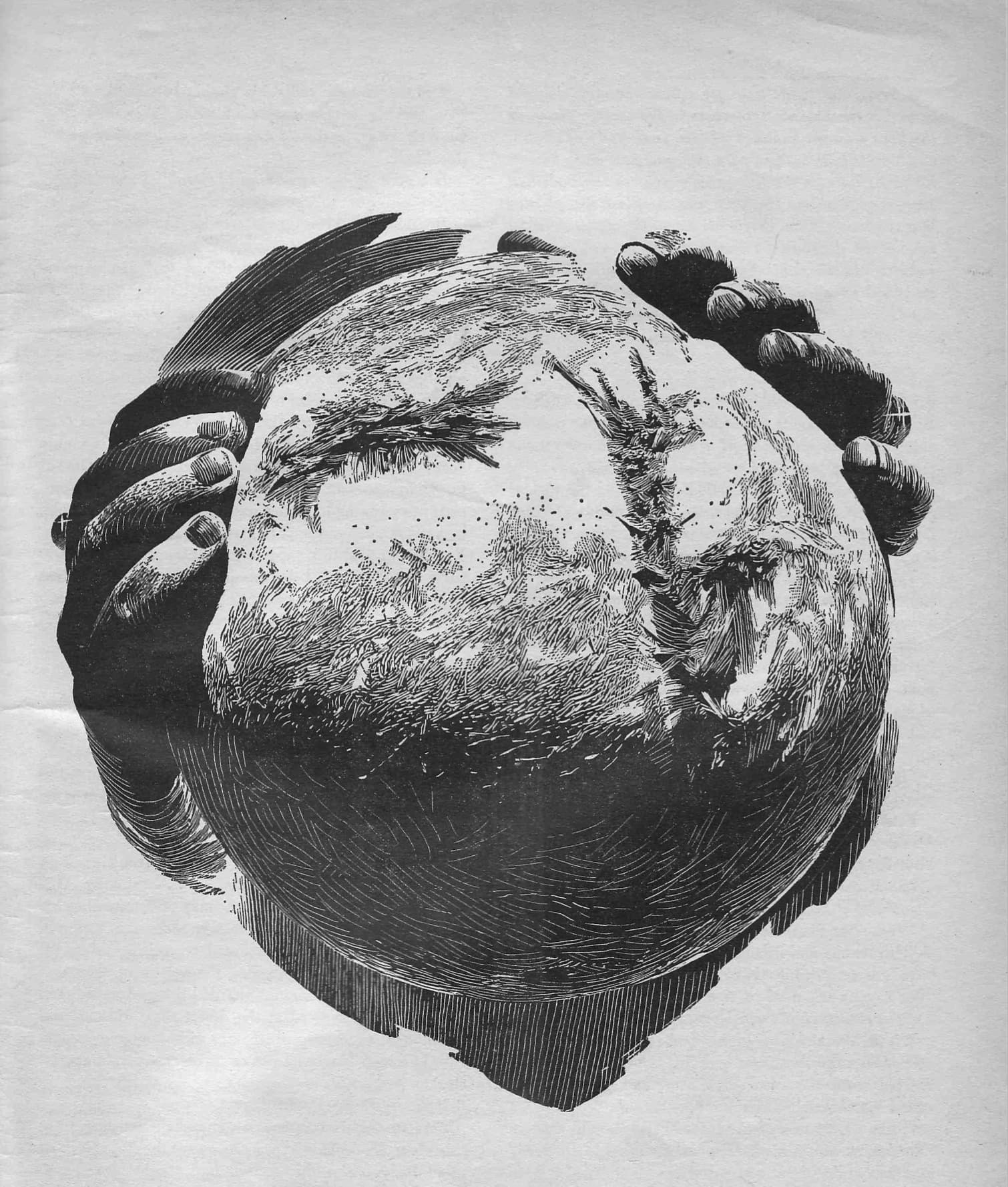
Arrakis, known as Dune and later as Rakis, was a harsh desert world in the Canopus system and the only natural source of the spice melange. Home to the Fremen and the sandworms, it became the seat of the Atreides empire and the center of the known universe.
Fremen
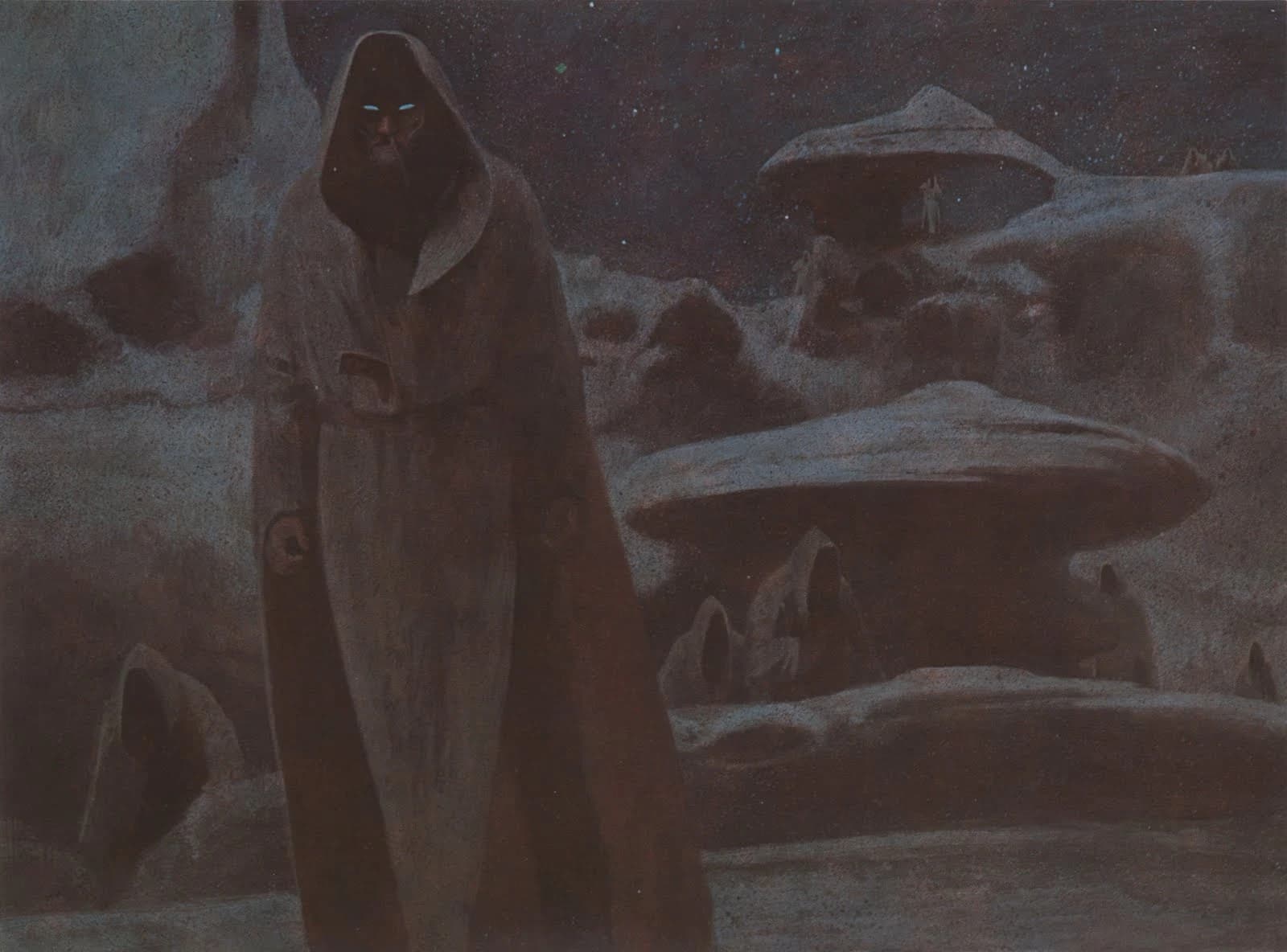
The Fremen were a culture of humans descended from the Zensunni Wanderers who made the desert planet Arrakis their home. Hardened by water scarcity and generations of persecution, they became the finest fighters in the Known Universe and the foot soldiers of Paul Atreides and his jihad.
Liet-Kynes
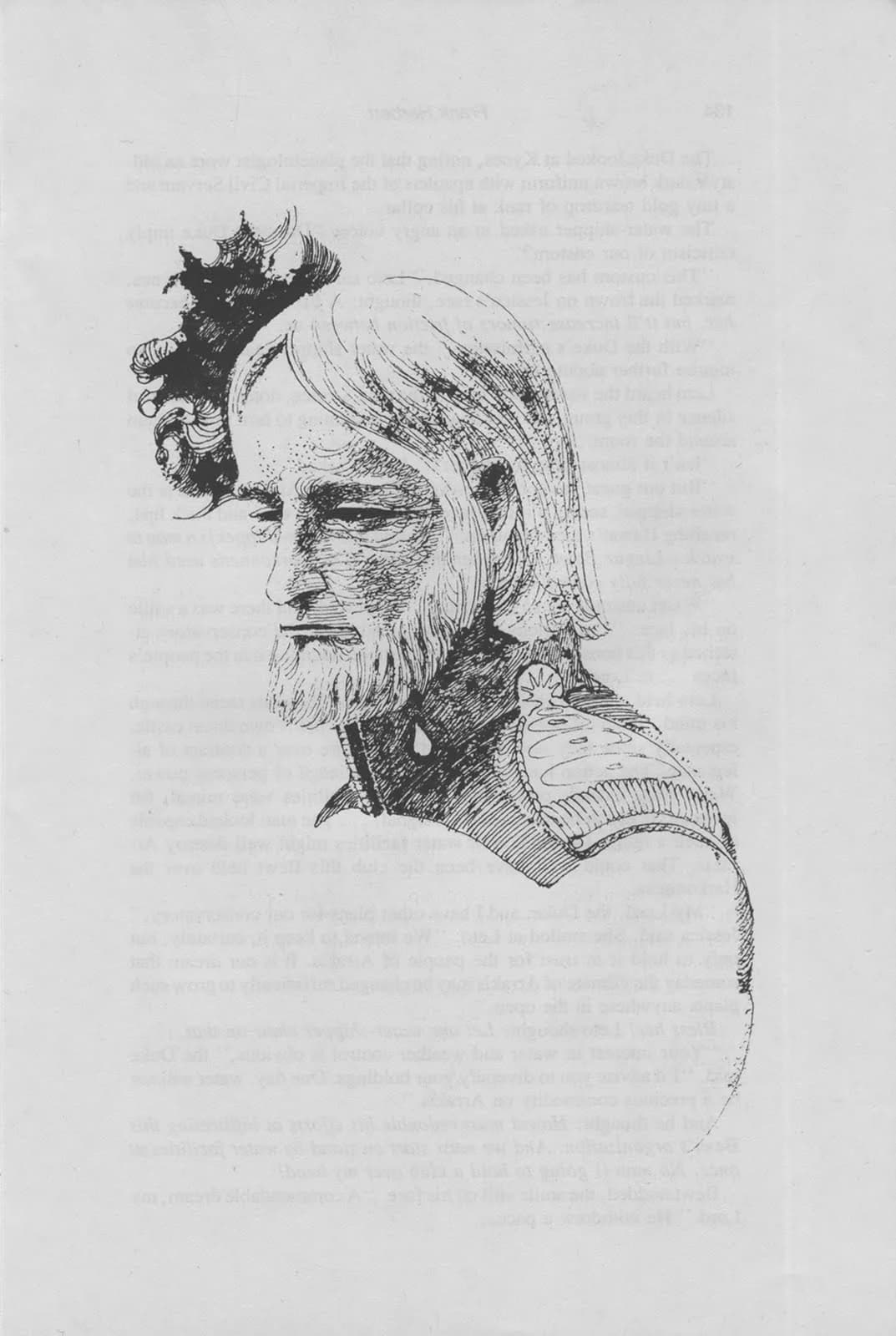
Liet-Kynes was the Imperial planetologist of Arrakis, Judge of the Change, and the secret leader of the Fremen. He carried on his father's dream of greening the desert and died saving Paul and Jessica from the Harkonnens.
Ornithopter
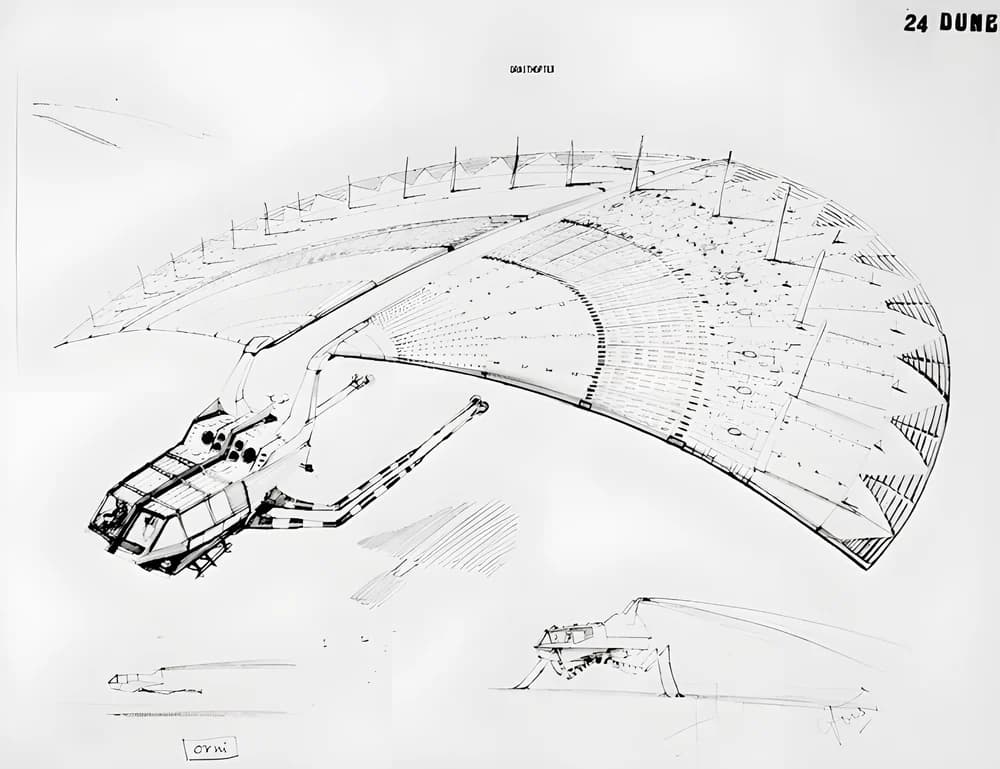
The ornithopter, or thopter, was the most common small transport aircraft of the Imperium, flying by jet propulsion and by mimicking the wingbeats of birds. It carried passengers and cargo, served in war, and on Arrakis dueled with the sandworms above the spice sands.

Pardot Kynes
Pardot Kynes was the Imperial Planetologist who first studied Arrakis, married into the Fremen, and gave them his dream of greening the desert. His vision of a transformed Dune would be carried on by his son Liet-Kynes.
Paul Atreides
Paul Atreides was the last Duke of House Atreides and the prophet Muad'Dib of the Fremen. The long-awaited Kwisatz Haderach of the Bene Gesserit, he toppled Emperor Shaddam IV, founded the Atreides Empire, and unleashed a jihad across the Known Universe before walking blind into the desert.
Mentioned in3 entries
Dune Ending Explained: the Book's Plot Summary and Final Chapter
The whole plot of Frank Herbert's Dune in order, from the gom jabbar on Caladan to the duel with Feyd-Rautha in Arrakeen, then a plain explanation of the final chapter, what Paul wins, what he can no longer stop, and where the rest of the series goes from there.
Dune: Part One Ending Explained
The whole story of Denis Villeneuve's Dune: Part One in order, from the Emperor's gift of Arrakis to the duel with Jamis in the deep desert, then a plain explanation of the ending and the main ways the film differs from Frank Herbert's novel.
Windtrap: the water harvester of Arrakis
The windtrap was a facility on Arrakis built to reclaim the faint moisture of the night air and funnel it into great underground catchbasins. It sustained the sietch communities of the Fremen, served the terraforming program of Pardot Kynes, and calmed the water riots that greeted the arrival of House Atreides.
Get new articles in your inbox
No spam. New lore drops, canon conflicts, and deep dives only when they’re worth reading.
Some links on Lore Fortress are affiliate links. If you buy through them we earn a small commission at no extra cost to you.