Ballista: siege engine of the Greek world
The ballista was a great crossbow of the Greek world, fixed to the ground or mounted on a moving platform and built to hurl huge wooden bolts against ships and city walls. In the hands of Kratos, these engines sank a Persian warship, drove off the Basilisk, struck the Colossus of Rhodes, slew Pandora's Guardian, and knocked the sun god Helios from the sky.
The ballista was a war engine of the Greek world, a powerful crossbow fixed to the ground or set upon a moving platform, built to loose huge wooden bolts against enemy ships and city walls. Its missiles were sometimes coated in a flammable mixture and lit before firing, so that a single shot carried both the weight of a battering ram and the ruin of fire. Emplacements stood in the cities of Attica, Athens, Rhodes, and Olympia, and others waited in stranger places, from the depths of Pandora's Temple to the chamber of the inventor Daedalus. Though the engine was built by mortal hands for mortal wars, its greatest shots were fired by Kratos, who turned it against warships, monsters, a bronze giant, and a god. (God of War (2005); God of War II; God of War III; God of War: Chains of Olympus)
An engine of walls and ships#
The ballista was among the heaviest weapons the Greek world set upon its walls. In its simplest form it was a crossbow grown monstrous, its frame anchored to the ground or carried on a platform that could be moved and turned. The bolts it threw were huge shafts of wood, and crews often coated them in a flammable mixture and set them burning before the shot, so that whatever the bolt struck was pierced and set alight in the same instant. Such missiles were made for shooting down enemy ships and battering city walls, and the largest engines could do far more. The great ballista of the Fortress of Athens loosed bolts that shattered wooden doors, brought down sections of stone wall, and killed a Minotaur outright with a single hit. (God of War (2005); God of War: Chains of Olympus)
Many of these engines were built to be aimed as well as fired. Some turned on their mountings when a lever behind them was pulled, some rode platforms that could be dragged and rotated into a new line of fire, and at least one, in the chamber of Daedalus, was crafted so that its bolt drew a rope behind it, turning a weapon of siege into a bridge for anyone bold enough to climb the line. (God of War (2005); God of War III)
The siege of Attica#
When the Persian fleet fell upon Attica, Eurybiades, the leader of the Attican army, was left mortally wounded in the fighting. A loaded ballista waited in front of him, and Eurybiades tried to drag himself to it and answer the fleet, but his wounds took him before he could reach the trigger. It fell to Kratos, fighting through the besieged city, to take the dead man's place at the engine. The Spartan turned it on the enemy and loosed, and the bolt struck one of the Persian ships and sank it. The fleet answered in kind: one Persian bolt destroyed the ballista where it stood, and another tore open a passage through the floor beside it. (God of War: Chains of Olympus)
The engines of Attica were not finished with the invasion. After the Persian King was slain, another ballista stood in the city while the Basilisk, an immense fire spitting beast, raged in the distance, burning what the Persians had not already destroyed. Kratos brought the weapon around and fired on the monster, and the bolt took the Basilisk in the neck. The creature screamed its anger at the Spartan and quit the field, driven off by a single well placed shot. The same engine could be turned against the city's own stonework, and a bolt from it was enough to break through the wall of a nearby building. (God of War: Chains of Olympus)
The walls of Athens#
The Fortress of Athens mounted two ballistae of very different scale. The first was enormous, a machine whose bolts destroyed wooden doors, broke some stone walls, and could slay a Minotaur in a single strike. It was trained on its targets by a lever set behind the frame. The second, smaller engine served a quieter purpose: its bolt carried a rope across a gap that could not otherwise be crossed, and Kratos climbed the line hand over hand to reach the far side. (God of War (2005))
A third ballista stood on the rooftops of the city, mounted so that it could be moved and rotated on its platform. Kratos wrestled the engine around until it faced a sealed door and fired, and the shot broke the door apart and opened the way to Zeus' Fury, the lightning of the sky father that the Spartan claimed in Athens. (God of War (2005))
The Challenge of Hades#
Deep within Pandora's Temple, in the Challenge of Hades, a huge ballista stood aimed at a massive wooden door bound with an iron lock. The bolts this engine threw were themselves enormous and burned as they flew, yet even they could not break the door they faced. What the door held back proved worse than what it promised. Pandora's Guardian, a giant Minotaur clad in heavy armor, came out from behind it, a beast so well protected that no ordinary blow could wear it down. (God of War (2005))
The ballista was the answer. Kratos fired the engine into the bull again and again, each shot tearing away part of its armor, until the beast stood unprotected. The final bolt took the Guardian full in the chest and drove it back against the wooden door, impaling it there. Even that blow did not break the door itself, but the Guardian's death did what the bolt could not: in its last throes, one of the beast's hooves smashed the base of the door, opening a gap about the height of a man, and through that breach Kratos went on. (God of War (2005))
The stone at Rhodes#
During the battle of Rhodes, when the Colossus of Rhodes was given life and sent against Kratos, a great ballista stood at the far edge of the battlefield, loaded not with a bolt but with a huge stone made ready for the giant's head. Timing decided everything. Loosed while the bronze giant still had its wits, the stone was simply caught in the Colossus's huge hands and smashed to pieces. Loosed while the giant reeled, it struck the statue's head squarely. Kratos then used the engine a second time in a way no armorer had intended, firing himself from it at the staggered Colossus, and in the close fighting that followed he blinded the giant's eye. (God of War II)
Olympia and the chamber of Daedalus#
The last great shots of the ballista were fired in the war against Olympus itself. At Olympia, Kratos came upon Helios in his chariot, battling the Titan Perses above the war torn city. The Spartan climbed to a ballista mounted on one of the buildings and fired on the sun god. The shot struck home and left Helios disoriented, and Perses seized his moment: the Titan caught the chariot out of the air, crushed it in his hand in a burst of blinding light, and hurled it away against the mountain. Perses climbed on toward Olympus, and Kratos went after the broken god where he had fallen. (God of War III)
In the chamber of Daedalus, Kratos found an engine much like the rope drawing ballista of Athens, one that could be swung to the left or right before firing. Its bolt pulled a line behind it, and wherever the bolt lodged, the rope could be climbed. The chamber was threaded with magic portals, each opening onto a different part of the workshop, and by firing the ballista through them the rope could be made to reach places no stair or ledge served. A crank at the side of the chamber raised the very floor beneath the engine, changing its line of fire again. By such shots Kratos brought down the caged treasures of the workshop, among them Daedalus' Schematics, the intricate blueprints drawn by the master inventor's own hand. (God of War III)
Sources
- GameGod of War (2005), Santa Monica Studio, 2005
- GameGod of War II, Santa Monica Studio, 2007
- GameGod of War III, Santa Monica Studio, 2010
- GameGod of War: Chains of Olympus, Ready at Dawn, 2008
Spotted a factual error or a primary source we missed? Email a correction. Every flagged claim gets reviewed.
Followed from this entry

Athens: Athena's city, besieged by Ares
Ares laid siege to Athens out of hatred for his sister Athena. Kratos was sent to save it, and killed Ares there to become the new God of War.
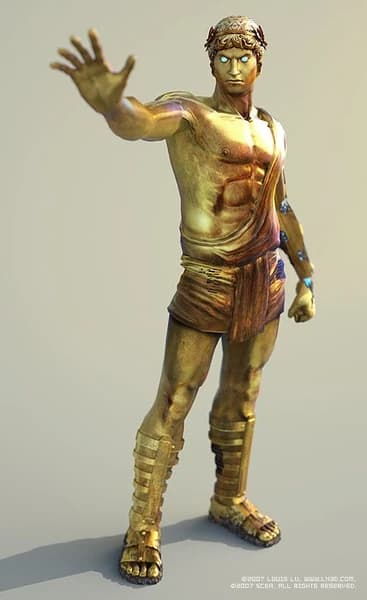
Colossus of Rhodes
The Colossus of Rhodes was a towering bronze statue of the sun god Helios that stood over the port of Rhodes. Animated by Zeus to destroy Kratos, it tore through the city in pursuit of the Spartan, and its fall left him a mortal once more.
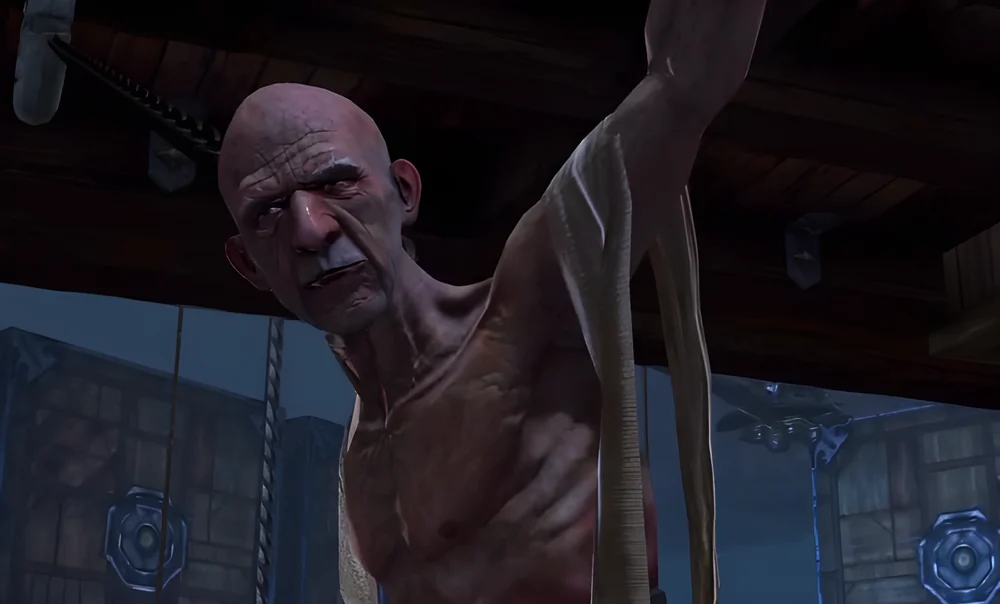
Daedalus
Daedalus was the master craftsman of Athens who built the great Labyrinth for Zeus in return for the promise of his lost son Icarus. Driven to madness in years of servitude and chained within his own creation, he was crushed when Kratos set the Labyrinth turning, and died grateful at last to be free.

Helios: the sun god Kratos beheaded
Kratos once saved Helios from the Titan Atlas. Years later he tore the sun god's head from his body and carried it through Olympus as a lantern.
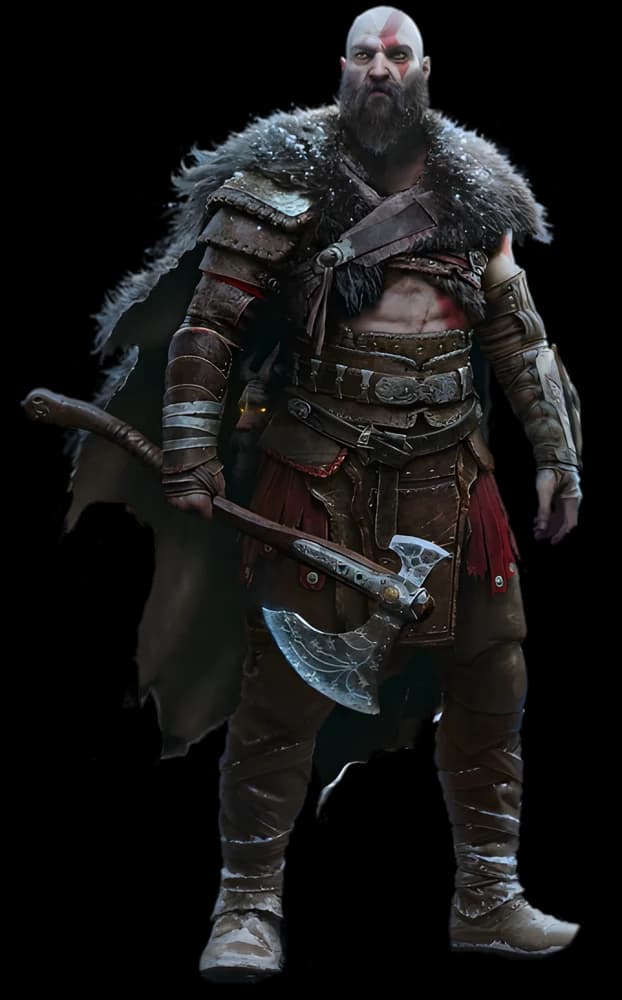
Kratos
Kratos was the demigod son of Zeus who rose from a Spartan general to the Greek God of War, destroyed the pantheon of Olympus in a quest for vengeance, and then began again in the Norse realms as a father seeking to leave his bloody past behind.

Minotaur
The Minotaurs were a species of towering bull-headed warriors first bred by Ares as brutes for his armies. From the labyrinth-bound Asterion of legend to the armored guardian of Pandora's Temple, they served as beasts of war across Greece and were a recurring foe of Kratos.
Get new articles in your inbox
No spam. New lore drops, canon conflicts, and deep dives only when they’re worth reading.
Some links on Lore Fortress are affiliate links. If you buy through them we earn a small commission at no extra cost to you.