Titania: Queen of the Faeries
Titania was the Queen of the Faeries, wife of King Oberon and mistress of Avalon in the Celtic Lands. She endured a bitter marriage to a cruel husband, and her name reached the Norse realms only through the memories of Mimir, the faerie once called Puck who had served her tormentor.
Titania was the Queen of the Faeries, wife of King Oberon and mistress of the faerie court that dwelt in Avalon, the land of the faeries in the Celtic Lands. No god or mortal of the North ever saw her, yet her name was spoken in the Nine Realms all the same, for the faerie who had once waited upon her court under the names Puck and Robin of the Goodfellows later crossed into the Norse lands and became Mimir, and the halls of Valhalla and the road to the Norns alike forced him to remember the queen he had helped to wrong. (God of War Ragnarök; God of War Ragnarök: Valhalla)
Queen of Avalon#
Titania belonged to the Fae, the supernatural folk whose homeland lay apart from the world of humans, and she reigned as Queen of the Faeries at the side of King Oberon. Together the royal pair dwelt in Faerieland, the domain also known as Avalon, a land of the Celtic Lands counted among whose residents were the king and queen themselves and the faeries of their household. (God of War Ragnarök: Valhalla)
Within that court Titania kept a household of her own. In Shakespeare's play four fairies attend her, Mustardseed, Peaseblossom, Moth, and Cobweb, charged with her comfort and her rest. The four were Goodfellows, members of the band of trickster faeries that gathered around Robin Goodfellow, the quick tongued servant of the king who was also called Puck, and who would one day be known across the Nine Realms as Mimir. The queen's own attendants were thus the closest friends of the very faerie her husband most often used against her. (A Midsummer Night's Dream; God of War Ragnarök: Valhalla)
A bitter marriage#
Little was recorded of Titania's temperament, but what survived of her story was shaped almost entirely by her marriage, and that marriage was a miserable one. By Mimir's account she was plainly unhappy as Oberon's wife, and the two rulers of the faeries quarreled frequently and openly. The discord did not spring from equal faults. Oberon was cruel and mischievous by nature, a king who delighted in chaos and found his best amusement in the suffering of others, and his own queen was not spared. Titania was made the target of his pranks, humiliated for the entertainment of her husband, and the pattern of that treatment suggested a long habit of cruelty rather than a single lapse. (God of War Ragnarök: Valhalla)
Why she remained beside him was never explained. Despite everything Oberon inflicted on her, Titania stayed in the marriage, and her reasons went unrecorded. To those in the Nine Realms who later heard her story, the arrangement bore a strong likeness to the union of Freya and Odin, another marriage in which one partner endured a deeply troubled bond with a domineering and deceitful spouse for reasons never fully understood. Titania, like Freya, was a queen bound to a king who regarded her pain as sport. (God of War Ragnarök; God of War Ragnarök: Valhalla)
The flower and the actor#
The worst of Titania's recorded humiliations took place far from Avalon. At one point Oberon uprooted his entire court and settled it in a forest outside Athens, there to observe a company of mortals, guests of the one called the Duke, and the romantic entanglements they had carried into the wood. The king presented his interest as a lofty one. He claimed to be defending true love against the pressures that beset it, and on that pretext he ordered Puck to retrieve a magical flower whose essence could bend affection itself. (God of War Ragnarök: Valhalla)
The flower's power was not what Oberon pretended. As Mimir later made plain, it did not create genuine love at all, but induced a temporary and obsessive devotion that was easily mistaken for it. Nor was the king's purpose noble. Whatever he claimed about aiding lovers, Oberon's true intent was to humiliate and torment his own wife. Once Puck had fetched the flower, its magic was turned on Titania, and the Queen of the Faeries was made to fall in love with something absurd, an actor named Nick Bottom. Under the enchantment she fawned over the preposterous object of her false devotion, and she and the others caught by the spell behaved foolishly until its power at last wore away. The episode was remembered as one instance among many, further proof that Oberon subjected his queen to cruelty and mockery for his own amusement whenever it pleased him. (God of War Ragnarök: Valhalla)
Echoes in the Nine Realms#
Titania never set foot in the Norse lands, and her fate after the days of the flower went unrecorded, yet the Nine Realms did not let her memory rest. Puck, weary of Oberon's fickle favor, eventually fled the domain of the Fae and made his way north, where he took the name Mimir, served Odin, and was in time freed from long imprisonment by Kratos. The guilt of his years in Oberon's service followed him. When Mimir accompanied Kratos through Helheim in search of the Norns, an illusion wearing the likeness of Sigrun tormented him with the charge that he had not helped Titania, the queen of the faeries, while she suffered under her husband. The accusation cut at an old wound, for Mimir had been the instrument of much of that suffering. (God of War (2018); God of War Ragnarök)
The full weight of that history emerged in Valhalla, whose shifting halls compelled Mimir to walk back through his oldest memories. There, at the side of Kratos, he confessed some of the ways in which Oberon had ordered him to torment the king's own wife, including the trick of the magic flower in the wood outside Athens. In the end, that was how Titania survived in the chronicles of the North, not through any deed of her own but through the remorse of the faerie who had wronged her, a queen of a distant land whose long suffering was finally spoken aloud in the halls of the honored dead. (God of War Ragnarök: Valhalla)
Sources
- GameGod of War (2018), Santa Monica Studio, 2018
- GameGod of War Ragnarök, Santa Monica Studio, 2022
- GameGod of War Ragnarök: Valhalla, Santa Monica Studio, 2023
- BookA Midsummer Night's Dream, William Shakespeare, around 1595 to 1596
Spotted a factual error or a primary source we missed? Email a correction. Every flagged claim gets reviewed.
Followed from this entry
Cobweb: faerie maid of Queen Titania
Cobweb was a faerie of Avalon, one of the male maids of Queen Titania and a member of the Goodfellows, the band of tricksters who ran with the young Mimir in the days when he was called Puck. He never reached the Norse realms, and his name survived there only in Mimir's recollections within Valhalla.
Mustardseed: faerie of the Goodfellows
Mustardseed was a faerie of Avalon, one of the faeries who attended Queen Titania and a member of the trickster band called the Goodfellows. He was a friend of Mimir in the days when the future Smartest Man Alive was known as Puck, and he was remembered in the Norse realms only through the old ambassador's recollections in Valhalla.
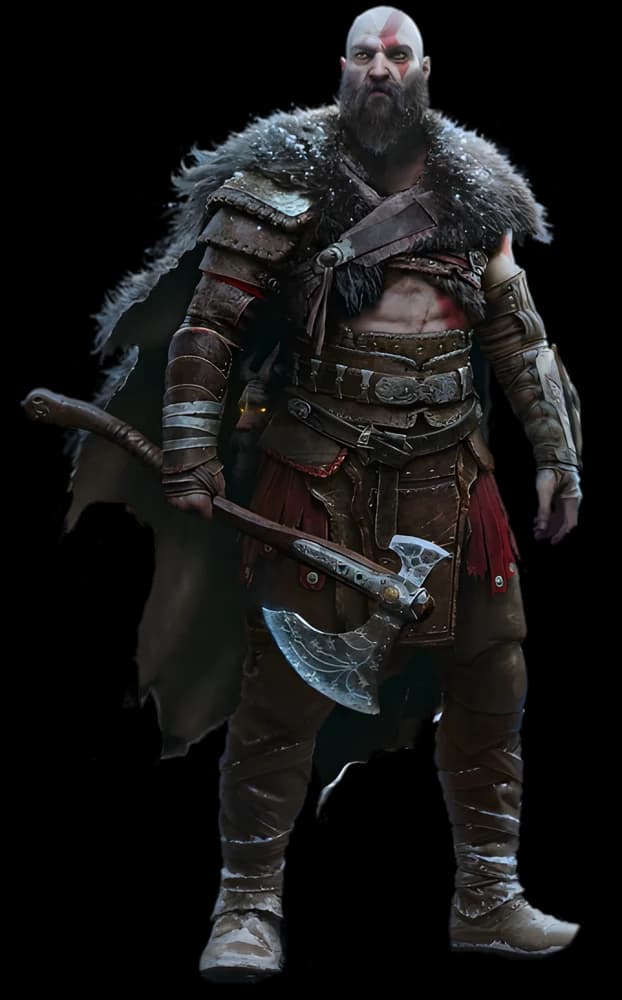
Kratos
Kratos was the demigod son of Zeus who rose from a Spartan general to the Greek God of War, destroyed the pantheon of Olympus in a quest for vengeance, and then began again in the Norse realms as a father seeking to leave his bloody past behind.
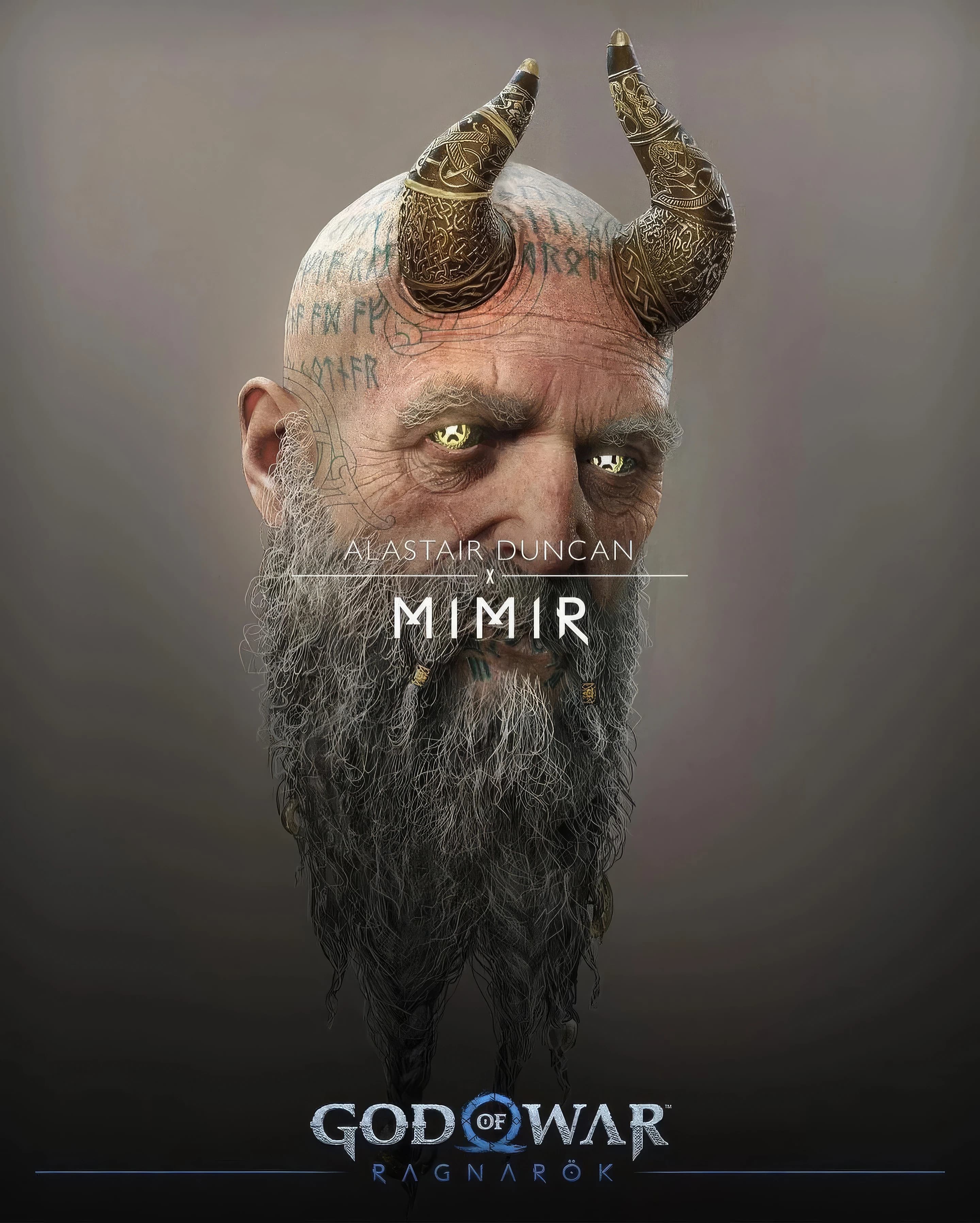
Mimir
Mimir was a Celtic fae who rose to become Odin's advisor and the ambassador of the Aesir before the All-Father imprisoned him for over a century. Freed and reanimated as a disembodied head by Kratos and Atreus, he became their guide, conscience, and friend across the Nine Realms.
Oberon
Oberon was the High King of the Fae, a capricious and cruel monarch of Fairyland. His fickle favor drove his servant Mimir to flee the realm of the Fae, a flight that carried Mimir into the Nine Realms.
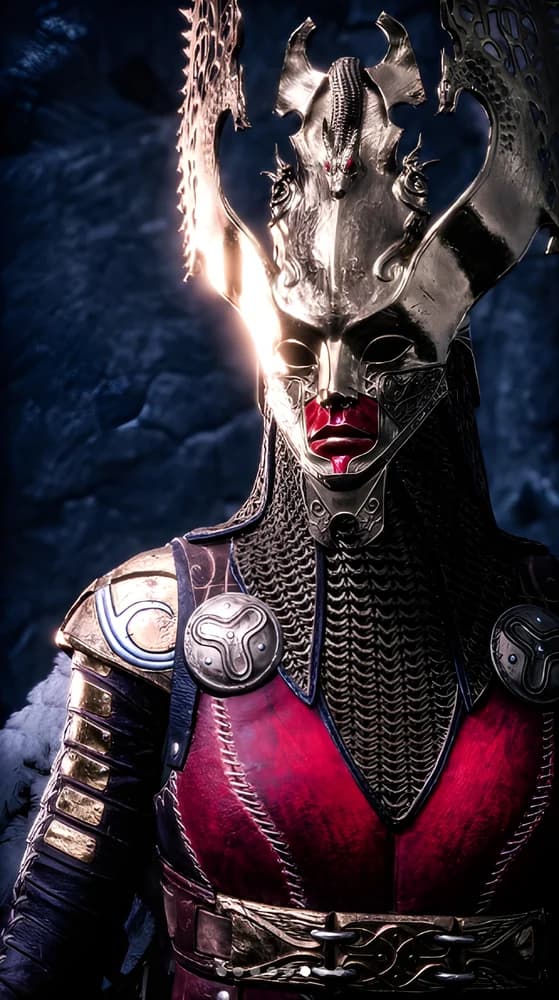
Sigrun: the Valkyrie Queen Kratos freed
Odin's curse drove the Valkyrie Queen mad, so Sigrun imprisoned her eight sisters and then herself. Kratos and Atreus beat her and freed her spirit.
Mentioned in4 entries
Avalon
Avalon was a hidden land of the Fae far from the Nine Realms, ruled by the faerie King Oberon and his queen Titania. It was the homeland of Mimir before he wandered into the Norse world, a place of mischief, magic, and the Goodfellows.
Cobweb: faerie maid of Queen Titania
Cobweb was a faerie of Avalon, one of the male maids of Queen Titania and a member of the Goodfellows, the band of tricksters who ran with the young Mimir in the days when he was called Puck. He never reached the Norse realms, and his name survived there only in Mimir's recollections within Valhalla.
Mustardseed: faerie of the Goodfellows
Mustardseed was a faerie of Avalon, one of the faeries who attended Queen Titania and a member of the trickster band called the Goodfellows. He was a friend of Mimir in the days when the future Smartest Man Alive was known as Puck, and he was remembered in the Norse realms only through the old ambassador's recollections in Valhalla.
Oberon
Oberon was the High King of the Fae, a capricious and cruel monarch of Fairyland. His fickle favor drove his servant Mimir to flee the realm of the Fae, a flight that carried Mimir into the Nine Realms.
Get new articles in your inbox
No spam. New lore drops, canon conflicts, and deep dives only when they’re worth reading.
Some links on Lore Fortress are affiliate links. If you buy through them we earn a small commission at no extra cost to you.