Every Lightsaber Combat Form Explained
A full breakdown of all seven classic lightsaber forms plus the rare styles most fans never hear about, from Shii-Cho to Trakata. Covers the body zones, marks of contact and maneuvers that sit underneath every form.
Most people can name seven lightsaber forms. That number is a convenience, not the whole picture. Each of the seven breaks down into subgroups and hybrids, several rare styles were never counted among them at all, and underneath every form sits a shared grammar of target zones, marks of contact and named maneuvers that duelists drilled for years. This page covers all of it: the seven classic forms, the variants inside them, the styles Luke Skywalker had to invent from scratch, and the obscure techniques that most fans have never heard of. Almost everything below is Legends material, since that is where the forms were actually documented in detail. Canon names most of the seven but rarely explains them. (Fightsaber: Jedi Lightsaber Combat; Jedi vs. Sith: The Essential Guide to the Force; The Jedi Path: A Manual for Students of the Force)
Body target zones, the three rings, and ready stances#
Continuity: Legends.
Before any form makes sense, you need the shared vocabulary underneath them. Most forms attack with horizontal swipes and parry with a vertical block, and the opponent's body is divided into six zones. (Star Wars: Attack of the Clones: The Visual Dictionary)
Zone one is the head. A zone one assault is a vertical cut, answered by a horizontal block, and it is usually set up from a high guard posture. The zone one parry holds the blade at head height, inclined across the body. Zone two covers the right arm and side, hit with horizontal side swipes and countered with a vertical power posture. Assuming a right handed duelist, every strike at the weapon arm is a zone two attack. Zone three mirrors it on the left, and assumes a left handed opponent. Zone four is the back, the most exposed target on anyone, usually attacked with a variation of a zone two or three strike. Its parry comes in two versions: angle the blade downward along the length of the back, or drop the hilt to the waist and angle it upward. The first is clearly better, but both were taught so students kept as many defensive options open as possible. Zones five and six are the right and left leg, attacked with downward slashes and defended with dropping parries from a hilt held near the waist. (Star Wars: Attack of the Clones: The Visual Dictionary)
On top of the zones sit the three rings of defense. The outer ring relies on long sweeping blows that strike at range. The middle ring works faster, holding guard positions at right angles either horizontally or vertically, and it is the primary means of deflecting blaster bolts in most forms. The inner ring is the last line, and nobody wants to be forced into it, though some forms live there far more than others. It works well against lunges because it uses short parries rather than full blocks. The distinction matters: a parry briefly redirects the blade so a counter can follow quickly, while a block simply stops the attack outright. In the inner ring the blade is angled to shove an opponent aside with its lower portion, opening a fast counter to the chest or arms. (I, Jedi; Star Wars: Attack of the Clones: The Visual Dictionary)
Stances vary by form and situation. The Jedi ready stance, strongly tied to Ataru, sets the dominant foot slightly back with the blade held in a vertical parry position on the dominant side. The defensive neutral stance is nearly identical but with the feet evenly spread. Offensive stances point the blade toward the opponent, though some defensive stances do too, and Form III famously holds the saber horizontally above the head, as Obi-Wan Kenobi does. Some ancient stances held the blade vertically. The Center of Being was one of these, letting a Jedi focus so intensely they could react almost instinctively. (Star Wars: Attack of the Clones: The Visual Dictionary; Revenge of the Sith)
Marks of contact#
Continuity: Legends.
Marks of contact name the objective of a strike rather than the motion. Learning them let a duelist aim with intent instead of just swinging. (Fightsaber: Jedi Lightsaber Combat)
Sun djem was popular with the Jedi and especially with Form I users. The goal was to disarm an opponent without wounding them, usually through Form I's Disarming Slash. Shiim was the frowned upon one: a minor wound, delivered as taunting by a stronger fighter, as Count Dooku does to Obi-Wan in their first duel, though weaker opponents also used it to wear an enemy down over time. (Fightsaber: Jedi Lightsaber Combat; Jedi Academy Training Manual; Attack of the Clones)
Then the dismemberment set. Cho mai takes a hand. Cho sun takes the whole arm. Cho mok takes a leg. Mou kei goes further, using a circular swing to sever multiple major limbs at once, which is what Obi-Wan lands on Anakin on Mustafar. Because lightsaber wounds cauterize and prosthetics were everywhere, both Jedi and Sith considered all of these merciful. They rarely killed. (Fightsaber: Jedi Lightsaber Combat; Revenge of the Sith)
The lethal marks are shorter. Shiak is the stab, running the blade through an opponent. The Sith aimed for the stomach or chest; Jedi aimed for arms or legs to keep their honor. Sai cha is decapitation, delivered with the zone two and three side swipes. Sai tok uses the same side swipes to cut an opponent in half, usually separating the legs from the torso, though a zone one vertical strike could bisect from shoulder to groin instead. (Fightsaber: Jedi Lightsaber Combat; Star Wars: Attack of the Clones: The Visual Dictionary)
The basic maneuvers#
Continuity: Legends.
Most maneuvers belong to a single form, but a handful are universal. Jung is a 180 degree turn taken before an attack to build momentum. Jung ma does the same with a full 360 degree spin. Shun is also a 360 degree spin, executed one handed. Sai is the leap over a swing aimed at the legs, usually followed by an overhead counter. (Star Wars: Attack of the Clones: The Visual Dictionary)
The Flowing Water cut waits for an opponent to strike and withdraw the blade to a defensive position, then follows their retreating blade in rather than pulling back, so the opponent effectively drags the attacker's saber into themselves. The name comes from the idea of water flowing into an empty vessel. The Falling Leaf is an ancient move: spin on the feet, slash at an opponent standing behind, and return to the original facing, described as slashing from the sky. The Dulon is taught to Padawans early, holding the pommel at the midsection with the blade angled thirty degrees up and slashing at high velocity, often to set up a shiak. Confusingly, dulon also refers to solo practice against imagined opponents. (Dark Forces: Jedi Knight; Star Wars: Attack of the Clones: The Visual Dictionary)
Jar'Kai, the art of two blades#
Continuity: Canon and Legends.
Jar'Kai never developed enough to count as a form of its own, but it predates the modern lightsaber entirely. Long before the Clone Wars, a group called the Yovshin Swordsmen crafted Jar'Kai dueling sabers built for dual wielding, named after a city on Atrisia. The Legions of Lettow, a group of dark side users, took up the related dual blade style of Niman, and in their war with the Jedi, the First Great Schism, it spread. After the Legions were defeated the Jedi absorbed the style into their own teaching, where Niman eventually became Form VI. (The Dark Forces Saga, Part 4: Of the Crudest Matter; The Complete Star Wars Encyclopedia)
Two blades let you sustain a pace of attack that overwhelms a single saber. The common tactic is to strike with one blade while the other holds defensive coverage, so the duelist never stops defending even while attacking. Against a group, more blades simply means more parries. The Rising Whirlwind swings both sabers around the body to build a defense and an attack at once, and the Twin Strike brings both blades down together to break a guard. (Jedi Academy Training Manual)
The costs are real. Two handed power strikes become impossible, and a strong enough opponent can crack a Jar'Kai guard unless the wielder is physically augmented the way General Grievous was. Training takes far longer, because a lightsaber's gyroscopic pull makes an untrained second blade a hazard to its own user. (Labyrinth of Evil; Star Wars: The Visual Dictionary; Knights of the Old Republic II: The Sith Lords)
Not every Jar'Kai user carried two standard sabers. Maris Brood used two guard shoto hilts that only worked in tandem. Grievous wielded four. The Priapulin Jedi Master Skwelli was known for wielding six. Pong Krell carried two double bladed lightsabers. Pairing a standard blade with a shorter shoto was common, and Luke Skywalker took up a shoto as a second blade to deal with Lumiya's lightwhip. Lightwhips sit outside all of this: long, flexible, hard to defend against, and offering almost no defense themselves, which makes them incompatible with the standard forms. Double bladed sabers and lightpikes are a milder version of the same problem. A wielder can lean heavily on one form, as Darth Maul does with Form VII, but the form in practice looks nothing like a single blade user's version. (Star Wars: The Force Unleashed; Revenge of the Sith; The Jedi Path: A Manual for Students of the Force; The Clone Wars, "Darkness on Umbara"; Legacy of the Force: Tempest; The Phantom Menace)
Form I: Shii-Cho, the Way of the Sarlacc#
Continuity: Canon and Legends.
Also called the Determination Form. Nearly every Jedi and Sith knows it, because it is the foundation everything else builds on and it is taught to initiates almost as soon as they reach the Temple. Obi-Wan Kenobi, Mace Windu and Yoda were all masters of it, though none used it as a primary style. Kit Fisto is the best-known exception, a true master of Form I who won serious fights with it. (Fightsaber: Jedi Lightsaber Combat; The Cestus Deception)
Shii-Cho comes from the transition out of swords. The earliest lightsabers were unstable and cumbersome, closer to ceremonial objects than weapons. As the technology improved and the saber became usable in combat, Shii-Cho evolved with it. Because sabers were swung like swords, the attacks and parries carried over largely unchanged. It was never designed for saber against saber fighting, since it predates the Dark Jedi and the Sith, but when they emerged it was the only option available. Once duels between Force users became routine, Form I was judged insufficient, and Form II was invented. (Jedi vs. Sith: The Essential Guide to the Force)
It never became obsolete. Its simplicity made it perfect for basic training and a viable fallback when nothing else fit. In combat it is deliberate, moving step by step and cutting off the angles, clumsy in lesser hands but relentlessly dogged. It also produces an emotionally charged, aggressive mindset with a strong pull toward finishing a duel fatally, which takes discipline to hold back. The sun djem mark of contact exists partly as that counterweight. The Sarlacc Sweep is its main offensive move, a wide arc designed to catch several opponents at once. Fending off multiple lesser enemies was Form I's real strength. Against a single skilled duelist, who had the freedom to find the gaps in its comparatively clumsy bladework, it struggled, and Fisto died quickly to Palpatine. It was also at a disadvantage against Makashi, since Makashi was invented to beat it. (Revenge of the Sith (novelization); The Cestus Deception; Fightsaber: Jedi Lightsaber Combat; Jedi Academy Training Manual; Knights of the Old Republic II: The Sith Lords; Revenge of the Sith)
Form II: Makashi, the Way of the Ysalamiri#
Continuity: Canon and Legends.
The Contention Form, born in an era with thousands of Jedi and Sith and constant saber to saber fighting. Blaster technology was nowhere near Clone Wars standards then, so Makashi is the most duel focused of the seven. (Fightsaber: Jedi Lightsaber Combat; Jedi vs. Sith: The Essential Guide to the Force)
Contrary to its reputation, it is one of the more defensive forms, particularly in the hands of a beginner. Since Form I revolved around disarming, Makashi's first priority is not being disarmed. Its second is spending as little energy as possible on defense so a decisive counter can follow. Even its offense follows that logic: jabs, parries and light cuts over slashes, blocks and chops. That precision is what let Dooku calculate and time every move perfectly. Footwork stays basic and acrobatics are discouraged. Wielders use back and forth charges, thrusts and sudden retreats, and often hold the saber one handed to extend reach, much like a real world fencer. (The Jedi Path: A Manual for Students of the Force; Attack of the Clones (novelization); Labyrinth of Evil)
Form II duelists lean on shiak, because the extra reach makes impaling the most efficient path to victory. Two maneuvers set it up: Contentious Opportunity, attacking while the opponent's defense is down, and the Makashi Riposte, nudging the opponent's blade angle off during a defense and thrusting into the gap. Sun djem stays popular too, though Makashi disarms with precise strikes at the weapon or the fingers rather than Form I's cruder Disarming Slash. (Jedi Academy Training Manual; Fightsaber: Jedi Lightsaber Combat)
Against one opponent it is close to unbeatable, and its fluidity makes the kills look effortless. Its weaknesses are structural. It predates widespread blasters, so it handles blaster fire badly. Built for one on one, it strains against groups. Forms built on raw strength, power or speed can overwhelm it, and that got worse as cybernetic augmentation spread. Enough skill covers the gaps, as Dooku proved repeatedly. It also pairs with Jar'Kai, which is how Asajj Ventress used it to fight stronger opponents, though her rage and passion ran directly against Makashi's requirement for a level head, and she was never its best practitioner. Curved hilts suit it better than anything else because they allow finer blade control, and the rarer lightfoil, better balanced than a standard saber, works for the same reason. Makashi students were also taught from the start to reject dogmatic loyalty to a single form, on the reasoning that enslavement to one style leaves you open to unorthodox tactics. That flexibility is probably why Dooku is remembered as one of the greatest duelists who ever lived. (Revenge of the Sith (novelization); Labyrinth of Evil; Darth Bane: Path of Destruction; Jedi Academy Training Manual; The Clone Wars, "Cloak of Darkness")
Form III: Soresu, the Way of the Mynock#
Continuity: Canon and Legends.
The Resilience Form, created in answer to blasters, which Makashi could not handle. It became the most defensive of the seven, built from tight maneuvers, delicate evasions and efficient parries that maximize coverage while minimizing exposure to ranged fire. Over time it grew past those pragmatic origins into the clearest expression of non aggressive Jedi doctrine. (Fightsaber: Jedi Lightsaber Combat)
Soresu keeps the blade close and moves it fast enough for near total coverage while burning very little energy. Quick reactions and fast positional changes exist to match the speed of a blaster bolt. Done well it reduces a body's exposure so far that the practitioner is close to untouchable, and it works against one opponent or many, ranged or melee. It also encourages preparing for a long fight by studying the enemy's technique while fighting them, and taking control of the environment. Its core tenet is to stand in the eye of the storm and keep a calm center regardless of the chaos outside it. The Circle of Shelter builds a protected zone around the user that is extremely hard to attack into. (Fightsaber: Jedi Lightsaber Combat; Revenge of the Sith (novelization); Jedi Academy Training Manual)
The cost is offense. Soresu has almost no specialized attacking sequences, so it produces endurance rather than victories. Initiates can defend themselves quickly but need a great deal of practice before they can counter and trap an opponent. Its one real offensive technique is the Deflecting Slash, using the momentum of a deflected bolt to strike a nearby target. Masters have to hold razor sharp attention on the center of the combat circle, because the blocks and parries happen so close to the body that a small flaw leaves no margin. And the plan of waiting out an opponent until they tire or grow frustrated does not always work. A level headed Form II master can invert it, tiring the Soresu duelist out while picking their defense apart. (Fightsaber: Jedi Lightsaber Combat; Jedi Academy Training Manual; Darth Bane: Rule of Two)
Form IV: Ataru, the Way of the Hawk-Bat#
Continuity: Canon and Legends.
The Aggression Form is Soresu's opposite. Ataru practitioners stay on the offensive, attacking with broad, rapid blows, and they lean on the Force constantly. Letting the Force flow through the body lets them exceed their physical limits and perform gymnastics that serve both attack and evasion. (Fightsaber: Jedi Lightsaber Combat; The Jedi Path: A Manual for Students of the Force)
Those acrobatics have their own names, and some people treat them as a form in themselves: the su ma rotations. Jung su ma is spinning, ton su ma is somersaults, en su ma is cartwheels. Yoda is the clearest example, since su ma maneuvers make up essentially all of his fighting. To an opponent, an Ataru master reads as a whirlwind coming from the front, the sides, above and behind at once. The Hawk-Bat Swoop closes the distance and lands a strike before the enemy can respond, and the Saber Swarm throws numerous short strikes, which works especially well combined with Jar'Kai. (Fightsaber: Jedi Lightsaber Combat; Jedi Academy Training Manual)
Nobody knows exactly when Ataru was developed, only that it saw heavy use during the Mandalorian Wars roughly four thousand years before the Clone Wars, and that it likely got a lot of Jedi killed needlessly. Like Form II it is poor against groups and against blaster fire, being specialized for single opponents. Unlike Form II, which wins through precise calculation, Ataru wins through short bursts of devastating acrobatic pressure. When that fails to put an opponent down, practitioners are advised to withdraw before fatigue kills them, exactly as Yoda does against Palpatine. (Fightsaber: Jedi Lightsaber Combat; Knights of the Old Republic II: The Sith Lords; Revenge of the Sith)
Form V: Shien and Djem So, the Way of the Krayt Dragon#
Continuity: Canon and Legends.
The Perseverance Form was built by Form III duelists who thought Soresu was far too passive. Its first variant, Shien, appeared around four thousand years before the Clone Wars, developing alongside Ataru during a period of constant warfare in which the Jedi took an active combat role. Form V tries to fuse Form II's offense with Form III's defense, and balancing the two burns far more energy than either parent form, which makes Form V the most physically demanding style there is. (Fightsaber: Jedi Lightsaber Combat; Knights of the Old Republic II: The Sith Lords)
Shien handled blaster fire well and often aimed to send bolts back at the shooter, which was a genuinely new idea at the time and became known as the Barrier of Blades. Where Soresu sacrifices counterattacking to defend, Shien does not. The Shien Deflection returns a bolt at the enemy and then closes on them. Some Shien practitioners adopted a reverse grip, which exposes the front but allows long sweeping strikes that cut through several enemies at once. (Fightsaber: Jedi Lightsaber Combat; Jedi Academy Training Manual)
Shien was strong against groups and weak against a single powerful opponent, which is why Djem So was developed. Djem So drops the focus on redirecting blaster fire and rebuilds the form for saber combat, emphasizing brute strength through broad, forceful blows and parries. A Djem So parry can knock an opponent off balance by physical force alone, leaving them open to follow up strikes meant to drive them back and deny them any chance to react. It is not purely offensive, though. Because it grew out of Soresu, Djem So users have some of the best defense of any duelist, often using fast parries that flow straight into a counter, a move called the Fluid Riposte, which can then be followed by the Falling Avalanche, an overhand power blow that crashes down with enormous force. Darth Bane may well be the finest Djem So wielder who ever lived. His size and strength suited the form, and his power blows could throw opponents off balance by force alone, which is a large part of why many fans rate him among the greatest duelists in history. (Jedi vs. Sith: The Essential Guide to the Force; Jedi Academy Training Manual; Darth Bane: Path of Destruction; Darth Bane: Rule of Two)
Form VI: Niman, the Way of the Rancor#
Continuity: Canon and Legends.
The Moderation Form, also called the diplomat's form, grew out of Jar'Kai, though later versions dropped the requirement for two blades and many practitioners used one. It blends every preceding form into a single generalized style, which is exactly why critics called it unfocused. It found its audience among Jedi consulars who preferred diplomacy to dueling, and it worked perfectly well against thugs and bounty hunters, which made it common during the Republic's golden age. It did not survive contact with real war. Every Form VI adherent who fought in the first battle of Geonosis died there. (The Jedi Path: A Manual for Students of the Force; Jedi vs. Sith: The Essential Guide to the Force; Fightsaber: Mastering the Art of Lightsaber Combat)
Niman covers most of the major dueling maneuvers with a deliberately reduced emphasis on bladework. Its training makes up the difference by pushing practitioners to fold Force abilities into combat, so a Form VI master can dismantle a whole group by managing their powers well, while a weaker Jedi struggles precisely because the form leans on the Force so hard. Two signature moves show the design: the Draw Closer telekinetically grabs an opponent and pulls them onto the blade, and the Pushing Slash hits them with a Force push right after landing a strike. Because Niman came from a dual blade style, it also works as an excellent gateway into Jar'Kai, and it actively encourages a shoto in the off hand since a shorter blade is easier to control. (Jedi Academy Training Manual; The Jedi Path: A Manual for Students of the Force)
Jack of all trades is a fair criticism only up to a point. A strong enough duelist can pull the maneuvers of every other form through Niman and adapt instantly to any opponent. Exar Kun is the clearest example, one of the most gifted Force users and duelists ever recorded, and the so called diplomatic form is what let him use both a double bladed saber and a dual blade style effectively. (Knights of the Old Republic Campaign Guide; Tales of the Jedi: Dark Lords of the Sith)
Form VII: Juyo, the Way of the Vornskr#
Continuity: Canon and Legends.
The Ferocity Form is the most brutal style of lightsaber combat, described as both vicious and beautiful, and it is the hardest and most demanding of all seven. In a straight duel very little stands against it. It demands intense internal focus on the wielder's own emotional state, and it does not work without passion, which put it directly at odds with everything the Jedi taught. The Order frowned on it heavily, and for long stretches teaching it was outright forbidden. (Jedi vs. Sith: The Essential Guide to the Force; The Jedi Path: A Manual for Students of the Force)
Darth Traya described the form as chaotic and erratic with a heavy weighting toward offense. Some accounts suggest Juyo preserves the material the Jedi deliberately left out when they built Shii-Cho, which fits, since duelists during the Force Wars and the First Great Schism used something very similar. The early Jedi held a broader view of the Force. After a run of schisms and wars they hardened into strict light side adherence, and rejecting Juyo's aggression was part of that. Some Jedi still used it, but the ban was widespread enough that most people simply thought of it as a Sith technique. (Knights of the Old Republic II: The Sith Lords; Knights of Fate; Jedi vs. Sith: The Essential Guide to the Force)
It is nowhere near as graceful as Ataru. To an observer the sequences look disjointed, as if each movement has nothing to do with the last. That high energy chaos combined with inward emotional focus suited the Sith perfectly, since hatred and anger make it work better. The Vornskr's Ferocity buries an opponent under a flurry of rapid attacks. But Juyo can be precise when it wants to be, snapping from chaos into accuracy, as with the Assured Strike, which trades some power for a perfectly placed hit. Palpatine called it the Sith style and trained Darth Maul in it, and beyond its raw benefit to a dark sider, the Jedi were so unfamiliar with its unpredictability that they were badly exposed to anyone using it. (The Jedi Path: A Manual for Students of the Force; Jedi Academy Training Manual; Fightsaber: Jedi Lightsaber Combat; The Phantom Menace)
Vaapad, Mace Windu's variant#
Continuity: Canon and Legends.
Mace Windu spotted that weakness in the Jedi, and he also recognized his own passion inside his own fighting. Fearing that Juyo would take him to the dark side, he helped build a variant instead and named it Vaapad, after a fast moving creature from Sarapin whose strikes come too quickly to see. (Shatterpoint; Revenge of the Sith (novelization))
Vaapad is described as more than a fighting form. It is a state of mind, and unlike other Jedi styles it requires passion rather than suppressing it. A student of Vaapad accepts their opponent's rage and becomes one half of a superconducting loop, with the enemy forming the other half. Plenty of Jedi believed it took the user dangerously close to the dark side because of how much it emphasizes physical combat, so only a few were ever permitted to learn it. Like Juyo it needs near constant Force energy drawn from emotion, which produces the same disjointed, chaotic rhythm. It probably needs less raw strength than Juyo, relying instead on Force enhanced speed and precision. Windu's blade moved so fast that Anakin described his bladework as an oblate sphere of purple fire. That state of mind carried over even without a saber, which is why Windu's punches land as fast as they do. In a duel the Swift Flank uses that speed to dart around an opponent and strike them in the back. (Jedi vs. Sith: The Essential Guide to the Force; Shatterpoint; Revenge of the Sith (novelization); Jedi Academy Training Manual)
Dooku was impressed by Vaapad but believed perfecting it required embracing the dark side. There is a case for that: Sora Bulq, the form's co-creator, fought Windu to a standstill after he turned. The counterargument is that fully embracing the dark side would stop a Vaapad user from feeding on an opponent's fury the way Windu did to defeat Palpatine. (Star Wars: Republic: Trackdown; Jedi: Mace Windu; Revenge of the Sith)
The hybrid problem#
Continuity: Legends.
In the earliest days of the Order there were many more forms than seven. Most were lost to time or folded into the seven, the way Jar'Kai was. In practice most Jedi combined several forms, producing an enormous number of hybrid styles. Dooku thought this prevented mastery of any single form. Darth Vader and Palpatine are the counterexample, both blending multiple forms into personal styles that worked extremely well. (The Jedi Path: A Manual for Students of the Force; Fightsaber: Jedi Lightsaber Combat)
Luke Skywalker's three styles#
Continuity: Legends.
Order 66 and the Imperial oppression that followed erased the seven forms for decades, so when Luke Skywalker rebuilt the Jedi he had to start from nothing. Three styles came out of that. (I, Jedi; Star Wars Jedi Knight II: Jedi Outcast; Star Wars Jedi Knight: Jedi Academy)
The strong style uses wide, forceful strikes to break through a guard, trading agility for unmatched power. Combined with its reach, that made it especially effective one on one, and it could do more damage than any period form. Given an opening, a strong style duelist almost always landed a killing blow. Its stance and long wind up push it toward pure offense, and its defense amounts to swinging the blade to intercept and overpower an incoming attack, or blocking and then disarming with a quick twist. That leaves it open to counters and at a disadvantage against faster opponents. It is also poor at blocking blaster bolts, since the blade has to travel too far to cover the torso, so it was used almost exclusively in saber duels. It has been compared to Djem So and Juyo, though its precision and simplicity have also drawn comparisons to Makashi and Shii-Cho. (Star Wars Jedi Knight II: Jedi Outcast; Star Wars Jedi Knight: Jedi Academy)
The fast style is the opposite, and has been compared to Shien and Soresu with differences. It uses as much speed as possible to overwhelm an opponent quickly, and it is highly versatile, working against both stronger opponents with weak defense and multiple lesser enemies. Practitioners keep the blade close to the body in a Soresu-like way, which gives strong defense against blaster fire. Speed costs strength, though, so powerful opponents can break through, and the tight bladework forces students to fight at close range where the risk sits. (Star Wars Jedi Knight II: Jedi Outcast; Star Wars Jedi Knight: Jedi Academy)
The medium style tries to combine both. It is simple and unspecialized in the same way as Shii-Cho or Niman, useful across a wide range of situations and weak against specialists. It was often the first style a student learned, much as Shii-Cho had been in the old Order, and more technical styles could be built on its foundation. (Star Wars Jedi Knight II: Jedi Outcast; Star Wars Jedi Knight: Jedi Academy)
Trakata, the blade that switches off#
Continuity: Legends, with the technique itself turning up in canon.
Trakata was built in the days of the Old Republic by a Jedi Consular who wanted to work around the lightsaber's weaknesses and lean into its strengths. It relies on practicality and deception, and it never became a mainstream style. In canon, the Sith known as the Stranger uses it against a group of Jedi on Khofar. (Jedi Academy Training Manual; The Acolyte, "Night")
The style is simply the art of switching the blade off and back on to confuse an opponent. Pass the Blade deactivates mid attack so the strike sails through the enemy's block or parry, then reignites it into their head or torso. Unbalancing Block catches the opponent's blade during a lock or parry, cuts the blade for a moment so they stumble, and leaves them open. Flash Slash ignites the blade only long enough to reach full length during a swing before shutting it off again. (Jedi Academy Training Manual; Darth Bane: Path of Destruction)
Because it stayed rare, almost nobody trained to counter it and almost nobody expected it, which is exactly what made it deadly. It can also be layered onto other forms, and mixed with Jar'Kai it was extremely effective even against several opponents. (Jedi Academy Training Manual; The Clone Wars, "Revival")
Sokan, Dun Moch, and Lus-ma#
Continuity: Legends.
Sokan teaches that the form you use barely matters compared to correct use of the terrain around you. Speed and agility are core to it, and it drew heavily on Ataru during its development in the Great Hyperspace War. The most famous application is Obi-Wan taking the high ground against Anakin on Mustafar. Used properly, Sokan lets a weaker duelist beat a far stronger one. (The Complete Star Wars Encyclopedia; Revenge of the Sith)
Dun Moch is psychological. It combines distraction with doubt, using shouted insults, jeers and quips aimed at an opponent's buried insecurities to erode their will. It is particularly effective against light side users. During a fight, those mental attacks break focus, making an opponent less accurate and less effective. Vader uses it on Luke at Cloud City. (Darth Bane: Path of Destruction; The Empire Strikes Back)
Lus-ma is the most obscure of the three. Dooku taught it to Grievous and his MagnaGuards, and its one recorded use is answering a Soresu move during their training. Its moves and ideals are said to be akin to Form III's. Almost nothing else is recorded about it. (Labyrinth of Evil)
Telekinetic, mounted, and aerial combat#
Continuity: Legends.
Telekinetic lightsaber combat starts with things like the saber throw and, at its peak, lets a practitioner defeat opponents without ever entering their reach. It is terrifying and extremely rare. Saber throws turn up often, Starkiller's among them, but sustained telekinetic swordplay is another matter. The standout example is Darth Traya, who held three lightsabers aloft at once and fought the Exile with them. It demands so much concentration that it is hard to picture working on a chaotic battlefield or against a group. (Star Wars: The Force Unleashed; Knights of the Old Republic II: The Sith Lords)
Mounted lightsaber combat is exactly what it sounds like and about as basic as it gets. One handed, mostly low lunges, because the other hand is steering the animal. It is crude and limited, with far less freedom of movement than fighting on foot. (Star Wars Jedi Knight: Jedi Academy)
Trispzest is a style of aerial dueling created by Kharys, the winged S'kytri Majestrix of Skye. It combines Form VII with conventional S'kytri aerial dueling, and its name translates as heart palpitation. It lets a flying combatant use the advantages of flight against grounded enemies, whom the S'kytri dismissively called walkers, and its primary emphasis is using sai cha to decapitate them. The standard approach is a high speed dive followed by a flurry of spins and twirls meant to overwhelm the target, with a retreat out of range and a second run if it fails. The fatal flaw is obvious: a flier is exposed to attacks from directly below, which is how Kyle Katarn wounded the Dark Jedi Maw. (The Dark Forces Saga, Part 4: Of the Crudest Matter; The Complete Star Wars Encyclopedia; Star Wars Jedi Knight: Dark Forces II)
Frequently asked questions
- How many lightsaber combat forms are there?
- Seven forms were recognized by the last Jedi Council before the Empire, running from Shii-Cho through to Juyo. That number is a simplification, because each form splits into subgroups and hybrids, and there are rare styles such as Trakata, Sokan and Dun Moch that sit outside the seven entirely.
- What is the strongest lightsaber form?
- No form wins outright, because each one is built to beat a specific problem. Makashi was close to unbeatable in a straight one on one duel, Soresu was the best answer to blaster fire, and Djem So gave the most raw power. The counter to any of them is a fight the form was not designed for.
- Which lightsaber form did Darth Vader use?
- Vader combined several forms rather than committing to one. Legends treats him and Palpatine as duelists who blended forms successfully into a hybrid style, in contrast to the view that mixing forms prevented true mastery of any of them.
- What is Vaapad and why was it dangerous?
- Vaapad was Mace Windu's variant of Form VII, built to channel a duelist's own passion and their opponent's fury rather than suppress it. Many Jedi felt it walked the user right up to the edge of the dark side, so only a handful were ever allowed to learn it.
- What is Trakata?
- Trakata is the art of switching the blade off and back on mid attack. In Legends it was created by a Jedi Consular in the days of the Old Republic, and its rarity is exactly what made it so hard to defend against. Canon shows it too, most memorably in The Acolyte.
Sources
- VideoThe Phantom Menace, Lucasfilm, 1999
- VideoAttack of the Clones, Lucasfilm, 2002
- VideoRevenge of the Sith, Lucasfilm, 2005
- VideoThe Empire Strikes Back, Lucasfilm, 1980
- VideoCloak of Darkness, The Clone Wars, season 1 episode 9, 2008
- VideoDarkness on Umbara, The Clone Wars, season 4 episode 7, 2011
- VideoRevival, The Clone Wars, season 4 episode 21, 2012
- VideoNight, The Acolyte, season 1 episode 5, 2024
- BookFightsaber: Jedi Lightsaber Combat, Star Wars Insider 62, David West Reynolds, 2002
- BookStar Wars: Attack of the Clones: The Visual Dictionary, David West Reynolds, DK, 2002
- BookStar Wars: The Visual Dictionary, David West Reynolds, DK, 1998
- BookJedi vs. Sith: The Essential Guide to the Force, Ryder Windham, 2007
- BookThe Jedi Path: A Manual for Students of the Force, Daniel Wallace, 2010
- BookJedi Academy Training Manual, Wizards of the Coast, 2009
- BookKnights of the Old Republic Campaign Guide, Wizards of the Coast, 2008
- BookThe Complete Star Wars Encyclopedia, Stephen J. Sansweet and others, 2008
- BookKnights of Fate, Fantasy Flight Games, 2018
- BookI, Jedi, Michael A. Stackpole, 1998
- BookDark Forces: Jedi Knight, William C. Dietz, 1998
- BookShatterpoint, Matthew Stover, 2003
- BookAttack of the Clones (novelization), R. A. Salvatore, 2002
- BookRevenge of the Sith (novelization), Matthew Stover, 2005
- BookThe Cestus Deception, Steven Barnes, 2004
- BookLabyrinth of Evil, James Luceno, 2005
- BookDarth Bane: Path of Destruction, Drew Karpyshyn, 2006
- BookDarth Bane: Rule of Two, Drew Karpyshyn, 2007
- BookLegacy of the Force: Tempest, Troy Denning, 2006
- ComicJedi: Mace Windu, Dark Horse, 2003
- ComicStar Wars: Republic: Trackdown, Dark Horse, 2003
- ComicTales of the Jedi: Dark Lords of the Sith, Dark Horse, 1994
- GameKnights of the Old Republic II: The Sith Lords, Obsidian Entertainment, 2004
- GameStar Wars Jedi Knight II: Jedi Outcast, Raven Software, 2002
- GameStar Wars Jedi Knight: Jedi Academy, Raven Software, 2003
- GameStar Wars Jedi Knight: Dark Forces II, LucasArts, 1997
- GameStar Wars: The Force Unleashed, LucasArts, 2008
- WebThe Dark Forces Saga, Part 4: Of the Crudest Matter, Wizards of the Coast, 2005
- WebFightsaber: Mastering the Art of Lightsaber Combat, StarWars.com, 2008
Spotted a factual error or a primary source we missed? Email a correction. Every flagged claim gets reviewed.
Followed from this entry

Anakin Skywalker
Anakin Skywalker was a Jedi Knight of the Galactic Republic and the prophesied Chosen One destined to bring balance to the Force. He fell to the dark side and became the Sith Lord Darth Vader, then found redemption at the cost of his life by destroying the Emperor.

Count Dooku
Dooku was a Jedi Master who became disillusioned with the Order and fell to the dark side as the Sith Lord Darth Tyranus. As Count of Serenno he led the Separatist movement through the Clone Wars, all the while serving as the unwitting pawn of his master, Darth Sidious.

Darth Maul
Maul was a Dathomirian Zabrak trained from childhood as the Sith apprentice of Darth Sidious. Cut down on Naboo and left for dead, he survived and rebuilt himself, becoming a crime lord and a relentless seeker of revenge against the Sith who discarded him and the Jedi he hated.

Darth Vader
Anakin Skywalker was the prophesied Chosen One, a Jedi Knight and hero of the Clone Wars who fell to the dark side and became the Sith Lord Darth Vader. He enforced the rule of the Galactic Empire for decades before his redemption and death at the Battle of Endor.
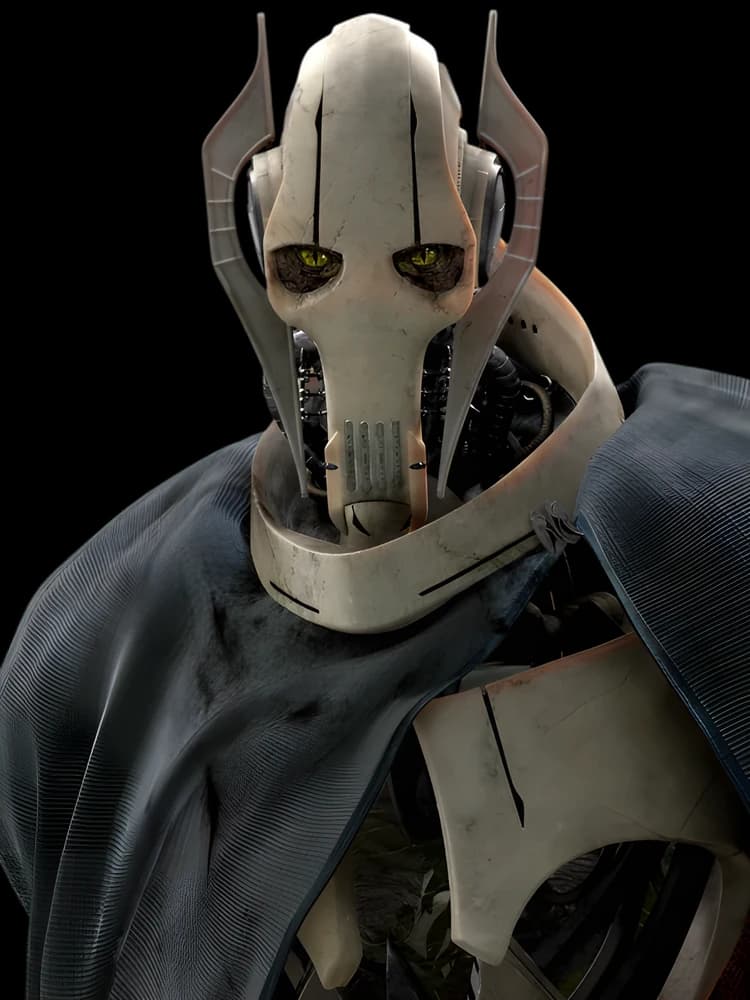
General Grievous
Grievous was a Kaleesh warlord rebuilt into a cyborg who served as Supreme Martial Commander of the Separatist Droid Armies during the Clone Wars. A feared Jedi hunter who collected the lightsabers of his victims, he led the Confederacy's forces until his death at the hands of Obi-Wan Kenobi.

Geonosis
Geonosis was a harsh, rocky planet in the Outer Rim, home to the insectoid Geonosians and their vast droid foundries. It was the hub of Separatist industry and the site of the battle that opened the Clone Wars.
Mentioned in1 entry
Get new articles in your inbox
No spam. New lore drops, canon conflicts, and deep dives only when they’re worth reading.
Some links on Lore Fortress are affiliate links. If you buy through them we earn a small commission at no extra cost to you.