Every Lightsaber Type and Variant Explained
Around forty distinct lightsaber designs exist across Canon and Legends, from the plain single blade every Jedi built to whips, axes, gauntlets and a suit of armour with sabers surgically fitted into its joints. This guide walks through all of them and flags which continuity each one belongs to.
Most Jedi and Sith carried a plain single-bladed lightsaber and never needed anything else. A few did not. This guide covers every named lightsaber type and variant across both continuities, roughly forty designs in total, ordered from the ones you have seen a hundred times to the ones that turn up once and never again. Each entry notes whether it belongs to Canon, Legends, or both. (A New Hope; The Phantom Menace; Star Wars Lightsabers: A Guide to Weapons of the Force)
The standard single-bladed lightsaber#
Canon and Legends. The default, and the default for good reasons. A straight hilt gave the wielder a full range of movement and worked equally well in one hand or two. It was also the easiest saber on this list to build. No complicated emitter arrays, no second handle, no rare or additional crystal. One kyber crystal, a power cell and a focusing lens. That combination suited nearly every situation a Jedi walked into, which is why the vast majority of the Jedi Order carried one. (The Clone Wars, "The Gathering"; Star Wars Lightsabers: A Guide to Weapons of the Force)
Double-bladed lightsabers and saberstaffs#
Canon and Legends. Also called the saberstaff or lightstaff. The hilt runs roughly twice the length of a standard weapon so both hands can grip it, and the design was probably modelled on the Zabrak quarterstaff, the zhaboka. Legends credits its invention to the Dark Lords of the old Sith Empire, with Darth Maul being the version everyone pictures. Jedi did use them, but rarely. (The Phantom Menace; Tales of the Jedi: Dark Lords of the Sith; Jedi vs. Sith: The Essential Guide to the Force)
Several sub-types exist. Hinged double-bladed lightsabers are effectively two sabers joined at the pommel, which makes them more portable and lets the wielder fold the weapon around an enemy blade to trap it. Pong Krell carried two of them during the Clone Wars, one blue and one green, and both were enormous enough to sit near great lightsaber territory. Split sabers use a locking mechanism instead of a weld so the two halves can be separated for Jar'Kai twin-blade fighting, which is how Asajj Ventress used hers most of the time. (The Clone Wars, "Darkness on Umbara"; Star Wars: The Clone Wars)
Inquisitor spinning lightsabers#
Canon. The most sophisticated double-bladed design, and probably the worst. Unlike a standard saberstaff, the Inquisitor hilt was no longer than a regular lightsaber, so it could be fought single-bladed or opened up into a staff. The ring could also spin at high speed, which served as intimidation, as an aggressive attack pattern, and as a way of lifting the wielder through the air. All those moving parts made the weapon fragile. Jedi worked out the weakness quickly and exploited it, as Kanan Jarrus did when he cut the Grand Inquisitor's spinning hilt apart. (Star Wars Rebels, "Spark of Rebellion", "Fire Across the Galaxy")
Curved-hilt lightsabers#
Canon and Legends. A hilt with a built-in curve so it sits deeper in the palm. That gives more powerful and more precise overhead blows, and it allows tiny changes in blade angle mid-exchange that force an opponent to keep readjusting. It suits one-handed Form II duelling, which is why Count Dooku and, in Legends, Darth Bane both used one. Two curved hilts can also be joined into a saberstaff, as Asajj Ventress could do with hers, though she mostly fought with them separately. (Attack of the Clones; Darth Bane: Path of Destruction; Star Wars: The Clone Wars)
Crossguard lightsabers#
Canon and Legends. Small vents called quillons sit below the main emitter and project two shorter tributary blades. Their job is to stop an opponent from running their blade down yours during a lock and taking your hands off. Designs vary a lot: some quillons fire out at ninety degrees, Darth Atrius angled his away from the wielder, Roblio Darte's had a single vent in Legends, and Stellan Gios carried a High Republic version with a physical metal crossguard that folded out on ignition rather than any second blade at all. Crossguards can be fitted to a double-bladed hilt too, though that is mostly an Old Republic curiosity. They work with an ordinary kyber crystal, but they are strongly associated with cracked ones, since a damaged crystal dumps excess energy that has to go somewhere. Kylo Ren is the obvious example. (The Force Awakens; Star Wars Annual 4; Republic 61; The High Republic: Light of the Jedi; Star Wars: The Old Republic)
Lightwhips#
Canon and Legends. A lightwhip runs on the same principles as a lightsaber but produces a long flexible strand instead of a rigid blade, often several metres of it. Canon describes the plasma as held in a flexible containment field, which is why the strand has less cutting power. Most produce a single lash, though cat o' nine tails versions with multiple tassels exist. The advantage is reach and sheer unfamiliarity: almost nobody trains against one, the strand wraps around a parrying blade instead of being stopped by it, and multiple tassels can come at a defender from several angles at once. The drawbacks are severe. The blade is weaker than a standard lightsaber, plenty of materials survive a direct hit, it is nearly useless defensively, and an untrained wielder is as likely to maim themselves as anyone else. Hit one hard enough and it shorts out violently. Githany and Lumiya are the famous Legends users. In Canon, lightwhips are tied to the Nightsisters of Dathomir, and Vernestra Rwoh built a whip mode into her lightsaber after seeing the design in a Force vision. (Darth Bane: Path of Destruction; Star Wars 96; The High Republic: A Test of Courage)
Lightsaber pikes#
Canon and Legends. Used much like a saberstaff, except the second end is a shaft of lightsaber-resistant material, usually phrik, rather than a second blade. The blade itself is often shorter and thicker than standard, and the point is reach. The Jedi Temple Guard version with twin yellow blades is the one most people know. (The Clone Wars, "The Wrong Jedi"; Star Wars: The Force Unleashed)
Sickle-bladed lightsabers#
Canon. Instead of a straight column of plasma, the blade curves like a sickle. The known example belonged to Darth Noctyss, an ancient Sith Lord who spent her whole career chasing immortality. Very little is recorded about why the blade is shaped that way, beyond speculation that it marked a particular sect within the Sith. (Dark Legends, "A Life Immortal")
Contained energy axes#
Canon. Until it is switched on, a contained energy axe looks like an ordinary vibro-ax. Activate it and a diatium power cell runs a magnetically contained edge of plasma, about a centimetre deep, along the axe head. The wielder still supplies the raw strength, but that plasma edge lets it slice through most materials easily. (Knights of Fate)
Flicker-phase blades#
Canon. A normal-looking lightsaber fitted with a modified activation mechanism that ignites and extinguishes the blade at random intervals. It sounds like a terrible idea and largely is, but it makes the weapon almost impossible to block reliably and thoroughly confusing to fight. The Jedi Order considered it dishonourable and unsporting, and it never saw widespread use. (Knights of Fate)
Dual-phase lightsabers#
Canon and Legends. Two or more kyber crystals in one hilt, with a secondary set of focusing crystals that lets the blade change length at the press of a control. The sudden change makes an opponent's guard falter while they adjust. In Legends, Keiran Halcyon built one that went from 1.3 to 3 metres. It was already considered antiquated by the Clone Wars, a relic of an older and nastier era of duelling. Darth Vader's lightsaber is the best known Canon example, running two kyber crystals. Corran Horn carried one in Legends. (Gadgets and Gear; I, Jedi)
Great lightsabers and lightclubs#
Legends and Canon. Length brings reach and force behind a swing, but the hilts get heavy and the species wielding them get bigger. The Legends lightclub uses special focusing crystals and power systems to push the blade up to three metres. The Canon great lightsaber is built for very large wielders, with a reinforced hilt and a blade longer than two metres, and smaller users find it heavy and awkward. (Star Wars Jedi Knight: Dark Forces II; Knights of Fate)
Shotos, lightdaggers and lightfoils#
Canon and Legends. At the opposite end, the shoto is a scaled-down lightsaber with a shorter hilt and blade, also called a lightdagger. Most often it rides in the off hand alongside a full-length saber, which makes it very good at quick counterattacks and unusually effective against awkward weapons like the lightwhip, as Luke Skywalker demonstrated against Lumiya in Legends. Some duellists fight with two, trading reach and power for speed. Others simply have no choice: Yoda is the obvious case, along with Yaddle and Even Piell. The lightfoil is a related Legends weapon, elegant and one-handed, first designed by the Sith of the Mecrosa Order. Later copies became popular among the saber rakes of the Tapani sector, who fought duels with them without being Force-sensitive at all. Those later lightfoils used poor quality focusing crystals and produced a weaker blade. (Attack of the Clones; Star Wars 96; Legacy of the Force: Exile; Lords of the Expanse; Jedi Academy Training Manual)
Guard shotos and lightsaber tonfa#
Legends. A short lightsaber with a second handle extending at ninety degrees from the main hilt, so the blade can run parallel to the forearm. Held by the perpendicular grip it is superb at blocking, and it opens up a wide vocabulary of blocking, trapping, jabbing and stabbing techniques. It is also dangerous in untrained hands, and the perpendicular grip costs you offensive power. Because the weapon exists to block other lightsabers, the casing was ideally machined from phrik, which was expensive. Maris Brood carried a pair in The Force Unleashed. (Darth Maul 2; Star Wars: The Force Unleashed)
Underwater lightsabers#
Canon and Legends. Most lightsabers short out the moment the blade touches water. Kit Fisto got around it by fitting two kyber crystals running a bifurcating cyclical ignition pulse, which let him fight submerged on Mon Cala. In Legends he recorded the modification in the Great Holocron, and it became widely used by Jedi during the Clone Wars. (The Clone Wars, "Water War"; Jedi vs. Sith: The Essential Guide to the Force)
Lava lightsabers#
Legends. From the outside this looks like an ordinary single-bladed weapon. Inside is a lava crystal, found only on volcanic worlds such as Mustafar, and it changes what the blade actually is. The crystal is less focused than a normal one, and the result is a dense, heavy blade that looks like lava and throws off flame and molten drips mid-duel. (Star Wars Galaxies)
The Dahgee lightsaber#
Legends. Used by a secretive Jedi sect on the world of Dahgee, and unusual on two counts. The blade was zigzagged rather than straight, and its colouring was strange, a dark silver or black core inside a coloured aura. The shape was almost certainly poor for actual duelling, which has led to the suggestion it was closer to a ceremonial weapon. When the Jedi High Council stopped sending Padawans to Dahgee, the sect declined and its blades went with it. (Star Wars: Clone Wars Adventures)
Ranged lightsabers: rifles, Farkillers and blaster hybrids#
Canon and Legends. Almost every weapon here is a melee weapon, with three exceptions. The lightsaber rifle literally loads lightsabers as ammunition, melting them after a handful of shots, and turns that into a devastating blast of energy. Jocasta Nu carried one into the ruined Jedi Temple to face Darth Vader. The Farkiller is a Canon sniper rifle built on lightsaber technology by the Jedi Var-Whill, able to hit targets from a hundred kilometres away. Third is the lightsaber-blaster hybrid: Ezra Bridger built a stun blaster into his first lightsaber to compensate for his weak blade work, and it remains a far more interesting weapon than the conventional saber he built later. (Darth Vader 9; Darth Vader 10; Doctor Aphra 32; Star Wars Rebels, "Path of the Jedi")
Sabercanes#
Canon and Legends. Mechanically no different from a standard lightsaber, but with the hilt disguised as the head of a walking cane. That makes it excellent for going unnoticed until the moment you decide not to be. Tera Sinube used one during the Clone Wars, and Maul carried one during the Imperial era. (The Clone Wars, "Lightsaber Lost"; Star Wars Rebels, "Twilight of the Apprentice")
Forcesabers#
Legends. The first plasma-bladed melee weapons, tens of thousands of years before the Clone Wars. They resembled lightsabers but ran on a different principle: powerful dark side energy was channelled through laboratory-grown crystals shaped with Sith alchemy. That made them lethal and made them corrupting, since light side users struggled to wield one without being pulled under. The Rakata invented them and their Force Hounds built them. The Je'daii first saw one when Daegen Lok had the exiled Force Hound Xesh build one as proof of a vision. (Dawn of the Jedi: Force Storm)
Protosabers and retrosabers#
Legends. The protosaber was the first known lightsaber design. It needed a large external battery pack connected to the hilt by a cable, which limited how long the weapon ran and meant you could forget about throwing it. Miniaturised power cells eventually killed the design and gave us the modern lightsaber. Some Jedi stuck with it anyway. The retrosaber keeps the external pack on purpose, because a modern belt-mounted battery can dump a brief surge into the blade, burning it hotter for a few seconds and overwhelming an ordinary lightsaber. (Tales of the Jedi: The Golden Age of the Sith; Jedi Academy Training Manual)
Lightsaber gauntlets#
Canon. The Tagge protoblade, built by TaggeCo to copy a Jedi weapon, is a gauntlet that ejects an edged physical blade energised with plasma from an external power supply. The gauntlet has a cortosis core to protect the wielder, but cortosis also has the habit of shorting out plasma, so the weapon could kill its own blade. Domina Tagge called it volatile and expensive. (War of the Bounty Hunters: Boushh 1)
The lightsaber parasol#
Canon-adjacent, from Star Wars: Visions. A Sith design that uses an auxiliary component to change what the blade does. Link the parasol auxiliary to the hilt and the energy from the kyber crystal is directed straight out and then fanned outwards into many blades in the shape of an umbrella. A second extension component on the pommel makes the whole thing longer again. Both parts detach, leaving an ordinary single-bladed lightsaber. (Star Wars: Visions, "The Duel")
The Darksaber and sword-profile blades#
Canon and Legends. The Darksaber is an ancient black-bladed lightsaber, built by Tarre Vizsla, the first Mandalorian inducted into the Jedi Order. Its blade is shorter than standard, flattened and pointed like a conventional sword rather than rounded, with a crackling white edge, and the hilt is unmistakably Mandalorian: angular pommel, hand guard, slit-shaped emitter, all beskar. Ignited or swung it sounds higher pitched than a normal saber, closer to a shriek than a hum. Pure beskar still holds up against it, as Din Djarin's beskar spear showed when he fought Moff Gideon. See Pre Vizsla, Sabine Wren and Bo-Katan Kryze for where the blade ended up. (The Clone Wars, "The Mandalore Plot"; Star Wars Rebels, "Trials of the Darksaber"; The Mandalorian, "Chapter 16: The Rescue")
Black blades and Project Blackwing#
Legends. The Darksaber is not the only black lightsaber. The Blackwing virus, a Sith bioweapon that turned its victims into undead cannibals, reached the crystals too. During an outbreak in a quarantine zone on Dathomir, crystals in the caves were changed by contact with the virus, and a saber built with one produced a dark, smoky, ash-coloured blade. (Star Wars Galaxies; Death Troopers)
Long-handle lightsabers and concealed blades#
Legends. Long-handle designs simply lengthen the grip to give the duellist more room for the hands and more force behind an attack. Darth Nihl's was a full staff with a blade on the end. (Star Wars: Legacy)
The War Dragon rider's saber#
Legends. Sometime between the start of the Clone Wars and the rise of the Galactic Empire, a warrior mounted on an Ubese Thorn-Back War Dragon carried a lightsaber with two hilts and three blades: one at each end and one emitted from the middle, between the two handles. That middle blade is smarter than it looks. Saberstaff users habitually smash the centre of the hilt into an opponent's face, which worked beautifully on Qui-Gon Jinn, but a good block can shear the hilt in half. Putting a blade there makes the block impossible. (Star Wars Galaxy Magazine 7, "Design An Alien"; The Phantom Menace)
Exar Kun's lightsaber#
Legends. Generally treated as the most powerful lightsaber in Star Wars. Kun built it roughly four thousand years before the Clone Wars, starting from two lightsabers welded pommel to pommel in imitation of the zhaboka and then redesigning it from instructions in a Sith holocron. It could be fought single or double-bladed and the blade length shifted between about 0.5 and 1.5 metres. What actually made it fearsome was its affinity for the dark side. It was infused with Kun's negative energy, and those who faced him were unsettled by it. Even his earlier single-bladed saber, at its highest setting, could cut Mandalorian iron. (Tales of the Jedi: Dark Lords of the Sith)
The lightsaber suit of Lord Nyax#
Legends. The last entry is barely a lightsaber and barely a person. Irek Ismaren, rumoured to be Palpatine's illegitimate son, positioned himself as a contender for the Imperial throne after the Emperor died at Endor. With his mother's help he had himself rebuilt with growth hormones and cybernetics, growing to three metres tall, with lightsabers installed in his elbows, forearms, wrists and knees. He took the name Lord Nyax, and it took Luke Skywalker, Mara Jade Skywalker and Tahiri Veila together to put him down. (Children of the Jedi; The New Jedi Order: Enemy Lines II: Rebel Stand)
Frequently asked questions
- How many types of lightsaber are there?
- Counting both Canon and Legends, around forty distinct lightsaber designs have been named, from the standard single blade to lightwhips, lightsaber pikes, guard shotos, contained energy axes and lightsaber gauntlets. Most of them are variations on hilt shape, blade length or crystal count rather than entirely new weapons.
- What is the rarest lightsaber variant?
- Several designs are one of a kind. The lightsaber parasol, the War Dragon rider's triple-bladed saber, the lightsaber suit worn by Lord Nyax and Exar Kun's double-bladed weapon all had a single known owner. The guard shoto is nearly as rare, with Maris Brood being its best known wielder.
- What is the most powerful lightsaber in Star Wars?
- Exar Kun's lightsaber is generally treated as the strongest. Built roughly four thousand years before the Clone Wars from instructions in a Sith holocron, it was infused with dark side energy that unsettled anyone who faced it.
- Why did the Inquisitors use spinning lightsabers?
- Their double-bladed hilts were no longer than a standard lightsaber, so they could be used single-bladed or as a saberstaff, and the ring could spin fast enough to intimidate opponents or lift the wielder through the air. The extra moving parts made the weapons fragile, and Jedi repeatedly exploited that weakness.
- Can lightsabers work underwater?
- Most shorted out on contact with water. Kit Fisto solved it by fitting two kyber crystals in a bifurcating cyclical ignition pulse, and in Legends he recorded the modification in the Great Holocron, after which it became widely used by Jedi during the Clone Wars.
Sources
- VideoA New Hope, Lucasfilm, 1977
- VideoThe Phantom Menace, Lucasfilm, 1999
- VideoAttack of the Clones, Lucasfilm, 2002
- VideoThe Force Awakens, Lucasfilm, 2015
- VideoStar Wars: The Clone Wars, Lucasfilm Animation, animated series, 2008 to 2020
- VideoWater War, Star Wars: The Clone Wars, season 4 episode 1, 2011
- VideoDarkness on Umbara, Star Wars: The Clone Wars, season 4 episode 7, 2011
- VideoLightsaber Lost, Star Wars: The Clone Wars, season 2 episode 8, 2010
- VideoThe Mandalore Plot, Star Wars: The Clone Wars, season 2 episode 12, 2010
- VideoThe Gathering, Star Wars: The Clone Wars, season 5 episode 6, 2012
- VideoThe Wrong Jedi, Star Wars: The Clone Wars, season 5 episode 20, 2013
- VideoSpark of Rebellion, Star Wars Rebels, season 1 episodes 1 and 2, 2014
- VideoPath of the Jedi, Star Wars Rebels, season 1 episode 8, 2014
- VideoFire Across the Galaxy, Star Wars Rebels, season 1 episode 15, 2015
- VideoTrials of the Darksaber, Star Wars Rebels, season 3 episode 15, 2017
- VideoTwilight of the Apprentice, Star Wars Rebels, season 2 episodes 21 and 22, 2016
- VideoChapter 16: The Rescue, The Mandalorian, season 2 episode 8, 2020
- VideoThe Duel, Star Wars: Visions, season 1 episode 1, 2021
- GameStar Wars: The Force Unleashed, LucasArts, 2008
- GameStar Wars Jedi Knight: Dark Forces II, LucasArts, 1997
- GameStar Wars: The Old Republic, BioWare, 2011
- GameStar Wars Galaxies, Sony Online Entertainment, Legends, 2003
- GameStar Wars: Clone Wars Adventures, Sony Online Entertainment, Legends, 2010
- BookThe High Republic: Light of the Jedi, Charles Soule, novel, 2021
- BookThe High Republic: A Test of Courage, Justina Ireland, novel, 2021
- BookDark Legends, "A Life Immortal", George Mann, short story anthology, 2020
- BookDarth Bane: Path of Destruction, Drew Karpyshyn, novel, Legends, 2006
- BookChildren of the Jedi, Barbara Hambly, novel, Legends, 1995
- BookI, Jedi, Michael A. Stackpole, novel, Legends, 1998
- BookThe New Jedi Order: Enemy Lines II: Rebel Stand, Aaron Allston, novel, Legends, 2002
- BookLegacy of the Force: Exile, Aaron Allston, novel, Legends, 2007
- BookDeath Troopers, Joe Schreiber, novel, Legends, 2009
- ComicStar Wars 96, Marvel, Legends, 1985
- ComicTales of the Jedi: The Golden Age of the Sith, Kevin J. Anderson, Dark Horse, Legends, 1996
- ComicTales of the Jedi: Dark Lords of the Sith, Tom Veitch and Kevin J. Anderson, Dark Horse, Legends, 1994
- ComicRepublic 61, Dark Horse, Legends, 2004
- ComicDarth Maul 2, Ron Marz, Dark Horse, Legends, 2000
- ComicStar Wars: Legacy, John Ostrander, Dark Horse, Legends, 2006
- ComicDawn of the Jedi: Force Storm, John Ostrander, Dark Horse, Legends, 2012
- ComicStar Wars Annual 4, Marvel, 2015 series annual
- ComicDarth Vader 9, Charles Soule, Marvel, 2017 series
- ComicDarth Vader 10, Charles Soule, Marvel, 2017 series
- ComicDoctor Aphra 32, Simon Spurrier, Marvel, 2019
- ComicWar of the Bounty Hunters: Boushh 1, Ethan Sacks, Marvel, 2021
- BookStar Wars Galaxy Magazine 7, "Design An Alien", Topps, Legends, 1996
- BookStar Wars Lightsabers: A Guide to Weapons of the Force, Daniel Wallace, official reference, 2020
- BookKnights of Fate, Fantasy Flight Games, roleplaying sourcebook, 2018
- BookGadgets and Gear, Fantasy Flight Games, roleplaying sourcebook, 2019
- BookJedi vs. Sith: The Essential Guide to the Force, Ryder Windham, Legends reference, 2007
- BookJedi Academy Training Manual, Wizards of the Coast, roleplaying sourcebook, Legends, 2009
- BookLords of the Expanse, West End Games, roleplaying sourcebook, Legends, 1997
Spotted a factual error or a primary source we missed? Email a correction. Every flagged claim gets reviewed.
Followed from this entry
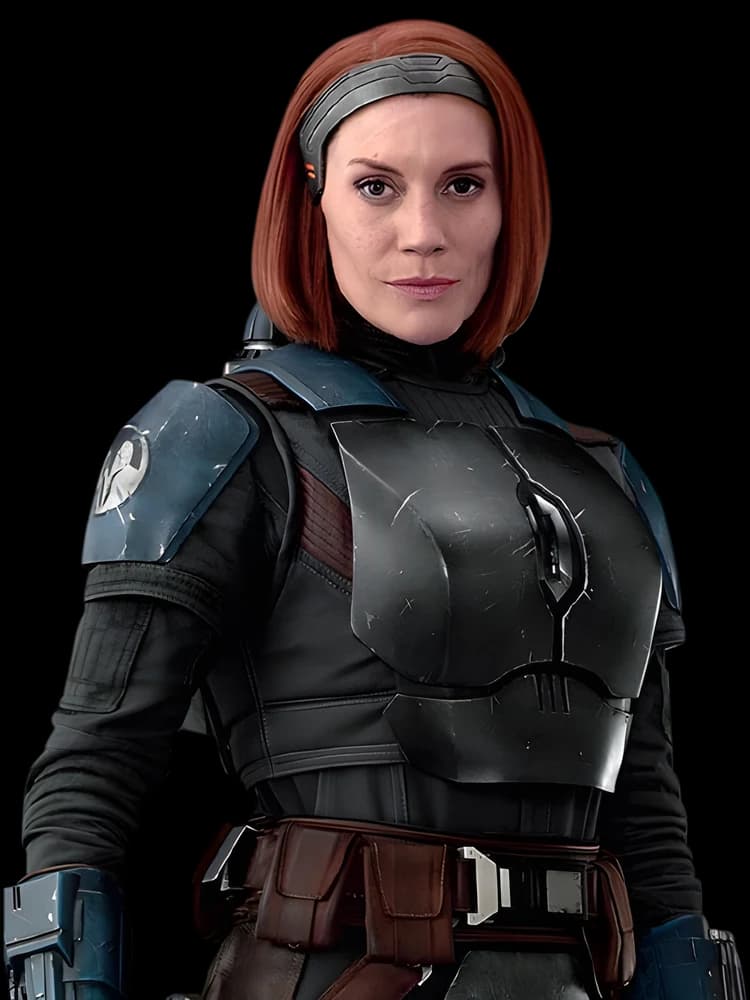
Bo-Katan Kryze
Bo-Katan Kryze was a Mandalorian warrior of House Kryze who fought through the fall of her sister Satine's rule, the conquest of Mandalore, and the Great Purge. She rose to wield the Darksaber and unite her scattered people to reclaim their homeworld.

Clone Wars
The Clone Wars was a galaxy-spanning conflict fought from 22 to 19 BBY between the Galactic Republic and the breakaway Confederacy of Independent Systems. Secretly engineered on both sides by the Sith, it ended with the Jedi purged and the Republic reformed into the Galactic Empire.

Corran Horn
Corran Horn was a Corellian Security investigator who became a Rogue Squadron ace and New Republic hero before discovering his hidden Jedi heritage. He rose to the rank of Jedi Master of the New Jedi Order and served through the Yuuzhan Vong War and the crises that followed.

Count Dooku
Dooku was a Jedi Master who became disillusioned with the Order and fell to the dark side as the Sith Lord Darth Tyranus. As Count of Serenno he led the Separatist movement through the Clone Wars, all the while serving as the unwitting pawn of his master, Darth Sidious.
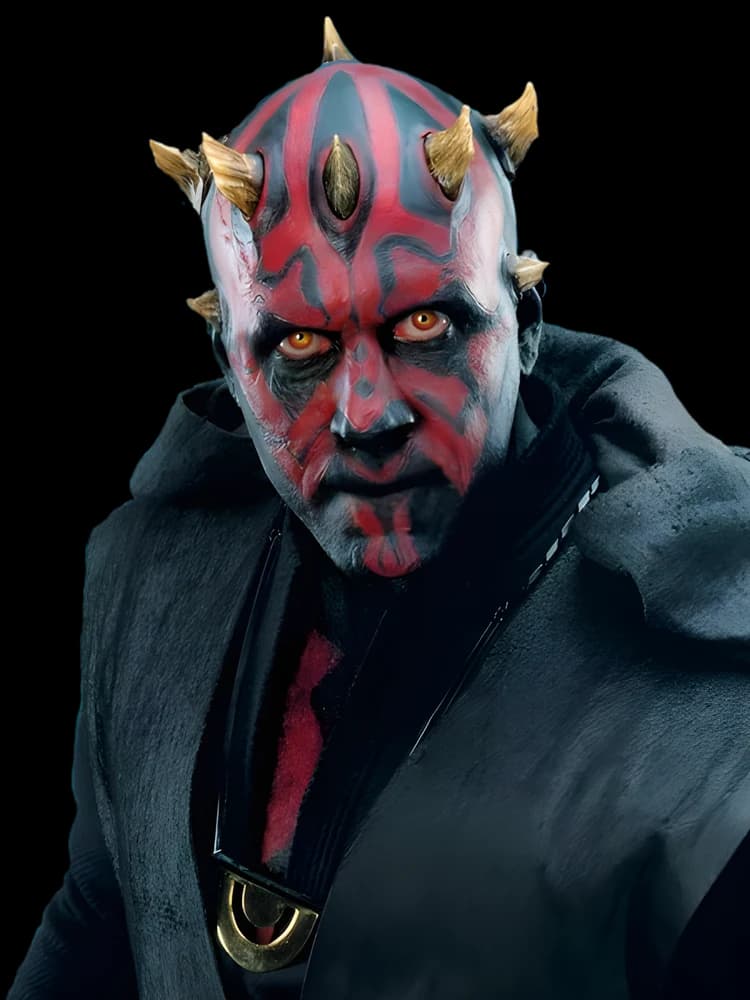
Darth Maul
Maul was a Dathomirian Zabrak trained from childhood as the Sith apprentice of Darth Sidious. Cut down on Naboo and left for dead, he survived and rebuilt himself, becoming a crime lord and a relentless seeker of revenge against the Sith who discarded him and the Jedi he hated.
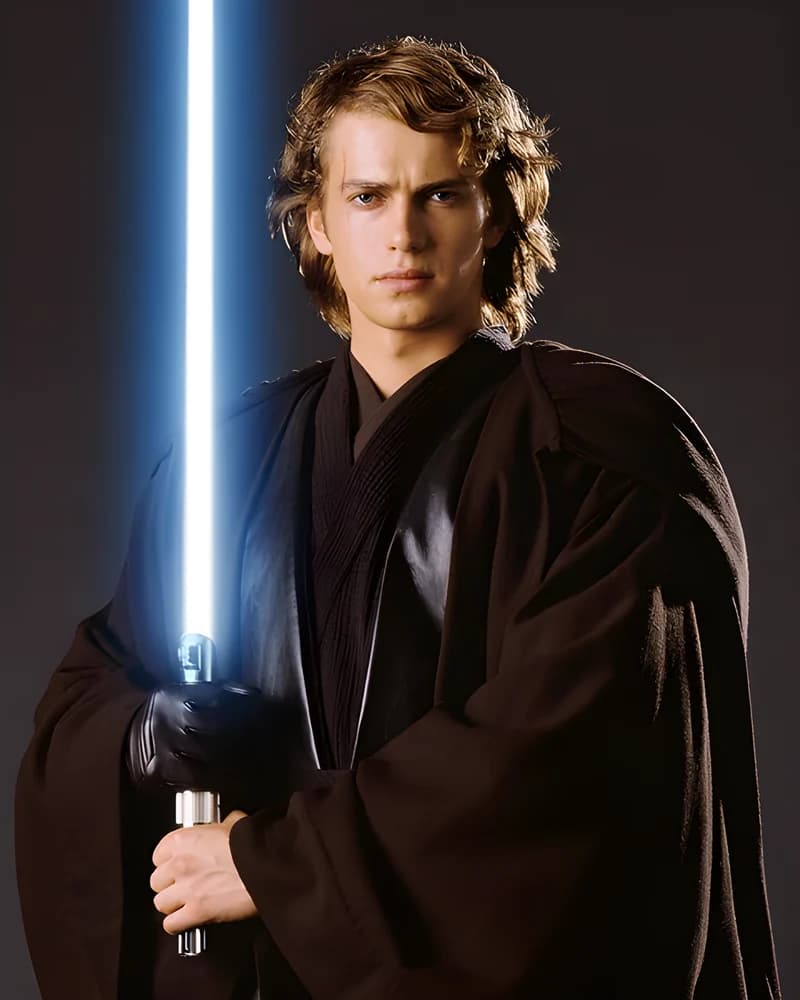
Darth Vader
Anakin Skywalker was the prophesied Chosen One, a Jedi Knight and hero of the Clone Wars who fell to the dark side and became the Sith Lord Darth Vader. He enforced the rule of the Galactic Empire for decades before his redemption and death at the Battle of Endor.
Mentioned in1 entry
Get new articles in your inbox
No spam. New lore drops, canon conflicts, and deep dives only when they’re worth reading.
Some links on Lore Fortress are affiliate links. If you buy through them we earn a small commission at no extra cost to you.