Order 37: The Clone Order Worse Than Order 66
Order 66 wiped out the Jedi in minutes. Order 37 was written to be used after it, and it worked by holding entire planets hostage until a Jedi fugitive gave themselves up. Here is exactly how it ran.
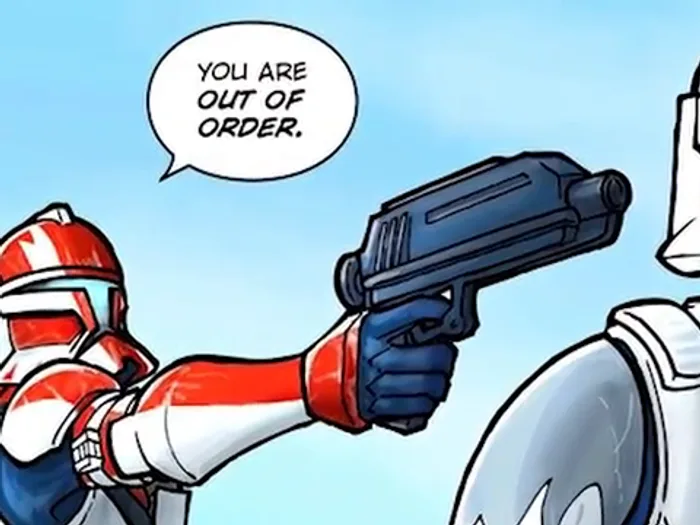
The execution of Order 66 was one of the most dramatic events in galactic history. In minutes the Jedi Order went from being the most powerful institution in the galaxy to being on its knees, and hours later the Republic itself was gone, replaced by the Galactic Empire. Order 66 was not a standalone command though. It was one entry in a set of 150 clone contingency orders, and it was not even the cruelest of them. That distinction belongs to Order 37, which came into its own after Order 66 and was aimed squarely at civilians. This page walks through the contingency order system, what Order 37 instructed, and the occasion it was used that survives in detail. This is Legends material, from the Last of the Jedi novels and the Republic Commando novels. (Republic Commando: True Colors; The Last of the Jedi: The Desperate Mission)
The 150 clone contingency orders#
Order 66 was part of a compilation of 150 orders that the clone army was required to obey in various emergencies, and the clones learned them during their training on Kamino. Depending on the order, the trigger could come from the Galactic Senate, the Security Council, or the Chancellor himself. (Republic Commando: True Colors; The Last of the Jedi: The Desperate Mission)
In Palpatine's hands, two of them did the work of first eliminating and then hunting down the Jedi. Order 66 and Order 37. (Revenge of the Sith; The Last of the Jedi: The Desperate Mission)
Why the rest of the list was so boring#
Burying the two that mattered among nearly 150 pieces of dry legal procedure meant few people would ever read that far. Order 5 is a fair sample of what the rest of the list looked like:
In the event of the Supreme Commander (Chancellor) being declared unfit to issue orders, as defined in Section 6 (ii), the Chief of the Defense Staff shall assume GAR command and form a strategic cell of senior officers (see page 1173, para 4) until a successor is appointed or alternative authority identified. (Republic Commando: True Colors)
Order 65 followed the same pattern, dealing with the detention and possible execution of the Supreme Chancellor if he was declared unfit for office, which did a lot of work in hiding what Order 66 was actually for. Anyone skimming the contingency list found page after page of chain of command paperwork. It's hard not to read that tedium as deliberate. (Republic Commando: True Colors)
What Order 37 was designed to do#
Order 37 covered the capture of a single wanted individual, and it was meant as a last resort. Where Order 66 dealt with killing Jedi who were already in the field with clone units, Order 37 suited the ones who got away. It was a fugitive hunting order. (The Last of the Jedi: The Desperate Mission)
The method is the difference. Order 37 was designed to prey on a Jedi's own morality. A Jedi who would fight to the death rather than surrender will still surrender to save other people, and the order was built entirely around that. It did not need to find the fugitive. It only needed to make staying hidden unbearable. (The Last of the Jedi: The Desperate Mission)
How Order 37 actually ran#
The order worked by suppressing the local population: civic lockdowns and mass arrests. On Bellassa, troopers used shock batons on anyone who protested or got in the way, prisoners were held in mobile repulsorlift pens, and the spaceport was locked down to locals. (The Last of the Jedi: The Desperate Mission)
Then came the ultimatum. The population was told that unless the fugitive was handed over, every prisoner would be executed. (The Last of the Jedi: The Desperate Mission)
What happened if nobody surrendered#
This is the part that separates Order 37 from anything else on the list. It did not stop at the threat. The order came with follow-up directives for what happened after the killing, including suppressing communications so word did not spread. (The Last of the Jedi: The Desperate Mission)
The most disturbing part is the paperwork about the dead. One follow-up file was titled Scenarios for Body Disposal Post Order Thirty-Seven. On Bellassa, Obi-Wan suspected the Empire would execute the prisoners even if Ferus was turned in, then carry out those disposal and suppression plans. (The Last of the Jedi: The Desperate Mission)
On Bellassa the operation was run by an Inquisitor, Malorum, which fits the containment logic of keeping the whole thing quiet. (The Last of the Jedi: The Desperate Mission)
Bellassa, the one documented use#
As far as the record goes, Order 37 was used twice, first on Bellassa and later on Rosha. The Bellassa case is the one that survives in detail. (The Last of the Jedi: The Desperate Mission; The Last of the Jedi: Return of the Dark Side)
The target was Ferus Olin, and the man who issued the order was the Inquisitor Malorum. Obi-Wan Kenobi had tracked Ferus down and decided to help him, and not long after that, Malorum triggered Contingency Order 37. Mass arrests followed in the city of Ussa, and an ultimatum went out over the HoloNet: if Ferus was not turned in within 48 hours, the civilians would be executed. The order worked exactly as designed. Ferus planned to give himself up. His safehouse was found first, by Boba Fett and the bounty hunter D'harhan, working for Malorum. (The Last of the Jedi: The Desperate Mission)
Why the Empire kept it secret#
Order 37 and Order 66 both show how far the Empire would go and how willing it was to rule through fear. What stands out is how much effort went into making sure atrocities like this never reached the wider galaxy. (The Last of the Jedi: The Desperate Mission)
Fear became his instrument later, in the back half of his rule. In the early days of the Empire his main source of power was his overwhelming popularity. That is the best explanation for the order's follow-up plans for communications and bodies. A planet that had been emptied out was only useful to Palpatine if the systems next door never found out. That reading is ours, but the order's own paperwork points that way. (The Last of the Jedi: The Desperate Mission)
Order 37 against Order 66#
Order 66 was horrific, but it was narrow. It targeted a few thousand Jedi and it happened in a single coordinated stroke. Order 37 had no such limit. It scaled to whatever a planet's population happened to be, and it treated every civilian on that world as a hostage. (Revenge of the Sith; The Last of the Jedi: The Desperate Mission)
The brutal irony is that mass murder of civilians was a genuinely effective way of drawing out a Jedi. The clones themselves rarely employed it. The Inquisitors used the same logic constantly, and it is the approach you see them fall back on again and again, including in the Obi-Wan Kenobi series. For a full breakdown of the clone units that would have carried out an order like this, the guide to every clone legion, corps, battalion and company covers the whole Grand Army. (The Last of the Jedi: The Desperate Mission; Obi-Wan Kenobi, "Part I")
Frequently asked questions
- What was Order 37 in Star Wars?
- Order 37 was one of the 150 clone contingency orders, a last resort for capturing a single wanted individual. It locked down a population, arrested civilians en masse and threatened to execute the prisoners unless the fugitive surrendered, with follow-up plans for body disposal and suppressing communications.
- Was Order 37 worse than Order 66?
- In scale, yes. Order 66 killed the Jedi. Order 37 was aimed at civilians, using mass arrests and the threat of mass executions as a bargaining chip against a single fugitive, which turns a Jedi's own morality against them.
- How many clone contingency orders were there?
- There were 150. Most were mundane legal procedure covering the sort of situations any armed force might face, which was the point. Burying Order 66 and Order 37 among nearly 150 pieces of dull paperwork kept anyone from looking too closely at the two that mattered.
- Where was Order 37 used?
- As far as the record goes it was used twice, on Bellassa and later on Rosha. The detailed case is Bellassa, where the Inquisitor Malorum issued it to force out the fugitive Ferus Olin, with mass arrests in the city of Ussa and a 48 hour ultimatum broadcast over the HoloNet.
- Who oversaw the execution of Order 37?
- On Bellassa it was the Inquisitor Malorum, who issued the order and hired bounty hunters to find Ferus Olin. Keeping it quiet mattered, because Palpatine relied on his popularity, not fear, in the early years of the Empire.
Sources
- BookThe Last of the Jedi: The Desperate Mission, Jude Watson, 2005
- BookThe Last of the Jedi: Return of the Dark Side, Jude Watson, 2006
- BookRepublic Commando: True Colors, Karen Traviss, 2007
- VideoRevenge of the Sith, Lucasfilm, 2005
- VideoPart I, Obi-Wan Kenobi, season 1 episode 1, 2022
Spotted a factual error or a primary source we missed? Email a correction. Every flagged claim gets reviewed.
Followed from this entry
Every Clone Legion, Corps, Battalion and Company Explained
A unit by unit guide to the Grand Army of the Republic, from the 21st Nova Corps down to individual companies of 144 men. Covers who commanded each formation, what their armor looked like and where they fought.

Galactic Empire
The Galactic Empire was the fascist regime that replaced the Galactic Republic when Sheev Palpatine, secretly the Sith Lord Darth Sidious, proclaimed himself Emperor. It ruled the galaxy through fear, military power, and the hunt for the Jedi until its defeat at Endor and final collapse at Jakku.

Palpatine
Sheev Palpatine was the Sith Lord Darth Sidious, who rose through the Galactic Senate to become Supreme Chancellor and then self-proclaimed Emperor. He orchestrated the fall of the Republic and the Jedi Order, ruled the galaxy for decades, and sought to cheat death itself.

Boba Fett
Boba Fett was an unaltered clone of the Mandalorian Jango Fett, raised as his son and trained from childhood to become one of the most feared bounty hunters in the galaxy. After surviving the sarlacc, he claimed Jabba the Hutt's throne as Daimyo of Mos Espa.
Jedi Order
The Jedi Order was a monastic, nontheistic religious order devoted to the light side of the Force, serving for over a thousand generations as the guardians of peace and justice in the Galactic Republic. Nearly annihilated by Order 66, the Order endured through scattered survivors and was rebuilt, however briefly, by Luke Skywalker.

Obi-Wan Kenobi
Obi-Wan Kenobi was a Jedi Master who trained Anakin Skywalker, served as a general in the Clone Wars, and survived Order 66. In hiding on Tatooine he guarded Luke Skywalker before guiding him into the Rebellion.
Get new articles in your inbox
No spam. New lore drops, canon conflicts, and deep dives only when they’re worth reading.
Some links on Lore Fortress are affiliate links. If you buy through them we earn a small commission at no extra cost to you.