Every Lightsaber Color Meaning Explained
A blade color is never just decoration. It tells you how its owner touches the Force, which school they trained under, and in some cases what they did to the crystal to get that shade. This guide covers every known lightsaber color in Canon and Legends, what each one means, and who carried it.
Every lightsaber color in Star Wars carries meaning, and the meaning is not the same in both continuities. In Legends the blade took its color from whichever crystal you managed to find, and the three schools of the Jedi Order each had a color attached to them. In Canon the crystal chooses you, shifting to match the nature of the person it bonds with. This guide runs through every known color in both timelines: what it means, who carried it, and whether it is Canon, Legends, or both. (Star Wars: Knights of the Old Republic; Star Wars: The Secrets of the Jedi)
How a lightsaber gets its color#
The two continuities answer this differently, and almost every argument about color meaning comes down to which rule set you are using. (Star Wars: The Secrets of the Jedi; Star Wars: Knights of the Old Republic)
In Canon, kyber crystals grow rarely across the galaxy and are attuned to the Force. They hold something close to a collective consciousness, communicating without words with each other and with living beings, and they respond only to life. Every kyber starts out clear. Once a Force user awakens it, the crystal shifts to match the nature of its new owner, and that color becomes the blade. Blue, green, and violet are the shades most often seen among Jedi. Red belongs to those who have gone over. The look of a blade is not fixed forever either: when Anakin Skywalker returned his former Padawan's weapons to her, they had been reworked and now burned blue. (Ultimate Star Wars; Ahsoka; Star Wars: The Secrets of the Jedi; The Clone Wars, "Old Friends Not Forgotten")
Legends worked the other way round. You went and found a crystal, and the crystal you found decided the color. Dozens of crystal types existed with their own hues and effects, and rarer crystals often granted stronger properties. The big constraint was supply. From the Seventh Battle of Ruusan until the Great Jedi Purge, the Jedi Order drew almost exclusively on Ilum crystals, which were always blue or green, which is why nearly every Jedi of that era carried one or the other. (Jedi Academy Training Manual; Power of the Jedi Sourcebook)
Legends also gave the colors a formal meaning. In 3956 BBY the Jedi historian Dorak told Revan that Jedi Guardians used blue crystals, Jedi Sentinels used yellow, and Jedi Consulars used green. The same breakdown appears in The Jedi Path. That single passage is the source of most of what people mean when they talk about lightsaber color meanings, and it is worth remembering it describes one order at one point in its history. (Star Wars: Knights of the Old Republic; The Jedi Path: A Manual for Students of the Force)
Red lightsabers#
Canon and Legends. Red is the color of the Sith, and both continuities agree on the emotional read: rage, hatred, greed, and above all the hunger for unlimited power. (Darth Vader (2017) 5; Jedi Academy Training Manual)
They disagree on the method. In Canon a red blade is a bled blade. Sith tradition holds that the crystal must be taken from a Jedi they killed, which is why Darth Vader was sent after the Jedi Master Kirak Infil'a and took his weapon after killing him. The Sith then pours rage, hate, fear, and pain into the kyber through the dark side until it changes. Crystals are inherently filled with light side energy and fight back. Vader's first attempt threw him into intense light side visions urging him to return, and Infil'a's crystal put up enough resistance to make the process a genuine ordeal. It does not always go cleanly, either. Ben Solo bled his own crystal as the final step of his fall and fractured it in the process, and the High Republic Jedi Dagan Gera bled his yellow crystal to red after he was released from stasis. During the High Republic era on Brendok, Osha Aniseya picked up the damaged lightsaber of her former master Sol, and in her anger bled the exposed crystal without meaning to. (Darth Vader (2017) 5; The Rise of Kylo Ren 4; Star Wars: The Force Awakens: The Visual Dictionary; Star Wars Jedi: Survivor; The Acolyte, "The Acolyte")
Legends had the Sith skip the theft entirely. They grew synthetic crystals in Force-imbued furnaces, which is why the Sith Empire could arm itself in crimson at scale from the reign of the Sith Emperor onward. Darth Sidious made Darth Maul build his own, working for several days in blistering heat to produce the four crystals his double-bladed weapon needed, holding them in shape and free of impurities with the Force while keeping himself alive. Maul took it as proof of Sith superiority over the Jedi. Sidious did not extend the same lesson to Tyranus or Vader, supplying their crystals himself. Synthetic crystals also produced a slightly stronger blade when energized by the dark side, and a Sith blade could occasionally break a Jedi's. Luke Skywalker built his own synthetic crystal in Legends, not out of malice but because there were no natural crystals to find on Tatooine. (Star Wars: The Old Republic; Jedi Academy Training Manual; Darth Maul: Shadow Hunter; Shadows of the Empire)
There are exceptions. Naturally occurring red crystals existed in Legends and were attuned to the light side rather than the dark. Adi Gallia carried one in her first lightsaber, a rare light red crystal she abandoned once the Sith resurfaced and the color became damning. (Star Wars Tales 5)
Pink lightsabers#
Mostly Legends. Pink is one of the rarer Legends colors, turning up mainly as a set of crystal shades in The Old Republic rather than in the hands of famous Jedi. (Star Wars: The Old Republic)
No source ever states what pink is supposed to mean, which leaves the wielders to do the talking. The most famous is Mara Jade, who served as the Emperor's Hand and carried a saber Palpatine himself gave her. Legends sources record that blade as magenta rather than pink, and she lost it in a duel with Lumiya not long after the Battle of Endor, later carrying the blue lightsaber that had belonged to Anakin and then Luke. Given who she worked for, a darker leaning is a reasonable read, but nowhere near the commitment a red blade implies. She was a good person underneath, working for the worst man in the galaxy. (Mara Jade: By the Emperor's Hand 0; Star Wars Tales 1)
Canon has pink too, as the color of seeker crystals, though without a wielder attached to it in the way Windu is attached to purple. (Disciples of Harmony)
Magenta and indigo lightsabers#
Canon and Legends. These two sit in the same awkward space: real colors with almost no story behind them. (Star Wars Jedi: Fallen Order)
Magenta and indigo both entered Canon as blade colors through Star Wars Jedi: Fallen Order, and both later picked up named wielders. Cleland Cudds carried a magenta blade and Vix Fonnick an indigo one. Legends has magenta as well, most famously Mara Jade's first lightsaber, along with a long list of shade variants recorded in The Old Republic. (Star Wars Jedi: Fallen Order; Star Wars Jedi: Survivor; The High Republic Adventures: Quest of the Jedi; Mara Jade: By the Emperor's Hand 0; Star Wars: The Old Republic)
Nothing official explains what either color signifies. Since both sit right next to violet, the sensible assumption is that they read much the same way purple does, which is to say a Force user standing somewhere between the two poles rather than firmly on one side. (Star Wars Jedi: Fallen Order)
Purple lightsabers#
Canon and Legends. Purple is the color everyone asks about, and the answer people usually give is the right one: it marks a Jedi who stands closer to the dark side than the rest of the order without ever crossing over. (Attack of the Clones; Shatterpoint)
Mace Windu is the reason. He fought with Vaapad, a variant of Form VII that let him channel his opponent's dark energy and his own back into the fight. Form VII in its traditional shape was a Sith form and the Jedi frowned on it, but Windu's version was accepted because he could hold the line while using it. The line was real, though. Sora Bulq, who helped Windu develop Vaapad, could not handle what it asked of him and ended up as one of Dooku's Dark Acolytes. Windu was in a strange sense the most balanced Jedi in the order, drawing on both sides and refusing to fall either way, and the blade said so. (Shatterpoint; Star Wars: Republic)
Legends gave the color a different origin. Purple came from incredibly rare amethyst crystals, and Windu got his through shatterpoints, the ability that let him glimpse fracture lines in objects and futures. He foresaw that he would build one of the most elegant sabers in the galaxy, and the Force pushed him toward the world of Hurikane. The crystalline natives chased him off at first. When he shattered one of them, he stopped, sobered, and painstakingly restored the creature with the Force. That was the moment he understood he could turn his anger to destruction or to defeating evil, and the natives rewarded him with the crystal he carried for the rest of his life. (Star Wars Tales 13)
Windu is not the only one. In Legends, violet blades belonged to Jaina Solo and Anakin Solo. Corran Horn produced purple in his lightsaber's dual-phase mode. In Canon, the High Republic Jedi Vernestra Rwoh and Huulik both carried amethyst blades alongside Windu. (Young Jedi Knights: Lightsabers; The New Jedi Order: Dark Tide I: Onslaught; I, Jedi; The High Republic: A Test of Courage; Heir to the Jedi)
Blue lightsabers#
Canon and Legends. Blue is the most common lightsaber color in Canon and the default image most people carry of a Jedi weapon: Obi-Wan Kenobi had three of them, Anakin had two, Ki-Adi-Mundi carried one, and the Skywalker lightsaber that passed to Luke and later to Rey is blue. (The Phantom Menace; Attack of the Clones; A New Hope; The Rise of Skywalker)
Canon has never spelled out a hard difference between blue and green. Both are light side colors and both are common, and that is roughly as far as the official material goes. (Star Wars: The Secrets of the Jedi)
Legends is far more specific. Blue belonged to the Jedi Guardians, one of the three schools of the order. Guardians concentrated on the physical side of the Force, on combat training and lightsaber work, and on meeting threats in the galaxy directly, with violence when the situation demanded it. Dorak's summary is blunt: the Guardian battles the forces of evil and the dark side. By the Clone Wars blue had become the most common blade in the order, partly because Ilum was producing blue and green almost exclusively, and partly because an order that had been drafted into running a war naturally skewed toward the school built for fighting. (Star Wars: Knights of the Old Republic; Power of the Jedi Sourcebook)
Light blue and cyan lightsabers#
Canon and Legends. Light blue is recognized in Canon as a distinct shade rather than a separate color. The elderly Jedi Master Tera Sinube carried a pale blue blade hidden inside a walking cane, and the High Republic Jedi Imri Cantaros and Lyssa Votz both had light blue weapons. (The Clone Wars, "Lightsaber Lost"; The High Republic: A Test of Courage; The High Republic: Mission to Disaster)
Cyan arrived in Canon through Jedi: Fallen Order and later turned up as Anoth Estra's blade. Legends recorded a spread of related shades, from ice blue and ocean blue to a cyan with a silver core. There is also a Legends route to an aqua blade that has nothing to do with finding the right crystal: Galen Marek combined Rahm Kota's green crystal with his father's deep blue one in a single hilt, and the two hues mixed. (Star Wars Jedi: Fallen Order; Star Wars Jedi: Survivor; Star Wars: The Old Republic; Star Wars: The Force Unleashed)
No official source explains what the pale end of the blue spectrum is supposed to signify. The usual reading, and the one the video takes, is that these blades sit between the Guardian and the Consular, tilting toward the physical without abandoning contemplation. (Star Wars: Knights of the Old Republic)
Turquoise lightsabers#
Legends. Turquoise has the best claim to being the rarest color in the whole of Star Wars, and the rarity is a supply problem rather than a philosophical one. Only two known routes existed to a turquoise or teal blade, and both were close to impossible. (Star Wars Galaxies; Young Jedi Knights: Lightsabers)
The first was Sunrider's Destiny, a crystal that was genuinely one of a kind. Once properly tuned it could only be used by its rightful owner, so it was never going to spread. The second was the rainbow gem, found solely on the planet Gallinore in the Hapes Cluster. Rainbow gems were not really gems at all but a form of silicon-based life. Tenel Ka set several of them, taken from a Hapan tiara, into a lightsaber hilt carved from a rancor tooth, which makes that weapon one of the most valuable objects in the galaxy by a wide margin. (Star Wars Galaxies; Young Jedi Knights: Lightsabers)
Because no source states a meaning, the read has to come from where the color sits. Turquoise falls between blue and green, so a Force alignment halfway between Guardian and Consular is the natural assumption: someone who will fight, but who lets the Force lead more often than a Guardian would. (Star Wars: Knights of the Old Republic)
Green lightsabers#
Canon and Legends. Green was the color of the Jedi Consulars in Legends, the school built around ending conflict rather than winning it. Consulars spent their time contemplating the Force and looking for ways to defeat the dark side through understanding it, and their primary weapons were diplomacy and planning. (Star Wars: Knights of the Old Republic; The Jedi Path: A Manual for Students of the Force)
That does not make them soft. Consulars were trained with the lightsaber to the level of a Guardian and often beyond it, kept in reserve for the day they needed it. Their deeper connection to the Force frequently made them the better duellist of the two, because they could use it to quicken their movements and strengthen their blows. (The Jedi Path: A Manual for Students of the Force)
In Canon green is simply one of the two common Jedi colors, carried by Qui-Gon Jinn, Yoda in his shoto, Luke Skywalker in his second weapon, Quinlan Vos, and Sabine Wren. Ahsoka Tano carried green during the Clone Wars. (The Phantom Menace; Revenge of the Sith; Return of the Jedi; Dark Disciple; Ahsoka, "Part One: Master and Apprentice"; The Clone Wars, "Lightsaber Lost")
Yellow-green lightsabers#
Canon. Yellow-green is a genuine listed shade rather than a trick of the light, and its best known owner is Ahsoka Tano, whose shoto lightsaber sat in that range during the Clone Wars. The ancient Jedi Ulic Qel-Droma is recorded with a blade of the same hue. (The Clone Wars, "Lightsaber Lost"; Nexus of Power)
With no stated meaning, the reasonable position is that a color between yellow and green marks a Force user between the Consular and the Sentinel. That would mean deep respect for the cosmic Force paired with the Sentinel's curiosity and appetite for practical skills, which describes Ahsoka fairly well. (Star Wars: Knights of the Old Republic)
Yellow lightsabers#
Canon and Legends. Yellow is the most confusing color in Star Wars, because it belongs simultaneously to the most obedient members of the Jedi Order and to some of its most independent, plus at least one empire run in secret by a Sith. (Star Wars: Knights of the Old Republic; The Clone Wars, "The Wrong Jedi"; Star Wars: The Old Republic: Knights of the Fallen Empire)
In Legends yellow marked the Jedi Sentinel, the third and least discussed school. Dorak describes the Sentinel as the Jedi who ferrets out deceit and injustice and brings it into the open, focusing less on combat and more on other skills. Sentinels blended the Guardian's practicality with the Consular's contemplative streak, and they tended to stay away from the Jedi Temple altogether, working inside communities scattered across the galaxy. Many were experts in technology or medicine, disciplines other Jedi considered beneath them. Bastila Shan's yellow blade is the best known Legends example. (Star Wars: Knights of the Old Republic; The Jedi Path: A Manual for Students of the Force)
In both continuities the Jedi Temple Guards carried yellow, in their case as double-bladed lightsaber pikes. The Temple Guards were among the most devoted Jedi in the order, their faces hidden behind identical masks so that the individual disappeared into the duty. (The Clone Wars, "The Wrong Jedi")
The early Jedi worked with protosabers, archaic weapons whose hilts were tethered by cable to an external power pack because no power cell small enough existed yet. These saw use through the Hundred-Year Darkness and the Great Hyperspace War before better power cells made them obsolete. They are frequently depicted with yellow or orange blades, though that may say more about primitive technology than about the wielders' philosophy. (Tales of the Jedi: The Fall of the Sith Empire; Star Wars: Legacy)
The Knights of Zakuul carried yellow too. Their Force users served the Eternal Empire, believing the Force was a tool to be used in the pursuit of justice and drawing their connection directly from Emperor Valkorion, who was in fact the Sith Emperor Vitiate wearing another face. No area of the Force was off limits to them, dark side included, but unlike the Sith of the same era they were encouraged to share their findings with the rest of the order rather than hoard them. They put the same weight on technical progress that the Sentinels did. (Star Wars: The Old Republic: Knights of the Fallen Empire)
Canon has widened the pool considerably. Asajj Ventress ended up with a yellow blade, and Rey ignited a newly built yellow lightsaber at the end of the Skywalker saga. Taken together, yellow reads as the color of the seeker: dedication, persistence, and a breadth of knowledge that runs past the Force into technology and everything else. (Dark Disciple; The Rise of Skywalker)
Orange lightsabers#
Canon and Legends, and exceedingly rare in both. Orange arrived in Canon through Jedi: Fallen Order and has since picked up named wielders, including Drya Thornne. A reddish-orange variant belongs to Baylan Skoll and his apprentice Shin Hati. (Star Wars Jedi: Fallen Order; Star Wars Jedi: Survivor; Ahsoka, "Part One: Master and Apprentice")
No official source attaches a meaning to it, but the usual fan reading is that orange marks Force users who look for peaceful resolutions to conflict much as green-bladed Consulars did, with one difference: where a Consular sought peace through meditation on the Force, an orange-bladed Jedi spent far more time on the front lines, bringing balance through negotiation and people skills. It is diplomacy practiced in the middle of a war rather than from a temple. (Star Wars Jedi: Fallen Order)
Legends wielders include Yaddle and the ancient Sith Lord Tulak Hord. (Star Wars: Republic; Star Wars: The Old Republic)
Bronze and brown lightsabers#
Legends. These are among the scarcest blades in the entire setting, and their meaning is the most quietly interesting. (Young Jedi Knights: Lightsabers; Star Wars Galaxies)
Bronze, sometimes recorded as fire orange or blood orange, belonged to Lowbacca, one of the very few Wookiee Jedi, and to Freedon Nadd's short lightsaber. Brown came from a crystal called Bnar's Sacrifice, named for Ood Bnar, a Jedi Master of the Neti species who was quite literally a living tree. Bnar had lain dormant for centuries when he finally rose to save Luke Skywalker and Kam Solusar in 10 ABY, releasing a devastating beam of light that annihilated the Imperial Executor Sedriss and disintegrated Bnar along with him. (Young Jedi Knights: Lightsabers; Star Wars: Knights of the Old Republic II: The Sith Lords; Star Wars Galaxies; Dark Empire II)
Both wielders shared a deep connection to the natural world and a refusal to reach for violence first. If any color means peace and the living world rather than a school of Force study, it is this one. (Young Jedi Knights: Lightsabers; Dark Empire II)
Silver lightsabers#
Legends. Silver rarely comes up in color discussions, but it is a recorded Legends blade, produced by the Durindfire crystal and known as frost or silver depending on the source. Corran Horn carried a silver blade in his lightsaber's regular mode, switching to purple in dual-phase. A handful of other Legends Jedi carried silver too. (I, Jedi)
No source assigns silver a philosophy. It is a crystal type rather than a statement, which is a useful reminder that plenty of Legends colors are exactly that. (I, Jedi)
White lightsabers#
Canon and Legends. White is the only color on this list that has to be earned by undoing something. (Ahsoka)
In Canon a white blade is a purified blade. Healing a bled kyber reverses the corruption a Sith forced into it, and the knowledge of how to do it survived in the Chronicles of Brus-Bu. Ahsoka Tano built her white lightsabers around two crystals she took from the double-bladed weapon of the Inquisitor known as the Sixth Brother, purifying them of the taint bleeding had left behind before assembling the hilts. The first versions were rough, thrown together from scrap metal in the middle of a fight. Komat and the High Republic Jedi Jora Malli also carried white. (Star Wars: The Rise of Skywalker: The Visual Dictionary; Ahsoka; Shadow of the Sith; The High Republic: Light of the Jedi)
Legends had white too, though by a different route. The Imperial Knights, who served the reigning Emperor rather than the Jedi or the Sith, carried white blades as a matter of course. (Star Wars: Legacy)
The meaning follows from the method. Freeing a crystal from the dark side without handing it to the Jedi is a statement of independence from both orders. Some people read that as the mark of a Gray Jedi, but Ahsoka does not use the dark side at any point, so white is better understood as the light side without the Jedi Order's dogma attached. (Ahsoka)
Black lightsabers#
Canon and Legends. Black means one weapon: the Darksaber. Its blade is shorter than a standard lightsaber and shaped like a traditional angular sword with a crackling white edge, and the whole profile is unmistakably Mandalorian, with an angular pommel, a hand guard, and a slit-shaped emitter all worked from beskar. Like any lightsaber, it cannot cut through pure beskar. (The Clone Wars, "The Mandalore Plot"; The Mandalorian, "Chapter 16: The Rescue")
Legend holds it was forged over a thousand years ago by Tarre Vizsla, the first Mandalorian ever inducted into the Jedi Order. The Jedi kept it in their temple after he died until members of House Vizsla broke in and took it back, and it became the symbol of leadership for House Vizsla and later Death Watch. Mandalorian custom is strict about it: the Darksaber can only be claimed by defeating its current owner in combat, and any other claim is illegitimate. Pre Vizsla carried it through the Clone Wars until Maul took it from him. (Rebels, "Trials of the Darksaber"; The Clone Wars, "Shades of Reason")
No source has ever explained what the color means. It is bound up with Mandalorian culture and belief rather than the Force schools, and the obvious reading is a drive toward growth through war and destruction, which sits at the heart of Mandalorian religion. What separates that from the Sith is honor, and the Sith never had any. Canon also records black blades in the hands of shadow wraiths. (Rebels, "Trials of the Darksaber"; Shadow of the Sith)
So which color would you carry#
Strip out the crystal mechanics and the picture is fairly clean. Red means you have gone over, and pink means you are working for someone who has while keeping a piece of yourself back. Black means you fight for growth on your own terms. Purple means you use the dark and refuse to be used by it. Blue means you will fight for something bigger than you, green means you trust the Force to know better than you do, and yellow means the thing you actually want is to understand. Orange puts you in the middle of the war arguing for peace, white means you walked away from both orders and kept the light, and brown means you never wanted the fight in the first place. (Star Wars: Knights of the Old Republic; Star Wars: The Secrets of the Jedi)
Most of that comes from Legends and one conversation with a Jedi historian on Dantooine. Canon has quietly rebuilt the whole system so the crystal decides, which is a better answer anyway. You do not pick the color. It picks you. (Star Wars: Knights of the Old Republic; Star Wars: The Secrets of the Jedi)
For the weapon itself, from hilt construction to the materials that can stop a blade, read the full guide to the lightsaber.
Frequently asked questions
- What does a purple lightsaber mean?
- In Legends a purple blade came from a rare amethyst crystal, and the color was read as a sign that its owner stood closer to the dark side than most Jedi without falling. Mace Windu is the famous example, and his Vaapad fighting style channeled his opponent's dark energy back at them. In Canon, amethyst is simply one of the shades a kyber can settle on, carried by Windu, Vernestra Rwoh, and Huulik.
- Why are Sith lightsabers red?
- In Canon a Sith takes a kyber crystal, usually one stolen from a Jedi they killed, and pours rage, hate, fear, and pain into it until it bleeds and turns crimson. Kyber crystals are inherently light side and resist the process. In Legends the Sith skipped the theft and grew synthetic crystals in Force-imbued furnaces instead.
- What does a yellow lightsaber mean?
- In Legends yellow marked a Jedi Sentinel, the school that hunted out deceit and injustice and trained in skills outside combat such as technology and medicine. In both continuities the Jedi Temple Guards carried yellow lightsaber pikes. Rey and Asajj Ventress both ended up with yellow blades in Canon.
- How did Ahsoka get white lightsabers?
- She took two kyber crystals from the double-bladed lightsaber of the Inquisitor known as the Sixth Brother and purified them of the dark side taint that bleeding had left behind. Healing a bled crystal strips the corruption out and leaves the blade pure white. The color signals that she belongs to neither the Jedi nor the Sith.
- What is the rarest lightsaber color?
- Turquoise is usually given the title in Legends, because only two known crystals produced it and both were absurdly hard to get. Brown and bronze blades are almost as scarce, tied to just a handful of wielders. In Canon the Darksaber is the only black blade, which makes it unique rather than merely rare.
Sources
- VideoThe Phantom Menace, Lucasfilm, 1999
- VideoAttack of the Clones, Lucasfilm, 2002
- VideoRevenge of the Sith, Lucasfilm, 2005
- VideoA New Hope, Lucasfilm, 1977
- VideoReturn of the Jedi, Lucasfilm, 1983
- VideoThe Rise of Skywalker, Lucasfilm, 2019
- VideoLightsaber Lost, Star Wars: The Clone Wars, season 2 episode 11, 2010
- VideoThe Mandalore Plot, Star Wars: The Clone Wars, season 2 episode 12, 2010
- VideoShades of Reason, Star Wars: The Clone Wars, season 5 episode 15, 2013
- VideoThe Wrong Jedi, Star Wars: The Clone Wars, season 5 episode 20, 2013
- VideoOld Friends Not Forgotten, Star Wars: The Clone Wars, season 7 episode 9, 2020
- VideoTrials of the Darksaber, Star Wars Rebels, season 3 episode 15, 2017
- VideoChapter 16: The Rescue, The Mandalorian, season 2 episode 8, 2020
- VideoPart One: Master and Apprentice, Ahsoka, season 1 episode 1, 2023
- VideoThe Acolyte, The Acolyte, season 1 episode 8, 2024
- GameStar Wars Jedi: Fallen Order, Respawn Entertainment, 2019
- GameStar Wars Jedi: Survivor, Respawn Entertainment, 2023
- ComicDarth Vader (2017) 5, Charles Soule, Marvel, 2017
- ComicThe Rise of Kylo Ren 4, Charles Soule, Marvel, 2020
- ComicThe High Republic Adventures: Quest of the Jedi, IDW, 2023
- BookAhsoka, E. K. Johnston, 2016
- BookDark Disciple, Christie Golden, 2015
- BookHeir to the Jedi, Kevin Hearne, 2015
- BookShadow of the Sith, Adam Christopher, 2022
- BookThe High Republic: Light of the Jedi, Charles Soule, 2021
- BookThe High Republic: A Test of Courage, Justina Ireland, 2021
- BookThe High Republic: Mission to Disaster, Justina Ireland, 2022
- BookDisciples of Harmony, George Mann, 2022
- BookStar Wars: The Secrets of the Jedi, Marc Sumerak, 2019
- BookUltimate Star Wars, DK, 2015
- BookStar Wars: The Force Awakens: The Visual Dictionary, Pablo Hidalgo, DK, 2015
- BookStar Wars: The Rise of Skywalker: The Visual Dictionary, Pablo Hidalgo, DK, 2019
- BookNexus of Power, Fantasy Flight Games roleplaying sourcebook, 2017
- GameStar Wars: Knights of the Old Republic, BioWare, 2003 (Legends)
- GameStar Wars: Knights of the Old Republic II: The Sith Lords, Obsidian Entertainment, 2004 (Legends)
- GameStar Wars: The Old Republic, BioWare, 2011 (Legends)
- GameStar Wars: The Old Republic: Knights of the Fallen Empire, BioWare, 2015 (Legends)
- GameStar Wars Galaxies, Sony Online Entertainment, 2003 (Legends)
- GameStar Wars: The Force Unleashed, LucasArts, 2008 (Legends)
- BookThe Jedi Path: A Manual for Students of the Force, Daniel Wallace, 2010 (Legends)
- BookJedi Academy Training Manual, Daniel Wallace, 2009 (Legends)
- BookPower of the Jedi Sourcebook, Wizards of the Coast, 2002 (Legends)
- BookDarth Maul: Shadow Hunter, Michael Reaves, 2001 (Legends)
- BookShadows of the Empire, Steve Perry, 1996 (Legends)
- BookShatterpoint, Matthew Stover, 2003 (Legends)
- BookI, Jedi, Michael A. Stackpole, 1998 (Legends)
- BookYoung Jedi Knights: Lightsabers, Kevin J. Anderson and Rebecca Moesta, 1996 (Legends)
- BookThe New Jedi Order: Dark Tide I: Onslaught, Michael A. Stackpole, 2000 (Legends)
- ComicStar Wars Tales 5, "Yaddle's Tale: The One Below", Dark Horse, 2000 (Legends)
- ComicStar Wars Tales 1, "Mara Jade: A Night on the Town", Dark Horse, 1999 (Legends)
- ComicStar Wars Tales 13, "Stones", Dark Horse, 2002 (Legends)
- ComicMara Jade: By the Emperor's Hand 0, Dark Horse, 1998 (Legends)
- ComicStar Wars: Republic, Dark Horse comic series, 1998 to 2006 (Legends)
- ComicTales of the Jedi: The Fall of the Sith Empire, Kevin J. Anderson, Dark Horse, 1997 (Legends)
- ComicDark Empire II, Tom Veitch, Dark Horse, 1994 to 1995 (Legends)
- ComicStar Wars: Legacy, John Ostrander and Jan Duursema, Dark Horse, 2006 to 2010 (Legends)
Spotted a factual error or a primary source we missed? Email a correction. Every flagged claim gets reviewed.
Followed from this entry

Ahsoka Tano
Ahsoka Tano was a Togruta Force-user, Anakin Skywalker's Padawan during the Clone Wars who left the Jedi Order after being wrongly accused of treason. She survived Order 66, became the rebel agent Fulcrum, and outlived the Empire.

Anakin Skywalker
Anakin Skywalker was a Jedi Knight of the Galactic Republic and the prophesied Chosen One destined to bring balance to the Force. He fell to the dark side and became the Sith Lord Darth Vader, then found redemption at the cost of his life by destroying the Emperor.

Clone Wars
The Clone Wars was a galaxy-spanning conflict fought from 22 to 19 BBY between the Galactic Republic and the breakaway Confederacy of Independent Systems. Secretly engineered on both sides by the Sith, it ended with the Jedi purged and the Republic reformed into the Galactic Empire.

Corran Horn
Corran Horn was a Corellian Security investigator who became a Rogue Squadron ace and New Republic hero before discovering his hidden Jedi heritage. He rose to the rank of Jedi Master of the New Jedi Order and served through the Yuuzhan Vong War and the crises that followed.
Darth Maul
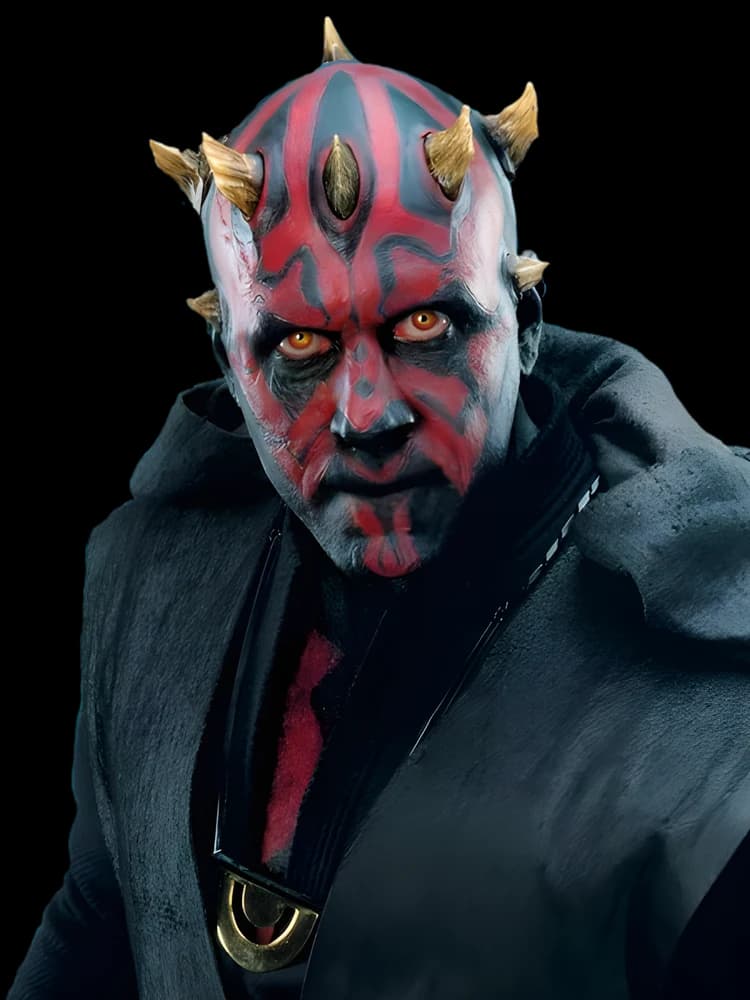
Maul was a Dathomirian Zabrak trained from childhood as the Sith apprentice of Darth Sidious. Cut down on Naboo and left for dead, he survived and rebuilt himself, becoming a crime lord and a relentless seeker of revenge against the Sith who discarded him and the Jedi he hated.

Darth Vader
Anakin Skywalker was the prophesied Chosen One, a Jedi Knight and hero of the Clone Wars who fell to the dark side and became the Sith Lord Darth Vader. He enforced the rule of the Galactic Empire for decades before his redemption and death at the Battle of Endor.
Mentioned in2 entries
Every Force Lightning Color Explained
Force lightning is not always blue, and it is not always a Sith power. This guide covers every recorded color in Canon and Legends, who produced it, how strong it was, and how much of the standard explanation is actually confirmed.
What Colour Would Your Lightsaber Be? Take the Quiz
Ten quick questions about how you fight, what you want and who you'd learn from, and we'll tell you which lightsaber colour fits. Blue, green, yellow, purple, red, white, orange or the black blade of the Darksaber.
Get new articles in your inbox
No spam. New lore drops, canon conflicts, and deep dives only when they’re worth reading.
Some links on Lore Fortress are affiliate links. If you buy through them we earn a small commission at no extra cost to you.