Everything Lightsabers Cannot Cut Through
A lightsaber blade burns hot enough to go through blast doors, but a short list of materials shrugs it off. This guide runs through every lightsaber-resistant substance in Canon and Legends, from armorweave capes to the quantum crystalline hull of the Sun Crusher, and explains why each one works.
A lightsaber blade burns hot enough to melt its way through a blast door, and it goes through bulkheads and armour plate as though none of it is there. Speed of cut depends on density, not on whether the material can stop it. A small number of things can. This guide runs through every lightsaber-resistant material in Canon and Legends, roughly ordered from the ones that barely help to the one nothing has ever beaten, and notes which continuity each belongs to. (The Phantom Menace)
Armorweave#
Canon and Legends. The most flexible material here and the least effective. Armorweave is a cloth that dissipates energy across its surface, which gives it limited protection against blaster bolts and some against a lightsaber. It will not save you from a committed strike. What it does is add a layer, and it does so without costing you any movement, which is why it turns up as a cape rather than a plate. Count Dooku and Darth Vader both wore it that way, and Mandalorians often worked it into their armour. In Vader's case it also gave the Dark Lord his silhouette. (Star Wars: The Force Awakens: The Visual Dictionary; Nexus of Power; Dark Lord: The Rise of Darth Vader)
Norris root#
Legends. A rare plant native to the planet Almar. During the Jedi Civil War, someone worked out a sophisticated method of crushing the root down into a red dye. Applied to clothing, that dye produced energy-resistant robes capable of turning aside blaster bolts and lightsaber blades. It is the only entry on this list that arrives as a fabric treatment rather than a material in its own right. (Star Wars: Knights of the Old Republic II: The Sith Lords)
Orbalisk armour#
Legends. Orbalisks are parasites that feed on the dark side of the Force. Once attached to a host they grow and multiply until the host is entirely covered and consumed. The holocron of Freedon Nadd held the secret of stopping them covering the face, hands and feet, which turns an infestation into a suit of living, lightsaber-resistant armour. It is extraordinarily painful, so only the hardest dark siders could tolerate it, Darth Bane being the obvious one. It also has a fatal flaw: orbalisks are not lightning resistant. Bane eventually had to strip his armour off after killing most of it with his own Force lightning. (Darth Bane: Rule of Two)
Vonduun crab armour#
Legends. The Yuuzhan Vong engineered biotech for every job, and their signature defence was vonduun crab armour, which engulfs the wearer in the same way orbalisks do. It is close to fully resistant to blaster fire and lightsabers both, and Jedi who tried to hack through it got nowhere. Being alive, it inherits the problems of living things. The armour is allergic to certain pollens, and Yuuzhan Vong warriors have died when their own plate reacted to Ithorian bafforr tree pollen, swelled, and suffocated them. Like the orbalisks, it is badly vulnerable to Force lightning, which turned out to be the great weakness of Yuuzhan Vong biotech generally. (The New Jedi Order: Vector Prime; The New Jedi Order: Dark Tide II: Ruin)
Amphistaffs#
Legends. The main Yuuzhan Vong weapon and one of the most durable objects in the galaxy. An amphistaff is a genetically engineered serpent that works as both a melee and a ranged weapon, hardening into a quarterstaff or spear or softening into a whip at a hand signal from its bonded warrior. Its edge is measured in atoms, so it slices flesh with no resistance at all, and no lightsaber can cut it. Used as a staff it absorbs blow after blow unfazed; used as a whip it winds around an ignited blade while its jaws go for the wielder's face. The only reason it does not sit further down this list is the same weakness the armour has. Amphistaffs are living things, so allergies, viruses and electrical current all degrade them badly. (The New Jedi Order: Vector Prime; The New Jedi Order Sourcebook)
Felucian skullblades#
Legends. From The Force Unleashed. Using the bones of an unidentified creature native to their world, the Felucians produced blades strong enough to hold up against the heat of a lightsaber. The working theory is that the bones contain microcrystals with properties close to kyber, and once the Felucians imbued them with the Force the result was a deadly and near-indestructible weapon. (The Force Unleashed Campaign Guide)
Ultrachrome#
Legends. Used by the Inquisitors and by the Sith during the Great Sith War. Ultrachrome is a superconductor, so energy from slugs, blaster bolts and lightsabers disperses instantly across its whole mass instead of concentrating at the point of contact, and without concentration there is no cut. The drawback is spectacular. Pump enough energy into an ultrachrome plate or shield and all of it melts at once, which leaves the wearer in an awkward position at best and covered in molten sludge at worst. That is probably why most users put it into vibroshields rather than armour, since a shield can be thrown away the moment it starts glowing. (The Jedi Path: A Manual for Students of the Force; Gadgets and Gear)
Phrik#
Legends and Canon. The lightsaber-resistant metal that saw the most use across the Skywalker era. Phrik was mined on the moon Gromas 16 and, once processed, came out extremely light and extremely durable. Phrik also disperses electrical current, which made it close to ideal for the electrostaffs carried by General Grievous's MagnaGuards, and it went into Palpatine's lightsaber too. After the Empire rose, the metal went into the Legends version of the Dark Trooper programme. Unlike cortosis it will not short a blade out; it just refuses to be cut. (Star Wars: Dark Forces; Star Wars: Revenge of the Sith: The Visual Dictionary; Ultimate Star Wars)
Neuranium#
Legends and Canon. An incredibly dense metal used to shield against radiation and plasma. Neuranium also blocks scans, which is how Palpatine got away with hiding a lightsaber inside one of the statues of the Four Sages of Dwartii standing in his own office. That is close to everything recorded about it in either continuity. (Ultimate Star Wars; Star Wars Jedi: Fallen Order)
Songsteel#
Legends. A luminescent silver metal, extraordinarily light, resisting lightsabers to roughly the same degree as phrik or cortosis. It is rare, tedious and difficult to forge, and it was reserved for exquisite and expensive weapons: swords and staffs that could take the heat of a blade without giving way. Like phrik, it deflects rather than shorts out. The named Legends owners of songsteel weapons are Darrus Jeht and the Master in Violet. (Living Force; Shadow of the Sith)
Force-imbued blades and Zeison Sha discblades#
Legends. This one predates the lightsaber entirely. Before the weapon existed, the Je'daii created Force-imbued metal blades through a ritual that channelled the Force into the steel and realigned its molecular structure into an unbreakable lattice. In the same way a wielder later bonds with the crystal in a hilt, the smith bonded with the blade. How well one held up against a lightsaber depended entirely on the Force powers of the person carrying it. Dark siders produced blades that behaved much like lightsabers themselves, cutting through most objects and deflecting blaster bolts. Force-imbued swords stayed in service for thousands of years after the lightsaber arrived, though by the time of Revan almost every Force user had moved on. (The Essential Guide to Warfare; Star Wars: Dawn of the Jedi 0)
The Zeison Sha took the same technique somewhere else. Neither Jedi nor Sith, and unusually skilled telekinetics, they forged Force-imbued metal into discblades and used the Force to guide them into a target at speed and with frightening accuracy. A lightsaber is not much help against a weapon that arrives from an unpredictable angle at range. (Jedi vs. Sith: The Essential Guide to the Force; Star Wars: Knights of the Old Republic II: The Sith Lords)
Beskar#
Canon and Legends. The famous one. Mandalorian iron, known in Mando'a as beskar, is found only in the Mandalore system. The Mandalorians treat the metal as sacred and will not allow outsiders to wear it, and forging it into spears and similar weapons was frowned upon, since beskar weaponry is one of the few things that can pierce beskar armour. In Legends they did it anyway, producing the beskad, a sword that closely resembles the Darksaber and traces back to the ancient Taung, the species that founded Mandalorian culture. Note the ceiling: even the Darksaber cannot cut pure beskar. In both continuities the Imperials strip-mined almost all of it. Legends gave the Mandalorians a reprieve, since the war with the extragalactic Yuuzhan Vong exposed an enormous new vein on Mandalore, enough that they began armouring entire ships with it and became a great power again. For the Canon version of the story, see Din Djarin. (The Mandalorian, "Chapter 3: The Sin", "Chapter 16: The Rescue"; The Book of Boba Fett, "Chapter 5: Return of the Mandalorian"; Rebels, "Heroes of Mandalore"; The Bounty Hunter Code: From the Files of Boba Fett; Legacy of the Force: Sacrifice)
Zillo Beast hide#
Canon and Legends. The Zillo Beast of Malastare stood 97 metres tall and its plated hide was effectively impervious to energy weapons of every kind, including blaster fire, explosions and lightsabers, as the Clone Wars demonstrated at length. Very little is recorded about the hide beyond what that story showed, though it is known that Palpatine ordered the creature cloned and its armour studied, which leaves the door open for more. (The Clone Wars, "The Zillo Beast", "The Zillo Beast Strikes Back")
Cortosis#
Canon and Legends. A rare and brittle metal that works on a different principle from everything else here. Cortosis does not resist a blade because it tolerates heat or because it is especially strong. Its superconducting properties short the lightsaber out for several minutes, so the Jedi in front of you is suddenly holding a metal tube. It can be worked into practically anything, and a cortosis weapon called the Null Blade once shorted out Darth Vader's own lightsaber. (A New Dawn; Thrawn: Alliances; Doctor Aphra (2020) 25; Star Wars: Knights of the Old Republic; Darth Plagueis)
Quantum crystalline armour#
Legends. The most overpowered material in Star Wars. Imperial scientists developed it at the Maw Installation specifically for the Sun Crusher, and it was made by producing a molecular lattice of densely packed atoms and then stacking a second, phase-shifted layer on top. The result is near indestructible and lightweight at the same time. The Sun Crusher took a direct hit from the Death Star prototype and came away with very little damage. Since the Death Star superlaser is essentially a giant lightsaber blade using the same kyber-focused principle, that is about as close to a test as the lore provides. No one has ever put a lightsaber to it directly, but a hull designed to fly through supernovae is not going to notice one. (Jedi Search; Champions of the Force; The Essential Guide to Weapons and Technology)
What else the archives list#
Legends. A few oddities round out the record. Water is the most practical: unless a lightsaber has been specially built, submerging the blade shorts it out, which is why underwater sabers needed a bifurcating cyclical ignition pulse. Sith alchemy was used during the first Sith Empire to augment ordinary metals against the then-unstoppable lightsaber, and its most notorious later use was reinforcing Vader's armour. On the biological side, the skin of the tikulini worms of Jazbina could take a lightsaber strike, and the crystal scales of the lava dragons of Eol Sha resisted a blade too, though those could still be shattered. (Jedi Academy Training Manual; Jedi vs. Sith: The Essential Guide to the Force; Book of Sith: Secrets from the Dark Side; Shatterpoint; Jedi Search)
Frequently asked questions
- What can a lightsaber not cut through?
- The short list is armorweave, Norris root cloth, orbalisk shells, Yuuzhan Vong biotech such as vonduun crab armour and amphistaffs, Felucian skullblades, ultrachrome, phrik, neuranium, songsteel, Force-imbued blades, beskar, Zillo Beast hide, cortosis and quantum crystalline armour. Water will also short out most blades.
- What is the strongest lightsaber-resistant material?
- Quantum crystalline armour, built by Imperial scientists at the Maw Installation for the Sun Crusher. Its molecular lattice of densely packed, phase-shifted atomic layers survived a direct hit from the Death Star prototype and was designed to fly through supernovae.
- Why does cortosis stop a lightsaber?
- Cortosis does not resist the blade through heat tolerance or strength. Its superconducting properties short the weapon out entirely, leaving the wielder holding a dead hilt for several minutes. That makes it the only material on the list that disarms a Jedi rather than merely blocking them.
- Can a lightsaber cut beskar?
- Not in its pure form. Mandalorian iron, called beskar in Mando'a, comes from Mandalore and repels a blade, even the Darksaber's. Beskar weapons such as the beskad were among the few things that could pierce beskar armour.
- How hot is a lightsaber blade?
- Hot enough to melt through a blast door, as Qui-Gon Jinn shows aboard a Trade Federation ship, which is why it goes through most materials as though they were not there. Density is what slows it down, and the handful of materials that stop it either disperse the energy, tolerate the heat, or short the weapon out.
Sources
- VideoThe Phantom Menace, Lucasfilm, 1999
- VideoThe Zillo Beast, Star Wars: The Clone Wars, season 2 episode 18, 2010
- VideoThe Zillo Beast Strikes Back, Star Wars: The Clone Wars, season 2 episode 19, 2010
- VideoHeroes of Mandalore, Star Wars Rebels, season 4 episodes 1 and 2, 2017
- VideoChapter 3: The Sin, The Mandalorian, season 1 episode 3, 2019
- VideoChapter 16: The Rescue, The Mandalorian, season 2 episode 8, 2020
- VideoChapter 5: Return of the Mandalorian, The Book of Boba Fett, episode 5, 2022
- GameStar Wars Jedi: Fallen Order, Respawn Entertainment, 2019
- BookA New Dawn, John Jackson Miller, 2014
- BookThrawn: Alliances, Timothy Zahn, 2018
- BookShadow of the Sith, Adam Christopher, 2022
- ComicDoctor Aphra (2020) 25, Alyssa Wong, Marvel, 2022
- BookStar Wars: The Force Awakens: The Visual Dictionary, Pablo Hidalgo, DK, 2015
- BookUltimate Star Wars, DK, 2015
- BookNexus of Power, Fantasy Flight Games roleplaying sourcebook, 2017
- BookGadgets and Gear, Alexis Dykema, Fantasy Flight Games roleplaying sourcebook, 2019
- BookDark Lord: The Rise of Darth Vader, James Luceno, 2005 (Legends)
- GameStar Wars: Knights of the Old Republic, BioWare, 2003 (Legends)
- GameStar Wars: Knights of the Old Republic II: The Sith Lords, Obsidian Entertainment, 2004 (Legends)
- BookDarth Bane: Rule of Two, Drew Karpyshyn, 2007 (Legends)
- BookThe New Jedi Order: Vector Prime, R. A. Salvatore, 1999 (Legends)
- BookThe New Jedi Order: Dark Tide II: Ruin, Michael A. Stackpole, 2000 (Legends)
- BookThe New Jedi Order Sourcebook, Wizards of the Coast, 2002 (Legends)
- BookThe Force Unleashed Campaign Guide, Wizards of the Coast, 2008 (Legends)
- BookThe Jedi Path: A Manual for Students of the Force, Daniel Wallace, 2010 (Legends)
- GameStar Wars: Dark Forces, LucasArts, 1995 (Legends)
- BookStar Wars: Revenge of the Sith: The Visual Dictionary, James Luceno, DK, 2005 (Legends)
- GameLiving Force, Wizards of the Coast roleplaying campaign, 2004 to 2006 (Legends)
- BookThe Essential Guide to Warfare, Jason Fry with Paul R. Urquhart, 2012 (Legends)
- ComicStar Wars: Dawn of the Jedi 0, John Ostrander, Dark Horse, 2012 (Legends)
- BookJedi vs. Sith: The Essential Guide to the Force, Ryder Windham, 2007 (Legends)
- BookThe Bounty Hunter Code: From the Files of Boba Fett, Daniel Wallace, Ryder Windham and Jason Fry, 2013 (Legends)
- BookLegacy of the Force: Sacrifice, Karen Traviss, 2007 (Legends)
- BookDarth Plagueis, James Luceno, 2012 (Legends)
- BookJedi Search, Kevin J. Anderson, 1994 (Legends)
- BookChampions of the Force, Kevin J. Anderson, 1994 (Legends)
- BookThe Essential Guide to Weapons and Technology, Bill Smith, 1997 (Legends)
- BookJedi Academy Training Manual, Daniel Wallace, 2009 (Legends)
- BookBook of Sith: Secrets from the Dark Side, Daniel Wallace, 2012 (Legends)
- BookShatterpoint, Matthew Stover, 2003 (Legends)
Spotted a factual error or a primary source we missed? Email a correction. Every flagged claim gets reviewed.
Followed from this entry

Clone Wars
The Clone Wars was a galaxy-spanning conflict fought from 22 to 19 BBY between the Galactic Republic and the breakaway Confederacy of Independent Systems. Secretly engineered on both sides by the Sith, it ended with the Jedi purged and the Republic reformed into the Galactic Empire.

Count Dooku
Dooku was a Jedi Master who became disillusioned with the Order and fell to the dark side as the Sith Lord Darth Tyranus. As Count of Serenno he led the Separatist movement through the Clone Wars, all the while serving as the unwitting pawn of his master, Darth Sidious.

Darth Vader
Anakin Skywalker was the prophesied Chosen One, a Jedi Knight and hero of the Clone Wars who fell to the dark side and became the Sith Lord Darth Vader. He enforced the rule of the Galactic Empire for decades before his redemption and death at the Battle of Endor.
Death Star
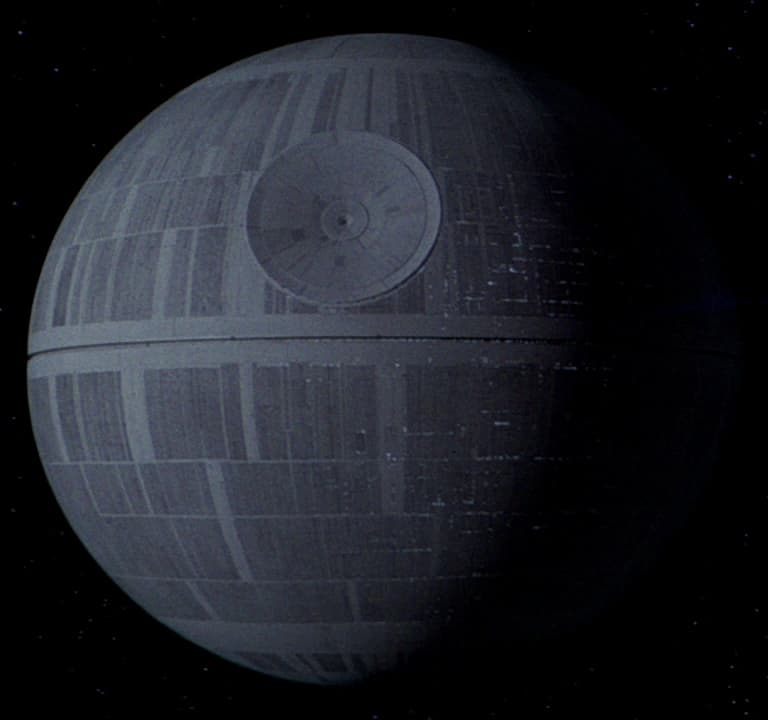
The Death Star, formally the DS-1 Orbital Battle Station, was a moon-sized Imperial superweapon capable of destroying an entire planet with a single shot. It annihilated Alderaan before being destroyed at the Battle of Yavin through a flaw deliberately built into its design.

Din Djarin
Din Djarin was a Mandalorian warrior and bounty hunter known across the Outer Rim simply as the Mandalorian. Hired to retrieve a Force-sensitive child, he instead became the foundling Grogu's protector and adoptive father.

General Grievous
Grievous was a Kaleesh warlord rebuilt into a cyborg who served as Supreme Martial Commander of the Separatist Droid Armies during the Clone Wars. A feared Jedi hunter who collected the lightsabers of his victims, he led the Confederacy's forces until his death at the hands of Obi-Wan Kenobi.
Get new articles in your inbox
No spam. New lore drops, canon conflicts, and deep dives only when they’re worth reading.
Some links on Lore Fortress are affiliate links. If you buy through them we earn a small commission at no extra cost to you.