Every Lightsaber Crystal Explained
More than sixty named lightsaber crystals exist across Canon and Legends, and most of them do something stranger than colour a blade. This guide runs through all of them, from cheap training stones to the Kaiburr crystal, and explains what each one actually did to the weapon it sat inside.
The crystal at the heart of a lightsaber does more than focus energy. It amplifies it. That is what makes a fist-sized stone the difference between a torch and a weapon, and it is why kyber ended up powering both Jedi weapons and superweapons. This guide covers every named lightsaber crystal across Canon and Legends, just over sixty of them, sorted roughly from the weakest to the most powerful. For the weapons they were fitted into, see the companion guide to every lightsaber type and variant. (Star Wars: Knights of the Old Republic; Jedi Academy Training Manual; Rogue One)
What lightsaber crystals actually do#
Lightsaber crystals were bound to the Force in something close to a symbiotic way, which is what let them do more than a lens does. They channelled energy, they focused it, and they amplified it. In Legends a lightsaber could be built around a long list of different stones. Some just do the job far better than others, and a handful add powers of their own: more heat, faster reflexes, ionised wounds, help staying unseen. (Star Wars: Knights of the Old Republic; Young Jedi Knights: Lightsabers; Jedi Academy Training Manual)
Canon and Legends do not agree#
The two continuities handle crystals differently and it matters for everything below. In Canon a kyber crystal answers the Force and takes on its colour through the bond with its wielder. In Legends the crystal already has its colour and the wielder picks one. Legends also splits into older and newer material that contradicts itself, and a large slice of the crystal list comes out of games such as Star Wars Galaxies and The Force Unleashed, where the powers get pretty wacky. Treat the odder entries as Legends flavour rather than hard physics. (The Clone Wars, "The Gathering"; Ahsoka; Star Wars Galaxies; Star Wars: The Force Unleashed)
Training crystals: bondar and the weak Adegans#
Legends. The weakest crystals could not focus a blade properly, so instead of cutting, the weapon stunned. That made them ideal for training lightsabers. Bondar crystals, found only on an asteroid in the far orbit of the Alderaan system, are the classic example. The weakest Adegan varieties served the same purpose. (Star Wars: Knights of the Old Republic; Tales of the Jedi Companion)
The Dahgee crystal#
Legends. One of the strangest looking crystals on record. The Dahgee crystal, used by the Dahgee Jedi in the days of the Republic, produced a zigzagged blade with a dark silver core and a coloured aura. The shape would have been genuinely inconvenient in a duel, which suggests it was closer to ceremonial. It looks incredible and would probably get you killed. (Star Wars: Clone Wars Adventures)
Ilum crystals#
Canon and Legends. The most abundant lightsaber crystal in the galaxy. Ilum was sacred to the Jedi Order, and most Padawans built their first lightsaber around a crystal from its caves. Ilum crystals had no special abilities at all. What they had was availability, consistent high quality and a strong affinity for the Force, which is exactly what an order arming thousands of Padawans needs. (The Clone Wars, "The Gathering"; Jedi Academy Training Manual)
Adegan crystals and their five subtypes#
Legends. Found in and around the Adega system, and later on worlds such as Mygeeto and Ilum itself, but rare even in their home system. Adegan crystals break into five subtypes. Kathracite was the most common, followed by relacite and danite, and all three were poor at focusing energy and good only for training sabers. Mephite was the type the Jedi actually used, close enough in structure to Ilum crystals that the two were hard to tell apart. Pontite was the rarest and the most powerful, and resonated with an aura that cooled both skin and temperament, which helped a Jedi keep calm in a fight. (Tales of the Jedi Companion; Jedi Academy Training Manual; Star Wars: Knights of the Old Republic II: The Sith Lords)
Bleeding and purification#
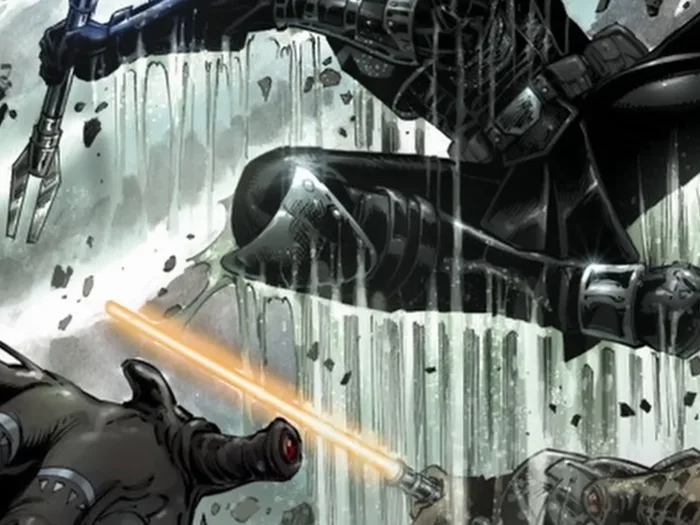
Canon. Kyber crystals lean towards the light and will not bond with a dark sider, so the Sith take them by force. The wielder pours their hatred into the crystal until it bleeds red. The process is reversible: Ahsoka Tano purified a pair of bled crystals and turned them white. Nothing has confirmed whether bled or purified crystals differ in raw power from an untouched one. When the crystal cracks, the result is the unstable, spitting blade Kylo Ren carried. (Ahsoka; The Force Awakens; Star Wars: The Force Awakens: The Visual Dictionary)
Synthetic crystals#
Legends. Same problem, different solution. The Sith learned to make synthetic crystals in special furnaces using the dark side. Synthetic crystals produced a slightly more powerful blade than a natural one and usually came out red, though the colour could be controlled. Luke Skywalker's second lightsaber ran a green synthetic crystal. On rare occasions the extra output was enough to break the blade of an opposing lightsaber, which is a horrible thing to discover mid-duel. They were also easy to augment, and unstable ones needed a vented hilt to bleed off excess energy. (Darth Bane: Path of Destruction; Jedi Academy Training Manual)
Crystals bonded to a single owner#
Legends. A small group of crystals were no stronger than an Ilum stone but, once tuned, would only work for one person. Bondara's Folly, an unusually rare crystal with a light brown blade, is one. Kenobi's Legacy is another. Bnar's Sacrifice, the crystal left behind by Jedi Master Ood Bnar, is a third. The lore never explains the mechanism. Bane's Heart, a carmine crystal Darth Bane gave to his apprentice Darth Zannah, went further: it made the saber discharge electricity and was hard for anyone but its owner to use. That same crystal ended up with General Grievous and later in the weapon carried by N-K Necrosis, a cyborg built from Grievous's design. (Star Wars Galaxies; Star Wars Galaxies: Rage of the Wookiees)
The absurdly expensive crystals#
Legends. Some crystals cost a fortune. The Corusca gem refracts light so convincingly that it looks like a furnace is burning inside it, and Coruscant took its name from the gems. They were among the hardest substances in the galaxy, hard enough that Lando Calrissian said they could slice through transparisteel like a laser through Sullustan jam. Jacen Solo built one into his lightsaber. (Young Jedi Knights: Shadow Academy; Young Jedi Knights: Lightsabers)
Durindfire crystals gave a blade a distinctive silver sheen, and the Empire bought and sold them to help fund the Death Star programme. The joke is that they came from Tatooine, where the Jawas used them to make the lenses that shield their eyes. Nobody local knew what they were worth. (The New Essential Guide to Alien Species; Star Wars: Knights of the Old Republic II: The Sith Lords)
Ultima-pearls were silvery pearls dredged from the ocean floor of Dac, notoriously awkward to install, and Jedi Master Cilghal used one in her lightsaber. The rainbow gem, a silicon-based lifeform from Gallinore rather than a true gem, was worth as much as a Mon Calamari cruiser, and Tenel Ka built rainbow gems into her second lightsaber. The one-of-a-kind Sunrider's Destiny produced a teal blade. None of them is known to grant a power beyond a strong attunement to the Force. (Young Jedi Knights: Lightsabers; The Hutt Gambit; Star Wars Galaxies)
Krayt dragon pearls#
Canon and Legends. Gastroliths from the belly of a krayt dragon, swallowed as stones and slowly dissolved by digestive acid, much as birds and dinosaurs use gizzard stones. In Canon, a stone that held kyber was polished over the dragon's life into a smooth pearl that could power a lightsaber. Killing a krayt to claim its pearl was treated as a major achievement by Tusken Raiders and monster hunters alike, as the second season of The Mandalorian showed. Pearls were notoriously difficult to fit into a lightsaber, but the blade that came out was powerful and howled when ignited. (Star Wars: Knights of the Old Republic; Aftermath: Empire's End; Gadgets and Gear; The Mandalorian, "Chapter 9: The Marshal")
Lambent crystals#
Legends. Yuuzhan Vong biotech rather than mineral: the fruit of a plant they grew. A lambent could be dimmed or brightened by the thoughts of whoever held it, which made it a communication device and a light source, and it could be used to sense hidden enemies. Anakin Solo harvested one while a prisoner of the Yuuzhan Vong, fitted it to his lightsaber, and used his bond with it to feel out Yuuzhan Vong the Force could barely see. (The New Jedi Order: Edge of Victory I: Conquest)
Dantari crystals#
Legends. A popular Jedi crystal before Ilum, found on Dantooine inside the eggs of the cave-dwelling kinrath. Some were said to reflect the alignment of the wielder, and they came in rare colours such as purple, pink and yellow as well as the usual red, blue and green. They carried a bonus a standard crystal does not: during a fight a Dantari crystal recycled the fury of battle, letting the wielder replenish their Force reserves faster. (Star Wars: Knights of the Old Republic; Star Wars: Knights of the Old Republic II: The Sith Lords)
Hurrikaine crystals#
Legends. Deep blue to violet, found only on the planet Hurikane. Mace Windu went there on a mission as a Padawan and harmed one of the stone-encrusted natives with a Force repulse. Realising what he had done, he used Force healing to repair the being. In return he was given a handful of the rare amethyst crystals that went into his electrum lightsaber. Blades made with them were unusually good at punching through an opponent's guard. (Star Wars Tales 13, "Stones"; Star Wars: Knights of the Old Republic II: The Sith Lords)
Ionising crystals: luxum and firkrann#
Legends. Luxum crystals formed from the dark energies of Ambria and gave the blade an ion effect, which made it more effective against droids. Handy if you spend the Clone Wars hacking apart battle droids. The Firkrann crystal, mined on Rafa V, did much the same thing with an electrical charge and was noted as a weapon of the Dark Lords of the Sith. Revan found one in the tomb of Tulak Hord, who may have used it. (Star Wars: Knights of the Old Republic)
Black crystals#
Canon and Legends. The crystal inside the Darksaber is a genuine unknown. Nothing records where it came from or why the blade is black. There is a long-running argument over whether the Darksaber cuts better than a standard weapon, and if it does, whether that comes from the crystal or the flattened sword profile. (The Clone Wars, "The Mandalore Plot"; The Mandalorian, "Chapter 8: Redemption")
The other black blade is the Blackwing crystal. The Blackwing virus was a bioweapon that turned its victims into the walking dead. During an outbreak in the Dathomir quarantine zone in the Imperial era, crystals in the caves there were changed by contact with the virus. Fitted to a lightsaber they threw a dark, smoky blade. Whether the weapon gained any real ability is unrecorded. (Death Troopers; Star Wars Galaxies)
Lorrdian gemstones#
Legends. The Lorrdians, enslaved during the Kanz Disorders and forbidden to speak, developed a kinetic language of tiny shifts in posture and body language. Force-sensitives among them imbued certain gemstones with the same gift. Anyone wielding one read an opponent's movement far better than they should have, which made it a strongly defensive crystal, good for deflecting blaster bolts. (Star Wars: Knights of the Old Republic II: The Sith Lords; Star Wars: The Force Unleashed)
Crystals that change the blade's shape#
Legends. Damind crystals, mined only on Daminia and used by the Sith, made the blade wider and longer than normal. That also made it easier to deflect blaster bolts. Pulling the other way, velmorite crystals from Velmor produced a fine, thin blade for graceful, fluid fighting, and rubat crystals sharpened the definition of the blade so the wielder could track it and strike faster. Rubat was the Jedi Order's crystal before Ilum. (Star Wars: Knights of the Old Republic; Star Wars: Knights of the Old Republic II: The Sith Lords; Star Wars: Force and Destiny Game Master's Kit)
Focus crystals#
Legends. A whole subgroup associated with the light side, all of them sharpening the mind rather than the blade. The most famous is the Solari crystal, a light orange stone among the oldest and most powerful crystals of the Jedi Order. It came with a catch: waver from the light and the blade goes out, which is exactly what happened to Shaela Nuur when vengeance took hold of her. Only Jedi of genuinely clean conscience could rely on one. (Star Wars Tales 23, "Shadows and Light"; Star Wars: Knights of the Old Republic)
The kasha crystal was a traditional meditation tool of the Cereans, the species Ki-Adi-Mundi belongs to, and patterns scribed on each face harnessed its full energy. Blades built with one cleared the mind of distractions in the middle of a fight. Meditation crystals grew naturally on Tython and did something similar plus one extra trick: the wielder kept their Force energy during a fight rather than burning through it, which is exactly what you want in a long, grinding duel. (Star Wars: Knights of the Old Republic II: The Sith Lords; Star Wars: The Force Unleashed II)
Crystals that make the blade hotter#
Legends. A cluster of crystals raised the heat and intensity of the blade. Nextor crystals, mined on M'haeli, were among the most volatile, granting real power at real risk. (Star Wars: Knights of the Old Republic)
Lignan crystals sit at the top of this group. Made from Lignan ore, which was steeped in the dark side, they made a blade burn hotter and last far longer than normal, and boosted a dark sider's own Force powers. The Lost Tribe of the Sith relied on them. Sigil and Phond crystals raised the heat far less dramatically, though Sigil was costly and still sought after. (Lost Tribe of the Sith: Precipice; Star Wars: Knights of the Old Republic)
The Qixoni crystal was formed when a star went supernova and fused the minerals of a planet it consumed. It boosted both the power of the blade and the wielder's Force abilities, though only for someone firmly aligned with the dark side. The sapith crystal has a stranger origin, excreted by the now extinct volice worm of Lwhekk, and yields a blade that is both intense and easier to control. Opila crystals produced an intense, cutting blade; refined and cleaned they became jenruax crystals, which added agility on top, something like the Force speed on show in The Phantom Menace. (Star Wars: Knights of the Old Republic II: The Sith Lords; Star Wars: Knights of the Old Republic; Star Wars: Force and Destiny Core Rulebook)
Barab ingots came off the radiation-baked world of Barab I, where the radiation fundamentally altered the stone. The blade could come out in any common colour, but it burned almost to the point of losing cohesion, more like fire than a blade, and anyone struck with it caught alight. (Star Wars: Knights of the Old Republic II: The Sith Lords; Jedi Academy Training Manual)
Compressed energy crystals#
Legends. A family of crystals whose blades were thinner than standard and visibly pulsed, usually with a power attached. The incineration crystal used by the clone of Starkiller is the best known, and it set victims on fire. The corrosion crystal produced a blade that made a wound corrode away. (Coruscant Nights II: Street of Shadows; Star Wars: The Force Unleashed II)
Crystals that burn cold#
Legends. A small, strange family that includes Baas's Wisdom, named for Jedi Master Bodo Baas, and the permafrost crystal from Hoth. They cut about as well as an ordinary blade but also leave the target with frostbite. So the same strike burns and freezes at once. The lore does not explain how that works. (Star Wars Galaxies)
The Ankarres Sapphire#
Legends. A legendary crystal attuned to the light, said to slowly heat up and burn the hand of any dark sider who touched it. It could aid a Jedi in battle, and its healing powers were the stuff of legend: the bounty hunter Zuckuss tried to use it to heal himself. (Star Wars: Knights of the Old Republic II: The Sith Lords; "Of Possible Futures: The Tale of Zuckuss and 4-LOM"; Star Wars Galaxies)
The Dathomir crystals#
Legends. The Witches of Dathomir trace back to Allya, a Jedi exiled to the planet centuries before the Galactic Civil War, who taught the locals the Force and how to ride rancors. Two crystals are named after her. Allya's Exile produced a scarlet blade that burned hotter than a Sigil crystal, inflicting severe burns. Allya's Redemption gave a light green blade with a yellow core and an acidic, poisoning effect. (The Courtship of Princess Leia; Star Wars Galaxies)
The Vexxtal crystal#
Legends. A dark side crystal from The Force Unleashed whose origins are a mystery. It turns up in the lightsabers of dark siders, and it left a corrupting aura on anyone wounded by its blade. (Star Wars: The Force Unleashed)
Amplification crystals#
Legends. Silver crystals of unknown origin, one of very few to produce a silver blade. The only known user was Maulkiller, the clone Darth Vader created from the genetic material of Darth Maul and Starkiller. He eventually died of his physical and mental instabilities, and nobody knows what happened to his crystals. (Star Wars: The Force Unleashed II)
The Heart of the Guardian and the Mantle of the Force#
Legends. Two ancient crystals rediscovered by the Rodian inventor Suvam Tan, both of which boosted whatever else was in the hilt. The Heart of the Guardian was believed to be tied to the founding of the Jedi guardians. Jedi prophecy said it would appear in the time of greatest turmoil and bring salvation; the Sith claimed it as their heritage and believed it would bring their domination. Fittingly, it was most likely used by Revan, who was both. It produced a fast yet devastating blade. (Star Wars: Knights of the Old Republic)
The Mantle of the Force was the other crystal Revan bought from Tan, with much the same amplifying property and one advantage. It always enhanced the wielder's Force abilities. (Star Wars: Knights of the Old Republic)
Concussive crystals: dragite, etaan and impact#
Legends. Dragite crystals from M'haeli produced a blade that resonated loudly when it struck, dealing a little sonic damage on top of the cut. Etaan crystals, from deep caverns on Etai, echoed with a humming resonance even after harvesting, so a blade built with one thrummed in harmony with every swing. (Star Wars: Knights of the Old Republic II: The Sith Lords; Endless Vigil)
The impact crystals, a pair of pulsing compressed energy crystals used by the clone of Galen Marek, produced yellow blades that simply did more damage, turning the weapon into something closer to a club. (Star Wars: The Force Unleashed II)
The lava crystal#
Legends. Found only on volcanic worlds such as Mustafar, and it changes what the blade actually is. Instead of near-weightless plasma you get something heavy and dense that resembles lava, throwing off bits of flame and dripping molten fragments as it moves. It was rumoured to be very powerful. (Star Wars Galaxies: Trials of Obi-Wan)
Invisible blades: eralam and ghostfire#
Legends. Eralam crystals were mined on the third moon of Erai until ancient Sith bombardments made them very rare. They produced a clear, superior blade, which is why it gets called the invisible lightsaber. The tactical value is obvious. (Star Wars: Knights of the Old Republic)
The ghostfire crystal goes further. Entirely transparent itself, growing as precarious spires on Outer Rim mountain peaks, it produced a blade that was dim, translucent and almost silent, and it left an illusory afterimage of the wielder and saber. Working out where the blade actually is becomes close to impossible. In the hands of a competent duellist that makes it one of the most dangerous crystals on this list. (Endless Vigil)
The Katak crystal#
Legends. A dark side crystal of unknown origin whose wielder slowly drained the life force of everyone nearby, the ability most associated with Darth Nihilus. The drain was eventually fatal, though it took a long time to finish. (Star Wars: The Force Unleashed)
Stygium crystals#
Legends. Stygium was best known as a cloaking crystal. Early in the Republic stygium cloaks were common, until the Republic passed a law controlling the trade, and they hid Maul's Scimitar and Starkiller's Rogue Shadow. When the Imperial superweapon Tarkin blew open the planet Aeten II, its core turned out to be stygium, which fed the Phantom TIE project. A whole island of the stuff on Maramere was invisible to scanners. In pure form it worked as a lightsaber crystal too, and in the hands of a stealthy Jedi it helped them stay unseen. (Star Wars: Knights of the Old Republic II: The Sith Lords; Darth Maul: Shadow Hunter; Starfighter: Crossbones 3; Star Wars: The Force Unleashed novelisation; Star Wars Insider 66)
The Kaiburr crystal#
Legends. The most powerful lightsaber crystal there is, an ancient Force relic held in the Temple of Pomojema on Mimban, and Luke Skywalker believed nothing outclassed its shards. Even a sliver gave a Force user a jolt. In its temple the whole crystal magnified a Force-sensitive's power a thousandfold. Vader drew on it to throw kinetite, his own take on Force lightning. Away from the temple the effect dropped off, and its shards were still regarded as the finest lightsaber crystals in the galaxy. (Splinter of the Mind's Eye; Young Jedi Knights: Lightsabers; The Rise and Fall of Darth Vader)
Frequently asked questions
- How many lightsaber crystals are there?
- Just over sixty crystals have been named across Canon and Legends, counting subtypes such as the five varieties of Adegan crystal. Most come from Legends sources, particularly older roleplaying material and games like Knights of the Old Republic, Star Wars Galaxies and The Force Unleashed.
- What is the most powerful lightsaber crystal?
- The Kaiburr crystal. Luke Skywalker believed it to be the most powerful lightsaber crystal in existence, and even a sliver of it sharply increased a Force user's potential. Inside a Force nexus the whole crystal could magnify its holder a thousandfold, though its power dropped away once it was carried out.
- Why are Sith lightsabers red?
- In Canon, kyber crystals are attuned to the light and cannot bond with a dark sider, so the Sith bleed them instead, pouring hatred into the crystal until it turns red. In Legends the early Sith could not obtain kyber at all and forged synthetic crystals in giant furnaces, which came out red and slightly more powerful than a natural stone.
- What is the difference between kyber crystals in Canon and Legends?
- Canon kyber crystals start clear and only take a colour once a wielder bonds with them. In Legends the crystal already has its colour and the wielder simply chooses one that suits them. Legends also gives crystals far wilder abilities, from freezing wounds to cloaking starships.
- What crystal did Mace Windu use?
- A Hurrikaine crystal, found only on the planet Hurikane. Windu was given a handful by the stone-encrusted natives after he harmed one of them and then healed the injury with the Force. The crystals produced a deep blue to violet blade and were prized for quickening reflexes and cutting through an opponent's defences.
Sources
- GameStar Wars: Knights of the Old Republic, BioWare, 2003
- GameStar Wars: Knights of the Old Republic II: The Sith Lords, Obsidian Entertainment, 2004
- GameStar Wars Galaxies, Sony Online Entertainment, 2003
- GameStar Wars Galaxies: Rage of the Wookiees, Sony Online Entertainment, 2005
- GameStar Wars Galaxies: Trials of Obi-Wan, Sony Online Entertainment, 2005
- GameStar Wars: Clone Wars Adventures, Sony Online Entertainment, 2010
- GameStar Wars: The Force Unleashed, LucasArts, 2008
- GameStar Wars: The Force Unleashed II, LucasArts, 2010
- BookStar Wars: The Force Unleashed (novelisation), Sean Williams, Del Rey, 2008
- VideoRogue One: A Star Wars Story, Lucasfilm, 2016
- VideoThe Force Awakens, Lucasfilm, 2015
- VideoThe Gathering, The Clone Wars, season 5 episode 6, 2012
- VideoThe Mandalore Plot, The Clone Wars, season 2 episode 12, 2010
- VideoChapter 8: Redemption, The Mandalorian, season 1 episode 8, 2019
- VideoChapter 9: The Marshal, The Mandalorian, season 2 episode 1, 2020
- BookAhsoka, E. K. Johnston, Disney Lucasfilm Press, 2016
- BookStar Wars: The Force Awakens: The Visual Dictionary, Pablo Hidalgo, DK, 2015
- BookAftermath: Empire's End, Chuck Wendig, Del Rey, 2017
- BookGadgets and Gear, Alexis Dykema, Fantasy Flight Games, 2019
- BookJedi Academy Training Manual, Rodney Thompson and others, Wizards of the Coast, 2009
- BookTales of the Jedi Companion, George R. Strayton, West End Games, 1996
- BookStar Wars: Force and Destiny Core Rulebook, Fantasy Flight Games, 2015
- BookStar Wars: Force and Destiny Game Master's Kit, Fantasy Flight Games, 2015
- BookEndless Vigil, Tim Huckelberry and others, Fantasy Flight Games, 2016
- BookThe New Essential Guide to Alien Species, Ann Margaret Lewis and Helen Keier, Del Rey, 2006
- BookStar Wars Insider 66, Who's Who: Imperial Grand Admirals, 2003
- BookDarth Bane: Path of Destruction, Drew Karpyshyn, Del Rey, 2006
- BookDarth Maul: Shadow Hunter, Michael Reaves, Del Rey, 2001
- BookCoruscant Nights II: Street of Shadows, Michael Reaves, Del Rey, 2008
- BookDeath Troopers, Joe Schreiber, Del Rey, 2009
- BookLost Tribe of the Sith: Precipice, John Jackson Miller, Del Rey, 2009
- BookThe New Jedi Order: Edge of Victory I: Conquest, Greg Keyes, Del Rey, 2001
- BookYoung Jedi Knights: Shadow Academy, Kevin J. Anderson and Rebecca Moesta, Boulevard, 1995
- BookYoung Jedi Knights: Lightsabers, Kevin J. Anderson and Rebecca Moesta, Boulevard, 1996
- BookThe Courtship of Princess Leia, Dave Wolverton, Bantam Spectra, 1994
- BookThe Hutt Gambit, A. C. Crispin, Bantam Spectra, 1997
- BookOf Possible Futures: The Tale of Zuckuss and 4-LOM (Tales of the Bounty Hunters), M. Shayne Bell, Bantam Spectra, 1996
- BookSplinter of the Mind's Eye, Alan Dean Foster, Del Rey, 1978
- BookThe Rise and Fall of Darth Vader, Ryder Windham, Scholastic, 2007
- ComicStar Wars Tales 13, "Stones", W. Haden Blackman, Dark Horse, 2002
- ComicStar Wars Tales 23, "Shadows and Light", Joshua Ortega, Dark Horse, 2005
- ComicStarfighter: Crossbones 3, W. Haden Blackman, Dark Horse, 2002
Spotted a factual error or a primary source we missed? Email a correction. Every flagged claim gets reviewed.
Followed from this entry
Every Lightsaber Type and Variant Explained
Around forty distinct lightsaber designs exist across Canon and Legends, from the plain single blade every Jedi built to whips, axes, gauntlets and a suit of armour with sabers surgically fitted into its joints. This guide walks through all of them and flags which continuity each one belongs to.

Ahsoka Tano
Ahsoka Tano was a Togruta Force-user, Anakin Skywalker's Padawan during the Clone Wars who left the Jedi Order after being wrongly accused of treason. She survived Order 66, became the rebel agent Fulcrum, and outlived the Empire.

Clone Wars
The Clone Wars was a galaxy-spanning conflict fought from 22 to 19 BBY between the Galactic Republic and the breakaway Confederacy of Independent Systems. Secretly engineered on both sides by the Sith, it ended with the Jedi purged and the Republic reformed into the Galactic Empire.

Darth Vader
Anakin Skywalker was the prophesied Chosen One, a Jedi Knight and hero of the Clone Wars who fell to the dark side and became the Sith Lord Darth Vader. He enforced the rule of the Galactic Empire for decades before his redemption and death at the Battle of Endor.
Death Star
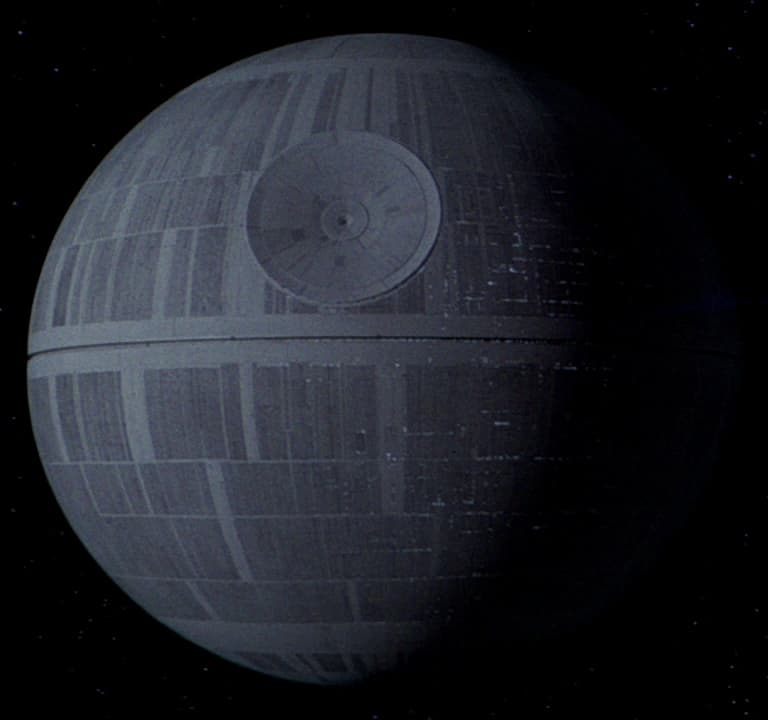
The Death Star, formally the DS-1 Orbital Battle Station, was a moon-sized Imperial superweapon capable of destroying an entire planet with a single shot. It annihilated Alderaan before being destroyed at the Battle of Yavin through a flaw deliberately built into its design.
General Grievous
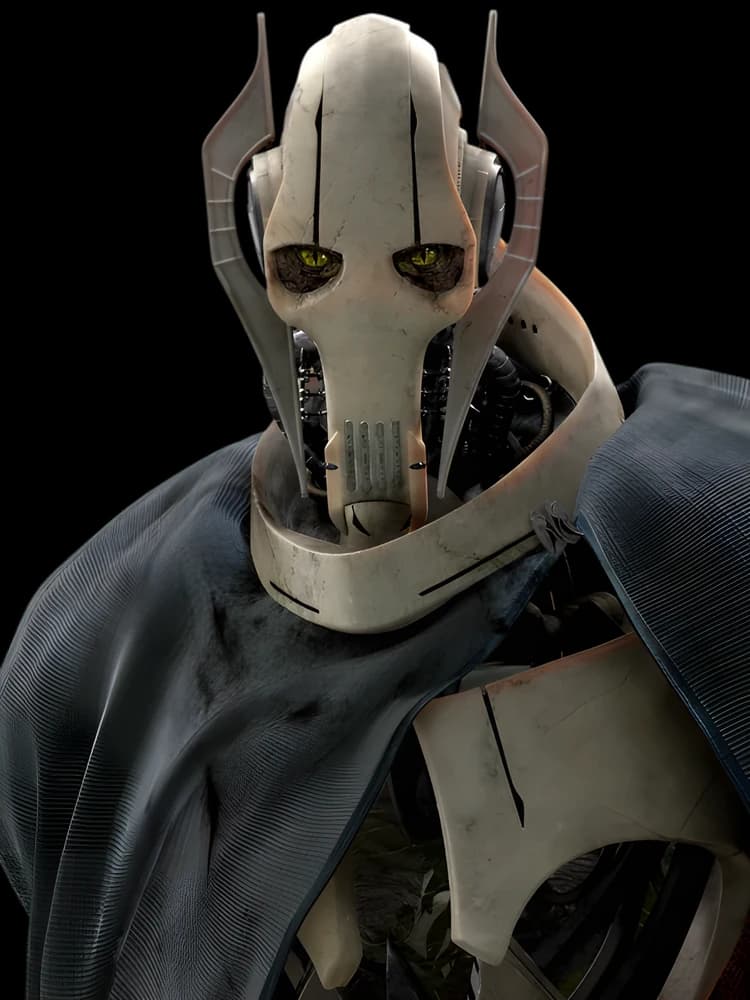
Grievous was a Kaleesh warlord rebuilt into a cyborg who served as Supreme Martial Commander of the Separatist Droid Armies during the Clone Wars. A feared Jedi hunter who collected the lightsabers of his victims, he led the Confederacy's forces until his death at the hands of Obi-Wan Kenobi.
Mentioned in1 entry
Get new articles in your inbox
No spam. New lore drops, canon conflicts, and deep dives only when they’re worth reading.
Some links on Lore Fortress are affiliate links. If you buy through them we earn a small commission at no extra cost to you.